Complete Plant Guide
Explore plants by difficulty, season and more. Find the perfect plant for you.
Difficulty
Categories
Plants by City
🗺️ Plants by City3454 plants found
Showing 3097-3132 of 3454
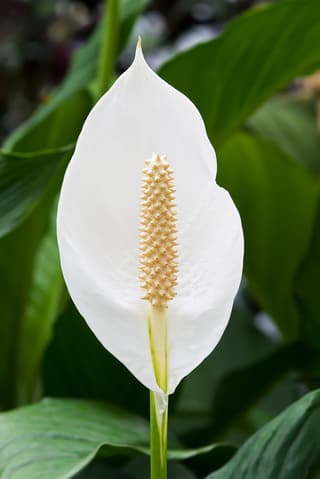
Peace Lily
Spathiphyllum wallisii
Spathiphyllum wallisii is an elegant houseplant native to the tropical rainforests of Colombia. It features elongated glossy dark green leaves and distinctive white spathe-shaped flowers. Famous for its air-purifying abilities, it removes toxins like benzene, formaldehyde, and xylene from indoor environments.
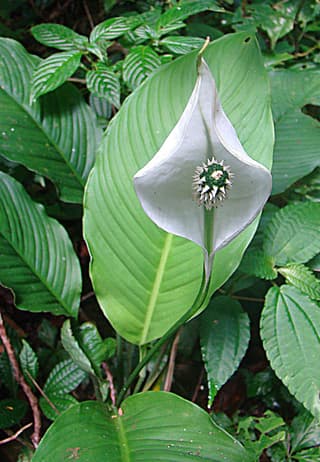
Peace Lily
Spathiphyllum wendlandii
Spathiphyllum wendlandii, commonly known as the Peace Lily, is a tropical evergreen perennial native to Central America — Costa Rica, Honduras, and Panama. With its lush dark-green leaves and graceful white spathe flowers, it is one of the most beloved indoor plants worldwide. It is also NASA-certified as an effective air purifier, removing benzene, formaldehyde, and trichloroethylene from indoor environments.
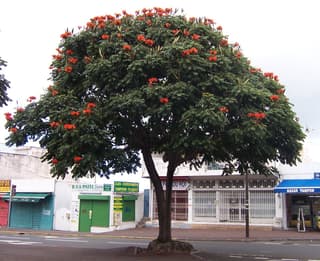
African Tulip Tree
Spathodea campanulata
Spathodea campanulata, commonly known as the African Tulip Tree, is a fast-growing evergreen tree native to the tropical rainforests of West and Central Africa. It is celebrated for its spectacular clusters of large, cup-shaped scarlet to orange flowers that blaze against its dense, dark green canopy. Growing up to 25 meters tall in ideal conditions, this majestic tree has been planted across tropical regions worldwide as an ornamental shade tree. Despite its beauty, it is considered invasive in several regions outside its native range.
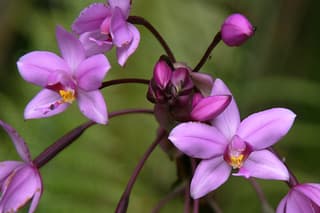
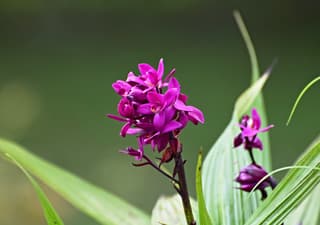
Philippine Ground Orchid
Spathoglottis plicata
Spathoglottis plicata, commonly known as the Philippine Ground Orchid, is a stunning terrestrial orchid native to Southeast Asia and the Pacific islands. Unlike most orchids that grow on trees, this species thrives in the ground, forming lush clumps of pleated, strap-like leaves topped by tall flowering spikes bearing up to 40 vibrant pink to purple blooms. It is one of the most accessible and rewarding orchids for tropical and subtropical gardens.
Clawed Ground Orchid
Spathoglottis unguiculata
Spathoglottis unguiculata, commonly known as the Clawed Ground Orchid, is a terrestrial orchid native to Southeast Asia and the Pacific region. Unlike most orchids that grow on trees, this species thrives in the ground, producing elegant flowers in shades of yellow and purple. Its distinctive claw-like lip gives it its name and makes it stand out among ornamental orchids.
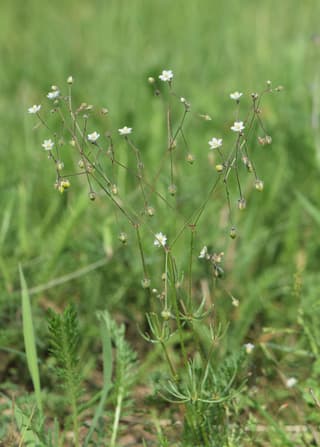
Corn spurry
Spergula arvensis
Corn spurry (Spergula arvensis) is an annual herb in the pink family (Caryophyllaceae), widespread as a weed in fields across Europe, North Africa, and parts of Asia. It grows to a height of approximately 10–50 cm, featuring narrow, linear leaves arranged in whorls, and blooms from summer to autumn with small, white, five-petaled flowers. It typically occurs on light, sandy, acidic soils low in calcium, especially in cereal crops like spring barley. Seeds can remain viable in the soil for several years.

Woodland False Buttonweed
Spermacoce remota
Spermacoce remota is a perennial (or short-lived) herb or subshrub with erect or decumbent stems, reaching about 70 cm in height, featuring slightly purplish stems and lanceolate to elliptical leaves up to 5-7 cm long. Its flowers are small, white with a slight pinkish tint, clustered in dense glomerules at the branch tips and leaf axils. It is native to tropical and subtropical Americas (southeastern USA, Caribbean, Mexico, Central and South America) and is now naturalized in tropical regions of Asia, Pacific islands, the Indian Ocean, and the Galápagos, easily colonizing gardens, lawns, roadsides, and disturbed soil areas. It is an important plant for local fauna, serving as an egg-laying site for butterflies such as the Banded Peacock (Anartia fatima).
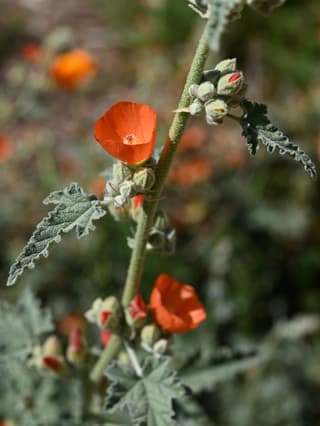
Desert Globe Mallow
Sphaeralcea ambigua
The Desert Globe Mallow (Sphaeralcea ambigua) is a perennial, woody subshrub in the mallow family (Malvaceae), native to the deserts of the southwestern United States and northwestern Mexico—ranging from California, Nevada, Utah, and Arizona to Sonora and Baja California. It thrives in the Mojave, Sonoran, and Great Basin deserts at elevations between 500 and 8,000 feet. The plant produces grayish-green, three-lobed, fuzzy leaves and bears cup-shaped, apricot to orange flowers that can bloom nearly year-round depending on the climate. As an extremely drought-tolerant species, it easily survives long dry periods and poor, rocky soil.

Singapore daisy
Sphagneticola trilobata
Sphagneticola trilobata, commonly known as Singapore daisy, creeping oxeye, or wedelia, is a perennial groundcover herb in the Asteraceae family, native to Mexico, Central America, and the Caribbean. It forms creeping stems up to 2 meters long that root at every node, featuring fleshy trilobed leaves and yellow daisy-like flowers that can bloom year-round in warm climates. Due to its immense vigor and ease of propagation, it has naturalized as an invasive weed in numerous tropical and subtropical regions worldwide—it is listed among the 100 world's worst invasive alien species by the IUCN—where it forms dense mats that displace native vegetation. It is recommended to grow it with caution, ideally in containers or controlled areas.
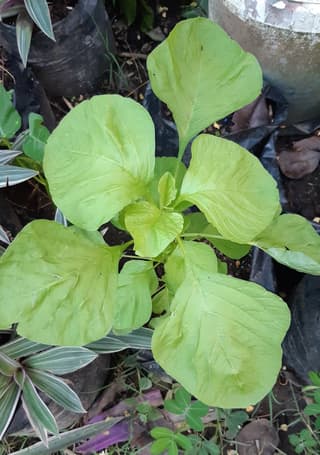
Spinach
Spinacia
Spinacia is the botanical genus of spinach, a leafy annual vegetable in the family Amaranthaceae (formerly Chenopodiaceae), native to central and southwestern Asia. The cultivated species, Spinacia oleracea, is the genus's sole widely grown member and is prized for its fast growth, tender nutrient-dense leaves, and adaptability to cool climates. It is one of the most popular leafy greens worldwide, eaten raw in salads or cooked in countless dishes.

Spinach
Spinacia oleracea
Spinach (Spinacia oleracea) is an annual herbaceous plant in the Amaranthaceae family, cultivated for its nutritious, fleshy, deep green leaves. It is a cool-season crop known for its nutrient density, particularly iron, vitamins A, C, and K, and folic acid.
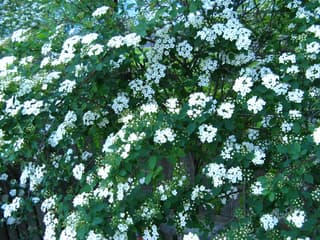
Vanhoutte Spirea
Spiraea × vanhouttei
Vanhoutte spirea (Spiraea × vanhouttei) is a deciduous ornamental shrub in the Rosaceae family. It is a hybrid species resulting from a cross between Spiraea trilobata and Spiraea cantoniensis. The shrub grows in a vase-like shape with branches that arch gracefully downward. In spring, dense clusters of white flowers cover the branches, making the plant resemble a bridal veil. It is known for its hardiness, tolerating frost, drought, and nutrient-poor soil. This plant is excellent for hedges, mass plantings, or as a beautiful specimen plant in gardens.
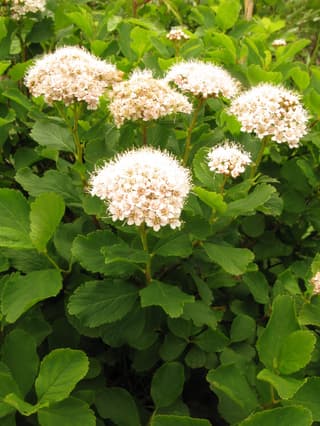
Birchleaf Spirea
Spiraea betulifolia
Birchleaf spirea (Spiraea betulifolia) is a compact, deciduous shrub in the rose family (Rosaceae), native to cool temperate forests of western North America and parts of eastern Asia. It forms a dense, rounded mound of wiry stems clothed in oval, toothed, birch-like green leaves. In late spring to summer it produces abundant flat-topped clusters (corymbs) of tiny white flowers that attract bees and butterflies, followed in autumn by rich red, orange, and burgundy foliage color. Low-maintenance and cold-hardy, it is widely used as a border shrub, mass planting, or informal hedge.
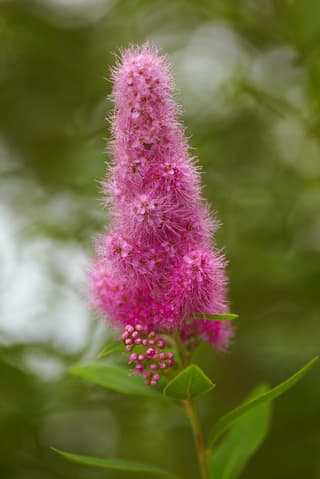
Billard Spiraea
Spiraea billardii
Billard Spiraea (Spiraea × billardii) is a hybrid species of spiraea shrubs, resulting from a cross between the wild species Spiraea douglasii and Spiraea salicifolia. It is an upright, densely branched deciduous shrub that can grow up to 2.5 meters tall and nearly as wide. In July-August, it blooms profusely with elongated clusters of pink flowers that attract butterflies and bees. The plant is extremely winter-hardy and perfectly suited for Nordic gardens.
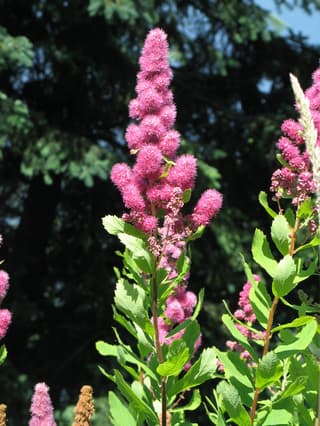
Douglas Spirea
Spiraea douglasii
Spiraea douglasii, commonly known as Douglas spirea or hardhack, is a deciduous, thicket forming shrub native to the Pacific coast of western North America, from Alaska to California. It grows three to six feet tall with woolly stems and produces dense, cone shaped spires of deep pink flowers in early summer. Thriving in moist streambanks, swamps, and wetlands, this fast growing native shrub spreads readily by rhizomes to form dense colonies, making it a popular choice for erosion control, rain gardens, and wildlife habitat restoration.
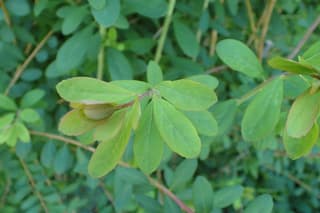
Japanese Spiraea
Spiraea japonica
Japanese Spiraea (Spiraea japonica) is a deciduous shrub belonging to the rose family (Rosaceae), native to East Asia, specifically Japan, China, and Korea. It forms a dense, rounded shrub and blooms in summer with abundant pink or white flower clusters. This hardy and easy-to-maintain species is ideal for garden plantings and hedges.
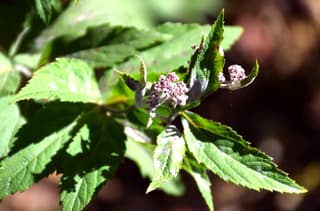
Willowleaf Spiraea
Spiraea salicifolia
Willowleaf Spiraea (Spiraea salicifolia) is an upright, dense, and fast-growing shrub belonging to the rose family, known for its narrow, willow-like leaves and pink or white, spike-like flower clusters. It blooms profusely throughout the summer and is very winter-hardy (USDA Zones 4a–8b), making it excellent for northern climates. The plant spreads effectively via root suckers, forming dense thickets, which is why it is also used as ground cover and for erosion control on moist slopes.
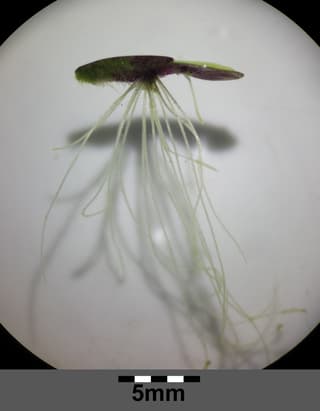
Great Duckweed
Spirodela polyrhiza
Great Duckweed (Spirodela polyrhiza) is a tiny free-floating aquatic plant from the Arum family (Araceae, subfamily Lemnoideae). Its round to oval fronds measure only 2–10 mm; they are fresh green on the upper side and reddish-purple on the underside. Unlike related duckweed species, each frond produces 7 to 21 thin roots (instead of the usual one), allowing it to float easily on the surface of stagnant or slow-moving waters and form dense mats. It reproduces primarily vegetatively by budding new fronds from the mother plant, flowering only rarely. In autumn, it produces turions—starch-rich storage buds that sink to the bottom to overwinter, resurfacing and germinating in spring when water temperatures reach around 15 °C. It is one of the fastest-growing flowering plants in the world and is found in the wild almost globally.
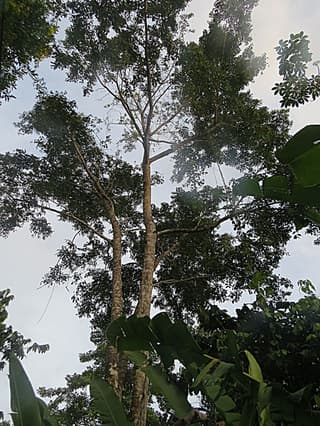
Yellow Mombin
Spondias mombin
Yellow Mombin (Spondias mombin) is a fast-growing tropical tree in the family Anacardiaceae, native to tropical America including the West Indies, Central America, and South America. It can reach up to 25 metres tall with a broad, irregular crown and deciduous foliage. The small, ovoid yellow fruits are edible and widely used in juices, sherbets, and jellies across tropical regions.
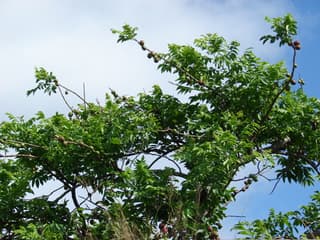
Red Mombin
Spondias purpurea
Red Mombin (Spondias purpurea) is a fast-growing deciduous tropical fruit tree in the Anacardiaceae family, native to Central America and Mexico. It can reach up to 15 meters in height and is prized for its small, aromatic red or purple fruits with a sweet-tart flavor. The tree sheds its leaves during the dry season and often flowers and fruits before the new leaves emerge in spring. Highly drought-tolerant once established, it is a staple fruit tree across Mesoamerica.

Prairie dropseed
Sporobolus
Sporobolus is a genus of ornamental and native grasses in the Poaceae family, with approximately 150-200 species distributed across temperate, tropical, and subtropical regions. The most prized ornamental species is Sporobolus heterolepis (prairie dropseed), which forms dense, arching clumps of fine, thread-like leaves that are bright green in summer and turn golden-orange in autumn. In summer and fall, it produces airy panicles of pinkish-brown flowers with a distinctive fragrance. It is a very hardy plant, tolerant of drought, poor soils, and clay, making it ideal for prairie gardens and naturalistic borders.
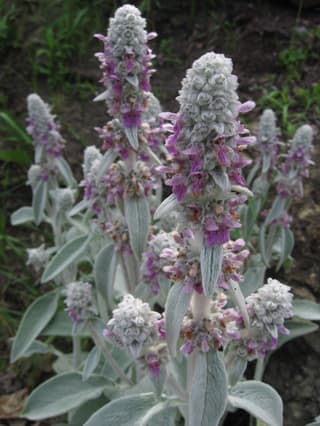
Lamb's Ear
Stachys
Lamb's Ear (Stachys byzantina) is a low-growing, mat-forming perennial in the mint family (Lamiaceae), celebrated for its striking silvery-white, densely woolly leaves that feel as soft as velvet. Native to Turkey, Armenia, and Iran, this hardy plant thrives in sunny, dry garden borders and is beloved in cottage gardens, sensory gardens, and water-wise landscapes. It produces upright spikes of small pink-purple flowers in late spring and summer, though it is primarily grown for its distinctive textured foliage.
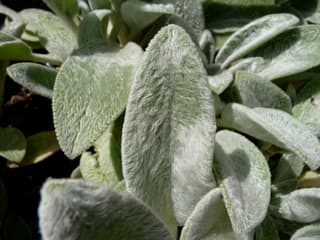
Lamb's Ear
Stachys byzantina
Stachys byzantina is a herbaceous perennial famous for its leaves densely covered in silky white hairs, which give it a velvety texture and a unique silvery color. Native to the Middle East, it forms dense, low mats, making it an excellent groundcover. In summer, it produces upright stems with small purple flowers, although it is primarily grown for its exotic foliage that resembles lamb's ears.
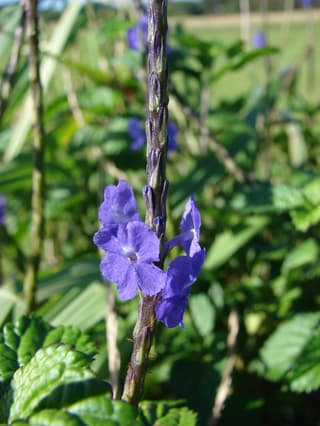
Blue Snakeweed
Stachytarpheta cayennensis
Blue Snakeweed (Stachytarpheta cayennensis) is a fast-growing tropical subshrub native to tropical America, belonging to the Verbenaceae family. It produces long, slender flower spikes adorned with vivid blue-purple tubular flowers that bloom successively over many months. A magnet for pollinators, it attracts over 98 butterfly species, bees, and hummingbirds. It is widely used as an ornamental garden plant and holds significant importance in traditional medicine throughout the tropics.
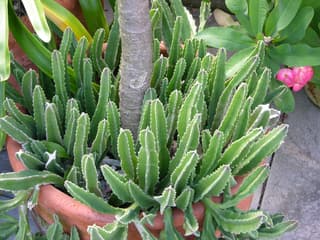
Zulu Giant
Stapelia gigantea
Stapelia gigantea, commonly known as the Zulu Giant or Carrion Flower, is a striking succulent native to South Africa. It produces enormous star-shaped flowers up to 30 cm across with a distinctive reddish-maroon and cream pattern. The flowers emit a carrion-like odor to attract flies for pollination. Its leafless, ribbed succulent stems grow in dense clumps and turn reddish-purple in bright sunlight.
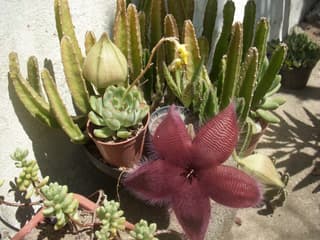
Starfish Flower
Stapelia grandiflora
Stapelia grandiflora, commonly known as the Starfish Flower or Carrion Plant, is a fascinating succulent native to South Africa. It produces striking star-shaped flowers up to 10 inches across, covered in fine hairs. The flowers emit a carrion scent to attract flies as pollinators, making it a remarkable botanical curiosity and a prized plant among succulent collectors.
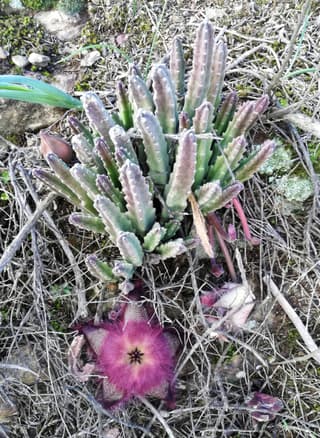
Starfish Flower
Stapelia hirsuta
Stapelia hirsuta is a striking South African succulent known for its velvety, four-angled stems and extraordinary star-shaped flowers that can reach up to 15 cm across. The flowers range from dark red to purple-brown and are covered in fine hairs, producing a foul odor to attract fly pollinators — a fascinating evolutionary adaptation. Native to the Cape Province of South Africa, it thrives in rocky, arid conditions and makes a rewarding houseplant for succulent enthusiasts.
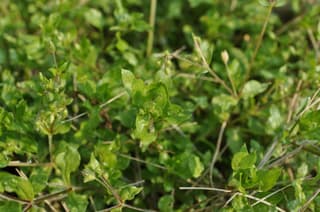
Common Chickweed
Stellaria
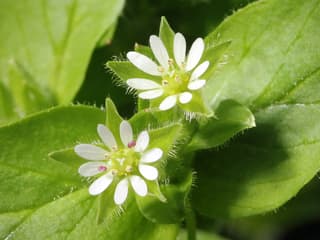
Stellaria is a genus of roughly 120 low-growing herbaceous plants in the carnation family (Caryophyllaceae), best known through its most common and widespread member, Stellaria media, or common chickweed. This sprawling, mat-forming annual produces tender oval leaves and tiny star-shaped white flowers (its genus name comes from the Latin "stella," meaning star). Chickweed thrives in cool, moist conditions and is one of the fastest-growing plants in temperate gardens, often flowering and setting seed within weeks of germination. It is naturalized nearly worldwide and is valued both as a nutritious wild edible and as a traditional skin-soothing herb, even though gardeners often treat it as a weed.
Chickweed
Stellaria media
Stellaria media, commonly called chickweed, is a low-growing, sprawling annual (or winter annual) native to Europe and now naturalized worldwide. It forms soft mats of small oval leaves and tiny white star-shaped flowers, thriving in cool, moist, disturbed soil such as garden beds, lawns, and greenhouses. Prized both as a cottage-garden ground cover and as one of the most popular wild edible and medicinal weeds, chickweed grows and flowers almost year-round in temperate climates.

Brain Cactus
Stenocactus phyllacanthus
Stenocactus phyllacanthus is a small, solitary, globose to short-cylindrical cactus native to the high-desert scrublands of central and northern Mexico (Aguascalientes, Guanajuato, Hidalgo, Jalisco, Nuevo León, Querétaro, San Luis Potosí and Zacatecas), typically found between 1,700 and 2,800 m elevation. Rarely exceeding 15 cm in height and 10 cm in diameter, it is prized by collectors for its dramatically wavy, paper-thin ribs crowned with dense tufts of fine spines. In spring and summer it bears funnel-shaped, yellowish-white flowers with brownish-red throats near the crown. Slow-growing and undemanding, it is one of the easiest Stenocactus species to bring into flower in cultivation.
Organ Pipe Cactus
Stenocereus
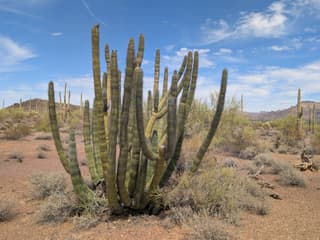
Stenocereus is a genus of large, tree-like columnar cacti native to the deserts of Mexico and the southwestern United States. The best-known species, Stenocereus thurberi (organ pipe cactus), forms clusters of slender, upright stems rising from a short trunk, resembling the pipes of a musical organ. Ribbed, spiny stems can reach up to 8 m tall and 3.5 m wide, producing white, night-blooming flowers followed by spiny, sweet edible fruit.
Mexican Organ Pipe Cactus
Stenocereus griseus
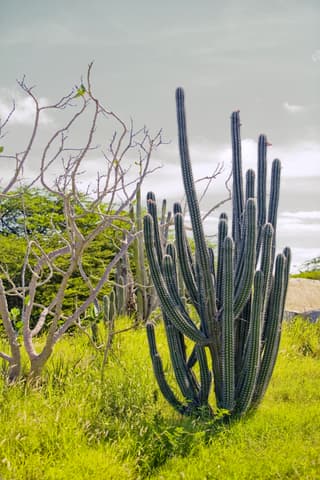
Stenocereus griseus, commonly known as the Mexican Organ Pipe Cactus or Dagger Cactus, is a tall columnar cactus native to Mexico and the Caribbean. It can grow up to 9 meters tall, producing white nocturnal flowers pollinated by bats and edible red fruits prized across the Caribbean. Extremely drought-tolerant, it thrives in arid landscapes and desert gardens.

Gray Ghost Organ Pipe Cactus
Stenocereus pruinosus
A slow-to-moderate growing Mexican columnar cactus with pale, gray-green branching stems dusted with a fine bloom (pruina) and covered in yellow spines, giving it a ghostly appearance. Native to arid regions of Mexico, it produces large, funnel-shaped white flowers that open at night in summer, followed by sweet, edible pitaya fruit prized locally.

St. Augustine Grass
Stenotaphrum secundatum
St. Augustine Grass (Stenotaphrum secundatum) is a fast-growing warm-season turfgrass native to the Gulf of Mexico region, widely used for residential and commercial lawns in tropical and subtropical climates. It forms a dense, vigorous carpet with good tolerance to partial shade and coastal salt exposure.
Elephant Foot Plant
Stephania
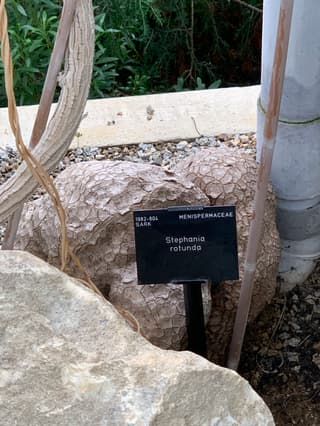
Stephania is a genus of caudiciform vines in the Menispermaceae family, native to the tropical forests of Southeast and East Asia. It is prized by collectors for its swollen, potato-like caudex, a woody, water-storing tuber that can grow to nearly a foot across over many decades. Each growing season, slender, twining vines emerge from the caudex, unfurling round, peltate leaves before dying back into dormancy when temperatures drop. Left largely untouched during its winter rest, the plant channels its energy into slowly thickening the caudex, making it as much a sculptural centerpiece as a houseplant.
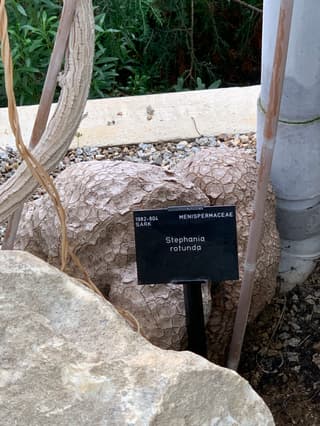
Stephania Erecta
Stephania erecta
Stephania erecta is a fascinating tropical plant native to Thailand and Southeast Asia, prized for its unique potato-shaped woody caudex (bulb) from which elegant, slender stems and peltate (shield-shaped) leaves emerge. The plant goes through a natural dormancy cycle, dropping its leaves in winter and re-sprouting vigorously in spring, making it a captivating conversation piece for any plant collector.
Find the Perfect Plant
Our plant guide helps you find ideal species for your experience level and time of year.
Browse by Difficulty, Season & More
Use the filters below to narrow this catalog by care difficulty, season, environment, or search directly by name. Each filter leads to a focused list tailored to your specific growing conditions.