Azalea Lace Bug and Other Azalea Pests: How to Spot and Treat Them
Azalea leaves stippled white on top with hard black specks underneath mean azalea lace bug, the most common azalea pest. Learn how to tell it apart from spider mites, when to treat, and what to use around pets.
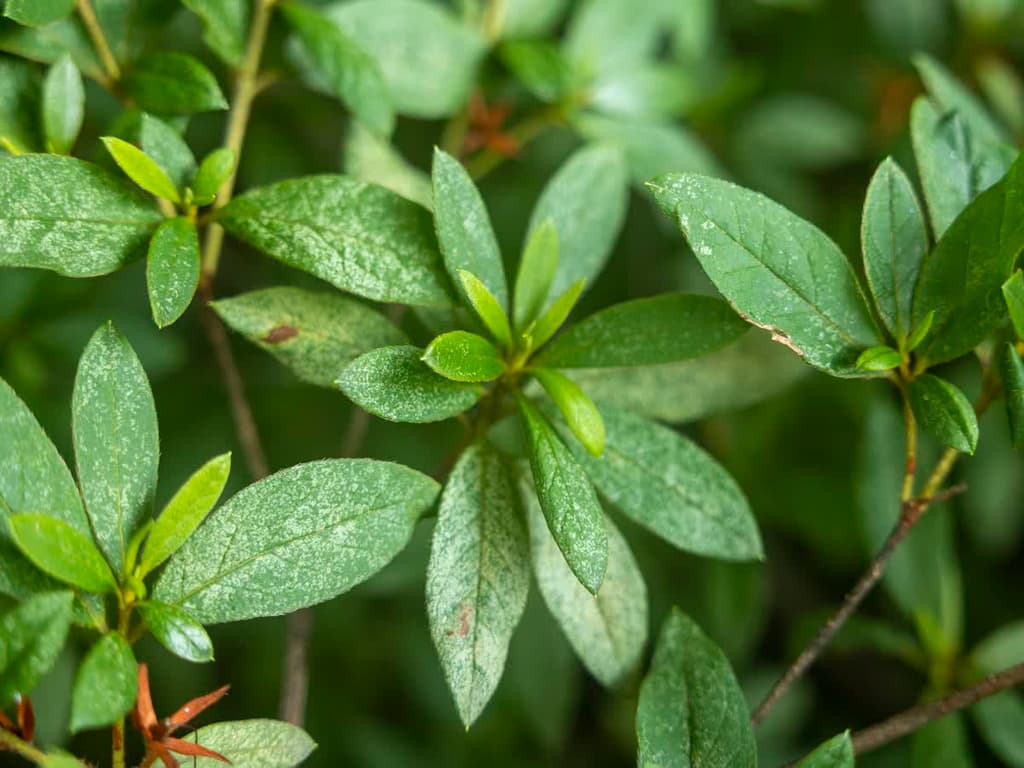
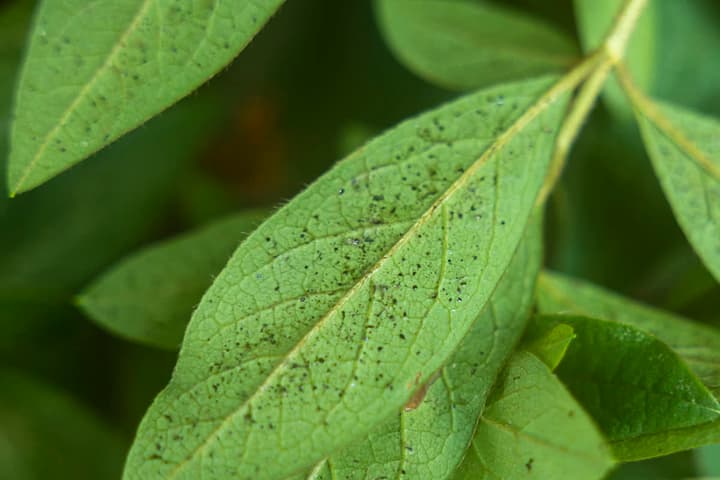
The azalea lace bug (Stephanitis pyrioides) is the most common of the azalea pests. On top, the leaf becomes stippled with white dots until it looks faded or silvery. Underneath, hard black specks appear, which are the insect's excrement.
An attacked azalea can recover if you act early. A leaf that has already become stippled will not turn green again. The plant, however, puts out clean new leaves if you control the insect before the next generation hatches. In Brazil, the time to act is spring, right after blooming: the spring generation causes the most damage to the foliage.
Quick summary:
Light stippling on top and hard black specks under the leaf indicate lace bugs.
Spider mites also stipple the leaf, but they do not leave black specks and usually leave fine webbing.
Treatment always goes on the underside of the leaf: a strong water spray, insecticidal soap, neem oil, or horticultural oil, repeated every 7–10 days in warm weather.
Which pest is on your azalea: identify it by the signs
Flip the leaf over before deciding anything. Almost all azalea pests live on the underside of the leaf, and what you see there sets them apart.
Top of the leaf | Underside of the leaf | Likely cause | First step |
|---|---|---|---|
White or yellow stippling, faded, silvery, or bronzed leaf | Hard black specks, insects with transparent wings, and shed skins | Azalea lace bug | Water spray and insecticidal soap on the underside |
Dull, grayish, or bronzed green | No black specks, fine webbing between leaves | Spider mite | White paper test |
Much finer stippling than lace bug damage | No black specks | Thrips | Magnifying glass on the underside and on flowers |
New leaf with curled edges, black layer on top | Tiny white insects that fly when shaken | Whitefly | Horticultural oil on the underside |
Yellowing leaf, sticky black layer | Nothing on the leaf; white waxy clusters in branch forks | Scale | Scrape off and prune the infested branch |
Distorted, sticky new growth | Soft insects clustered on new shoots | Aphid | Water spray |
Yellow between the veins, which stay green | Clean leaf | Iron deficiency (not a pest) | Check soil acidity |
The black speck from a lace bug is hard and dry, like a droplet of varnish. The sticky black coating is something else: it is sooty mold (a black fungus that grows on honeydew, the sugary liquid excreted by aphids, whiteflies, and scale insects).
Azalea lace bug
The azalea lace bug is an insect about 3 mm long that feeds on the underside of the leaf. The name comes from its transparent, lace-like wings with dark patches. According to the NC State Extension, in the United States it is the most frequently reported insect pest on garden plants.
How to recognize the lace bug and leaf damage
The adult is cream-colored, with its wings held flat over its body, and goes unnoticed unless you look closely. The nymph (the young insect, still wingless) hatches nearly transparent and soon turns black and spiny. The UF/IFAS publication describes the adult as 3 mm long and 1.5 mm wide.
The eggs are inserted into the leaf, along the midrib, on the underside. Each egg is covered by a drop of excrement that hardens like varnish and protects it. NC State has found up to 90 eggs on a single leaf.
Damage appears on top of the leaf, even though the insect feeds underneath. Each puncture empties out cells, creating a pale bleached spot. With repeated feeding, the leaf looks faded, silvery, and eventually bronzed. In severe infestations, leaves dry out and drop prematurely.
Lace bug or spider mite: the black specks make the call
Stippling from lace bugs and spider mites looks similar. What sets them apart is found under the leaf: spider mites do not leave hard black droppings, according to NC State. Lace bugs leave these specks and often the cast skins of nymphs attached to them.
To confirm mites, hold a sheet of white paper under a branch and tap the branch. Clemson Extension explains that crushed mites leave a red streak on the paper. Fine webbing between leaves is also a sign of mites.
Thrips (slender insects about 1 mm long) also stipple leaves. NC State describes lace bug damage as similar to thrips damage, but coarser. Very fine stippling without black specks underneath points to thrips.
The azalea lace bug occurs in Brazil
The first record in Brazil was published in 1997 by researchers from the Instituto Biológico de São Paulo, in the journal Arquivos do Instituto Biológico. The insect was found damaging azaleas in parks and gardens in the city of São Paulo.
The azalea lace bug is native to Japan. According to UF/IFAS, it spread worldwide alongside azaleas themselves through nursery trade. Before buying an azalea, inspect the underside of a few leaves: black specks underneath are a reason to pick another plant.
Life cycle and when to treat in Brazil
From egg to adult, the azalea lace bug takes 22 to 45 days between 69 °F and 89 °F (20.6 °C and 31.7 °C), according to UF/IFAS. The warmer it gets, the faster they develop. Adults live 1 to 4 months, and a female lays over 300 eggs, at a rate of 5 to 7 per day.
In the US, NC State counts at least 2 generations per year in North Carolina. UF/IFAS counts 3 to 5 in Florida, which is warmer. Eggs overwinter inside the leaf, protected by the varnish.
American fact sheets tell you to treat in April and May, which is spring there. The rule behind the date is the season: NC State notes that spring generations cause the most damage. In Brazil, spring runs from September to November. For azaleas, which bloom in fall and winter, this is right after flowering.
Spring (September to November): the primary window. Check the underside of new leaves weekly and treat at the earliest signs.
Summer and fall (December to May): continue weekly inspections, which UF/IFAS recommends across all three seasons. If you spot the insect, treat as in spring.
Winter (June to August): eggs are protected beneath their varnish coating, and treatments yield poor results, according to NC State.
How to treat azalea lace bugs step by step
You will need a basic hand lens, a spray bottle, and a garden hose or showerhead. Start with the gentlest method and only escalate to the next if the insect keeps appearing.
Confirm the presence of lace bugs. Flip 5 to 10 leaves across different branches and use your hand lens to look for lace-winged adults, black nymphs, and black fecal specks.
Rinse the underside of the leaves with a strong jet of water. UF/IFAS suggests using a water spray to dislodge insects and potentially kill some nymphs. Surviving bugs will continue feeding. Inspect the underside the following day, and if insects remain, move to step 3.
Spray insecticidal soap, neem oil, or horticultural oil on the underside of the leaves. Insecticidal soap is a potassium salt of fatty acids sold for plants. Horticultural oil is a refined oil formulated for plant foliage. All three work only on contact with the pest, and UF/IFAS stresses targeting the leaf undersides. Use horticultural oil only when temperatures stay between 45 °F and 85 °F (7 °C and 29 °C), according to Clemson. Above 85 °F (29 °C), opt for soap.
Repeat the soap or oil. According to NC State's azalea pest calendar, reapply after 7 to 10 days in warm weather or 10 to 14 days in cool weather. For the azalea lace bug, NC State recommends 2 applications.
Prune heavily damaged branches. Clemson includes pruning infested branches as part of management. Remove only branches where almost all leaves have turned silvery.
The repeat application exists because of the eggs. NC State states that soap and oil kill nymphs and adults, but not the eggs protected inside the leaf. Meanwhile, Oregon State University says horticultural oil can smother eggs. This guide follows NC State, whose factsheet was revised in 2023: soap and oil do not kill the egg, nor do they leave protection on the leaf. That is why the second application catches nymphs that hatched after the first.
Systemic insecticides (absorbed by roots and moved to leaves) exist that control lace bugs, according to NC State. On azaleas, some insecticides carry an unwanted side effect.
Clemson recommends avoiding two active ingredients: soil-applied imidacloprid and foliar sprays of carbaryl. Both trigger spider mite outbreaks. NC State also notes that harsh chemical insecticides eliminate the lace bug's natural predators. For azaleas at home, start with water and soap.
Do stippled leaves turn green again? Can the azalea be saved?
Stippled leaves do not regain their green color. UF/IFAS explains that early-season damage remains on the foliage for the rest of the growing season. The plant, however, can recover: new leaves that emerge after control measures will be clean.
The real risk is repeated, severe attacks. A review from the University of Georgia notes reports of plants dying in severe infestations. Do not cut back the entire azalea: new growth is what shows whether control measures worked.
How to prevent azalea lace bugs
Hot sun favors lace bugs. Oregon State reports that azaleas planted in full sun suffer nearly twice as many infestations. UF/IFAS confirms damage is worse in sunny exposures and that partial shade reduces attacks.
Give your azalea partial shade. A location with partial shade reduces pest pressure, according to UF/IFAS.
Keep your azalea well watered. Oregon State notes that drought-stressed plants are more vulnerable. UF/IFAS recommends adequate watering and fertilizing to reduce plant stress.
Preserve natural predators. Spiders, green lacewings (slender green insects with transparent wings), and predatory bugs consume lace bugs, according to Clemson.
Inspect every new purchase. The pest frequently enters gardens on infested nursery stock bearing leaf-embedded eggs.
There are azalea varieties more resistant to the lace bug, but published tests cover varieties sold in the US. There is no tested list for varieties sold in Brazil.
Other azalea pests
Azalea lace bugs and southern red mites are the two pests NC State's calendar flags as major on azaleas. Whiteflies and azalea bark scale appear as occasional pests.
Spider mites
Spider mites are spider relatives under 0.5 mm in size, barely visible to the naked eye. They live on leaf undersides, leaving the foliage dull green, grayish, or bronzed. Heavy feeding produces fine webbing between leaves.
UF/IFAS cites two common species on azaleas. The southern red mite (Oligonychus ilicis) prefers cool, humid weather and appears in spring and fall. The twospotted spider mite (Tetranychus urticae) prefers hot, dry weather.
Insecticidal soap and horticultural oil control spider mites, according to UF/IFAS. Clemson recommends a 2% horticultural oil mixture (20 mL per liter of water), applied when temperatures remain between 45 °F and 85 °F (7 °C and 29 °C).
Whiteflies
The azalea whitefly (Pealius azaleae) primarily attacks hairy-leaf azaleas, according to NC State. The adult looks like a tiny white moth and flies when you shake the branch. In a severe infestation, the edges of new leaves curl, and honeydew covers the leaf with sooty mold.
NC State recommends horticultural oil on the underside of the leaf: one application in the fall and another in the spring, after the new growth emerges. The page on whiteflies on azaleas summarizes the signs.
Scale
The most reported scale insect on azaleas is azalea bark scale (Eriococcus azaleae). Clemson describes it as a white waxy sac roughly 3 mm long containing a dark red female inside. The sac settles in branch forks, where stems split in two. Adults remain stationary on wood, and only newly hatched crawlers move.
Small infestations can be scraped off with a fingernail or a brush. Heavily infested branches should be pruned and discarded. Clemson recommends 2% horticultural oil before bud break and insecticidal soap during active growth against crawlers. The scale insect guide shows other types and how to remove each one.
Aphids
Aphids are soft-bodied insects 1.5 mm to 3 mm long that cluster on tender shoots and flower buds. They excrete honeydew, which attracts ants and promotes sooty mold. NC State's azalea pest calendar does not list aphids.
A jet of water on the shoot resolves most cases. The guide on aphids on plants explains the step-by-step process with insecticidal soap.
When yellow leaves are not a pest problem
Yellow new leaves with green veins, and a clean underside, indicate iron deficiency. UF/IFAS points to slightly acidic soil (pH above 6.5) as a common cause: in it, roots absorb iron poorly. Azaleas grow best with a pH between 5.0 and 5.5. The page on iron deficiency in azaleas explains how to correct it.
Oregon State offers an important warning: on rhododendrons, severe lace bug feeding can mimic iron deficiency, causing yellow leaves with green veins. The difference lies on the underside. Lace bug feeding leaves hard black spots; iron deficiency leaves the leaf clean.
How to treat azaleas when you have dogs or cats
The azalea itself is toxic to dogs and cats. The ASPCA lists vomiting, diarrhea, weakness, and heart failure among the signs of poisoning. The toxic substance is grayanotoxin, present in the plant. Keep the animal away from the azalea, with or without pests.
A natural product is not the same as a safe product for animals. The Oregon State pesticide information center (NPIC) records reactions in cats treated with neem oil for fleas. Signs included salivation, tremors, and seizures. Some of these cats died.
With pets at home, start with a jet of water and prune infested branches. If you have a cat at home, do not use neem oil. If you use insecticidal soap or horticultural oil, follow the label and keep the animal out of the room until the leaves dry. The guide to toxic plants for pets lists other houseplants that require the same care.
Frequently asked questions
Do azalea lace bugs spread to other houseplants?
Not to most of them. UF/IFAS describes the lace bug as specific to azaleas, and NC State adds rhododendrons and mountain laurel (Kalmia) among vulnerable hosts. A pothos or fern sitting nearby is not at risk. Another azalea or rhododendron close by definitely is: check the undersides of their foliage too.
Does pruning the entire azalea to the ground cure lace bugs?
No. Eggs stay hidden within remaining leaves, and heavy shearing robs the plant of functional foliage it needs to survive. Prune only branches with mostly bleached, silvery leaves. On the rest of the shrub, spray the underside of foliage with a hose blast and insecticidal soap, repeating every 7–10 days in warm weather.
Can you treat azalea lace bugs in autumn?
You can, but results are lower. In fall and winter, the eggs are protected by the varnish, and NC State notes that control becomes harder during this period. In Brazil, fall runs from March to May. If you saw the insect during these months, wash the leaves and prepare the main treatment for September.
Do the black specks under the leaves ever wash off?
The black specks are hardened fecal deposits that coat lace bug eggs. No research shows that scraping them off helps, so leave old leaves undisturbed. What matters is new growth: if fresh foliage emerges clean without stippling after your treatments, your control worked.
The first step for your azalea
Flip a stippled leaf over today. Hard black specks underneath indicate lace bugs: wash the undersides of the leaves and apply insecticidal soap every 7–10 days. Dull green leaves accompanied by fine webbing without black spots point to spider mites: perform the white paper test. If you are unsure between the two, snap a photo of the leaf underside in the Bloom app (iOS, diagnostics included in the Premium plan). The app pinpoints the most likely culprit.
The azalea care profile covers lighting, watering, and soil requirements. For other plants in your home, our guide to common houseplant pests explains how to identify each insect by its telltale signs.
Related articles
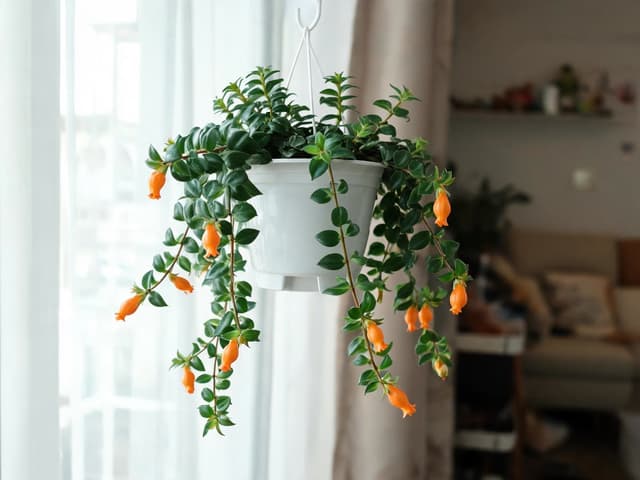
How to Care for a Goldfish Plant: Light, Watering, and Blooms
How to care for a goldfish plant: bright light without strong sun, water when the soil surface dries, and humid air. Learn how to tell a Nematanthus from a Columnea, why it drops leaves, and how to get it to bloom again.
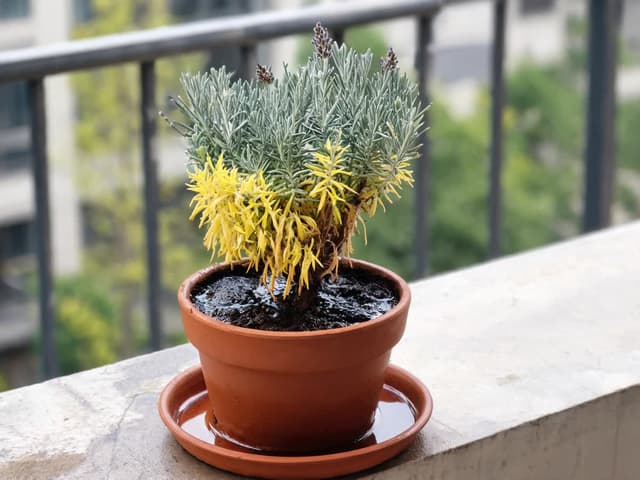
Lavender Leaves Turning Yellow: Where the Yellowing Starts Shows the Cause
Lower leaves turning yellow with moist soil means overwatered roots, the most common cause. Old leaves drying one by one on woody stems is normal. Take the stem and root test, see if your plant can still be saved, and find out what to do today.
How to Propagate Lavender: Where to Cut and Why Cuttings Rot
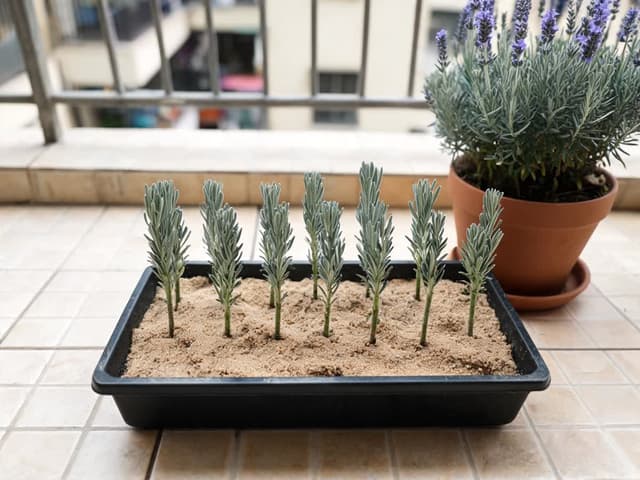
A lavender cutting comes from a non-flowering branch tip, about 4 inches long, planted in sandy soil that never stays soggy. Learn where to cut, rooting times, seasonality in Brazil, and what to do if the base turns black.