Bone Meal for Plants: Uses and Application Rates
Bone meal provides slow-release phosphorus and calcium with almost no nitrogen. Check pot doses, the required soil conditions, and three issues it cannot fix.
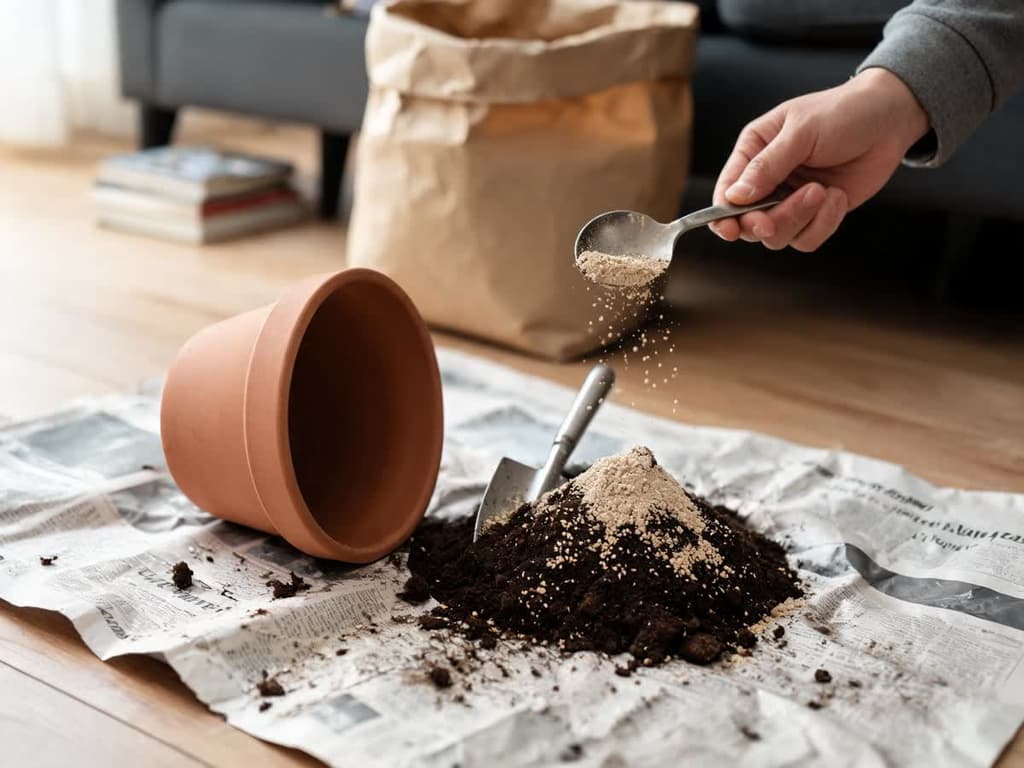
Bone meal for plants provides slow-release phosphorus and calcium, with little to no nitrogen. You mix it into the soil when planting or repotting, and it nourishes roots, blooms, and bulbs over several months. It does not fix yellow leaves, and it will not kickstart growth in a stalled plant.
What it provides: phosphorus and calcium, released gradually.
What it does not provide: nitrogen and potassium, the two nutrients a stalled plant usually needs.
How much and when: a single application, mixed into the soil, at planting or repotting time.
The condition: its phosphorus only dissolves in acidic soil, and pH measures how acidic or alkaline soil is. Above pH 7, it stays locked in the pot and never enters the plant.
What bone meal is and what it contains
Bone meal is ground animal bone sold as fertilizer. It supplies phosphorus and calcium in slow-release form. The nutrients release gradually over months instead of all at once. The typical analysis is 3-15-0, according to Colorado State University Extension (CMG GardenNotes #234).
These three numbers appear on every fertilizer label and always indicate the percentages of nitrogen, phosphorus, and potassium, in that exact order. In bone meal, only the middle number is high. A standard maintenance fertilizer features all three numbers in balanced proportions. Reading the three numbers on the label lets you tell a complete fertilizer apart from a targeted supplement like this one.
In Brazil, what is sold under this name covers two different products, with different legal guarantees. Calcined is meal burned in a furnace, and autoclaved is meal cooked with pressurized steam. Phosphorus appears measured as phosphorus pentoxide, which is the form required by law on the label. Organic carbon is the residual protein and fat left over from the bone.
The guaranteed minimums for both are in Annex I of Normative Instruction 39 from the Ministry of Agriculture, updated on October 31, 2019 (MAPA).
Minimum guarantee | Calcined bone meal | Steamed bone meal |
|---|---|---|
Phosphorus (P2O5) | 18% | 9% |
Nitrogen | no guarantee | 1% |
Calcium | 15% | 14% |
Organic carbon | none | 3% or more |
Production method | burning and grinding bone | steam above 140 °C, above 7 bar, for at least 3 hours |
Calcined bone meal contains twice the phosphorus of steamed bone meal. Both supply nearly identical calcium levels. For nitrogen, calcined bone meal carries no guaranteed minimum, while steamed bone meal guarantees only 1%.
The law requires testing phosphorus in bone meal using 2% citric acid, rather than water, unlike standard mineral fertilizers. The reason lies in the process itself: bone meal does not dissolve in water.
Bone meal phosphorus only dissolves in acidic soil
Bone meal is calcium phosphate. Calcium phosphate requires an acidic solution to break down into plant-available phosphorus that roots can take in. Soil pH measures how acidic or alkaline the medium is. On this scale, 7 is neutral: below 7 is acidic, and above 7 is alkaline.
The guidance from Colorado State University Extension leaves no doubt. Phosphorus from bone meal only becomes available to plants in soils with a pH below 7.0.
The phosphate fertilizer factsheet from the same university repeats the instruction. Applying it to soil with a pH below 7 provides the acidic solution that releases phosphorus in a form that roots absorb (CSU Extension 0.569, revised in August 2024).
That source is from Colorado, where the soil is naturally alkaline, which is why the warning there is serious. In Brazil, this condition is usually already met. Embrapa notes that "Brazilian soils are naturally acidic" due to their advanced stage of weathering and the leaching of nutrients by rain (Embrapa Rice and Beans, updated in April 2026).
Bagged potting mixes formulated with bark and peat moss are also acidic. Potting mix refers to the ready-to-use medium sold in bags.
Soil additives are what break this rule. Three common materials drive container soil toward an alkaline pH:
wood ash, which acts like agricultural lime, only faster;
agricultural lime, the soil conditioner sold specifically for that purpose;
ground eggshells applied repeatedly in large amounts.
Wood ash comes up most often, because it circulates as a home remedy alongside bone meal itself. The University of New Hampshire Extension measures wood ash neutralizing power at 25% to 59% of pure limestone. The same fact sheet notes that wood ash is more soluble and more reactive than ground limestone, and it changes pH faster (UNH Cooperative Extension).
Adding a spoonful of wood ash with a spoonful of bone meal creates alkaline soil. That alkalinity halts phosphorus release from the bone meal.
If you have never added agricultural lime, wood ash, or builders lime to your container, the soil is acidic, and the phosphorus will release. If you have, bone meal is the wrong phosphorus source for that pot.
When bone meal is not the answer
Three distinct problems drive people to buy bone meal: yellow foliage, stopped growth, and dry leaf tips. Bone meal helps with none of these three, and in two cases it worsens the problem. Each issue displays a specific symptom, and that symptom identifies what is happening.
Yellow leaves. When the yellowing is uniform and starts on the lower leaves, gradually moving up, the missing nutrient is nitrogen. The University of California's integrated pest management program describes this condition as slow growth and uniform yellowing of older leaves (UC IPM). Bone meal contains between 0% and 3% nitrogen, so it does not fix this.
Too much phosphorus produces yellowing on its own. Horticulturist Linda Chalker-Scott from Washington State University writes that phosphorus competes with iron and manganese uptake by the roots. A lack of these two micronutrients causes yellowing between leaf veins (The Myth of Phosphate Fertilizer).
Iron is immobile within the plant, so this yellowing appears on new leaves at the top. Where the yellowing starts on the plant separates one cause from another. The yellowing map by height and pattern confirms the diagnosis before you buy anything.
A plant stalled for months. A pothos that has not produced a new leaf in two years does not lack phosphorus. Chalker-Scott explains why the math does not add up: replenishing a missing nutrient restores normal growth, and no mineral speeds up a plant beyond its natural pace (The Myth of Beneficial Bone Meal, February 2008). A stalled indoor plant almost always gets too little light, and no fertilizer replaces light.
In that same publication on phosphate, Chalker-Scott notes that nitrogen deficiency impairs a plant's ability to take up phosphorus. Supplying nitrogen significantly enhances that uptake. Giving phosphorus to a nitrogen-starved plant offers the exact nutrient it cannot use at that moment.
Dry, brown leaf tips. On a fern, brown tips point to dry air, saline water, or cramped roots, not nutrient deficiency. Fertilizing an already stressed plant adds salts to the soil and worsens the damage. Before feeding, identify the species and check your plant's symptoms: the Bloom app identifies plants from photos and, on the Premium plan, diagnoses symptoms to tell you what is wrong.
In all three situations, bone meal feeds a plant that does not need phosphorus.
Bone meal for potted plants: application rates and timing
Apply it once, thoroughly mixed into the potting mix, during planting or repotting. Never sprinkle it onto the soil surface of an established potted plant. Phosphorus is largely immobile in soil: it stays right where it lands, out of reach of root systems below.
Where | How much | Source of rate |
|---|---|---|
Garden bed | around 490 g per square meter, worked into the soil | measured: 10 pounds per 100 square feet, CSU Extension |
Container, with a legible label | whatever the label says | IN 39 requires the manufacturer to include the dosage on the packaging |
Container, without a label | 1 level tablespoon in pots up to 8 inches (20 cm) wide, 2 in larger pots | calculated from garden bed rates, not a measured container trial |
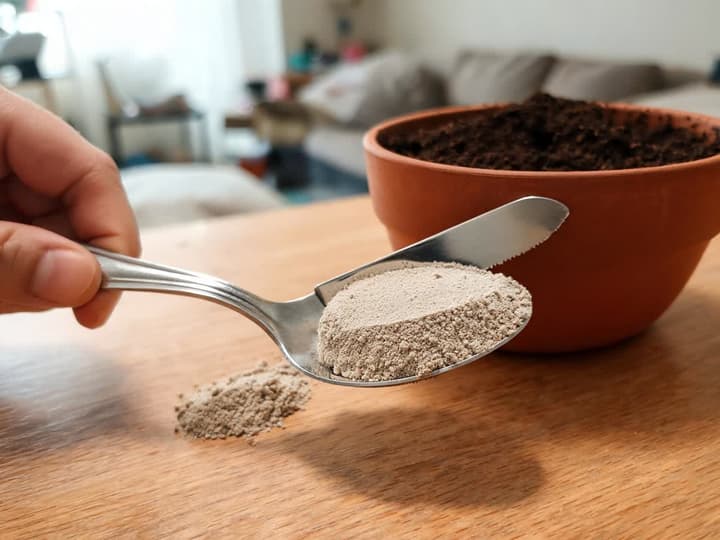
No university extension publishes bone meal application rates specifically for indoor containers. Available measured rates apply only to outdoor garden beds. The tablespoon rate is derived mathematically from bed applications and serves only as a fallback when the product label is missing.
As for frequency, common advice ranges from every 30 days to once per growing season. The growing season is the window of active growth, typically spring and summer. Because a slow-release amendment is still breaking down after a month, monthly reapplications pile fresh doses onto undigested material.
This article recommends a single application, because the harms of excess phosphorus are well-documented while the benefits of repeated feeding are not. Chalker-Scott details the mechanism: under low phosphorus levels, roots release organic acids that enable mycorrhizal colonization, whereas high phosphorus shuts off those exudates and blocks the relationship entirely. Mycorrhizae are root-fungus partnerships that expand a plant's access to water and nutrients. Her advice is to run a soil test before adding any amendments.
In practice: incorporate bone meal when planting or repotting, and only reapply during the following growing season if the plant is actively blooming or forming bulbs. After mixing bone meal into the soil, water thoroughly until moisture drains freely from the pot's bottom drainage holes.
Raw, steamed, or calcined: which type do you have?
The smell tells you what you bought. Steamed bone meal retains 3% or more organic carbon by legal definition, and these residual proteins and fats produce a distinct animal scent. Calcined bone meal has been oven-fired until only mineral ash remains, which doubles its phosphorus concentration and leaves it virtually odorless.
Calcined | Steamed | |
|---|---|---|
Scent | faint | strong |
Phosphorus | 18% | 9% |
Release speed | faster | slower |
Pest and maggot attraction | low | higher |
Raw bone is not a registered fertilizer in Brazil and should not go into pots. It rots, attracts animals and insects, and plants take a long time to get anything from it.
Making bone meal at home is technically possible and often recommended using barbecue scraps. What open-flame burning lacks is temperature control. Commercial steam autoclaving is strictly defined by law: pressurized steam above 140 °C, at over 7 bar, for at least 3 hours.
Without that precision, what sifts through your mesh might be mineral ash or bone that is charred outside while remaining raw inside. If you want to repurpose leftover bones, composting offers a much safer, more predictable approach.
Bone meal indoors: dogs, cats, and fungus gnats
Dogs are the real risk, because bone meal is appetizing to them. The ASPCA poison control center notes that fertilizers contain bone meal, fish meal, or blood meal. According to the center, dogs find the contents of these bags palatable and often tear open the packaging to eat them (ASPCA Animal Poison Control). According to the same source, most ingestions cause mild digestive upset, but some animals eat so much that stomach distension and gastric torsion become concerns.
Pet Poison Helpline describes a second outcome. Veterinary technician Jo Marshall writes that the meal clumps in the stomach and forms a bezoar. A bezoar is a mass of indigestible material, and it causes an obstruction that typically requires surgery to remove. Marshall also cites the risk of pancreatitis when ingestion is large (Pet Poison Helpline).
Regarding cats, published literature focuses almost exclusively on dogs. Neither veterinary poison center cites cases or mechanisms in cats, though that does not guarantee safety. If your cat digs in houseplants, take the same precautions as you would with a dog: blend the amendment deep into the potting mix during repotting, leave zero dust on the soil surface, and store the sealed bag securely out of reach.
Fungus gnats pose a more predictable issue that depends directly on the bone meal formulation you buy. Fungus gnat larvae feed on decaying organic matter. Adult females seek out egg-laying sites by homing in on the scent of damp, organic-rich soil.
Steamed bone meal adds organic matter to the soil, whereas calcined bone meal contains no protein or fat. Persistent surface moisture is what determines whether fungus gnats take hold. Mixing the meal deep into the root zone instead of top-dressing eliminates that surface attraction.
Does bone meal make plants bloom?
Not purely through phosphorus. Phosphorus is necessary for blooming, just as it is for every metabolic function a plant performs. Pumping in more phosphorus than a plant needs will not trigger extra flowers, just as overeating will not make an adult taller.
Three species previously examined on this blog show the same dynamic through different responses. In desert roses, the only published fertilizer trial tested a formula with 18% nitrogen against 2.6% phosphorus. Higher overall application rates of that fertilizer produced more flowers, not high phosphorus.
Thanksgiving cactus shows the exact opposite, and that response is verified. A 17-month experiment documented that phosphorus directly promotes flowering in Thanksgiving cactus when you switch formulas as buds initiate.
For roses, sources disagree on bone meal itself. The University of Illinois Extension suggests one cup in the planting hole. Chalker-Scott responds that phosphorus and calcium are rarely deficient in non-agricultural soil.
Soil chemistry explains all three cases. When soil lacks phosphorus, restoring adequate levels brings back normal flowering. When phosphorus is already sufficient, adding more will not yield a single extra bloom and actively damages beneficial mycorrhizae.
Frequently asked questions
Which fertilizer is better, castor bean meal or bone meal?
They solve opposite problems: castor bean meal provides nitrogen, and bone meal provides phosphorus. Castor bean meal requires a warning. Embrapa Cotton notes that "the toxicity of the meal is well known due to the presence of certain constituents, such as ricin" (Documentos 217). Mixing the two combines the scent that attracts dogs with a material toxic to them.
Which plants benefit from bone meal?
Plants that produce flowers, fruit, or bulbs, applied specifically when planting or repotting. It offers little benefit to indoor foliage plants, which demand more nitrogen. For succulents and cacti, find targeted advice in fertilizer for succulents. For peace lily and palms, each plant requires a different fertilizer formula.
How often can I apply bone meal to plants?
Once per planting or repotting. If the plant is actively flowering or developing bulbs, you can apply it at most once more during the following growing season. Monthly applications pile new phosphorus onto residues still breaking down from earlier treatments. Excess buildup impedes iron and manganese uptake by the root system.
Can you apply bone meal directly to a plant?
Never apply it directly to foliage or against plant stems. It belongs mixed into the potting mix before placing the root ball into the pot or planting hole. Phosphorus barely travels through soil. Powder scattered across the surface sits where it falls, unreachable by deeper roots and accessible to curious dogs.
How long does bone meal take to work?
Months, which is exactly how slow-release amendments are designed to function. A slow-release profile means nutrients release gradually over an entire season. If you need a visible response within weeks, choose a water-soluble fertilizer diluted in your watering can rather than bone meal.
What to do with the bag you have
Bone meal provides phosphorus and calcium, never nitrogen. You mix it into the soil once during planting or repotting, and never scatter it on top of an already planted plant. Its phosphorus only dissolves in acidic soil, which is the norm in Brazil.
The exception is any container where you added wood ash or agricultural lime. Bone meal cannot fix yellow leaves, stalled growth, or dry leaf tips, which are three problems with completely different causes.
Don't know what plant is in the pot or what's wrong with it? Bloom identifies the species from a photo and sets up its care schedule. The app is for iPhone and has a free version with 2 identifications per month. On Premium, it compares the photo of the symptom and tells you what is wrong with the plant before you buy fertilizer.
Related articles
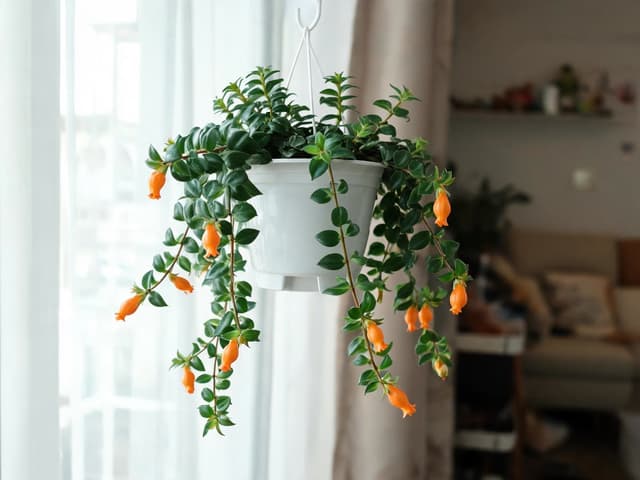
How to Care for a Goldfish Plant: Light, Watering, and Blooms
How to care for a goldfish plant: bright light without strong sun, water when the soil surface dries, and humid air. Learn how to tell a Nematanthus from a Columnea, why it drops leaves, and how to get it to bloom again.
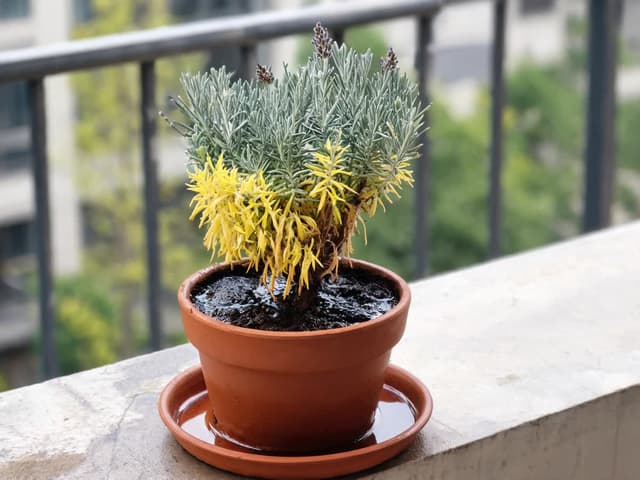
Lavender Leaves Turning Yellow: Where the Yellowing Starts Shows the Cause
Lower leaves turning yellow with moist soil means overwatered roots, the most common cause. Old leaves drying one by one on woody stems is normal. Take the stem and root test, see if your plant can still be saved, and find out what to do today.
How to Propagate Lavender: Where to Cut and Why Cuttings Rot
A lavender cutting comes from a non-flowering branch tip, about 4 inches long, planted in sandy soil that never stays soggy. Learn where to cut, rooting times, seasonality in Brazil, and what to do if the base turns black.