Succulent Fertilizer: How to Feed, Dilute, and When to Skip It
Succulents need very little fertilizer, but they do need some. In pots, soil nutrients eventually run out. The real danger is overfeeding. Learn how to dilute, how often to apply, and when fertilizing actually hurts your plants.

A standard liquid indoor plant fertilizer, diluted to half or a quarter of the strength recommended on the label, works for almost every situation. When choosing a succulent fertilizer, the dosage matters much more than the exact chemical formula.
The Iowa State University Extension is literal about this. Aaron Steil writes that "most succulents need little fertilizer to thrive." His recommendation is to use a general-purpose product in the spring and summer. The dose should be "half or one-quarter of the recommended rate" (revisado em dezembro de 2024).
Once you have the dilution down, you only need to get two more things right: how often to apply it and when your plant is actually in its active growing phase.
Quick summary:
The dose matters more than the formula. A 10-10-10 NPK fertilizer at a quarter strength delivers less nitrogen than a 4-14-8 formula at full strength. Start by diluting what you have, not by buying something new.
Concrete numbers: If the label calls for 5 mL per liter of water, use 1.25 to 2.5 mL instead. Keep this same proportion, regardless of the unit of measurement on your bottle.
Frequency: Feed every 3 to 4 waterings during the growing season. This averages out to 2 or 3 feedings per season, not once every two weeks.
Too much nitrogen is the classic mistake. It forces weak, watery growth, resulting in large, floppy leaves, leggy stems, and tissue that rots easily.
The growing season might not be when you think. Many common succulents go dormant during the heat of the summer, not the cold of winter.
There are six situations where you should never fertilize. Newly purchased plants and recently repotted plants are two of them.
Do succulents need fertilizer?
Yes, but very little. The confusion comes from a half-truth: succulents evolved in poor soils and survive on minimal nutrients. This leads many people to think they never need fertilizer. If they are planted in the ground, that is mostly true.
In a pot, it is a different story. Pots are closed environments. Roots can only reach what is inside that specific volume of soil. There is no rain or fresh organic matter coming in to replenish nutrients.
Nursery soil comes pre-loaded with an initial charge of nutrients. This is why plants do so well during their first few months at home without any help. Eventually, those nutrients run out, and the plant starts drawing from an account that no one is refilling.
The difference is how fast that account empties. A tomato plant in the same size pot grows fast, needs water daily, and loses nutrients through the drainage hole with every watering, exhausting its soil in weeks. A succulent grows slowly, gets watered every two or three weeks, and consumes very little, taking seasons to reach the same point.
This is why two or three highly diluted feedings per growing season are more than enough. Fertilizing every two weeks is far too much for these plants.
Choosing a succulent fertilizer: Dose matters more than formula
The three numbers on the packaging represent the primary macronutrients, always in the NPK order: nitrogen, phosphorus, and potassium. Nitrogen drives leaf and stem growth, phosphorus supports roots and blooms, and potassium regulates water retention and overall resilience.
Why excess nitrogen ruins succulents. These plants evolved for nutrient-poor soils and slow growth. When given too much nitrogen, they try to use it, producing new tissue quickly. Tissue produced too fast ends up watery and weak.
The result is large, soft leaves instead of a tight, firm shape, with wider gaps along the stem. The rosette, the circular arrangement of leaves at the center, loses its form. The plant can easily split and rot at the first sign of overwatering.
The issue is excess, not the nutrient itself. Without any nitrogen, the plant becomes pale and completely stops growing.

None of this requires a specialty succulent formula. Dilution solves the problem.
Fertilizer Type | Dose for Succulents | Frequency | When to Use |
|---|---|---|---|
Standard liquid fertilizer (most common) | Half to a quarter of the label recommendation | Every 3 to 4 waterings, only during the growing season | The standard choice. Works for almost every case and allows you to control the dose precisely. |
Cactus and succulent liquid fertilizer | Half of the label recommendation | Every 3 to 4 waterings | Already less concentrated. You should still dilute it, as labels often assume commercial nursery conditions rather than a windowsill. |
Slow-release pellets (like Osmocote) | Half of the recommended amount, applied to the soil surface | One application per season | Convenient for large collections. Less ideal for beginners, as you cannot undo the application once mixed in. |
Formulated organic fertilizers (like Bokashi) | According to the package directions | 1 to 2 times per season | A good option if you want organic nutrients with a predictable NPK ratio. |
Worm castings | Not recommended for potted succulents | Never | Worm castings retain moisture, which is the opposite of what succulent soil needs to do. |
When a low-nitrogen formula makes sense. This is helpful in two specific scenarios. During blooming, a fertilizer with low nitrogen and high phosphorus, like a 4-14-8 or 4-14-18, is more useful than a balanced one. It is also helpful if your plant is already stretching and softening, as it avoids worsening the issue. Outside of these situations, standard fertilizer diluted well does the job.
The most common case. Echeveria is one of the most widely grown rosette succulents, and its care serves as a good baseline for the rest of the group:
How to dilute and apply fertilizer, step by step
1. Calculate your dilution. Cut the recommended dose on the label in half or by three-quarters. If it calls for 5 mL per liter of water, use 1.25 to 2.5 mL instead. If you are unsure, start with a quarter strength. You can always increase it next time, but you cannot remove fertilizer once it is in the pot.
2. Wet the soil first. Never apply fertilizer to dry soil. On dehydrated roots, a concentrated solution can burn the roots instead of feeding them. Water with plain water first, wait a few hours, and then apply your diluted fertilizer solution.
3. Apply to the soil, never the rosette. Standing water between leaves is already a rot risk with plain water. With dissolved fertilizer salts, it can cause chemical burns and rot. Pour directly onto the soil surface near the edge of the pot, keeping it away from the main stem.
4. Let it drain. Apply the solution until it runs out of the drainage holes, then empty the saucer. This flushing action carries away excess salts, preventing buildup in the soil.
5. Water after applying dry or slow-release granules. Without water, the granules cannot release any nutrients, and the fertilizer will not work.
How often to fertilize succulents
The Iowa State extension recommends applying soluble fertilizer "every 3 to 4 waterings" during active growth. This is the best way to track it because it aligns with your plant's actual watering schedule rather than a calendar date.
A succulent in a medium pot with good light usually needs water every 14 to 21 days. At that rate, 3 to 4 waterings span anywhere from six weeks to three months. In practice, this means fertilizing only two or three times during the entire growing season.
If you do not know how often to water your plant, solve that first, as fertilizing depends on it. You can find the method in how often to water succulents.
Fertilizing every 15 days is a schedule meant for fast-growing plants, and it does not work here. For a succulent, that frequency delivers far more nutrients than the plant can use, leaving the excess to build up in the soil.
When succulents actually grow (and why "fertilize in spring" can be wrong)
The general rule works for most common nursery succulents: fertilize in spring and summer, and stop in fall and winter. This is the standard advice in our succulent care guide. However, there is a major exception, as many species do the exact opposite.
Aeonium, Haworthia, Gasteria, Dudleya, and several Crassula species grow during cooler weather. They go dormant during the heat of summer, meaning they stop growing and live off their reserves. During this time, they may close their rosettes, stop producing new leaves, and drop lower leaves.
The roots of a dormant plant absorb very little water or nutrients. Any fertilizer applied during this time sits in the soil as excess salt, which can burn the roots when regular watering resumes.
An example from this group. The zebra Haworthia is one of the most common houseplants:
You do not need to memorize a long list of plant genera. Just watch your plant. If it is putting out new leaves, it is growing and can accept fertilizer. If it has not changed in weeks and the rosette is tightly closed, it is dormant, and you should wait. New growth is your cue; the calendar month is just a guess.
If you are not sure what species you have, Bloom can identify it from a photo on iOS. This identification will tell you whether your plant's growing window is in summer or winter.
When to skip fertilizing
In these six situations, fertilizing will only harm your plant.
1. Newly purchased plants. Nursery soil is pre-loaded with enough nutrients to last for months. Fertilizing too soon simply adds unnecessary salts to the pot. Wait at least one full growing season.
2. Recently repotted plants. There are two reasons to wait here. Fresh potting soil contains its own nutrients, and disturbed roots take weeks to recover and absorb nutrients properly. Wait four to six weeks, or until you see new leaf growth.
3. Dormant plants. Resting roots do not absorb nutrients. Any fertilizer applied will sit in the soil as excess salt rather than promoting growth.
4. Sick plants or those with damaged roots. Fertilizer is not medicine. On rotted or damaged roots, a concentrated nutrient solution will accelerate root loss. Treat the underlying issue, wait for the plant to resume growing, and only then resume fertilizing.
5. Dry soil. This is an easy mistake to make, but fertilizing dry soil can chemically burn the roots. Always water first.
6. Etiolated plants. Etiolation is the stretching that happens when a plant lacks light, leaving it tall, thin, and pale. The plant needs more light, not more food. Fertilizing will only accelerate the weak, leggy growth. Correct the lighting conditions first.
DIY succulent fertilizers: What works and what is a myth
Coffee grounds and banana peels dominate online discussions about homemade succulent fertilizers. However, university extension testing contradicts these popular trends on almost every point.
Coffee grounds do not acidify the soil. This common claim is incorrect. Linda Brewer, a soil scientist at the Oregon State University Extension, writes that "it is a myth that coffee grounds are highly acidic and will lower soil pH."
After brewing, the grounds are "close to pH neutral, between 6.5 and 6.8" (OSU Extension). The acid stays in the beverage.
They do not fertilize immediately, and can actually do the opposite in the short term. Coffee grounds contain about 1% to 2% nitrogen. However, according to the same source, as they decompose, "microorganisms in the soil tie up nitrogen" to grow. Initially, they deplete available nitrogen rather than supplying it. Other nutrients are present in amounts that are "not sufficient to meet plant needs."
For succulents, coffee grounds are also a poor choice physically. The fine texture easily compacts, forming a dense barrier on the surface that traps moisture when wet and repels water once dry. Succulent soil needs to do the exact opposite. Additionally, residual caffeine can "suppress germination and slow the growth of some plants," according to OSU.
Banana peels and eggshells share the same underlying issue: the nutrients are locked up inside organic structures. The potassium in banana peels is bound within cell walls, but plants can only absorb soluble ions. Eggshells release virtually no calcium over any useful timeframe, remaining intact years after being buried. Both require complete microbial decomposition before they can benefit your plant.
Kitchen scraps do not provide a predictable NPK ratio. Succulents are highly sensitive to unpredictable nutrient levels because their required doses are so small. In an outdoor garden bed, a small dosing error is lost in the volume of soil. In a small 5-inch (12 cm) pot, that same error is the difference between feeding your plant and burning its roots.
If you want to avoid synthetic options, well-aged compost is a reliable alternative. Another option is a formulated organic fertilizer with a guaranteed NPK analysis on the label, such as Bokashi, which allows you to dilute the dose accurately.
Signs of over-fertilizing
Overfeeding is far more common than underfeeding with succulents, and the symptoms are easy to spot.

A white or yellowish crust on the soil surface or around the rim of clay pots. This is an accumulation of soluble salts, showing that more fertilizer went in than drained out.
Brown and dried leaf tips and edges. The University of Maryland lists this symptom: "browning or death of leaf tips and margins" (UMD Extension, revised March 2023). The same source cites reduced growth, lower leaf drop, root tip death, and wilting.
Large, soft, watery leaves with a rosette that is losing its compact shape. This is the classic result of excess nitrogen.
Wilting even when the soil is damp. High salt levels in the soil can draw water out of the roots, dehydrating the plant even in moist soil.
How to fix it. Flush the soil. Water thoroughly with plain water, letting it drain completely out of the bottom, and repeat the process. Use a total volume of water at least equal to the size of the pot, as recommended by UMD.
For small pots with heavy buildup, repotting into fresh soil is often faster and safer. After repotting, do not fertilize again until you see new leaf growth.
Frequently Asked Questions
What is the best NPK ratio for succulents?
There is no single perfect ratio. A balanced NPK fertilizer like 10-10-10, diluted to half or a quarter of the recommended label dose, works well for most succulents. Low-nitrogen, high-phosphorus formulas like 4-14-8 are useful for blooming or to prevent stretching.
What is the best DIY fertilizer for succulents?
Well-aged compost is the only kitchen-adjacent option that works reliably, and even then, only in small amounts. Coffee grounds, banana peels, and eggshells applied directly to the pot do not provide usable nutrients in a timely manner. For organic options with reliable dosing, use Bokashi.
Can you put coffee grounds on succulents?
It is not recommended. Coffee grounds have a very fine texture that compacts succulent soil and repels water when dry. They do not acidify the soil, and they temporarily lock up nitrogen rather than releasing it.
What should you mix into succulent soil?
Focus on drainage materials rather than fertilizers. A common ratio is one part potting soil to one part coarse sand, perlite, or pumice. Fertilizer should be introduced later, dissolved in your irrigation water, allowing you to control the dose and stop when the plant is dormant.
Can you fertilize succulents in the winter?
It depends on the species. Most succulents stop growing in winter, so you should skip fertilizing. However, Aeonium, Haworthia, Gasteria, and some Crassula species grow during cooler months and rest in summer. Use new leaf growth as your cue to fertilize.
When in doubt
Getting succulent feeding right comes down to three choices, none of which involve buying expensive specialty brands: dilute your fertilizer to half or a quarter strength, space applications out to two or three times per season, and look at the plant's actual growth rather than the calendar.
If you are ever unsure whether to fertilize, skip it. A succulent can easily recover from under-fertilization in a single season, but it often cannot recover from burned roots.
Related articles
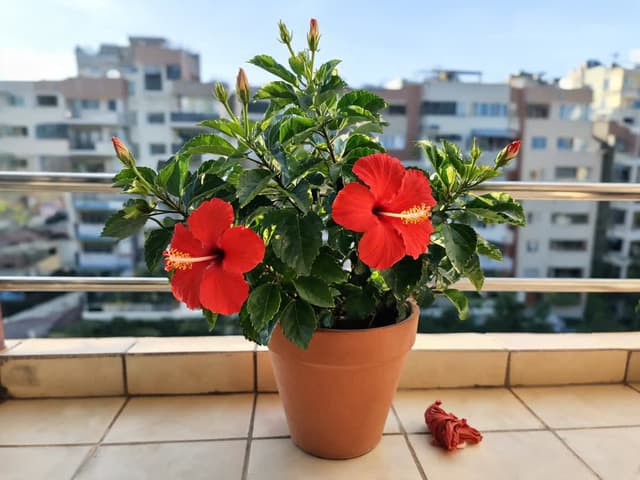
How to Care for Hibiscus: Sun, Watering, Fertilizer, and Pruning for Flowers
How to care for hibiscus: 6 hours of direct sun, evenly moist soil without waterlogging, half-strength fertilizer in spring and summer, and pruning in early spring. Find out why the flower lasts one day and why buds drop before opening.
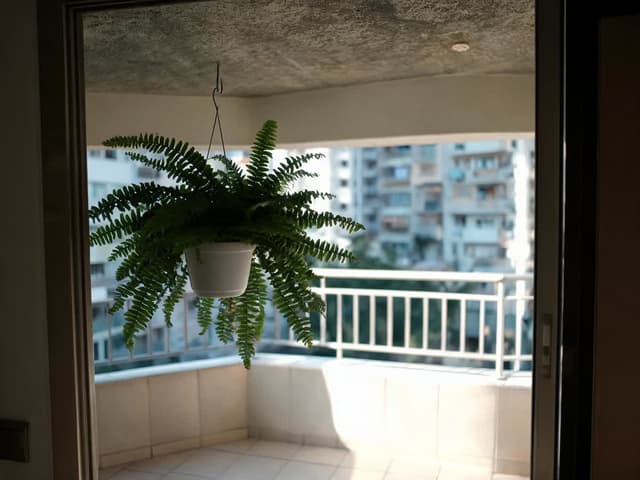
Do Ferns Like Sun or Shade? It Depends on the Type
Ferns prefer bright shade: plenty of light, but no direct sun on their fronds. Tuberous sword fern is the exception that handles sun. Here is the ideal light for each type, where to place pots, and how fronds show too much or too little light.
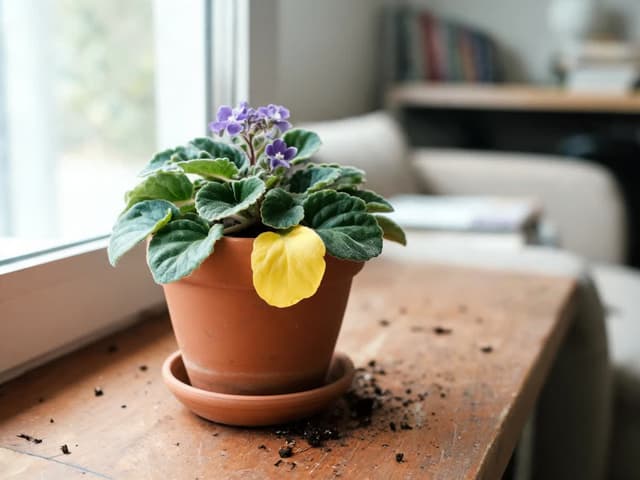
African Violet Yellow Leaves: Causes and What to Do
Yellow leaves on an African violet usually stem from overwatering, and the first place to check is the center of the plant. Losing one lower leaf at a time is normal. Identify whether age, watering, cold water, sunlight, cold drafts, or fertilizer is the culprit based on the yellowing pattern, and see what to do today.