How to Make a Cactus Bloom: Cold, Dry Winter and Direct Sun
A desert cactus blooms after a cold, dry, bright winter followed by direct sun. Learn why yours will not bloom, the age each type flowers, and what to do when blooms wilt.
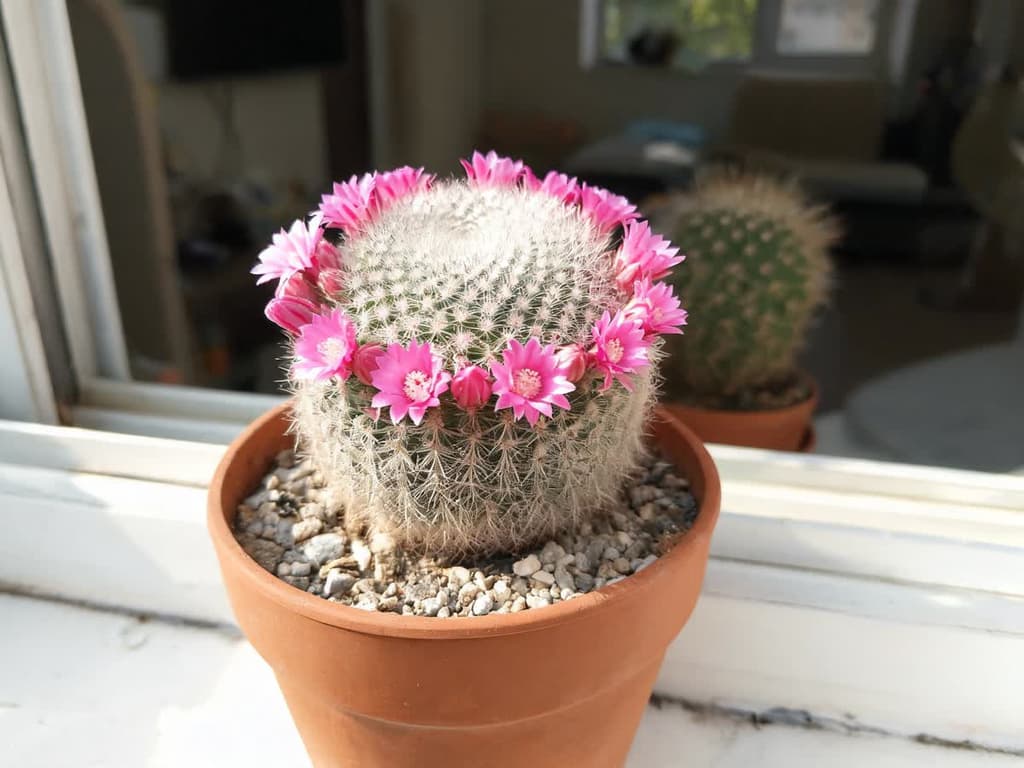
To get a cactus to bloom, give it a cold, dry, bright winter, followed by direct sun in spring. According to the Royal Horticultural Society (RHS), winter rest—the phase where the cactus almost stops growing—calls for nighttime temperatures between 8 and 10 °C (46 to 50 °F). Watering during this stretch is minimal. Once warm weather returns, the cactus needs at least 4 hours of direct sun each day. A cactus that spends the entire year in a warm, low-light home keeps growing, but has a lower chance of blooming.
Age also matters. Small, round cacti, such as Mammillaria and Gymnocalycium, bloom when young, while a large cactus can take decades. This guide applies to desert cacti, those with round or columnar bodies covered in spines. The general profile for the cactus family brings together thousands of species. Forest cacti, such as the Christmas cactus, bloom under the opposite conditions and have their own section at the end.
Quick summary:
Desert cacti develop flower buds after a winter rest: nights at 8 to 10 °C, barely moist soil, and strong light (RHS).
After the resting period, it needs at least 4 hours of direct sun per day (Missouri Botanical Garden). In Brazil, the sunny window faces north or west.
Small cacti, such as Mammillaria and Gymnocalycium, flower young in pots. Large cacti, like the golden barrel cactus, only bloom when mature, and the RHS gives a timeline of 10 to 20 years to reach maturity.
Cactus flowers do not last long, often just a single day. A wilting flower does not indicate disease: the true sign of trouble is a soft, dark, or foul-smelling stem.
Why your cactus isn't blooming
The cause cited most often by the RHS and Clemson is a warm winter, with watering and low light. The others are a plant that is too young and too little sun during the months when the cactus grows (September to March, in Brazil).
What you see | Probable cause | What to do |
|---|---|---|
Healthy, growing cactus that has never flowered | Warm, watered winter: no winter rest occurred (RHS, Clemson) | Next winter, move the pot to a spot with nighttime temperatures between 8 and 10 °C and provide almost no water |
Stretched, thin, leaning cactus growing toward the window | Insufficient light (RHS) | Move it gradually to a window that gets at least 4 hours of direct sun per day |
Small cactus only a few years old | Young plant (Missouri Botanical Garden) | Maintain the winter rest and sunlight; the first flower may take a few years |
Large, round, or columnar cactus | Age: large cacti bloom rarely and late (Missouri Botanical Garden, RHS) | Wait: the golden barrel cactus only blooms when mature, and reaching maturity takes 10 to 20 years (RHS) |
Cactus that bloomed before but stopped | Hypothesis, unmeasured by any cited source: a warmer or wetter rest than during the year it bloomed | Check nighttime winter temperatures with a thermometer |
Cactus with flat segments, no spines, and no flowers | It is a forest cactus, which has opposite blooming requirements | Follow the Christmas cactus section at the end of this guide |
How to make a cactus bloom in 4 steps
Desert cacti bloom when conditions at home mirror the desert year: a cold, dry winter, followed by warmth, sunlight, and moisture. According to the RHS, a cooler and drier rest, paired with the brightest possible light all year long, promotes flowering.
1. Cold, dry winter rest
Winter rest is the period when the cactus almost stops growing due to cold and lack of water. It is during the cold that it begins forming buds, which only appear when the warmth returns. The RHS recommends nights between 8 and 10 °C (46 to 50 °F). The University of Illinois extension gives nights between 7 and 10 °C (45 to 50 °F), in a cool, dry, and bright location (Illinois Extension).
Clemson University Extension allows a slightly wider range, from 7 to 13 °C (45 to 55 °F). According to Clemson, most cacti tolerate normal room temperatures in winter. Even so, they are more likely to bloom when they spend the winter in the cold (Clemson HGIC).
In the RHS source, the rest period runs from November to early March, which is the Northern Hemisphere winter. In Brazil, this corresponds to the period from May to early September.
2. Minimal watering during rest
During rest, water only enough to keep the cactus body from shriveling or wrinkling. Clemson suggests a light watering every few weeks. The Missouri Botanical Garden limits it to at most once a month in winter (Missouri Botanical Garden). When in doubt, follow the more cautious approach: at most 1 light watering per month. No fertilizer during this period.
The watering interval in days, for each spot in the house, is in the guide on how often to water a cactus.
3. Bright light during winter as well
Cactus rest should be cold, dry, and bright. Two German gardening sites, myhomebook and t-online, suggest extending this dormant phase in a dark corner. The RHS and the Missouri Botanical Garden advise the opposite: the brightest light possible throughout winter as well. Follow the RHS and the Missouri Botanical Garden: they are plant research institutions, and both recommend light during the resting period. In darkness, a cactus etiolates and weakens.
For winter rest, the Missouri Botanical Garden recommends a windowsill, while Clemson suggests a cool room with sunlight.
4. Direct sun and water when warmth returns
When nights warm up, the cactus resumes growth, and that is when buds appear. During this phase, it needs at least 4 hours of direct sun each day, the minimum that the Missouri Botanical Garden gives for cacti. Clemson recommends a window that receives direct sun for several hours. In Brazil, this is a north- or west-facing window.
A cactus that spent months in low light will scorch if placed immediately in strong sunlight. The Missouri Botanical Garden recommends making the transition gradually, increasing the hours of direct sun over several days. Resume watering when the soil dries out completely to the bottom of the pot: water thoroughly until liquid drains from the drainage hole.
Winter rest in Brazil: check the temperature, not the month
The rest described by these sources demands genuine cold, and many Brazilian homes never reach it. For that reason, decide based on a thermometer rather than the calendar. A maximum-minimum thermometer placed next to the pot for a week reveals nighttime temperatures.
Nights between 7 and 13 °C: the spot works for winter rest. Keep the pot there, with minimal watering, until nighttime temperatures consistently climb above 13 °C.
Nights above 13 °C all winter: the rest will be weak. The cactus may produce fewer blooms or fail to flower altogether. Choose the coolest, brightest corner in the house, such as a covered balcony, and cut back watering in the exact same way.
Nights below 7 °C or with frost risk: bring the pot inside, as none of the sources recommend a resting period below 7 °C.
Echeveria and other rosette-forming succulents also spend the winter with little water and protected from frost, as shown in the guide on winter care for succulents.
At what age does a cactus bloom
A small potted cactus blooms sooner, and a large cactus blooms later and less frequently. The Missouri Botanical Garden says that most small cacti eventually flower, although this can take a few years. The same source cautions that large cacti rarely flower.
The ages published by the sources, by cactus type:
Cactus | When it blooms | Source |
|---|---|---|
Gymnocalycium | Young, and frequently | Clemson |
Mammillaria | Small and easy to flower | Clemson |
Astrophytum asterias | Yellow flowers around 5 years old | Clemson |
Golden barrel cactus (Echinocactus grusonii) | Only when mature: maturity at 10 to 20 years | RHS; University of Arizona |
Saguaro (Carnegiea gigantea) | Only after 35 years in the desert | US National Park Service |
The saguaro is not a houseplant. It demonstrates the scale: columnar cacti, when large, can take decades to produce flowers.
The Mammillaria flower emerges from the part of the body that grew the previous year and often forms a ring around the top. This is described by the North Carolina State University Extension (NC State Extension). The New York Botanical Garden notes the same for Mammillaria hahniana. For this reason, a Mammillaria that did not grow during the warm months has less room to form buds the following year.
Cacti that bloom most easily in pots
If you want a cactus that blooms indoors, choose one of the small genera. The University of Minnesota Extension lists Mammillaria, Gymnocalycium, Lobivia, and Rebutia among the cacti that are easy to get to bloom indoors (University of Minnesota Extension).
Mammillaria: small body covered in fine spines, with flowers forming a crown around the top (NC State).
Gymnocalycium: blooms young and frequently, with white, pink, or red flowers (Clemson).
Rebutia and Lobivia: small cacti noted by the University of Minnesota among those that bloom readily.
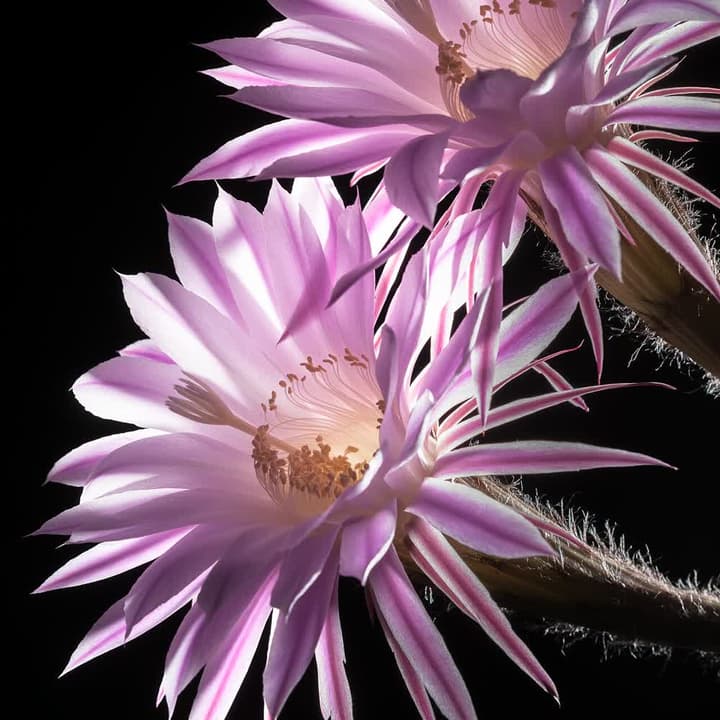
Echinopsis: large, funnel-shaped flowers at the tip of a long tube. They open at dusk during spring or summer, typically lasting just one day (NC State).
Many cacti are sold without labels, and the genus dictates the age at which the plant flowers. Bloom (available for iOS) identifies plants by photo and provides the genus name. With that name, you can tell whether your cactus belongs to a group that flowers young.
Does a tight pot make a cactus bloom?
For desert cacti, none of the consulted sources link rootbound conditions to more flowers. Clemson simply states that cacti prefer being slightly pot-bound and should only be repotted when needed. The new container should be just slightly larger than the old one.
The link between a snug container and flowering does exist, but for forest cacti. The Missouri Botanical Garden notes that tight potting promotes more frequent blooming in that group. For desert cacti, do not repot just to force blooms. Repot when roots emerge from the drainage hole or when the plant outgrows its container.
I bought or received a cactus with a flower, and it turned brown or soft
Do not cut anything yet. First, gently squeeze the base of the cactus body near the soil line. If the stem feels firm, the plant is fine, and the problem is limited to the flower. If the base feels soft, you are dealing with rot, which requires swift action.
The flower wilted and the stem is firm. Cactus flowers have short lifespans. The Missouri Botanical Garden notes flowers that last a single 24-hour period, and the RHS describes the blooms as short-lived. A wilting flower turns brown and mushy, marking the natural end of its life cycle. If the dry flower comes away easily, lift it off with tweezers. If it stays attached, let it fall off on its own.
The flower is made of straw, glued to the cactus. Many small store-bought cacti come with dyed straw flowers stuck to their bodies. The University of Minnesota cautions against confusing these glued decorations with genuine cactus blooms. They do not belong to the plant, and they never open or wilt. A real flower grows directly out of the cactus body.
The top part is red, yellow, or orange, and sits on a green cactus. This is a grafted cactus: two cacti joined together, the colorful one on top and a green one on the bottom. In general, the top one is a Gymnocalycium. The colorful part lacks chlorophyll (the green pigment that produces food) and lives off the bottom cactus, which feeds it, according to NC State (NC State Extension). NC State cites light pink flowers in summer for this plant. If the colorful part becomes soft, treat it as rot, described right below. Keep the grafted cactus in bright light, without strong direct sun: NC State warns that the sun burns mainly the grafted cactus.
The base of the cactus is soft, dark, or foul-smelling. This indicates stem or root rot. In its profile on Gymnocalycium, NC State links fungal diseases to excess watering and high humidity. Stop watering and remove the cactus from its pot to inspect the root system.
If rot has traveled up the stem, you can still save the firm top as a new cutting. Cut cleanly above the softened tissue and allow the cut surface to callus before planting. You can find step-by-step instructions in the rotted base section of the guide on how to propagate a cactus.
There are powdery white spots on the flower or between spines. White tufts resembling cotton or flour typically mean mealybugs, sap-sucking pests. They gather between the spines and around the base of the flower. That same NC State fact sheet lists mealybugs among the pests to monitor. Isolate the pot from other plants before treating.
Christmas cactus and Thanksgiving cactus bloom under the opposite rule
The Christmas cactus and the Thanksgiving cactus are forest cacti. They have flattened segments, almost no spines, and grow on trees in the wild. The RHS advises keeping them away from strong sun and watering them regularly, unlike desert cacti.
What makes these cacti bloom is the long night of autumn (in Brazil, from March to June). To set buds, most varieties need 14 to 16 hours of uninterrupted darkness, according to Iowa State University Extension. Above 21 °C (70 °F), they do not bloom, even with long nights (Iowa State University Extension).
In this group, the plant drops its buds if you move the pot. Iowa State recommends not moving the pot until the first flowers open. The complete guide is in how to make Thanksgiving cactus bloom.
Frequently asked questions
How often does a cactus flower?
Desert cacti bloom during the warm season following their winter rest. NC State points to spring for Mammillaria, and spring or summer for Echinopsis. Gymnocalycium flowers frequently, according to Clemson. Large cacti bloom less often, according to the Missouri Botanical Garden.
Does a cactus die after blooming?
No. In the consulted sources, no potted cactus dies simply because it bloomed. Clemson and the RHS describe cacti as long-lived perennials, and their profiles list no cacti that die after flowering. Plants that bloom once and die belong to other groups, such as agaves. You can find the list of those monocarpic plants in succulents that bloom and die.
Does fertilizer make a cactus bloom?
Fertilizer alone does not make a cactus bloom; winter rest is what sets up flowering. In the growing months, use a fertilizer with less nitrogen than phosphorus, such as 5-10-5. Clemson suggests once a month, from December to March in Brazil, and the University of Minnesota suggests half strength 1 to 2 times a year. Follow Minnesota's recommendation, which is the more cautious approach.
How long does a cactus flower last?
Cactus blooms are short-lived, according to the RHS. Echinopsis flowers open at dusk and typically last a single day, according to NC State. The Missouri Botanical Garden cites flowers that open at night and last 24 hours. For Mammillaria elegans, Clemson notes long-lasting rings of blooms without stating a specific number of days.
Conclusion
A desert cactus blooms after a winter with nights between 8 and 10 °C, minimal watering, and strong light. When warm weather returns, it needs at least 4 hours of direct sun. Smaller genera bloom while young; large cacti can take decades. Next winter, set a maximum-minimum thermometer beside the pot and pick the coolest, brightest spot in the house.
Related articles

How to Care for Hibiscus: Sun, Watering, Fertilizer, and Pruning for Flowers
How to care for hibiscus: 6 hours of direct sun, evenly moist soil without waterlogging, half-strength fertilizer in spring and summer, and pruning in early spring. Find out why the flower lasts one day and why buds drop before opening.

Do Ferns Like Sun or Shade? It Depends on the Type
Ferns prefer bright shade: plenty of light, but no direct sun on their fronds. Tuberous sword fern is the exception that handles sun. Here is the ideal light for each type, where to place pots, and how fronds show too much or too little light.

African Violet Yellow Leaves: Causes and What to Do
Yellow leaves on an African violet usually stem from overwatering, and the first place to check is the center of the plant. Losing one lower leaf at a time is normal. Identify whether age, watering, cold water, sunlight, cold drafts, or fertilizer is the culprit based on the yellowing pattern, and see what to do today.