Winter Succulent Care: How to Protect Your Plants by Cold Zone
When caring for succulents in winter, watering changes first. Low light and cool air mean potting mix can take 40 days to dry out. Learn how to identify your winter tier, the three checks to make before watering, and which varieties handle frost.

When caring for succulents in winter, your watering routine is the first thing that needs to shift. With weaker sun and lower temperatures, potting soil dries out far slower. The plants drink less, too. Keeping your summer schedule during cold months is the fastest way to trigger root rot.
The damage does not show up overnight. You usually only notice translucent bottom leaves three weeks later, long after the roots have already died.
Winter also looks different everywhere. Some regions get mild nights and dry indoor air. Others drop below freezing every single morning. These settings require completely different, sometimes opposite, care routines.
Two questions define your setup: What was the lowest temperature in your area this past week? Is your air bone-dry, or is it pouring rain?
Quick summary:
Water less often, but with a system. Three conditions must line up: dry soil at the bottom of the pot, a clear forecast ahead, and watering early in the morning.
Skip the fertilizer. This applies across all cold zones. Dormant plants consume very little, so extra nutrients simply turn into salt buildup in the soil.
Your succulent might actually grow in the winter. Aeonium and several Haworthia species have an inverted growing season. Cutting water on them during the cold months halts active growth.
Frost hardiness depends on the genus. Sempervivum and most Sedum can sit under snow. Echeveria and Haworthia will not survive a freeze.
Cold damage takes time to reveal itself. It starts as a translucent, water-soaked patch that only turns dark and soft days later.

The three winter zones, and how to identify yours
Check the lowest temperature over your last seven nights. Take this reading on your porch or patio, not indoors. Then note whether your local winter brings dry air or steady rain. Your answers will land you on one of the rows below.
Winter category | How to tell it fits your space | How watering changes | Main risk |
|---|---|---|---|
Mild winter | nights between 50 °F (10 °C) and 64 °F (18 °C), zero frost | space out your summer schedule by 1.5x to 2x | root rot from sticking to a summer watering schedule |
Cold, dry winter | nights between 32 °F (0 °C) and 50 °F (10 °C), plants indoors with the heat running | water once every 2 to 3 weeks, just enough to prevent shriveling | etiolation from low light and dry pots near heating vents |
Frost conditions | forecast of 32 °F (0 °C) or lower, or morning frost on the grass | no water at all while freezing temps persist outdoors | ruptured cells from freezing, which causes permanent damage |
One extra rule covers all three zones: if your region gets concentrated winter rain, outdoor rainfall becomes a bigger threat than your watering can. Move pots under shelter rather than trying to tweak a schedule.
The calendar month does not determine your zone. Neither does your hemisphere or state.
In the exact same month, a warm coastal patio might stay at 75 °F (24 °C), while a high-elevation porch drops to 34 °F (1 °C). Your zone comes straight from the thermometer on your coldest night.
Why watering must change before anything else in winter
Potting soil loses moisture in two ways: evaporation off the surface, and transpiration through the plant. Winter cuts down both at once.
Days get shorter and sunlight weakens, slowing plant transpiration. Chilly air slows surface evaporation. Moisture that cleared out in 12 days during summer can linger for 30 to 40 days.
If you keep watering like it is summer, the soil stays saturated for weeks. Water pushes out air pockets, starving the roots of oxygen.
Iowa State University Extension describes the mechanism. According to it, "root rot typically develops when there is too much water in the soil." The reason: "oxygen levels in soggy soil are lower, causing the roots to die" (Aaron Steil, reviewed in August 2023).
Three things must happen before you water:
The soil is dry all the way to the bottom. The top inch (2 cm) can dry in 24 hours, which tells you nothing. Insert a wooden skewer halfway into the pot. If it comes out clean and dry, the root zone is ready.
The weather forecast shows clear skies for two to three days. Watering right before a cold front hits is the worst timing.
It is morning. The pot has daylight hours to drain and begin drying. Watering in the evening leaves roots sitting in cold, wet soil for twelve straight hours.

Once all three checks pass, water thoroughly. Soak the soil until water runs freely out of the drainage hole, and dump the saucer right away. Shallow surface sips only wet the top layer, leave deep roots thirsty, and encourage mineral salt buildup.
You rarely need to reduce the volume of water you give at one time. What changes is the gap between waterings, depending on your setup:
Mild winter: stretch your summer interval by 1.5x to 2x. A pot that needed water every 14 days will usually stretch to every 21 to 30 days.
Cold, dry winter: West Virginia University Extension is direct about indoor plants. In winter, water "only to prevent leaves from puckering, typically once every two or three weeks" (Succulents 101, WVU Extension).
Frost risk, with the plant outdoors: no water. The Montana State University Extension is literal (Adriane Good and Abiya Saeed, LILA Winter 2023). Succulents "can handle cold while dormant." But "watering during dormancy can be fatal" for a plant spending the winter outdoors.
The most common example. Echeveria is the standard rosette succulent found in garden centers. Its baseline timing works well for most relatives in the same family:
You can find our complete watering routine in the guide on how often to water succulents, including moisture testing steps and how to tell underwatering from overwatering.
Succulents that grow during winter instead of resting
Many growers cut back water across the board assuming every succulent goes dormant in winter. Dormancy simply means a plant halts new growth and sips minimal moisture. While this fits summer-growers, a large group does the reverse: resting in heat and growing in the cold.
Each plant follows the rainfall cycles of its native habitat. Where rain falls in summer, the plant grows during warm months and rests in the cold. Where rainfall concentrates in winter, it grows during the cool, wet season and goes dormant during hot, dry summers.
The Aeonium is the clearest example. The plant library record from Arizona State University notes that "the Aeonium is biologically active from October until April." The same record states that, "during the warm time of the year, the Aeonium is generally dormant" (Chris Martin Plant Library, Aeonium arboreum). It blooms in winter, and cutting its water during this phase cuts it off mid-growth.
With Haworthia, the genus is split, and the division is on record. South Africa's biodiversity institute keeps a fact sheet for each species. The one for Haworthia truncata states that "Haworthias are essentially winter-growing plants" (Ian Oliver, July 2009). This species comes from a region where rain falls in winter.
The fact sheet for Haworthia cymbiformis says the opposite, because this species comes from the summer rainfall region. In it, "the growing season for these plants is usually in the summer rainfall months." The text closes with a literal warning: "if plants are watered at the wrong time of the year, they may rot and die" (Sthembile Zondi, August 2013).
How to tell without memorizing botanical charts. Watch the plant instead of your wall calendar:
Are fresh leaves pushing out from the center or stem tips right now? It is actively growing. Keep your normal watering cadence and give it the brightest spot in the house.
Has growth paused for 4 to 6 weeks while the stems stay firm? The plant is resting. Follow the three winter watering checks above.
Are rosettes clamping shut and shedding lower leaves during the hottest weeks of summer? That is summer dormancy. These plants will wake back up in the fall.
Knowing the exact species settles the question, but basic store tags rarely help, often showing only "assorted succulent." Bloom identifies plants from a photo and displays the exact species name. That name is what separates an Echeveria that needs a winter rest from an Aeonium that wants to grow.
Which succulents handle freezing temperatures and which do not
Cold tolerance is determined by genus and species, not the succulent category as a whole. Montana State Extension splits them into two distinct groups.
Soft succulents do not tolerate frost or freezing." On the other hand, "hardy, or hard, succulents tolerate cold weather better and survive outdoors in a Montana winter." Among the soft ones, she lists "the Crassula, Echeveria, and Sedum families"; among the hardy ones, "Sempervivum, Yucca, and Lewisia.
Within the genus Sedum, both cases exist, and the records from the North Carolina State University Herbarium make the difference measurable. They use the hardiness zone, a number that indicates the minimum temperature the plant can survive in a garden bed. The third column of the table translates this number into degrees.
Genus or species | Hardiness zone | Minimum zone temperature | What it means in practice |
|---|---|---|---|
Sedum (most species) | 3a to 9b | down to -40 °F (-40 °C) | can spend winter buried under snow |
4a to 8b | down to -29 °F (-34 °C) | stays in garden beds year-round | |
9a to 11b | down to 19 °F (-7 °C) | will not survive a hard frost | |
9a to 11b | down to 19 °F (-7 °C) | potted plant, bring indoors |
Sempervivum is the hardiest plant on this list and the one that appears least often in flower shops:
Treat hardiness ratings with caution. They measure whether a perennial can survive in garden soil, not whether its foliage stays unblemished. A zone 9a Echeveria might lose outer leaves during a 34 °F (1 °C) night even if its central crown sprouts back in spring.
For potted plants, use a more conservative threshold. When nighttime temperatures consistently hit 10 °C (50 °F), bring the plant indoors. The Iowa State Extension gives the same threshold for houseplants in general: bring them inside "when nighttime temperatures begin to consistently dip near 50°F" (Aaron Steil, October 8, 2025).
Why a dry plant withstands more cold than a watered plant. Freezing resistance comes from cells having less water and more dissolved sugar. This sugar lowers the freezing point and keeps ice crystals from rupturing the cell wall. The newsletter of the Henry Shaw Cactus and Succulent Society summarizes the mechanism (Joe Merkelbach, February 2011). Plants "decrease cell water content and accumulate sugar and starch so the intracellular fluid does not freeze." A nearly dry cell "cannot burst from the expansion of freezing water." This is why the weather forecast factors into watering conditions.
If you need to cover outdoor plants, use frost cloth or a breathable blanket. Never rest bare plastic against foliage, as it conducts cold right at the contact point and traps moisture. Drape covers in late afternoon before the soil loses radiant warmth, and remove them in the morning.
During cold, rainy seasons, keeping plants dry saves more succulents than shielding them from cold air. A waterlogged pot that hits freezing turns into a solid ice block around the roots.
What frost damage looks like and why it takes days to appear
The classic symptom is a soft, waterlogged patch that looks like bruised or frosted glass. The damaged tissue sinks slightly and wilts within hours.
The University of Florida publication on cold damage to foliage describes this pattern (Stamps, Chen, Natarajan, and Parsons, ENH1168/EP429, UF/IFAS). It cites "rapid leaf wilting and development of water-soaked areas." This is followed by "sunken pitting due to collapse of cells."
The delayed reaction is what tricks most growers. Affected leaves only blacken days later as necrotic tissue breaks down. It is easy to check a plant the morning after a freeze and mistakenly think it survived unharmed.

How to handle cold damage step by step:
Hold off on pruning. Let damaged leaves shrivel and darken completely. That reveals the true line between dead and viable tissue. Cutting too soon removes parts of the leaf that might still bounce back.
Do not water to revive it. Soft, waterlogged foliage is suffering from blown cell walls, not drought. Adding water now will only trigger stem rot.
Relocate the plant away from cold exposure. Move it to a bright, dry, draft-free room.
Check the central crown. If the growing core remains solid, the plant can regenerate leaves come spring. If the center is mushy and blackened, behead the plant above the rot to salvage clean tissue for propagation.
Cold damage and overwatering can look nearly identical over time, since both result in soft, dark foliage. The backstory tells you which is which. Cold damage strikes suddenly on outer, exposed leaves after a noticeable freeze. Overwatering rot creeps upward from the base of the stem over weeks, independent of weather spikes.
If your plant is turning pale yellow all over instead, check our guide to yellowing leaves to rule out other culprits.
Shorter winter days: how to adjust lighting for succulents
Winter sun rises later, sets earlier, and travels lower along the horizon. That means your usual window provides drastically less usable light, even if your indoor setup has not moved an inch. For your succulent, it feels like being moved into a dark hallway.
Iowa State Extension notes the giveaway: "crescimento novo alto, ralo e esguio, de cor pálida, é indicação de que os níveis de luz estão baixos". The rosette stretches out, leaf spacing widens, and rich colors fade into washed-out greens.
Three quick fixes prevent most stretching:
Move pots closer to the glass. Light intensity falls off sharply with distance. Shifting a plant just two feet back into the room drastically cuts foot-candles.
Reassess window directions for the season. Because the sun's trajectory changes, a summer window might get shadowed in winter. Find whichever sill gets the longest stretch of direct sun and move your collection there.
Rotate containers a quarter turn every week. Without rotations, stems bend toward the glass and grow lopsided.
A succulent stretching in winter is starving for light, not nutrients. Both issues can cause pale, weak stems, but applying plant food here makes things worse by fueling fragile, leggy growth.
For window orientation recommendations and sunlight requirements by variety, see our guide to ideal succulent lighting.
Winter succulent care mistakes to avoid
Fertilizing. Iowa State University Extension advises applying fertilizer "during active growth (spring and summer)." And avoiding fertilizer "in winter when they are not actively growing" (Aaron Steil, reviewed in December 2024). A dormant plant absorbs little, and the rest turns into salt buildup in the soil. The exception is a plant that is actively growing right now, putting out new leaves in the cold. When to resume fertilizing, and what to use, is in our succulent fertilizer guide.
Repotting and hard pruning. Sliced roots heal slowly in cool weather, leaving easy access for fungal rot. Hold off until active spring growth resumes. For soil recipes and pot selections, check our general succulent care guide.
Misting the foliage. Water droplets rarely reach root depth and instead collect in rosette crevices. In cool air, that moisture lingers for hours, setting up the exact conditions crown rot needs.
Watering late in the day. This leaves wet potting soil cold for twelve hours overnight. Water in the morning instead.
Draping plastic directly over leaves. Plastic transfers freezing temperatures at every touch point and traps condensation. Use lightweight frost fabric suspended above the leaves.
Bringing plants indoors but placing them far from light. Swapping freezing temps for dark corners solves nothing. Keep them right up against your sunniest windows.
Letting drainage saucers sit full. In hot weather, standing water evaporates in a day. In winter, saucers stay full, leaving roots submerged for weeks.
Frequently asked questions
How often should you water succulents in winter?
There is no set schedule because timing depends on pot size, light levels, and your local winter temperatures. In mild regions, increase your summer gap by 1.5x to 2x. Indoors during cold winters, WVU Extension recommends watering roughly once every two to three weeks, just enough to prevent foliage from shriveling.
Can succulents stay outside during the winter?
It depends entirely on the genus and how low your night temperatures drop. Sempervivum and many Sedum species can remain outdoors under snow cover. Tender types like Echeveria, Haworthia, Aeonium, and potted Crassula cannot survive a freeze. For potted plants, bring them indoors once nights consistently dip toward 50 °F (10 °C).
Which succulents can survive frost?
Hardy succulents can handle subfreezing temperatures. Montana State Extension includes Sempervivum, Yucca, and Lewisia in this group. Many ground-cover Sedum tolerate temperatures down to -40 °F (-40 °C), according to North Carolina State Extension data. However, none of these plants can tolerate freezing while sitting in wet, soggy soil.
Do you need to cover succulents in the cold?
Only when overnight temperatures are forecast to hit 32 °F (0 °C) or lower, and only for plants kept outside. Use burlap, frost cloth, or an old sheet, never bare plastic touching foliage. Cover in late afternoon and remove the cover once sun hits the plants the next morning. Keeping pots dry protects them far better than blankets alone.
Will a cold-damaged succulent recover?
As long as the central rosette core and base of the stem remain solid, your succulent can bounce back. Fresh leaves will emerge from the crown once warmth and light return in spring, making lost outer leaves irrelevant. If the core has turned black or mushy, cut back to clean stem tissue and propagate the healthy top.
Bottom line
Take two quick steps today. First, check your lowest forecast temperature for the week ahead. If it stays above 50 °F (10 °C), your priorities are managing light and stretching watering intervals; if it drops below 32 °F (0 °C), your priority is frost protection. Second, push a wooden skewer deep into your pot before you reach for the watering can.
Those two checks give you far better information than any generic winter care schedule, because they reflect the actual conditions in your home.
Before cutting back water, verify which succulents you have. A plant's species determines whether it rests or grows through the cold season. Your succulent is either dormant right now, or winter is its peak growth window. Bloom identifies plants from a single photo and maps out care needs specific to each species. You can find it on iOS.
Because different species enter dormancy at different points in the year, two pots on the same sill might need completely different care in December. To track each plant's needs individually, explore our roundup of the best apps for succulents.
Related articles
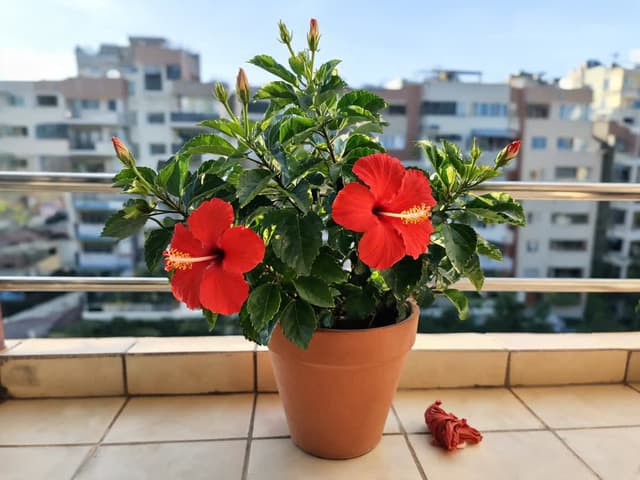
How to Care for Hibiscus: Sun, Watering, Fertilizer, and Pruning for Flowers
How to care for hibiscus: 6 hours of direct sun, evenly moist soil without waterlogging, half-strength fertilizer in spring and summer, and pruning in early spring. Find out why the flower lasts one day and why buds drop before opening.
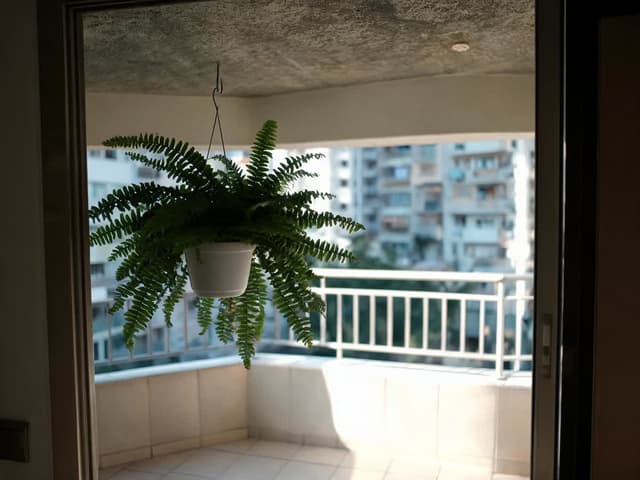
Do Ferns Like Sun or Shade? It Depends on the Type
Ferns prefer bright shade: plenty of light, but no direct sun on their fronds. Tuberous sword fern is the exception that handles sun. Here is the ideal light for each type, where to place pots, and how fronds show too much or too little light.
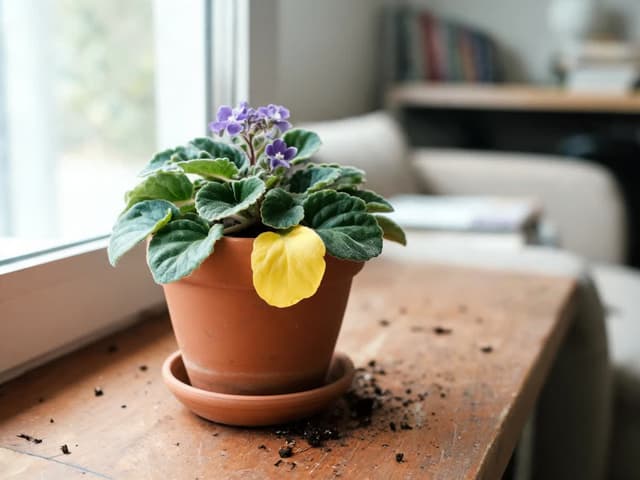
African Violet Yellow Leaves: Causes and What to Do
Yellow leaves on an African violet usually stem from overwatering, and the first place to check is the center of the plant. Losing one lower leaf at a time is normal. Identify whether age, watering, cold water, sunlight, cold drafts, or fertilizer is the culprit based on the yellowing pattern, and see what to do today.