Plants That Repel Mosquitoes: What the Science Supports
Nine plants from the classic list, checked one by one against the research: what each one proves and why the potted plant in your yard does not do the job.
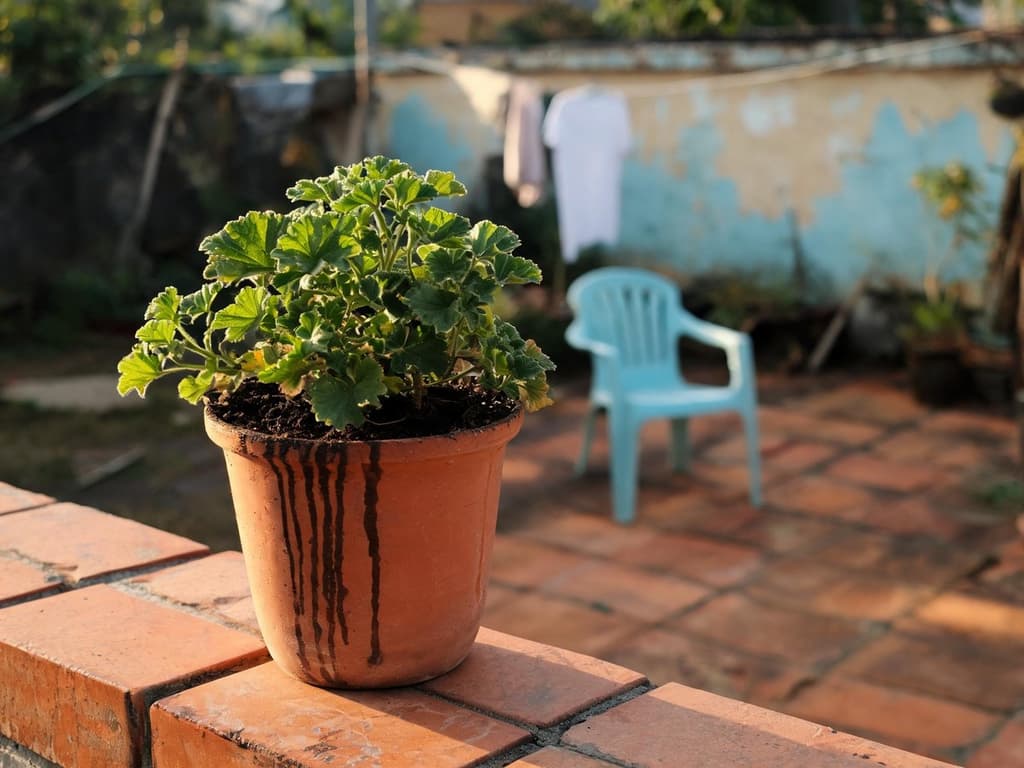
You bought a pot of citronella at the market, put it in the corner of the yard where everyone sits, and kept getting bitten. Before switching plants, it is worth asking: does it really work?
Only in part. Plants that repel mosquitoes exist, and what repels them is the compound inside the leaf, extracted and concentrated. The living plant, just sitting in its pot, releases this compound too slowly to create a scent barrier in the air.
In a study published in July 2026, researchers surrounded mosquito traps with 9 pots of citronella geranium and others with 9 pots of rosemary. The trial lasted 16 weeks, and catches did not drop.
That does not make the whole list a lie. It changes what you can expect from each plant on it. Below are nine plants from the classic list, each with what was tested, in what form, along with the source and year.
No live potted plant has a study showing a reduction of mosquitoes around it. What has evidence is the isolated compound from these plants, applied to the skin or emitted by a diffuser. The only plant-derived substance recommended by the CDC is oil of lemon eucalyptus registered as PMD. PMD stands for the active compound taken from this oil.
What was tested for each plant, and the outcome
Plant | What was tested | Result | Source |
|---|---|---|---|
Lemon eucalyptus | 30% PMD on the skin | Strong reduction in attraction | Rodriguez, 2017 |
Catnip | Isolated nepetalactone, in the lab | +49% to +59% repellency | Peterson and Coats, 2001 |
Citronella grass | Commercial citronella candle | No significant reduction | Rodriguez, 2017 |
Rosemary | 9 live potted plants, 16 weeks in the field | 1.21× the control, no effect | Novelo, 2026 |
Rosemary (oil) | 12.5% essential oil, in the lab | Among the top 3 for repellency duration | Gillij, 2008 |
Citronella geranium | 9 live potted plants, 16 weeks in the field | 0.96× the control, no effect | Novelo, 2026 |
Citronella geranium | Live plant against an unprotected person | No significant difference | Matsuda, 1996 |
Lavender, lemongrass, white sage, yarrow | Live plant, laboratory test | Did not deter mosquitoes | Novelo, 2026 |
Garlic, thyme | No active ingredient registered with the EPA | No validated product | NPIC, 2018 |
Marigold | No field tests found using live plants | No evidence | No source |
Lantana | Living hedge around the entire house | 50% to 83% fewer mosquitoes indoors | Mng'ong'o, 2011 |
The table requires two readings. The first: the numbers in different rows cannot be compared with one another. The +49% for catnip came from a laboratory test using pure oil in 2001. The 50% for lantana came from traps inside houses in Tanzania over 11 months.
These are different questions and different measurements. Putting the two side by side as if it were a ranking would be fabricating data.
The second reading: "no effect" does not mean the plant lacks the compound. Citronella geranium contains geraniol and citronellol, and that has been measured. What it does not do is release these compounds fast enough to change anything three feet away.
Why mosquito-repelling plants do not work in a pot
The most direct study on this is recent. Mario Novelo and colleagues published the paper on July 31, 2026, in the Journal of Medical Entomology. The field test lasted 16 weeks across two locations in California, one rural and one urban (DOI 10.1093/jme/tjag131).
The study design was generous toward the hypothesis. Instead of a single pot, they used 9 pots of the same species, creating a continuous barrier around the trap.
During the first eight weeks, the plants were left intact. Citronella geranium caught 0.96 times what the control caught (95% confidence interval: 0.52 to 1.76; P = 1.000). Creeping rosemary caught 1.21 times (0.65 to 2.25; P = 1.000).
In parentheses are the margin of error (confidence interval) and the P-value, which measures the chance that the difference is due to chance. In both cases, the difference compared to the control falls within pure chance.
For the next eight weeks, the researchers began pruning the plants. They removed 5 g of foliage per pot at each visit and put the chopped pieces back into the pot. This simulated the disturbance from garden maintenance, which has been suggested as a way to "activate" the scent. The result did not change.
The same study included a benchmark for comparison. A metofluthrin diffuser, the volatile insecticide used in plug-in devices, reduced catches by 43% to 89% (P < 0.001).
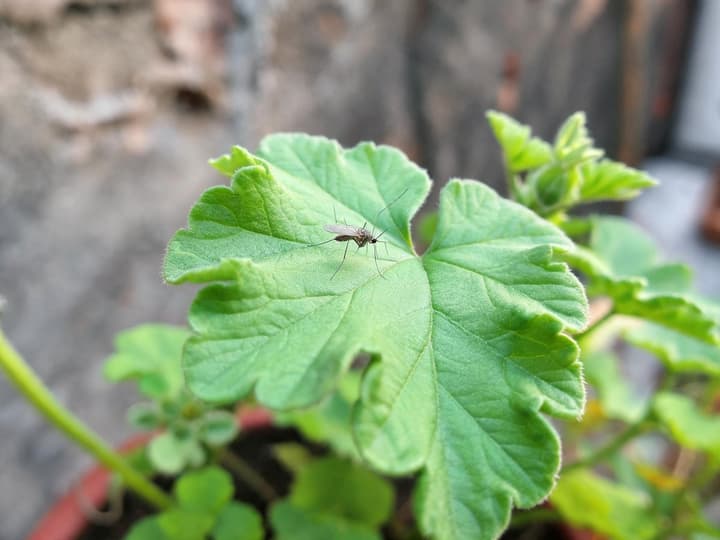
The authors offer a mechanical explanation. The passive emission from a living plant is too slow. It does not create the scent gradient needed to alter a mosquito's flight path at any meaningful distance.
Essential oil works because someone extracted the compound from the leaf, concentrated it, and forced it to evaporate. The whole leaf, sitting in a pot, keeps the compound trapped inside.
The conclusion of the paper is straightforward: "passive placement of intact live plants does not offer the spatial protection against mosquitoes that retail marketing suggests."
The study notes its own limitation. Prior to the field trial, a laboratory test evaluated 6 candidates: common yarrow, lemongrass, lavender, white sage, creeping rosemary, and citronella geranium.
In that test, mosquitoes chose between flying toward the plant or toward clean air. None of the 6 altered that choice: the insects split evenly between both sides as if by random draw. The two plants chosen for the field were picked because they took first and second place in this comparison, which the authors themselves describe as qualitative.
Thirty years earlier, an independent test had already reached the same conclusion. In 1996, in the Journal of the American Mosquito Control Association, Brenda Matsuda and colleagues evaluated citrosa, the commercial name for citronella geranium. It was sold in North America as a biological repellent. The claim was that it protected an area of nearly 1 m² (about 10 square feet) through the continuous release of citronella oil.
In the field measurements, 75% DEET provided more than a 90% reduction in bites for up to 8 hours. Between those standing near the citrosa and those who were not, there was no significant difference.
The five plants whose compounds have published tests
These five hold up when asking "where is the study." In all of them, what was tested is the compound.
Lemon eucalyptus, the only one turned into a recommended product
Lemon eucalyptus oil is the only plant-based active ingredient the CDC recommends. The EPA registers it as a repellent, alongside DEET, picaridin, IR3535, and 2-undecanone (NC State Extension, revised September 2022). In 2017, Rodriguez and colleagues tested a product with 30% PMD, in the Journal of Insect Science. It reduced attraction of Aedes aegypti as well as 98% DEET.
The distinction is subtle. What the CDC recommends is PMD, p-menthane-3,8-diol, a substance derived from the tree's oil and then standardized.
"Pure" lemon eucalyptus essential oil, sold in health food stores, has not undergone the same safety and efficacy tests. It is not registered as a repellent. And the tree in the yard is neither of the two.
In your pot, this item on the list delivers nothing. It only makes sense in a repellent bottle, with the label listing PMD.
Catnip and nepetalactone
Nepetalactone is the oil that gives catnip (Nepeta cataria) its distinctive smell. In 2001, Chris Peterson and Joel Coats from Iowa State University presented findings at an American Chemical Society meeting. Nepetalactone proved roughly 10 times more repellent than DEET. At a high dose, catnip registered +49% to +59% repellency, compared to roughly +10% for DEET at identical doses.
The figure reflects isolated oil in a controlled laboratory test. No study has ever measured a live catnip plant reducing mosquitoes around it.
In your pot, catnip is an easy plant with an enjoyable scent. Just do not rely on it for protection.
Citronella and the naming confusion that changes everything
The name citronella covers two completely different plants. Commercial citronella oil comes from grasses in the genus Cymbopogon, primarily Cymbopogon nardus and Cymbopogon winterianus. The pot labeled "citronella plant" or "mosquito plant" is something else: a geranium, from the genus Pelargonium.
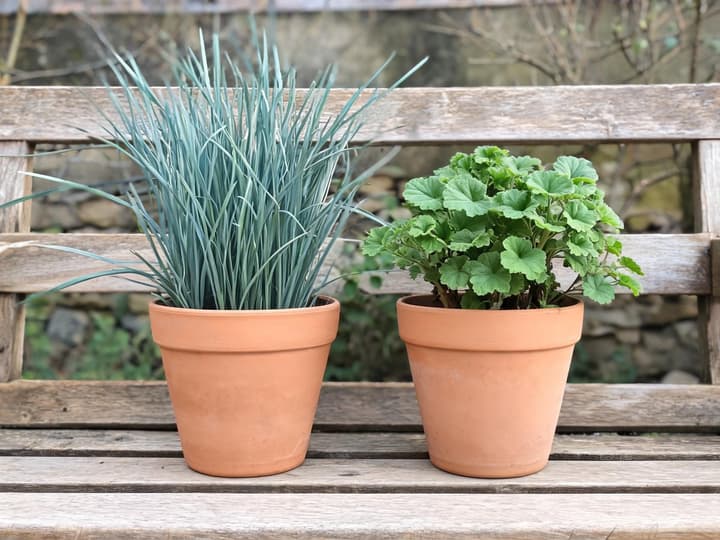
Matsuda's chemical analysis in 1996 settled this point. Citrosa contained no trace of Cymbopogon whatsoever. Its morphology and oil matched the hybrid complex of the common rose geranium.
As for real citronella, the grass, the evidence is weak. A commercial citronella candle tested by Rodriguez in 2017 did not reduce mosquito attraction significantly.
Meanwhile, a study published on August 26, 2026, in Frontiers in Insect Science tested 7 essential oil candles against Aedes aegypti. The test used a cage with a human volunteer. 3 of them cut attraction by 56%, 45%, and 40%. The others did almost nothing (DOI 10.3389/finsc.2026.1917728).
The two results do not contradict each other. The formulation and concentration of what goes into the candle determine the outcome.
In your pot, citronella grass is a vigorous full-sun plant that grows large. As a repellent, the heavy lifting comes from its oil blended into a formulated product.
Lavender and basil, with lab-only evidence
The essential oils of lavender (Lavandula angustifolia) and basil (Ocimum basilicum) appear in laboratory studies on repellency. The linalool found in lavender is a known active compound. That is why both appear in all five English guides I read.
What is missing is the connection to a potted plant. Lavender was one of the 6 candidates in the 2026 lab test, and mosquitoes did not stay away from it. No study has measured either one, alive and planted, against a control out in the field.
In your pot, both plants are worth growing for their own sake. Lavender demands direct sun and fast-draining soil, and it struggles indoors. Basil does well in a pot, and you get to eat it too.
The four plants carried by reputation without research
Two different things belong here: "never tested" and "tested and failed."
Citronella geranium, the one that failed the most
This plant has the most research stacked against it. It failed in 1996 in Matsuda's field trial. It failed again in the 2026 study in a 9-pot barrier, both pruned and unpruned. It is still marketed as a "mosquito plant."
Rosemary
It was the second plant taken into the field during the 2026 study, and it caught 1.21 times what the control caught.
Rosemary oil, separated from the plant, has measured repellency. In a test with Aedes aegypti at a 12.5% concentration, it ranked among the top three oils with the longest repellency time. The data is from Gillij and colleagues, Bioresource Technology, 2008.
Even so, no EPA-registered repellent uses rosemary oil as an active ingredient (NPIC, 2018). Having a published study and having an approved product are two different things: the first measures the effect in the laboratory, the second requires an efficacy and safety dossier. The shrub in the pot is neither of the two.
Marigold
Marigolds (Tagetes) appear in 4 out of the 5 English guides I read. The recommendation seems to survive through vegetable gardening lore, tied to root effects on soil nematodes, microscopic worms that attack root systems. That is a completely different subject and pest. For adult mosquitoes, I found no field tests on the living plant.
Garlic
There is no EPA-registered repellent that uses garlic oil as an active ingredient. The same goes for lemongrass, thyme, and geraniol (NPIC, Oregon State University, February 2018).
When a live plant actually worked
There is one published case where a living plant worked.
In 2011, in PLoS ONE, Fredros Mng'ong'o and colleagues described a pilot study in the Kagera region of Tanzania. Households planted Lantana camara around their homes, forming a tall, dense hedge that blocked entry points. Between September 2008 and July 2009, traps inside 231 homes with lantana were compared against 90 homes without the plant.
The result was 56% fewer Anopheles gambiae (IRR 0.44; 95% CI: 0.28 to 0.68) and 83% fewer Anopheles funestus (IRR 0.17). The IRR compares catches from homes with and without the plant. The total was 50% fewer mosquitoes of any type (IRR 0.50; p < 0.0001). The material cost for one home was US$ 1.50 (DOI 10.1371/journal.pone.0025927).
What worked was a tall, continuous living hedge encircling the entire home in a rural area. It functioned largely as a physical barrier across the mosquitoes' flight path. Three pots on a patio are a far cry from that, and the authors discuss this mixed mechanism.
Before borrowing the idea, take note. Lantana is listed as toxic to cats, dogs, and children. If you have pets or young children at home, confirm the species and talk to your vet before planting.
The risk hardly anyone mentions: your pot can breed mosquitoes
While a motionless potted plant will not keep mosquitoes away, standing water in the saucer underneath is a classic breeding ground for Aedes aegypti. A full saucer forgotten behind the couch for two weeks helps mosquitoes far more than the foliage hurts them.
Brazilian data also shatters an old belief about bromeliads. Márcio Mocellin and colleagues from the Oswaldo Cruz Institute sampled 120 bromeliads across 10 species at the Rio de Janeiro Botanical Garden. Collection took place between March 2005 and February 2006, less than 200 m from homes in a dengue-endemic neighborhood. They collected 2,816 larvae and pupae.
Of these, only 2 were Aedes aegypti (0.07%) and 5 were Aedes albopictus (0.18%). During the same period, Ae. aegypti larvae and pupae appeared in artificial containers in nearly 5% of neighboring houses (Mem Inst Oswaldo Cruz, 2009). The authors themselves note the limit of the finding: it is one year, in a single area, and may not apply to more degraded neighborhoods.
The central cup of bromeliads took the blame for decades, but the math never checked out. Plastic plant saucers and buckets remain the real problem. Here is how to handle that, ranked by return:
Empty plant saucers after watering, or swap them for a layer of coarse sand, which supports the pot without leaving standing puddles.
Check for hidden water collectors: outdoor saucers, decorative cachepots holding plastic nursery pots inside.
Check your propagation trays and watering buckets as well.
Clogged drainage holes trap moisture. If water drains slowly from the bottom, your pot is retaining water you cannot see.
The tiny black flies that scatter from potting soil when you water are something else entirely. They hover near the surface and never bite anyone. They are not mosquitoes, and no repellent plant will fix them.
They are fungus gnats, and managing them means letting the soil dry out and clearing away the organic matter their larvae feed on. If your pot is already infested, you will find the complete process in how to identify and get rid of fungus gnats in potted plants. They frequently show up alongside scale and aphids, covered in houseplant pests.
What actually reduces mosquitoes around you
Ranked from most to least effective at reducing mosquitoes:
Eliminate standing water. It is the only step that reduces the overall mosquito population. Every other tactic targets mosquitoes that have already emerged.
Add physical barriers. Window screens and bed nets remain your most cost-effective protection.
Rely on airflow. Mosquitoes are weak fliers in a breeze, so pointing a fan at your seating area works purely by physics.
Apply registered repellent to your skin: DEET, picaridin, PMD, IR3535, or 2-undecanone. If you want the plant-based option, it is PMD, and the label needs to say PMD.
Consider diffusers or candles, with a caveat. In the 2026 study, a metofluthrin diffuser reduced catches by 43% to 89%. Among essential-oil candles, 3 out of 7 cut attraction by 40% to 56%, while the remaining 4 did almost nothing. Without a label listing the active compound's concentration, you cannot tell what you are getting.
If you are not sure which plant you bought, which is common when the label only says "anti-mosquito," you can sort it out with a photo. Bloom (available for iOS) identifies the plant from a photo of the leaf and tells citronella grass apart from geranium.
When the plant you already have is the one having problems, the process starts with the symptom. Yellow leaves and spotted leaves have different causes, and the guide what is wrong with my plant separates the two. To compare identification tools with each other, there is the list of best plant apps.
Frequently asked questions
What is the best plant to keep mosquitoes away?
None, if the question is about the live potted plant. No species has a study showing a reduction in mosquitoes around it. If the question is about plants whose compound became an effective repellent, the answer is lemon eucalyptus, through registered PMD, and not the tree itself.
What scent do mosquitoes hate most?
The compounds with measured repellency are nepetalactone from catnip, citronellal, geraniol, and PMD from lemon eucalyptus. All were tested as isolated, concentrated substances. That same scent dissipating slowly from an intact leaf fails to produce an effect because the concentration in the air is orders of magnitude lower.
What are the 10 plants that mosquitoes hate?
Five appear across all 5 English guides I read: lavender, catnip, rosemary, basil, and mint. Marigold, citronella, sage, and lemon balm show up in 4 out of 5. Citronella geranium appears in 3. Of those ten, only a few have published tests on their isolated extracts, and two failed in live field trials.
How do I keep mosquitoes out of my yard?
Start with standing water, which is the only step that reduces the number of mosquitoes: plant saucers, buckets, gutters, tires, rarely used drains. Then, install screens and netting on openings. A fan in the seating area disrupts the mosquito's flight. Apply registered repellent to your skin when you are going to sit still outdoors.
Do coffee grounds repel mosquitoes?
There is no evidence that coffee grounds repel adult mosquitoes. The opposite is true. Moist coffee grounds at 50 g/L killed 100% of Aedes aegypti larvae within 48 hours in a laboratory setting (Insects, 2023). It acts as a larvicide in standing water, but standing water should not be there in the first place.
What to do today
Step out to your yard or patio and empty every plant saucer. It is the single step on this page that actually lowers the number of mosquitoes around your home, and it takes five minutes.
Related articles
Prayer Plant Brown Tips: Causes, Water, and How to Trim
A prayer plant develops brown tips from tap water fluoride and chlorine, dry air, soil that dries out too much, or fertilizer salts. Brown tips will not turn green again: trim the dry part following the leaf's shape and check new leaves to confirm the fix.
How to Care for a Prayer Plant: Light, Water, Humidity, and Closing Leaves
To care for a prayer plant, provide bright indirect light, keep the soil moist without waterlogging, and maintain air humidity above 50%. Water with fluoride-free water. Leaves that rise and fold at night are the plant's normal movement.

Peonies in Winter: Can They Handle Frost? Care by Type and in Pots
Peonies in winter: the herbaceous type tolerates lows of −15 to −20 °C, dies back above ground in winter and returns in spring, and tree peonies keep their branches. Cut dead foliage down to the ground, mulch the soil only in the first winter, protect the roots in pots, and cover the buds on frosty nights.