675 Medium Plants | 2026 Guide
Discover 675 medium plants for your garden. Complete care guide.
675 Medium Plants
Showing 1-36 of 675
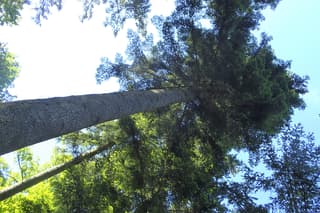
Nordmann fir
Abies nordmanniana
The Nordmann fir (Abies nordmanniana) is a large, majestic conifer native to the mountain forests of the Caucasus, northeastern Turkey, and Georgia. The tree has a graceful, broad pyramidal crown with horizontally spreading branches that grow in tiers. The glossy, dark green needles are soft and non-prickly, featuring two prominent white stripes on the underside. In the wild, the Nordmann fir can reach heights of up to 50 meters; in gardens and parks, it typically reaches a height of 9 to 15 meters. The tree is best known as a Christmas tree because its needles are very slow to drop.
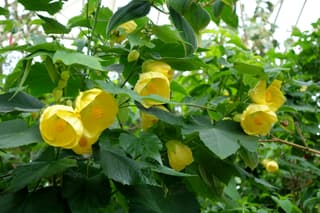
Flowering Maple
Abutilon hybridum
Abutilon hybridum, commonly known as flowering maple, is an ornamental shrub from the Malvaceae family, native to South America. Its pendulous bell-shaped flowers in shades of red, yellow, orange, and pink resemble small lanterns, making it a highly decorative plant for both indoor and outdoor settings.
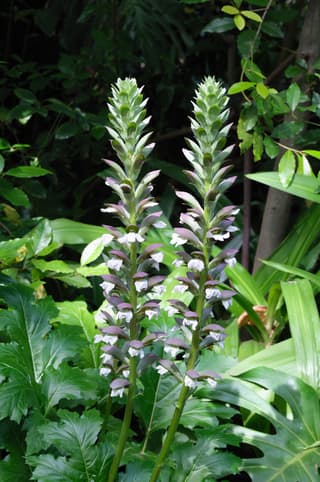
Bear's Breeches
Acanthus mollis
Acanthus mollis, commonly known as Bear's Breeches, is a bold architectural perennial native to the Mediterranean. It is prized for its dramatic, deeply lobed glossy green leaves and tall spikes of white and purple flowers that bloom in late spring to midsummer. Its striking foliage inspired the iconic leaf motif on Corinthian columns.
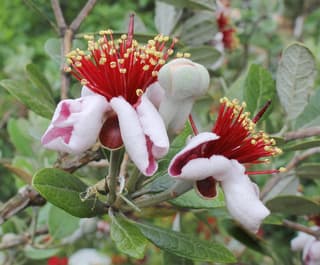
Pineapple Guava
Acca sellowiana
Acca sellowiana, commonly known as pineapple guava or feijoa, is an evergreen shrub native to southern Brazil and Uruguay. Belonging to the Myrtaceae family, it produces aromatic fruits with a flavor reminiscent of pineapple, strawberry, and guava. Its ornamental flowers feature white petals with striking red stamens — and are entirely edible.
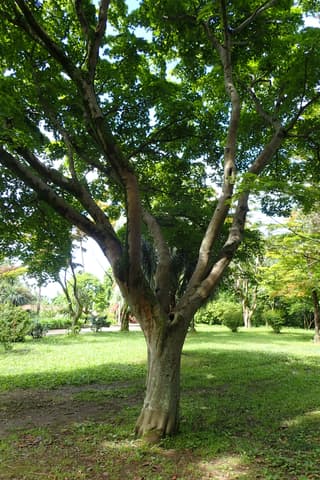
Maple
Acer
The genus Acer, commonly known as maple, encompasses more than 130 species of deciduous trees and shrubs distributed throughout the Northern Hemisphere. Famous for the exuberance of its autumn foliage, the maple is cultivated for both its ornamental value and its fine wood. The Japanese species Acer palmatum is especially prized in gardens and bonsai, while Acer saccharum provides the famous sap for maple syrup.
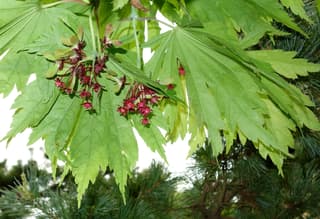
Fullmoon Maple
Acer japonicum
The Fullmoon Maple (Acer japonicum) is a small-to-medium deciduous tree native to the mountain woodlands of Japan and Korea, prized for its rounded, moon-shaped leaves with 7-11 soft lobes. In spring it bears clusters of small purplish-red flowers before the foliage unfurls, and in autumn its canopy turns brilliant shades of gold, orange, and crimson. Slow-growing and elegant, it is a signature specimen tree in Japanese-style gardens.
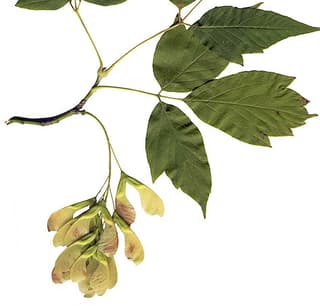
Boxelder
Acer negundo
Boxelder (Acer negundo) is a fast-growing, deciduous tree native to North America, belonging to the family Sapindaceae. It can reach up to 21 meters (70 feet) in height and is renowned for its exceptional cold hardiness and adaptability to a wide range of soil types and climatic conditions. The tree features pinnately compound leaves with 3 to 5 leaflets and produces inconspicuous green-yellow flowers in spring before the leaves emerge. It is dioecious, with male and female flowers on separate trees.
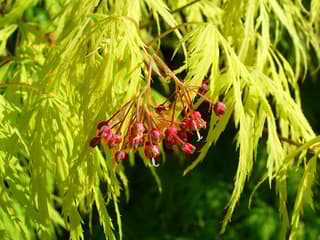
Japanese Maple
Acer palmatum
The Japanese Maple (Acer palmatum) is an ornamental tree native to Japan, China, and Korea, celebrated for the spectacular beauty of its foliage, which transforms through the seasons — from deep green in spring to vivid shades of red, orange, and yellow in autumn. With an elegant habit and deeply lobed palmate leaves, it is one of the most beloved ornamental trees in Asian-style gardens, contemplation gardens, and as a bonsai subject.
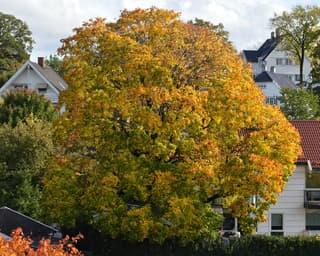
Norway Maple
Acer platanoides
The Norway Maple (Acer platanoides) is a large deciduous tree native to Europe and western Asia, widely planted as a shade and street tree. It features broad, palmate leaves, small yellow-green spring flowers, and vibrant yellow to orange autumn foliage. Extremely hardy and adaptable, it tolerates a wide range of soils, pollution, and urban conditions.
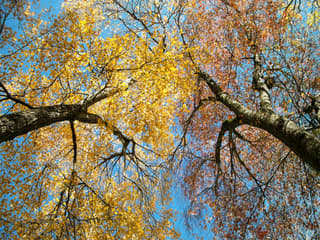
Red Maple
Acer rubrum
Acer rubrum, commonly known as the Red Maple, is one of the most abundant and widespread deciduous trees in eastern North America. Celebrated for its spectacular crimson, orange, and yellow autumn foliage, it is a fast-growing landscape tree valued for shade, wildlife habitat, and ornamental beauty.
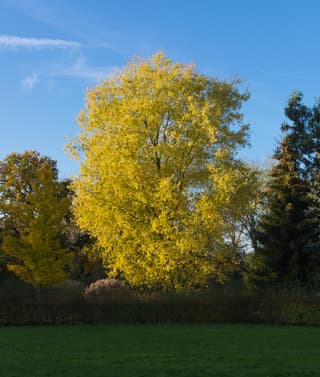
Silver Maple
Acer saccharinum
The Silver Maple (Acer saccharinum) is a fast-growing deciduous tree native to eastern and central North America. Named for the silvery underside of its leaves, it is widely planted as a shade and ornamental tree. It thrives along rivers and wetlands but adapts well to drier conditions.
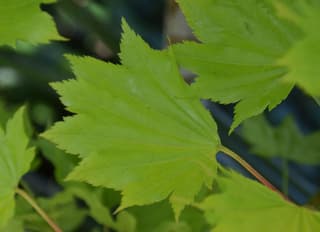
Full Moon Maple
Acer shirasawanum
Acer shirasawanum, or the Full Moon Maple, is a slow-growing deciduous tree or large shrub native to Japan, prized for its rounded, star-shaped leaves that emerge bright yellow-green in spring and turn brilliant orange and red in autumn. Reaching 5-6 meters (16-20 feet) tall and wide at maturity, it forms an elegant, rounded canopy that works beautifully as a specimen tree or understory planting.
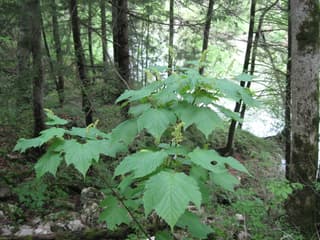
Mountain Maple
Acer spicatum
Mountain Maple (Acer spicatum) is a small deciduous shrub or understory tree native to eastern North America. It thrives on rocky slopes and stream banks in cool, shaded forests, producing brilliant yellow, orange, and red foliage in autumn. Its erect racemes of small greenish-yellow flowers appear in early summer.
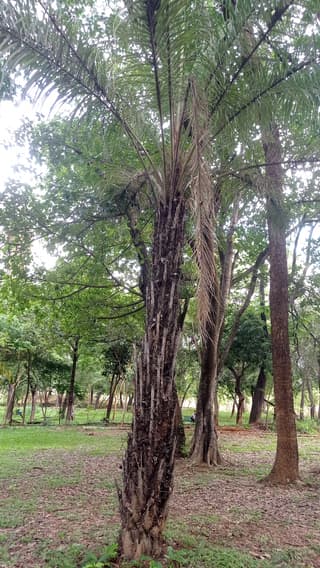
Macaw Palm
Acrocomia aculeata
Acrocomia aculeata, commonly known as the Macaw Palm or Grugru Palm, is a native Brazilian and tropical American palm tree widely distributed across the Cerrado, Atlantic Forest, and transitional zones. Its spiny trunk can reach up to 15 meters in height, crowned by long, arching pinnate leaves that give it a majestic tropical appearance. It produces abundant oil-rich fruits, making it one of the most versatile and economically promising palms in the Americas. Highly resistant to drought and fire, it adapts to different soil types and is increasingly valued in tropical landscaping and sustainable agroindustry.
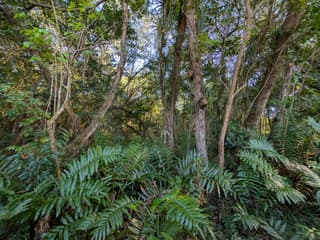
Golden Leather Fern
Acrostichum aureum
Acrostichum aureum, commonly known as the Golden Leather Fern or Mangrove Fern, is one of the largest tropical ferns in the world. Native to pantropical mangrove swamps and coastal wetlands, this robust species develops long, leathery fronds reaching up to 3 metres in length. It tolerates both saline and freshwater environments, making it one of the most adaptable ferns on Earth.
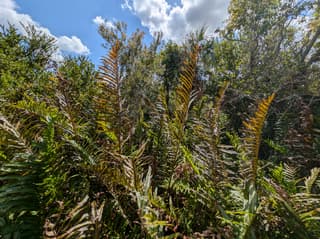
Giant Leather Fern
Acrostichum danaeifolium
The Giant Leather Fern (Acrostichum danaeifolium) is one of the largest ferns in the Americas, native to mangrove swamps and coastal wetlands of tropical America. It can reach up to 12 feet tall and thrives in consistently wet, even flooded, soils with high humidity.
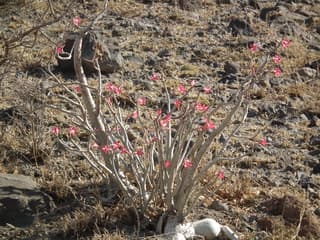
Desert Rose (genus)
Adenium
Adenium is a genus of succulent shrubs and small trees native to arid regions of Africa and the Arabian Peninsula. Famous for their swollen, water-storing caudex (trunk base) and showy trumpet-shaped flowers in shades of pink, red, and white. The most widely cultivated species is A. obesum.
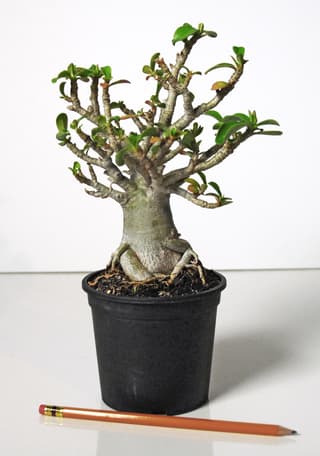
Impala Lily
Adenium multiflorum
The Impala Lily (Adenium multiflorum) is a striking succulent shrub native to southern Africa, celebrated for its spectacular winter blooms of white and crimson bicolor flowers that appear on bare branches. It develops a thick basal stem called a caudex that stores water and gives the plant a dramatic bonsai-like appearance over time.
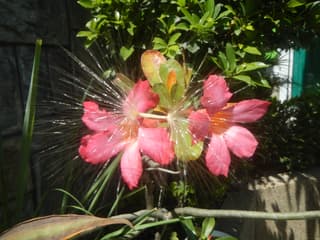
Desert Rose
Adenium obesum
Adenium obesum, commonly known as the Desert Rose, is a striking succulent shrub native to East Africa and the Arabian Peninsula. Renowned for its thick, swollen caudex and vibrant trumpet-shaped flowers in shades of pink, red, and white, it is a favorite among bonsai enthusiasts and ornamental plant collectors. Despite its exotic appearance, it is well-suited for indoor cultivation in bright, sunny spots.
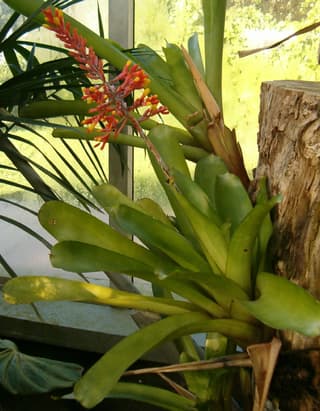
Tail Bromeliad
Aechmea caudata
Aechmea caudata is a bromeliad native to Brazil's Atlantic Forest, occurring from Espírito Santo to Rio Grande do Sul across epiphytic, rupicolous, and terrestrial habitats. It forms a funnel-shaped rosette of long arching leaves up to 128 cm, with serrated margins and a sharp tip. The erect spike inflorescence rises above the rosette, bearing yellowish flowers with orange-red sepals — a striking tropical display. Like all monocarpic bromeliads, it flowers once in its lifetime (typically in summer), then slowly declines while producing offsets.
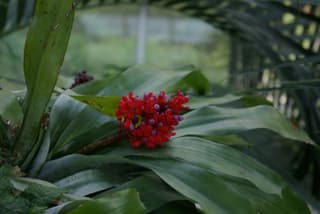
Coral Berry Bromeliad
Aechmea fulgens
Aechmea fulgens, commonly known as the Coral Berry Bromeliad, is an epiphytic bromeliad native to northeastern Brazil, particularly the states of Bahia and Pernambuco. It forms an elegant rosette of bright green, waxy leaves with marginal spines. Its striking inflorescence features red bracts and numerous purple flowers, followed by long-lasting red globose berries that persist for many months after blooming. This makes it one of the most decorative bromeliads for both indoor cultivation and tropical gardens.
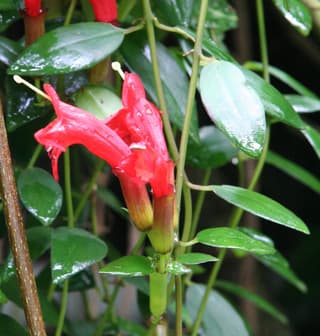
Lipstick Plant
Aeschynanthus radicans
The Lipstick Plant (Aeschynanthus radicans) is a stunning tropical epiphyte native to the humid rainforests of Southeast Asia. Known for its cascading vines adorned with glossy, waxy leaves and striking tubular red flowers that emerge from dark burgundy calyxes resembling a lipstick tube, this plant is a favorite among indoor gardeners. It thrives in hanging baskets where its trailing stems can gracefully drape, creating a lush, eye-catching display.
Common Fieldcap
Agrocybe pediades
Agrocybe pediades is a small, cosmopolitan saprophytic fungus that frequently grows in nutrient-rich soils, such as lawns, gardens, and pastures. It is characterized by its initially hemispherical cap that flattens with age, displaying a yellowish-ochre or cinnamon color. It is an essential organism for the decomposition of organic matter and nutrient recycling in the soil. Although edible, its small size and the potential for confusion with similar toxic species require caution.
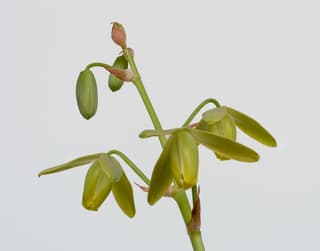
Curly Tamarak
Albuca spiralis
Albuca spiralis, commonly known as 'Frizzle Sizzle', is a unique bulbous succulent native to South Africa. It is celebrated for its distinctive, corkscrew-shaped leaves that curl more tightly when exposed to high light levels. In late spring, it produces spikes of nodding, bell-shaped yellow-green flowers that emit a sweet vanilla fragrance. The plant undergoes a summer dormancy period where its foliage may die back completely.
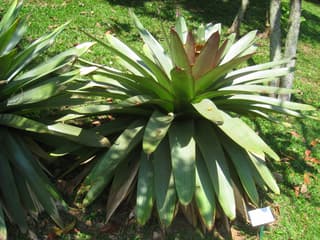
Imperial Bromeliad
Alcantarea imperialis
Alcantarea imperialis, commonly known as the Imperial Bromeliad, is one of the largest bromeliads in the world and a truly spectacular ornamental plant endemic to Brazil. Native to the rocky slopes of the Serra dos Órgãos mountain range in Rio de Janeiro state, this magnificent species forms enormous rosettes of leathery leaves that can reach 1.5 m in diameter, with a central tank capable of holding up to 30 liters of rainwater. When it eventually blooms — an event that occurs after 10 to 40 years — it produces a towering flower spike up to 3.5 m tall bearing white-yellowish flowers with reddish bracts that attract hummingbirds and other pollinators.
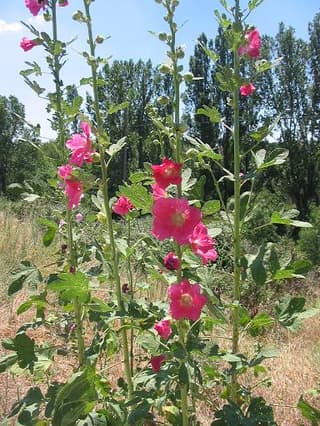
Hollyhock
Alcea rosea
Hollyhock (Alcea rosea) is a biennial or short-lived perennial flowering plant in the family Malvaceae, native to southwestern and central Asia, including Turkey and China. Renowned for its towering flower spikes reaching up to 2.5 metres (8 feet) in height, it produces abundant blooms in shades of pink, red, white, yellow, purple, and orange throughout summer. A cottage garden classic, hollyhocks thrive along fences, walls, and borders.
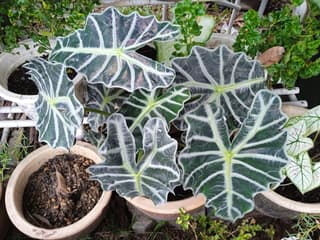
Alocasia Polly
Alocasia × mortfontanensis
Alocasia × mortfontanensis, commonly known as the African Mask Plant or Alocasia Amazonica, is a stunning hybrid featuring large, arrow-shaped leaves. The foliage is a deep, dark green, almost black, with dramatic, thick silvery-white veins and wavy, scalloped edges. It is a centerpiece plant that brings a tropical, prehistoric aesthetic to any indoor space.
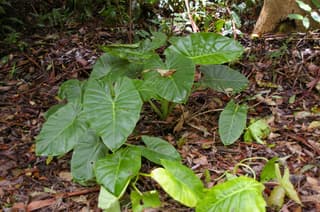
Cunjevoi
Alocasia brisbanensis
Alocasia brisbanensis, commonly known as Cunjevoi, is a large-leafed tropical perennial native to the rainforest margins of eastern Australia. It features dramatic, glossy, spade-shaped leaves up to 70 cm long on long purplish-green petioles, making it a striking ornamental plant. All parts of the plant contain calcium oxalate crystals and are highly toxic if ingested.
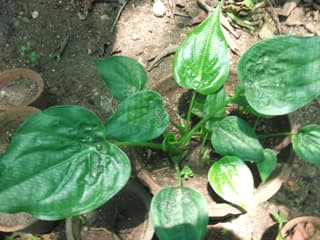
Chinese Taro
Alocasia cucullata
Alocasia cucullata, commonly known as Chinese Taro or Buddha's Hand, is a compact tropical plant native to Southeast Asia. It features glossy, heart-shaped to arrow-shaped leaves on long petioles, held upright in a striking architectural form. This evergreen perennial thrives in warm, humid environments and is widely cultivated as an ornamental houseplant. Revered across Thailand and Laos as a sacred plant of good fortune, it is traditionally placed at home entrances and Buddhist temples.
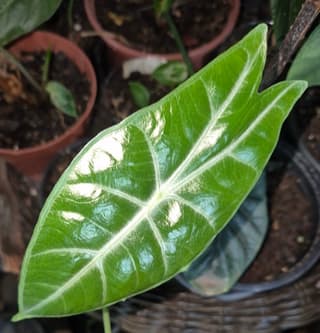
Dragon Scale Alocasia
Alocasia longiloba
Alocasia longiloba is a striking tropical plant native to the humid rainforests of Southeast Asia — Borneo, Malaysia, and Thailand. It is best known for its dramatic arrow- or heart-shaped leaves adorned with silvery-green venation that stands out boldly against a deep green background, giving it the popular name 'Dragon Scale Alocasia.' The texture of the leaf surface can appear almost reptilian, especially in the highly sought-after 'Dragon Scale' and 'Silver' cultivated forms. As a houseplant it typically reaches 60–120 cm tall, making it an elegant focal point in living rooms, offices, and indoor gardens. It belongs to the family Araceae and shares its genus with approximately 90 other fascinating species.
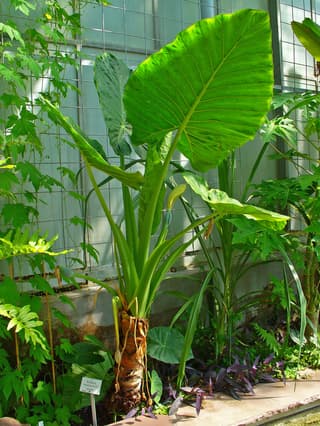
Giant Taro
Alocasia macrorrhizos
Alocasia macrorrhizos is a spectacular tropical perennial from Southeast Asia, prized for its enormous upright arrow-shaped leaves that can reach up to 1.5 meters in length. Known as Giant Elephant's Ear, this fast-growing plant makes a bold architectural statement both indoors and in tropical gardens. It belongs to the Araceae family and features thick, prominently veined, glossy green leaves on sturdy upright stems.
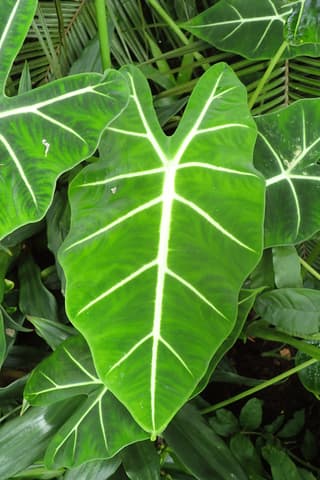
Green Velvet Alocasia
Alocasia micholitziana
Alocasia micholitziana, commonly known as the Green Velvet Alocasia or Frydek, is a striking tropical houseplant native to the Philippines. It is prized for its velvety dark green leaves with dramatically contrasting white veins and a deeply ribbed texture. A member of the Araceae family, it thrives as an indoor plant in warm, humid environments and can be a stunning focal point in any home.
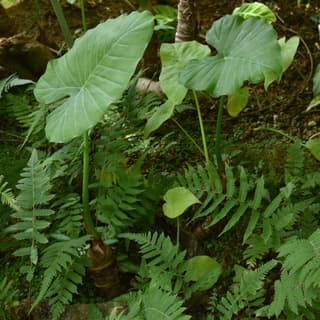
Night-Scented Lily
Alocasia odora
Alocasia odora, commonly known as the Night-Scented Lily or Asian Taro, is a striking tropical plant from the Araceae family, native to East and Southeast Asia. Its large arrow-shaped leaves can reach up to 60 cm in length, and the plant can grow to 2.4 meters tall. It produces fragrant cream-to-pale-peach flowers on a spadix during spring and summer, notably scented at night. WARNING: Toxic to humans, cats, and dogs when ingested raw due to calcium oxalate crystals.
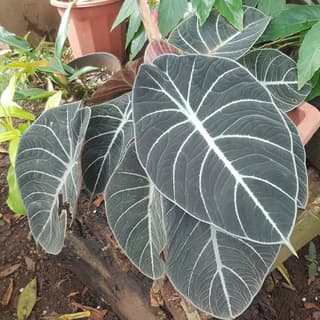
Black Velvet Alocasia
Alocasia reginula
Alocasia reginula, commonly known as Black Velvet Alocasia, is a striking compact tropical plant native to the rainforests of Borneo. It is prized for its deep, near-black velvety leaves adorned with contrasting silvery-white veins. Unlike larger Alocasia species, this jewel alocasia stays small and manageable, making it an ideal statement houseplant. Its thick, succulent-like rhizomes store water, giving it some drought tolerance but also making it highly susceptible to root rot if overwatered.
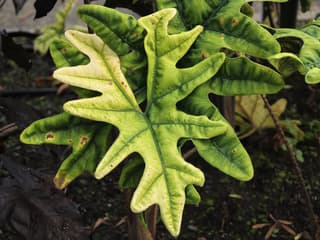
Alocasia Jacklyn
Alocasia tandurusa
Alocasia Jacklyn (Alocasia tandurusa) is a rare and spectacular tropical plant native to the humid rainforests of Sulawesi, Indonesia. Its enormous arrow-shaped leaves with prominent venation and deep green coloration make it one of the most sought-after alocasias among plant collectors worldwide. When grown indoors, it can reach up to 4 feet in height, becoming a stunning focal point in any space.
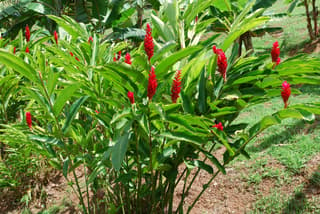
Red Ginger
Alpinia purpurata
Red Ginger (Alpinia purpurata) is a stunning tropical plant native to the South Pacific, celebrated for its dramatic crimson-red flower spikes rising above glossy lance-shaped foliage. A member of the Zingiberaceae family, it is widely cultivated as an ornamental in tropical and subtropical gardens and as a potted plant in warm interiors. Its long-lasting blooms make it highly prized for floral arrangements, leis, and landscape use.
What are Medium Plants?
Medium Plants require a bit more attention and basic gardening knowledge. These plants thrive with regular care and some cultivation experience. Ideal for those who already master the basics.
Tips for Growing Medium Plants
medium plants need a balance between attention and freedom. Keep a regular care routine, watch leaves to identify problems early, and adjust watering by season.