2343 Easy Plants | 2026 Guide - Page 31
Discover 2343 easy plants for your garden. Complete care guide.
2343 Easy Plants
Showing 1081-1116 of 2343
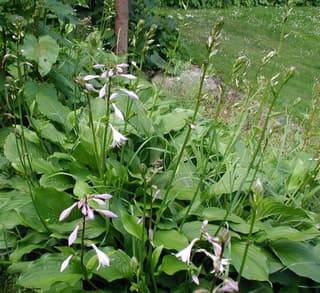
Fortune's Hosta
Hosta fortunei
Hosta fortunei, commonly known as Fortune's hosta or plantain lily, is a clump-forming herbaceous perennial prized for its broad, heart-shaped blue-green to green leaves, often edged or streaked with cream or gold depending on the cultivar. Believed to have originated from cultivated plants in Japan, it thrives in shaded and woodland garden settings, sending up tall spikes of pale lavender, bell-shaped flowers in summer. Its lush, textured foliage makes it a staple of shade gardens and mixed borders.
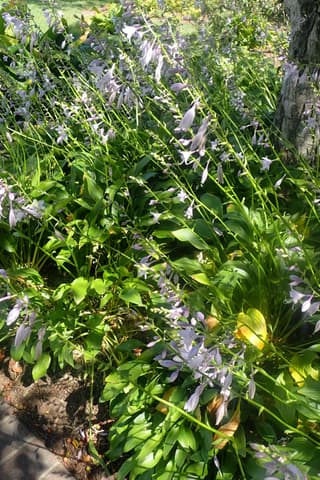
Narrow-leaved Plantain Lily
Hosta lancifolia
Hosta lancifolia, commonly known as the Narrow-leaved Plantain Lily, is a compact, clump-forming perennial prized for its graceful, lance-shaped dark green leaves. Native to Japan and China, it thrives in shaded gardens and is one of the most adaptable hostas for both ground cover and container planting. It produces slender lavender to purple funnel-shaped flowers in late summer, attracting hummingbirds and bees.
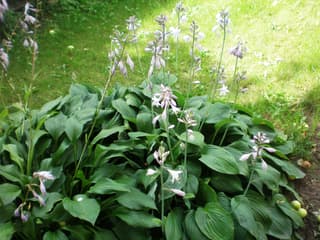
Fragrant Plantain Lily
Hosta plantaginea
Hosta plantaginea, commonly known as the Fragrant Plantain Lily or August Lily, is a herbaceous perennial native to China. It is celebrated for its large, glossy, heart-shaped leaves and exceptionally fragrant white trumpet-shaped flowers that bloom in late summer. Unlike most hostas, its flowers emit a sweet, powerful fragrance, especially in the evening, making it a favourite for shaded gardens worldwide.
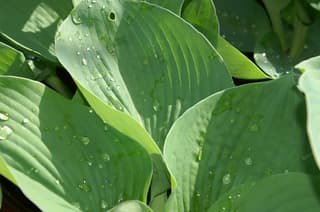
Siebold's Hosta
Hosta sieboldiana
Hosta sieboldiana is a large, bold shade perennial native to Japan, prized for its massive blue-gray leaves that can reach 14 inches long. It forms a dramatic domed mound up to 2 feet tall and 5 feet wide, making it one of the most impressive groundcover plants for shaded gardens.
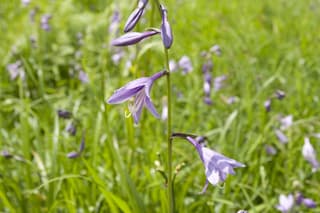
Small-Leaved Plantain Lily
Hosta sieboldii
Hosta sieboldii, the small-leaved plantain lily, is a compact, clump-forming perennial native to East Asia and prized in shade gardens for its narrow, lance-shaped leaves with mid-green centers and creamy white margins. In mid to late summer it sends up slender flower stems bearing funnel-shaped, lavender blooms above the tidy foliage mound. Unlike its larger cousin Hosta sieboldiana, this species stays compact, making it an excellent choice for borders, woodland edges, and containers in partly shaded corners.
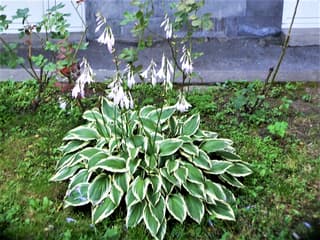
Wavy-Leaf Plantain Lily
Hosta undulata
Hosta undulata, commonly known as the Wavy-Leaf Plantain Lily, is a classic shade-garden perennial originating from cultivated forms developed in Japan. It is prized for its striking variegated foliage — creamy white centers surrounded by wavy green margins — which creates dramatic contrast in low-light garden settings. In summer, it sends up tall scapes bearing delicate lavender to white trumpet-shaped flowers. Fully deciduous, it dies back to the ground in winter and re-emerges each spring with fresh, vigorous growth.
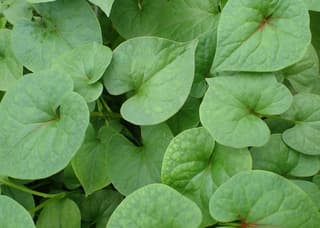
Chameleon plant
Houttuynia cordata
Houttuynia cordata, commonly known as the chameleon plant, is a deciduous ground-covering perennial from the Saururaceae family originating in East Asia. The plant is known for its heart-shaped leaves, which are often variegated in green, yellow, red, and cream, as well as for its small white flowers with cone-shaped, lime-green spikes that appear from early to late summer. When the leaves are crushed, they emit a sharp, fish-like scent—hence the name 'fish mint'. Chameleon plant thrives in moist to wet soil and spreads aggressively via underground rhizomes, so it should be planted with caution.
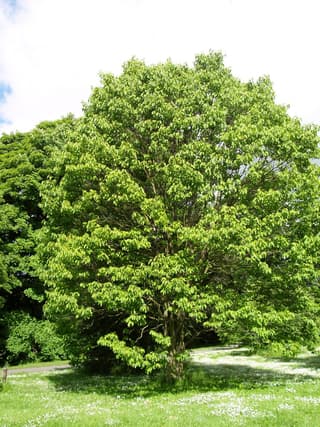
Japanese Raisin Tree
Hovenia dulcis
The Japanese Raisin Tree (Hovenia dulcis) is a medium to large deciduous tree native to East Asia (China, Japan, and Korea), widely planted as an ornamental shade tree and for its sweet edible fruit stalks. It belongs to the Rhamnaceae family and can reach up to 10 meters in cultivation. This exceptionally hardy species adapts to a wide range of soils, tolerates cold winters down to -15°C, and is largely resistant to pests and diseases, making it an excellent choice for gardens, parks, and urban landscaping.

Kentia Palm
Howea forsteriana
The Kentia Palm (Howea forsteriana) is an elegant, slow-growing palm native to Lord Howe Island, Australia. Renowned for its graceful, arching fronds and tolerance of indoor conditions, it became the quintessential Victorian parlour palm in the 1870s. Queen Victoria herself kept these palms in all her homes. With its single trunk and dark green, pinnate fronds reaching up to 3 meters long, it adds a sophisticated tropical touch to any space while being remarkably low-maintenance.
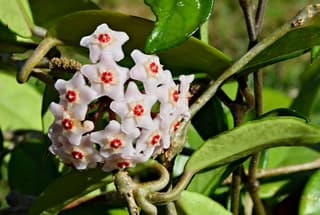
Wax Plant
Hoya
Hoya is a large genus of tropical and subtropical climbing and epiphytic plants in the family Apocynaceae, native to Asia, Australia, and the Pacific islands. With over 300 species, Hoyas are among the most beloved houseplants in the world, prized for their thick waxy leaves and clusters of star-shaped, often fragrant flowers. They are exceptionally well-suited to indoor growing and are considered ideal plants for beginners due to their low maintenance requirements.
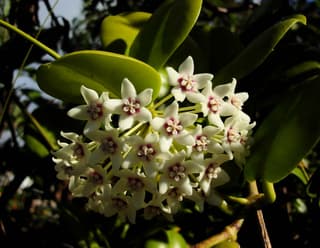
Common Waxflower
Hoya australis
Hoya australis, known as the common waxflower, is a fast-growing evergreen vine native to eastern and northern Australia, Papua New Guinea, and nearby Pacific islands. Its thick, glossy, succulent-like leaves store water, helping the plant withstand occasional drought. Established plants produce rounded clusters of up to 40 star-shaped, waxy white flowers with deep red centers, prized for their strong, sweet fragrance and abundant nectar.
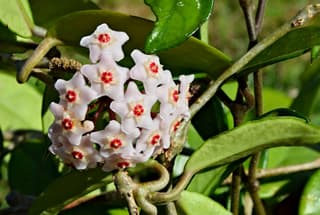
Wax Plant
Hoya carnosa
Hoya carnosa is a beloved tropical vine native to East Asia and Australia, prized for its waxy, succulent-like leaves and stunning clusters of star-shaped, fragrant flowers. This long-lived houseplant can thrive for decades with minimal care, making it perfect for beginners. The plant produces unique umbrella-shaped flower clusters that are pink or white with red centers and emit a sweet fragrance, especially in the evening. It has received the Royal Horticultural Society Award of Garden Merit.
Krimson Queen Wax Plant
Hoya carnosa 'Krimson Queen'
Hoya carnosa 'Krimson Queen' is a variegated cultivar of the classic wax plant, an epiphytic vining member of the Apocynaceae family native to East and Southeast Asia. Its thick, heart-shaped leaves carry a broad creamy-white margin that blushes pink under strong light, framing a deep green center. A slow but rewarding grower, mature plants produce ball-shaped clusters of small, star-shaped, waxy, fragrant pink-and-white flowers.
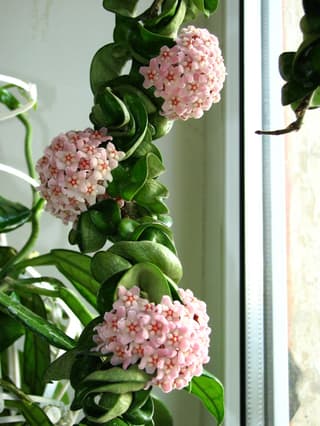
Hindu Rope Plant
Hoya compacta
Hoya compacta, commonly known as the Hindu rope plant, is a cultivar of Hoya carnosa prized for its thick, waxy leaves that curl and fold back on themselves along trailing, rope-like stems. Native to East Asia and Australia, this slow-growing epiphytic vine is grown indoors for its unusual sculptural foliage and clusters of fragrant, star-shaped flowers.
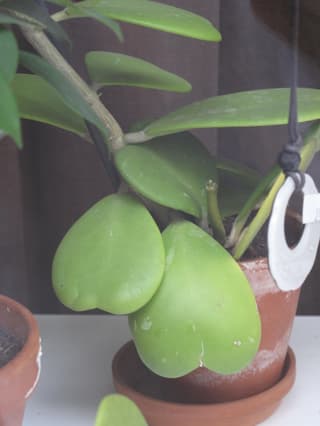
Sweetheart Hoya
Hoya kerrii
Hoya kerrii is a charming tropical vine native to Southeast Asia, famous for its thick, heart-shaped succulent leaves. This slow-growing epiphyte produces fragrant star-shaped flowers in clusters and is beloved as a symbol of love and affection.
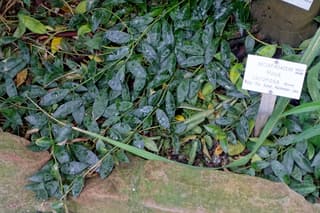
Cinnamon-scented Hoya
Hoya lacunosa
Hoya lacunosa is a compact tropical vine native to the rainforests of Malaysia and Indonesia. Beloved for its intensely sweet, cinnamon-like fragrance — strongest at dusk and into the night — it produces dense clusters of small, star-shaped white flowers. A popular and rewarding houseplant, especially among hoya collectors.

Wax Plant Memoria
Hoya memoria
Hoya memoria, also known by its synonym Hoya gracilis, is a trailing epiphytic vine native to the Philippines. It features dark green, pointed, slightly succulent leaves with a distinctive waxy texture. Beloved by indoor plant enthusiasts, it produces clusters of fuzzy, raspberry-pink star-shaped flowers with a sweet caramel fragrance during spring and summer. Its vining habit makes it ideal for hanging baskets and shelves.
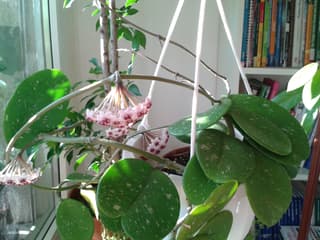
Obovata Wax Plant
Hoya obovata
Hoya obovata is a tropical epiphytic climber native to the rainforests of India, Indonesia, and Fiji. It is prized for its thick, waxy, round-to-oval dark green leaves often adorned with silver splash markings. It produces sweetly fragrant, star-shaped pink flowers arranged in globe-like umbels with a reddish central corona.
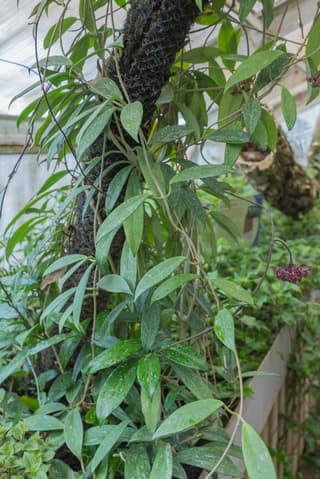
Wax Flower Vine
Hoya pubicalyx
Hoya pubicalyx is a vigorous tropical vining plant native to the Philippines, prized for its glossy, lance-shaped leaves and spectacular dark-pink to deep-crimson star-shaped flowers arranged in rounded umbels. The blooms have a sweet, pleasant fragrance and appear repeatedly from the same spurs, making it a long-lived flowering houseplant. It is one of the most popular hoyas in cultivation due to its reliable blooming and ease of care.
Hoya Burtoniae
Hoya sp. aff. burtoniae
Hoya sp. aff. burtoniae is a fuzzy-leaved trailing epiphyte closely related to Hoya burtoniae, native to the forests of the Philippines. Its small, velvety, almond-shaped leaves blush deep burgundy-red in bright light, and mature vines reward patient growers with clusters of tiny, fuzzy, star-shaped flowers with a red-and-gold corona and a sweet, honey-like fragrance. Grown in a hanging basket or on a trellis, it makes a striking, low-maintenance addition to any bright indoor space.
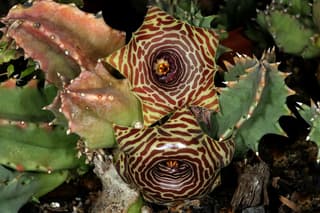
Lifesaver Plant
Huernia
Huernia is a genus of low-growing, clump-forming succulents native to eastern and southern Africa, prized for their soft, toothed, cucumber-like stems and unusual star-shaped flowers. The most widely cultivated species, Huernia zebrina, produces cream-to-yellow blooms marked with maroon zebra-like stripes and a glossy, donut-shaped center ring that resembles a lifesaver candy - the source of its common name. Like other members of the milkweed subfamily (Apocynaceae, Asclepiadoideae), its flowers emit a faint carrion-like odor to attract fly pollinators.
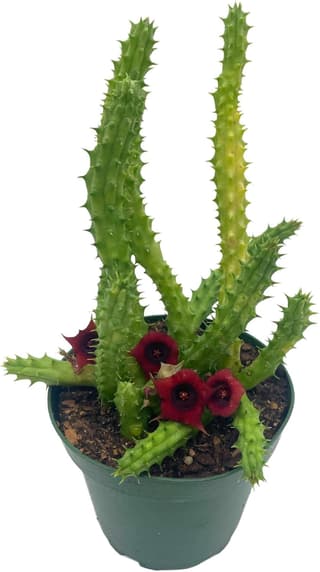
Red Dragon Flower
Huernia schneideriana
Huernia schneideriana is a fascinating succulent native to East Africa. It features grayish-green, cylindrical stems with prominent teeth along the edges. Its flowers are the main highlight: small, bell-shaped or star-shaped, with a velvety interior of dark red or intense burgundy. It is a low-growing or slightly trailing plant, making it ideal for hanging baskets or succulent collections in small spaces.
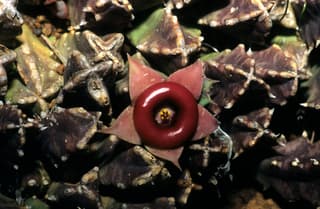
Lifesaver Cactus
Huernia zebrina
Huernia zebrina, commonly called the lifesaver cactus, is a low-growing succulent from the family Apocynaceae native to southern Africa (Namibia, Botswana, South Africa, Zimbabwe and Mozambique). Its toothed, four-angled stems form dense mats, and from late spring through summer it produces striking star-shaped flowers with a raised, glossy red-and-cream ring at the center that resembles a life-saver candy. The blooms emit a faint carrion scent to attract fly pollinators.
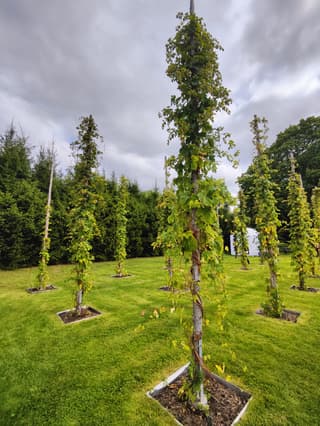
Hops
Humulus lupulus
Hops (Humulus lupulus) is a vigorous, perennial climbing plant in the hemp family (Cannabaceae), native to Europe, North Asia, and North America. It is known for its impressive growth rate—under optimal conditions, shoots can grow up to 7 inches (18 cm) per day in early summer, and the plant can reach 20–26 feet (6–8 meters) in length during a single growing season. The plant is dioecious: female plants produce the characteristic cone-shaped inflorescences rich in bitter substances (humulones and lupulones) and essential oils. These cones are indispensable in brewing beer, providing bitterness, aroma, and preservative properties. Hops have also been used medicinally in folk medicine for hundreds of years, particularly as a sedative.
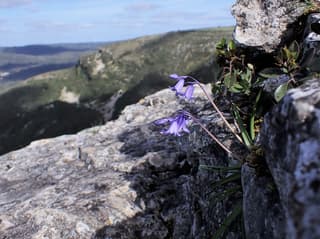
Spanish Bluebell
Hyacinthoides hispanica
The Spanish Bluebell (Hyacinthoides hispanica) is a bulbous perennial native to the Iberian Peninsula, prized for its nodding bell-shaped flowers in shades of blue, lavender, pink, or white that bloom in mid to late spring. It naturalizes readily, forming stunning colonies under deciduous trees. Caution: all plant parts are toxic if ingested.
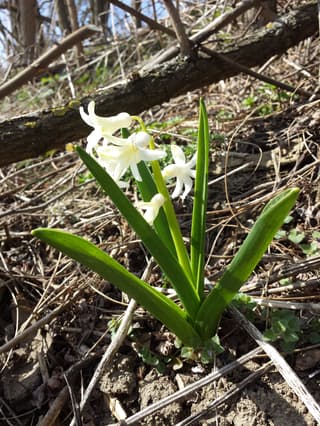
Common Hyacinth
Hyacinthus orientalis
Hyacinthus orientalis, commonly known as the Common Hyacinth or Garden Hyacinth, is a bulbous perennial prized for its intensely fragrant, densely packed flower spikes that bloom in spring. Native to the Eastern Mediterranean and Asia Minor, it produces upright stalks bearing clusters of bell-shaped flowers in shades of blue, violet, white, pink, and yellow. After blooming, the foliage dies back and the bulb remains dormant until the next season.
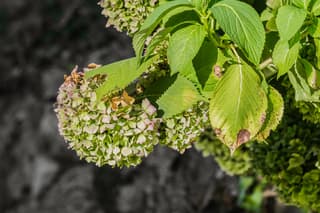
Panicle Hydrangea
Hydrangea paniculata
Hydrangea paniculata, commonly known as Panicle Hydrangea, is a deciduous shrub native to China, Japan, and Russia. It is celebrated for its large cone-shaped flower clusters (panicles) that bloom from mid-summer through fall, transitioning from creamy white to shades of pink. It is the most sun-tolerant and cold-hardy hydrangea species.
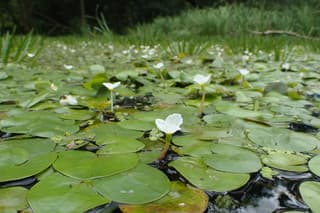
Frogbit
Hydrocharis
Hydrocharis is a small genus of five free-floating aquatic plants in the frogbit family (Hydrocharitaceae), found across Europe, Asia, parts of Africa, New Guinea and the Americas. The one usually grown in garden ponds is European frogbit, Hydrocharis morsus-ranae: rosettes of round to kidney-shaped glossy leaves about 3 cm across, often reddish underneath, floating on the surface with long dangling roots. Plants spread quickly by runners into mats 0.5-1 m wide but stay only about 10 cm tall. In summer they bear three-petalled white flowers, 2-3 cm across, with a yellow spot at the base of each petal; male and female flowers grow on separate plants. In autumn the plant dies back and survives the winter as small dormant buds (turions) that sink to the bottom and float up again in spring. In warmer parts of Asia its relative Hydrocharis dubia plays the same role in ponds and paddies.
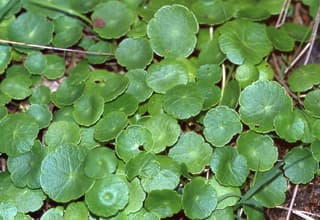
Marsh pennywort
Hydrocotyle vulgaris
Marsh pennywort (Hydrocotyle vulgaris) is a low, creeping perennial of the family Araliaceae, native to wet meadows, bogs, and pond margins across Europe. Its rounded, umbrella-shaped leaves form a dense mat that spreads readily over saturated soil or shallow water, making it a popular marginal plant for ponds and bog gardens.
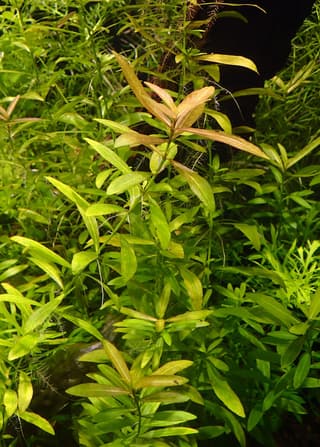
Dwarf Hygrophila
Hygrophila polysperma
Hygrophila polysperma is an aquatic plant in the Acanthaceae family, native to India and other areas of South and Southeast Asia. Since 1945, it has been very popular in the aquarium hobby due to its rapid growth and extreme hardiness. It features upright stems with opposite leaves of a bright green color that can turn pink or orange near the light source. It reaches approximately 10-18 inches (25-45 cm) in cultivation. Warning: In some regions, such as Florida and other US states, it is considered an invasive species and its import and sale are prohibited; therefore, it must never be released into natural waterways.
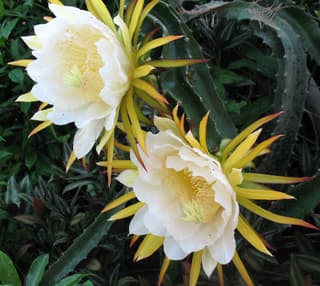
Red Pitaya
Hylocereus costaricensis
Red Pitaya (Hylocereus costaricensis) is a climbing cactus native to Costa Rica and Central America, prized for its intensely red, sweeter-tasting flesh compared to the white-fleshed variety. This succulent vine has triangular, fleshy stems that climb using aerial roots and needs a trellis or support to thrive. It produces enormous white flowers that bloom only at night and wilt by morning, followed by pink-skinned fruit covered in leathery scales that reveal a vivid ruby pulp dotted with tiny edible black seeds.

Dragon Fruit
Hylocereus undatus
The dragon fruit (Hylocereus undatus) is an epiphytic climbing cactus native to Central America and Mexico, now widely cultivated in tropical and subtropical regions for its exotic fruits with pink skin and white pulp speckled with black seeds. Its green, triangular, and succulent stems grow like vines, clinging to trees, walls, or trellises via aerial roots. At night, it produces massive, fragrant white flowers that open for only a few hours, earning it the nickname 'Queen of the Night'.
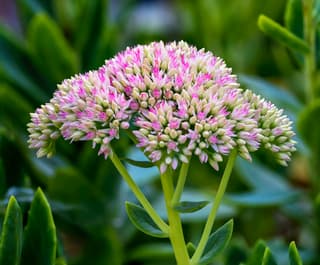
Autumn Joy Sedum
Hylotelephium
Hylotelephium is a genus of succulent perennial plants in the family Crassulaceae, formerly classified under Sedum. Commonly known as Autumn Joy Sedum or showy stonecrop, these plants are beloved for their fleshy, blue-green leaves and large, dome-shaped flower heads that emerge in late summer and persist through fall, providing late-season interest in the garden. Native to Asia and Europe, they are exceptionally hardy, drought-tolerant, and attract butterflies, bees, and other pollinators in abundance.
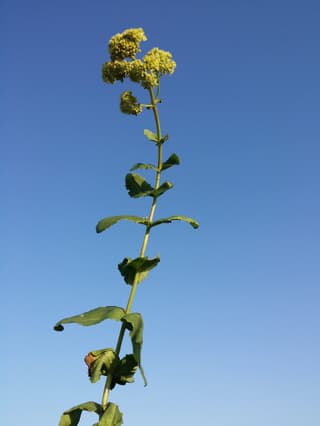
Great Stonecrop
Hylotelephium maximum
Hylotelephium maximum, commonly known as great stonecrop or orpine, is a robust, clump-forming succulent perennial in the Crassulaceae family native to Europe, the Caucasus, and western Siberia. It forms upright, fleshy stems 30-80 cm tall arising from a tuberous rootstock, with broad, opposite, grey-green succulent leaves. In late summer and autumn (September-October) it produces dense, flattened clusters of small creamy-white to pale pink flowers that attract bees and butterflies. Long treated as a subspecies of Hylotelephium telephium (as Sedum maximum), it thrives on dry, stony, calcareous slopes and forest edges at elevations up to 2,500 m, and is prized in gardens for its drought tolerance and low-maintenance nature.
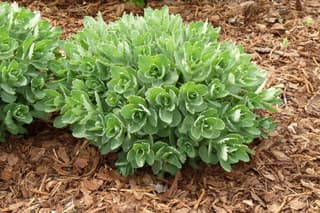
Showy Stonecrop
Hylotelephium spectabile
Hylotelephium spectabile, commonly known as Showy Stonecrop or Ice Plant, is a hardy succulent perennial native to China and Korea. It forms upright, clumping mounds of fleshy, blue-green leaves topped with flat-topped clusters of star-shaped pink flowers in late summer and fall — a magnet for butterflies and bees.
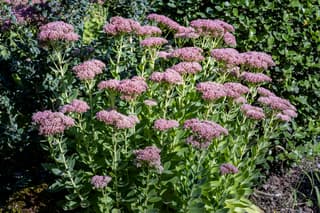
Orpine
Hylotelephium telephium
Orpine (Hylotelephium telephium) is a hardy Eurasian succulent perennial celebrated for its fleshy blue-green foliage and dense clusters of star-shaped flowers in shades of pink and purple from midsummer to autumn. Exceptionally drought-tolerant and cold-hardy to USDA zone 3, it thrives in sunny borders, rock gardens, and dry landscapes.
What are Easy Plants?
Easy Plants are ideal for beginners or people with little time for care. These species are tolerant of watering mistakes, light variations, and don't require constant attention. Perfect for those just starting out with plants.
Tips for Growing Easy Plants
To succeed with easy plants, remember: less is more. Avoid overwatering, choose a spot with adequate light, and let the soil dry between waterings. Most of these plants prefer to be 'forgotten' occasionally.