2343 Easy Plants | 2026 Guide - Page 34
Discover 2343 easy plants for your garden. Complete care guide.
2343 Easy Plants
Showing 1189-1224 of 2343
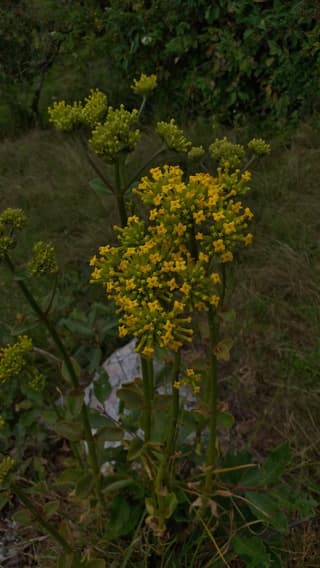
Dense-flowered Kalanchoe
Kalanchoe densiflora
Kalanchoe densiflora, commonly known as the dense-flowered kalanchoe, is an evergreen succulent native to southern Africa. It forms an upright, glabrous perennial with thick, fleshy oblong leaves and produces tall, densely packed clusters of tubular yellow-to-orange flowers in winter and spring. Valued for its drought tolerance and low-maintenance nature, it thrives in bright light and well-draining soil, making it a popular choice for sunny windowsills, rock gardens, and warm-climate landscaping.
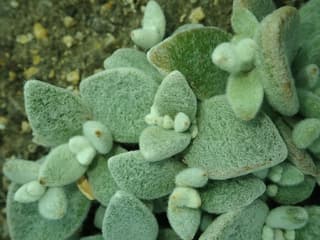
Snow white panda plant
Kalanchoe eriophylla
Kalanchoe eriophylla, known as the snow white panda plant, is a dwarf, densely branched succulent in the Crassulaceae family, native to Madagascar. Every part is cloaked in a thick coat of white, silvery hairs that shield the leaves from strong sun and water loss, forming a compact mat. In the cool season it bears small pink to violet flowers.
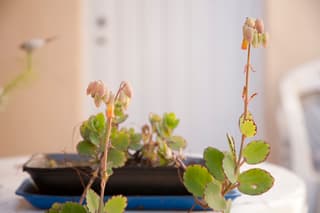
Lavender Scallops
Kalanchoe fedtschenkoi
A perennial shrubby succulent native to Madagascar, famous for its fleshy blue-gray leaves with scalloped edges that turn pink under intense sunlight. In winter, it produces beautiful clusters of bell-shaped, drooping flowers.
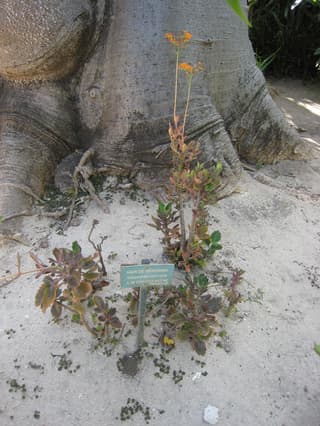
Christmas Tree Plant
Kalanchoe laciniata
Kalanchoe laciniata, commonly known as the Christmas Tree Plant, is a striking succulent native to tropical Africa and the Arabian Peninsula. It produces deeply dissected, fern-like green leaves that give it a tree-like silhouette, earning its festive common name. In spring and summer, it bears clusters of tubular yellow to orange flowers that attract pollinators.
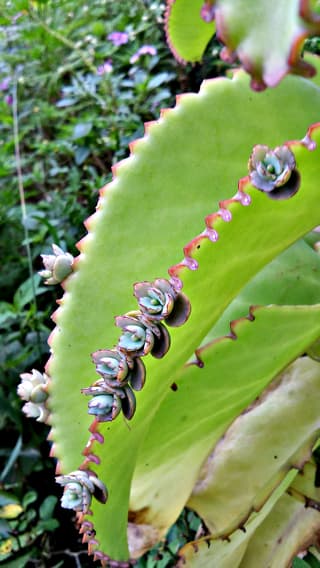
Big Mama Kalanchoe
Kalanchoe laetivirens
Kalanchoe laetivirens, commonly known as Big Mama or Mother of Thousands, is a succulent native to Madagascar in the family Crassulaceae. Its glossy green leaves produce countless tiny plantlets along their margins, which drop off and root readily — giving rise to its common name. It blooms in winter and early spring with small flowers in shades of pink, red, or orange.
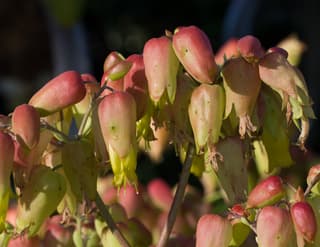
Milky Widow's Thrill
Kalanchoe laxiflora
Kalanchoe laxiflora, commonly known as Milky Widow's Thrill or Bell Kalanchoe, is a charming perennial succulent shrub native to central Madagascar. It produces clusters of delicate, pendulous bell-shaped flowers in shades of pink, coral, and orange on slender, arching stems. The fleshy blue-green leaves are often edged in red, and the plant freely produces tiny plantlets (bulbils) along leaf margins — a trait called vivipary — making it easy to propagate. This compact succulent thrives in bright light and dry conditions, making it an excellent choice for sunny windowsills, rock gardens, and xeriscaping.
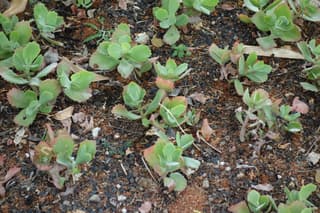
Tugela cliff-kalanchoe
Kalanchoe longiflora
Kalanchoe longiflora is a compact succulent shrublet from the Crassulaceae family, native to rocky cliffs and shale slopes of the Tugela River basin in KwaZulu-Natal, South Africa. It grows to about 40 cm tall, with sprawling, four-angled fleshy stems and limpet-shaped, bluish grey-green leaves that often blush pink to crimson-red in strong sun. From autumn into winter it produces clusters of tubular yellow flowers. As a cliff-dwelling (cremnophyte) species, its brittle stems readily snap and re-root from broken pieces, an adaptation to rockfall and erosion. It is drought and heat tolerant but sensitive to frost and overwatering.
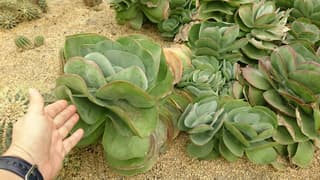
Flapjack Plant
Kalanchoe luciae
Kalanchoe luciae, commonly known as the Flapjack Plant or Paddle Plant, is a striking succulent native to Southern Africa. It produces large, flat, round leaves arranged in a rosette pattern — like a stack of pancakes. The leaves are pale silvery-green but develop vivid red or pink margins when exposed to bright sunlight or cool winter temperatures, making it a highly ornamental specimen.
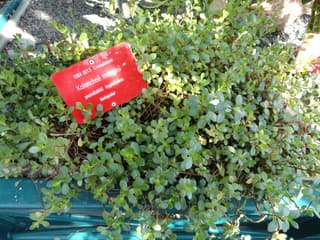
Chandelier Plant
Kalanchoe manginii
Kalanchoe manginii, commonly known as the Chandelier Plant or Beach Bells, is a trailing succulent native to Madagascar. It produces charming pendant tubular flowers in shades of orange-red during winter and spring, making it an excellent choice for hanging baskets and elevated planters. It belongs to the Crassulaceae family and is prized as an ornamental houseplant.
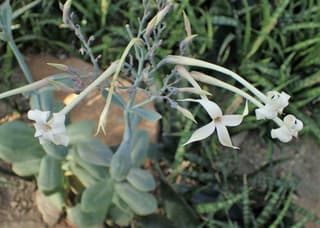
Penwiper Plant
Kalanchoe marmorata
The Penwiper Plant (Kalanchoe marmorata) is an easy-care succulent from Madagascar and East Africa, prized for its broad, scalloped, blue-green leaves marked with irregular purple-brown blotches that resemble a marble pattern. In late winter to early spring it sends up tall stems topped with clusters of white or pinkish tubular flowers.
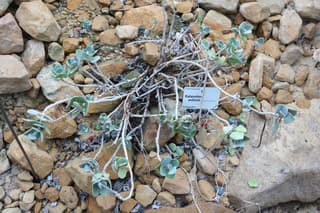
Millot Kalanchoe
Kalanchoe millotii
Shrubby succulent native to Madagascar with scalloped, grey-green leaves covered in soft felt-like hairs. Reaches about 30 cm and bears yellow-green flowers in loose clusters.

Copper Spoons
Kalanchoe orgyalis
Kalanchoe orgyalis, commonly known as Copper Spoons, is a striking succulent shrub native to Madagascar. Its thick, spoon-shaped leaves are covered in fine hairs and shift from silvery-green to a rich coppery-bronze as they mature and receive more sun. Left to grow, it forms a woody, multi-stemmed shrub up to 1.8 m (6 ft) tall, topped with clusters of small yellow flowers in spring.
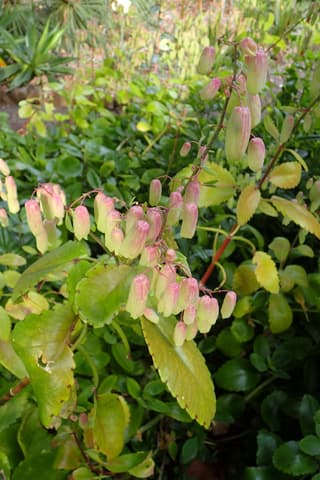
Cathedral Bells
Kalanchoe pinnata
Kalanchoe pinnata, also known as Cathedral Bells, Air Plant, or Miracle Leaf, is a succulent perennial native to Madagascar and naturalized throughout the tropics worldwide. Its botanical synonym is Bryophyllum pinnatum. The plant is celebrated for its remarkable ability to produce tiny plantlets along the serrated edges of its leaves — a phenomenon known as vivipary. Pendant red-orange flowers appear in late winter and spring. Kalanchoe pinnata has a long history of use in traditional medicine across tropical cultures, most notably for the treatment of kidney stones.
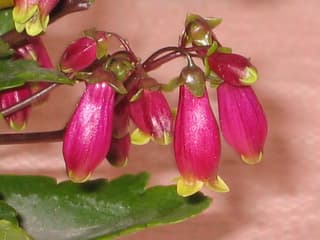
Pearl Bells
Kalanchoe porphyrocalyx
Kalanchoe porphyrocalyx, commonly called Pearl Bells or the pendent kalanchoe, is a succulent species in the family Crassulaceae native to the rainforests of central and north-eastern Madagascar, where it often grows epiphytically. It forms slender, upright stems bearing blue-grey, rectangular leaves with gently serrated edges. In late winter through spring it produces pendent, bell-shaped flowers with a tube in shades of red, rose-pink or pale yellow topped by yellow-green to orange petals, all held within a distinctive purple calyx -- the source of its species name porphyrocalyx ("purple calyx").
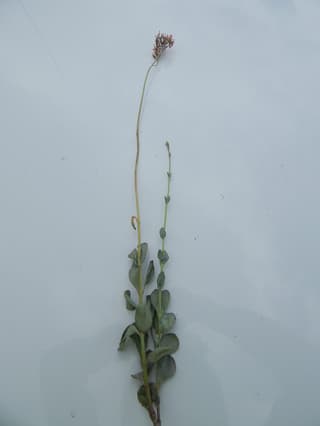
Common Kalanchoe
Kalanchoe rotundifolia
Kalanchoe rotundifolia is an evergreen succulent from southern Africa with rounded, grey-green fleshy leaves on branching stems. It can reach about 1.2 m in height. In autumn and early winter it carries clusters of orange-red tubular flowers with yellowish-green bases on tall stalks. It is very drought tolerant and thrives in sun and well-drained soil.

Paddle Plant
Kalanchoe thyrsiflora
Kalanchoe thyrsiflora is a striking succulent native to South Africa, prized for its large, flat, paddle-shaped leaves that form a neat basal rosette. The fleshy grey-green leaves develop vivid red margins when exposed to full sun and cool temperatures. A monocarpic species, it produces a tall flowering stalk with sweetly scented yellow-white tubular flowers in late winter to spring, after which the main rosette dies but produces offsets.
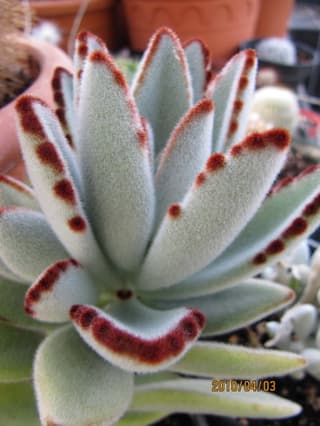
Panda Plant
Kalanchoe tomentosa
The Panda Plant (Kalanchoe tomentosa) is an ornamental succulent native to Madagascar, celebrated for its oval leaves densely covered in soft silver-white felt with distinctive brown or reddish tips — giving it an unmistakable panda-like appearance. Belonging to the Crassulaceae family, it grows slowly and compactly, reaching up to 45 cm in height. The tiny hairs (trichomes) coating its leaves are not merely decorative: they act as thermal insulation and dramatically reduce water loss, making this plant exceptionally drought-tolerant and resilient.
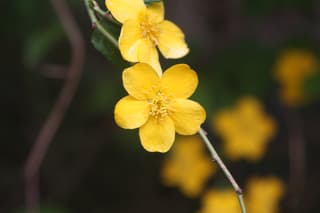
Japanese Kerria
Kerria japonica
Japanese Kerria (Kerria japonica) is a deciduous shrub native to the mountainous regions of China and Japan. It is celebrated for its brilliant golden-yellow flowers that bloom profusely in spring, covering its arching, bright green stems. A highly adaptable and low-maintenance plant, it thrives in shaded gardens and tolerates cold winters down to USDA Zone 4.
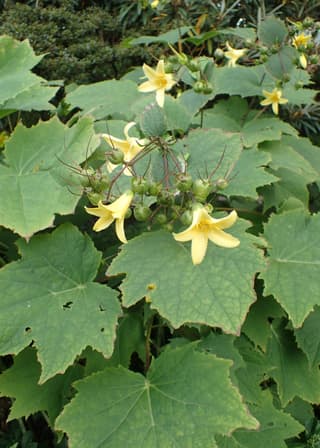
Yellow Wax Bells
Kirengeshoma palmata
Yellow Wax Bells (Kirengeshoma palmata) is a clump-forming, deciduous perennial in the hydrangea family (Hydrangeaceae), native to woodland environments in Japan and eastern China. It forms 24–48 inch high, shrub-like mounds with dark burgundy stems and large, maple-like, palmate leaves. In late summer and early autumn, it bears clusters of nodding, waxy, bell-shaped flowers in a soft yellow hue, later followed by characteristic three-pronged seed capsules.

Kleinia
Kleinia
Kleinia is a genus of perennial succulents in the Asteraceae family, closely allied to Senecio. Native to the Canary Islands, North Africa, and parts of Asia, the genus comprises around 56 species featuring fleshy stems, silvery-blue foliage, and ornamental summer flowers. It is a low-maintenance plant ideal for rock gardens, dry borders, and container growing.
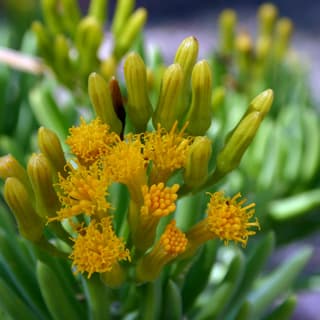
Succulent Bush Senecio
Kleinia barbertonica
Kleinia barbertonica, commonly known as Succulent Bush Senecio or Barberton Groundsel, is a fast-growing, shrubby succulent native to South Africa and Eswatini. It forms a dense, rounded bush of upright, blue-green cylindrical stems that resemble narrow fingers, topped with clusters of bright yellow-orange, citrus-scented flowers in winter. Highly drought-tolerant and low-maintenance, it thrives in bright sun and well-draining soil, making it a popular choice for xeriscaping, rock gardens, and container growing.

Trailing Jade
Kleinia petraea
Kleinia petraea, commonly known as Trailing Jade, is a low-growing succulent in the daisy family (Asteraceae), native to the highlands of Kenya and Tanzania in East Africa. Long known in cultivation under its older name, Senecio jacobsenii, it forms dense mats of fleshy, egg-shaped leaves on trailing stems that cascade up to 4 feet (120 cm) over the edge of a hanging basket or container. The foliage is bright green but develops purple, mauve, or bronze tones when grown in strong light or under drought stress, and in fall or winter mature plants may send up erect stalks bearing clusters of bright orange, rayless flowers.
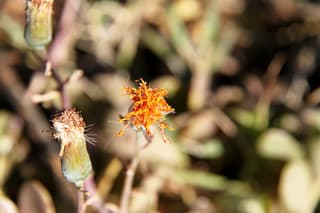
Trailing Jade
Kleinía petraea
Trailing Jade is a creeping and pendulous succulent from the Asteraceae family, native to the rocky regions of Kenya and Tanzania in East Africa. Its fleshy, highly branched stems can exceed 3 feet in length, covered with oval, succulent leaves that are green with shades of purple, mauve, or brown along the edges. In fall and winter, it produces upright stalks with tubular orange flowers that lack visible petals, characteristic of the genus. It is often confused with the common Jade Plant (Crassula ovata) due to the appearance of its leaves, although they share no botanical relationship.
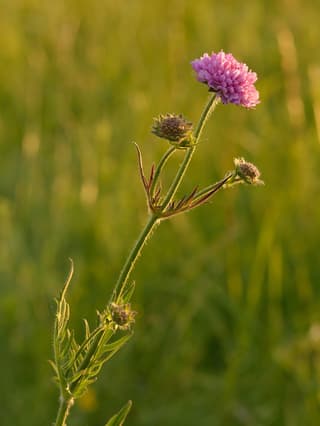
Field Scabious
Knautia arvensis
Field Scabious is a perennial meadow herb from the honeysuckle family (Caprifoliaceae), growing to a height of 30 to 150 cm. Its upright, slightly grooved stem bears grey-green, dull leaves with lyre-shaped to pinnately lobed blades. From May to September, blue to pinkish-purple flowers appear, clustered into conspicuous, approximately 4 cm large flower heads. It grows in meadows, field margins, and light woodlands, where it prefers drier, calcareous soils from lowlands to mountainous regions. It is an important honey plant and a host plant for many species of butterflies and beetles.
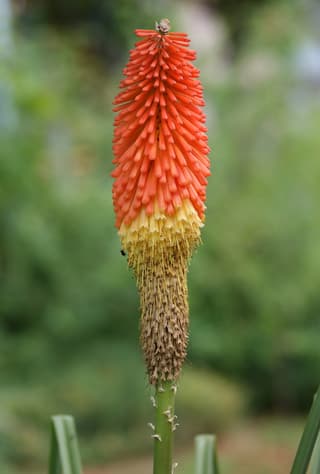
Red Hot Poker
Kniphofia uvaria
Kniphofia uvaria, commonly known as Red Hot Poker or Torch Lily, is a striking herbaceous perennial native to South Africa. Its bold torch-like flower spikes display vivid shades of red, orange, and yellow, making it one of the most visually dramatic plants in the garden. Drought-tolerant and low-maintenance once established, it thrives in sunny, well-drained beds and borders.
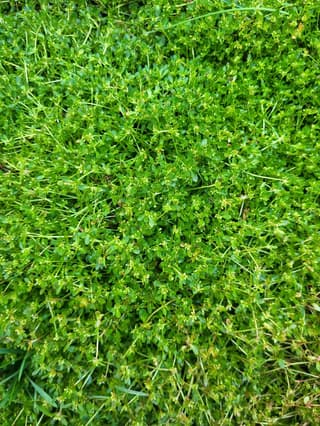
Koenigia (Iceland-Purslane)
Koenigia
Koenigia is a genus of annual and perennial herbs in the buckwheat family (Polygonaceae), expanded in 2015 to absorb the former genera Aconogonon and part of Persicaria, giving it roughly 41 species. Its type species, Koenigia islandica (Iceland-purslane), is one of the smallest flowering plants on Earth, standing only 1-2 cm tall, and is considered the hardiest annual plant known, thriving on wet gravel and scree in arctic tundra and alpine meadows across the Northern Hemisphere. Other species absorbed into the genus form larger, spreading knotweed-type herbs. Because the genus spans such extremes of size and habit, this record generalizes care from the wet, cold, open habitats typical of the group.
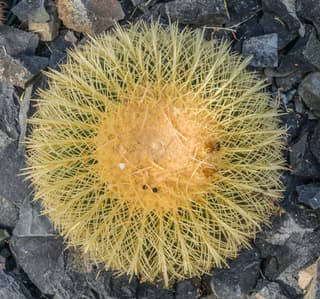
Golden Barrel Cactus
Kroenleinia grusonii
The Golden Barrel Cactus (Kroenleinia grusonii, synonym Echinocactus grusonii) is a globose cactus native to central Mexico, belonging to the Cactaceae family. It is recognizable by its spherical, ribbed body covered with dense golden spines (a white-spined variety also exists) which, with age, can take on a more oblong shape, exceeding one meter in height. It grows very slowly and can live for decades; in nature, it is considered endangered due to poaching and dam construction in its original habitat.
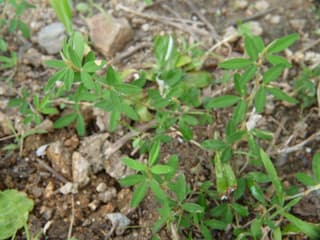
Japanese Clover
Kummerowia striata
Japanese clover (Kummerowia striata) is a low-growing, prostrate annual legume in the pea family, native to China and Japan and now widely naturalized across the eastern and central United States. It forms wiry, branching mats 5-40 cm tall with small trifoliate leaves whose leaflets show distinctive parallel veins angled toward the leaf margin. From midsummer into fall it produces tiny pink-to-purple, pea-like flowers with a white upper petal, followed by single-seeded pods. As a nitrogen-fixing legume it enriches poor, compacted soils and is valued as livestock forage, erosion control cover, and wildlife food, though it can also behave as a weedy colonizer of disturbed ground and thin turf.
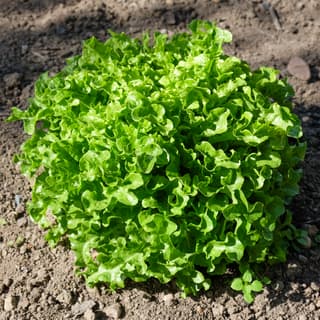
Iceberg lettuce
Lactuca sativa
Lactuca sativa, specifically the Iceberg variety, is characterized by its light green, extremely crisp leaves that grow in a compact, rounded head similar to a cabbage. It is widely valued in culinary arts for its firm texture and post-harvest heat resistance.
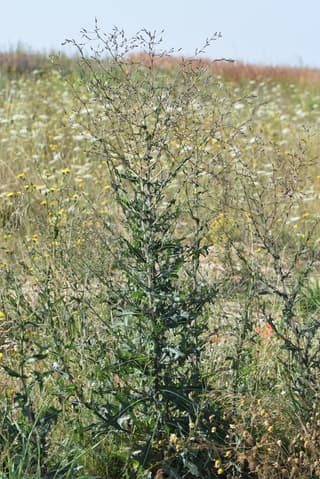
Prickly Lettuce
Lactuca serriola
Lactuca serriola, commonly known as Prickly Lettuce, is an annual or biennial herb native to Europe and the Mediterranean region. It grows vigorously in open disturbed ground, roadsides, and field margins, reaching up to 2 metres tall. The plant produces pale yellow daisy-like flowers from summer through early autumn and is notable for leaves that align north-south, earning it the name "compass plant." Its milky latex, known as lactucarium, has been used medicinally for centuries.
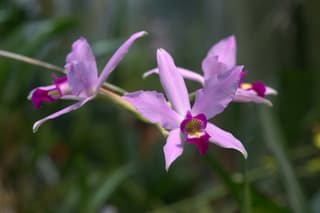
Two-edged Laelia
Laelia anceps
Laelia anceps is an epiphytic orchid from the Orchidaceae family, native to eastern Mexico (rarely Honduras and Guatemala), where it grows on trees in oak-pine forests and coffee plantations at altitudes of 500 to 2,400 meters. It produces ovoid, flattened pseudobulbs (6-12 cm) with one, rarely two, stiff leathery leaves. A long (45-60 cm) flower spike emerges from the base of the pseudobulb, bearing 2 to 4 fragrant flowers 6-12 cm in diameter, ranging in color from lavender to pink, purple, and white. It blooms from November to January. It is one of the most cold-hardy species in the Cattleya alliance, tolerating short-term temperatures just above freezing as well as summer heat exceeding 35°C.
Japanese Crape Myrtle
Lagerstroemia fauriei
A deciduous tree native to Japan, reaching 20 to 30 feet in height, featuring a vase-shaped canopy and exfoliating bark in shades of copper, gray, and brown. It blooms in summer with panicles of white flowers. It is highly resistant to powdery mildew.
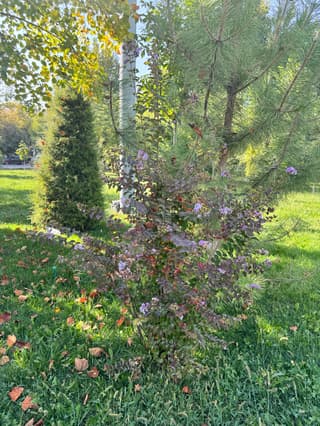
Crepe Myrtle
Lagerstroemia indica
Lagerstroemia indica, commonly known as Crepe Myrtle, is a small tree or large shrub native to Asia. It is widely cultivated in tropical and temperate climates due to its spectacular flowering that occurs in summer and fall. Its flowers have crinkled and delicate petals, resembling crepe paper. In addition to the flowers, it stands out for its smooth, light-colored trunk that peels to reveal brown tones, providing ornamental interest even in winter when the plant loses its leaves.
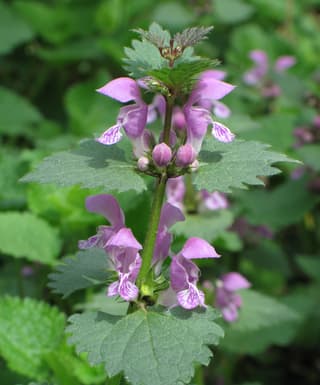
Dead Nettle
Lamium
Lamium is a genus of low-growing plants in the family Lamiaceae, commonly called dead nettle for their nettle-like leaves that lack stinging hairs. Widely used as ground cover in shaded gardens.
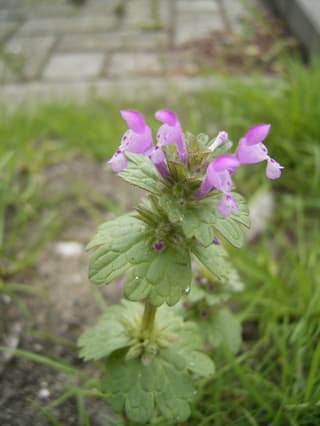
Henbit Dead-nettle
Lamium amplexicaule
Lamium amplexicaule, commonly known as henbit dead-nettle, is a low-growing winter annual in the mint family (Lamiaceae), native to Europe and Asia and now naturalized across North America. It forms mats of scalloped, rounded leaves that clasp the stem, topped by small tubular pink-purple flowers in early spring. Despite its nettle-like appearance, henbit has no stinging hairs and is completely harmless to touch. It thrives in disturbed soils, garden beds, and lawns, often being one of the first plants to flower in late winter.
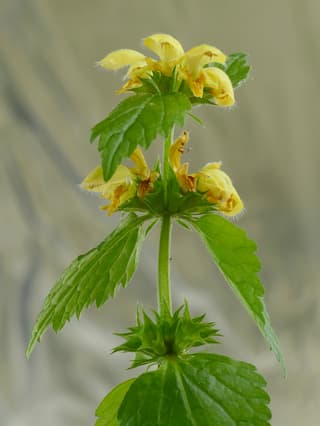
aluminium plant
Lamium galeobdolon
Lamium galeobdolon, commonly known as Yellow Archangel, is a vigorous perennial groundcover. It is distinguished by its striking variegated leaves, which often feature silver-metallic patterns that give it the nickname 'aluminium plant' in some regions. In late spring, it produces upright spikes of hooded, bright yellow flowers. It is exceptionally hardy and thrives in the deep shade of woodland gardens where other plants struggle to grow.
What are Easy Plants?
Easy Plants are ideal for beginners or people with little time for care. These species are tolerant of watering mistakes, light variations, and don't require constant attention. Perfect for those just starting out with plants.
Tips for Growing Easy Plants
To succeed with easy plants, remember: less is more. Avoid overwatering, choose a spot with adequate light, and let the soil dry between waterings. Most of these plants prefer to be 'forgotten' occasionally.