633 Medium Pet Safe | 2026 Guide - Page 11
Find 633 medium pet safe. Complete guide for your garden.
633 Pet Safe with medium level
Showing 361-396 of 633

Chinese Fan Palm
Livistona chinensis
Livistona chinensis, commonly known as the Chinese Fan Palm or Fountain Palm, is a slow-growing tropical palm native to southern Japan, Taiwan, and southern China. Its distinctive fan-shaped fronds with gracefully drooping tips can reach up to 15 meters tall in the wild, making it a striking ornamental choice for gardens and spacious interiors.
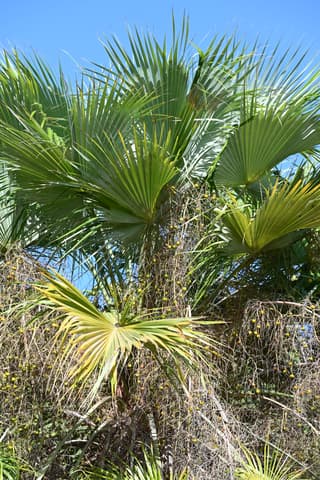
Footstool Palm
Livistona rotundifolia
Livistona rotundifolia, commonly known as the Footstool Palm, is an elegant tropical palm native to Southeast Asia. It is characterized by its large, glossy, rounded leaves that resemble a fan, hence its popular name. It is a moderate-growing plant that can reach considerable heights in its natural habitat, though its size remains more contained when grown in pots. Highly valued for its ornamental beauty, it is ideal for well-lit interiors and tropical gardens.
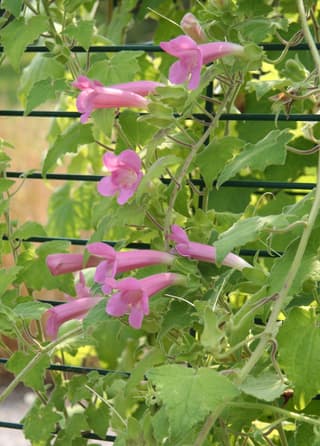
Climbing Snapdragon
Lophospermum erubescens
Lophospermum erubescens, also known as climbing snapdragon or Mexican twist, is a tender perennial climber native to the mountainous regions of Mexico, often grown as an annual in colder climates. Related to snapdragons (Antirrhinum), the plant features heart- to triangular-shaped, hairy leaves and large, pink to white trumpet-shaped flowers that bloom from spring to fall and attract hummingbirds. Its twining leaf stalks make the plant well-suited for trellises, hanging baskets, and training along fences and lattices.
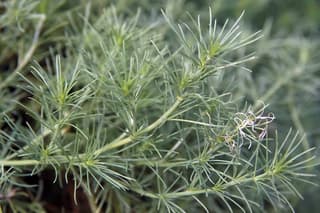
Parrot's Beak
Lotus berthelotii
Lotus berthelotii, commonly known as Parrot's Beak, is a trailing perennial native to the Canary Islands and Cape Verde. It produces striking scarlet, claw-shaped flowers that resemble a parrot's beak, set against fine silvery foliage. A favourite for hanging baskets and garden walls.
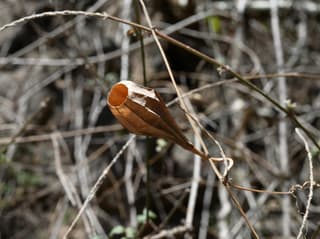
Angled Luffa
Luffa acutangula
Angled Luffa (Luffa acutangula) is a fast-growing annual climbing vine in the Cucurbitaceae family, native to tropical Asia. Its young fruits are a popular vegetable in Asian cuisine, while mature fruits develop internal fibrous networks used as natural sponges. It thrives in warm, humid climates with full sun exposure.
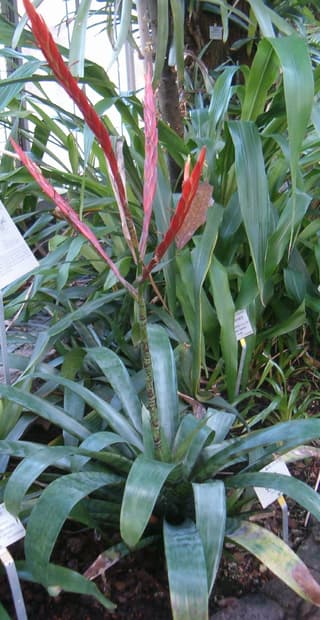
Flaming Sword Bromeliad
Lutheria
Lutheria is a genus of striking epiphytic bromeliads native to the tropical forests of Venezuela and Trinidad. Best known for its dramatic sword-shaped flower bract that blazes red, orange, and yellow, Lutheria splendens is the most popular species grown as an ornamental houseplant. As an epiphyte, it grows anchored to trees rather than soil, absorbing water and nutrients through its central cup and leaf scales.
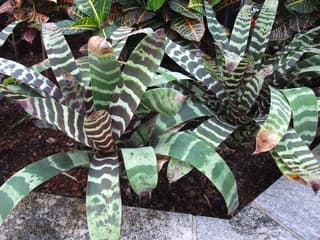
Flaming Sword
Lutheria splendens
The Flaming Sword (Lutheria splendens, formerly Vriesea splendens) is a striking tropical bromeliad native to Venezuela, the Guianas, and Trinidad & Tobago. It is prized for its dramatic sword-shaped red bract and dark-striped strap-like leaves. As an epiphyte, it naturally grows on trees and rocks, absorbing water and nutrients primarily through its central tank and specialized leaf scales called trichomes.
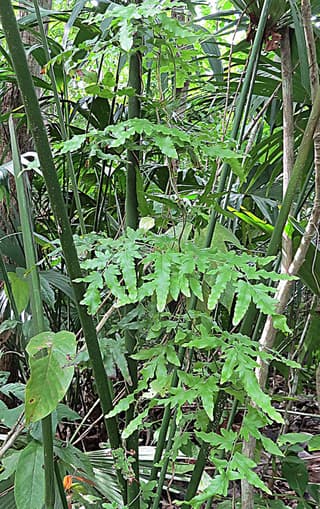
Climbing Fern
Lygodium venustum
Lygodium venustum, known as the climbing fern, is a climbing pteridophyte native to Central and South America, especially abundant in dry forests and disturbed areas from Mexico to Paraguay. Its delicate fronds wind around supports with natural elegance, forming curtains of bright green foliage. It is valued both as an ornamental plant and for its traditional medicinal use—prepared roots were used as an antivenom in indigenous communities in Nicaragua.
Fried Chicken Mushroom
Lyophyllum decastes
Lyophyllum decastes, commonly known as the Fried Chicken Mushroom, is an edible fungus that grows in dense clusters. It features a grayish-brown cap and resilient, cartilaginous flesh. It is frequently found along roadsides, in parks, and within deciduous forests, where it decomposes organic matter in the soil.
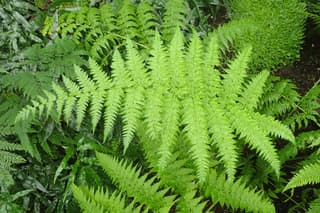
Swordfern
Macrothelypteris torresiana
Macrothelypteris torresiana is a large fern in the Thelypteridaceae family, native to tropical and subtropical regions of Asia and Africa (including Madagascar and Mauritius). Its bi- to tripinnate fronds, featuring a soft texture and lacy appearance, can reach about 90 cm in length, forming dense and striking clumps. It reproduces via spores released from sori protected by C-shaped indusia, as well as spreading through creeping rhizomes. Introduced as an ornamental plant in various parts of the Americas, it is now considered an invasive species in several regions, including Brazil (listed by the Horus Institute), where it colonizes riparian forests, forest edges, and humid, shaded areas.

Saucer Magnolia
Magnolia × soulangeana
The Saucer Magnolia is a deciduous hybrid tree, a cross between Magnolia denudata and Magnolia liliiflora, first bred in France around 1820 by Etienne Soulange-Bodin. It is celebrated for its large, cup-shaped flowers that appear in early spring before the leaves emerge, in shades of pink, purple, and white.
Kobus Magnolia
Magnolia kobus
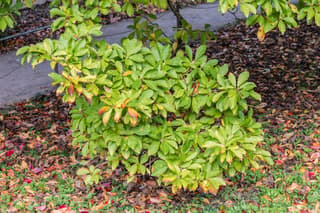
Kobus Magnolia (Magnolia kobus) is a deciduous flowering tree native to Japan and Korea, prized for its fragrant, cup-shaped white flowers that appear on bare branches in early spring before the leaves emerge. It grows into a pyramidal shape when young, maturing into a broad, rounded canopy 8-12m tall. Trees can take 15-25 years to reach full flowering maturity, but reward patient growers with a spectacular annual display.
Lily Magnolia
Magnolia liliiflora
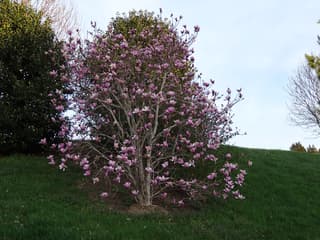
Magnolia liliiflora, commonly known as Lily Magnolia or Mulan Magnolia, is a deciduous flowering shrub native to southwestern China (Sichuan and Yunnan). It grows as a bushy, multi-trunked shrub up to 4 meters tall, producing large, goblet-shaped pink-to-purple flowers with a light citrus fragrance in early spring, before its leaves emerge. It is one of the parent species behind the widely planted Saucer Magnolia hybrid.
Star Magnolia
Magnolia stellata
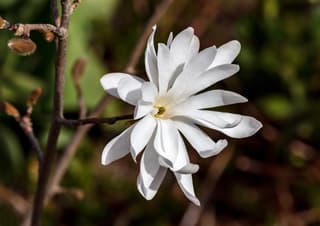
Star Magnolia (Magnolia stellata) is a small, deciduous tree or large shrub native to Japan. Renowned for its stunning star-shaped white flowers that bloom in early spring before the leaves emerge, it is one of the first ornamental plants to bloom each season, creating a breathtaking display of delicate petals even in late winter conditions.
Sweetbay Magnolia
Magnolia virginiana
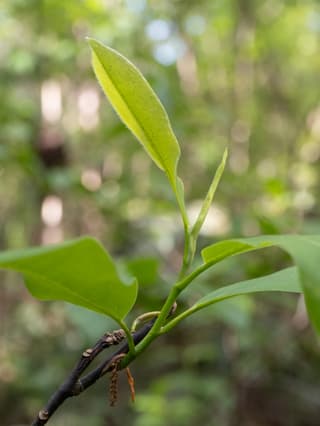
Sweetbay magnolia is a semi-evergreen to deciduous small tree native to wetlands and swampy woods of the eastern United States. It produces fragrant, lemon-scented creamy-white flowers from late spring through summer and glossy dark green leaves with silvery undersides that shimmer in the breeze.
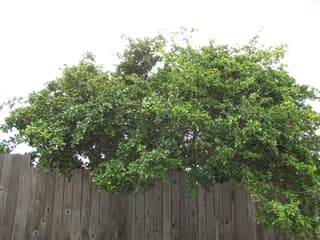
Barbados cherry
Malpighia emarginata
Malpighia emarginata, commonly known as Barbados cherry or acerola, is an evergreen tropical shrub or small tree native to the Lesser Antilles, Central America, and northern South America. Prized worldwide for its small red drupes containing extraordinary concentrations of vitamin C — roughly 1,677 mg per 100 g, making it one of the richest natural sources on earth — the plant also bears delicate pink or lavender flowers multiple times a year, providing nearly year-round ornamental interest alongside its exceptional nutritional value.
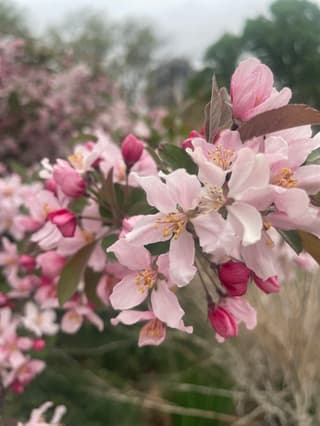
Japanese Flowering Crabapple
Malus × floribunda
The Japanese Flowering Crabapple (Malus × floribunda) is a small deciduous ornamental tree in the Rosaceae family, celebrated for its spectacular spring bloom. Deep pink buds open into white to pale pink flowers that smother the arching branches before the leaves emerge. In autumn it bears small yellow-red pome fruits that are a favorite of birds.
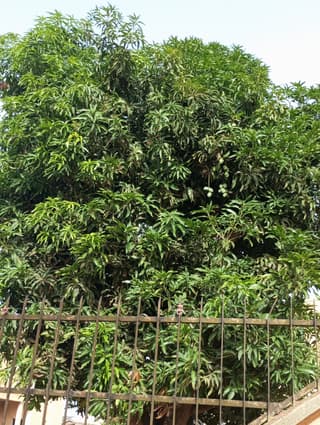
Mango Tree
Mangifera indica
The mango tree (Mangifera indica) is a tropical fruit tree native to South Asia, particularly India, where it has been cultivated for over 4,000 years. It belongs to the family Anacardiaceae and can reach up to 30 meters in height under ideal conditions. Widely regarded as the "King of Fruits," it holds immense cultural, economic, and culinary importance across the tropical world.
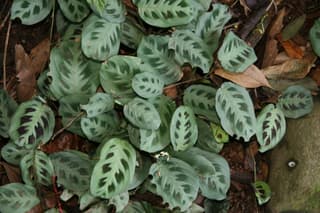
Prayer Plant (genus)
Maranta
Maranta is a genus of tropical plants in the family Marantaceae, native to tropical Central and South America. Best known for M. leuconeura (the prayer plant), the genus is celebrated for its striking patterned foliage and the fascinating nyctinastic movement of folding leaves upward at night.

Arrowroot
Maranta arundinacea
Maranta arundinacea, commonly known as arrowroot, is a tropical rhizomatous perennial herb native to the West Indies, Central America, and northern South America. Grown both as an ornamental foliage plant and as a food crop, its starchy underground rhizomes are processed into a fine, easily digestible, gluten-free starch used in cooking and baking. The plant forms clumps of broad, glossy, mid-green oval leaves and produces small white flowers in spring and summer.
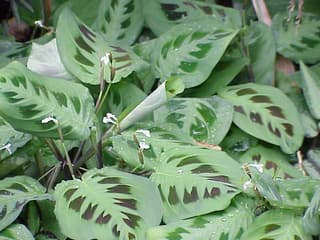
Prayer Plant
Maranta leuconeura
Maranta leuconeura is a tropical plant native to Brazilian rainforests, prized for its decorative leaves with unique colorful vein patterns. Its common name "Prayer Plant" comes from the nyctinastic movement of its leaves, which fold upward at night like hands in prayer and open during the day to absorb light.
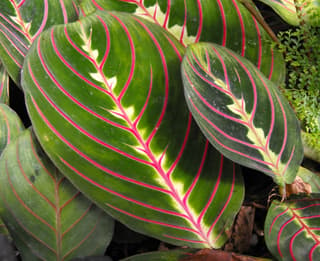
Red Prayer Plant
Maranta leuconeura var. erythroneura
The Red Prayer Plant (Maranta leuconeura var. erythroneura) is one of the most striking members of the Marantaceae family, native to the tropical rainforests of Brazil. Its deep green, herringbone-patterned leaves are laced with vivid red veins, making it a true living work of art. The nickname "prayer plant" comes from its daily leaf movement: the leaves open flat during the day to capture light and fold upward at night like praying hands, a phenomenon called nyctinasty.

Rabbit's Foot Prayer Plant
Maranta leuconeura var. kerchoveana
A tropical evergreen perennial from the Brazilian rainforest floor, prized for its velvety, oval leaves patterned with dark blotches resembling rabbit tracks along the midrib. Like all prayer plants, its leaves rise and fold together at night and lie flat again during the day, an unusual light-driven behavior called nyctinasty.
Marasmius oreades
Marasmius oreades
Marasmius oreades, commonly known as the fairy ring mushroom, is a basidiomycete fungus that grows in lawns, forming characteristic circular rings. It has a small cap, 2 to 5 cm in diameter, with a color ranging from cream to pale tan. It is famous for its ability to completely desiccate during dry periods and 'revive' after rain, maintaining its structure and ability to release spores. It is an edible mushroom of excellent quality, with a sweet taste and an aroma reminiscent of almonds.
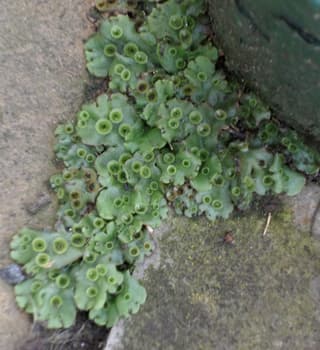
Common Liverwort
Marchantia polymorpha
Common Liverwort (Marchantia polymorpha) is a widespread bryophyte characterized by a flat, ribbon-like thallus that forms dense, green mats on moist, nutrient-rich soil. It is often the first plant to establish itself after fire or soil disturbance and is also used as an indicator of high soil moisture and poor drainage in nurseries and greenhouses. The species reproduces both sexually, via spores from umbrella-shaped reproductive organs (gametophores), and asexually, via gemmae formed in cup-like structures on the upper surface of the thallus.
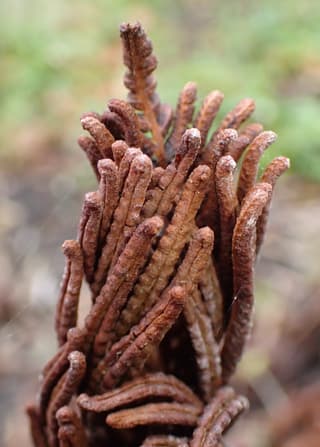
Ostrich fern
Matteuccia struthiopteris
Matteuccia struthiopteris (Ostrich fern) is a perennial, rhizomatous, and deciduous fern from the Onocleaceae family, native to temperate regions of the Northern Hemisphere (North America, Europe, Asia). It forms erect clumps of leek-green fronds arranged in a crown shape, resembling ostrich feathers, which can reach 3-5 feet (90-150 cm) in height in cultivation. It is frost-hardy (USDA zones 2-8) but requires partial to full shade and constantly moist soil rich in organic matter—it does not tolerate drought or strong sun exposure, which scorches its fronds. According to the ASPCA, the plant is non-toxic to cats, dogs, or humans. In spring, the young shoots ("fiddleheads") are harvested and consumed as a seasonal vegetable, but only after being thoroughly boiled.
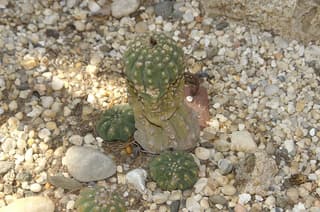
Madison Cactus
Matucana madisoniorum
Matucana madisoniorum is a small, solitary-growing, globular or slightly cylindrical cactus native to a very narrow range in the Amazon region of Peru, specifically the Marañón River valley, at elevations of only 400-1000 meters. Its grayish-green stem consists of 7-12 flat, wavy ribs, and its spination is highly variable: some individuals possess long, curved, dark brown spines, while others are completely spineless, making them easily confused with the peyote cactus (Lophophora williamsii). The funnel-shaped flowers blooming from the apical areoles are bright orange-red, or more rarely white, reaching 8-10 cm in length, and bloom in several waves during the summer. The species is listed as Critically Endangered by the International Union for Conservation of Nature (IUCN) due to habitat loss and over-collection.
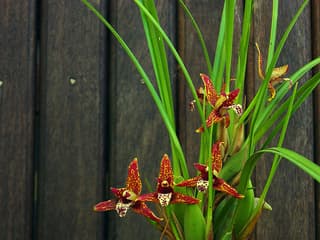
Maxillaria (genus)
Maxillaria
Maxillaria is a large genus of epiphytic Neotropical orchids in the family Orchidaceae, comprising hundreds of species from Mexico to South America. Prized for their solitary, often fragrant flowers, they grow naturally on tree trunks and branches in humid tropical forests.
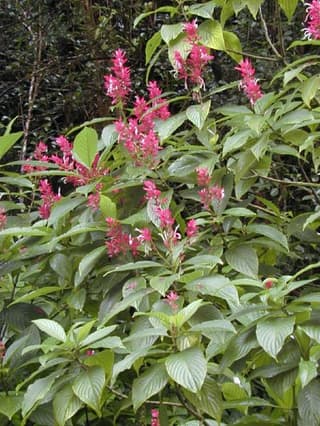
Brazilian Red Cloak
Megaskepasma erythrochlamys
Brazilian Red Cloak (Megaskepasma erythrochlamys) is a stunning tropical shrub native to Venezuela and Suriname, belonging to the Acanthaceae family. It is celebrated for its spectacular inflorescences composed of large crimson bracts surrounding small two-lipped white flowers, creating a breathtaking display in tropical and subtropical gardens. The plant can reach 2 to 3 meters in height, with large, glossy dark green oval leaves up to 50 cm long.
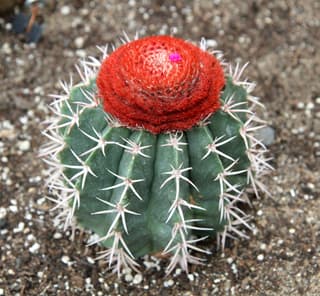
Turk's Cap Cactus
Melocactus zehntneri
Melocactus zehntneri, commonly known as Turk's Cap Cactus, is a globose cactus native to the Caatinga biome of northeastern Brazil. Its most distinctive feature is the cephalium — a cylindrical structure of white bristles and wool that develops at the apex of the plant only at maturity, from which small pink flowers and red fruits emerge. It is perfectly adapted to the harsh conditions of one of Brazil's most arid ecosystems.
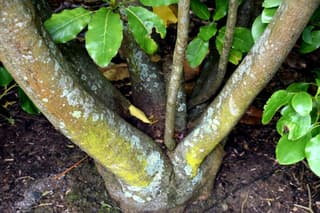
Puka
Meryta
Meryta is a genus of about 28 species of evergreen trees and shrubs in the Araliaceae family, native to subtropical and tropical islands of the Pacific Ocean, with the greatest diversity in New Caledonia and further species from New Zealand (M. sinclairii, the "puka"), Norfolk Island, and the Marquesas. This is a genus-level care profile rather than a single species, since most Meryta share similar growth habits and care needs. They are prized for their large, glossy, simple leaves that give a bold, tropical look to gardens and interiors, are dioecious (separate male and female plants), fast-growing, and tolerant of coastal wind and salt spray, but are frost-tender and require protection in cooler climates.
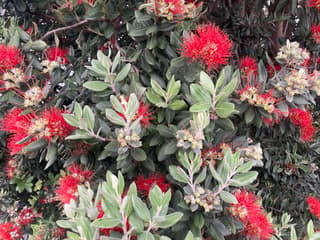
Pohutukawa
Metrosideros excelsa
Metrosideros excelsa, widely known as the Pohutukawa or New Zealand Christmas Tree, is a majestic coastal tree. It is famous for its explosion of bright red flowers composed of long stamens that appear at the height of summer. Its leaves are leathery, deep dark green on the upper surface and covered with dense white hairs on the lower surface, giving it a silvery appearance. It is an extremely resilient species, capable of growing on rocky cliffs and withstanding strong salt winds.
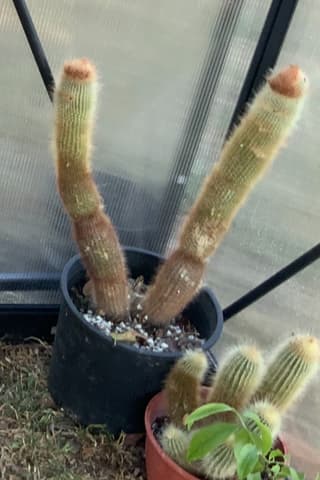
Micranthocereus
Micranthocereus
Micranthocereus is a genus of columnar cacti endemic to Brazil, with about ten species distributed mainly throughout Bahia and Minas Gerais, in Caatinga environments, rocky fields (campos rupestres), and quartzite rock outcrops. The stems are erect, branched at the base, and covered by low ribs and woolly areoles from which white to brown spines emerge. A woolly cephalium—a whitish fuzzy structure from which flowers bloom—forms at the top of older stems. The flowers are tubular, usually white, sometimes yellowish or pinkish, opening at night and pollinated by bats and moths, followed by globose and fleshy fruits. It is a hardy plant, adapted to long periods of drought, intense light, and poor, well-drained soils, making it highly sought after by cactus collectors for its sculptural form and resilience.
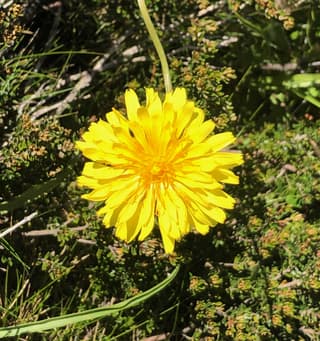
Yam Daisy
Microseris lanceolata
Microseris lanceolata, known as the yam daisy or murnong, is a perennial herb in the daisy family (Asteraceae) native to the plains, open forests and alpine herbfields of southeastern Australia. It grows from a tuft of narrow, toothed, lance-shaped leaves and sends up a bare stalk topped with a single dandelion-like yellow flower head that closes on cloudy days. Below ground, several fleshy, tapering roots branch out from the base of the rosette. For thousands of years these roots were dug, roasted in earth ovens and eaten by Aboriginal peoples across southeastern Australia, particularly the Kulin nations, for whom murnong was a dietary staple before European livestock grazing devastated wild populations in the 1800s.
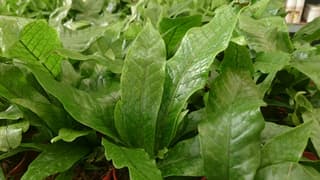
Crocodile Fern
Microsorum musifolium
Microsorum musifolium, commonly known as the Crocodile Fern, is a lush tropical plant native to Southeast Asia and Australia. Its unique fronds, featuring a texture reminiscent of crocodile skin, are its most striking feature. With its vibrant green color and elongated, wavy shape, it is an excellent choice for adding an exotic and natural touch to any indoor space or shaded outdoor area.
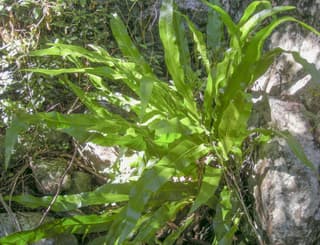
Fishtail Fern
Microsorum punctatum
Microsorum punctatum, commonly known as the Fishtail Fern or Ox-tongue Fern, is a tropical evergreen fern native to southern Asia, ranging from India to China and across the Pacific Islands. It features long, leathery, glossy bright-green fronds with wavy margins, making it an attractive ornamental plant for both indoor and outdoor shaded environments.
Medium Care Pet Safe
Our selection of 633 medium pet safe combines the characteristics of this category with moderate care needs. Ideal for those with basic experience.
Why Choose Medium Pet Safe?
Combining the beauty of pet safe with medium difficulty level lets you enjoy this category with a balanced care commitment. Each plant was selected to offer the best characteristics of the category at the care level you are looking for.