1159 Medium Plants | 2026 Guide - Page 25
Discover 1159 medium plants for your garden. Complete care guide.
1159 Medium Plants
Showing 865-900 of 1159
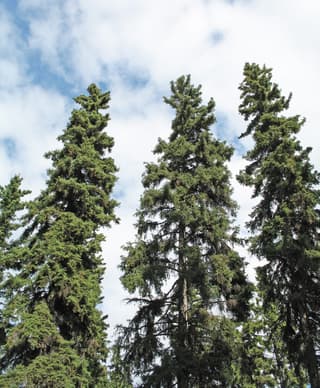
White Spruce
Picea glauca
White spruce (Picea glauca) is a cold-hardy evergreen conifer native to Canada and the northern United States, prized for its dense pyramidal habit and soft, bluish-green needles. While the wild species can reach 18-24 m in forests, its compact cultivar 'Conica' (Dwarf Alberta Spruce) grows only a few centimeters a year, making it one of the most popular conifers for containers, bonsai and indoor/patio growing.
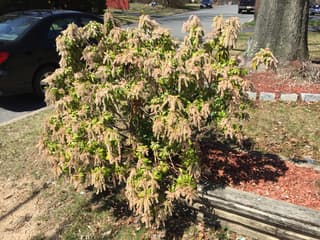
Japanese Andromeda
Pieris japonica
Pieris japonica, commonly known as Japanese andromeda or lily-of-the-valley shrub, is an evergreen shrub in the heath family (Ericaceae), native to Japan, southern China, and Taiwan. It is prized for its coppery-red new growth that matures to glossy dark green, and for its drooping clusters of small, urn-shaped white flowers that bloom in early spring. A slow grower, it thrives in partial shade with consistently moist, acidic soil.
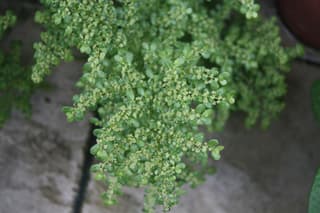
Red Brilliantine Pilea
Pilea serpyllacea
Red Brilliantine (Pilea serpyllacea) is a tiny creeping plant native to the Andes of Bolivia and Peru. It is prized for its small, glossy leaves with reddish tones, often confused with Pilea glauca. It thrives in terrariums, hanging pots, and as ground cover in humid indoor settings.
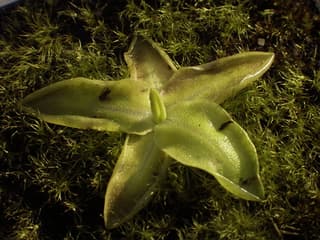
Butterwort
Pinguicula
Pinguicula, commonly known as butterwort, is a genus of over 100 species of carnivorous plants in the Lentibulariaceae family, native to temperate and tropical regions of America, Europe, and Asia. Their leaves form rosettes with a greasy, shiny surface (hence the common name) covered in mucilaginous glands that trap, digest, and absorb nutrients from small insects, supplementing the scarce nutrients of the peaty soil where they grow. Some Mexican species maintain succulent leaves year-round; others from temperate climates form a winter bud (hibernaculum) during dormancy.
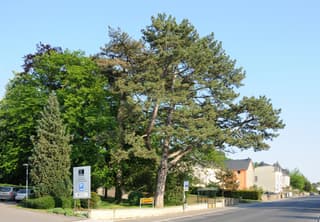
Austrian Pine
Pinus nigra
The Austrian pine (Pinus nigra) is a robust, fast-growing evergreen conifer native to the mountains of Central and Southern Europe, from Austria down through the Balkans and into parts of Turkey and North Africa. It forms a dense, broadly pyramidal crown with stiff, dark green needles borne in pairs and grey-brown, deeply fissured bark. Prized for its toughness, it tolerates poor, alkaline, and compacted soils, urban pollution, coastal salt spray, and strong winds, making it a favorite for windbreaks, reforestation, and street planting throughout temperate climates.
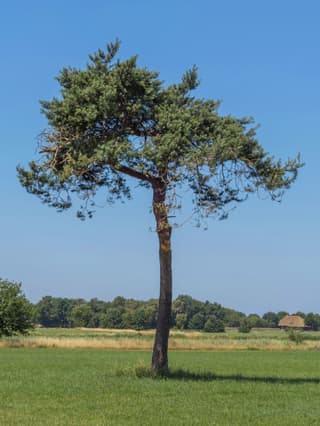
Scots Pine
Pinus sylvestris
Pinus sylvestris, known as the Scots Pine, is a majestic conifer native to Eurasia. It is easily recognizable by its bark, which becomes orange and flaky on the upper part of the trunk, and its blue-green needles arranged in pairs. It is one of the hardiest trees in the world, capable of thriving in Arctic climates and poor, sandy soils.
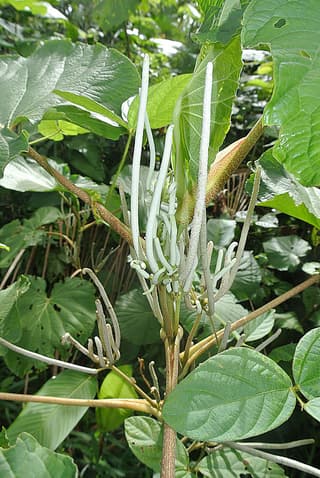
Cowfoot
Piper umbellatum
The Cowfoot (Piper umbellatum) is a perennial subshrub in the Piperaceae family, native to the tropical regions of the Americas, including nearly all of Brazil. It can reach 3 to 13 feet in height in its natural habitat, though it remains more compact when grown in pots. Its leaves are large, rounded to cordate (heart-shaped), with prominent palmate venation and long petioles that optimize light capture in shaded environments. The inflorescences appear as erect axillary spikes, yellowish-white in color, followed by brownish pyramidal fruits. It grows naturally at the edges of primary forests, secondary forests, riparian forests, and shaded riverside areas.

Pull-and-hold
Pisonia aculeata
Pisonia aculeata, known as pull-and-hold or devil's claws, is a tropical thorny climber in the Nyctaginaceae family. Native to the tropical regions of the Americas and the Caribbean, this vigorous plant develops long branches armed with recurved thorns—like hooks—that cling to other plants and surfaces to climb. Its small, inconspicuous flowers appear in clusters during spring and summer, followed by sticky seeds that can trap small insects and birds. It is occasionally cultivated as an ornamental plant in tropical gardens and natural hedges.
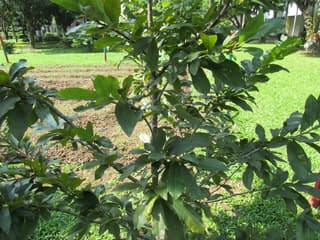
Pistachio
Pistacia
Pistacia is a genus of trees and shrubs in the family Anacardiaceae, native to Mediterranean regions, the Middle East, Central Asia, and parts of the Americas. The genus includes iconic species such as the edible pistachio (P. vera), the mastic tree (P. lentiscus), the terebinth (P. terebinthus), and the ornamental Chinese pistache (P. chinensis). Adapted to arid and semi-arid climates, Pistacia plants are celebrated for their exceptional drought tolerance, longevity, and versatile uses spanning food, medicine, and ornamentation.
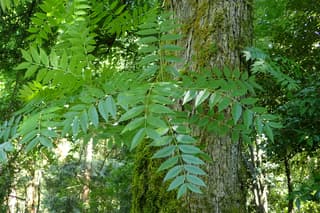
Chinese Pistache
Pistacia chinensis
Pistacia chinensis, commonly known as Chinese pistache, is a medium to large deciduous tree native to China and Taiwan. Renowned for its spectacular fiery fall foliage — turning vivid orange, red, and scarlet — it is one of the most reliable and showy ornamental trees for temperate climates. It grows 30–40 feet tall with a broad, rounded canopy, exfoliating bark that reveals salmon-colored inner layers, and small, inconspicuous spring flowers. Once established, it is exceptionally drought-tolerant, pollution-resistant, and largely pest-free, making it a low-maintenance landscape favorite.
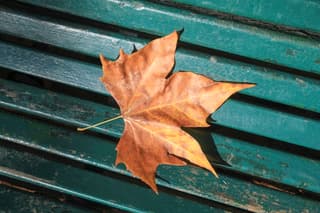
London plane
Platanus × hispanica
The London plane (Platanus × hispanica) is a large deciduous hybrid tree, a cross between the Oriental plane (P. orientalis) and the American sycamore (P. occidentalis). It is instantly recognizable by its distinctive bark that peels away in patches to reveal cream, olive, and grey mottled patterns beneath, and by its large maple-like leaves. One of the most widely planted urban trees in the world, it is prized for its exceptional tolerance of air pollution, compacted soils, and drought once established.
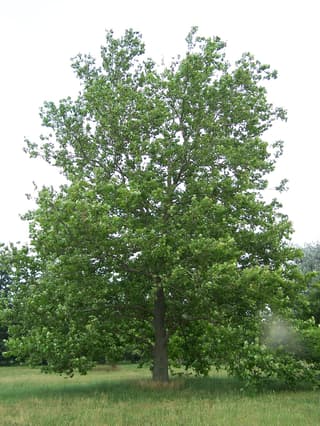
American Sycamore
Platanus occidentalis
The American sycamore is one of the largest native hardwood trees in eastern North America, commonly reaching 75-100 ft (23-30 m) tall with a broad, spreading crown. It is best known for its distinctive exfoliating bark, which sheds in irregular gray-brown plates to reveal smooth, creamy-white inner bark. Native to riverbanks, floodplains and bottomlands, it tolerates wet soils as well as periods of drought once established. Small monoecious flowers appear in early spring (green male clusters, burgundy-red female clusters), followed by distinctive ball-shaped seed heads that persist through winter.
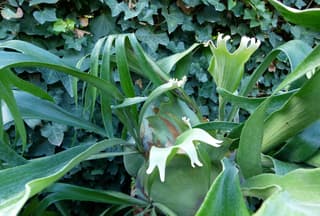
Elkhorn Fern
Platycerium alcicorne
Platycerium alcicorne, commonly known as the Elkhorn Fern, is an epiphytic fern native to Madagascar and East Africa (including Kenya, Mozambique, Tanzania, Zimbabwe, and neighboring islands such as the Comoros, Mauritius, Reunion, and Seychelles). Like other staghorn ferns, it produces two distinct types of fronds: rounded, shield-shaped sterile fronds that clasp its mounting surface and protect the root ball, and antler-like fertile fronds that arch outward and carry spore patches on their undersides. In the wild it grows attached to tree trunks and branches, absorbing moisture and nutrients from the air, rainfall, and decaying organic debris trapped behind its shield fronds. It never produces flowers or seeds, reproducing instead through spores and by forming offsets (pups) that can be divided from the parent plant.
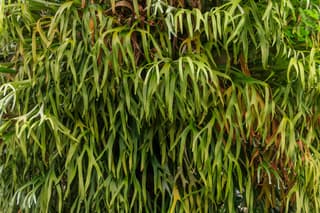
Staghorn Fern
Platycerium bifurcatum
Platycerium bifurcatum is a striking epiphytic fern native to the rainforests of Australia, Java, and New Guinea. Known for its unique antler-shaped fronds, this plant naturally grows on trees and rocks, absorbing nutrients and moisture from the air. It produces two types of fronds: sterile shield fronds that anchor the plant and fertile fronds that resemble deer antlers. With proper care, staghorn ferns can live for over 50 years and become impressive living sculptures.
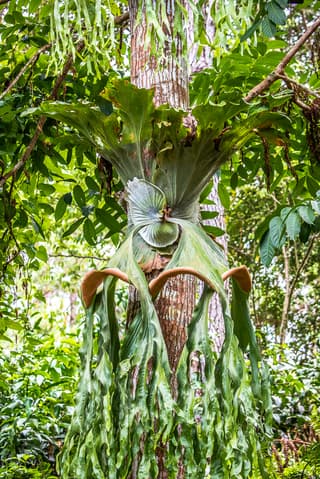
Philippine Staghorn Fern
Platycerium grande
Platycerium grande is a magnificent epiphytic fern native to the Philippines, renowned for its enormous bifurcated fronds resembling elk antlers. One of the largest species in the Platycerium genus, it can reach up to 4 feet in height. In nature, it grows on tree trunks and rocks, absorbing nutrients and moisture through its basal shield fronds.
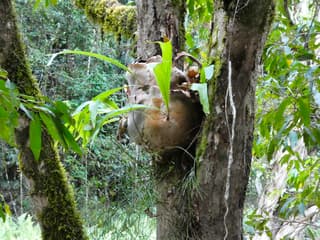
Hill's Elkhorn Fern
Platycerium hillii
Platycerium hillii, commonly known as Hill's Elkhorn Fern or Green Staghorn Fern, is an Australian epiphytic fern from the family Polypodiaceae. Native to tropical and subtropical Queensland, it grows on trees and rocks, developing two types of fronds: flat shield fronds that anchor the plant and collect nutrients, and upright antler-shaped fertile fronds that give it its distinctive staghorn appearance. It is one of the most compact Platycerium species, making it well-suited for indoor cultivation.
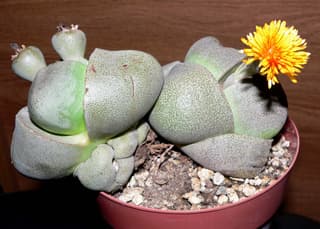
Split rock
Pleiospilos nelii
Pleiospilos nelii is a small, stemless succulent from the Aizoaceae family, native to the semi-arid Karoo regions on the border of the Western and Eastern Cape Provinces in South Africa. The plant produces only one or two pairs of thick, nearly spherical leaves in gray-green to reddish hues, covered with tiny dots that perfectly imitate the surrounding stones and quartz gravel—hence the common name 'living stones.' In autumn, a new pair of leaves emerges between the old ones, while the old leaves wither and dry up, transferring their water to the new growth. From July to August, the plant produces large, fragrant, yellow-salmon daisy-like flowers that turn orange over time.
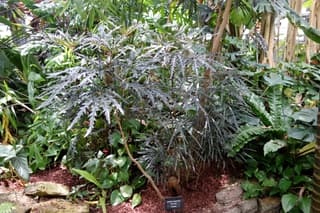
False Aralia
Plerandra elegantissima
Plerandra elegantissima, commonly known as False Aralia, is an elegant evergreen shrub native to the rainforests of New Caledonia. Prized for its finely divided, dark green to coppery leaves with serrated edges, this tropical plant brings a sophisticated, feathery texture to any indoor space. While it can grow up to 15 meters tall in its native habitat, indoors it typically stays between 1.5 and 2 meters, making it a striking yet manageable houseplant.
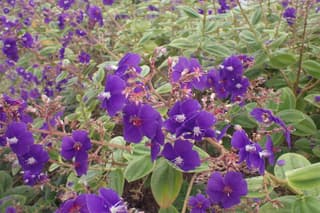
Glory Bush
Pleroma urvilleanum
Glory Bush (Pleroma urvilleanum, synonym Tibouchina urvilleana) is a stunning evergreen shrub native to Brazil's Atlantic Forest (Mata Atlântica). It produces brilliant violet-purple flowers up to 10 cm (4 in) across with distinctive dark stamens, blooming prolifically in summer and fall. Growing 3–6 m tall, it belongs to the family Melastomataceae and has earned the Royal Horticultural Society's Award of Garden Merit.
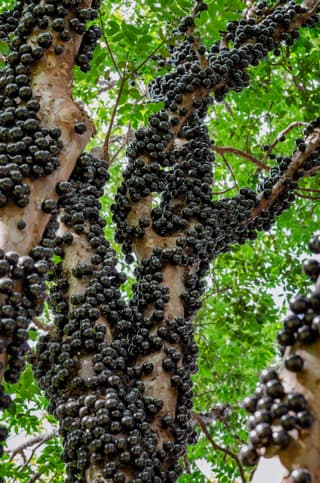
Jabuticaba tree
Plinia cauliflora
The Jabuticaba tree is an iconic Brazilian fruit tree, native to the Atlantic Forest. Its most striking characteristic is cauliflory, where white flowers and dark purple, globose fruits grow directly on the trunk and branches. The pulp is white, succulent, and sweet. It has a slow growth rate, with bark that peels off periodically, revealing lighter tones underneath.
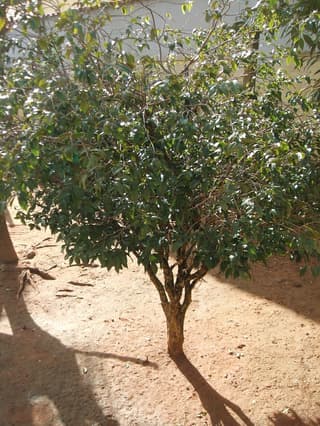
Jaboticaba
Plinia jaboticaba
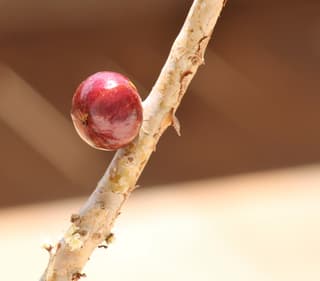
Jaboticaba is a slow-growing, tropical evergreen fruit tree native to Brazil, belonging to the Myrtaceae family. It is renowned for its distinctive fruiting habit called cauliflory, where small white flowers and subsequent dark purple berries emerge directly from the trunk and older branches. The fruits are thick-skinned berries with sweet, white or rosy-pink gelatinous pulp inside, resembling grapes in flavor and texture. Dense and profusely branched, the tree develops a rounded crown and can live for decades. It is valued both as an ornamental specimen for its unique structure and as a productive fruit tree, with cultural significance dating back centuries in Brazil.
Stalked Jabuticaba
Plinia trunciflora
Stalked Jabuticaba (Plinia trunciflora) is a native Brazilian fruit tree from the Atlantic Forest, belonging to the Myrtaceae family. It is distinguished by its glossy black fruits hanging on long stalks (peduncles) directly from the trunk and branches — a phenomenon known as cauliflory. The fruits have a sweet flavor reminiscent of coffee. The tree can reach up to 15 meters in its natural habitat, with a globose canopy and pendant branches.
White Frangipani
Plumeria alba
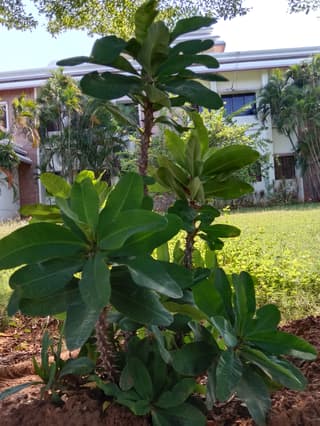
Plumeria alba, commonly known as white frangipani or West Indian jasmine, is a small deciduous tree in the Apocynaceae family, native to Puerto Rico and the Lesser Antilles in the Caribbean. It grows up to 7.5 meters tall, with thick, succulent branches that release a milky sap when cut. Its fragrant white flowers with yellow centers bloom in clusters at the branch tips.
Bridal Bouquet
Plumeria pudica
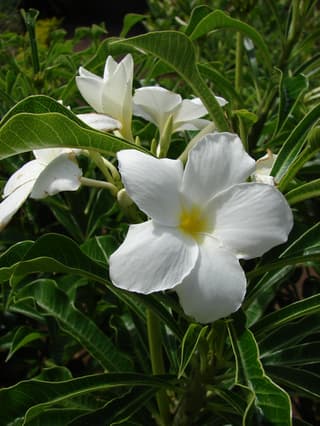
Plumeria pudica, commonly known as Bridal Bouquet or Fiddleleaf Plumeria, is a tropical shrub native to Panama, Colombia, and Venezuela. It stands out for its distinctive fiddle-shaped (spatula-like) leaves and clusters of pure white flowers with yellow centers. Unlike most plumerias, it is evergreen and does not drop its leaves seasonally, making it an exceptional ornamental plant for tropical and subtropical gardens.
Kentucky bluegrass
Poa pratensis
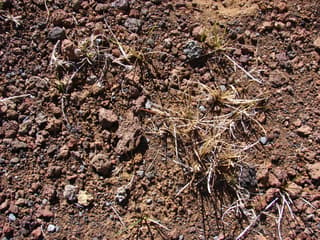
Poa pratensis, commonly known as Kentucky bluegrass or smooth meadow-grass, is a perennial cool-season grass native to Europe, northern Asia, and the mountains of Algeria and Morocco. Widely naturalized across North America, it is one of the most popular turfgrasses in the world, prized for its fine texture, attractive blue-green color, and dense sod-forming ability through underground rhizomes. It thrives in cool, humid climates and is extensively used for lawns, athletic fields, golf courses, and pastures in USDA hardiness zones 3a–7b.
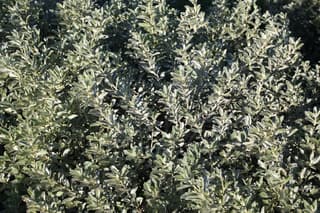
Satin Bush
Podalyria sericea
A small, evergreen shrub reaching about 1 m in height and width, native to the sandstone and granite outcrops of Cape Town, South Africa (from Saldanha Bay to the Cape Peninsula). The leaves are covered in long, shiny hairs that give it a silky, silvery appearance. Between autumn and winter (May to August in the Southern Hemisphere), it produces small pink flowers with white centers, typical of legumes (Fabaceae), followed by inflated pods containing several seeds. It is classified as "Vulnerable" due to habitat loss, invasive alien plants, and frequent fires.
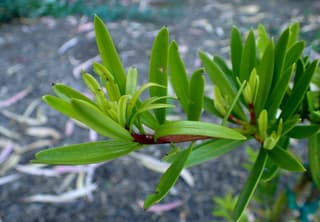
Sea Teak
Podocarpus costalis
Podocarpus costalis, known as sea teak or arius, is a small evergreen conifer native to coastal cliffs and limestone outcrops of the Philippines and Taiwan, including Lanyu (Orchid Island). Growing as a dense, shrubby tree from 1 to 5 meters tall, it has narrow, leathery, dark-green needle-like leaves and a gnarled, gray-brown trunk shaped by constant sea winds. As a conifer it bears no true flowers; instead it produces small, fleshy, edible cone-fruits. Prized for its salt tolerance and slow, sculptural growth, it is one of the most sought-after species for bonsai and coastal landscaping in East Asia, though wild populations are now endangered from overcollection.
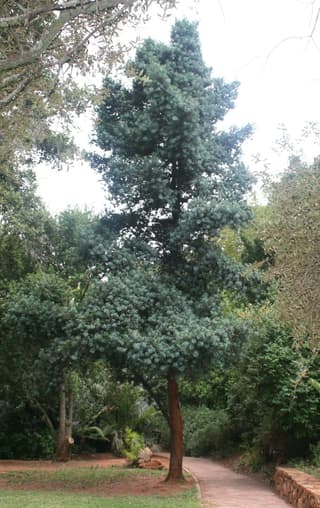
Breede River Yellowwood
Podocarpus elongatus
Podocarpus elongatus, commonly known as the Breede River yellowwood, is an evergreen conifer native to the Western Cape of South Africa, where it grows along the Breede River valley and into the Cederberg mountains. Unlike its taller yellowwood relatives, it typically forms a broad, multi-stemmed, rounded shrub or small tree with elongated grey-blue needle-like leaves, though in sheltered, well-watered ravines it can reach up to 20 m. It is the only South African yellowwood able to resprout from its roots and trunk after fire or flood damage, making it exceptionally resilient in its native fynbos habitat.
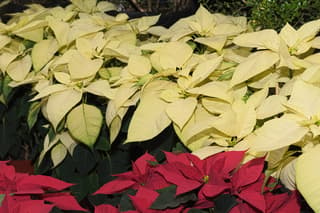
Poinsettia
Poinsettia pulcherrima
The Poinsettia (Euphorbia pulcherrima) is an evergreen shrub native to Mexico and Central America, belonging to the Euphorbiaceae family. It is famous for its showy, brightly colored bracts—red, pink, white, or cream—which surround the small, yellow true flowers clustered in cyathia at the center of the rosette. In the wild, it can reach several meters in height, but when grown in pots, it remains a compact shrub typically sold during the Christmas holidays. Like all euphorbias, it produces a white latex that is mildly toxic if ingested or if it comes into contact with skin and eyes.
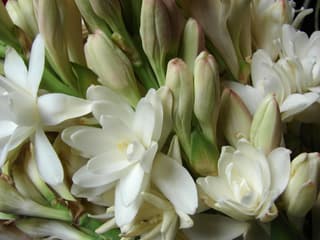
Tuberose
Polianthes tuberosa
Tuberose (Polianthes tuberosa) is a perennial bulbous plant native to Mexico, celebrated worldwide for its intensely sweet and intoxicating fragrance. Its flowering spikes can reach up to 1 meter in height, bearing clusters of waxy white tubular flowers that bloom from summer through fall. Tuberose is a prized ornamental and cut flower plant, widely used in perfumery and traditional ceremonies.
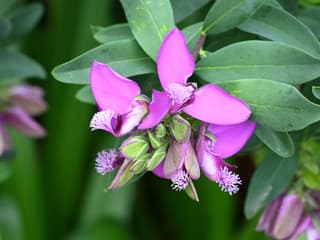
Milkwort
Polygala
Polygala is a large genus of flowering plants in the milkwort family (Polygalaceae), comprising hundreds of species ranging from low herbaceous wildflowers to subtropical evergreen shrubs. The best-known ornamental form, myrtle-leaf milkwort (Polygala myrtifolia), is a fast-growing shrub prized for its abundant purple-pink pea-like flowers, while other species such as Polygala tenuifolia and Polygala senega have long histories of use in traditional medicine.
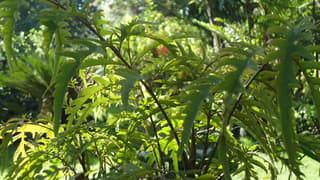
Aralia (genus)
Polyscias
Polyscias is a genus of tropical shrubs and small trees in the family Araliaceae, native primarily to tropical Asia, the Pacific Islands, and Madagascar. Widely grown as houseplants for their elegant ornamental foliage, they are commonly known as aralias or ming aralias.

Fernleaf Aralia
Polyscias filicifolia
Polyscias filicifolia, commonly known as Fernleaf Aralia, is a tropical houseplant native to the Pacific Islands and Southeast Asia. Its distinctively delicate, fern-like foliage sets it apart from other Aralia species, making it a prized ornamental plant for indoor tropical gardens. It is a slow-growing evergreen that thrives in warm, humid environments.
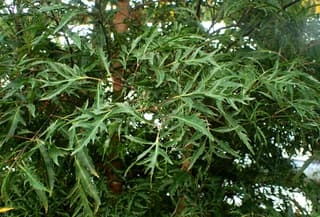
Ming Aralia
Polyscias fruticosa
Ming Aralia (Polyscias fruticosa) is an elegant tropical evergreen shrub from the Araliaceae family, prized for its finely divided, lace-like foliage that gives it an almost bonsai-like appearance. Native to India and Southeast Asia, it can grow up to 2.4 meters indoors and up to 7.5 meters in its natural habitat. Its slow growth rate and graceful vertical form make it a striking specimen houseplant.
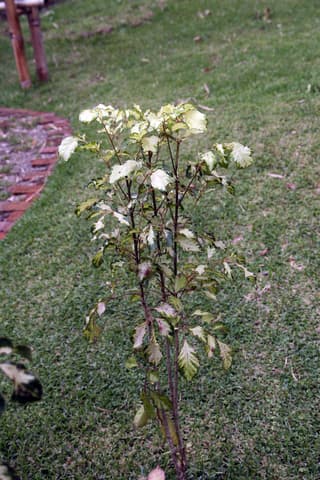
Geranium Aralia
Polyscias guilfoylei
Polyscias guilfoylei, commonly known as Geranium Aralia or Wild Coffee, is an elegant tropical evergreen shrub native to the Pacific Islands. It features compound leaves with 7-9 leaflets that display lush green or variegated white and yellow margins, giving it a lacy, decorative appearance. A classic choice for both indoor and tropical outdoor landscapes, this slow-growing plant rewards patient gardeners with striking year-round foliage.
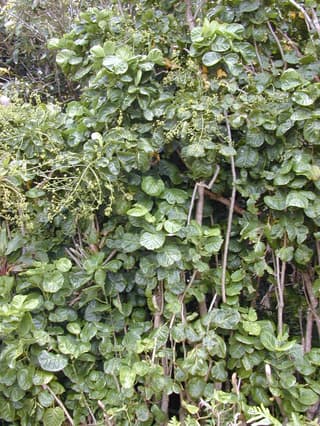
Shield Aralia
Polyscias scutellaria
Shield aralia is a compact tropical shrub from the Southwest Pacific islands, prized for its glossy, rounded, bowl-shaped leaves that grow in clusters at the branch tips. Indoors it stays fairly compact and slow-growing, making it a popular choice as a structured accent or bonsai-style specimen. In its native range it can reach several meters as an understory shrub, but potted specimens are easily kept small with light pruning.
What are Medium Plants?
Medium Plants require a bit more attention and basic gardening knowledge. These plants thrive with regular care and some cultivation experience. Ideal for those who already master the basics.
Tips for Growing Medium Plants
medium plants need a balance between attention and freedom. Keep a regular care routine, watch leaves to identify problems early, and adjust watering by season.