1159 Medium Plants | 2026 Guide - Page 26
Discover 1159 medium plants for your garden. Complete care guide.
1159 Medium Plants
Showing 901-936 of 1159

Holly Fern
Polystichum
Polystichum is a large, cosmopolitan genus of evergreen ferns in the family Dryopteridaceae, commonly known as holly ferns or shield ferns for their glossy, spiny-toothed fronds. With around 500 species distributed worldwide, from Christmas fern (P. acrostichoides) to western sword fern (P. munitum), the genus thrives in shaded woodland conditions and is prized as a resilient, low-maintenance foliage plant for both gardens and containers.
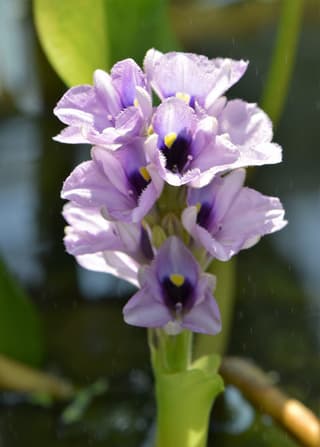
Anchored Water Hyacinth
Pontederia azurea
The anchored water hyacinth (Pontederia azurea, syn. Eichhornia azurea) is a perennial aquatic plant in the Pontederiaceae family, native to Central and South America, including Brazil. Unlike the floating water hyacinth, this species roots in the bottom mud and sends out stems that stretch to the surface. It has round, shiny green leaves about 10 cm wide and showy bluish-purple flowers with yellow markings. It grows vigorously in still or slow-moving waters.

Quaking Aspen
Populus tremuloides
Populus tremuloides, commonly known as quaking aspen, is a fast-growing deciduous tree native to North America, famous for its smooth white-gray bark and heart-shaped leaves that shimmer and "quake" in the slightest breeze thanks to their flattened petioles. It forms expansive clonal colonies connected by a single root system, with some colonies ranking among the oldest and largest living organisms on Earth. In autumn its foliage turns brilliant golden-yellow.
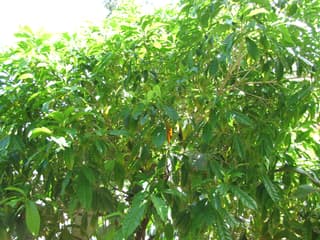
Abiu
Pouteria caimito
The abiu (Pouteria caimito) is a tropical evergreen fruit tree in the Sapotaceae family, native to the Peruvian and Brazilian Amazon basin. When cultivated, it reaches 4 to 10 meters in height, featuring a dense canopy and dark green leaves. It produces fragrant yellowish-white flowers between December and January, followed by smooth, oval fruits that ripen to a golden-yellow hue. The pulp is translucent with a pudding-like consistency and a sweet flavor reminiscent of caramel; the unripe fruit contains an irritating latex that disappears upon ripening.
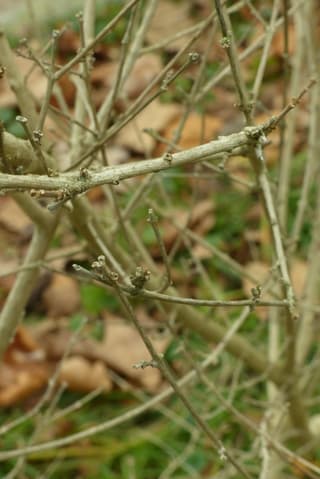
Premna
Premna
Premna is a genus of tropical shrubs and small trees in the family Lamiaceae, native to Asia, Africa, and Oceania. It is prized in Asia — especially P. microphylla and P. serratifolia — as a bonsai subject and hedge plant, valued for its dense foliage and fast growth.
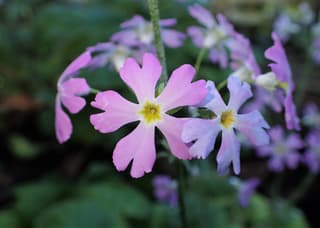
Fairy Primrose
Primula malacoides
Fairy primrose (Primula malacoides) is a delicate evergreen perennial from the Himalayas, Assam, Myanmar and China. It forms a tuft of light green, hairy leaves topped by slender stems carrying tiers of small purple, pink, red or white flowers in early spring. It is popular as a flowering pot plant and for cool greenhouses.
Poison Primrose
Primula obconica
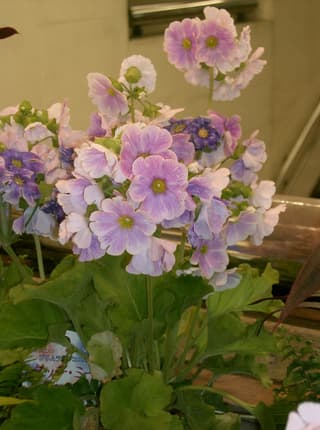
Primula obconica, commonly known as the Poison Primrose or German Primrose, is a charming flowering houseplant native to China. It produces clusters of delicate blooms in shades of pink, red, purple, blue, and white, typically in spring. Despite its beauty, the plant contains primin — a natural allergen that can cause skin irritation on contact, earning it the nickname Poison Primrose. It thrives in cool, bright indirect light conditions, making it an excellent windowsill plant during the cooler months.

Oak-Nymph-Leaved Primulina
Primulina dryas
Primulina dryas, formerly known as Chirita dryas, is a compact evergreen perennial in the family Gesneriaceae, native to Hong Kong and southern China. It grows naturally on shaded limestone cliffs and rocky karst formations, forming flat rosettes of thick, velvety leaves sometimes marked with silvery veins. In summer and autumn it produces small clusters of tubular white flowers with purple lobes and yellow throats.
Fiji Fan Palm
Pritchardia pacifica
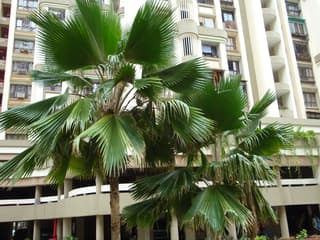
Pritchardia pacifica, commonly known as the Fiji Fan Palm or Pacific Fan Palm, is a majestic tropical palm native to the Pacific islands of Fiji and Tonga. It features stunning fan-shaped leaves up to 6 feet (1.8 m) in diameter, making it one of the most visually striking palms in the world. Historically, Fijian chiefs used its leaves as ceremonial fans, giving it deep cultural and royal significance.
Argentine Screwbean
Prosopis strombulifera
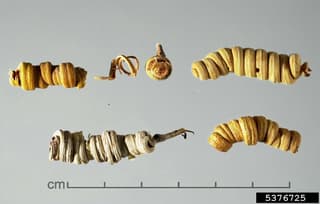
A thorny shrub in the Fabaceae family, native to arid and semi-arid regions of the Americas, ranging from the Southwestern United States to the Argentine Patagonia. It typically grows between 15 and 150 cm, occasionally reaching up to 3 m. It spreads via lateral roots that produce new shoots, forming dense thickets. It features bipinnate leaves, white thorns, and yellow spiral-shaped fruits. It is a halophyte capable of growing in highly saline soils and fixing nitrogen.
Plum / Cherry (genus)
Prunus
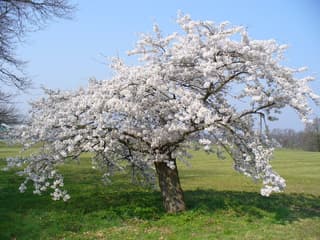
Prunus is one of the largest and most economically important genera in the rose family (Rosaceae), comprising over 400 species of trees and shrubs including cherries, plums, peaches, almonds, and apricots. Native to temperate regions of the Northern Hemisphere, these deciduous plants are celebrated for their spectacular spring blossoms and edible fruits. They thrive in full sun and well-drained soils, tolerating cold winters down to USDA zone 4.
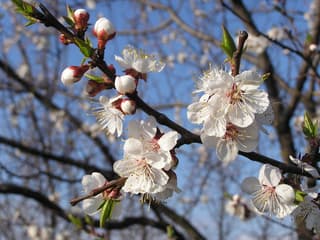
Apricot
Prunus armeniaca
The apricot (Prunus armeniaca) is a deciduous fruit tree in the Rosaceae family, native to Central Asia and Eastern Europe. It produces sweet, golden-orange drupes prized fresh, dried, or preserved. In early spring, before the leaves emerge, the tree bursts into delicate pink-white blossoms, making it as ornamental as it is productive. Note: the pits contain amygdalin, a cyanogenic glycoside that can be harmful in large amounts — the fruit flesh is entirely safe to eat.
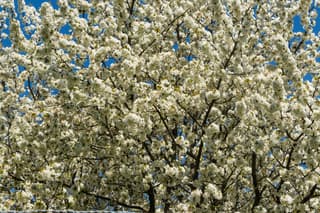
Sweet Cherry Tree
Prunus avium
Prunus avium, commonly known as the sweet cherry tree, is a large deciduous tree in the Rosaceae family, native to Europe and Western Asia. It produces stunning white blossoms in spring and sweet red cherries in summer, cultivated both for its ornamental beauty and its edible fruits.
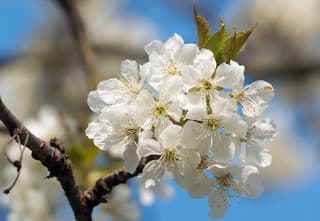
Sour Cherry
Prunus cerasus
Sour cherry (Prunus cerasus) is a deciduous fruit tree in the Rosaceae family, native to Eastern Europe and Southwest Asia. It produces small, tart red fruits prized for culinary use in pies, jams, liqueurs, and dried snacks. In spring, the tree bursts into clusters of fragrant white blossoms before leafing out, making it an ornamental highlight in any garden.
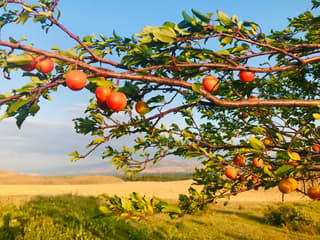
European Plum
Prunus domestica
The European plum (Prunus domestica) is a deciduous fruit tree originating in Western Asia and cultivated across Europe for thousands of years. It produces juicy, sweet plums prized for fresh eating, jams, dried prunes, and spirits such as slivovitz. In spring, the tree bursts into delicate white blossoms before leafing out, making it as ornamental as it is productive.
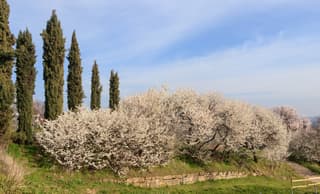
Almond
Prunus dulcis
Prunus dulcis, commonly known as the almond, is a deciduous tree native to the Middle East and South Asia, now widely cultivated across Mediterranean climates for its edible seed. It bursts into pale pink-and-white blossom in late winter before its narrow leaves emerge, one of the earliest trees to flower each year. Grown as an orchard or ornamental tree, it needs a hot, dry summer and a cold winter dormancy to fruit well. Two forms exist: the sweet almond (var. dulcis), prized for its edible kernel, and the bitter almond (var. amara), whose seeds contain amygdalin and are toxic unless processed.
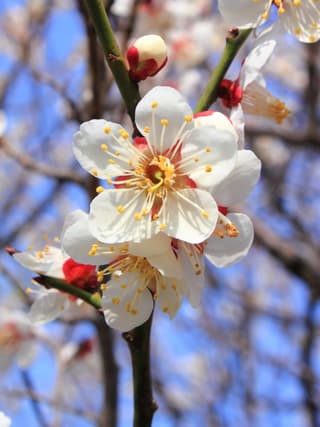
Japanese apricot (ume)
Prunus mume
A small deciduous tree in the rose family prized for its intensely fragrant flowers that open on bare branches in late winter, well before the leaves emerge. Native to China and long cultivated in Japan and Korea, it produces sour, apricot-like fruit used in foods such as umeboshi and ume liqueur.
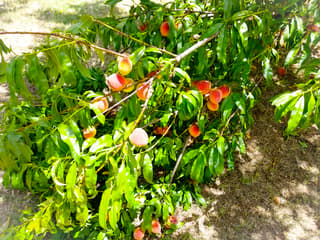
Peach Tree
Prunus persica
The peach tree (Prunus persica) is a deciduous fruit tree native to China, now cultivated worldwide in temperate regions. It produces sweet, juicy fruits with velvety skin and yellow or white flesh, and puts on a spectacular display of pink or white blossoms in early spring. One of the most popular fruit trees for home orchards, it is valued for its delicious fruit, ornamental beauty, and relatively fast growth.
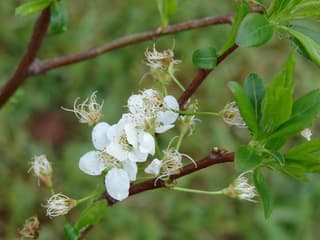
Japanese Plum
Prunus salicina
Prunus salicina, commonly known as the Japanese plum or Chinese plum, is a small to medium-sized deciduous tree native to China. It is widely cultivated across temperate regions of the world for its delicate white spring blossoms and juicy, flavorful fruits that ripen in summer. The tree is valued both as an ornamental specimen and as a productive fruit tree in home gardens and commercial orchards.
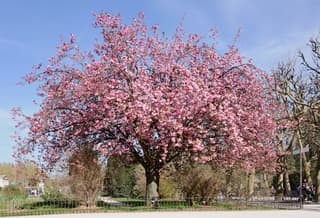
Japanese Cherry Blossom
Prunus serrulata
Prunus serrulata, widely known as Sakura or Japanese Cherry Blossom, is a deciduous tree of incomparable beauty, native to Japan, Korea, and China. It is famous for its ephemeral and exuberant blooming that occurs in early spring, covering bare branches with dense clusters of pink or white flowers. Its serrated leaves emerge after the flowers and take on bronze tones before turning green, eventually becoming yellow or reddish in the fall.

Chokecherry
Prunus virginiana
Prunus virginiana, known as chokecherry, is a fast-growing, suckering deciduous shrub or small tree native to nearly every U.S. state and Canadian province. In late spring it produces long, fragrant, white flower clusters (racemes) that mature into pea-sized berries, ripening from red to nearly black by late summer. Chokecherry is prized by gardeners for its wildlife value and spring bloom, and by foragers for its tart fruit, traditionally cooked into jellies, syrups, and wine. Every other part of the plant -- bark, leaves, twigs, and seed pits -- contains cyanogenic compounds and is toxic if chewed or wilted, so only the ripe, de-seeded fruit pulp is safe to eat.
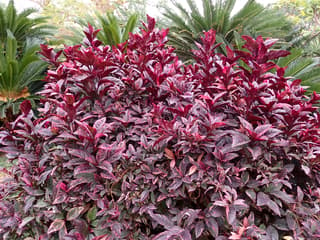
Purple False Eranthemum
Pseuderanthemum carruthersii
Pseuderanthemum carruthersii, popularly known as Purple False Eranthemum, is a perennial tropical shrub native to the Pacific islands. It is notable for its lush ornamental foliage, featuring oval leaves with intense shades of purple, burgundy, and metallic green. Its flowers are small, white with pinkish or purplish centers, appearing in terminal spikes. It is an excellent plant for creating color contrasts in tropical gardens or as a focal point in spacious, well-lit interiors.
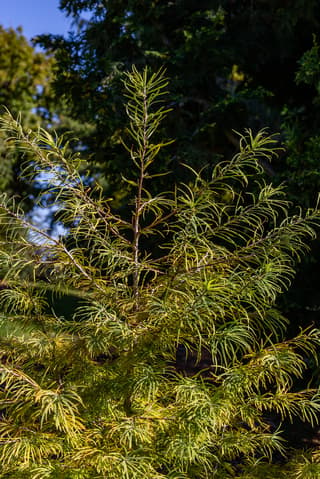
Golden Larch
Pseudolarix amabilis
The Golden Larch (Pseudolarix amabilis) is a deciduous conifer native to eastern China and the sole species in the genus Pseudolarix. Unlike most conifers, it sheds its needles every autumn, which turn a striking golden-yellow color before falling, giving the tree its name. It is slow-growing and can reach 9–18 m in height in cultivation, featuring soft, light-green needles arranged in tufts on short spurs. Instead of true flowers, it develops cones: smaller male pollen cones in spring and upright, ovoid female cones that mature to a reddish-brown color and disintegrate after the seeds ripen. It is highly valued as a specimen ornamental tree and as a bonsai for its seasonal beauty and unique appearance.
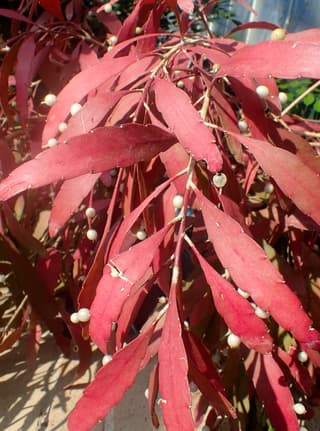
Red Mistletoe Cactus
Pseudorhipsalis ramulosa
Pseudorhipsalis ramulosa, known as the Red Mistletoe Cactus, is an epiphytic cactus native to the humid rainforests of Central and South America, where it grows clinging to tree trunks and rocks. Its flat, ribbon-like stems cascade downwards and can reach several feet in length, taking on shades ranging from deep green to ruby red when exposed to brighter light. In summer, it produces small greenish-white flowers followed by white or reddish berries, making it a highly prized ornamental plant for hanging baskets.
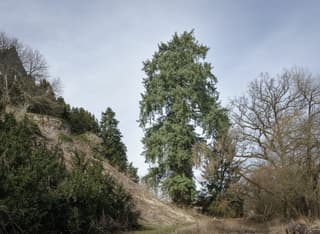
Douglas Fir
Pseudotsuga menziesii
Douglas fir (Pseudotsuga menziesii) is a large, fast-growing evergreen conifer native to western North America, ranging from the Rocky Mountains to the Pacific coast. Despite its common name, it is not a true fir (Abies) but belongs to its own genus, Pseudotsuga. It has a conical, pyramidal form with soft, flat, blue-green to dark-green needles arranged spirally around the twig, and distinctive pendant cones with three-pointed, snake-tongue-like bracts protruding between the scales. In its native range it is among the tallest trees in the world, historically reaching over 90 m (300 ft); in cultivated landscapes it more typically grows 12-24 m (40-80 ft) tall with a 4-6 m spread. Douglas fir is the backbone of the Pacific Northwest timber industry and is Oregon's official state tree, and its fragrant foliage makes it one of the most popular Christmas trees in North America.
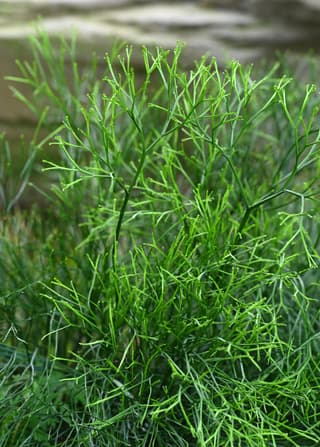
Whisk Fern
Psilotum nudum
Psilotum nudum, commonly known as the Whisk Fern, is one of the most primitive vascular plants on Earth, with a lineage stretching back over 400 million years. Lacking true roots and leaves, it absorbs water and nutrients through its rhizomes and photosynthetic green stems. Native to pantropical regions, it grows naturally in rock crevices and as an epiphyte.
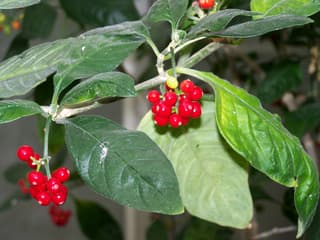
Wild Coffee
Psychotria
Psychotria is one of the largest genera of flowering plants in the world, belonging to the family Rubiaceae (the coffee family), with over 1,600 species spread across tropical and subtropical regions on every continent. Commonly known as wild coffee, these plants are evergreen shrubs or small understory trees featuring opposite, glossy leaves, small tubular white-to-greenish flowers, and fleshy drupes that ripen to bright red or deep purple. The genus is ecologically vital — providing nectar for pollinators and fruit for birds — and ethnobotanically significant, with numerous species used in traditional medicine across the Americas, Africa, and Asia. Certain species, most notably Psychotria viridis, produce the alkaloid dimethyltryptamine (DMT), making the genus uniquely important in ethnopharmacology and indigenous spiritual practices.
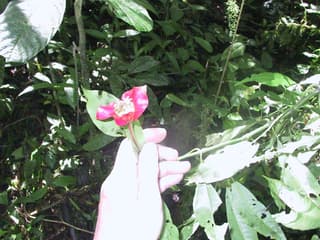
Hot Lips Plant
Psychotria elata
Psychotria elata, commonly known as the Hot Lips Plant or Hooker's Lips, is a tropical shrub native to the rainforests of Central and South America. Its most striking feature is its vivid red bracts shaped like human lips, which appear before small white and yellow flowers bloom. Found growing as an understory shrub in the tropical forests of Mexico, Costa Rica, Panama, Colombia, and Ecuador, this remarkable plant has become endangered due to deforestation in its native range.
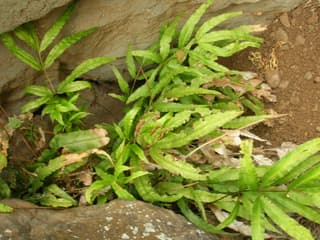
Cretan Brake Fern
Pteris cretica
Pteris cretica, commonly known as the Cretan Brake Fern, is an elegant evergreen fern native to the Mediterranean region. With its graceful, pinnate fronds that can display beautiful variegation, it has become a popular houseplant prized for its delicate appearance and air-purifying properties. This slow-growing fern thrives in humid, shaded environments and is well-suited to terrariums, bathrooms, and indoor collections.
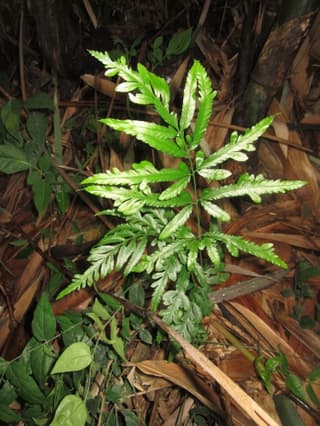
Silver Lace Fern
Pteris ensiformis
The Silver Lace Fern (Pteris ensiformis) is a compact ornamental fern from the Pteridaceae family, native to Southeast Asia and Australia. It is known for its thin, arching fronds with silver midribs that contrast with the dark green, providing a delicate lace-like appearance. The 'Evergemiensis' cultivar is the most popular for indoor cultivation, reaching about 12 to 24 inches (30 to 60 cm) in height.

Caucasian Wingnut
Pterocarya fraxinifolia
The Caucasian Wingnut (Pterocarya fraxinifolia) is a majestic and very fast-growing forest tree, native to the riparian forests of the Caucasus and northern Iran. It can reach 25 to 30 meters in height and 20 meters in spread, developing a powerful trunk with deeply fissured bark and a broad, spreading crown. Its deciduous foliage, dark green and glossy, is composed of large pinnate leaves that can exceed 60 cm in length, resembling those of an ash tree. In spring, it produces long, greenish, highly ornamental pendulous catkins, followed in summer by a succession of winged fruits in clusters that can reach 60 cm. This outdoor tree is ideal for large spaces, parks, and plantings along water bodies, where its suckering roots contribute to bank stabilization.
Knight's plume moss
Ptilium crista-castrensis
Ptilium crista-castrensis, commonly known as Knight's plume moss, is a pleurocarpous moss of exceptional beauty. Its branches are dense, symmetrical, and pinnate, resembling bird feathers or the ornaments of medieval helmets. Ranging from light green to golden in color, this moss forms soft, extensive carpets on coniferous forest floors and decaying wood in boreal regions.
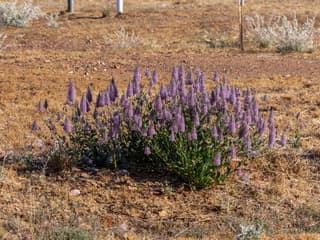
Pink Mulla Mulla
Ptilotus exaltatus
Ptilotus exaltatus is a stiff, herbaceous to semi-woody annual or short-lived perennial in the Amaranthaceae family, native to the arid and semi-arid regions across much of Australia. It produces egg-shaped to oblong leaves up to 125 mm long and striking conical flower spikes, up to 150 mm long, in shades of pink to purple, giving rise to its "mulla mulla" and "lamb's tail" common names. It is a fast grower, often flowering within weeks from seed, but has a reputation among growers for being short-lived and not entirely reliable in cultivation outside its native dry climate.
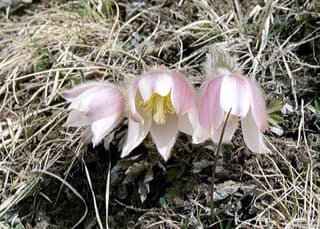
Spring pasqueflower
Pulsatilla vernalis
Pulsatilla vernalis is a low-growing alpine perennial in the buttercup family, native to the mountain meadows and rocky slopes of Europe from the Pyrenees to Scandinavia and the Balkans. It is among the first flowers to bloom each year, often pushing through the last patches of melting snow in early spring. Each nodding, bell-shaped flower is covered in silky silver hairs and opens to reveal six petal-like white to pale violet sepals flushed with purple on the reverse, surrounding a boss of golden stamens. After flowering, the plant produces feathery seed heads and finely divided, fern-like foliage that persists through summer before dying back in autumn.
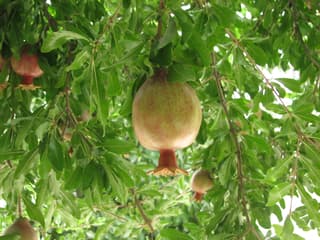
Pomegranate
Punica granatum
Punica granatum, commonly known as Pomegranate, is a fruit-bearing deciduous shrub or small tree native to the region spanning Iran to northern India. It has been cultivated for millennia and is prized for its jewel-like red arils, ornamental scarlet flowers, and deep cultural symbolism. Growing 3 to 5 meters tall, it thrives in hot, dry climates with full sun and well-draining soil.
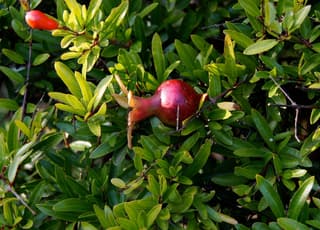
Dwarf Pomegranate
Punica granatum 'Nana'
Punica granatum 'Nana' is a compact, ornamental cultivar of the pomegranate prized for its glossy, fine-textured foliage, vivid orange-red trumpet-shaped flowers, and miniature fruit. Native in habit to the Mediterranean and western Asian origin of the parent species, this dwarf form rarely exceeds 1.5 m and is equally at home in containers, borders, or as a flowering bonsai. Its gnarled, twisting trunk develops character with age, making it a favorite among bonsai enthusiasts.
What are Medium Plants?
Medium Plants require a bit more attention and basic gardening knowledge. These plants thrive with regular care and some cultivation experience. Ideal for those who already master the basics.
Tips for Growing Medium Plants
medium plants need a balance between attention and freedom. Keep a regular care routine, watch leaves to identify problems early, and adjust watering by season.