1331 Medium Plants | 2026 Guide - Page 35
Discover 1331 medium plants for your garden. Complete care guide.
1331 Medium Plants
Showing 1225-1260 of 1331
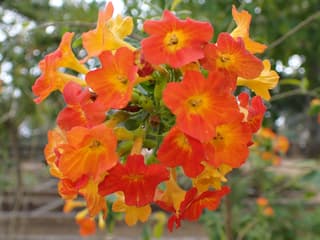
Marmalade bush
Streptosolen jamesonii
The marmalade bush (Streptosolen jamesonii) is an ornamental perennial, semi-woody, and scrambling shrub native to the Andean regions of Colombia, Ecuador, Peru, and Bolivia in South America. Belonging to the Solanaceae family, it can reach 1.5 to 2 meters in height, featuring long, flexible, and arching branches. Its leaves are ovate to elliptical, dark green, glossy, and deeply veined. The trumpet-shaped flowers bloom in clusters and change color as they mature—starting yellow and evolving into shades of orange and red—an effect reminiscent of orange marmalade, which gives the plant its popular name. It flowers intensely during spring and summer, attracting hummingbirds, bees, and butterflies to the garden.
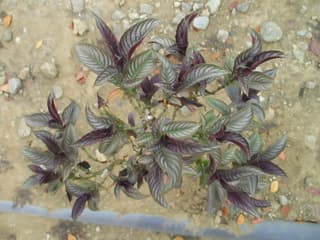
Persian shield
Strobilanthes dyeriana
Strobilanthes dyeriana, commonly known as Persian Shield, is a stunning tropical evergreen subshrub native to Myanmar. It is highly prized for its lance-shaped leaves that feature a brilliant iridescent purple sheen with silver highlights and dark green veins. The underside of the foliage is a deep maroon. While it can produce small violet flowers in winter, it is primarily grown for its spectacular foliage which adds a dramatic touch to any plant collection.
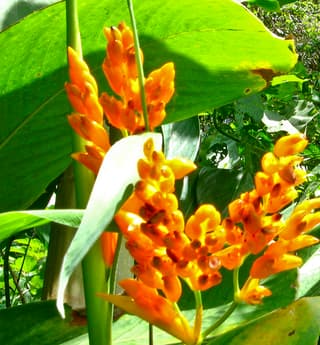
Stromanthe
Stromanthe
Stromanthe is a genus of approximately 13 tropical plant species in the family Marantaceae, native to the rainforests of South America, particularly Brazil. Celebrated for their stunning variegated foliage in shades of green, white, pink, and red, they are among the most visually spectacular houseplants available. The most famous species is Stromanthe sanguinea 'Triostar', whose tricolored leaves make it a standout specimen. Like other prayer plants, Stromanthe leaves move throughout the day in response to light.
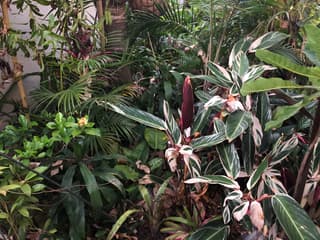
Tricolor Stromanthe
Stromanthe sanguinea
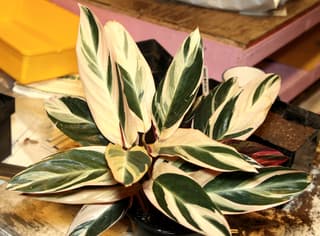
Stromanthe sanguinea, commonly known as the Tricolor Stromanthe or Triostar, is a stunning tropical plant native to the rainforests of Brazil. Its long, lance-shaped leaves display a breathtaking palette of dark green, pink, cream, and deep burgundy on the undersides, making it one of the most visually striking houseplants available. A member of the Marantaceae family and relative of Calathea and Maranta, this species exhibits nyctinastic leaf movements — folding its leaves upward at dusk in response to changing light conditions.
Tricolor Stromanthe
Stromanthe thalia
Tricolor Stromanthe (Stromanthe thalia) is a stunning Brazilian tropical plant from the Marantaceae family, celebrated for its spectacular tricolor foliage in shades of green, pink, and cream with deep magenta-purple undersides. As a prayer plant, its leaves fold upward at dusk and reopen at dawn. It thrives indoors with bright indirect light and high humidity.
Cape Sprays
Struthiola
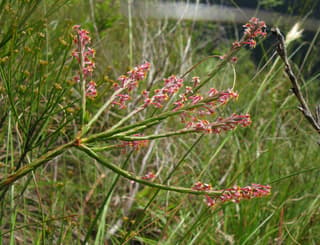
Struthiola is a genus of approximately 31 species of ericoid shrubs in the family Thymelaeaceae, native to the fynbos biome of South Africa's Cape Floral Region. These evergreen shrublets are renowned for their sweetly scented tubular flowers at dusk and their remarkable drought tolerance in sandy, well-drained soils.
Japanese Pagoda Tree
Styphnolobium japonicum
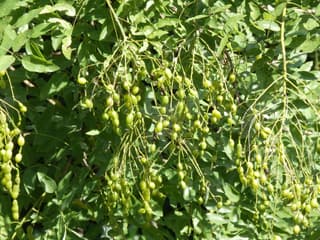
The Japanese Pagoda Tree (Styphnolobium japonicum), formerly known as Sophora japonica, is a large deciduous tree native to China and widely cultivated across East Asia. Belonging to the Fabaceae family, it can reach up to 25 meters in height and is highly valued for its generous shade and fragrant creamy-white flowers produced in summer. It is a hardy tree, adaptable to poor soils and urban pollution, frequently used in parks, avenues, and historic gardens.

Big-leaf mahogany
Swietenia macrophylla
Big-leaf mahogany (Swietenia macrophylla) is a large tropical tree in the Meliaceae family, native to Mexico, Central America and the Amazon. In the wild it reaches 30–40 m, with a straight trunk, buttressed base and compound leaves up to 60 cm long, glossy and dark green. The flowers are small, greenish-white and fragrant, and the fruits are upright, club-shaped woody capsules that release wind-borne winged seeds. Its reddish timber is among the most valuable in the world, and illegal logging led to its listing in CITES Appendix II.
Syagrus Palm
Syagrus
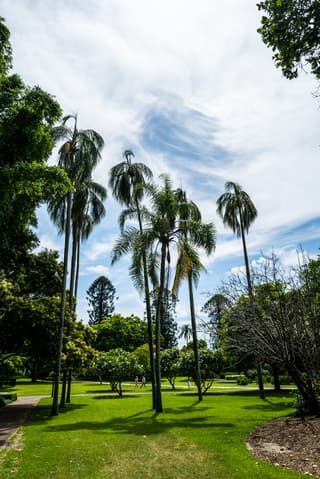
Syagrus is a genus of about 60 to 80 palms from South America, with one species in the Lesser Antilles, closely related to the coconut. Best known are the queen palm (S. romanzoffiana) and the licuri palm (S. coronata). Most have a single smooth, spineless trunk from 2 to over 30 m tall and feather-shaped leaves. Small cream-yellow flowers hang in clusters between the leaves, followed by small coconut-like fruits in green, orange or brown; in many species the kernel is edible. There are also nearly trunkless dwarf species and the small S. weddelliana, grown as a pot plant.
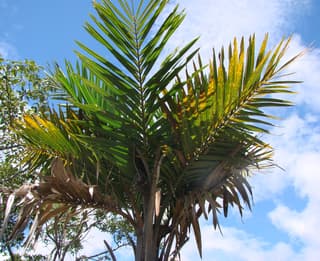
Catole Palm
Syagrus comosa
Syagrus comosa is a palm of the cerrado savanna and rocky highland grasslands of central, eastern and northern Brazil, reaching into Bolivia. It grows in open areas and on rocky slopes up to 1,200 m. It has a single slender trunk 6-12 cm thick, often covered by old leaf bases, and usually stands 1-7 m tall, typically about 5 m. The crown holds 6-12 feathery leaves up to 1.5 m long. Its clusters bear cream flowers and small coconuts with edible pulp, gathered from the wild by local people. It grows slowly and is rare in cultivation.
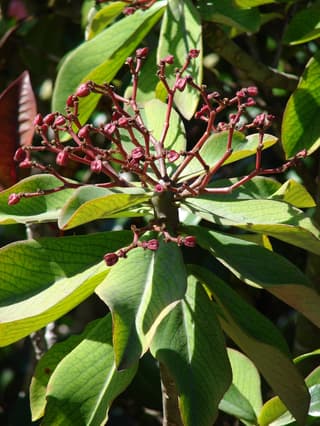
African Milk Bush
Synadenium grantii
The African Milk Bush (Synadenium grantii, synonym of Euphorbia umbellata) is a perennial succulent shrub native to East Africa—specifically the Great Lakes region, including the Democratic Republic of the Congo, Tanzania, Kenya, Uganda, Burundi, and Rwanda—where it grows on rocky slopes between 950 and 2,100 m in altitude. In Brazil, it is widely cultivated as an ornamental plant and in folk medicine, known primarily for the abundant milky latex that flows from any wound on the stem or leaves. In nature, it can reach 2 to 10 m in height, but in pots, it tends to remain much more compact. The leaves are fleshy, green or reddish-purple (as seen in the ornamental cultivar 'Rubra'), and the flowers are small, greenish, and inconspicuous, surrounded by purplish bracts. WARNING: All plant latex is toxic and extremely irritating—contact with skin or eyes can cause burning, dermatitis, and blisters, and ingestion is dangerous for humans and animals. Always cultivate with protective gloves and keep out of reach of children and pets.
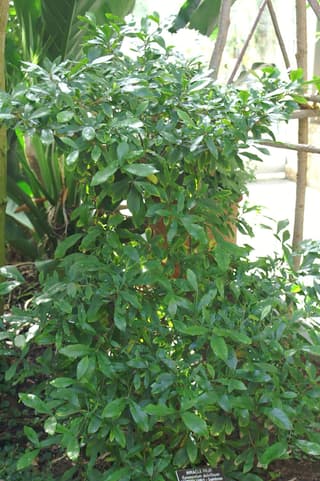
Miracle Berry
Synsepalum dulcificum
Synsepalum dulcificum, known as the Miracle Berry, is an evergreen shrub native to West Africa. Its most notable feature is the production of small red berries containing miraculin. This glycoprotein temporarily alters taste buds, causing sour or bitter foods to be perceived as extremely sweet. The plant has glossy dark green leaves and exhibits slow, elegant growth.
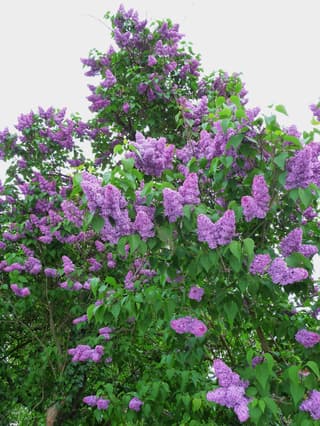
Common Lilac
Syringa vulgaris
Syringa vulgaris, the common lilac, is a hardy deciduous shrub native to the Balkans and widely cultivated for its spectacular spring display of highly fragrant flower clusters. Growing up to 5 meters tall, it produces dense panicles in shades ranging from classic purple-lavender to white, pink, and magenta. It is a beloved garden staple in temperate climates and thrives in cold winters with full sun exposure.
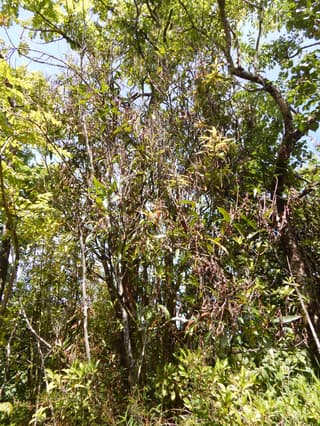
Rose Apple
Syzygium jambos
Syzygium jambos, popularly known as Rose Apple or Wax Apple, is a tropical fruit tree native to Southeast Asia. It features evergreen foliage, fragrant white to cream-colored flowers, and rounded fruits that range from yellow to pale pink, with a rose-like aroma. It is widely cultivated for its edible fruits and also as an ornamental plant.
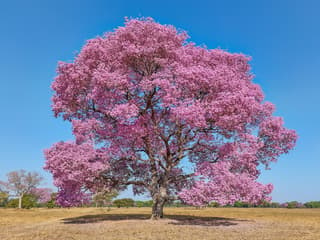
Pink Trumpet Tree
Tabebuia impetiginosa
Tabebuia impetiginosa, commonly known as the Pink Trumpet Tree or Pau d'Arco, is one of South America's most spectacular flowering trees. Native to the tropical and subtropical forests of Brazil and neighboring countries, it produces breathtaking displays of purple to pink trumpet-shaped flowers in late winter and early spring, typically when the tree is leafless. A member of the Bignoniaceae family, it can reach up to 30 meters tall in the wild and is widely planted as an ornamental street and garden tree in warm climates worldwide.
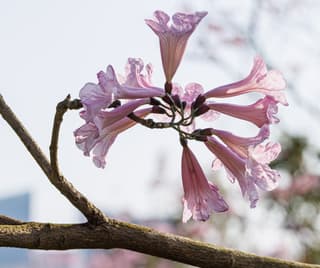
Pink Trumpet Tree
Tabebuia rosea
The Pink Trumpet Tree (Tabebuia rosea) is a majestic tropical tree native from Mexico to Colombia and Venezuela.
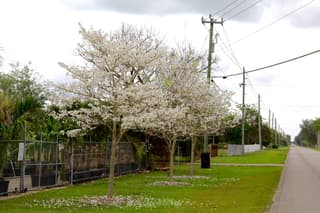
White Ipe
Tabebuia roseoalba
Tabebuia roseoalba is a Brazilian ornamental flowering tree native to the Cerrado and Pantanal biomes, in the family Bignoniaceae. It grows 7-16 m tall with a 40-50 cm trunk diameter and fissured, cork-like bark. Leaves are compound and trifoliate, with a blue-green tone. In late winter to early spring (roughly August-October in its native Southern Hemisphere range), the tree drops its leaves entirely and bursts into a canopy of white to pale-pink trumpet-shaped flowers with yellow markings in the throat -- a striking but brief display that lasts only a few days. It is a hardy, drought-tolerant pioneer species widely planted along streets and used in the restoration of degraded land.
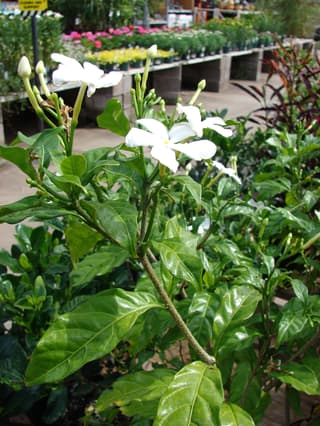
Crape Jasmine
Tabernaemontana divaricata
Tabernaemontana divaricata, commonly known as Crape Jasmine, is an evergreen tropical shrub native to South and Southeast Asia, prized for its pure white, pinwheel-shaped flowers and glossy dark green leaves. It blooms nearly year-round in warm climates, filling the air with a delicate jasmine-like fragrance. Widely used in gardens and as a container plant, it holds cultural and religious significance across India and Southeast Asia.
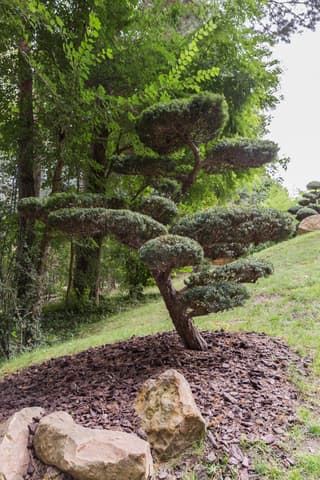
English Yew
Taxus baccata
Taxus baccata, known as the English yew or European yew, is a slow-growing conifer native to Europe, North Africa, and Western Asia. It is one of the longest-living trees in the world, with specimens exceeding 4,000 years. It produces dark green needle-like leaves arranged in two rows on the branches and seeds surrounded by a fleshy red aril. Almost all parts of the plant—leaves, bark, and seeds—contain highly toxic taxine alkaloids, fatal to humans, cats, dogs, and horses. Only the fleshy aril is edible, though the seed inside remains lethal. The yew is extremely valuable as a hedge and topiary shrub due to its tolerance for severe pruning and ability to grow in varied light conditions.
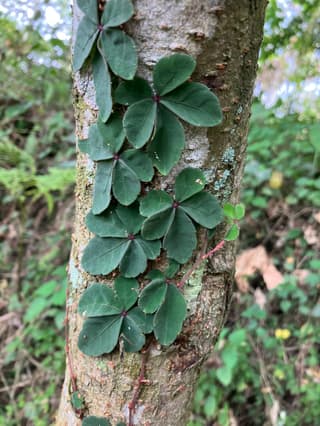
Lizard Vine
Tetrastigma obtectum
Tetrastigma obtectum, known as the lizard vine or Chinese tetrastigma, is a lush evergreen climbing vine from the Vitaceae family. It is native to southern China and parts of Southeast Asia, where it grows on forest edges, along riverbanks, and on cool, moist mountain slopes at altitudes up to 2,000 meters. The plant features characteristic palmate leaves with five lanceolate leaflets and produces small greenish-white flowers in the summer, followed by spherical, grape-like black berries. It is particularly popular as a terrarium plant and indoor ornamental due to its ability to thrive in low light and high humidity.
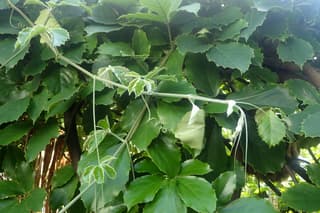
Chestnut vine
Tetrastigma voinierianum
Tetrastigma voinierianum is a vigorous woody climber in the grape family, native to the forests of Vietnam and Laos. It climbs by long tendrils and, in good conditions, grows up to 30 cm a month. The large palmate leaves have five leaflets 15 to 25 cm long, dark green above and covered in rusty hairs below, where small pearl-like beads of sap form that feed ants in the wild. New stems are reddish and hairy. The small greenish-white flowers are rarely produced indoors; the fruits are small black berries, not edible grapes.
Bent Alligator-flag
Thalia geniculata
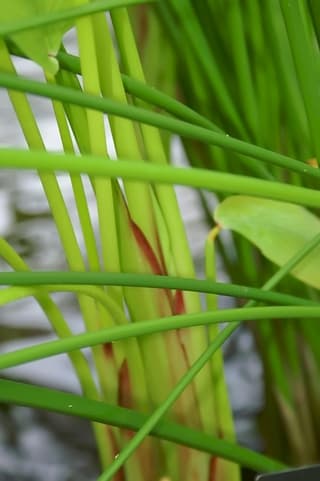
Thalia geniculata, commonly known as Bent Alligator-flag, is a majestic perennial aquatic plant. Its large, light green oval leaves resemble those of the Maranta but grow on long, erect stems that can reach impressive heights. Its most striking feature is the zigzag inflorescence, which supports delicate small purple flowers, attracting pollinators such as butterflies and hummingbirds.
Ahouai
Thevetia ahouai
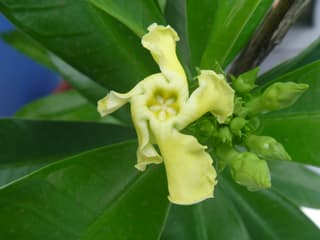
Thevetia ahouai, also known as Cascabela ahouai, is a perennial tropical shrub in the Apocynaceae family. It features leathery, dark green, glossy leaves with a lanceolate shape. Its flowers are yellow, tubular, and lightly scented, followed by fleshy fruits that turn from green to red and finally black when ripe. The entire plant contains a milky white latex and cardiac glycosides, making it extremely toxic if ingested.

Mysore Trumpetvine
Thunbergia mysorensis
Thunbergia mysorensis, commonly known as the Mysore Trumpetvine or Indian Clock Vine, is a spectacular evergreen climbing plant native to the tropical regions of southern India, particularly Karnataka. It belongs to the family Acanthaceae and is celebrated for its dramatic pendulous racemes of bicolored flowers—vivid yellow with maroon-red rims—that cascade like strings of exotic jewels. A recipient of the Royal Horticultural Society's Award of Garden Merit, this fast-growing vine can reach up to 6 meters and is a favorite in tropical and subtropical gardens worldwide.
Princess Flower
Tibouchina granulosa
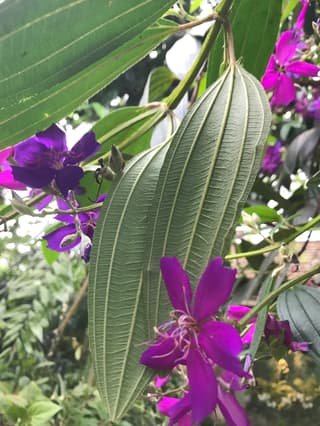
Tibouchina granulosa, commonly known as the Princess Flower or Glory Bush, is a medium-sized tree native to the Brazilian Atlantic Forest. It is notable for its rounded crown and dark green foliage with a velvety texture. Its most striking feature is its exuberant flowering, which typically occurs twice a year, covering the tree with vibrant shades of purple or pink flowers.
Glory Bush
Tibouchina mutabilis
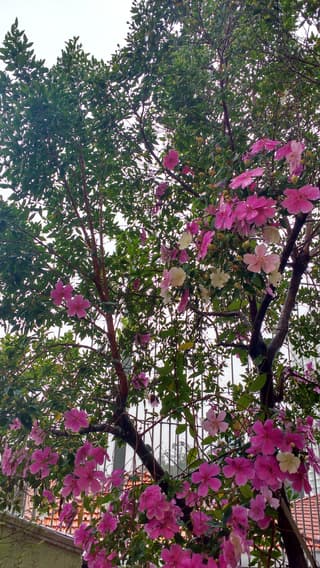
The Brazilian glory tree (Tibouchina mutabilis), known in Brazil as manacá-da-serra, is an evergreen ornamental tree native to the Brazilian Atlantic Forest, especially the coastal mountain ranges of São Paulo, Rio de Janeiro, Paraná and Santa Catarina. A member of the Melastomataceae family, it can reach up to 12 meters in height with an open, spreading crown. Its most striking trait is its flowering display: blossoms open white, turn pink, then deepen to purple, giving the tree a multicolored look as old and new flowers bloom together.
Tiger Flower
Tigridia
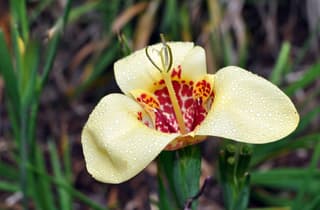
Tigridia pavonia is a striking summer bulb from the Iris family (Iridaceae), native to Mexico and Central America. It is characterized by showy, brightly colored flowers with distinctive spotted centers resembling a tiger's or peacock's eye. Each individual flower blooms for only one day, but the plant continuously produces new flowers over 2-4 weeks in summer. The leaves are sword-shaped, pleated, with prominent longitudinal veins, and they die back in the fall.
Little-leaf Linden
Tilia cordata
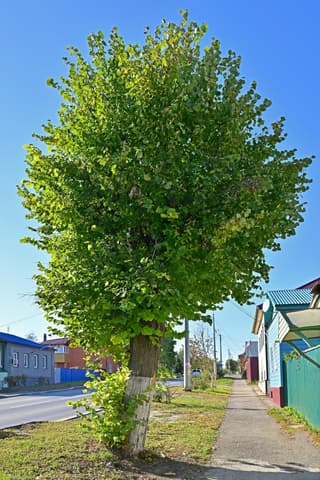
The Little-leaf Linden (Tilia cordata) is a long-lived deciduous tree in the Malvaceae family, native to Europe and western Asia. It reaches a height of up to 30 m with a broad, rounded crown spreading up to 12 m. In summer (June–July), it produces small, creamy-yellow flowers with an intense, sweet fragrance that attracts bees, making it highly valuable for beekeeping. Its heart-shaped, dark green leaves turn golden in autumn. The linden is a long-lived tree (living over 1,000 years), exceptionally frost-resistant (down to -34°C), and relatively tolerant of urban conditions.
Henry's lime
Tilia henryana
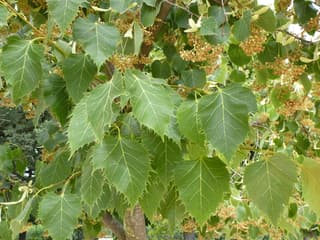
Henry's lime (Tilia henryana) is a deciduous tree native to the mountain forests of central China (Anhui, Hubei, Hunan, Shaanxi, Zhejiang...), introduced to the West by Ernest Wilson in 1901. More compact than the common lime, it reaches 30 to 50 ft in height in cultivation (up to 80 ft in its native habitat), with a rounded, spreading habit and pale gray bark that fissures with age. Its heart-shaped leaves, coppery when budding then glossy green, are distinguished by a ciliate margin of long silky bristles reminiscent of a carnivorous plant's eyelashes, before turning golden yellow in autumn. The late flowering (late August-September) produces abundant clusters of highly fragrant, nectar-rich creamy white flowers, among the last of the Tilia genus to open.
Blushing Bride
Tillandsia brachycaulos
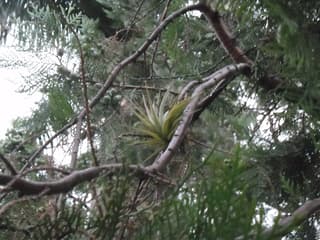
Tillandsia brachycaulos is a small epiphytic air plant native to Mexico and Central America, prized for its dense rosette of narrow, silvery-green leaves that dramatically flush deep red to scarlet in the weeks before flowering, the trait behind its common name, "Blushing Bride." It thrives without soil, drawing water and nutrients through specialized leaf scales called trichomes, and produces violet-to-purple tubular flowers rising from red or orange bracts.
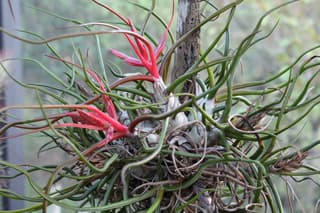
Bulbous Air Plant
Tillandsia bulbosa
Tillandsia bulbosa is an epiphytic air plant from the humid tropics of the Americas, from southern Mexico and Central America through the Caribbean to northern South America and Brazil. It forms a small rosette 7-22 cm tall: the leaf bases swell into a pseudobulb, from which thin, dark green, twisting leaves spread like tentacles. At bloom the upper leaves turn red and a spike of bright red bracts appears, carrying tubular blue-violet flowers. In the wild it grows on trees and shelters ants, which nest between the leaf bases; at home, the ants are not needed. After flowering it produces pups at the base.
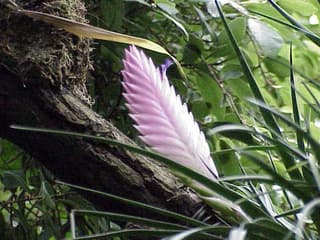
Pink Quill
Tillandsia cyanea
Tillandsia cyanea, known as the Pink Quill, is an epiphytic air plant native to Ecuador prized for its long-lasting bright pink flattened bract that rises from a rosette of narrow, arching green leaves. Unlike soil-grown houseplants, it has no true roots for absorbing nutrients -- instead it draws water and nutrients through specialized trichomes on its leaves. Small tubular violet-blue flowers emerge one at a time from the pink bract, which itself can stay colorful for two to three months.
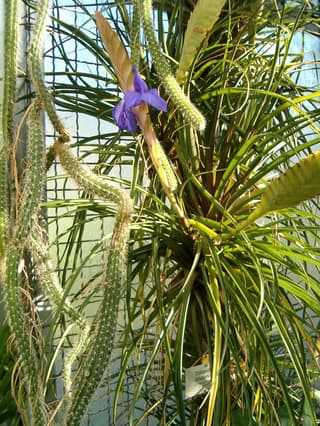
Blue-flowered Torch
Tillandsia lindenii
Tillandsia lindenii, commonly called the Blue-flowered Torch, is an eye-catching epiphytic bromeliad native to the cloud forests of Ecuador and Peru. It forms a compact rosette of arching, dark green, strap-like leaves from which rises a flattened, sword-shaped bract in shades of green, pink, or rose. From this striking bract emerge a succession of large, deep violet-blue flowers with white throats, each lasting only a few days while the colorful bract itself persists for months. Grown as a houseplant, it thrives mounted on bark or lightly potted in a well-aerated, soil-free medium, needing no traditional soil since it absorbs water and nutrients through specialized leaf scales called trichomes.
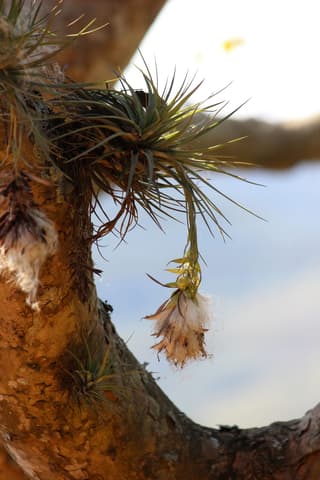
Pohl's Air Plant
Tillandsia pohliana
Tillandsia pohliana is an epiphytic or rock-dwelling bromeliad in the Bromeliaceae family, native to central and eastern Brazil, Bolivia, Paraguay, southern Peru and northern Argentina at 800 to 1,500 m. It forms a broad rosette 20 to 25 cm tall of flexible silvery leaves about 20 cm long. The spike-shaped inflorescence has broad pink bracts with orange-red tones and white flowers about 2.5 cm long.
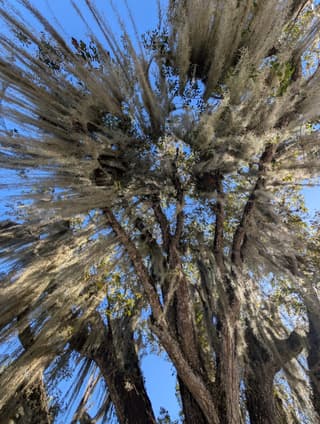
Spanish Moss
Tillandsia usneoides
Spanish moss is a flowering epiphytic bromeliad, not a true moss and not parasitic, native to the southeastern United States, Mexico, Central America, and South America. It forms long, silvery-grey strands that drape over host trees such as live oaks and bald cypress, absorbing water and nutrients from the air through specialized scales (trichomes) on its leaves rather than through roots in soil.
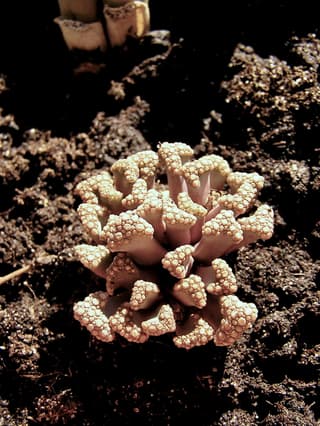
Jewel Leaf
Titanopsis calcarea
Titanopsis calcarea is a dwarf succulent from the Aizoaceae family that forms clumps of basal rosettes up to 4 inches (10 cm) wide. Its leaves, reaching up to 1 inch (2.5 cm), are gray or blue-green and end in a truncated tip covered with warty tubercles in shades of white, ochre, reddish, or bluish. It is endemic to South Africa (Bushmanland and the Upper Karoo), where it grows on limestone outcrops; in the wild, often only the leaf tips are visible, blending in with the surrounding pebbles. In late fall and winter, it produces daisy-like flowers about 0.8 inches (2 cm) wide, ranging from yellow to orange. It is a slow grower and has received the Royal Horticultural Society's (RHS) Award of Garden Merit.
What are Medium Plants?
Medium Plants require a bit more attention and basic gardening knowledge. These plants thrive with regular care and some cultivation experience. Ideal for those who already master the basics.
Tips for Growing Medium Plants
medium plants need a balance between attention and freedom. Keep a regular care routine, watch leaves to identify problems early, and adjust watering by season.