Dry Jaboticaba Leaves: How to Save Your Tree
Dry jaboticaba leaves: scratch the bark to check if the tree is alive, find the cause by where the browning starts, and learn what to do today.
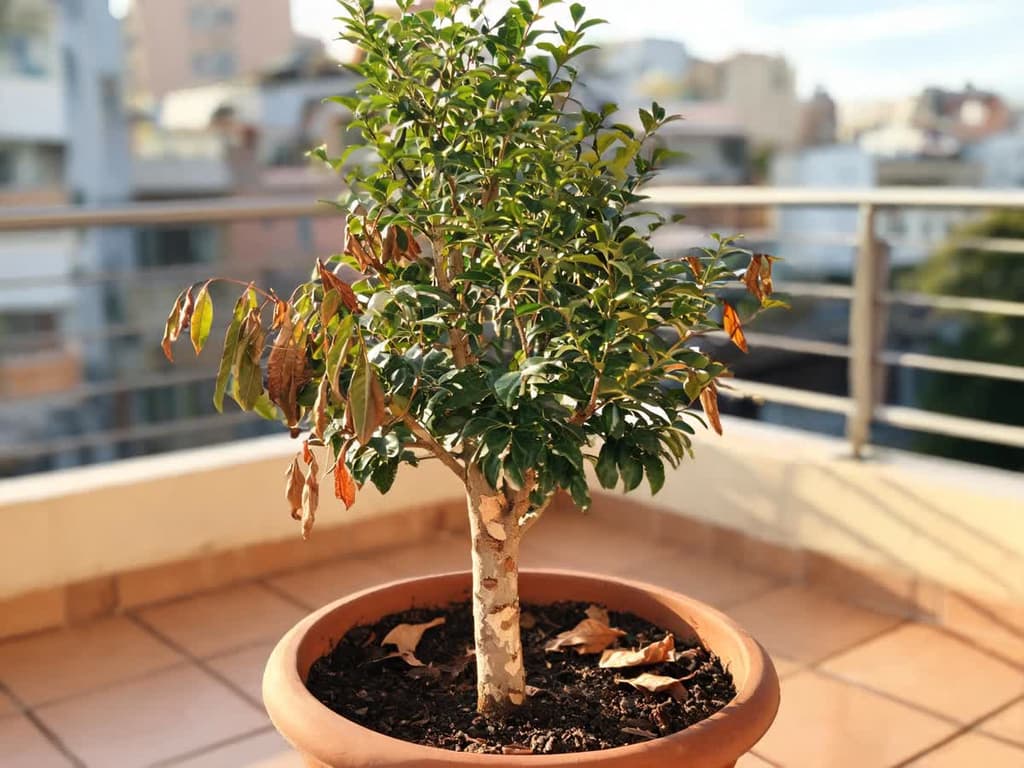
A jaboticaba tree with dry leaves that turn brown starting from the tip and then drop shows the sign of underwatering. The University of Florida (UF/IFAS) describes this pattern after short dry periods. The same source states that if the bark remains healthy after drought, the tree has a higher chance of surviving.
What to do first: gently scratch the bark of three or four thin branches from different sides of the canopy using your fingernail. Green underneath means the branch is alive. Then, find the cause by checking where the brown begins on the leaf and fix only that cause, without changing everything all at once.
Is a Jaboticaba Tree with Dry Leaves Still Alive?
The scratch test tells you if the branch is alive in a few seconds. The University of Illinois Extension recommends gently scratching the stem with a fingernail or a key. If green shows, that section is alive.
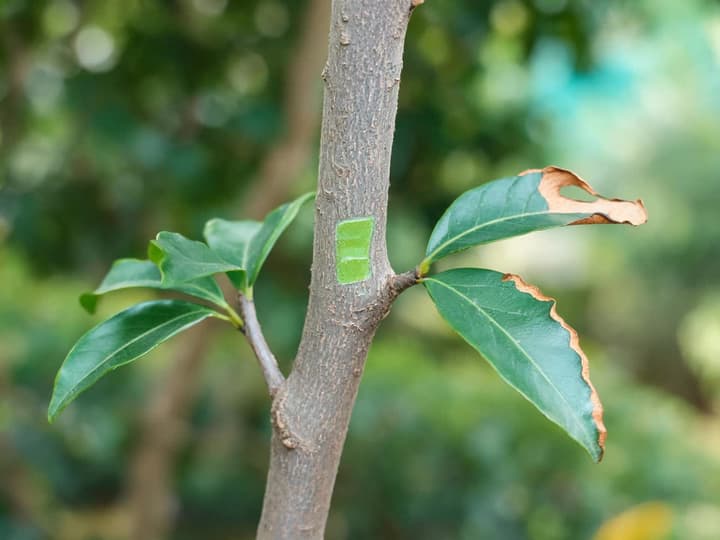
Perform the test like this:
Start at the tip of a thin branch. If it shows dry brown tissue, scratch again about 4 inches lower until you find green.
Test three or four branches from different sides of the canopy, as well as the trunk close to the soil.
Scratch lightly. Remove only the outermost layer of bark, over an area the size of a fingernail. There is no need to dig into the wood.
Green on the trunk means the tree is alive, even without a single leaf. In that case, do not uproot the jaboticaba tree. APTA is the agricultural research agency for the State of São Paulo. According to APTA, a seedling grown from seed takes 8 to 12 years to bear its first fruit. The jaboticaba seedling guide explains why a grafted sapling (made from a branch of a tree that already produces fruit) shortens this wait. If your jaboticaba tree was already producing fruit, replacing it with a new seedling resets that multi-year count.
Leave the dry branches on the tree for now. When in doubt, postpone pruning until new leaves emerge (flushing), so you avoid cutting into the live part of the branch. UF/IFAS Miami-Dade gives this guidance for cold damage. Once the jaboticaba tree flushes new growth, prune each dead branch right above the point where green tissue appeared. The guide on overpruned jaboticaba shows where to make this cut.
Brown across more than half of the branches is a bad sign. University of Georgia (UGA) Extension considers it better to replace the plant in that case. That recommendation applies to newly planted trees and shrubs and was not tested on jaboticaba. For mature trees following drought, Illinois Extension advises against pruning too early. Wait until other trees of the same type put out new leaves and remove only the tree that remains brown. This guide follows Illinois for mature jaboticaba trees, because that is the scenario it describes.
Causes of Dry Jaboticaba Leaves: Where the Browning Starts
Look at where the brown begins, which side of the canopy it appears on, and what the soil feels like. Then, compare with the table.
Where the brown appears | Probable cause | What to do |
|---|---|---|
Brown tips spreading toward the base, dry soil | Underwatering | Water until moisture drains out of the pot's drainage hole |
Burned tips and margins on the side facing harsh sun or wind | Harsh sun and wind paired with dry roots | Water and shield that side of the canopy |
Burned tips and margins days after fertilizing, white crust on the soil | Excess fertilizer | Flush water slowly through the soil for several minutes |
Leaves drying up and dropping in the weeks after planting or repotting | Transplant shock (stress from moving the sapling) | Water until the sapling puts out new leaves, withholding fertilizer |
Leaves completely scorched all at once after a night of frost | Cold damage | Wait for new shoots before pruning |
Wilting leaves with soil that has stayed soggy for days | Roots suffering from standing water | Hold off on watering until the soil dries out and clear the pot's drainage hole |
Patches that expand and dry out, showing bright yellow powder | Fungus (rust) | Remove diseased branches to improve canopy airflow and spray with Bordeaux mixture |
Spotted leaves one or two days after spraying a product | Chemical burn | Stop spraying and wait for new growth |
Brown Tips and Dry Soil: Underwatering
Underwatering is the first cause to check on a jaboticaba tree with dry leaves. UF/IFAS notes that jaboticaba trees tolerate periods of drought poorly and that the leaf dries out at the tip first. With drought, the brown advances until the entire leaf drops.
A potted jaboticaba tree requires regular watering, according to UF/IFAS. The reason: the fine roots, which absorb water, occupy the top inches of the potting soil. On a hot day, this layer can dry out even while the bottom of the pot remains moist.
Water slowly until water drains freely from the drainage hole. For a tree in the yard, slowly soak the area beneath the canopy until the soil is moist to a depth of 10 to 12 inches. That is the depth Illinois Extension recommends for trees showing leaf scorch. Water again only when the top 2 inches of soil feel dry. Embrapa Clima Temperado notes that jaboticaba trees only grow, bloom, and fruit properly when roots have consistent water access year-round.
Leaves that have already dried out will not turn green again. Illinois Extension notes that on evergreen trees, dead leaves drop once new foliage begins to flush. Because of this, evaluate recovery by looking at the new growth.
Underwatering vs. Overwatering: How to Tell Before You Water a Jaboticaba Tree
Push your finger about 2 inches into the soil before watering. If the soil is dry at that depth, water the plant. If it feels damp or sticky, wait.
A second method for small containers is checking the weight. Lift the pot right after watering and take note of how heavy it feels. Once it feels much lighter than it did on that day, the soil has dried out.
Do not switch back and forth between soaking the soil and parching it to "test" the cause. Kansas State University Extension cautions that overwatering causes wilting very similar to drought stress. Alternating between the two makes it impossible to pinpoint the real problem. Pick one rule, the finger test in the soil, and stick with it until the jaboticaba tree pushes out new leaves.
Wilting Leaves with Waterlogged Soil: Roots Suffering from Standing Water
Jaboticaba trees can tolerate waterlogged soil for a few days. In an experiment by the Federal University of Technology – Paraná (UTFPR), 18- and 24-month-old seedlings stayed in waterlogged soil for up to 15 days. Growth did not change, and 99.45% of the seedlings survived (Radaelli and colleagues, 2020). UF/IFAS records mature trees that tolerated up to a month of flooding, provided the soil dried out afterward.
Embrapa Clima Temperado warns that waterlogged soil can kill jaboticaba roots, without specifying how long that takes. This guide follows the UTFPR study for brief inundation because it measured the results: 15 days of waterlogged soil did not kill the seedlings. No study has measured what happens to a jaboticaba tree sitting in an undrained pot with wet soil for weeks. The safest choice for the plant is a container with drainage holes and emptying the saucer after every watering.
If the soil has stayed wet for days and the leaves are wilting, stop watering until the top 2 inches dry out. Check that the pot's drainage hole is clear. On citrus (orange, lemon), UF/IFAS describes rotted roots as soft and water-soaked in appearance. None of the consulted sources describe this specific symptom on jaboticaba trees. The guide on overwatered jaboticaba details signs of overwatering beyond wilting foliage. Root rot caused by Phytophthora fungi has its own dedicated page: Phytophthora root rot on jaboticaba.
Leaves Scorched After Fertilizing
Jaboticaba trees burn easily when given too much nitrogen, according to UF/IFAS. Nitrogen is the nutrient that drives leafy growth and is present in most fertilizers. According to University of Maryland Extension, fertilizer salts pull moisture out of plant cells and kill them, acting like a chemical burn. If foliage dried out right after an application, suspect fertilizer burn.
A white crust on the potting soil indicates accumulated salt, according to NC State Extension. The same source recommends slowly running water through the soil for several minutes to flush out the excess. After that, do not fertilize the jaboticaba tree until it flushes new leaves.
Leaves Scorched on the Sun- and Wind-Exposed Side
Sun and wind scorch appears on the tips and edges of the leaves, and is worse on the side of the tree that is most exposed. Illinois Extension describes this pattern in broadleaf trees and shrubs. The scorch appears after dry, windy, or intensely sunny days, when the roots do not replace the water that the leaves lose.
If you moved your jaboticaba tree from shade into full sun, keep the soil moist 2 inches down until new leaves emerge.
Leaves Scorched After a Frosty Night
Jaboticaba trees tolerate short frosts, such as those in parts of Southern Brazil, according to Embrapa Clima Temperado. UF/IFAS states that jaboticaba trees can suffer damage when exposed to temperatures below 28 °F (−2 °C) for extended periods. Cold hardiness varies from one jaboticaba species to another.
Cold damage often becomes noticeable only several days later, so avoid pruning right after a frost. UF/IFAS Miami-Dade advises waiting at least 3 to 7 days to evaluate the damage. After that, run the scratch test and cut away only branches that show brown once new growth begins to appear.
Expanding Dry Spots: Fungal Infection
A leaf with fungus dries up in spots, not from the tip. Rust forms round patches of dead tissue with a bright yellow powder. This description comes from APTA researcher José Carlos Cavichioli, in a response to Globo Rural. He explains that rust attacks more often in cold and humid air.
To counter rust, the researcher recommends Bordeaux mixture (a blend of copper sulfate and lime) alongside maintenance pruning to open up the canopy. The profile on jaboticaba rust covers these symptoms. For dark lesions without yellow powder, compare them with the pages on anthracnose on jaboticaba and leaf spot on jaboticaba.
Fungicides will not help leaves that dried out from the tip due to drought stress. According to Illinois Extension, fungal leaf damage appears scattered across the canopy and is more common in lower, shaded sections. Scorch from sun, wind, or drought concentrates on the exposed side. If the spotting does not fit either of these patterns, a photo of the leaf in Bloom (available for iOS) will identify the likely disease. Photo diagnosis requires the Premium plan.
Newly Planted Jaboticaba Tree with Dry Leaves
Jaboticaba trees are very sensitive to transplanting, according to Embrapa Clima Temperado. The institution advises moving saplings with the entire root ball intact (the soil attached to the roots) and planting on an overcast or rainy day. After planting, keep watering until the sapling puts out fresh leaves. Leaf scorch is a common symptom of transplant shock in trees, according to Purdue Extension.
For a jaboticaba tree planted a few weeks ago, lack of water remains the main risk. Penn State Extension recommends watering daily for the first 2 weeks for newly planted trees in general. From week 3 to week 12, the guidance is to water every 2 to 3 days. Even during this period, skip watering if the soil is wet. For a potted sapling, check with your finger at 5 cm (2 inches). For a sapling planted in the ground, Penn State checks at a depth of 15 to 23 cm (6 to 9 inches) using a metal rod.
Do not fertilize a newly planted sapling. UGA explains that fertilizer stimulates new foliage that unestablished roots cannot yet support. Do not move the sapling to a new spot either: every relocation counts as another transplant. Penn State points out that new roots remain confined to the planting hole for weeks. Because of this, the sapling relies on water delivered close to the trunk.
I Sprayed Dish Soap on My Jaboticaba Tree: What Now?
Do not spray the mixture again. Dish soap contains harsh cleaning agents that can injure the plant, according to the Colorado State University Extension. UF/IFAS, discussing tomato plants, explains that dish soap that removes grease also removes the waxy layer that protects the leaf.
Heat makes the damage worse. Maryland Extension notes that injury from soaps, horticultural oils, and sulfur increases above roughly 85 °F (29 °C). If you sprayed on a hot day, expect to see more scorched, spotted leaves over the next few days.
Leaves that have already burned will not recover, but the tree itself can bounce back. According to Maryland Extension, new growth can replace damaged foliage, and damaged leaves will eventually drop on their own. None of the consulted sources suggest that washing the foliage reverses the injury, so leave the leaves alone. If the entire canopy has dried up, perform the scratch test. In any scenario, water only when your finger finds the top 2 inches of soil dry.
Is It Normal for a Jaboticaba Tree to Drop Its Leaves?
Jaboticaba leaves do not drop throughout the year. Agronomist André Antonialli, from CATI (agricultural technical assistance of São Paulo), states this in a response to Globo Rural. If the canopy is sparse and there are many leaves on the ground, look in the table for where the brown began.
The same response points to extended drought, cold, and frost among the conditions that harm jaboticaba trees. For symptoms that go hand in hand with defoliation, visit the page on jaboticaba losing leaves. If only the leaf tips have dried out, see the page on brown leaf tips on jaboticaba.
What to Do Today for a Dry Jaboticaba Tree
Perform the scratch test on three or four branches and on the trunk.
Stick your finger 2 inches into the soil. Dry: water until moisture drains out of the drainage hole. Damp: wait for it to dry and check that the drainage hole is clear.
Look up the cause in the table and address only that issue.
Do not fertilize or repot until the jaboticaba tree puts out new leaves.
Do not spray anything, except Bordeaux mixture if the lesions have bright yellow powder (rust).
Do not prune dead branches right now. Wait for new shoots to emerge and cut only above the green tissue revealed by the test. Diseased branches with rust are the sole exception.
Frequently Asked Questions About Dry Jaboticaba Leaves
How do you revive a dried-out jaboticaba tree?
Lightly scratch the bark on several branches and the trunk with your fingernail. If green appears underneath, the tree is alive. Water when the top 2 inches of soil feel dry, never letting water pool in the saucer. Do not fertilize or prune until fresh growth appears. Then, cut each dead branch back to just above the point where the scratch test showed green.
How long does it take for a jaboticaba tree to leaf out again?
None of the consulted sources measured this recovery time for jaboticaba trees. Illinois Extension advises waiting until other trees of the same kind put out new leaves before deciding to remove a dried-up tree. As long as the trunk shows green during the scratch test, the tree is alive. Keep watering according to the finger test.
Does a jaboticaba tree lose its leaves in winter?
No. Jaboticaba leaves do not drop throughout the year, according to the CATI agronomist interviewed by Globo Rural. A bare jaboticaba tree has experienced something abnormal, with CATI citing prolonged drought, cold, and frost among the main stressors. Perform the scratch test and wait for new growth before cutting away any branches.
Why are my jaboticaba leaves getting scorched?
Intense sunlight paired with dry roots, strong winds, and excessive fertilizer can all scorch leaf tips and margins. Scorch caused by sun and wind shows up on the most exposed side of the canopy. Fertilizer burn appears a few days after application, sometimes accompanied by a white crust on top of the soil.
Summary: Dry Jaboticaba Leaves
When a jaboticaba tree develops dry leaves, underwatering is the first cause to check, and foliage dries out from the tip first. Scratch the bark: green tissue means the tree is alive. Identify the cause by seeing where the browning starts and correct only that issue. Water using the finger test, hold off on fertilizer, and wait for new growth before pruning dead branches.
Sources
Jaboticaba: A Unique Fruit Tree for Florida Home Gardeners (HS1519), UF/IFAS Extension (2026)
Native fruit species of Southern Brazil, Document 129, Embrapa Temperate Climate (2004)
Flooding in jaboticaba seedlings, Radaelli et al., Research, Society and Development 9(11) (2020)
Drying jaboticaba tree? Understand the cause, Globo Rural (2024)
Leaf Scorch of Woody Plants (RPD 620), University of Illinois Extension
Plants Grown in Containers, Extension Gardener Handbook, NC State Extension
Phytotoxicity: Chemical Damage to Garden Plants, University of Maryland Extension
Meeting the Watering Needs of a Newly Planted Tree, Penn State Extension (2026)
Watering Newly Planted and Young Trees and Shrubs (MF2800), Kansas State University
Insect Control: Insecticidal Soap, Colorado State University Extension
Should I use Dawn detergent on my tomato plants?, UF/IFAS Extension Nassau County (2017)
Related articles

How to Care for Hibiscus: Sun, Watering, Fertilizer, and Pruning for Flowers
How to care for hibiscus: 6 hours of direct sun, evenly moist soil without waterlogging, half-strength fertilizer in spring and summer, and pruning in early spring. Find out why the flower lasts one day and why buds drop before opening.

Do Ferns Like Sun or Shade? It Depends on the Type
Ferns prefer bright shade: plenty of light, but no direct sun on their fronds. Tuberous sword fern is the exception that handles sun. Here is the ideal light for each type, where to place pots, and how fronds show too much or too little light.

African Violet Yellow Leaves: Causes and What to Do
Yellow leaves on an African violet usually stem from overwatering, and the first place to check is the center of the plant. Losing one lower leaf at a time is normal. Identify whether age, watering, cold water, sunlight, cold drafts, or fertilizer is the culprit based on the yellowing pattern, and see what to do today.