Does Jabuticaba Like Sun or Shade? How Much Sun It Needs to Fruit
Jabuticaba likes sun to bear fruit and tolerates partial shade while young. Learn how many hours of sun it needs, where to place the pot, why it struggles indoors, and how to acclimate a sapling.
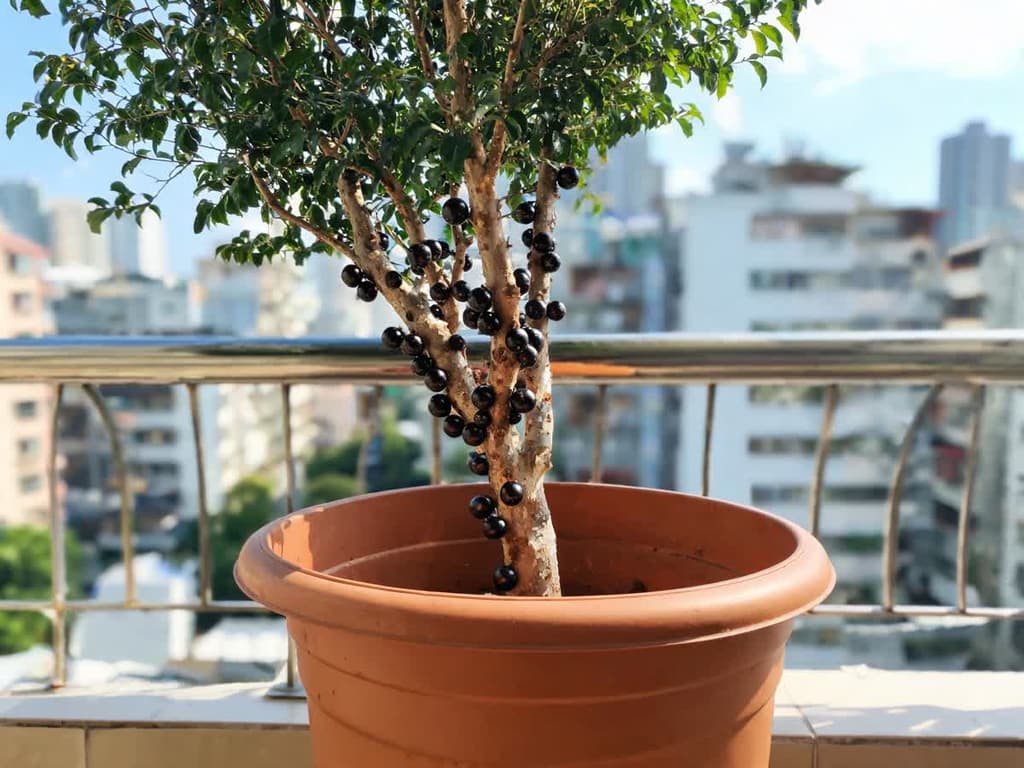
Jabuticaba likes sun to bear fruit. It tolerates partial shade and grows well in it while young, but harvests are larger in full sun, according to the University of Florida (UF/IFAS). Because of this, an adult tree or a potted plant should stay in the sunniest spot in the yard or on the balcony. That is how its trunk fills with fruit. A small sapling can spend its first few months in partial shade and move into the sun gradually.
Brazilian research measured the growth of jabuticaba (Plinia cauliflora, formerly called Myrciaria cauliflora) in shade and sun, but not fruit harvest. Full sun means 6 hours or more of direct sun per day.
Quick summary:
To bear fruit: full sun, which means direct sunlight for 6 hours or more per day.
To grow: a young plant also grows well in partial shade (3 to 6 hours of sun).
The trunk needs light: flowers and fruit develop on the trunk and thick branches, so the canopy must not leave the trunk in the dark.
In pots in Brazil: a north-facing balcony usually receives more hours of sun.
Indoors: jabuticaba is not an indoor plant. Use the indoors only as temporary shelter.
Nursery sapling: move it into full sun gradually, over 2 to 3 weeks, so the leaves do not scorch.
Does jabuticaba like sun or shade: what research shows
Jabuticaba is a Brazilian forest tree that tolerates partial shade, but produces more fruit in full sun. Brazilian research shows that a young plant grows just as well in the shade as in the sun. The recommendation for more fruit in the sun comes from the University of Florida Extension (UF/IFAS), not from a Brazilian study on yield.
Jabuticaba originates in native forest. Because of this, researchers at the Federal University of Technology – Paraná (UTFPR) hypothesized that jabuticaba tolerates shade. They state that this hypothesis still needs testing. The same paper notes that, in yards, the plant survives, grows, and produces fruit in full sun (Canonico et al., UTFPR, 2020).
Sources that discuss light do not all say the same thing:
UF/IFAS, 2026 fact sheet: jabuticaba prefers partial shade, but tolerates full sun and yields larger harvests in it. The fact sheet cites good results under the canopy of larger trees or under 30% to 60% shade cloth (UF/IFAS, HS1519).
UF/IFAS, older fact sheet (HS39): the tree needs full sun to grow well and bear fruit, and should be planted in full sun (UF/IFAS, HS39).
UTFPR, young jabuticaba in the field: the jabuticaba called hybrid grew the same in full sun and under shade cloth providing up to 80% shade. Only the season changed growth (Canonico et al., 2020).
UTFPR, saplings, and orchard: for growth, the thesis recommends raising the sapling of the açu variety, also called paulista, under 50% shade cloth. For the young hybrid in the orchard, it recommends covering the plant with shade cloth at any of the tested shade percentages (Dotto, UTFPR, 2015).
This guide recommends full sun for the mature plant because both UF/IFAS publications address fruiting and agree that sunlight produces more fruit. The UTFPR studies measured the growth of young plants, not fruit harvest.
Jabuticaba grows in the shade, but fruits in the sun
A young jabuticaba grows in shade and sun, but only sun produces more fruit. In the UTFPR studies, young plants grew equally well in both environments, and the thesis recommends shade cloth to rear saplings. No Brazilian study found has compared the harvest of mature jabuticaba trees in sun versus shade.
The jabuticaba flower grows on the trunk and thick branches, a flowering habit called cauliflory. Because of this, sun reaching only the canopy is not enough. On an adult tree, UF/IFAS recommends removing crossing branches and any branches that block light from the trunk. According to the publication, this improves flowering and fruit production (UF/IFAS, HS1519).
A mature jabuticaba planted in full-day shade yields less fruit than in the sun, according to UF/IFAS. No study found has measured how much less. If your tree is growing well but producing little fruit, first check whether sunlight reaches the trunk.
How many hours of sun jabuticaba needs
An adult jabuticaba tree needs full sun, and full sun means at least 6 hours of direct sun per day. This is the definition from the North Carolina State University extension gardening handbook (NC State Extension). The same manual calls a place with 3 to 6 hours of sun per day partial shade (NC State Extension).
None of the research sources on jabuticaba provide a specific number of sunlight hours for it. Because of this, this guide uses the Extension definition of full sun: 6 hours or more of direct sunlight. If the sunniest spot in your home receives less than that, use that spot anyway and expect less fruit.
To track the hours, observe the spot on a sunny day from morning until late afternoon. Note the time direct sun hits the plant and the time it leaves. Sunlight filtered by cloth, trees, or frosted glass does not count as direct sun.
Potted jabuticaba on the balcony
Potted jabuticaba does best on the balcony, in the spot that receives the most hours of direct sun. In Brazil, this is usually the north-facing side. In most of the country, which lies south of the Equator, the midday sun passes to the north. Extension services in the United States point to the south side for the same reason, but in the Northern Hemisphere.
The side of the house changes the type of sun. The east side gets sun from sunrise until midday, and the west side gets sun from midday until sunset (NC State Extension). An east- or west-facing balcony receives about 6 hours of direct sun, right at the threshold of full sun.
On a covered balcony, sun enters only through the open side. Move the pot to the outer edge of the balcony, where direct sun hits for the longest time. Fig trees and avocado trees are also full-sun fruiting plants that can grow in containers. If you keep both on the balcony, they will compete with the jabuticaba for the same sunny corner.
Jabuticaba indoors
Jabuticaba is a sun tree, and indoors it does not receive the 6 hours of direct sunlight required for full sun. Inside a living room, far from the window, the plant gets no direct sunlight at all. Keep the plant indoors only as short-term shelter, such as during balcony renovations.
After moving indoors, jabuticaba may yellow or drop leaves. If this happens, return the pot to its original sunny location. A plant kept indoors for just a few days can go straight back to its old spot. If it spent weeks in the shade, transition it back gradually using the steps in the section on young saplings.
Yellow leaves and leaf drop can stem from overwatering or nutrient deficiencies, not just light issues. Check the causes of jabuticaba with yellow leaves and jabuticaba dropping leaves if the plant continues to show symptoms after returning to the sun.
Young sapling: how to transition jabuticaba from shade to sun
Jabuticaba saplings are usually grown in partial shade. The São Paulo Agribusiness Technology Agency (APTA) recommends keeping saplings in partial shade during their first months of life (APTA). Because of this, a sapling bought from a nursery might not be ready for full sun. APTA and UTFPR mention shade only for the sapling stage. Since the tree bears more fruit in the sun, this guide transitions the sapling into full sun in 2 to 3 weeks.
A plant raised in the shade should move into full sun gradually. A leaf that grew in the shade has a thinner wax layer. Strong sun all at once can burn this leaf, according to North Carolina State University Extension (NC State Extension). The source does not give a timeframe. This guide suggests 2 to 3 weeks, the safest option for the plant:
During the first week, keep the sapling in direct sun only during the early morning hours and in the shade the rest of the day.
During the second week, leave the sapling in direct sun until noon.
During the third week, place the sapling in its permanent, full-sun spot.
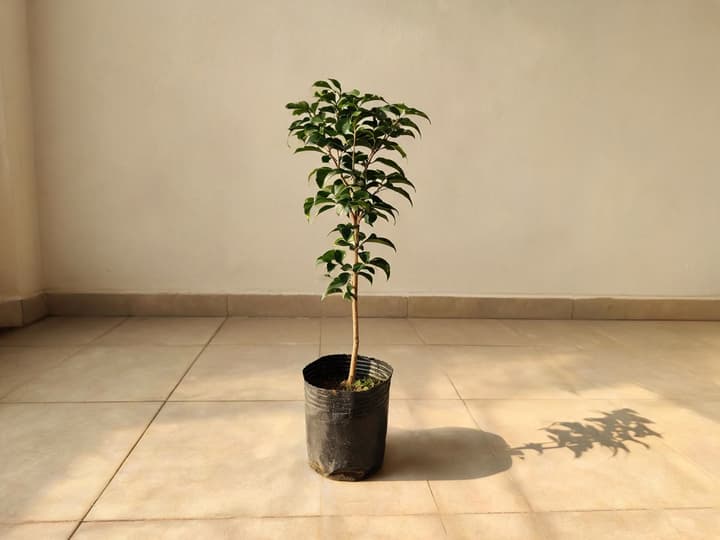
If pale or dry patches appear on the most exposed leaves right after a step, return to the previous step. Wait for new foliage to emerge before continuing.
To plant the sapling in the ground, choose the full-sun spot in your yard and complete the transition to the sun beforehand, while it is still potted. A garden bed shaded all day lets the sapling grow, but reduces the mature tree's harvest. Jabuticaba grows slowly and can take up to 8 years to bear fruit, according to UF/IFAS.
Jabuticaba planted in the shade: moving it vs. removing the shade
If the jabuticaba is already planted in the ground, in the shade, remove what is casting shade on it before thinking about moving it. UF/IFAS says that jabuticaba takes well to transplanting from a pot into the ground, but it can take up to 2 years to establish (UF/IFAS Gardening Solutions). None of the consulted sources addresses transplanting a tree already established in the ground.
To remove shade, start with the surroundings: neighboring tree branches, a climbing vine on a wall, or a tall shrub. Next, examine the canopy itself. Remove thin crossing branches that crowd the center and block light from reaching the trunk, without cutting the thick branches that produce fruit. The guide on pruning jabuticaba details which cuts the tree tolerates.
If leaves started dropping right after the jabuticaba lost sunlight, insufficient light is the prime suspect. Lost sunlight can stem from a new wall or a neighboring tree growing larger. If nothing changed around a tree that has lived in the same spot for years, look for another cause, such as water, pests, or roots.
Signs of low light and excessive sun on jabuticaba
Sign | Likely cause | What to do |
|---|---|---|
Green, healthy tree with few or no flowers on the trunk | Too little sun reaching the trunk, or the plant is too young | Remove whatever shades the trunk and verify the sapling's age and origin |
Leaves yellowing and dropping right after being moved indoors | Sudden drop in light levels | Return the container to its sunny spot |
Pale or brown, dry patches on the most exposed leaves shortly after moving into the sun | Shade-adapted foliage burned by the sun | Step back one stage in the sun transition |
Yellow leaves alongside continually waterlogged soil | Excess water, not excess light | Verify the pot has drainage holes at the base and empty water from the saucer. Water again when the soil is no longer saturated |
A seed-grown jabuticaba can take years to produce its first bloom, even in full sun. A grafted sapling, taken from a branch of an already fruiting tree, typically bears fruit much sooner. Before blaming lighting for a tree without fruit, verify where the sapling came from. The guide on how to care for jabuticaba explains how long each type of sapling takes.
Frequently asked questions
Can a jabuticaba tree stay in the sun?
Yes. A mature jabuticaba tree can remain in full sun all day, and sun is where it produces larger harvests, according to UF/IFAS. In home gardens, jabuticaba survives, grows, and bears fruit in full sun. Only a nursery-raised sapling from shaded conditions needs a gradual 2-to-3-week adjustment to the sun.
Does jabuticaba fruit in the shade?
Jabuticaba yields less fruit in partial shade than in full sun, according to UF/IFAS. In full shade all day, the trunk where flowers develop receives little light, and the jabuticaba produces fewer fruit. No Brazilian study found has measured the yield of mature jabuticaba trees in shade versus sun.
Can potted jabuticaba stay indoors?
Potted jabuticaba should not live indoors. It is a sun tree and requires 6 hours or more of direct sunlight daily to produce fruit. Indoors, it should only stay for a few days. If the leaves turn yellow or drop, return the pot to a balcony or another sunny outdoor spot.
Does jabuticaba prefer morning or afternoon sun?
None of the reviewed sources compares morning sun to afternoon sun for jabuticaba. This guide counts the total hours of direct sun, which should be 6 or more. A sapling newly arrived from a nursery starts with early morning hours, following the steps in the section on young saplings.
Summary: where to place your jabuticaba
Jabuticaba likes sun to bear fruit and tolerates partial shade to grow. Give the adult plant the spot with the most hours of direct sun, preferably 6 or more, and let light reach the trunk. In pots, in Brazil, use a north-facing balcony. A nursery sapling moves into the sun gradually, over 2 to 3 weeks. For a tree already planted in the shade, remove what shades it: neighboring branches, climbing vines, and thin crossing branches from its own canopy.
If you are not sure whether the tree in your yard is a jabuticaba, a photo of the leaf in Bloom (available for iOS) will identify the species.
Sources
Related articles

How to Care for Hibiscus: Sun, Watering, Fertilizer, and Pruning for Flowers
How to care for hibiscus: 6 hours of direct sun, evenly moist soil without waterlogging, half-strength fertilizer in spring and summer, and pruning in early spring. Find out why the flower lasts one day and why buds drop before opening.

Do Ferns Like Sun or Shade? It Depends on the Type
Ferns prefer bright shade: plenty of light, but no direct sun on their fronds. Tuberous sword fern is the exception that handles sun. Here is the ideal light for each type, where to place pots, and how fronds show too much or too little light.

African Violet Yellow Leaves: Causes and What to Do
Yellow leaves on an African violet usually stem from overwatering, and the first place to check is the center of the plant. Losing one lower leaf at a time is normal. Identify whether age, watering, cold water, sunlight, cold drafts, or fertilizer is the culprit based on the yellowing pattern, and see what to do today.