2332 Easy Plants | 2026 Guide - Page 42
Discover 2332 easy plants for your garden. Complete care guide.
2332 Easy Plants
Showing 1477-1512 of 2332

Holy Basil
Ocimum tenuiflorum
Holy Basil (Ocimum tenuiflorum), also known as Tulsi, is a sacred aromatic herb native to the Indian subcontinent and Southeast Asia. Revered in Hinduism as a manifestation of the goddess Lakshmi, it has been used for over 3,000 years in Ayurvedic medicine. This upright, bushy subshrub grows 30–60 cm tall with fragrant green or purple leaves and small purple-pink flower spikes that bloom in summer.
Evening Primrose
Oenothera
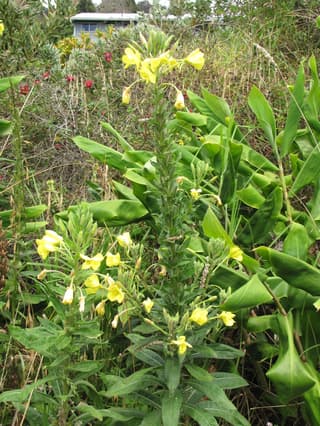
Evening Primrose (Oenothera) is a genus of roughly 145 herbaceous wildflowers in the Onagraceae family, native to the Americas. Depending on the species, plants may be annuals, biennials, or perennials, typically forming rosettes of lance-shaped leaves topped by four-petaled cup-shaped flowers in yellow, pink, or white. Many species open their blooms in the evening or at dusk and close by midday, a trait that gives the genus its common name and its symbolic ties to twilight and hidden beauty.
Evening Primrose
Oenothera biennis
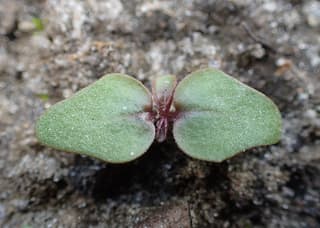
Oenothera biennis, known as Evening Primrose, is a biennial plant native to North America. It is famous for its vibrant yellow flowers that open rapidly at dusk and emit a mild fragrance to attract nocturnal pollinators. In its first year, the plant forms a rosette of low-growing leaves, and in its second year, it develops a tall, flowering stalk. It is widely recognized in the herbal medicine industry for the oil extracted from its seeds, which is rich in gamma-linolenic acid.
Biennial Gaura
Oenothera gaura
Kisses
Oenothera suffulta
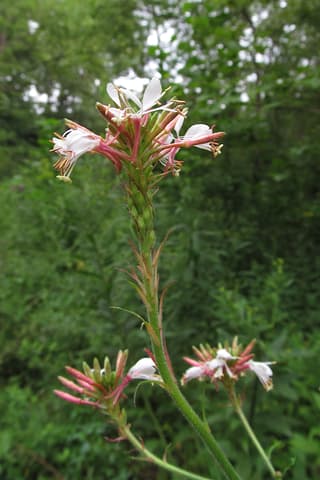
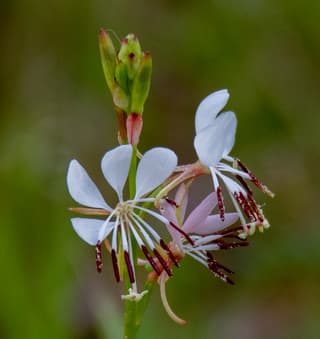
Oenothera suffulta, commonly known as Kisses or Roadside Gaura, is a small annual to short-lived perennial native to south-central Texas, Oklahoma, and northern Mexico. Its delicate pink, white, and red flowers open at dusk. Formerly classified as Gaura suffulta, it belongs to the family Onagraceae and thrives in poor sandy soils, being highly drought tolerant.
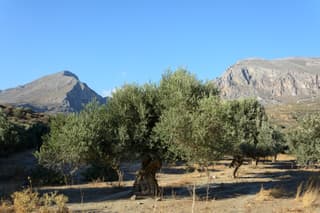
Olive tree
Olea europaea
The Olive tree (Olea europaea) is a medium-sized evergreen tree native to the Mediterranean region, Asia, and Africa. It is widely cultivated for its fruit, olives, and the oil extracted from them, olive oil. It features distinct silvery-green leaves and a gnarled, gray bark that becomes rougher with age. It is a universal symbol of peace, longevity, and prosperity.
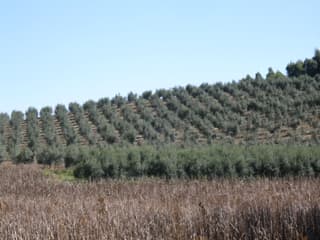
Arbequina Olive
Olea europaea 'Arbequina'
The Arbequina Olive (Olea europaea 'Arbequina') is a Spanish olive cultivar originating from the Arbeca region in Catalonia. It is recognized for its compact size, self-fertility, and early fruiting, characteristics that have made it one of the most popular varieties for cultivation in pots, small gardens, and hedges. Its leaves are evergreen, featuring a silvery underside, and the plant produces small creamy white flowers in spring, followed by green olives that ripen to a purplish hue, used for both gourmet olive oil production and table olives.
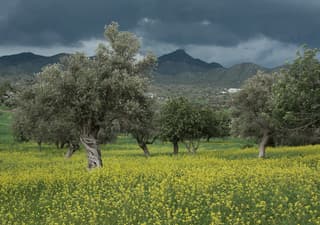
Little Ollie
Olea europaea 'Montra'
Little Ollie is a compact, non-fruiting cultivar of the Mediterranean olive tree, prized for its dense, rounded form and silvery-green evergreen foliage. Bred by Monrovia, this sterile selection produces the classic olive look without the mess of dropped fruit, making it a popular choice for hedges, containers, and topiary. Extremely drought-, heat-, and salt-tolerant once established, it thrives in full sun with minimal care.

Dwarf Lilyturf
Ophiopogon
Ophiopogon is a genus of evergreen, grass-like perennials in the family Asparagaceae, native to East and Southeast Asia, with Ophiopogon japonicus as the most widely cultivated species. It forms dense clumps of thin, arching, linear leaves resembling a coarse turf grass, creating a uniform dark-green mat. It is widely used as a shade groundcover, border edging, and filler between stepping stones, precisely because it tolerates spots where regular lawn grass fails from lack of sun. In summer it produces small, understated white-to-pale-lilac flowers, followed by ornamental cobalt-blue berries.
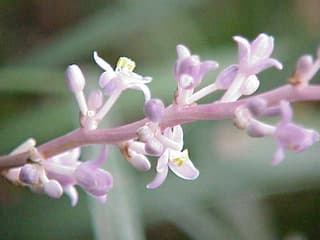
White Lilyturf
Ophiopogon jaburan
White lilyturf (Ophiopogon jaburan) is an evergreen perennial native to Japan and southern Korea, prized as a shade-tolerant groundcover and border plant. It forms dense clumps of long, arching, strap-like leaves — plain green or variegated with cream stripes — and sends up spikes of small white to pale lavender flowers in summer, followed by ornamental violet-black berries in fall. Low-maintenance and adaptable, it handles partial shade to full coastal sun and light frost.
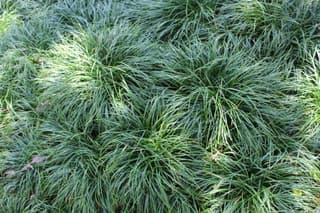
Mondo Grass
Ophiopogon japonicus
Ophiopogon japonicus, commonly known as mondo grass or dwarf lilyturf, is an evergreen perennial groundcover native to Japan and East Asia. It forms dense, low-growing mats of dark green, grass-like foliage and is widely used in shaded gardens. In summer it produces small white to pale lilac flowers followed by ornamental cobalt-blue berries.
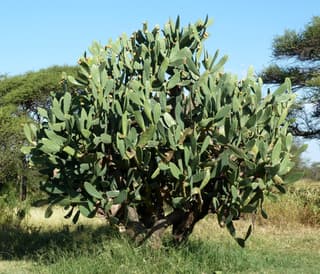
Prickly Pear Cactus
Opuntia
Opuntia, commonly known as prickly pear or nopal, is a genus of cacti native to the Americas, especially Mexico. Its flattened pads (cladodes), spines, and showy flowers make it one of the most recognizable plants in the world. It produces edible fruits (tunas) and pads (nopales) that have been used in Mexican cuisine for millennia.
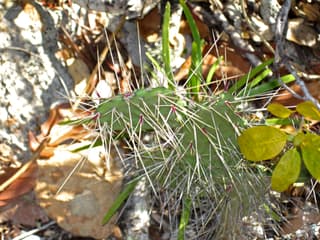
Sweet Prickly Pear
Opuntia dillenii
Opuntia dillenii, commonly known as the Sweet Prickly Pear, is a robust cactus native to the Caribbean and coastal Americas. Its oval, spine-covered pads produce vibrant yellow flowers in spring and summer, followed by edible reddish-purple fruits. Exceptionally drought-tolerant and heat-resistant, it thrives in poor, sandy soils with minimal care.
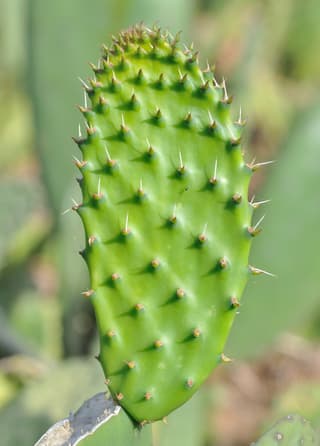
Prickly Pear
Opuntia ficus-indica
Opuntia ficus-indica, commonly known as prickly pear or Indian fig, is a large tree-like cactus native to Mexico. It features flattened stem segments called cladodes (pads) armed with clusters of tiny glochids. It produces showy yellow to orange-red flowers in spring and summer, followed by edible fruits called tunas or prickly pears. One of the most economically important cacti in the world.
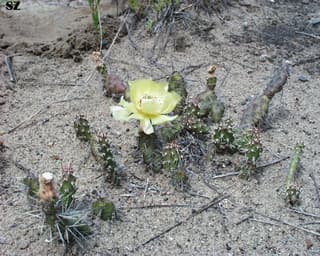
Brittle Prickly Pear
Opuntia fragilis
Opuntia fragilis, known as the brittle prickly pear, is a low-growing, mat-forming cactus native to prairies and rocky outcrops across western North America, from British Columbia to Texas. It is the most cold-hardy cactus species in North America, surviving winter temperatures below -30 C. Its small, easily detached stem segments (cladodes) break off at the slightest touch and root readily wherever they land, giving the plant its "fragilis" name and its efficient means of vegetative spread.
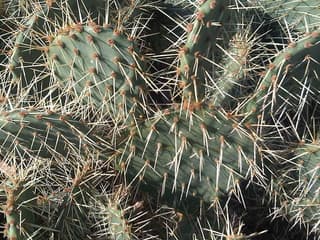
Eastern Prickly Pear
Opuntia humifusa
Opuntia humifusa, the Eastern Prickly Pear, is a low-growing, mat-forming cactus native to the eastern and central United States. It produces flat, paddle-shaped pads armed with glochids and occasional spines, stunning yellow flowers up to 4 inches wide in late spring and early summer, and edible red-purple fruits in late summer. One of the most cold-hardy cacti in the world, it thrives in USDA zones 4–9 and can survive temperatures as low as -12°C (10°F).

Twistspine Pricklypear
Opuntia macrorhiza
Opuntia macrorhiza is a low-growing, mat-forming prickly pear cactus native to the central and southern United States and northern Mexico, from Colorado and Utah east to Wisconsin and Missouri and south into Texas. One of the most cold-hardy Opuntia species, it survives winters down to USDA zone 3a. Its flattened, blue-green pads (cladodes) are armed with twisted, often reflexed spines, and in early summer it produces bright yellow flowers with a red-orange eye, followed by fleshy edible fruit.
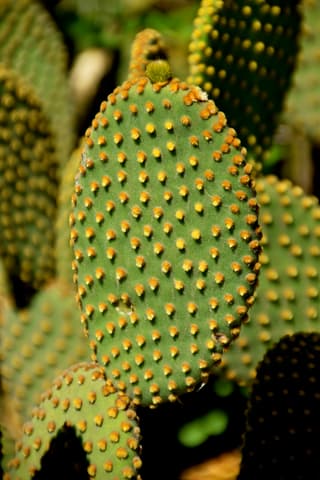
Bunny Ears Cactus
Opuntia microdasys
Native cactus from central and northern Mexico, known for its characteristic oval pads covered with white or yellow glochids that give it a velvety appearance. Forms dense bushes up to 60 cm tall and is highly valued as an ornamental plant both indoors and outdoors.
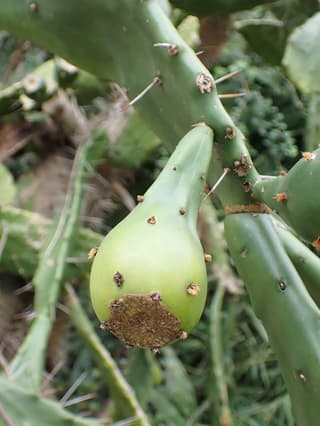
Drooping Prickly Pear
Opuntia monacantha
Opuntia monacantha, commonly known as the Drooping Prickly Pear, is a cactus native to South America (Brazil, Argentina, Uruguay, and Paraguay). It features flat, bright-green pads with yellow flowers and colorful edible fruits. A tough, drought-tolerant species, it thrives in full sun and well-draining sandy soil, making it an excellent choice for low-maintenance gardens and sunny interiors.
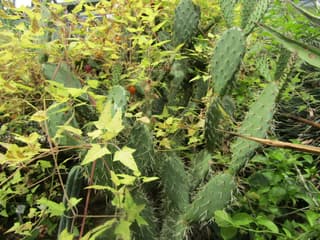
Prickly Pear
Opuntia orbiculata
Opuntia orbiculata is a paddle-type cactus belonging to the Cactaceae family, native to arid and semi-arid regions of the Americas. It forms shrubby clumps with flattened, succulent segments (pads) covered in glochids—tiny, fine, barbed spines that detach easily when touched. It is a hardy plant that grows in stacked segments, blooming in late spring and early summer with large, showy flowers followed by edible fruits (known as 'tunas').

Blind Prickly Pear
Opuntia rufida
Opuntia rufida is a shrubby, many-branched cactus native to the Chihuahuan Desert of Big Bend, Texas and northern Mexico. Its flattened, blue-green pads (cladodes) are spineless but densely covered in reddish-brown glochid clusters that give the plant its cinnamon-colored look and its common name, since livestock that brush against the glochids can be blinded. In summer it produces yellow flowers that fade to apricot or red, followed by reddish edible fruit.
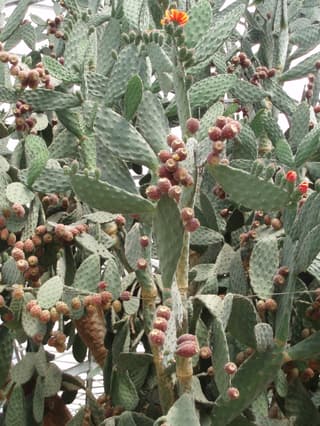
Woollyjoint Prickly Pear
Opuntia tomentosa
Opuntia tomentosa, the woollyjoint prickly pear, is a tree-forming cactus native to central Mexico's semi-arid highlands. Over years it develops a short, thick trunk topped with broad, velvety green pads covered in fine, felt-like hairs (hence 'tomentosa'), eventually reaching 3-6 m and occasionally up to 8 m in the wild. In spring and summer it bears yellow-to-orange, sometimes red-tinged flowers followed by sweet, edible reddish-purple fruit ('tunas'). Extremely drought tolerant once established, it thrives in full sun and sandy, fast-draining soil, and is grown both ornamentally and for its edible pads and fruit.
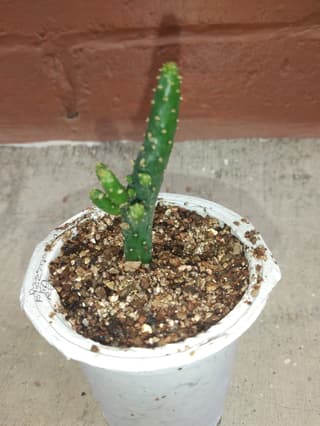
Tuna Prickly Pear
Opuntia tuna
Opuntia tuna, commonly known as tuna prickly pear or Caribbean prickly pear cactus, is a robust columnar cactus native to the Caribbean and tropical Americas. Its flattened pads (cladodes) are armed with spines and glochids, and it produces showy yellow-to-orange flowers in spring and summer, followed by edible reddish fruits.
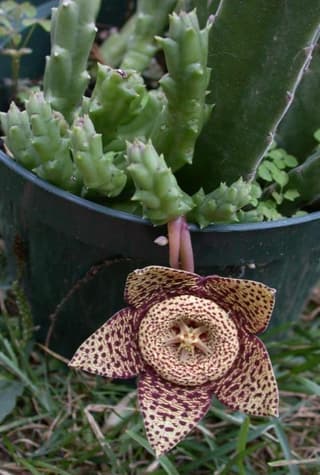
Carrion Flower
Orbea variegata
Orbea variegata, commonly known as Carrion Flower or Starfish Plant, is a low-growing succulent native to the Cape Province of South Africa. It produces striking star-shaped flowers up to 8 cm across, yellow or off-white with dark maroon spots, that emit a carrion odor to attract fly pollinators.

Old Man of the Andes
Oreocereus celsianus
A slow-growing columnar cactus native to the Andes of Bolivia, Peru, and Argentina, where it grows at altitudes between 2,900 and 3,600 meters. Its upright stems, which branch at the base, are covered in dense white wool and long yellowish spines. They can reach up to 3 meters in height in the wild, though they rarely exceed 1 meter in cultivation. The white 'beard' covering the top of the stems protects the plant from intense solar radiation and the extreme temperature fluctuations of its high-altitude habitat, giving it its popular names. In spring, it produces tubular pinkish-purple flowers, usually pollinated by hummingbirds, followed by small globose fruits.
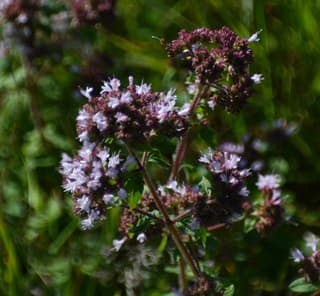
Oregano
Origanum
Origanum is a genus of aromatic Mediterranean herbs in the Lamiaceae family, widely known for culinary and medicinal use. This entry covers the most common species of the genus, including O. vulgare (common oregano), O. majorana (sweet marjoram), and O. dictamnus (Cretan dittany). These are hardy, drought-tolerant, fragrant plants well-suited for herb gardens, containers, and sunny borders.
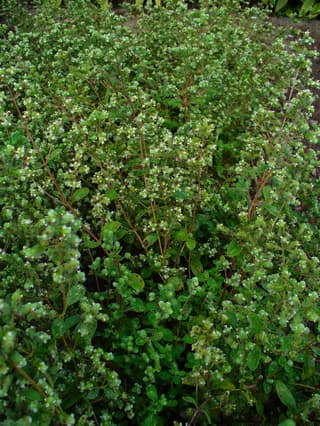
Sweet Marjoram
Origanum majorana
Sweet marjoram (Origanum majorana) is a fragrant Mediterranean herb in the Lamiaceae family, prized for over 4,000 years for its culinary and medicinal value. It features small, oval, grayish-green velvety leaves and produces tiny white to pale pink flowers in compact knot-like clusters during summer. While technically a tender perennial in warm climates (USDA zones 9–11), it is commonly grown as an annual in temperate regions. Sweet marjoram is milder and sweeter than its close relative oregano, with a warm, slightly floral, and spicy aroma.
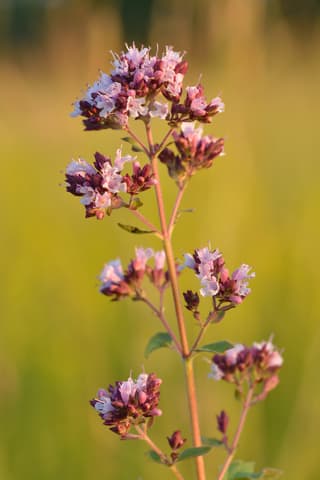
Oregano
Origanum vulgare
Oregano (Origanum vulgare) is an aromatic perennial herb native to the Mediterranean region, belonging to the Lamiaceae family. Known for its intensely fragrant leaves, it is one of the most widely used culinary herbs worldwide, essential in Italian, Greek, and Mexican cuisines. It forms low, bushy mounds and produces small pink, white, or purple flowers in summer.
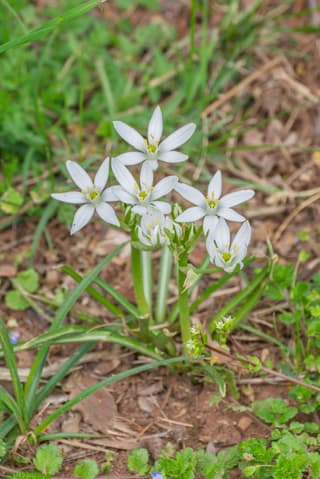
Ornithogalum
Ornithogalum
Ornithogalum is a genus of about 200 bulbous plants in the asparagus family (Asparagaceae), native to Europe, the Mediterranean, western Asia and especially southern Africa. Each bulb produces a tuft of narrow, strap-shaped leaves and stems topped with clusters or spikes of star-shaped flowers, usually white with a green stripe on the back, and orange or yellow in some species. The most grown species are O. umbellatum (Star of Bethlehem, a hardy garden bulb), O. thyrsoides (chincherinchee, a long-lasting cut flower), O. dubium (sun star, sold as a pot plant) and O. arabicum; the care on this page is valid for them.
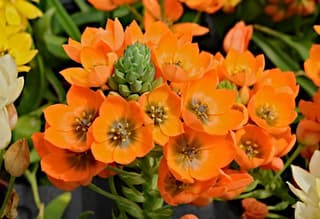
Sun Star
Ornithogalum dubium
Ornithogalum dubium, popularly known as the sun star or orange star plant, is a bulbous perennial native to South Africa prized for its clusters of vivid orange to yellow star-shaped flowers held above strap-like leaves. A favorite of florists and potted gift plants, it blooms from late winter through spring before entering a summer dormancy.
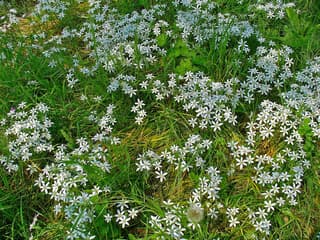
Star-of-Bethlehem
Ornithogalum umbellatum
Star-of-Bethlehem (Ornithogalum umbellatum) is a small bulbous perennial native to Europe, the Mediterranean, and southwestern Asia. It produces star-shaped white flowers with green stripes on the outer petals, blooming in spring in umbel-shaped clusters. The plant goes dormant in summer after flowering. WARNING: All parts, especially the bulbs, are highly toxic to humans, cats, and dogs due to cardiac glycosides.
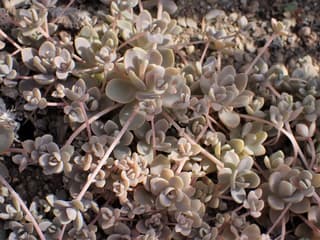
Green Dunce Cap
Orostachys malacophylla
Orostachys malacophylla is a hardy, monocarpic succulent from the Crassulaceae family (the same family as stonecrops and sedums). The plant forms dense rosettes of fleshy, bluish-green to green leaves with a diameter of 4-15 cm and spreads via runners (stolons), forming dense mats of rosettes. In the autumn, mature rosettes produce a conical inflorescence up to approximately 20 cm with white to greenish flowers and yellow stamens—after which the specific flowering rosette dies, while the numerous offsets ensure the colony lives on. The species is very hardy (USDA zones 3a-8b) and tolerates heavy frost, and the plant is not considered toxic to humans or pets.
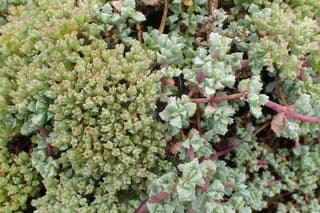
Deltoid Pumpkin
Oscularia deltoides
Oscularia deltoides is a succulent groundcover from the Aizoaceae family, native to the rocky and arid areas of the Western Cape in South Africa. It forms creeping cushions of triangular (deltoid) blue-green leaves, often with pinkish tints, edged with tiny translucent teeth that give it a frost-covered appearance. In spring and summer, it produces an abundant bloom of daisy-like flowers in magenta-pink or lavender hues, which are lightly scented and open during the day. Due to its extreme drought tolerance and ease of cultivation, it is highly valued as a groundcover, in rock gardens, and in containers.
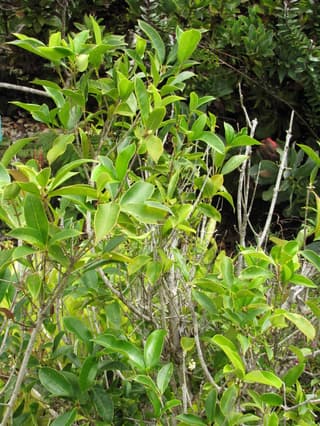
Sweet Olive
Osmanthus fragrans
Osmanthus fragrans, commonly known as Sweet Olive or Tea Olive, is an evergreen shrub or small tree native to China and parts of Asia. Renowned for its intensely fragrant, tiny white or yellow flowers, it is one of the most celebrated ornamental plants in Chinese culture. The flowers are used to scent teas, wines, and perfumes, and the plant holds deep cultural significance in China, where it is associated with the Mid-Autumn Festival.
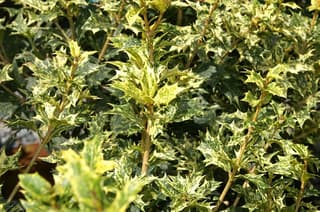
Goshiki False Holly
Osmanthus heterophyllus 'Goshiki'
Osmanthus heterophyllus 'Goshiki' is an evergreen shrub in the Oleaceae family, native to Japan and Taiwan. The cultivar 'Goshiki' (literally meaning "five colors" in Japanese) is distinguished by its variegated foliage: the leathery, spiny leaves, similar to those of holly, emerge in shades of bronze-pink before maturing into green mottled with cream, yellow, and pink. In autumn, it produces small white flowers that are discreet but highly fragrant, often hidden among the leaves. Slow-growing with a compact habit, it is prized as a specimen plant, in informal hedges, or in mixed borders.

African Daisy
Osteospermum
Osteospermum, commonly called African daisy or Cape daisy, is a genus of roughly 70 species of daisy-like flowering plants native to South Africa and the surrounding region, belonging to the sunflower family (Asteraceae). Grown as mounding, spreading subshrubs or herbaceous perennials, they produce abundant 5 cm blooms in white, yellow, orange, red, coral, pink and purple, often with a striking dark or iridescent-blue center disc. In warm climates (USDA zones 9-11) they behave as tender perennials that flower nearly year-round; in cooler regions they are grown as fast-growing annuals or overwintered indoors. Prized for heat and drought tolerance once established, African daisies are popular as border edging, container spillers and ground cover in sunny, well-drained garden beds.
What are Easy Plants?
Easy Plants are ideal for beginners or people with little time for care. These species are tolerant of watering mistakes, light variations, and don't require constant attention. Perfect for those just starting out with plants.
Tips for Growing Easy Plants
To succeed with easy plants, remember: less is more. Avoid overwatering, choose a spot with adequate light, and let the soil dry between waterings. Most of these plants prefer to be 'forgotten' occasionally.