1162 Medium Easy Care | 2026 Guide - Page 20
Find 1162 medium easy care. Complete guide for your garden.
1162 Easy Care with medium level
Showing 685-720 of 1162
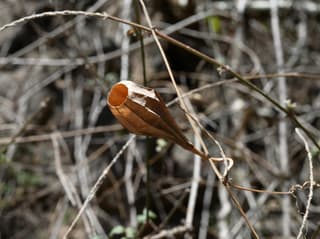
Angled Luffa
Luffa acutangula
Angled Luffa (Luffa acutangula) is a fast-growing annual climbing vine in the Cucurbitaceae family, native to tropical Asia. Its young fruits are a popular vegetable in Asian cuisine, while mature fruits develop internal fibrous networks used as natural sponges. It thrives in warm, humid climates with full sun exposure.
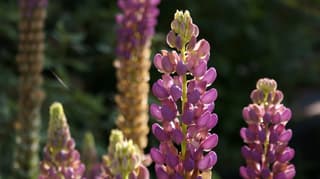
Lupine
Lupinus hybridus
Lupinus hybridus, commonly known as Lupine or Garden Lupine, is a herbaceous plant belonging to the Fabaceae family. It produces striking vertical flower spikes in shades of blue, purple, pink, white, and yellow, making it one of the most spectacular flowering plants in the garden. A product of hybridization between American and Mediterranean species, the hybrid lupine is widely prized in landscaping for its bold beauty and abundant spring and summer blooms.

Perennial Lupine
Lupinus polyphyllus
Lupinus polyphyllus, commonly known as perennial lupine or bigleaf lupine, is a perennial herbaceous plant belonging to the Fabaceae family, native to western North America. It is distinguished by its large palmate leaves composed of 9 to 17 velvety leaflets and its majestic upright flower spikes that can reach 120 cm in height. Its butterfly-shaped flowers come in a wide range of colors, from blue to purple, as well as pink, white, red, and yellow. As a nitrogen-fixing plant thanks to its symbiotic root nodules, it naturally enriches poor soils while offering a remarkable floral display from spring to summer.
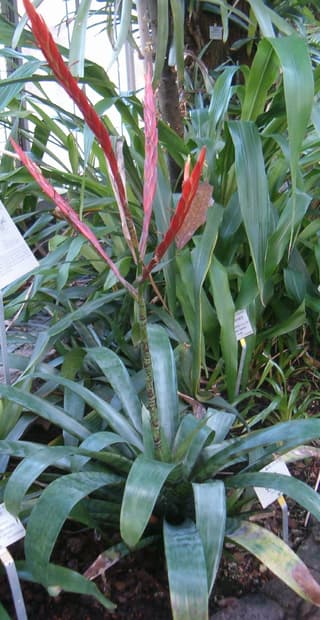
Flaming Sword Bromeliad
Lutheria
Lutheria is a genus of striking epiphytic bromeliads native to the tropical forests of Venezuela and Trinidad. Best known for its dramatic sword-shaped flower bract that blazes red, orange, and yellow, Lutheria splendens is the most popular species grown as an ornamental houseplant. As an epiphyte, it grows anchored to trees rather than soil, absorbing water and nutrients through its central cup and leaf scales.
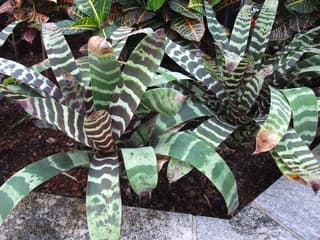
Flaming Sword
Lutheria splendens
The Flaming Sword (Lutheria splendens, formerly Vriesea splendens) is a striking tropical bromeliad native to Venezuela, the Guianas, and Trinidad & Tobago. It is prized for its dramatic sword-shaped red bract and dark-striped strap-like leaves. As an epiphyte, it naturally grows on trees and rocks, absorbing water and nutrients primarily through its central tank and specialized leaf scales called trichomes.

Blue Potato Bush
Lycianthes rantonnetii
Blue Potato Bush (Lycianthes rantonnetii) is an ornamental shrub native to Paraguay, Argentina, and southern Brazil, belonging to the Solanaceae family. It produces striking blue-violet flowers with yellow centers from spring through fall. Warning: all parts of the plant are toxic to humans, cats, and dogs.
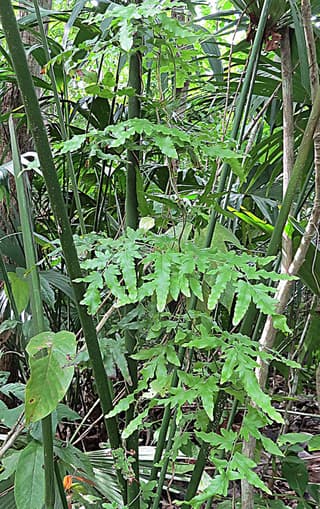
Climbing Fern
Lygodium venustum
Lygodium venustum, known as the climbing fern, is a climbing pteridophyte native to Central and South America, especially abundant in dry forests and disturbed areas from Mexico to Paraguay. Its delicate fronds wind around supports with natural elegance, forming curtains of bright green foliage. It is valued both as an ornamental plant and for its traditional medicinal use—prepared roots were used as an antivenom in indigenous communities in Nicaragua.
Fried Chicken Mushroom
Lyophyllum decastes
Lyophyllum decastes, commonly known as the Fried Chicken Mushroom, is an edible fungus that grows in dense clusters. It features a grayish-brown cap and resilient, cartilaginous flesh. It is frequently found along roadsides, in parks, and within deciduous forests, where it decomposes organic matter in the soil.
Lantern Stinkhorn
Lysurus mokusin
Lysurus mokusin is a fascinating saprophytic fungus belonging to the Phallaceae family. It is distinguished by its erect, reddish or orange receptacle, which terminates in four to five 'arms' or ribs that join at the tip, giving it a lantern-like appearance. It produces a viscous, foul-smelling gleba (similar to decaying meat) at the top to attract flies, which then disperse its spores. Although not a plant, it frequently appears in gardens with organic mulch.
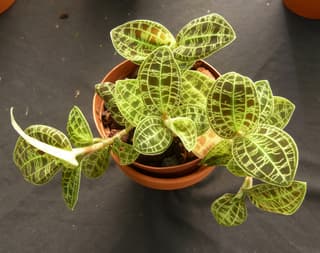
Jewel Orchid
Macodes petola
Macodes petola, known as the jewel orchid, is a terrestrial orchid native to the tropical rainforests of Southeast Asia—including Java, Malaysia, Sumatra, Borneo, the Philippines, and the Ryukyu Islands. Unlike most orchids, it does not grow epiphytically on trees but directly on the moist soil of shaded swampy forests and riverbanks. Its leaves are dark green to velvety, featuring a striking network of gold and silver veins that resemble lightning bolts or veins of precious metal—hence its nickname 'jewel orchid.' The flowers are small, reddish-brown with a white lip, and appear rarely, usually in late fall or winter; however, the plant's primary attraction remains its foliage pattern rather than its blooms.

Swordfern
Macrothelypteris torresiana
Macrothelypteris torresiana is a large fern in the Thelypteridaceae family, native to tropical and subtropical regions of Asia and Africa (including Madagascar and Mauritius). Its bi- to tripinnate fronds, featuring a soft texture and lacy appearance, can reach about 90 cm in length, forming dense and striking clumps. It reproduces via spores released from sori protected by C-shaped indusia, as well as spreading through creeping rhizomes. Introduced as an ornamental plant in various parts of the Americas, it is now considered an invasive species in several regions, including Brazil (listed by the Horus Institute), where it colonizes riparian forests, forest edges, and humid, shaded areas.
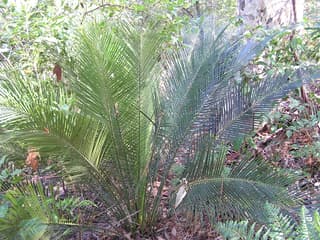
Burrawang
Macrozamia
Macrozamia is a genus of about 41 cycad species endemic to Australia, belonging to the ancient family Zamiaceae. Often called Burrawang or Zamia Palms, these living fossils have graced the Australian landscape for over 200 million years — long before flowering plants evolved. They form striking rosettes of glossy, dark-green pinnate fronds emerging from a stout trunk or subterranean caudex. Dioecious by nature, male and female cones are borne on separate plants. All parts of the plant are highly toxic if ingested raw, containing cycasin and macrozamin — powerful hepatotoxic and neurotoxic compounds.

Saucer Magnolia
Magnolia × soulangeana
The Saucer Magnolia is a deciduous hybrid tree, a cross between Magnolia denudata and Magnolia liliiflora, first bred in France around 1820 by Etienne Soulange-Bodin. It is celebrated for its large, cup-shaped flowers that appear in early spring before the leaves emerge, in shades of pink, purple, and white.
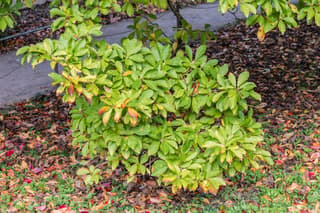
Kobus Magnolia
Magnolia kobus
Kobus Magnolia (Magnolia kobus) is a deciduous flowering tree native to Japan and Korea, prized for its fragrant, cup-shaped white flowers that appear on bare branches in early spring before the leaves emerge. It grows into a pyramidal shape when young, maturing into a broad, rounded canopy 8-12m tall. Trees can take 15-25 years to reach full flowering maturity, but reward patient growers with a spectacular annual display.
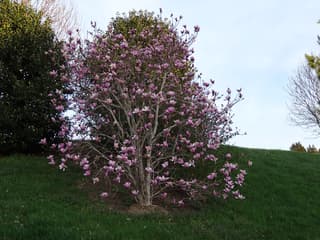
Lily Magnolia
Magnolia liliiflora
Magnolia liliiflora, commonly known as Lily Magnolia or Mulan Magnolia, is a deciduous flowering shrub native to southwestern China (Sichuan and Yunnan). It grows as a bushy, multi-trunked shrub up to 4 meters tall, producing large, goblet-shaped pink-to-purple flowers with a light citrus fragrance in early spring, before its leaves emerge. It is one of the parent species behind the widely planted Saucer Magnolia hybrid.
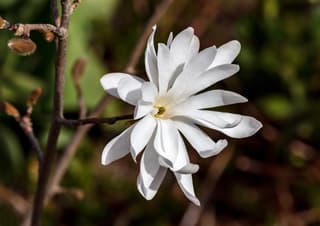
Star Magnolia
Magnolia stellata
Star Magnolia (Magnolia stellata) is a small, deciduous tree or large shrub native to Japan. Renowned for its stunning star-shaped white flowers that bloom in early spring before the leaves emerge, it is one of the first ornamental plants to bloom each season, creating a breathtaking display of delicate petals even in late winter conditions.
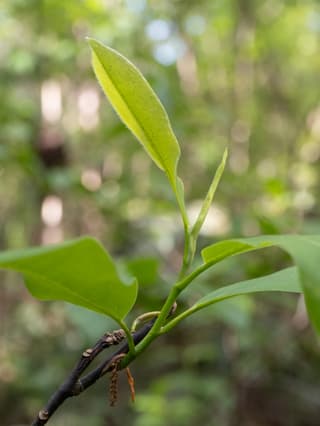
Sweetbay Magnolia
Magnolia virginiana
Sweetbay magnolia is a semi-evergreen to deciduous small tree native to wetlands and swampy woods of the eastern United States. It produces fragrant, lemon-scented creamy-white flowers from late spring through summer and glossy dark green leaves with silvery undersides that shimmer in the breeze.

Beale's Barberry
Mahonia bealei
Beale's barberry (Mahonia bealei, syn. Berberis bealei) is a stiffly upright, evergreen shrub native to China, prized for its bold, leathery, holly-like leaflets and fragrant, lemon-yellow flower spikes that open in winter and early spring. The blooms are followed in summer by dusty blue-black, grape-like berries. Once a popular shade-garden ornamental in the West, it has escaped cultivation and naturalized throughout much of the southeastern United States, where it is now classified as an invasive species: it tolerates deep shade, spreads readily by bird-dispersed seed, and can form dense thickets that crowd out native understory plants. Gardeners in that region are generally advised to avoid planting it and to choose a native alternative instead.
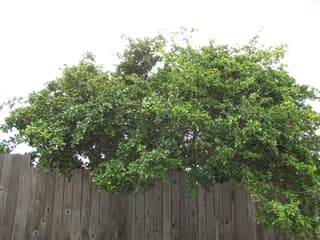
Barbados cherry
Malpighia emarginata
Malpighia emarginata, commonly known as Barbados cherry or acerola, is an evergreen tropical shrub or small tree native to the Lesser Antilles, Central America, and northern South America. Prized worldwide for its small red drupes containing extraordinary concentrations of vitamin C — roughly 1,677 mg per 100 g, making it one of the richest natural sources on earth — the plant also bears delicate pink or lavender flowers multiple times a year, providing nearly year-round ornamental interest alongside its exceptional nutritional value.
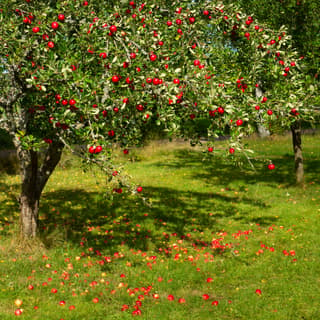
Apple Tree
Malus
Malus is a genus of small to medium deciduous trees and shrubs in the Rosaceae family, native to temperate regions of the Northern Hemisphere. It encompasses cultivated apple trees grown for their edible fruit as well as ornamental crabapples prized for their spring blossoms and colorful fall fruit.
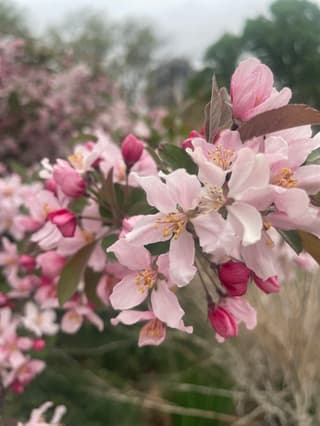
Japanese Flowering Crabapple
Malus × floribunda
The Japanese Flowering Crabapple (Malus × floribunda) is a small deciduous ornamental tree in the Rosaceae family, celebrated for its spectacular spring bloom. Deep pink buds open into white to pale pink flowers that smother the arching branches before the leaves emerge. In autumn it bears small yellow-red pome fruits that are a favorite of birds.
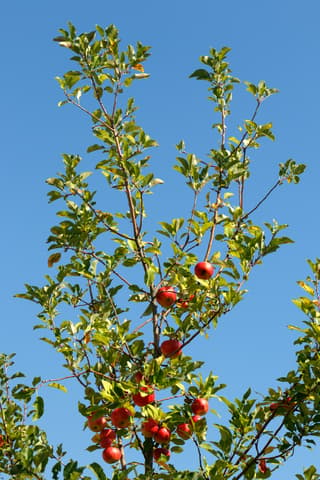
Apple Tree
Malus domestica
The apple tree (Malus domestica) is one of the most widely cultivated and economically significant fruit trees in the world, belonging to the rose family (Rosaceae). Native to the mountainous regions of Central Asia, it has been cultivated for over 4,000 years and today grows in temperate climates across every inhabited continent. Apple trees produce fragrant white and pink blossoms in spring and edible fruits in late summer to autumn. They are deciduous trees that can reach 9 meters in natural growth, though grafted dwarf varieties are typically much more compact.
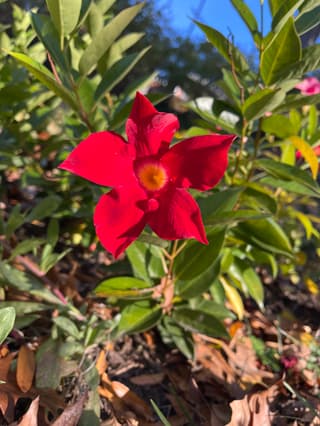
Mandevilla
Mandevilla
Mandevilla is a genus of tropical flowering vines in the Apocynaceae family, native to Central and South America. Species such as Mandevilla sanderi are widely grown for their glossy evergreen foliage and abundant trumpet-shaped flowers that bloom from late spring through fall on trellises, fences, and in hanging baskets.
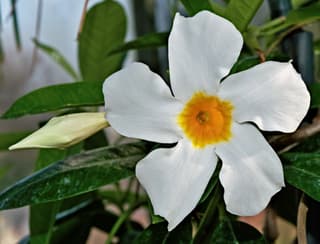
White Rock Trumpet
Mandevilla boliviensis
The White Rock Trumpet (Mandevilla boliviensis) is an evergreen woody vine in the Apocynaceae family, native to Bolivia and Ecuador. It produces white, funnel-shaped flowers with a bright yellow throat that appear nearly year-round in warm climates. It is widely grown to cover trellises, pergolas, and fences in tropical and subtropical gardens.
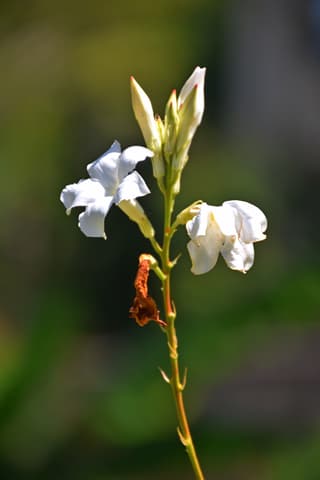
Chilean Jasmine
Mandevilla laxa
Chilean Jasmine (Mandevilla laxa) is a vigorous deciduous twining vine native to Bolivia, northwestern Argentina, and Peru. It produces clusters of funnel-shaped, creamy-white flowers with an intense vanilla fragrance — especially noticeable in the evenings — throughout summer and into fall. The milky white sap can irritate skin on contact.
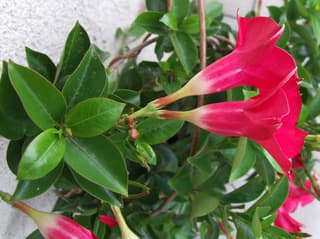
Mandevilla
Mandevilla sanderi
Mandevilla is a genus of tropical flowering vines in the Apocynaceae family, native to Central and South America. Species such as Mandevilla sanderi are widely grown for their glossy evergreen foliage and abundant trumpet-shaped flowers that bloom from late spring through fall on trellises, fences, and in hanging baskets.
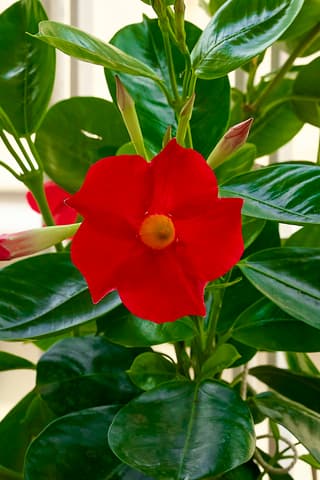
Mandevilla
Mandevilla splendens
Mandevilla splendens, widely sold in nurseries as Dipladenia, is a tropical evergreen twining vine in the Apocynaceae family, native to southeastern Brazil. Its trumpet-shaped, pale pink flowers deepen to rose as they age and bloom from spring through fall, attracting hummingbirds. The milky sap is mildly toxic and can irritate skin and eyes, so wear gloves when pruning.
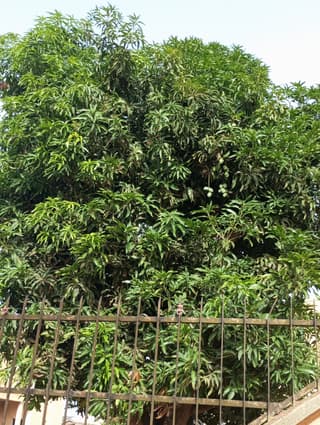
Mango Tree
Mangifera indica
The mango tree (Mangifera indica) is a tropical fruit tree native to South Asia, particularly India, where it has been cultivated for over 4,000 years. It belongs to the family Anacardiaceae and can reach up to 30 meters in height under ideal conditions. Widely regarded as the "King of Fruits," it holds immense cultural, economic, and culinary importance across the tropical world.
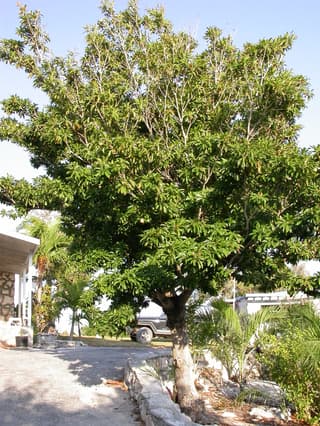
Sapodilla
Manilkara zapota
The sapodilla (Manilkara zapota) is an evergreen fruit tree in the Sapotaceae family, native to southern Mexico, the Yucatan, and Central America. In the wild, it can exceed 30 m in height, though cultivated specimens are usually kept between 9 and 15 m. Its foliage is dense and glossy dark green, its bell-shaped whitish flowers are inconspicuous, and its fruit—with sweet pulp and a grainy texture—is highly prized in tropical cuisine. Historically, the latex from its bark (chicle) was the basis for Mayan chewing gum.
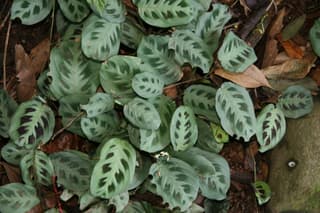
Prayer Plant (genus)
Maranta
Maranta is a genus of tropical plants in the family Marantaceae, native to tropical Central and South America. Best known for M. leuconeura (the prayer plant), the genus is celebrated for its striking patterned foliage and the fascinating nyctinastic movement of folding leaves upward at night.

Arrowroot
Maranta arundinacea
Maranta arundinacea, commonly known as arrowroot, is a tropical rhizomatous perennial herb native to the West Indies, Central America, and northern South America. Grown both as an ornamental foliage plant and as a food crop, its starchy underground rhizomes are processed into a fine, easily digestible, gluten-free starch used in cooking and baking. The plant forms clumps of broad, glossy, mid-green oval leaves and produces small white flowers in spring and summer.
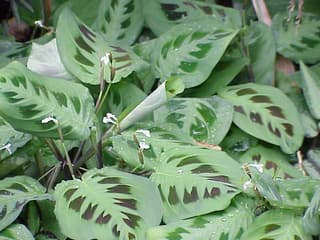
Prayer Plant
Maranta leuconeura
Maranta leuconeura is a tropical plant native to Brazilian rainforests, prized for its decorative leaves with unique colorful vein patterns. Its common name "Prayer Plant" comes from the nyctinastic movement of its leaves, which fold upward at night like hands in prayer and open during the day to absorb light.
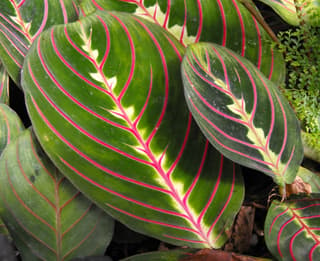
Red Prayer Plant
Maranta leuconeura var. erythroneura
The Red Prayer Plant (Maranta leuconeura var. erythroneura) is one of the most striking members of the Marantaceae family, native to the tropical rainforests of Brazil. Its deep green, herringbone-patterned leaves are laced with vivid red veins, making it a true living work of art. The nickname "prayer plant" comes from its daily leaf movement: the leaves open flat during the day to capture light and fold upward at night like praying hands, a phenomenon called nyctinasty.

Rabbit's Foot Prayer Plant
Maranta leuconeura var. kerchoveana
A tropical evergreen perennial from the Brazilian rainforest floor, prized for its velvety, oval leaves patterned with dark blotches resembling rabbit tracks along the midrib. Like all prayer plants, its leaves rise and fold together at night and lie flat again during the day, an unusual light-driven behavior called nyctinasty.
Marasmius oreades
Marasmius oreades
Marasmius oreades, commonly known as the fairy ring mushroom, is a basidiomycete fungus that grows in lawns, forming characteristic circular rings. It has a small cap, 2 to 5 cm in diameter, with a color ranging from cream to pale tan. It is famous for its ability to completely desiccate during dry periods and 'revive' after rain, maintaining its structure and ability to release spores. It is an edible mushroom of excellent quality, with a sweet taste and an aroma reminiscent of almonds.
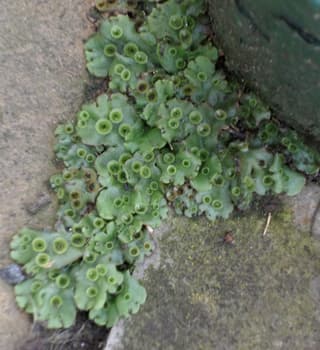
Common Liverwort
Marchantia polymorpha
Common Liverwort (Marchantia polymorpha) is a widespread bryophyte characterized by a flat, ribbon-like thallus that forms dense, green mats on moist, nutrient-rich soil. It is often the first plant to establish itself after fire or soil disturbance and is also used as an indicator of high soil moisture and poor drainage in nurseries and greenhouses. The species reproduces both sexually, via spores from umbrella-shaped reproductive organs (gametophores), and asexually, via gemmae formed in cup-like structures on the upper surface of the thallus.
Medium Care Easy Care
Our selection of 1162 medium easy care combines the characteristics of this category with moderate care needs. Ideal for those with basic experience.
Why Choose Medium Easy Care?
Combining the beauty of easy care with medium difficulty level lets you enjoy this category with a balanced care commitment. Each plant was selected to offer the best characteristics of the category at the care level you are looking for.