1135 Medium Easy Care | 2026 Guide - Page 23
Find 1135 medium easy care. Complete guide for your garden.
1135 Easy Care with medium level
Showing 793-828 of 1135
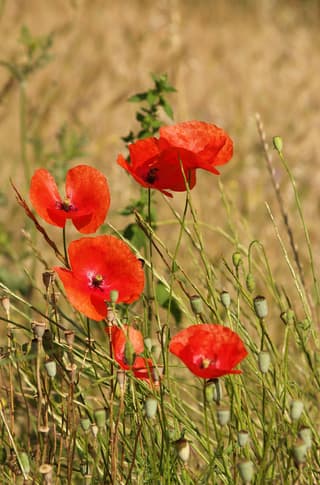
Poppy
Papaver
Papaver is a genus of about 80 species of flowering plants commonly known as poppies. They are celebrated for their silky, tissue-paper-like petals in shades of red, orange, yellow, pink, and white. Notable species include P. somniferum (opium poppy), P. rhoeas (corn/field poppy), and P. orientale (oriental poppy). All parts of the plant produce a milky latex that is toxic if ingested. Species range from hardy annuals to perennials, blooming in late spring through early summer.
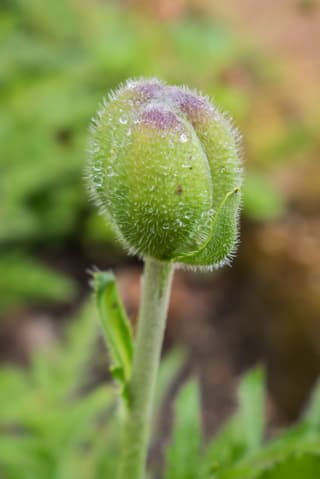
Oriental Poppy
Papaver orientale
Papaver orientale, commonly known as the Oriental Poppy, is a spectacular hardy perennial native to the Caucasus mountains, northeastern Turkey, and northern Iran. It produces enormous, tissue-paper-thin flowers in vivid shades of orange, red, pink, white, and purple, each with a dramatic dark center. After flowering in late spring to early summer, the foliage dies back completely, only to reappear as a basal rosette in autumn. This deciduous habit allows it to survive the dry summers of its native range.
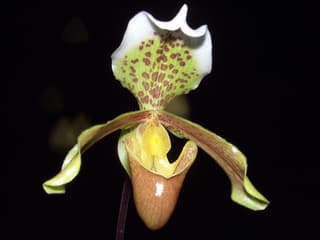
Lady Slipper Orchid
Paphiopedilum insigne
Paphiopedilum insigne is a stunning terrestrial orchid native to the misty forests of Southeast Asia and the Himalayas. Known for its distinctive pouch-shaped lip that resembles a delicate slipper, this cool-growing orchid produces elegant flowers in shades of green, yellow, and brown with characteristic spotted patterns. It is the type species of the Paphiopedilum genus and has been cultivated since the 19th century, prized for its long-lasting blooms that can persist for 6-8 weeks.
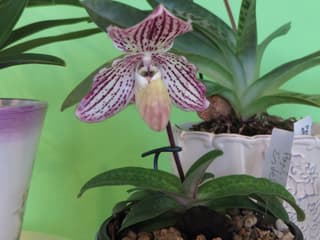
Lady Slipper Orchid
Paphiopedilum sp
Paphiopedilum, commonly known as the Lady Slipper Orchid, is a genus of terrestrial orchids native to the humid forests of Southeast Asia. Distinguished by their unique pouch-shaped lip (the "slipper"), these orchids produce long-lasting, exotic blooms in a wide range of colors. Unlike most orchids, they are true ground-dwellers, growing in leaf litter and mossy forest floors.
Pleated Inkcap
Parasola
Parasola is a genus of small saprobic fungi, commonly known as pleated inkcaps. They are extremely delicate, with nearly transparent caps featuring deep radial grooves, resembling a paper parasol. They appear quickly after rain on lawns or organic debris and usually wither within a few hours under strong sunlight.
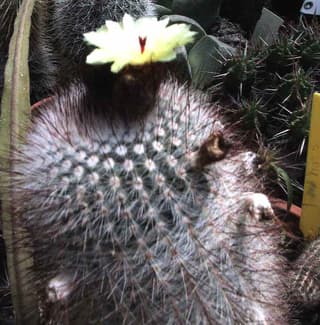
Silver Ball Cactus
Parodia scopa
Parodia scopa, commonly known as the silver ball cactus, is a globular to cylindrical cactus native to the uplands of southern Brazil and Uruguay. Its spherical body is densely covered in fine white to silvery spines that give it a shimmering, satin-like appearance. In late spring and summer, it produces bright pale-yellow flowers at the crown.
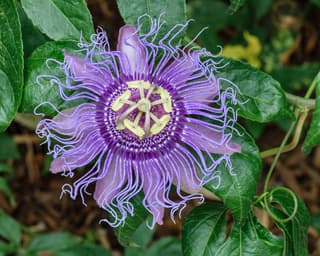
Passion Flower / Passion Vine (genus)
Passiflora
Passiflora is a genus of over 500 species of tropical and subtropical climbing vines, native primarily to South and Central America. The genus spans edible species like P. edulis (passion fruit) and ornamental species like P. caerulea (blue passion flower) and P. incarnata (maypop), all prized for their spectacular, intricate blooms.
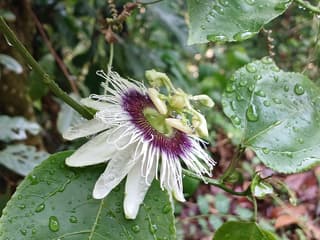
Purple Passion Fruit
Passiflora edulis
Passiflora edulis, commonly known as Purple Passion Fruit, is a vigorous climbing vine native to subtropical regions of Brazil, Paraguay, and Argentina. It produces aromatic fruits with a purple or yellow rind, widely used in culinary and medicinal applications. Its striking white and purple ornamental flowers bloom for a single day.
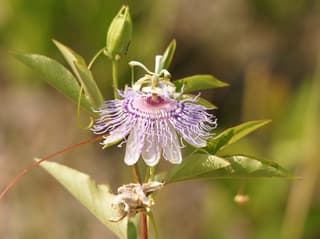
Maypop
Passiflora incarnata
Passiflora incarnata, commonly known as maypop or purple passionflower, is a fast-growing, herbaceous perennial vine native to the southeastern United States. Its intricate, fringed purple-and-white flowers bloom from early summer through fall, followed by egg-shaped, edible yellow-green fruits that turn yellow when ripe. The vine dies back to its rootstock each winter and re-sprouts vigorously in spring, often naturalizing along fences, trellises, and woodland edges.
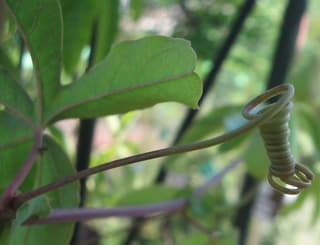
Passion Flower
Passiflora sp
Passiflora sp (Passion Flower) is a vigorous tropical vine native to Brazil and South America, belonging to the Passifloraceae family. Famous for its stunning and intricate flowers featuring colorful filaments in purple, white and blue, it is one of the most exotic and captivating plants in the tropical flora. Many species also produce delicious edible fruits and have recognized medicinal properties.
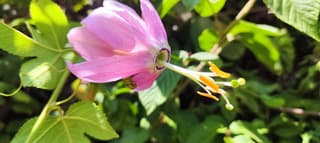
Banana Poka
Passiflora tarminiana
Passiflora tarminiana, commonly known as Banana Poka or banana passionfruit, is a vigorous climbing vine native to the Andes of Colombia, Ecuador, and Venezuela. It produces striking pink tubular flowers and elongated, aromatic fruits widely used in juices and desserts. Due to its rapid growth, it has become an invasive species in Hawaii and other tropical regions.
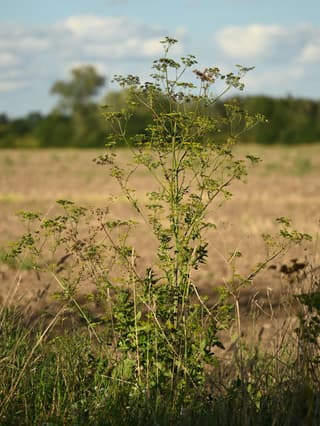
Parsnip
Pastinaca sativa
Parsnip (Pastinaca sativa) is a biennial root vegetable from the Apiaceae family, native to Eurasia. Resembling a carrot in shape but with a creamy-white colour, it produces a sweet and nutritious taproot in its first growing season. It is primarily cultivated for its edible root, which becomes noticeably sweeter after exposure to frost. Parsnip has been a staple of European cuisine for centuries and is highly valued for both culinary and historical significance.

Guarana
Paullinia
Paullinia is a genus of woody climbing vines (lianas) in the Sapindaceae family, native to the tropical rainforests of South America, especially the Amazon. The most well-known species of the genus is guarana (Paullinia cupana), cultivated for centuries by indigenous peoples, particularly the Sateré-Mawé, for its caffeine-rich seeds. Plants in this genus feature glossy compound leaves, tendrils that assist in climbing supports and trees, and small whitish flowers clustered in inflorescences. The fruits are capsules that, when ripe, split open to expose dark seeds surrounded by a white aril—features that resemble an eye, which is the origin of the indigenous legend regarding the creation of guarana.
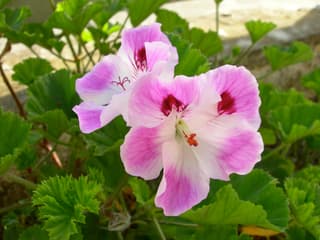
Regal Geranium
Pelargonium × domesticum
Pelargonium × domesticum, commonly known as the regal or Martha Washington geranium, is a hybrid pelargonium prized for its large, ruffled, azalea-like blooms in shades of white, pink, red, purple and burgundy, often with dark blotches. Unlike its zonal cousins, it needs cool nights to set flower buds and struggles in prolonged heat and humidity, making it a classic cool-season patio and greenhouse plant.
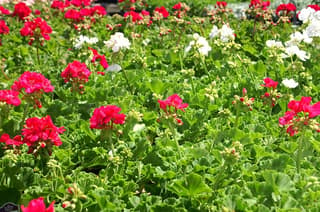
Zonal Geranium
Pelargonium × hortorum
Pelargonium hortorum, commonly known as Zonal Geranium or Horseshoe Geranium, is one of the most popular flowering plants in gardens and containers worldwide. Native to South Africa, it is a hybrid derived from Pelargonium zonale and P. inquinans. Its distinctive rounded leaves feature a darker horseshoe-shaped band, and it produces prolific clusters of flowers in vibrant shades of red, pink, orange, white, and purple from spring through fall.
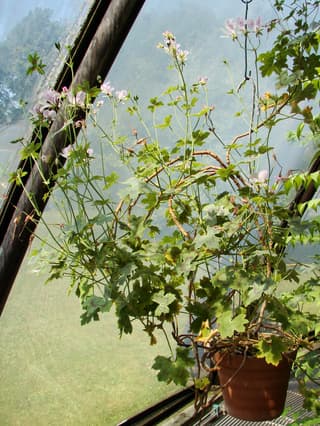
Regal Storksbill
Pelargonium grandiflorum
Pelargonium grandiflorum, commonly known as the Regal Pelargonium or Regal Storksbill, is an ornamental plant native to the Cape region of South Africa. It stands out for its large, showy flowers in shades of white, pink, red, and purple, often featuring distinctive dark markings on the upper petals. It is one of the most elegant species in the Pelargonium genus, widely grown in pots and temperate gardens.
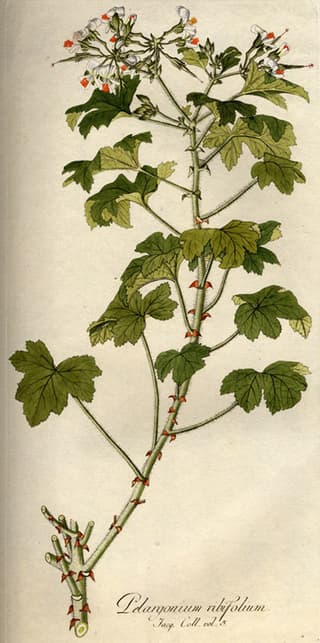
Currant-leaved Pelargonium
Pelargonium ribifolium
Pelargonium ribifolium is a much-branched, evergreen shrub native to the southern Western and Eastern Cape of South Africa, where it is more common along the margins of streams and other consistently moist habitats. Reaching up to 2 m in height and around 1 m in spread, it forms an erect, woody-based shrub with softly hairy, aromatic, three-lobed leaves reminiscent of currant (Ribes) foliage - the origin of its species epithet ribifolium. Small white flowers, roughly 20 mm across and marked with red veining on the two upper petals, appear intermittently through the year with a peak flush from September to November (Southern Hemisphere spring). Unlike many of its Cape relatives that demand full baking sun, this species is notably adaptable, thriving in full sun near water as well as in partially or fully shaded understorey positions. In cultivation it makes an attractive, low-maintenance garden shrub for moist, humus-rich beds or large containers, and propagates readily from softwood or semi-ripe cuttings.
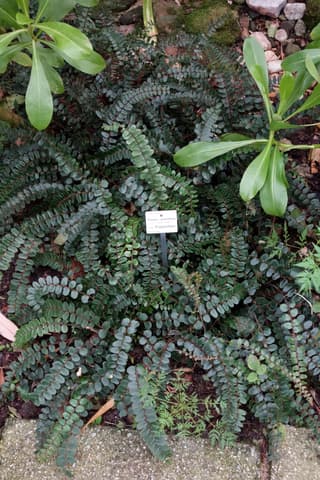
Button Fern
Pellaea rotundifolia
Pellaea rotundifolia is a compact, evergreen fern native to New Zealand and Australia, prized for its distinctive round, button-like leaflets arranged along dark, wiry stems. Unlike many ferns, it tolerates lower humidity and is remarkably drought-resistant, making it an excellent low-maintenance houseplant. It received the Royal Horticultural Society Award of Garden Merit.
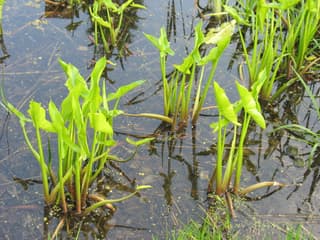
Arrow Arum
Peltandra
Peltandra is a genus of aquatic and wetland perennials in the arum family (Araceae), native to marshes, swamps, and pond edges of eastern North America. This profile covers the genus as a whole (most commonly represented by Peltandra virginica, green arrow arum) rather than a single species, since all members share the same emergent, bog-loving growth habit, arrow-shaped leaves, and calcium-oxalate toxicity. Grown submerged or in permanently saturated soil, Peltandra forms dense clumps of glossy, sagittate leaves topped by greenish-white spadix flowers in spring, followed by berry clusters that mature underwater.
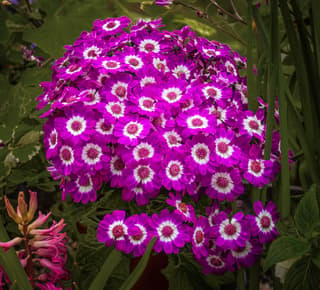
Florist's Cineraria
Pericallis × hybrida
Florist's Cineraria (Pericallis × hybrida) is a popular cool-season annual celebrated for its spectacular daisy-like flowers in vivid shades of blue, purple, pink, red, and white, often with striking bicolor patterns. Native to the Canary Islands, it is widely grown as a potted plant and bedding annual during winter and early spring. It belongs to the Asteraceae family and is a hybrid of several Pericallis species, formerly classified as Senecio cruentus or Cineraria.
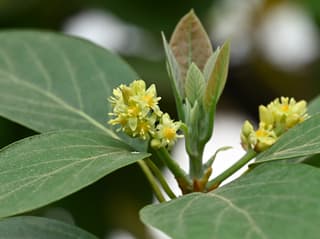
Avocado Tree
Persea
Persea is a genus of approximately 200 evergreen trees in the family Lauraceae, native to tropical and subtropical Americas, eastern Asia, and Macaronesia. The most famous species is the avocado (P. americana), cultivated worldwide for its nutritious fruit. The genus also includes the redbay (P. borbonia) of the southeastern United States and other ornamental species prized for their glossy, aromatic foliage.
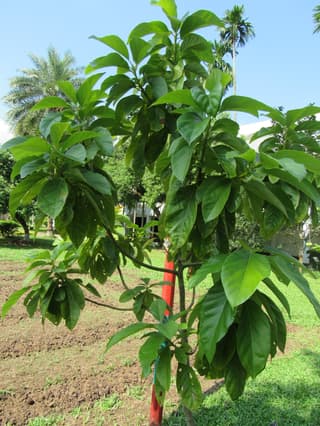
Avocado
Persea americana
Persea americana, commonly known as the avocado, is an evergreen fruit tree native to south-central Mexico and Central America, belonging to the family Lauraceae. It is one of the most economically important and widely cultivated fruit trees in the world, celebrated for its creamy, nutrient-dense fruit rich in healthy monounsaturated fats, vitamins, and minerals. The tree can reach up to 18 meters in height in its natural habitat, bearing large, glossy, dark green leaves.
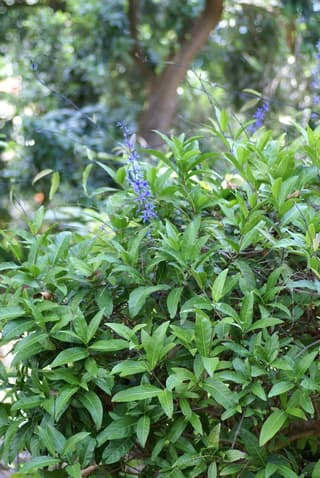
Sandpaper Vine
Petrea volubilis
The Sandpaper Vine (Petrea volubilis) is a vigorous woody climber native to Brazil and other tropical regions of the Americas, belonging to the Verbenaceae family. It can reach up to 5 meters in length when supported by structures such as pergolas, arbors, and fences. Its leaves are leathery, rough to the touch, and have serrated margins, and may partially drop during colder periods. Flowering occurs mainly in winter and spring, forming clusters (panicles) of small star-shaped flowers in shades of lilac to bluish-purple, with a white variety (Alba) also available. It is widely used in landscaping for its exuberant ornamental effect over trellises and pergolas.
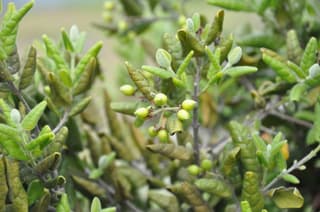
Boldo
Peumus boldus
Peumus boldus, commonly known as Boldo, is an evergreen tree native to the central regions of Chile. Its leaves are leathery, grayish-green, and possess a very strong characteristic aroma due to the presence of essential oils and the alkaloid boldine. It is a slow-growing plant that can reach large proportions in its natural habitat, but in domestic cultivation or pots, it remains a robust shrub.
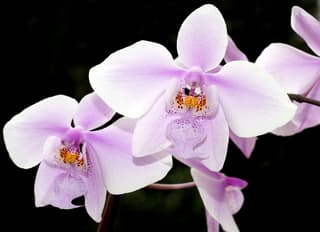
Schiller's Moth Orchid
Phalaenopsis schilleriana
Phalaenopsis schilleriana is an epiphytic moth orchid endemic to the Philippines, prized for its handsome foliage as much as its flowers. The leathery leaves are marked with alternating bars of silver-grey and dark green on top, with a purple flush underneath, remaining attractive year-round. In late winter to spring, arching, often branching sprays carry dozens of fragrant, rose-pink flowers with a spotted lip. Cooler autumn nights help trigger the bloom spike.
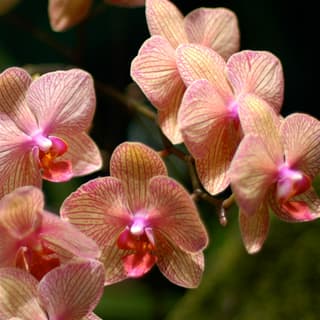
Phalaenopsis Hybrid Orchid
Phalaenopsis x hybridus
The Phalaenopsis Hybrid Orchid (Phalaenopsis x hybridus) is one of the world's most popular flowering houseplants, celebrated for its elegant arching flower spikes bearing large, flat blooms in a spectacular range of colors including white, pink, purple, yellow, and red. Native to the tropical forests of Southeast Asia, this epiphytic orchid thrives indoors with proper care, producing flowers that last months at a time. As a hybrid group derived from dozens of wild Phalaenopsis species, these orchids have been bred for extended bloom time, vibrant color, and adaptability to home environments.
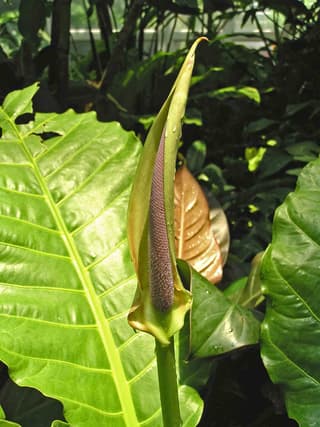
Imperial Red Philodendron
Philodendron 'Imperial Red'
Philodendron 'Imperial Red' (Philodendron erubescens 'Imperial Red') is a self-heading aroid hybrid from the Araceae family, grown for its dramatic foliage: new leaves unfurl a deep burgundy-red and gradually mature to a glossy dark green. Unlike vining philodendrons, it grows in a compact rosette, making it well suited to tabletops, desks, and shelves.
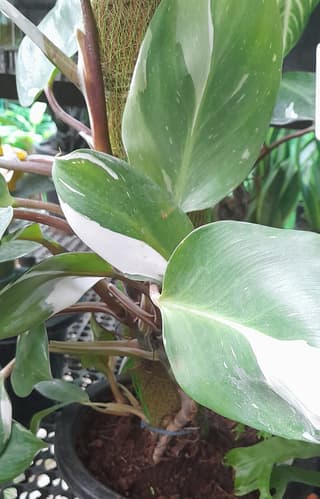
White Knight Philodendron
Philodendron 'White Knight'
Philodendron White Knight is a rare and highly prized variegated philodendron cultivar, known for its striking white, cream, and green marbled leaves paired with deep burgundy-purple stems and petioles. A vining aroid in the Araceae family, it climbs via aerial roots and is prized by collectors for its slow, compact growth and dramatic color contrast.
White Princess Philodendron
Philodendron 'White Princess'
Philodendron 'White Princess' is a striking variegated cultivar of Philodendron erubescens, prized by collectors for its dark green, burgundy-backed leaves splashed with cream-white and occasional pink sectors. Like all variegated aroids, its patterning is unstable and driven by chimeric tissue, so leaf variegation can vary from cutting to cutting and even leaf to leaf on the same plant. It is a climbing vine in the Araceae family that produces aerial roots and benefits from a moss pole or trellis for support as it matures.
White Wizard Philodendron
Philodendron 'White Wizard'
The White Wizard Philodendron is a striking variegated cultivar of Philodendron erubescens, prized for its heart-shaped leaves marbled in shades of deep green, creamy white, and occasional pink flecks. Native to the rainforests of Colombia, this climbing tropical aroid is a favorite among collectors due to the rarity and instability of its variegation, which can differ leaf to leaf on the same plant. Indoors it grows well trained onto a moss pole, producing lush, dramatic foliage when given the right light.
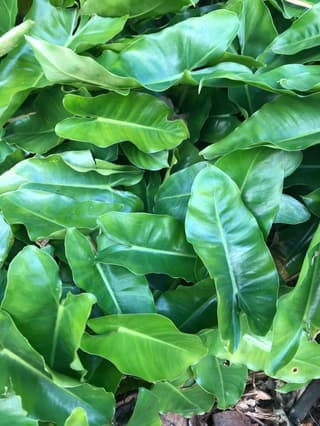
Burle Marx Philodendron
Philodendron burle-marxii
Philodendron burle-marxii is a fast-growing tropical aroid native to the rainforests of Brazil, Colombia, and Ecuador. Named in honor of Roberto Burle Marx, the legendary Brazilian landscape architect, it features glossy dark green lance-shaped leaves with a prominent central vein. This versatile plant thrives both as a climber with support or as a trailing plant in hanging baskets, making it one of the most sought-after aroids among houseplant collectors.
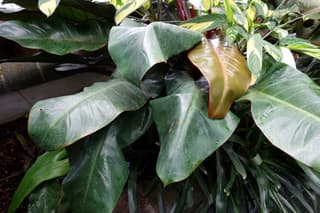
Blushing Philodendron
Philodendron erubescens
Philodendron erubescens is a climbing tropical plant native to the rainforests of Colombia. It stands out for its large heart-shaped leaves with green and reddish tones, and intensely red stems. It is a perennial plant ideal for indoors that can reach up to 90cm in height when grown at home.
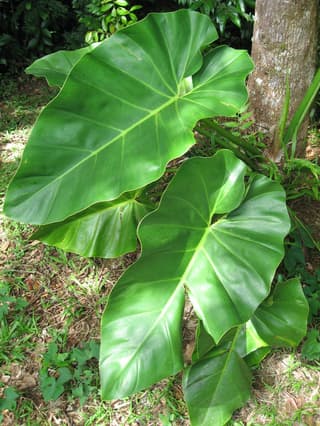
Giant Philodendron
Philodendron giganteum
Philodendron giganteum is a striking aroid native to the tropical forests of the Caribbean and South America, including Brazil's Para state. In the wild it grows as a hemiepiphyte, climbing tree trunks and producing leaves that can exceed 60 cm (2 ft) in length. Its bold, glossy foliage makes it a dramatic statement plant for spacious indoor or greenhouse settings.
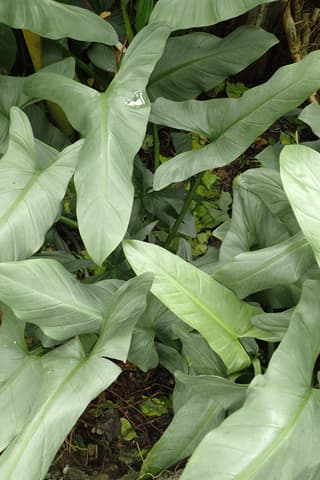
Silver Sword Philodendron
Philodendron hastatum
Philodendron hastatum, known as the silver sword philodendron, is an epiphytic climbing aroid native to the tropical rainforests of southeastern Brazil. Its young leaves are lance-shaped with a metallic silver sheen, maturing into longer, more elongated leaves with coppery undersides.
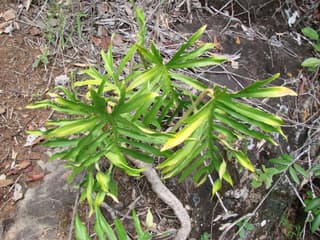
Mayo's Philodendron
Philodendron mayoi
Philodendron mayoi is a tropical climbing species native to Brazil's Atlantic Forest, prized for its deeply lobed, fern-like leaves. A medium-growing houseplant, it thrives in bright indirect light and high humidity, making it a striking addition to any indoor space.
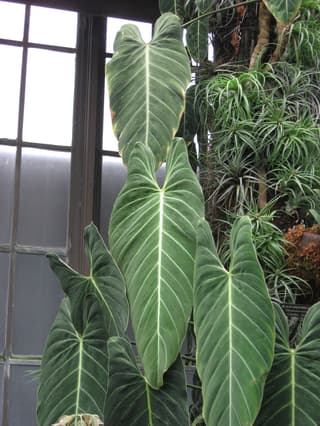
Black Gold Philodendron
Philodendron melanochrysum
Philodendron melanochrysum, commonly known as the Black Gold Philodendron, is a stunning tropical climbing plant native to the rainforests of Colombia. Its large, velvety, deep green leaves shimmer with golden iridescence when light catches them, earning it the evocative name "black gold." Mature leaves can reach up to 60 cm in length, displaying a breathtaking combination of dark, almost black-green color with prominent golden-yellow veins. This hemiepiphytic climber is one of the most sought-after collector plants in the aroid world.
Medium Care Easy Care
Our selection of 1135 medium easy care combines the characteristics of this category with moderate care needs. Ideal for those with basic experience.
Why Choose Medium Easy Care?
Combining the beauty of easy care with medium difficulty level lets you enjoy this category with a balanced care commitment. Each plant was selected to offer the best characteristics of the category at the care level you are looking for.