616 Medium Pet Safe | 2026 Guide - Page 14
Find 616 medium pet safe. Complete guide for your garden.
616 Pet Safe with medium level
Showing 469-504 of 616
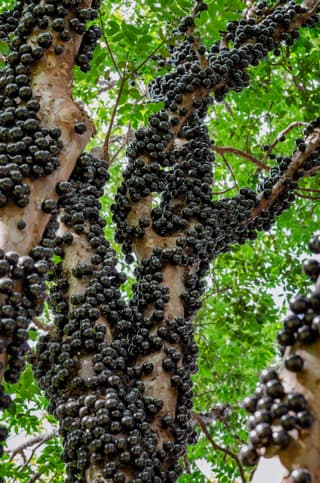
Jabuticaba tree
Plinia cauliflora
The Jabuticaba tree is an iconic Brazilian fruit tree, native to the Atlantic Forest. Its most striking characteristic is cauliflory, where white flowers and dark purple, globose fruits grow directly on the trunk and branches. The pulp is white, succulent, and sweet. It has a slow growth rate, with bark that peels off periodically, revealing lighter tones underneath.
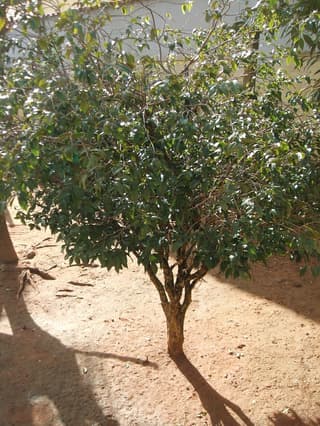
Jaboticaba
Plinia jaboticaba
Jaboticaba is a slow-growing, tropical evergreen fruit tree native to Brazil, belonging to the Myrtaceae family. It is renowned for its distinctive fruiting habit called cauliflory, where small white flowers and subsequent dark purple berries emerge directly from the trunk and older branches. The fruits are thick-skinned berries with sweet, white or rosy-pink gelatinous pulp inside, resembling grapes in flavor and texture. Dense and profusely branched, the tree develops a rounded crown and can live for decades. It is valued both as an ornamental specimen for its unique structure and as a productive fruit tree, with cultural significance dating back centuries in Brazil.
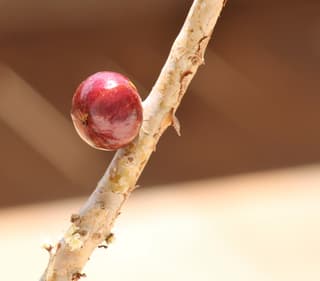
Stalked Jabuticaba
Plinia trunciflora
Stalked Jabuticaba (Plinia trunciflora) is a native Brazilian fruit tree from the Atlantic Forest, belonging to the Myrtaceae family. It is distinguished by its glossy black fruits hanging on long stalks (peduncles) directly from the trunk and branches — a phenomenon known as cauliflory. The fruits have a sweet flavor reminiscent of coffee. The tree can reach up to 15 meters in its natural habitat, with a globose canopy and pendant branches.
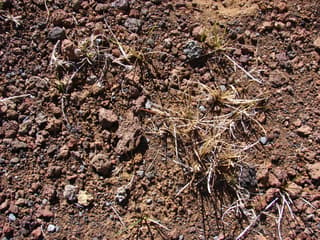
Kentucky bluegrass
Poa pratensis
Poa pratensis, commonly known as Kentucky bluegrass or smooth meadow-grass, is a perennial cool-season grass native to Europe, northern Asia, and the mountains of Algeria and Morocco. Widely naturalized across North America, it is one of the most popular turfgrasses in the world, prized for its fine texture, attractive blue-green color, and dense sod-forming ability through underground rhizomes. It thrives in cool, humid climates and is extensively used for lawns, athletic fields, golf courses, and pastures in USDA hardiness zones 3a–7b.
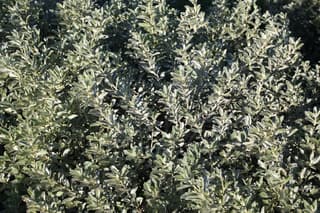
Satin Bush
Podalyria sericea
A small, evergreen shrub reaching about 1 m in height and width, native to the sandstone and granite outcrops of Cape Town, South Africa (from Saldanha Bay to the Cape Peninsula). The leaves are covered in long, shiny hairs that give it a silky, silvery appearance. Between autumn and winter (May to August in the Southern Hemisphere), it produces small pink flowers with white centers, typical of legumes (Fabaceae), followed by inflated pods containing several seeds. It is classified as "Vulnerable" due to habitat loss, invasive alien plants, and frequent fires.
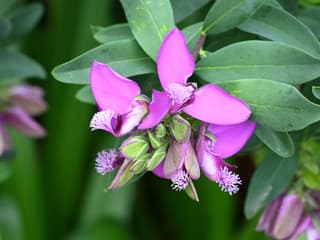
Milkwort
Polygala
Polygala is a large genus of flowering plants in the milkwort family (Polygalaceae), comprising hundreds of species ranging from low herbaceous wildflowers to subtropical evergreen shrubs. The best-known ornamental form, myrtle-leaf milkwort (Polygala myrtifolia), is a fast-growing shrub prized for its abundant purple-pink pea-like flowers, while other species such as Polygala tenuifolia and Polygala senega have long histories of use in traditional medicine.

Holly Fern
Polystichum
Polystichum is a large, cosmopolitan genus of evergreen ferns in the family Dryopteridaceae, commonly known as holly ferns or shield ferns for their glossy, spiny-toothed fronds. With around 500 species distributed worldwide, from Christmas fern (P. acrostichoides) to western sword fern (P. munitum), the genus thrives in shaded woodland conditions and is prized as a resilient, low-maintenance foliage plant for both gardens and containers.
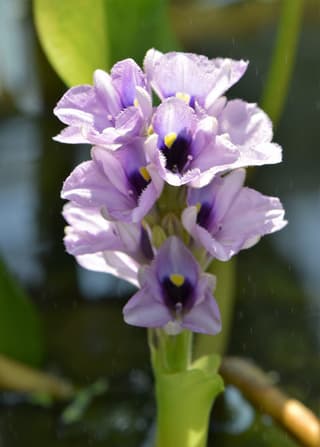
Anchored Water Hyacinth
Pontederia azurea
The anchored water hyacinth (Pontederia azurea, syn. Eichhornia azurea) is a perennial aquatic plant in the Pontederiaceae family, native to Central and South America, including Brazil. Unlike the floating water hyacinth, this species roots in the bottom mud and sends out stems that stretch to the surface. It has round, shiny green leaves about 10 cm wide and showy bluish-purple flowers with yellow markings. It grows vigorously in still or slow-moving waters.
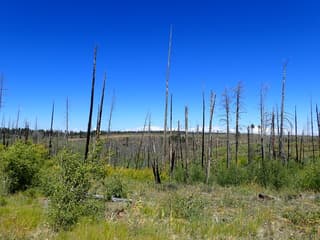
Quaking Aspen
Populus tremuloides
Populus tremuloides, commonly known as quaking aspen, is a fast-growing deciduous tree native to North America, famous for its smooth white-gray bark and heart-shaped leaves that shimmer and "quake" in the slightest breeze thanks to their flattened petioles. It forms expansive clonal colonies connected by a single root system, with some colonies ranking among the oldest and largest living organisms on Earth. In autumn its foliage turns brilliant golden-yellow.
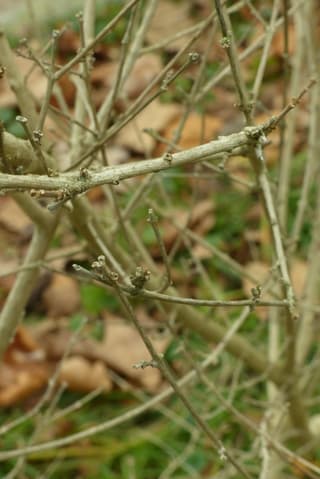
Premna
Premna
Premna is a genus of tropical shrubs and small trees in the family Lamiaceae, native to Asia, Africa, and Oceania. It is prized in Asia — especially P. microphylla and P. serratifolia — as a bonsai subject and hedge plant, valued for its dense foliage and fast growth.

Oak-Nymph-Leaved Primulina
Primulina dryas
Primulina dryas, formerly known as Chirita dryas, is a compact evergreen perennial in the family Gesneriaceae, native to Hong Kong and southern China. It grows naturally on shaded limestone cliffs and rocky karst formations, forming flat rosettes of thick, velvety leaves sometimes marked with silvery veins. In summer and autumn it produces small clusters of tubular white flowers with purple lobes and yellow throats.
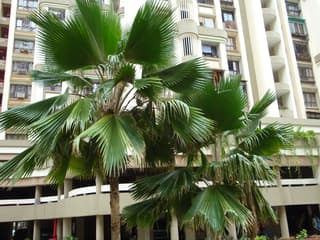
Fiji Fan Palm
Pritchardia pacifica
Pritchardia pacifica, commonly known as the Fiji Fan Palm or Pacific Fan Palm, is a majestic tropical palm native to the Pacific islands of Fiji and Tonga. It features stunning fan-shaped leaves up to 6 feet (1.8 m) in diameter, making it one of the most visually striking palms in the world. Historically, Fijian chiefs used its leaves as ceremonial fans, giving it deep cultural and royal significance.
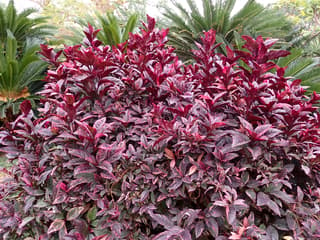
Purple False Eranthemum
Pseuderanthemum carruthersii
Pseuderanthemum carruthersii, popularly known as Purple False Eranthemum, is a perennial tropical shrub native to the Pacific islands. It is notable for its lush ornamental foliage, featuring oval leaves with intense shades of purple, burgundy, and metallic green. Its flowers are small, white with pinkish or purplish centers, appearing in terminal spikes. It is an excellent plant for creating color contrasts in tropical gardens or as a focal point in spacious, well-lit interiors.
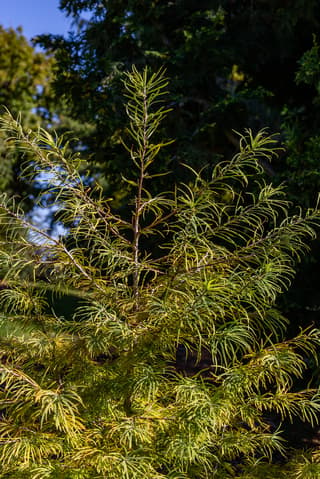
Golden Larch
Pseudolarix amabilis
The Golden Larch (Pseudolarix amabilis) is a deciduous conifer native to eastern China and the sole species in the genus Pseudolarix. Unlike most conifers, it sheds its needles every autumn, which turn a striking golden-yellow color before falling, giving the tree its name. It is slow-growing and can reach 9–18 m in height in cultivation, featuring soft, light-green needles arranged in tufts on short spurs. Instead of true flowers, it develops cones: smaller male pollen cones in spring and upright, ovoid female cones that mature to a reddish-brown color and disintegrate after the seeds ripen. It is highly valued as a specimen ornamental tree and as a bonsai for its seasonal beauty and unique appearance.
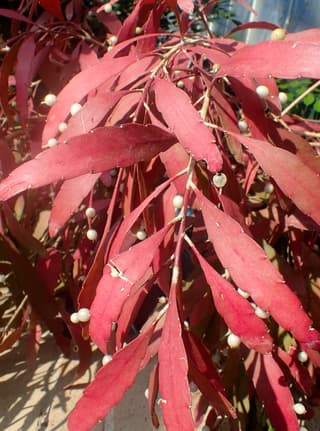
Red Mistletoe Cactus
Pseudorhipsalis ramulosa
Pseudorhipsalis ramulosa, known as the Red Mistletoe Cactus, is an epiphytic cactus native to the humid rainforests of Central and South America, where it grows clinging to tree trunks and rocks. Its flat, ribbon-like stems cascade downwards and can reach several feet in length, taking on shades ranging from deep green to ruby red when exposed to brighter light. In summer, it produces small greenish-white flowers followed by white or reddish berries, making it a highly prized ornamental plant for hanging baskets.
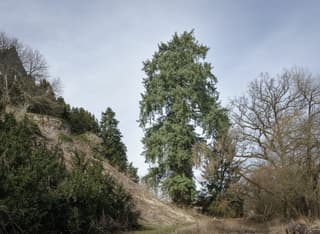
Douglas Fir
Pseudotsuga menziesii
Douglas fir (Pseudotsuga menziesii) is a large, fast-growing evergreen conifer native to western North America, ranging from the Rocky Mountains to the Pacific coast. Despite its common name, it is not a true fir (Abies) but belongs to its own genus, Pseudotsuga. It has a conical, pyramidal form with soft, flat, blue-green to dark-green needles arranged spirally around the twig, and distinctive pendant cones with three-pointed, snake-tongue-like bracts protruding between the scales. In its native range it is among the tallest trees in the world, historically reaching over 90 m (300 ft); in cultivated landscapes it more typically grows 12-24 m (40-80 ft) tall with a 4-6 m spread. Douglas fir is the backbone of the Pacific Northwest timber industry and is Oregon's official state tree, and its fragrant foliage makes it one of the most popular Christmas trees in North America.
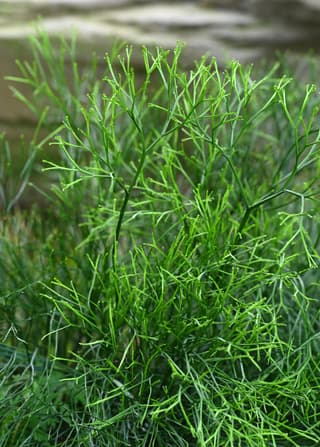
Whisk Fern
Psilotum nudum
Psilotum nudum, commonly known as the Whisk Fern, is one of the most primitive vascular plants on Earth, with a lineage stretching back over 400 million years. Lacking true roots and leaves, it absorbs water and nutrients through its rhizomes and photosynthetic green stems. Native to pantropical regions, it grows naturally in rock crevices and as an epiphyte.
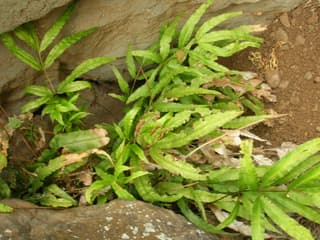
Cretan Brake Fern
Pteris cretica
Pteris cretica, commonly known as the Cretan Brake Fern, is an elegant evergreen fern native to the Mediterranean region. With its graceful, pinnate fronds that can display beautiful variegation, it has become a popular houseplant prized for its delicate appearance and air-purifying properties. This slow-growing fern thrives in humid, shaded environments and is well-suited to terrariums, bathrooms, and indoor collections.
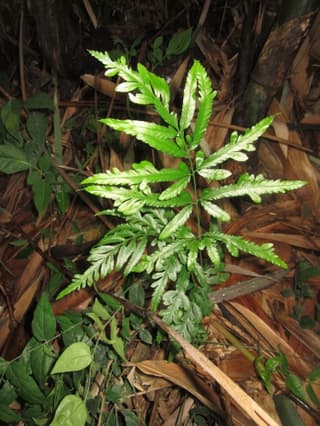
Silver Lace Fern
Pteris ensiformis
The Silver Lace Fern (Pteris ensiformis) is a compact ornamental fern from the Pteridaceae family, native to Southeast Asia and Australia. It is known for its thin, arching fronds with silver midribs that contrast with the dark green, providing a delicate lace-like appearance. The 'Evergemiensis' cultivar is the most popular for indoor cultivation, reaching about 12 to 24 inches (30 to 60 cm) in height.
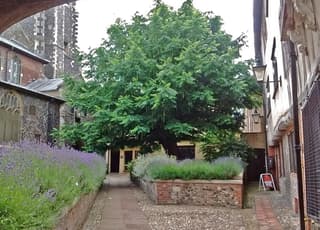
Caucasian Wingnut
Pterocarya fraxinifolia
The Caucasian Wingnut (Pterocarya fraxinifolia) is a majestic and very fast-growing forest tree, native to the riparian forests of the Caucasus and northern Iran. It can reach 25 to 30 meters in height and 20 meters in spread, developing a powerful trunk with deeply fissured bark and a broad, spreading crown. Its deciduous foliage, dark green and glossy, is composed of large pinnate leaves that can exceed 60 cm in length, resembling those of an ash tree. In spring, it produces long, greenish, highly ornamental pendulous catkins, followed in summer by a succession of winged fruits in clusters that can reach 60 cm. This outdoor tree is ideal for large spaces, parks, and plantings along water bodies, where its suckering roots contribute to bank stabilization.
Knight's plume moss
Ptilium crista-castrensis
Ptilium crista-castrensis, commonly known as Knight's plume moss, is a pleurocarpous moss of exceptional beauty. Its branches are dense, symmetrical, and pinnate, resembling bird feathers or the ornaments of medieval helmets. Ranging from light green to golden in color, this moss forms soft, extensive carpets on coniferous forest floors and decaying wood in boreal regions.
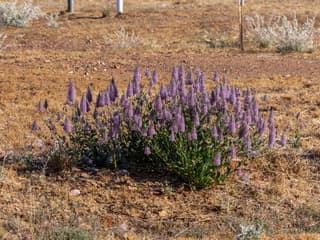
Pink Mulla Mulla
Ptilotus exaltatus
Ptilotus exaltatus is a stiff, herbaceous to semi-woody annual or short-lived perennial in the Amaranthaceae family, native to the arid and semi-arid regions across much of Australia. It produces egg-shaped to oblong leaves up to 125 mm long and striking conical flower spikes, up to 150 mm long, in shades of pink to purple, giving rise to its "mulla mulla" and "lamb's tail" common names. It is a fast grower, often flowering within weeks from seed, but has a reputation among growers for being short-lived and not entirely reliable in cultivation outside its native dry climate.
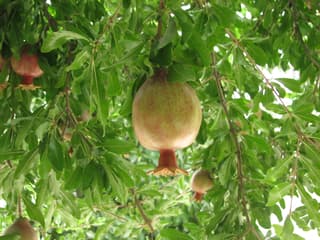
Pomegranate
Punica granatum
Punica granatum, commonly known as Pomegranate, is a fruit-bearing deciduous shrub or small tree native to the region spanning Iran to northern India. It has been cultivated for millennia and is prized for its jewel-like red arils, ornamental scarlet flowers, and deep cultural symbolism. Growing 3 to 5 meters tall, it thrives in hot, dry climates with full sun and well-draining soil.
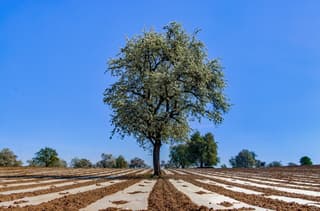
Pear
Pyrus
The genus Pyrus, in the family Rosaceae, encompasses the cultivated pear trees grown worldwide. The European pear (Pyrus communis) is the most widely cultivated species, prized for its sweet, buttery fruit enjoyed fresh, cooked, or preserved. These deciduous trees produce abundant clusters of white spring blossoms before the leaves emerge, making them beautiful ornamental and fruit-bearing trees in gardens and orchards. Native to Europe and Western Asia, pear trees have been cultivated for over 5,000 years and hold an important place in culinary and cultural history.
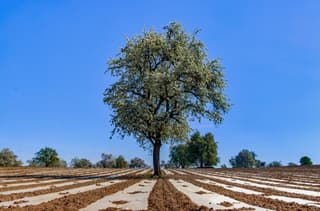
European Pear
Pyrus communis
Pyrus communis, the European Pear, is one of the oldest cultivated fruit trees in human history, originating in the temperate regions of Europe and Western Asia. It belongs to the Rosaceae family and is celebrated for producing some of the world's most beloved fruit cultivars — including Bartlett (Williams), Bosc, Anjou, and Conference. A deciduous tree that can reach up to 12 meters in height, it bursts into beautiful white blossoms each spring before leafing out, and bears sweet, juicy fruit in late summer and early autumn.
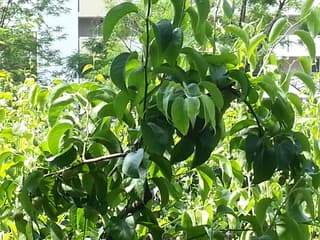
Asian Pear
Pyrus pyrifolia
Pyrus pyrifolia, the Asian or nashi pear, is a deciduous fruit tree native to East Asia (China, Japan, and Korea) in the rose family Rosaceae. It grows 7-15 m tall with a rounded crown, glossy serrated leaves, and clusters of fragrant white five-petaled flowers that open in early spring before the leaves. Its fruit is round, crisp, and juicy rather than the soft, buttery texture of European pears, with russeted or golden skin and a sweet, mildly floral flavor. Widely cultivated in Japan, China, and Korea, and increasingly in orchards worldwide, it requires a period of winter chilling to break dormancy and set fruit.
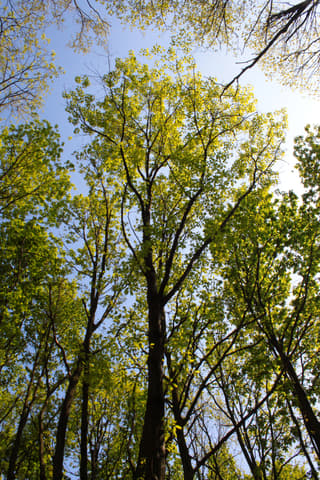
Northern Red Oak
Quercus rubra
The Northern Red Oak (Quercus rubra) is one of the most majestic deciduous trees of eastern North America. It can exceed 70 feet in height with a broad, rounded crown and deeply lobed leaves that turn brilliant scarlet, russet, and crimson in autumn. Among the faster-growing oaks, it is prized as an ornamental shade tree, street tree, and critical wildlife habitat.
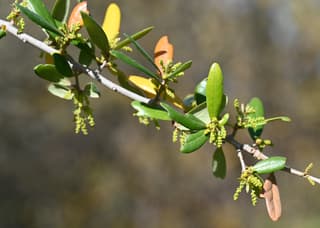
Southern Live Oak
Quercus virginiana
Quercus virginiana, the Southern Live Oak, is a majestic, long-lived evergreen oak native to the southeastern United States. It is renowned for its broad, sweeping canopy, thick gnarled trunk, and ability to thrive in coastal conditions. Trees can live for centuries and grow to enormous proportions, with horizontal branches that may span wider than the tree is tall. The Southern Live Oak is a keystone species of the American South, providing habitat for countless wildlife species and shading entire neighborhoods.
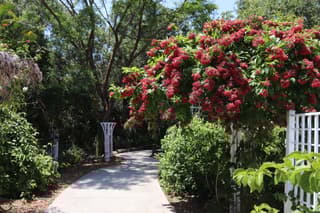
Rangoon Creeper
Quisqualis indica
Rangoon Creeper (Quisqualis indica) is a vigorous tropical climbing vine native to Southeast Asia, celebrated for its stunning tricolor flowers that magically transform from white to pink to deep red over three days. This fast-growing liana from the family Combretaceae can reach impressive heights of 8 meters or more, making it perfect for covering trellises, pergolas, fences, and arches. Beyond its ornamental beauty, the plant holds significant medicinal value in traditional Asian medicine, where seeds, leaves, and roots have been used to treat intestinal parasites and other ailments.
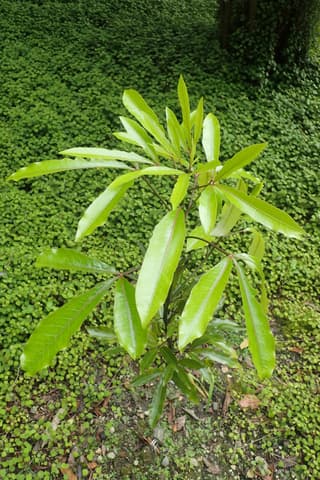
Raukaua
Raukaua
Raukaua is a small genus of evergreen shrubs and trees in the family Araliaceae, native to New Zealand and southern South America (Chile and Argentina). The genus comprises 6 species, all woody plants with heteroblastic foliage — juvenile leaves often differ dramatically from adult leaves. Most notable is R. anomalus, a divaricating shrub with zig-zag interlaced branches typical of New Zealand's unique flora. Māori historically extracted aromatic oil from R. edgerleyi leaves, used medicinally and ritually.
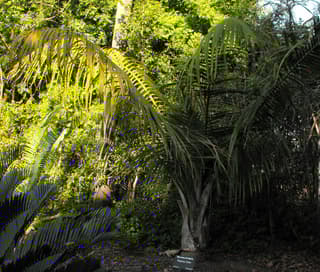
Majesty Palm
Ravenea rivularis
Ravenea rivularis, commonly known as the Majesty Palm, is a stately tropical palm native to the riverbanks of Madagascar. It features graceful arching fronds and can grow up to 80 feet tall in its natural habitat, though indoors it typically reaches 6-10 feet. It is one of the most popular indoor palms for its elegant, tropical appearance.
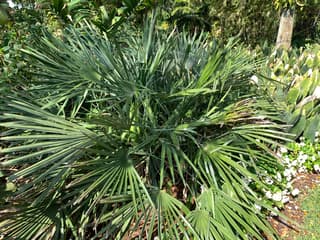
Needle Palm
Rhapidophyllum hystrix
The needle palm (Rhapidophyllum hystrix) is a slow-growing, clumping fan palm native to the coastal plains of the southeastern United States. Named for the long, sharp black spines that emerge from its leaf bases, it is the most cold-hardy palm species in the world, capable of surviving temperatures well below freezing. Its dark green, palmate leaves radiate from a short, often subterranean trunk, forming dense, multi-stemmed clumps ideal as an understory shrub.
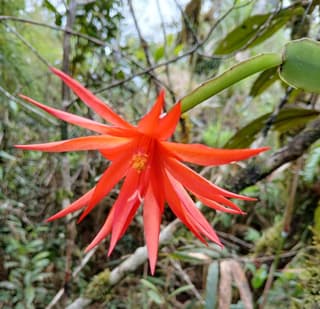
Easter Cactus
Rhipsalidopsis gaertneri
The Easter Cactus (Rhipsalidopsis gaertneri) is an epiphytic cactus native to the Atlantic Forest of Brazil, particularly Paraná and Santa Catarina states. Unlike desert cacti, it thrives in humid conditions with indirect light, producing stunning star-shaped flowers in shades of red, pink, and white during spring.
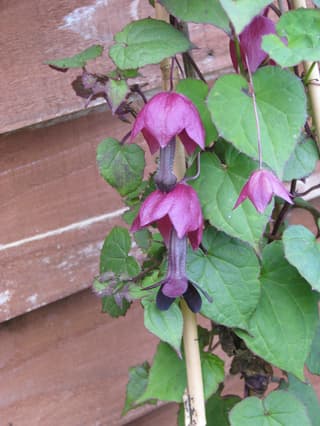
Purple Bells
Rhodochiton atrosanguineus
Purple Bells is a fast-growing, deciduous climbing vine native to southwestern Mexico, prized for its unusual pendant flowers: a bright pink or magenta calyx cupping a deep maroon-purple tubular corolla, giving the plant a bell-within-a-bell look. It climbs by twining leaf stalks around supports, reaching 2-3.5 m in a single season, and blooms continuously from summer through fall. Grown as a tender perennial in warm climates (USDA zones 9-11) or as a frost-tender annual elsewhere, it thrives in full sun with consistently moist, well-draining soil.
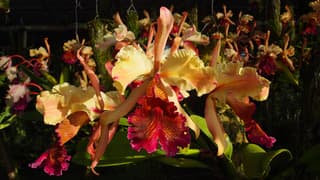
Jiminy Cricket Cattleya Orchid
Rhyncovola Jiminy Cricket x Cattleya dowiana
A Cattleya-alliance orchid hybrid combining the grex Rhyncovola Jiminy Cricket with the species Cattleya dowiana, prized for large, fragrant flowers with a velvety lip streaked in gold. Like other Cattleyas, it is an epiphytic orchid with sympodial growth, thick pseudobulbs, and leathery evergreen leaves, thriving in bright light with strong air movement and a dry-between-waterings routine.
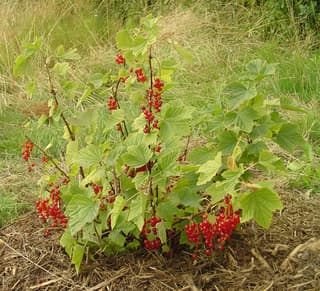
Redcurrant
Ribes rubrum
Redcurrant (Ribes rubrum) is a deciduous fruiting shrub native to Western and Northern Europe, prized for its bright red, tart berries borne in long pendant clusters called strigs. A staple of traditional European kitchen gardens, it thrives in temperate climates with cold winters and produces abundantly from mid-summer. It is one of the hardiest fruiting shrubs available, tolerating temperatures as low as -20°C.
Medium Care Pet Safe
Our selection of 616 medium pet safe combines the characteristics of this category with moderate care needs. Ideal for those with basic experience.
Why Choose Medium Pet Safe?
Combining the beauty of pet safe with medium difficulty level lets you enjoy this category with a balanced care commitment. Each plant was selected to offer the best characteristics of the category at the care level you are looking for.