684 Medium Pet Safe | 2026 Guide - Page 19
Find 684 medium pet safe. Complete guide for your garden.
684 Pet Safe with medium level
Showing 649-684 of 684
Trichoderma
Trichoderma
Trichoderma is a genus of fungi that is present in all soils, where they are the most prevalent culturable fungi. Many species in this genus can be characterized as opportunistic avirulent plant symbionts. They are widely used in agriculture as biocontrol agents due to their ability to parasitize other fungi and stimulate plant growth.
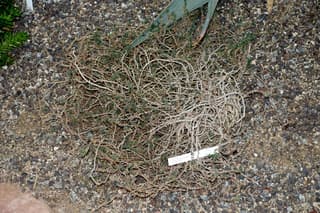
African Bonsai
Trichodiadema bulbosum
Trichodiadema bulbosum is a small caudiciform succulent from the Aizoaceae family, native to South Africa. It forms a tuberous, bulbous caudex that is often partially buried, from which erect, branched stems emerge in a shrub-like habit, giving it an appearance similar to a miniature bonsai. Its leaves are covered with bristle-like papillae and topped by a 'diadem' of stiff hairs, a characteristic that gives the genus its name. In spring and summer, it produces striking pink flowers with yellow centers. It is a slow-growing plant, highly valued in cultivation as an ornamental succulent and for indoor or outdoor bonsai.
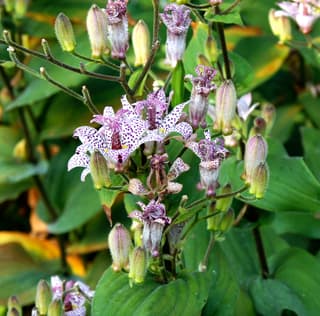
Toad lily
Tricyrtis formosana
Tricyrtis formosana, the Taiwan toad lily, is a hardy perennial native to the woodland understories of Taiwan. In late summer and autumn, it produces small, star-shaped white flowers with prominent purple spots and yellow throats, reminiscent of exotic orchids. The glossy, lance-shaped dark green leaves remain attractive throughout the growing season, and the plant eventually forms dense clumps via creeping rhizomes. It is a shade-loving plant resistant to both diseases and pests, making it ideal for woodland gardens, shaded borders, and pond margins.
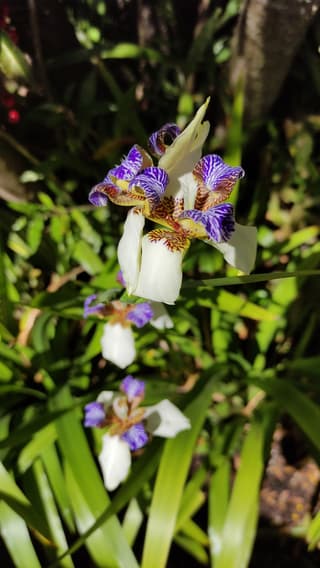
Yellow Walking Iris
Trimezia gracilis
Trimezia gracilis, commonly called yellow walking iris, is a rhizomatous perennial in the Iridaceae family, native to west-central and southeastern Brazil through Paraguay. It forms upright fans of sword-shaped leaves and produces short-lived yellow flowers marked with brown-purple blotches at the base of the petals. Each bloom lasts only a day, but flowering continues from spring through fall. The common name refers to the plantlets that form at the tips of spent flower stalks, which root where they touch the ground, making the clump appear to "walk."
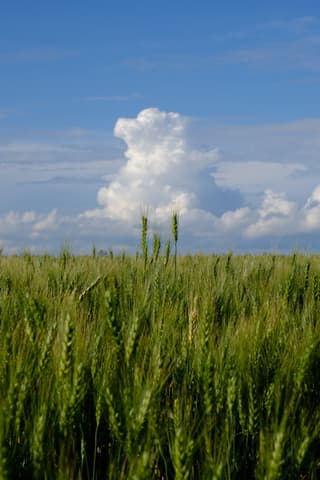
Common wheat
Triticum aestivum
Common wheat (Triticum aestivum) is the most widely cultivated cereal grain in the world and is among humanity's oldest cultivated plants. Domesticated over 9,000 years ago in the Near East, it is now grown on every continent. This annual grass reaches a height of up to 120 cm and forms characteristic spikes that ripen in summer. Its grains are the foundation for bread, flour, pasta, and a variety of other foods. Common wheat has relatively high demands for soil, water, and climate, preferring sunny locations with nutrient-rich, well-drained soils.
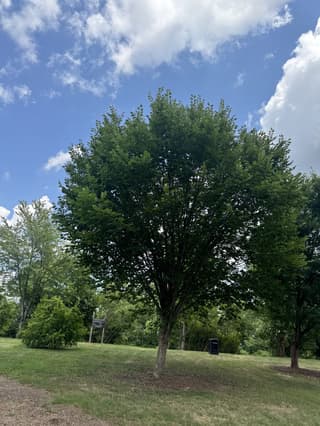
Elms
Ulmus
Ulmus is the elm genus, deciduous or semi-deciduous trees in the family Ulmaceae. There are about 30 to 40 species across the temperate parts of North America, Europe and Asia. The leaves are alternate, double-toothed and lopsided at the base: one side starts lower than the other, the easiest way to tell an elm. In late winter, before the leaves, tufts of tiny reddish flowers with no petals appear. Then come the seeds, round flat discs with a thin papery wing that the wind carries off. American elm can top 30 metres. Most mature elms in Europe and North America died in recent decades from Dutch elm disease, and resistant cultivars are now planted instead. Chinese elm (Ulmus parvifolia) is one of the most popular bonsai trees.
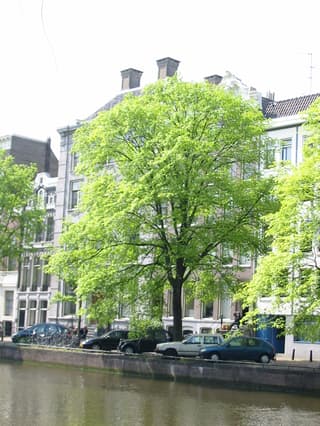
Dutch Elm
Ulmus × hollandica
Ulmus × hollandica, commonly known as the Dutch Elm, is a natural hybrid between the Wych Elm (Ulmus glabra) and the Field Elm (Ulmus minor) that arose spontaneously across Europe wherever the ranges of its two parent species overlap. A large, fast-growing deciduous tree, it was historically planted in vast numbers as a street and canal-side tree throughout the Netherlands and the rest of the Low Countries, prized for its tolerance of urban conditions and its elegant, broadly spreading crown. Its leaves are intermediate in shape between the two parent species, and inconspicuous reddish flowers appear in early spring before the foliage, followed by winged samara fruits. The hybrid became infamous during the 20th century for its role in the Dutch elm disease epidemics, though some clones show moderate resistance and continue to be bred for improved tolerance.
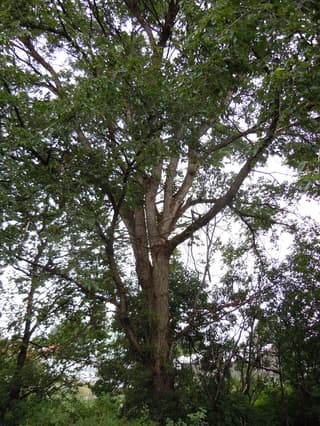
American elm
Ulmus americana
The American elm (Ulmus americana) is a fast-growing, deciduous tree from the elm family (Ulmaceae), originally native to eastern North America. The tree is known for its characteristic vase-shaped crown and can reach heights of up to 24 meters in the wild with a correspondingly wide canopy. From the mid-20th century, Dutch elm disease decimated large portions of the wild population in North America, but disease-resistant cultivars have since been developed. The species produces small, inconspicuous greenish-red flowers in early spring before the leaves emerge, and features coarse, dark green foliage that turns golden in the fall.
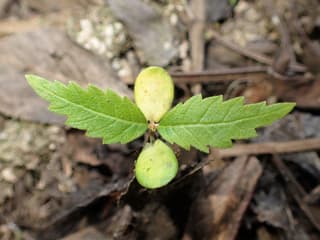
Field Elm
Ulmus minor
Ulmus minor, known as the field elm, is a majestic deciduous tree native to Europe, North Africa, and Western Asia. It is distinguished by its robust stature, deeply fissured bark in mature specimens, and alternate leaves with a markedly asymmetrical base. It is a keystone species in riparian forests, although its populations have been drastically reduced in recent decades due to Dutch elm disease, a devastating fungal infection.
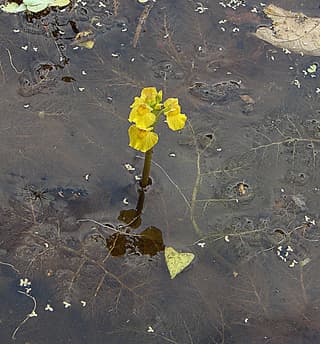
Leafy Bladderwort
Utricularia foliosa
Utricularia foliosa is an aquatic carnivorous plant in the Lentibulariaceae family, native to tropical and subtropical regions of the Americas and Africa. It floats freely or remains submerged in the still waters of ponds, marshes, and slow-moving rivers, forming dense mats of thin, branched stems that can reach several meters in length. Its filiform leaves, up to 30 cm long, support small bladder-like traps (utricles) that suck in and capture microcrustaceans, mosquito larvae, and other small aquatic invertebrates. During the reproductive period, it produces an erect flower stalk that rises above the water, up to 40 cm high, displaying several yellow flowers similar to small snapdragons.
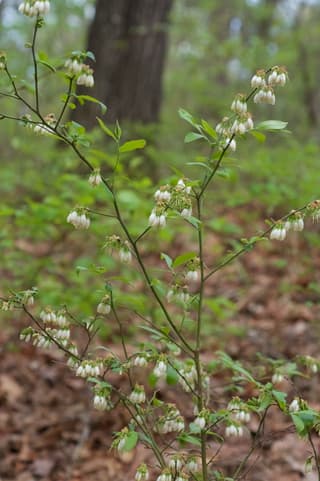
Rabbiteye Blueberry
Vaccinium ashei
The Rabbiteye Blueberry (Vaccinium ashei) is a deciduous shrub native to the southeastern United States, prized for its exceptional heat and drought tolerance. It produces abundant blue berries in summer and stunning fall foliage in shades of orange and scarlet.
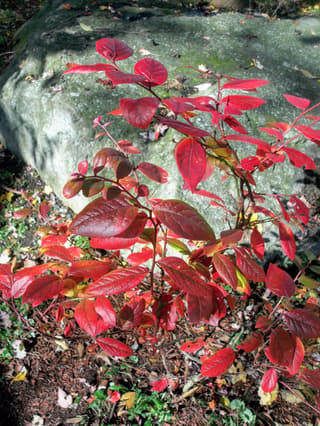
Highbush Blueberry
Vaccinium corymbosum
Highbush blueberry (Vaccinium corymbosum) is a deciduous, fruit-bearing shrub native to eastern North America and a member of the Ericaceae (heath) family, related to azaleas and rhododendrons. It is the primary species cultivated commercially for blueberry production worldwide. Plants form upright clumps 1.8-3.7 m tall, with green foliage that turns brilliant red-orange in fall, small white or pink bell-shaped flowers in spring, and sweet, nutrient-dense blue-purple berries in summer.
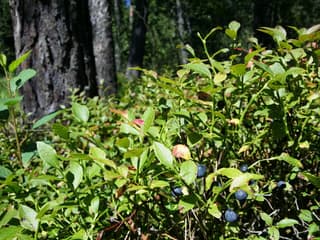
Bilberry
Vaccinium myrtillus
Bilberry (Vaccinium myrtillus) is a deciduous, low-growing shrub in the Ericaceae family, native to heathlands, moorlands and mountain forests across Europe and northern Asia. It spreads via underground rhizomes, forming dense mats 10-50 cm tall. Small greenish-pink flowers appear in spring, followed by dusky blue-black berries prized in traditional European cuisine and herbal medicine.
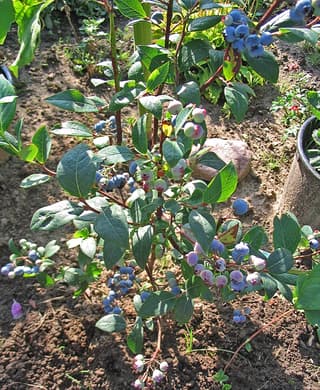
Blueberry
Vaccinium sp
Vaccinium sp, commonly known as blueberry, is a genus of flowering shrubs in the Ericaceae family native to North America. These deciduous or semi-evergreen shrubs produce small, sweet, dark blue to purple berries highly prized for their nutritional value and flavor. The genus includes dozens of species adapted to diverse environments, from lowbush varieties in cold northern forests to highbush cultivars in temperate regions. Blueberries are celebrated for their antioxidant-rich berries and ornamental fall foliage.
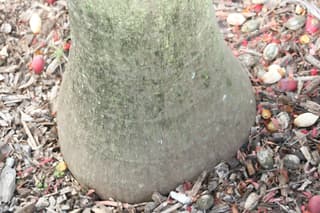
Montgomery Palm
Veitchia arecina
The Montgomery Palm (Veitchia arecina) is a fast-growing tropical palm native to the islands of Vanuatu in the Melanesian archipelago. Featuring a slender solitary trunk with a distinctive pale green crownshaft and lush pinnate fronds, it is widely prized as an ornamental specimen in tropical and subtropical gardens.
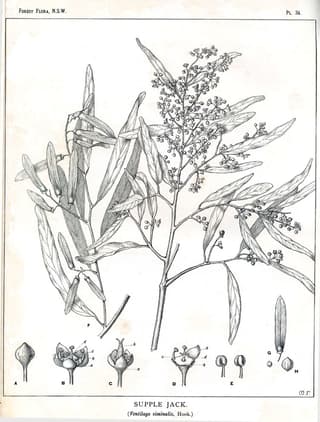
Supplejack
Ventilago
Ventilago is a genus of approximately 40 species of evergreen climbing vines and scandent shrubs in the family Rhamnaceae. Native to tropical South and Southeast Asia, Australasia, Africa, and Madagascar, they bear small greenish-yellow axillary flowers and distinctive single-seeded winged samaras. Some species develop a tree-like form when mature, reaching up to 7 meters.
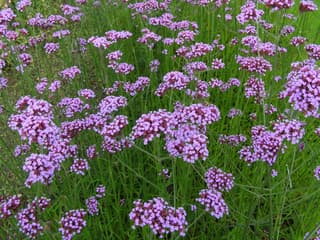
Verbena (genus)
Verbena
Verbena is a genus of flowering plants in the Verbenaceae family, widely grown as annuals or perennials in gardens and containers. They produce abundant blooms in shades of purple, pink, white, and red, and are highly attractive to pollinators such as bees and butterflies.
Grapevine
Vitis
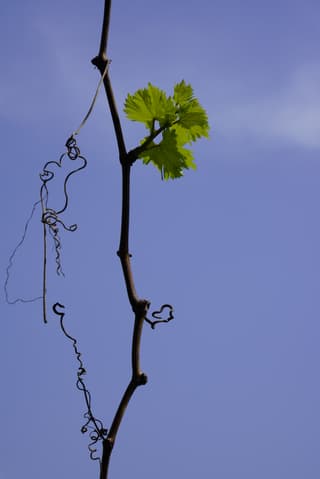
Vitis, commonly known as the grapevine, is a woody climbing plant of great historical and economic importance. Its stems, called canes, attach to supports using tendrils. It is famous for producing grapes, which grow in clusters and are the foundation of the wine industry, in addition to being consumed fresh or dried. Its leaves are large, lobed, and deciduous, providing dense foliage ideal for pergolas.
Fox Grape
Vitis labrusca
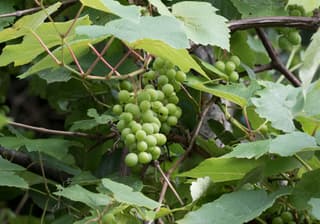
Vitis labrusca, commonly known as the Fox Grape or Northern Fox Grape, is a vigorous deciduous climbing vine native to eastern North America. It is the parent species of many beloved American grape cultivars, most notably the Concord grape, widely used in juices, jellies, and wines. This fast-growing vine climbs by tendrils and can reach 15–20 feet in length, producing clusters of dark blue-black grapes with a characteristic "foxy" musky aroma. Its large, three-lobed leaves turn attractive shades in autumn, and fragrant greenish-yellow flowers bloom in spring to early summer. A hardy, adaptable plant suited to USDA zones 5–8, it thrives in full sun and well-drained loamy soil.
Stubble Rosegill
Volvariella gloiocephala
Volvariella gloiocephala, also known as the Stubble Rosegill, is a saprobic fungus characterized by its large, slimy, whitish to grey cap and the prominent volva at the base of the stem. It often grows on nutrient-rich soils, arable fields, or compost heaps.

Giant Vriesea
Vriesea gigantea
The Giant Vriesea (Vriesea gigantea) is a large epiphytic bromeliad native to Brazil's Atlantic Forest. It is prized for its broad, strap-shaped leaves marked with an intricate netted (tessellated) pattern in pale green and yellowish tones reminiscent of snakeskin. The plant forms a substantial rosette that can exceed 70 cm across, eventually sending up a tall flower spike from its center at maturity. In the wild it grows attached to tree trunks and branches, drawing water and nutrients mainly through the central "cup" or "tank" formed by its overlapping leaf bases.
Vriesea incurvata
Vriesea incurvata
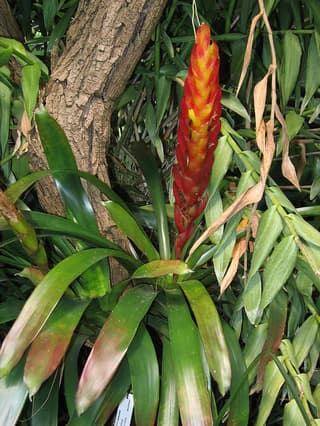
Vriesea incurvata is an epiphytic bromeliad endemic to the Atlantic Forest of south-eastern and southern Brazil, where it grows on trunks and branches inside humid forest. It forms a rosette of smooth green leaves that holds water in its centre. The flattened flower spike has red floral bracts and yellow flowers, and is larger and carries more flowers than that of its close relative Vriesea carinata.
Flaming Sword
Vriesea splendens
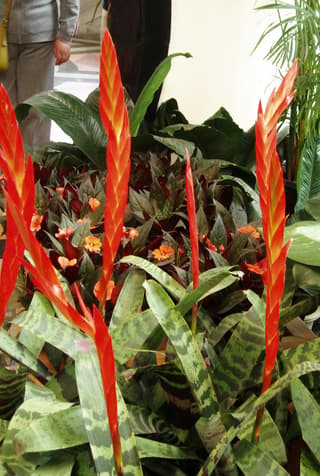
Vriesea splendens, commonly known as the Flaming Sword, is a stunning tropical bromeliad native to Trinidad and Venezuela. It produces a dramatic, sword-like red inflorescence spike that can last for months, making it one of the most striking indoor plants available. Its dark green leaves are banded with horizontal purple-brown stripes, creating a beautiful architectural form even without flowers.
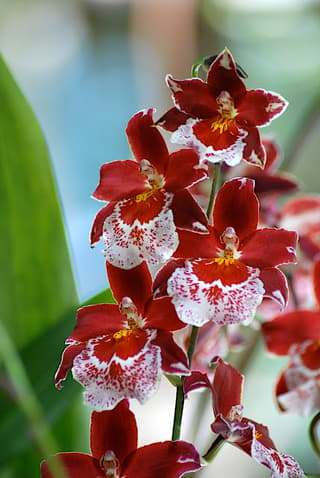
Cambria orchid
Vuylstekeara
Vuylstekeara is an artificially created orchid nothogenus (a cross between Cochlioda × Miltonia × Odontoglossum), most commonly known in the trade as "Cambria," primarily through the popular cultivar Vuylstekeara Cambria 'Plush'. This hybrid combines the best traits of its parent species: it offers long-lasting, colorful inflorescences and is relatively easy to maintain, making it a frequent recommendation for beginner orchid enthusiasts. Ribbon-like leaves grow from its fleshy pseudobulbs, and its flowers appear with contrastingly patterned petals in a wide range of colors from yellow to burgundy.
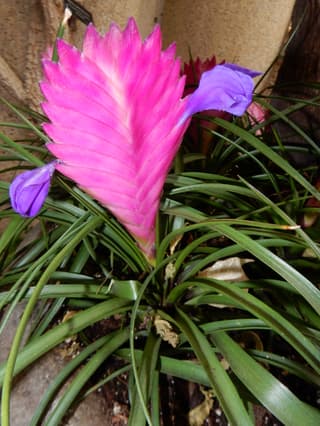
Pink quill
Wallisia cyanea
Wallisia cyanea (formerly Tillandsia cyanea), known as the pink quill, is an epiphytic bromeliad native to the tropical forests of Ecuador. It forms a dense rosette of narrow, grass-like leaves from which a flattened, vibrant pink spike resembling a quill emerges. From this spike, short-lived violet-blue flowers appear sequentially over several months. It is a slow-growing plant that does not require soil, primarily cultivated for its spectacular, long-lasting colorful inflorescence.
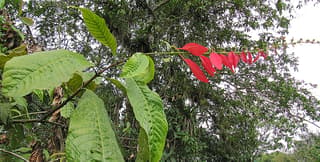
Chaconia
Warszewiczia
Warszewiczia is a genus of evergreen tropical trees and shrubs in the Rubiaceae (coffee) family, native to Central America, the Caribbean, and northern South America. Its best-known and most widely cultivated species, W. coccinea -- the chaconia or wild poinsettia -- is the national flower of Trinidad and Tobago. The plant is prized for its striking flower clusters: long, upright spikes bearing dozens of small, inconspicuous yellow flowers, each subtended by one flame-red, enlarged sepal (bract) that gives the inflorescence its brilliant color. It grows as a large shrub or small tree, typically 4-8 m tall in cultivation (up to 12 m in the wild), with big, glossy, leathery leaves.
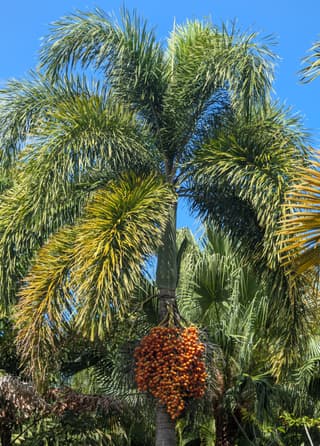
foxtail palm
Wodyetia
The foxtail palm (Wodyetia bifurcata) is a monotypic palm species native to the Cape Melville Peninsula in far north Queensland, Australia. Its common name derives from the distinctive plumose fronds, where leaflets radiate in all directions around the rachis, creating a full, bushy appearance reminiscent of a fox's tail. The solitary, self-cleaning trunk is grey and prominently ringed, reaching up to 10 metres in height. Widely cultivated across tropical and subtropical regions worldwide, the foxtail palm is prized as a landscape ornamental in gardens, parks, and streetscapes.
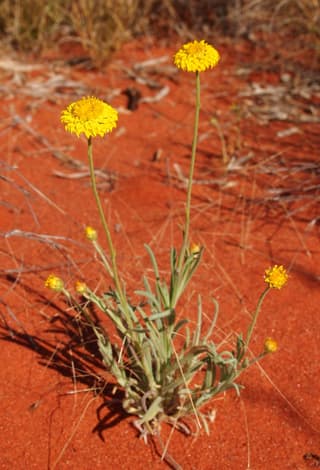
Strawflower
Xerochrysum bracteatum
Xerochrysum bracteatum, commonly known as the Strawflower or Everlasting Daisy, is a cheerful Australian native wildflower celebrated for its papery, long-lasting blooms in shades of yellow, orange, pink, red, and white. Its flowers retain their shape and color for years when dried, making it a favorite for everlasting floral arrangements. A drought-tolerant, sun-loving plant, it thrives in garden borders and containers with minimal care.
Red-cracking Bolete
Xerocomellus chrysenteron
Xerocomellus chrysenteron, commonly known as the red-cracking bolete, is a common edible mushroom characterized by its velvety, brown cap that cracks at maturity to reveal a reddish subcutaneous layer. The pores are yellow, turning greenish-blue when bruised, and the stem is often tinted with ruby red.

Caribbean Swordlily
Xiphidium caeruleum
A rhizomatous perennial herb from the Haemodoraceae family, native to tropical forests ranging from southern Mexico and the Caribbean to central Brazil and Bolivia. It forms compact clumps of linear, bright light-green leaves arranged in a fan shape, reaching heights of 1 foot to 3 feet. In spring and summer, it produces delicate panicles of tubular white flowers that hang downward, followed by fruits that ripen from green to orange, red, and finally black. It is cultivated as an ornamental plant in shaded gardens, borders, and containers, and has traditional uses in folk medicine as a diuretic and anti-inflammatory.
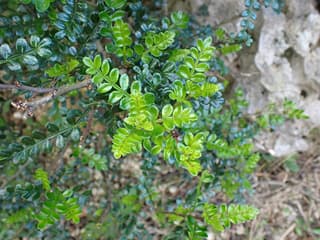
Chinese pepper tree
Zanthoxylum beecheyanum
Zanthoxylum beecheyanum, commonly known as the Chinese Pepper or Tiny-leaf Sichuan Pepper, is a slow-growing evergreen shrub native to East Asia. It is highly prized in the bonsai community for its naturally small, glossy pinnate leaves and compact growth habit. The plant features small thorns along its branches and produces aromatic foliage that emits a citrusy scent when crushed. In maturity, it may produce tiny greenish flowers followed by small reddish-brown peppercorns.
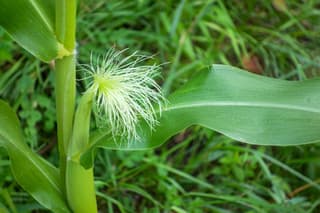
Corn / Maize
Zea
Zea is a genus of tall annual grasses in the Poaceae family, best known through its widely cultivated species Zea mays (corn or maize), a staple cereal crop grown worldwide for its starchy kernels.
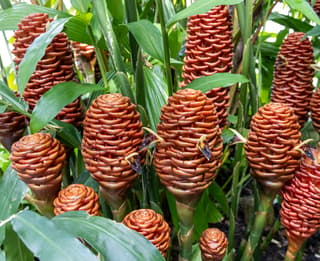
Ginger
Zingiber
Zingiber is the botanical genus of true ginger, in the family Zingiberaceae, native to tropical Asia. It comprises dozens of rhizomatous perennial herb species, cultivated for millennia for their aromatic, edible, and medicinal rhizomes. Plants form clumps of narrow, linear leaves rising from a fleshy underground rhizome, and produce cone-shaped flower spikes on separate stalks. This is a general genus-level profile representative of typical species such as Zingiber officinale (culinary ginger).
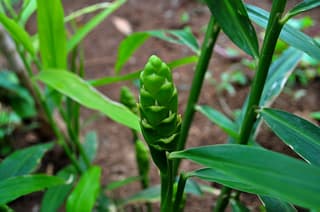
Ginger
Zingiber officinale
Ginger (Zingiber officinale) is a tropical rhizomatous herb in the family Zingiberaceae, cultivated for thousands of years for its aromatic, pungent rhizome used in cooking and traditional medicine.
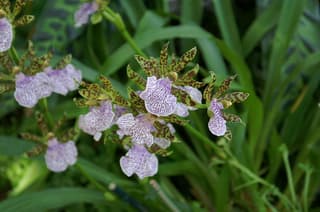
Zygopetalum Orchid (genus)
Zygopetalum
Zygopetalum is a genus of fragrant orchids native to South America, particularly Brazil. Known for their striking flowers in shades of burgundy, green, and violet with intricately patterned lips, they are among the few terrestrial orchids that thrive indoors.
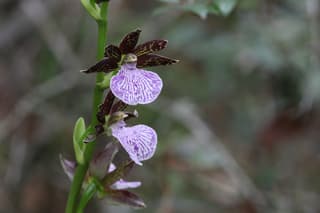
Spotted Zygopetalum
Zygopetalum maculatum
Zygopetalum maculatum is a fascinating Brazilian orchid, known for its contrasting flower colors and an intense fragrance reminiscent of hyacinth or pepper. It features oval pseudobulbs from which long, lanceolate leaves emerge. Its flowers display green petals and sepals with deep brown spots, highlighting a white lip with vibrant violet veins.
Medium Care Pet Safe
Our selection of 684 medium pet safe combines the characteristics of this category with moderate care needs. Ideal for those with basic experience.
Why Choose Medium Pet Safe?
Combining the beauty of pet safe with medium difficulty level lets you enjoy this category with a balanced care commitment. Each plant was selected to offer the best characteristics of the category at the care level you are looking for.