634 Medium Pet Safe | 2026 Guide - Page 6
Find 634 medium pet safe. Complete guide for your garden.
634 Pet Safe with medium level
Showing 181-216 of 634
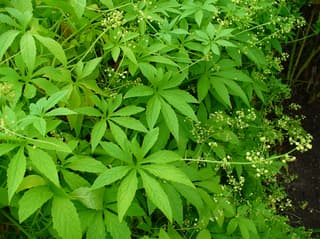
Caigua
Cyclanthera pedata
Caigua (Cyclanthera pedata) is a fast-growing annual climbing vine from the Cucurbitaceae family, native to the Andean regions of Peru. Its thin, tendril-bearing stems grow to a length of approximately 4.5 m, with palmately divided leaves measuring 10–12 cm in diameter. Small white-greenish flowers grow in the leaf axils. The light green, slightly curved fruits grow up to 20 cm and have a smooth or finely spiked skin; young fruits are eaten raw, while more mature ones are stuffed.
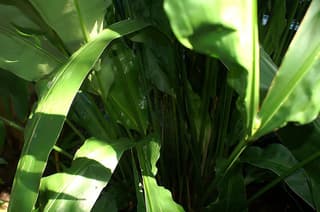
Split-leaf Cyclanthus
Cyclanthus bipartitus
Cyclanthus bipartitus, known within its family as the "Panama hat plant" (Cyclanthaceae), is a stemless perennial herb native to humid tropical rainforests ranging from southern Mexico and Central America to Venezuela, the Guianas, Colombia, Ecuador, Peru, Bolivia, and northern Brazil. It typically grows along stream banks and in swampy understory areas, forming dense clumps. Its long leaves (50 to 100 cm or more) are deeply divided in half from the base, resembling a split fan or a fishtail—therefore, despite its palm-like appearance, it is not a true palm. It produces a spadix inflorescence with flowers arranged in discs, orange in color, with a fragrance reminiscent of a blend of cinnamon and vanilla; among Amazonian indigenous peoples, these flowers are used in body adornments.
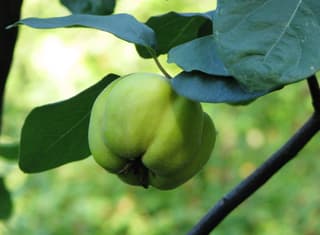
Quince
Cydonia oblonga
Cydonia oblonga, commonly known as quince, is a deciduous small tree or large shrub in the family Rosaceae. Native to southwest Asia and the Caucasus region, it produces fragrant pinkish-white flowers in spring and large, golden-yellow, pear-shaped aromatic fruits in autumn. One of the oldest cultivated fruits, quince has been grown for thousands of years for its culinary and medicinal properties.
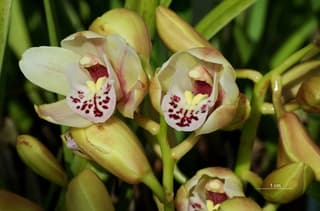
Cymbidium orchid
Cymbidium
The Cymbidium genus comprises orchids highly valued for their lush flowers and flower spikes that can last up to ten weeks. Unlike many tropical orchids, Cymbidiums prefer cooler climates and are known as cool-climate orchids. They feature oval pseudobulbs and long, strap-shaped leaves that remain green year-round.
Indian Boat Orchid
Cymbidium aloifolium
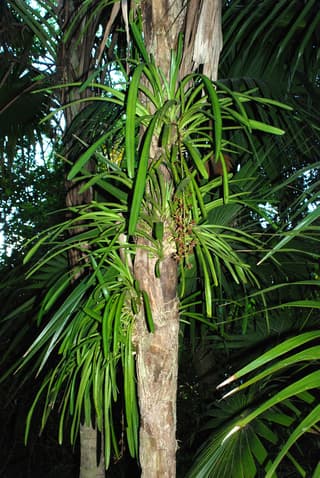
Cymbidium aloifolium, commonly known as the Indian Boat Orchid or Aloe-leafed Cymbidium, is an epiphytic orchid native to tropical and subtropical forests of Asia, including India, China, and Southeast Asia. It features stiff, strap-like leaves resembling aloe foliage and produces graceful arching flower spikes with cream, pale yellow, and maroon-striped blooms.

Boat Orchid
Cymbidium hybridum
Cymbidium hybridum refers to the vast group of cultivated Cymbidium hybrids (Orchidaceae) bred over more than a century from wild Asian and Australian species. These evergreen, terrestrial-to-epiphytic orchids form clumps of pseudobulbs topped with long, strap-shaped leaves, and in late winter to spring they send up sturdy arching spikes carrying a dozen or more long-lasting, waxy flowers. Modern hybrids range from miniature to large-flowered types, in shades of white, green, yellow, pink, red, cream and near-brown, often with a contrasting spotted lip. Prized as houseplants, patio specimens in mild climates, and cut flowers, boat orchids reward growers with cool nights and bright light with months of bloom.
Egyptian Papyrus
Cyperus papyrus
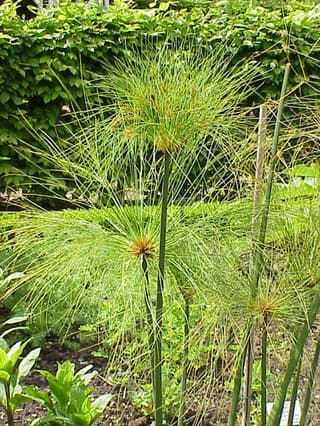
Cyperus papyrus, commonly known as Egyptian Papyrus or Paper Reed, is a majestic semi-aquatic plant native to the banks of the Nile River in northeastern Africa. Its tall, triangular stems can reach up to 16 feet (5 meters) in height, topped with feathery, umbrella-like clusters of thread-fine rays. One of the most historically significant plants in human civilization, it was the source of the world's first paper. Today it thrives in water gardens, ponds, and large containers.
Garden Carrot
Daucus carota subsp. sativus
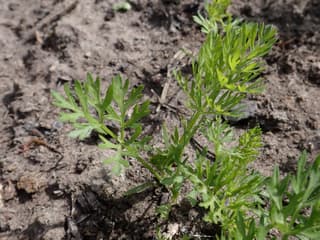
The garden carrot (Daucus carota subsp. sativus) is one of the world's most widely grown root vegetables, descended from the wild Eurasian carrot. Belonging to the Apiaceae family, it is prized for its sweet, nutrient-dense taproot rich in beta-carotene. A biennial grown as an annual, it produces feathery foliage and white umbel flowers in its second year.
Hare's-foot Fern
Davallia canariensis
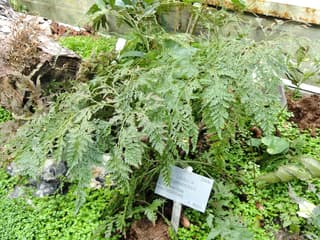
Davallia canariensis, commonly known as the Hare's-foot Fern or Deer's-foot Fern, is a captivating epiphytic fern native to the Canary Islands and the Iberian Peninsula. Its most distinctive feature is the thick, furry rhizomes covered in reddish-brown scales that creep over the edge of the pot, resembling the fuzzy feet of a hare. The finely divided, triangular fronds create a lush, cascading display, making it an exceptional choice for hanging baskets and decorative arrangements.
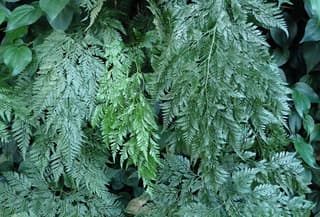
White Rabbit's Foot Fern
Davallia griffithiana
Davallia griffithiana is an epiphytic fern native to China and Southeast Asia, prized for its long, creeping white furry rhizomes that resemble a rabbit's foot. The delicate, finely cut bright-green fronds create a lush, cascading display perfect for hanging baskets. It is non-toxic and well-suited as an indoor houseplant in humid, warm environments.
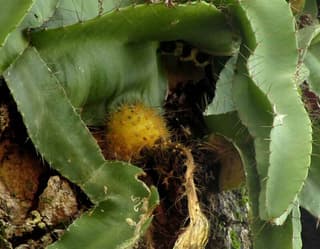
Dog-tail Cactus
Deamia testudo
Deamia testudo, known as the Dog-tail Cactus, is an epiphytic and climbing cactus native to the tropical forests of Central America and northern South America, from Mexico to Colombia and Venezuela. It grows by attaching itself to tree trunks and rocks using aerial roots, displaying angular and flattened stems that resemble a tortoise shell. In summer and early fall, it produces large, fragrant, nocturnal white flowers, followed by spiny spherical fruits.
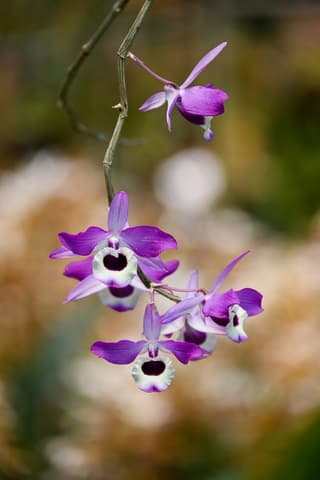
Dendrobium Orchid (genus)
Dendrobium
Dendrobium is one of the largest orchid genera, comprising over 1,800 species native to tropical and subtropical Asia, Oceania, and Pacific islands. These epiphytic plants grow on trees and are adapted to diverse climates — from humid tropical forests to cool mountain regions. They produce stunning flowers in a wide array of colors and are widely cultivated as ornamentals.
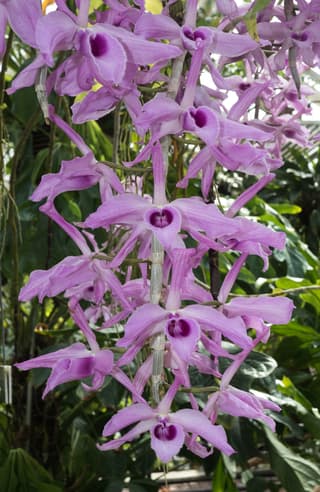
Honohono Orchid
Dendrobium anosmum
Dendrobium anosmum, commonly known as the honohono orchid or sanggumay, is a pendulous epiphytic orchid native to the Philippines, New Guinea, Thailand, and Sri Lanka. It produces long, cane-like deciduous pseudobulbs adorned with fragrant flowers in shades of pink, white, and lavender-purple, blooming profusely in spring. Despite the misleading epithet "anosmum" (odorless), most plants emit a delightfully sweet fragrance.
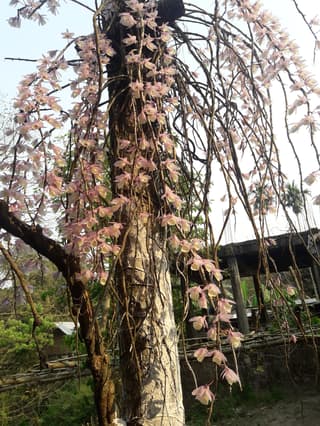
Hooded Orchid
Dendrobium aphyllum
Dendrobium aphyllum, commonly known as the Hooded Orchid, is a deciduous epiphytic orchid native to Southeast Asia, from India to Vietnam. It produces elegant, pendulous canes that shed their leaves during dormancy, then burst into bloom with delicate pinkish-violet and white fragrant flowers every spring. Its dramatic seasonal cycle makes it a prized specimen for intermediate to warm orchid growers.
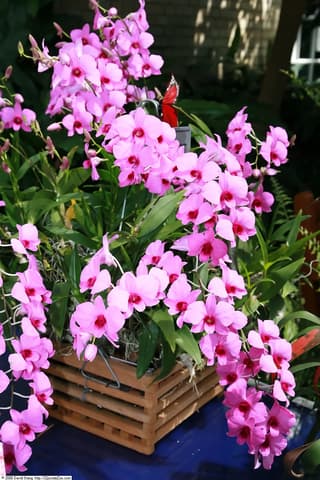
Cooktown Orchid
Dendrobium bigibbum
The Cooktown Orchid (Dendrobium bigibbum) is a stunning epiphytic orchid native to the tropical rainforests of northeastern Australia, particularly the Cape York Peninsula. It is Queensland's official state floral emblem and is prized for its arching sprays of lilac, mauve, purple, and white butterfly-shaped flowers. A popular choice for orchid enthusiasts and tropical gardens worldwide.
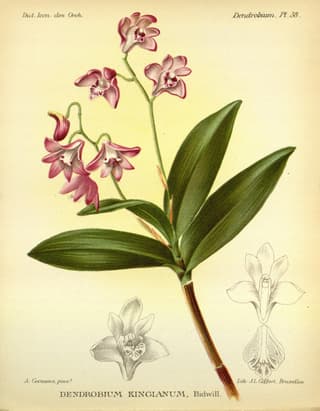
Pink Rock Orchid
Dendrobium kingianum
Dendrobium kingianum, commonly known as the Pink Rock Orchid, is a native Australian orchid that grows naturally on rocky cliff faces and outcrops along the eastern coast. It produces clusters of delicate pink, white, or purple flowers from late winter to spring, making it one of the most beloved cool-growing orchids for Australian gardeners and collectors worldwide.

Noble Dendrobium
Dendrobium nobile
Dendrobium nobile is a stunning deciduous orchid native to the Himalayan foothills and Southeast Asia, prized for its abundant fragrant flowers that bloom along mature canes in late winter to early spring. This sympodial orchid produces clusters of stout pseudobulbs that can reach up to 60cm in height, adorned with beautiful blooms in shades of white, pink, purple, and yellow. Popular as both an indoor and outdoor plant in warm climates, it requires a cool winter rest period to trigger flowering.

Den-Phal Orchid
Dendrobium phalaenopsis
Dendrobium phalaenopsis, commonly known as the Den-Phal orchid, is an epiphytic orchid native to northern Australia and New Guinea. Renowned for its arching sprays of purple, pink, or white blooms that last for weeks, it is the parent species behind the popular 'Den-Phal' hybrids sold in flower shops under the trade name Cooktown orchid, prized for generous flowering and comparatively easy care among orchids.
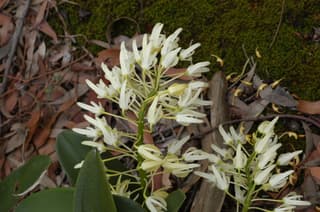
Rock Orchid
Dendrobium speciosum
Dendrobium speciosum, commonly known as the Rock Orchid or King Orchid, is a large epiphytic and lithophytic orchid native to eastern Australia. It grows naturally on rocks and tree trunks, producing robust pseudobulbs up to 45 cm long. In late winter to early spring, it produces spectacular arching sprays of white to creamy-yellow flowers with purple-spotted labellums and a soft honey fragrance.
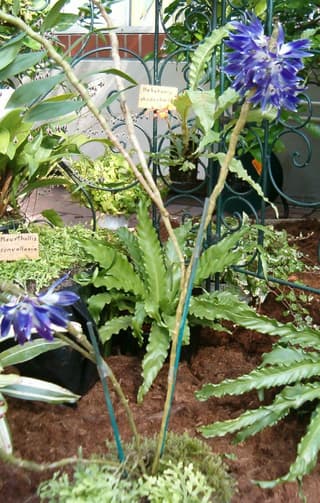
Queen Victoria's Dendrobium
Dendrobium victoriae-reginae
Dendrobium victoriae-reginae, known as Queen Victoria's dendrobium, is a striking epiphytic orchid endemic to the high-elevation cloud forests of the Philippines, found on Luzon, Mindanao, Mindoro, Negros, and Camiguin. It grows among oaks, rhododendrons, and azaleas at 1,300 to 2,700 meters elevation, where cool temperatures and near-constant moisture prevail. Its pendulous, cane-like stems are basally branching and swollen at the nodes, bearing papery, lance-shaped leaves. Short, erect racemes carry one to three flowers in variable shades of lilac to deep violet-blue, among the most prized colors in the genus.
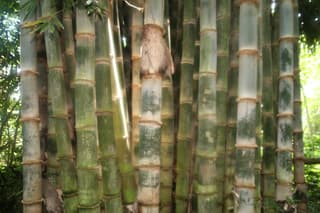
Giant Bamboo
Dendrocalamus giganteus
Dendrocalamus giganteus, commonly known as Giant Bamboo, is one of the largest bamboo species in the world, capable of reaching heights of up to 30 meters. Native to Southeast Asia — particularly India and Myanmar — it is prized for its impressive stature, extraordinarily fast growth, and versatile uses from construction to ornamental landscaping.
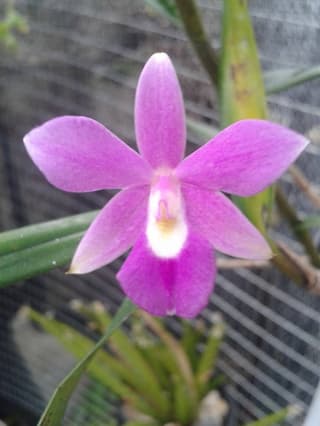
Pink Butterfly Orchid
Dimerandra emarginata
Dimerandra emarginata is a medium-sized epiphytic orchid native to the rainforests of Central America, northern South America, and the Caribbean, from Mexico south to Brazil. It grows on tree bark or rocks, producing slender, cane-like stems with leathery, notch-tipped leaves. From summer through fall, it bears clusters of small but vivid pink flowers with a white-and-pink lip, blooming successively over weeks. Commonly called the Pink Butterfly Orchid, it thrives mounted or in open, well-draining bark mixes that mimic its natural epiphytic habitat.
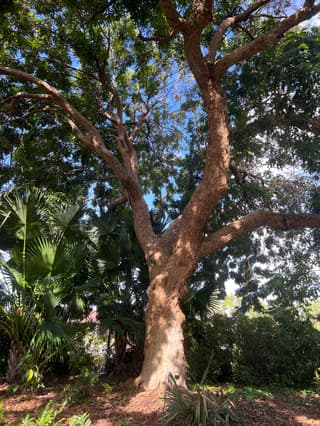
Longan
Dimocarpus longan
Dimocarpus longan, commonly known as longan or 'dragon's eye,' is an evergreen fruit tree belonging to the soapberry family (Sapindaceae), native to Southeast Asia. It grows up to 12 meters tall, forming a spreading crown with paripinnate, leathery leaves. Small, yellowish-white flowers appear in spring in abundant panicles and are faintly aromatic. The fruits—round, with a brown, brittle skin—contain a translucent, sweet pulp surrounding a single shiny, dark brown seed, resembling an eye. Longan is closely related to lychee and rambutan. It is primarily cultivated in China, Thailand, Vietnam, and other tropical countries for its delicious fruits, timber, and numerous medicinal uses.
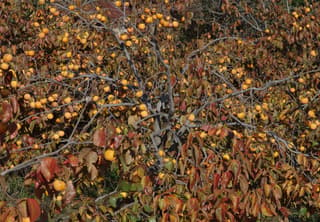
Japanese Persimmon
Diospyros kaki
The Japanese persimmon (Diospyros kaki) is a deciduous fruit tree native to China and Japan, widely cultivated across temperate regions worldwide. Belonging to the family Ebenaceae, it can grow up to 9 meters tall and is prized for its spectacular autumn foliage in shades of gold, orange, red and burgundy, as well as its glossy orange-red fruits that cling to the bare branches well into winter. The persimmon fruit, with its honeyed, floral flavor reminiscent of mango and apricot, is one of the oldest cultivated fruits in East Asia, with records of its cultivation dating back over 2,000 years.
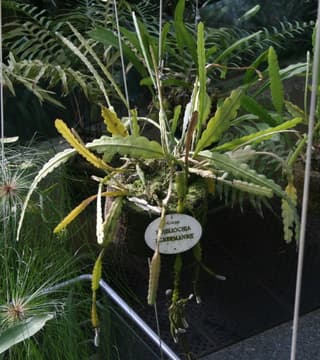
Orchid Cactus
Disocactus
Disocactus is a genus of epiphytic cacti native to the tropical forests of Mexico and Central America, prized for their flattened, leaf-like stems and spectacular funnel-shaped flowers in shades of red, pink, and white. Unlike desert cacti, Disocactus species grow on trees in humid, shaded environments, making them a striking choice for hanging baskets indoors.
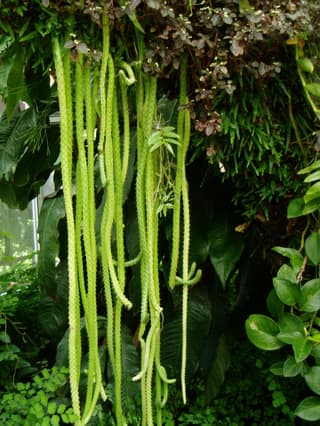
Rat Tail Cactus
Disocactus flagelliformis
Disocactus flagelliformis, commonly known as the Rat Tail Cactus, is an epiphytic cactus native to Mexico. Its long, trailing cylindrical stems can reach up to 2 meters in length and are covered in fine spines. It is prized for its spectacular magenta to bright red flowers that bloom in spring, making it a popular choice for hanging baskets.
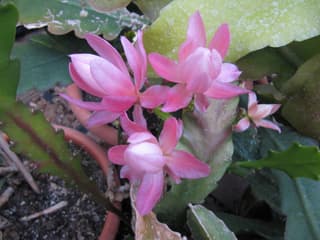
German Empress
Disocactus phyllanthoides
Disocactus phyllanthoides, commonly called the German Empress, is an epiphytic cactus native to the cloud forests of Puebla and Veracruz, Mexico. It has flattened, leaf-like stems and produces funnel-shaped rose-pink flowers in late winter to spring. Unlike desert cacti, it thrives in filtered shade and moderate humidity, often growing on trees or rocks in its native habitat.
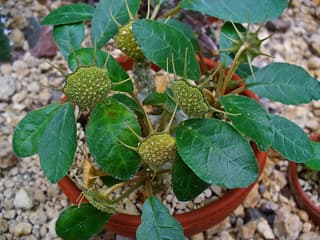
Shield Flower
Dorstenia
Dorstenia is a captivating genus of caudiciform succulents in the Moraceae family — the same family as figs and breadfruit. Native to arid regions of East Africa and the Arabian Peninsula, including Ethiopia, Somalia, Kenya, Tanzania, Saudi Arabia, Yemen, and Oman, it is prized by collectors for its swollen water-storing caudex and uniquely bizarre hypanthodium inflorescences — flat, disc- or shield-shaped structures that serve as composite flower heads. Despite its exotic appearance, Dorstenia is relatively easy to grow indoors when given bright light and well-draining soil.
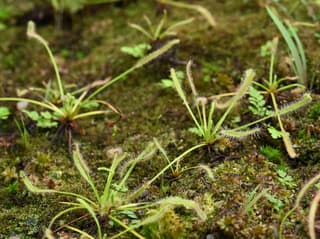
Sundew (genus)
Drosera
Drosera, commonly known as sundews, is one of the largest genera of carnivorous plants, with over 190 species found on every continent except Antarctica. They trap insects using sticky, glistening tentacles tipped with mucilaginous glands that resemble dewdrops in sunlight.
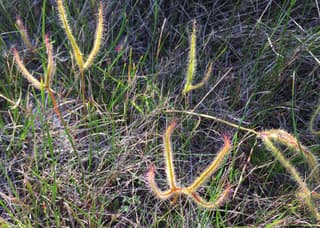
Fork-leaved Sundew
Drosera binata
Drosera binata, known as the fork-leaved or forked sundew, is a carnivorous perennial in the family Droseraceae, native to boggy heathlands and wetlands of southeastern Australia and New Zealand. Its narrow leaves repeatedly split into Y- or fork-shaped segments, each covered in red glandular hairs that secrete glistening, sticky mucilage to trap and digest small insects. In spring and summer it sends up tall flower stalks topped with clusters of small white blooms, held well above the sticky foliage so pollinators are not caught.
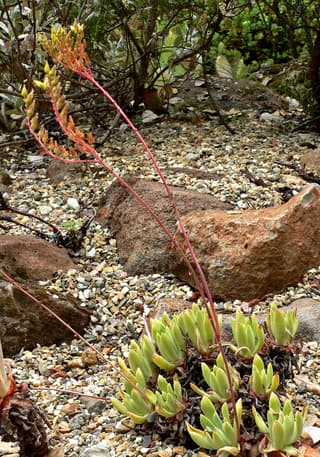
Greene's Liveforever
Dudleya greenei
Dudleya greenei, commonly known as Greene's Liveforever or Greene's Dudleya, is a rare succulent endemic to the Channel Islands of California. It forms striking silvery-white powdery rosettes that grow close to the ground, giving it the nickname "chalk lettuce." This slow-growing evergreen is threatened in the wild due to habitat loss and illegal collection, making it a protected species. Its fleshy, glaucous leaves are coated in a natural white powder (farina) that reflects harsh sunlight and helps retain moisture.

Chalk Dudleya
Dudleya pulverulenta
Chalk Dudleya (Dudleya pulverulenta) is a striking rosette succulent native to Southern California and Baja California. Its broad silvery-white leaves are coated in a chalky wax (farina) that reflects intense sun, and in spring tall arching red stalks carry tubular red-to-yellow flowers loved by hummingbirds. Rosettes can reach 30 cm or more across.
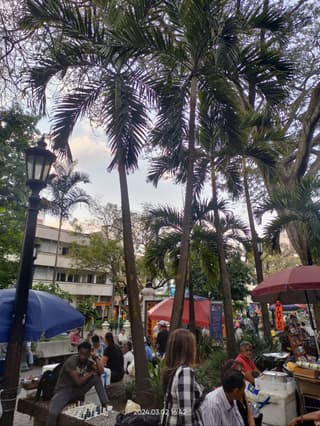
Dypsis Palm
Dypsis
Dypsis is a large genus of feather palms native almost entirely to Madagascar, comprising more than 150 species that range from small understory clustering palms to towering forest giants. The best-known member, Dypsis lutescens (the areca palm), is one of the world's most popular houseplants thanks to its graceful, arching, multi-caned fronds and easygoing nature indoors. As a genus, Dypsis palms share a preference for warm, humid, well-lit conditions reminiscent of their tropical Madagascan origins.

Triangle Palm
Dypsis decaryi
Dypsis decaryi, the Triangle Palm, is a striking palm endemic to southern Madagascar. Its leaves emerge from three distinct sides of the trunk, creating a perfect triangular silhouette that makes it one of the most architecturally distinctive palms in the world.
Areca Palm
Dypsis lutescens
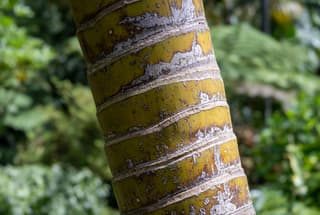
Dypsis lutescens, commonly known as Areca Palm or Butterfly Palm, is a palm species native to Madagascar. It features multiple golden-yellow stems resembling bamboo and elegant bright green fronds with feather-like leaflets. It is one of the most popular indoor plants due to its tropical beauty and proven air-purifying capabilities, listed in the NASA Clean Air Study as effective in removing formaldehyde, xylene, and toluene from indoor air.
Lau's Echeveria
Echeveria laui
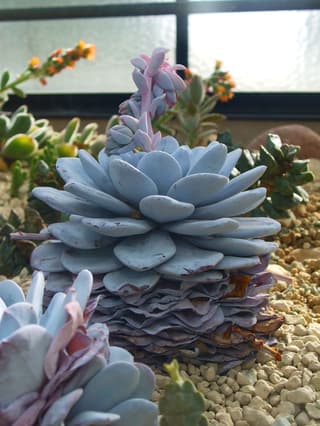
Echeveria laui is a slow-growing succulent native to Oaxaca, Mexico, prized for its compact rosettes covered in a thick, powdery blue-white farina that gives the leaves a frosted, icing-sugar appearance. The plump, spoon-shaped leaves form a tight rosette rarely taller than a few centimeters, and mature plants produce coral-pink, bell-shaped flowers on tall stalks in summer.
Medium Care Pet Safe
Our selection of 634 medium pet safe combines the characteristics of this category with moderate care needs. Ideal for those with basic experience.
Why Choose Medium Pet Safe?
Combining the beauty of pet safe with medium difficulty level lets you enjoy this category with a balanced care commitment. Each plant was selected to offer the best characteristics of the category at the care level you are looking for.