Complete Plant Guide
Explore plants by difficulty, season and more. Find the perfect plant for you.
Difficulty
Categories
Plants by City
🗺️ Plants by City3478 plants found
Showing 1801-1836 of 3478
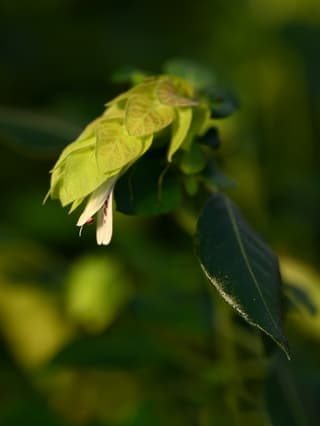
Water-willow / Shrimp Plant (genus)
Justicia
Justicia is a large genus of approximately 600 species in the family Acanthaceae, comprising tropical and subtropical herbs and shrubs. The most popular ornamentals are Justicia brandegeeana (Shrimp Plant) and Justicia carnea (Brazilian Plume Flower), beloved for their distinctive colorful bracts and flowers. They thrive as houseplants and in subtropical gardens.
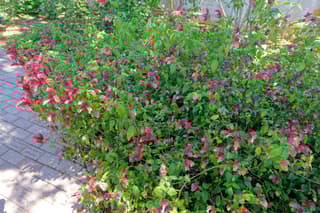
Shrimp Plant
Justicia brandegeeana
Justicia brandegeeana is a tropical evergreen shrub native to Mexico, belonging to the Acanthaceae family. It is widely grown as an ornamental plant for its distinctive shrimp-shaped bracts that range from red to pink and yellow, with small white flowers emerging from within. It can reach up to 90 cm tall and blooms nearly year-round in warm climates.
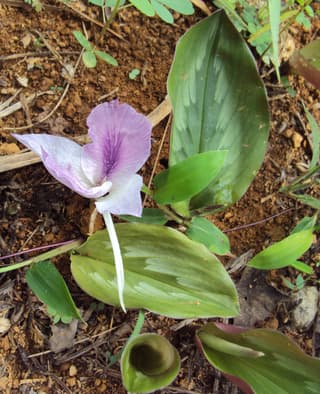
Resurrection Lily
Kaempferia rotunda
Kaempferia rotunda, commonly known as Resurrection Lily or Tropical Crocus, is a perennial herbaceous plant in the Zingiberaceae family, native to Southeast Asia including India and Myanmar. It is celebrated for its stunning purple and white flowers that emerge directly from the ground before the leaves appear each spring, creating a magical display reminiscent of a resurrection. The broad ornamental leaves feature decorative patterns in shades of green. During winter, the plant enters full dormancy, dying back completely to the rhizome, only to resurge vigorously the following season.
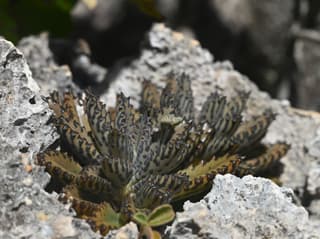
Mother of Millions Hybrid
Kalanchoe × houghtonii
Kalanchoe × houghtonii is a succulent hybrid between Kalanchoe daigremontiana and K. delagoensis, both native to Madagascar. Commonly called Mother of Millions Hybrid, it produces scores of tiny plantlets along its leaf margins that readily root wherever they land. A fast-growing, eye-catching ornamental, though severely toxic to pets and humans and potentially invasive in warm climates.
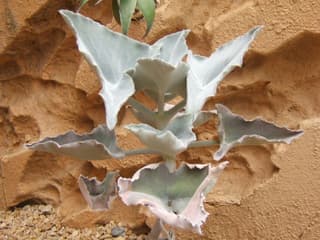
Velvet Elephant Ear
Kalanchoe beharensis
Kalanchoe beharensis is a striking succulent native to southern Madagascar, known for its large, velvety, triangular leaves covered in soft brown or silver hairs. In its natural habitat, it can grow into a tree-like shrub reaching up to 3 meters tall. The thick, felted leaves give this plant an almost otherworldly appearance, making it a favorite among succulent collectors. Despite its exotic looks, it is remarkably easy to care for, thriving on neglect and requiring minimal watering.
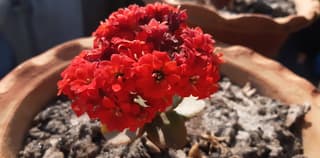
Flaming Katy
Kalanchoe blossfeldiana
Kalanchoe blossfeldiana is a flowering succulent native to Madagascar, known for its vibrant, long-lasting blooms that appear in fall and winter. It is an easy-care plant, perfect for beginners.
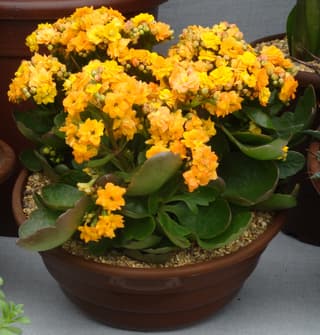
Calandiva
Kalanchoe calandiva
Calandiva is a double-flowered cultivar series of Kalanchoe blossfeldiana, native to Madagascar. Its lush, rose-like blooms with at least 8 petals make it one of the most decorative succulent houseplants available. Hardy and low-maintenance, it thrives with minimal care.
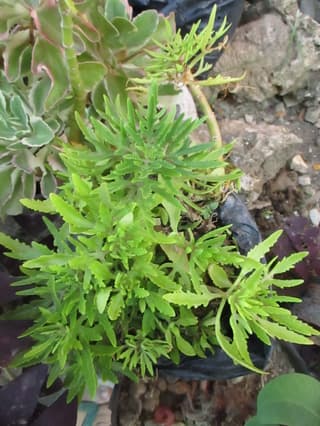
Horned-leaf Kalanchoe
Kalanchoe ceratophylla
Kalanchoe ceratophylla is a perennial succulent native to tropical Asia, ranging from the Indian subcontinent through southern China, Indochina, Taiwan to the Philippines. A member of the Crassulaceae family, it produces small yellow-green bell-shaped flowers in winter and spring. It is valued as an ornamental plant and for its traditional medicinal uses, being drought-tolerant and easy to grow.
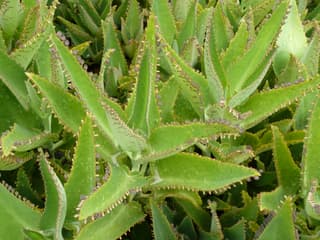
Mother of Thousands
Kalanchoe daigremontiana
Kalanchoe daigremontiana, known as Mother of Thousands, is a fascinating succulent native to Madagascar. It is famous for producing tiny plantlets along the margins of its fleshy, lance-shaped leaves — each one capable of falling off and rooting on its own. A resilient, low-maintenance plant that thrives with neglect, it is mildly toxic and can become invasive outdoors in warm climates.
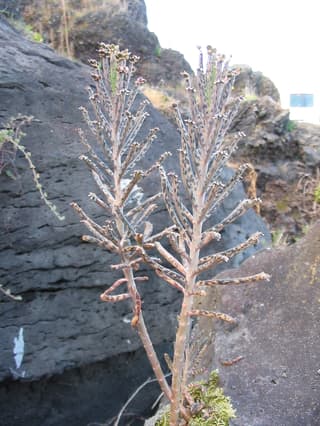
Mother of Millions
Kalanchoe delagoensis
Kalanchoe delagoensis, commonly known as Mother of Millions or Chandelier Plant, is a striking succulent native to Madagascar. Also known by its synonym Bryophyllum delagoense, this fast-growing plant is famous for producing tiny plantlets along the edges of its tubular, mottled leaves — a form of vegetative reproduction that makes it incredibly prolific. Upright stems can reach 120 cm, topped in winter and spring with clusters of pendant, tubular orange-red flowers. Because of its aggressive spread via these plantlets, it is classified as an invasive weed in Australia, Florida, South Africa, and several Pacific Islands.
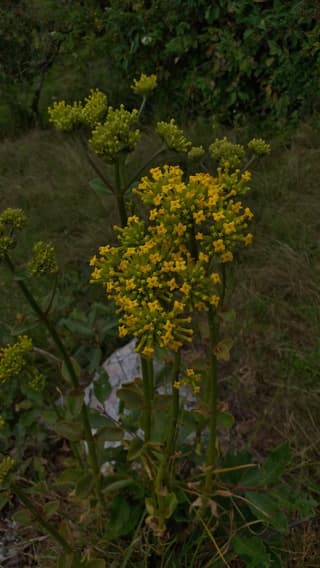
Dense-flowered Kalanchoe
Kalanchoe densiflora
Kalanchoe densiflora, commonly known as the dense-flowered kalanchoe, is an evergreen succulent native to southern Africa. It forms an upright, glabrous perennial with thick, fleshy oblong leaves and produces tall, densely packed clusters of tubular yellow-to-orange flowers in winter and spring. Valued for its drought tolerance and low-maintenance nature, it thrives in bright light and well-draining soil, making it a popular choice for sunny windowsills, rock gardens, and warm-climate landscaping.
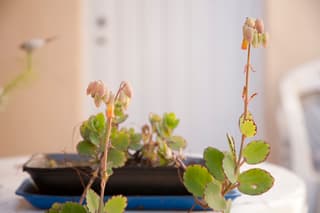
Lavender Scallops
Kalanchoe fedtschenkoi
A perennial shrubby succulent native to Madagascar, famous for its fleshy blue-gray leaves with scalloped edges that turn pink under intense sunlight. In winter, it produces beautiful clusters of bell-shaped, drooping flowers.
Christmas Tree Plant
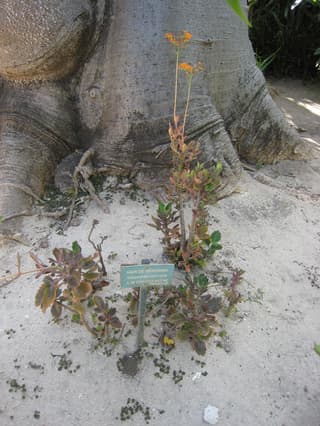
Kalanchoe laciniata
Kalanchoe laciniata, commonly known as the Christmas Tree Plant, is a striking succulent native to tropical Africa and the Arabian Peninsula. It produces deeply dissected, fern-like green leaves that give it a tree-like silhouette, earning its festive common name. In spring and summer, it bears clusters of tubular yellow to orange flowers that attract pollinators.
Big Mama Kalanchoe
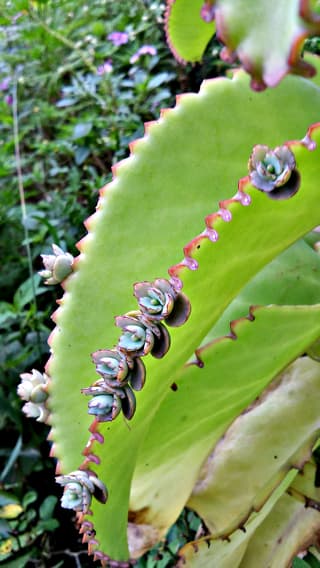
Kalanchoe laetivirens
Kalanchoe laetivirens, commonly known as Big Mama or Mother of Thousands, is a succulent native to Madagascar in the family Crassulaceae. Its glossy green leaves produce countless tiny plantlets along their margins, which drop off and root readily — giving rise to its common name. It blooms in winter and early spring with small flowers in shades of pink, red, or orange.
Milky Widow's Thrill
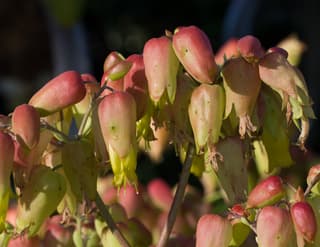
Kalanchoe laxiflora
Kalanchoe laxiflora, commonly known as Milky Widow's Thrill or Bell Kalanchoe, is a charming perennial succulent shrub native to central Madagascar. It produces clusters of delicate, pendulous bell-shaped flowers in shades of pink, coral, and orange on slender, arching stems. The fleshy blue-green leaves are often edged in red, and the plant freely produces tiny plantlets (bulbils) along leaf margins — a trait called vivipary — making it easy to propagate. This compact succulent thrives in bright light and dry conditions, making it an excellent choice for sunny windowsills, rock gardens, and xeriscaping.
Flapjack Plant
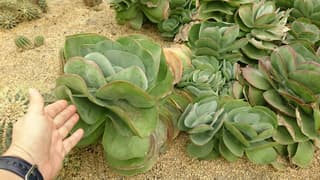
Kalanchoe luciae
Kalanchoe luciae, commonly known as the Flapjack Plant or Paddle Plant, is a striking succulent native to Southern Africa. It produces large, flat, round leaves arranged in a rosette pattern — like a stack of pancakes. The leaves are pale silvery-green but develop vivid red or pink margins when exposed to bright sunlight or cool winter temperatures, making it a highly ornamental specimen.

Chandelier Plant
Kalanchoe manginii
Kalanchoe manginii, commonly known as the Chandelier Plant or Beach Bells, is a trailing succulent native to Madagascar. It produces charming pendant tubular flowers in shades of orange-red during winter and spring, making it an excellent choice for hanging baskets and elevated planters. It belongs to the Crassulaceae family and is prized as an ornamental houseplant.
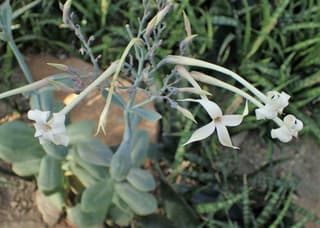
Penwiper Plant
Kalanchoe marmorata
The Penwiper Plant (Kalanchoe marmorata) is an easy-care succulent from Madagascar and East Africa, prized for its broad, scalloped, blue-green leaves marked with irregular purple-brown blotches that resemble a marble pattern. In late winter to early spring it sends up tall stems topped with clusters of white or pinkish tubular flowers.

Copper Spoons
Kalanchoe orgyalis
Kalanchoe orgyalis, commonly known as Copper Spoons, is a striking succulent shrub native to Madagascar. Its thick, spoon-shaped leaves are covered in fine hairs and shift from silvery-green to a rich coppery-bronze as they mature and receive more sun. Left to grow, it forms a woody, multi-stemmed shrub up to 1.8 m (6 ft) tall, topped with clusters of small yellow flowers in spring.
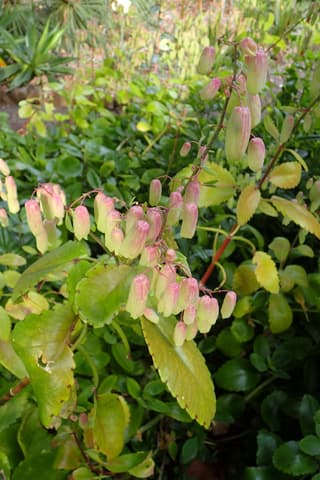
Cathedral Bells
Kalanchoe pinnata
Kalanchoe pinnata, also known as Cathedral Bells, Air Plant, or Miracle Leaf, is a succulent perennial native to Madagascar and naturalized throughout the tropics worldwide. Its botanical synonym is Bryophyllum pinnatum. The plant is celebrated for its remarkable ability to produce tiny plantlets along the serrated edges of its leaves — a phenomenon known as vivipary. Pendant red-orange flowers appear in late winter and spring. Kalanchoe pinnata has a long history of use in traditional medicine across tropical cultures, most notably for the treatment of kidney stones.
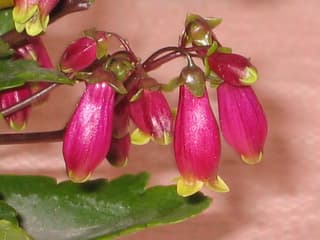
Pearl Bells
Kalanchoe porphyrocalyx
Kalanchoe porphyrocalyx, commonly called Pearl Bells or the pendent kalanchoe, is a succulent species in the family Crassulaceae native to the rainforests of central and north-eastern Madagascar, where it often grows epiphytically. It forms slender, upright stems bearing blue-grey, rectangular leaves with gently serrated edges. In late winter through spring it produces pendent, bell-shaped flowers with a tube in shades of red, rose-pink or pale yellow topped by yellow-green to orange petals, all held within a distinctive purple calyx -- the source of its species name porphyrocalyx ("purple calyx").

Paddle Plant
Kalanchoe thyrsiflora
Kalanchoe thyrsiflora is a striking succulent native to South Africa, prized for its large, flat, paddle-shaped leaves that form a neat basal rosette. The fleshy grey-green leaves develop vivid red margins when exposed to full sun and cool temperatures. A monocarpic species, it produces a tall flowering stalk with sweetly scented yellow-white tubular flowers in late winter to spring, after which the main rosette dies but produces offsets.
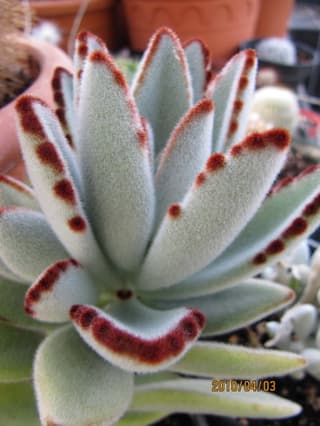
Panda Plant
Kalanchoe tomentosa
The Panda Plant (Kalanchoe tomentosa) is an ornamental succulent native to Madagascar, celebrated for its oval leaves densely covered in soft silver-white felt with distinctive brown or reddish tips — giving it an unmistakable panda-like appearance. Belonging to the Crassulaceae family, it grows slowly and compactly, reaching up to 45 cm in height. The tiny hairs (trichomes) coating its leaves are not merely decorative: they act as thermal insulation and dramatically reduce water loss, making this plant exceptionally drought-tolerant and resilient.
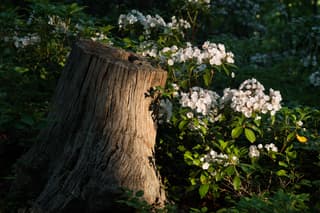
Mountain Laurel
Kalmia
Kalmia is a small genus of broadleaf evergreen shrubs native to eastern North America, best known through Kalmia latifolia, the showy mountain laurel of Appalachian woodlands. Clusters of saucer-shaped white-to-pink-to-purple flowers with intricate spring-loaded anthers open in late spring, set against glossy, leathery leaves. Every part of the plant contains grayanotoxins and is dangerously toxic if ingested.
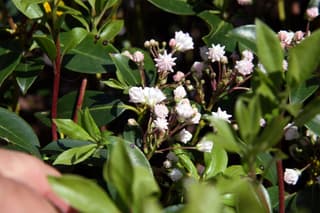
Mountain Laurel
Kalmia latifolia
Mountain laurel is a dense, rounded evergreen shrub native to the eastern United States, prized for its striking clusters of cup-shaped flowers that bloom in late spring. Its glossy, leathery leaves provide year-round structure, while the saucer-shaped pink, white, or purple-marked blooms attract pollinators. Despite its beauty, every part of the plant is highly toxic, so it is best admired at a safe distance from pets and children.
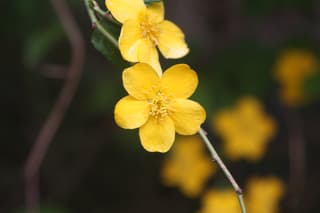
Japanese Kerria
Kerria japonica
Japanese Kerria (Kerria japonica) is a deciduous shrub native to the mountainous regions of China and Japan. It is celebrated for its brilliant golden-yellow flowers that bloom profusely in spring, covering its arching, bright green stems. A highly adaptable and low-maintenance plant, it thrives in shaded gardens and tolerates cold winters down to USDA Zone 4.

Sausage tree
Kigelia africana
The Sausage tree (Kigelia africana) is an impressive tropical tree from the Bignoniaceae family, native to sub-Saharan Africa, where it grows along riverbanks, in savannas, and open woodlands. It earned its common name from its striking, woody fruits that resemble hanging sausages in both shape and size—reaching lengths of over 50 cm and weighing up to 10 kg. In the wild, it grows to a height of 10 to 18 meters with a wide, spreading canopy. Its nocturnal, deep red to purple flowers have an unpleasant scent to attract bats, which are its primary pollinators. While raw fruits are toxic to humans, they are traditionally used in folk medicine and beverage preparation after fermentation, roasting, or drying. In temperate climates, Kigelia is grown exclusively as an indoor or greenhouse plant in its youth, as it does not tolerate frost.
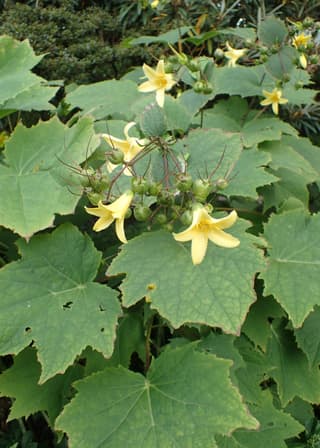
Yellow Wax Bells
Kirengeshoma palmata
Yellow Wax Bells (Kirengeshoma palmata) is a clump-forming, deciduous perennial in the hydrangea family (Hydrangeaceae), native to woodland environments in Japan and eastern China. It forms 24–48 inch high, shrub-like mounds with dark burgundy stems and large, maple-like, palmate leaves. In late summer and early autumn, it bears clusters of nodding, waxy, bell-shaped flowers in a soft yellow hue, later followed by characteristic three-pronged seed capsules.

Kleinia
Kleinia
Kleinia is a genus of perennial succulents in the Asteraceae family, closely allied to Senecio. Native to the Canary Islands, North Africa, and parts of Asia, the genus comprises around 56 species featuring fleshy stems, silvery-blue foliage, and ornamental summer flowers. It is a low-maintenance plant ideal for rock gardens, dry borders, and container growing.
Succulent Bush Senecio
Kleinia barbertonica
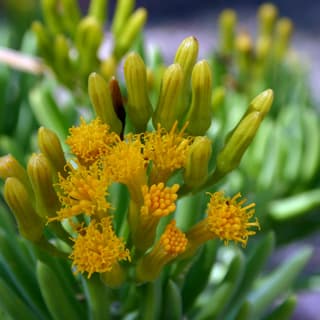
Kleinia barbertonica, commonly known as Succulent Bush Senecio or Barberton Groundsel, is a fast-growing, shrubby succulent native to South Africa and Eswatini. It forms a dense, rounded bush of upright, blue-green cylindrical stems that resemble narrow fingers, topped with clusters of bright yellow-orange, citrus-scented flowers in winter. Highly drought-tolerant and low-maintenance, it thrives in bright sun and well-draining soil, making it a popular choice for xeriscaping, rock gardens, and container growing.

Trailing Jade
Kleinia petraea
Kleinia petraea, commonly known as Trailing Jade, is a low-growing succulent in the daisy family (Asteraceae), native to the highlands of Kenya and Tanzania in East Africa. Long known in cultivation under its older name, Senecio jacobsenii, it forms dense mats of fleshy, egg-shaped leaves on trailing stems that cascade up to 4 feet (120 cm) over the edge of a hanging basket or container. The foliage is bright green but develops purple, mauve, or bronze tones when grown in strong light or under drought stress, and in fall or winter mature plants may send up erect stalks bearing clusters of bright orange, rayless flowers.
Field Scabious
Knautia arvensis
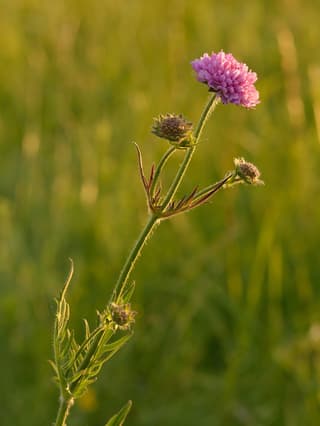
Field Scabious is a perennial meadow herb from the honeysuckle family (Caprifoliaceae), growing to a height of 30 to 150 cm. Its upright, slightly grooved stem bears grey-green, dull leaves with lyre-shaped to pinnately lobed blades. From May to September, blue to pinkish-purple flowers appear, clustered into conspicuous, approximately 4 cm large flower heads. It grows in meadows, field margins, and light woodlands, where it prefers drier, calcareous soils from lowlands to mountainous regions. It is an important honey plant and a host plant for many species of butterflies and beetles.
Red Hot Poker (genus)
Kniphofia
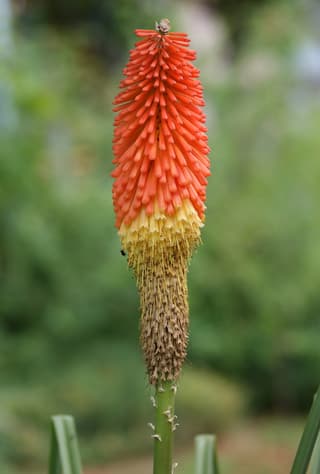
Kniphofia is a genus of herbaceous perennial plants native to Africa, famous for their tall, torch-like flower spikes in shades of red, orange, and yellow. Commonly called Red Hot Poker or Torch Lily, they are prized in ornamental gardens for their drought tolerance and spectacular late-season blooms.
Red Hot Poker
Kniphofia uvaria
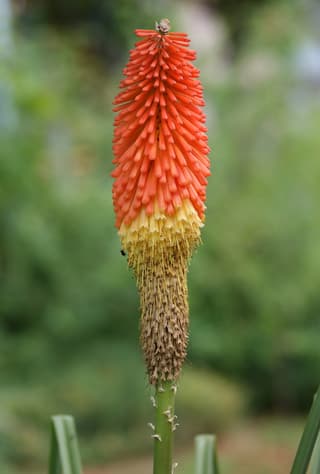
Kniphofia uvaria, commonly known as Red Hot Poker or Torch Lily, is a striking herbaceous perennial native to South Africa. Its bold torch-like flower spikes display vivid shades of red, orange, and yellow, making it one of the most visually dramatic plants in the garden. Drought-tolerant and low-maintenance once established, it thrives in sunny, well-drained beds and borders.
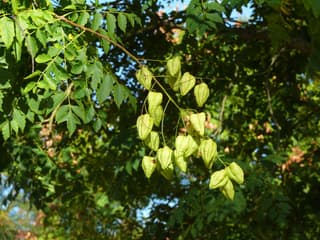
Golden Rain Tree
Koelreuteria paniculata
Koelreuteria paniculata, commonly known as the Golden Rain Tree, is a deciduous ornamental tree native to China, Korea, and Japan. It is celebrated for its spectacular cascading panicles of bright yellow flowers in midsummer and its distinctive papery, lantern-like seed pods that turn from green to pinkish-bronze in late summer and persist through winter, providing multi-season interest.
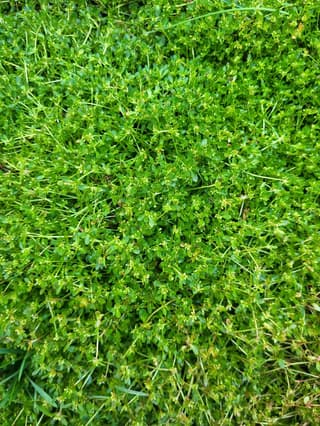
Koenigia (Iceland-Purslane)
Koenigia
Koenigia is a genus of annual and perennial herbs in the buckwheat family (Polygonaceae), expanded in 2015 to absorb the former genera Aconogonon and part of Persicaria, giving it roughly 41 species. Its type species, Koenigia islandica (Iceland-purslane), is one of the smallest flowering plants on Earth, standing only 1-2 cm tall, and is considered the hardiest annual plant known, thriving on wet gravel and scree in arctic tundra and alpine meadows across the Northern Hemisphere. Other species absorbed into the genus form larger, spreading knotweed-type herbs. Because the genus spans such extremes of size and habit, this record generalizes care from the wet, cold, open habitats typical of the group.
Find the Perfect Plant
Our plant guide helps you find ideal species for your experience level and time of year.
Browse by Difficulty, Season & More
Use the filters below to narrow this catalog by care difficulty, season, environment, or search directly by name. Each filter leads to a focused list tailored to your specific growing conditions.