Complete Plant Guide
Explore plants by difficulty, season and more. Find the perfect plant for you.
Difficulty
Categories
Plants by City
🗺️ Plants by City3478 plants found
Showing 1837-1872 of 3478
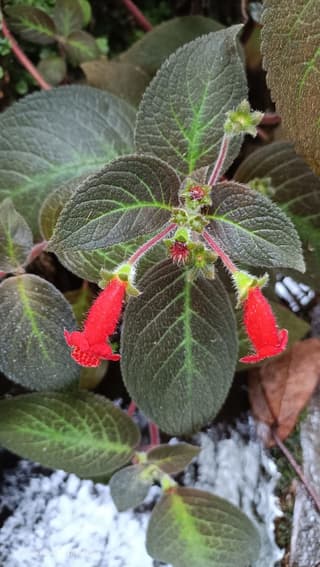
Tree Gloxinia
Kohleria amabilis
Kohleria amabilis, known as the tree gloxinia, is a rhizomatous perennial in the Gesneriaceae family native to Colombia and Honduras. It features velvety, silver-patterned oval leaves and nodding tubular flowers that are pink outside with red or purple spotting inside, blooming from late winter through summer.
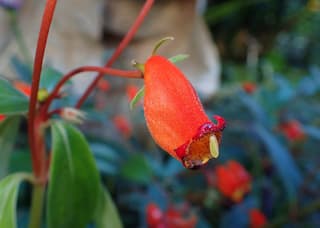
Tree Gloxinia
Kohleria eriantha
Kohleria eriantha (often treated today as a synonym of Kohleria hirsuta) is a rhizomatous (scaly-rooted) perennial from the Gesneriaceae family—the same family as the African violet—native to the tropical mountain cloud forests of South America, primarily Colombia and Ecuador. Its velvety, hairy leaves and tubular, orange-red flowers with yellow-spotted throats that bloom from summer to fall make it a popular potted houseplant. Due to its rhizomes, it tolerates drought better than persistently waterlogged soil.
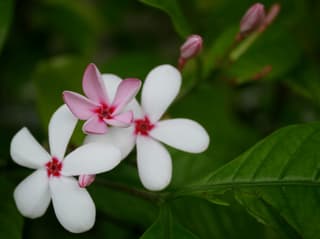
Pink Kopsia
Kopsia fruticosa
Kopsia fruticosa, commonly known as Pink Kopsia or Shrub Vinca, is a tropical evergreen shrub in the Apocynaceae family, native to Southeast Asia (Malaysia, Indonesia, Thailand, and surrounding regions). Renowned for its year-round display of soft pink flowers with a striking red center, it is a prized ornamental plant in tropical and subtropical gardens. Its glossy, leathery leaves and compact upright habit make it equally suitable for garden beds, hedges, and container growing.
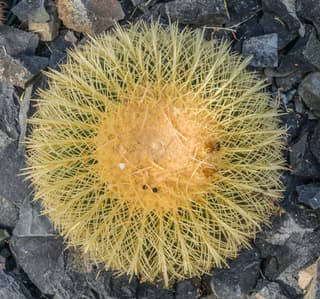
Golden Barrel Cactus
Kroenleinia grusonii
The Golden Barrel Cactus (Kroenleinia grusonii, synonym Echinocactus grusonii) is a globose cactus native to central Mexico, belonging to the Cactaceae family. It is recognizable by its spherical, ribbed body covered with dense golden spines (a white-spined variety also exists) which, with age, can take on a more oblong shape, exceeding one meter in height. It grows very slowly and can live for decades; in nature, it is considered endangered due to poaching and dam construction in its original habitat.
Black Ironwood
Krugiodendron ferreum
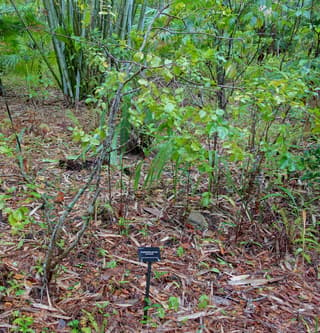
Black Ironwood (Krugiodendron ferreum) is a tree native to South Florida, the Caribbean, and Central America, belonging to the Rhamnaceae family. Famous for having the densest wood in the Americas—with a density of up to 1.42 g/cm³, so heavy that it sinks in water—it is a slow-growing and extremely long-lived species. It features opposite, leathery, oval leaves with an emarginate apex, persisting on the branches for two to three years. The flowers are small, greenish, and inconspicuous; the fruits are dark purple drupes, favored by birds and wild mammals. It grows in rocky limestone environments, dry forests, and coastal hammocks, tolerating intense drought, salt spray, and hurricane-force winds.
Sheathed Woodtuft
Kuehneromyces mutabilis
The Sheathed Woodtuft (Kuehneromyces mutabilis) is an excellent edible mushroom that grows in clusters on the stumps of deciduous trees. Its cap is hygrophanous, meaning it changes color based on moisture levels: it is yellowish-brown when wet and turns lighter in the center as it dries. The stem features a ring, below which are small dark scales; this is a critical identifying feature to distinguish it from the deadly poisonous Funeral Bell (Galerina marginata).
Scotch laburnum
Laburnum alpinum
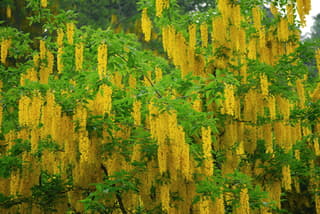
Laburnum alpinum, commonly known as Scotch laburnum or Alpine golden chain, is a small deciduous tree in the family Fabaceae, native to the mountains of central and southern Europe. It is celebrated for its exceptionally long, pendulous racemes of fragrant yellow flowers in late spring. IMPORTANT: All parts of the plant are severely toxic due to the alkaloid cytisine, particularly the seeds, which can cause life-threatening poisoning in humans, dogs, cats, and horses.
Common Laburnum
Laburnum anagyroides
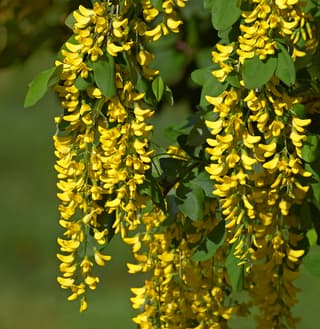
The Common Laburnum (Laburnum anagyroides) is a small, deciduous tree native to the mountainous regions of Central and Southern Europe (the Alps, Italy, the Balkans). It is known for both its toxic content and its stunning spring bloom: in May–June, it is covered with long, pendulous clusters of fragrant, golden-yellow flowers. All parts of the plant—roots, bark, leaves, flowers, seeds, pods—are highly poisonous; it contains the alkaloid cytisine, which can be fatal to humans, cats, dogs, horses, and goats alike. For adults, consuming just 15–20 seeds can be fatal. Despite its exceptional ornamental value, it must be kept at a safe distance from children and animals.
Deceiver
Laccaria laccata
The Deceiver (Laccaria laccata) is an extremely variable mushroom commonly found in various forest types. The name 'Deceiver' refers to the fact that this species can look different every time depending on the moisture level (hygrophanous), which often leads to it being confused with other small brown mushrooms. It forms an essential mycorrhizal symbiosis with the roots of both deciduous and coniferous trees, aiding in nutrient uptake for the tree.
Cape Cowslip
Lachenalia
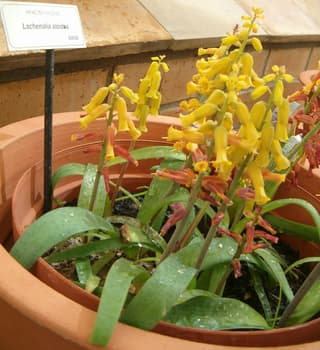
Lachenalia is a genus of roughly 130 winter-growing bulbous species native almost exclusively to the winter-rainfall regions of South Africa's Western and Northern Cape, with a few extending into Namibia. Commonly known as Cape cowslips or Cape hyacinths, these small bulbs produce strap-shaped, often mottled leaves and dense spikes of tubular, waxy flowers in vivid yellows, oranges, reds, pinks, greens and purples between late winter and early spring. This profile covers general genus-level care guidance applicable across most Lachenalia species and hybrids rather than a single species, since care needs are broadly consistent across the genus.
False saffron milkcap
Lactarius deterrimus
Lactarius deterrimus, commonly known as the false saffron milkcap, is a fungus that forms a symbiotic mycorrhizal relationship with spruce trees. It is characterized by its orange-colored cap that develops green stains as it ages or is bruised. When cut, the mushroom exudes an orange latex that turns wine-red after several minutes. It is a popular edible mushroom in Europe, though it has a slightly bitter aftertaste compared to the true saffron milkcap.
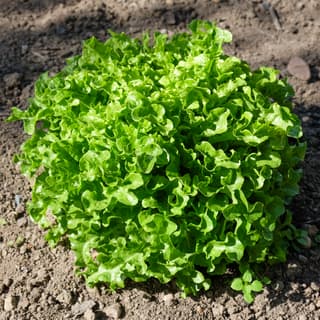
Iceberg lettuce
Lactuca sativa
Lactuca sativa, specifically the Iceberg variety, is characterized by its light green, extremely crisp leaves that grow in a compact, rounded head similar to a cabbage. It is widely valued in culinary arts for its firm texture and post-harvest heat resistance.
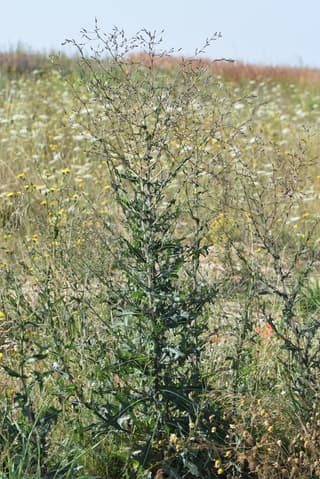
Prickly Lettuce
Lactuca serriola
Lactuca serriola, commonly known as Prickly Lettuce, is an annual or biennial herb native to Europe and the Mediterranean region. It grows vigorously in open disturbed ground, roadsides, and field margins, reaching up to 2 metres tall. The plant produces pale yellow daisy-like flowers from summer through early autumn and is notable for leaves that align north-south, earning it the name "compass plant." Its milky latex, known as lactucarium, has been used medicinally for centuries.

Wild Lettuce
Lactuca virosa
Lactuca virosa, commonly known as Wild Lettuce or Opium Lettuce, is a biennial herb native to central and southern Europe. Reaching up to 2 metres in height, it produces a rosette of leaves in its first year before sending up a tall flowering stalk in its second. The plant exudes a milky white latex when cut, known historically as lactucarium, and has been used for centuries as a mild sedative and analgesic. Its yellow flowers bloom in summer, attracting pollinators. Despite its common name, it contains no true opiates but does produce bitter compounds — lactucin and lactucopicrin — that act on the nervous system.
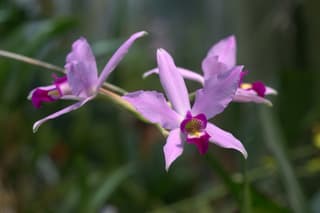
Laelia Orchid
Laelia
Laelia is a genus of epiphytic orchids in the family Orchidaceae, native to Mexico, Central America and the mountainous highlands of Brazil. Species form elongated pseudobulbs that store water and nutrients, each bearing one to a few leathery leaves and an upright spike of showy pink, purple or white flowers. Closely related to Cattleya, Laelia orchids are prized by growers for their toughness and spectacular blooms.
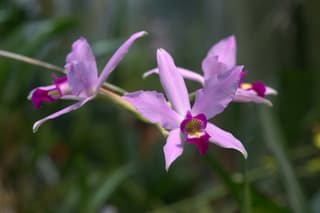
Two-edged Laelia
Laelia anceps
Laelia anceps is an epiphytic orchid from the Orchidaceae family, native to eastern Mexico (rarely Honduras and Guatemala), where it grows on trees in oak-pine forests and coffee plantations at altitudes of 500 to 2,400 meters. It produces ovoid, flattened pseudobulbs (6-12 cm) with one, rarely two, stiff leathery leaves. A long (45-60 cm) flower spike emerges from the base of the pseudobulb, bearing 2 to 4 fragrant flowers 6-12 cm in diameter, ranging in color from lavender to pink, purple, and white. It blooms from November to January. It is one of the most cold-hardy species in the Cattleya alliance, tolerating short-term temperatures just above freezing as well as summer heat exceeding 35°C.
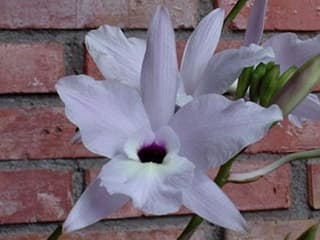
Rosy Tinted Laelia
Laelia rubescens
Laelia rubescens is an epiphytic or lithophytic orchid native to Mexico and Central America, found in seasonally dry deciduous forests at elevations between 100 and 1700 meters. It produces compact pseudobulbs and delicate flowers in shades of white, pink, and lavender with a red-brown blotch on the lip, blooming primarily in autumn and winter.
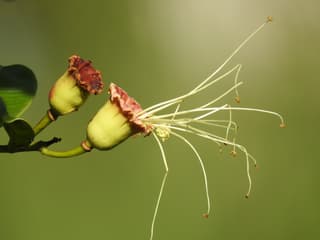
Thimble Tree
Lafoensia pacari
The Thimble Tree (Lafoensia pacari) is a native tree of the Brazilian Cerrado (savanna), belonging to the Lythraceae family. It is a medium to large deciduous tree reaching 5–18 meters tall, with a trunk 30–60 cm in diameter. Its spectacular spring and summer blooms feature large, fringed white flowers with long stamens. Highly valued in traditional Cerrado medicine, it is also widely used in urban landscaping and riparian forest restoration across Brazil.
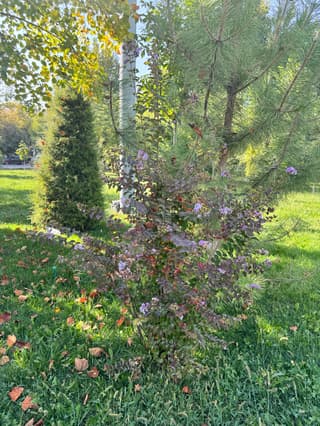
Crepe Myrtle
Lagerstroemia indica
Lagerstroemia indica, commonly known as Crepe Myrtle, is a small tree or large shrub native to Asia. It is widely cultivated in tropical and temperate climates due to its spectacular flowering that occurs in summer and fall. Its flowers have crinkled and delicate petals, resembling crepe paper. In addition to the flowers, it stands out for its smooth, light-colored trunk that peels to reveal brown tones, providing ornamental interest even in winter when the plant loses its leaves.
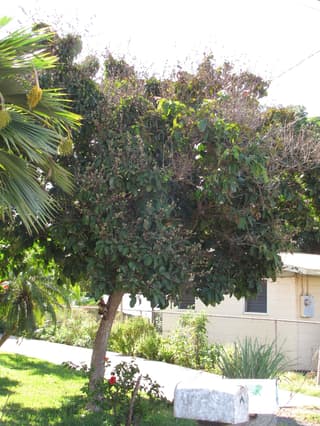
Queen's Crape Myrtle
Lagerstroemia speciosa
The Queen's Crape Myrtle is a fast-growing, deciduous flowering tree native to tropical and subtropical Asia, prized for its large panicles of crinkled pink, purple, or lavender flowers that bloom through summer and into fall. Reaching up to 18 meters tall in the landscape, it also produces smooth, peeling gray bark and woody seed capsules that persist into winter. Its leaves are the source of banaba tea, a traditional folk remedy.
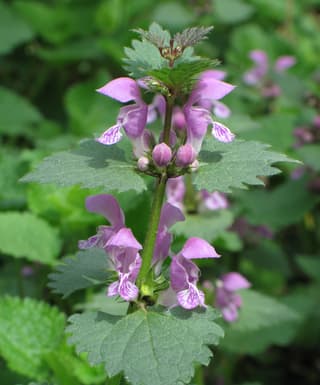
Dead Nettle
Lamium
Lamium is a genus of low-growing plants in the family Lamiaceae, commonly called dead nettle for their nettle-like leaves that lack stinging hairs. Widely used as ground cover in shaded gardens.
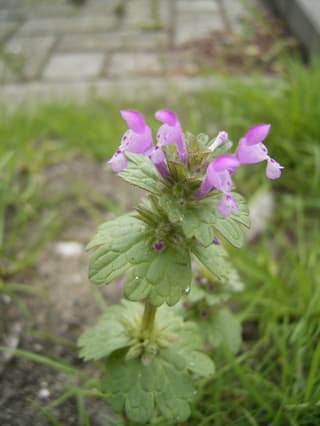
Henbit Dead-nettle
Lamium amplexicaule
Lamium amplexicaule, commonly known as henbit dead-nettle, is a low-growing winter annual in the mint family (Lamiaceae), native to Europe and Asia and now naturalized across North America. It forms mats of scalloped, rounded leaves that clasp the stem, topped by small tubular pink-purple flowers in early spring. Despite its nettle-like appearance, henbit has no stinging hairs and is completely harmless to touch. It thrives in disturbed soils, garden beds, and lawns, often being one of the first plants to flower in late winter.
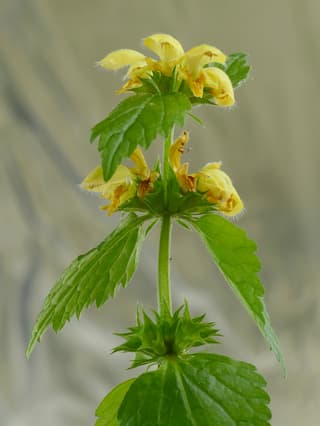
aluminium plant
Lamium galeobdolon
Lamium galeobdolon, commonly known as Yellow Archangel, is a vigorous perennial groundcover. It is distinguished by its striking variegated leaves, which often feature silver-metallic patterns that give it the nickname 'aluminium plant' in some regions. In late spring, it produces upright spikes of hooded, bright yellow flowers. It is exceptionally hardy and thrives in the deep shade of woodland gardens where other plants struggle to grow.
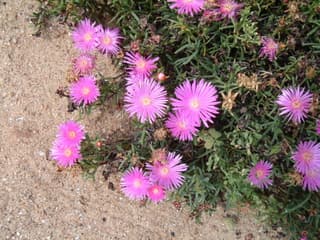
Purple Ice Plant
Lampranthus productus
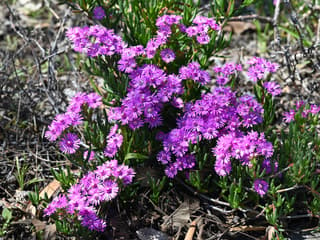
Lampranthus productus, commonly known as Purple Ice Plant, is a trailing succulent groundcover native to South Africa, belonging to the family Aizoaceae. It is celebrated for its spectacular magenta-purple daisy-like flowers with white centers that bloom profusely in winter and spring, covering the fleshy blue-green foliage entirely. Exceptionally drought-tolerant, heat-resistant, and capable of withstanding coastal salt air and wind, it is widely planted on slopes, banks, and sunny gardens throughout Mediterranean climates worldwide.
Trailing Ice Plant
Lampranthus spectabilis
Lampranthus spectabilis, commonly called the trailing ice plant, is a low-growing succulent groundcover native to South Africa. Grown for its dazzling display of daisy-like magenta, pink, or purple flowers that open only in full sun, this mat-forming perennial thrives in poor, sandy soil and coastal conditions. Its fleshy, glistening leaves store water, making it highly drought tolerant once established.
Lantana
Lantana × strigocamara
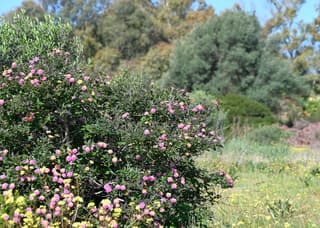
Lantana × strigocamara is a vigorous garden hybrid between Lantana camara and L. strigocamara, naturalized widely across tropical and subtropical regions worldwide. This evergreen shrub produces dense clusters of small tubular flowers that famously change color as they mature — from yellow or orange to red or pink — creating a multicolored display on a single flower head. A sun-loving, drought-tolerant plant, it is a favorite for butterfly gardens, borders, and containers. It is often confused with its parent species Lantana camara, from which it differs in subtle morphological details. Note: all plant parts are toxic to humans, cats, dogs, and livestock.
Common Lantana
Lantana camara
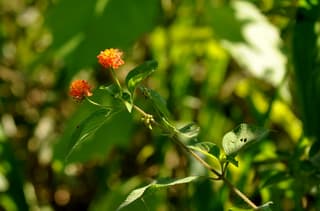
Lantana camara is a tropical perennial shrub native to the American tropics, widely cultivated worldwide as an ornamental plant. Its small clusters of multicolored flowers — ranging from red, orange, and yellow to pink and white — attract butterflies and hummingbirds. While valued for its vibrant beauty and tolerance to heat and drought, Lantana is considered invasive in many tropical and subtropical regions outside its native range, and all parts of the plant are toxic to humans and pets.
Trailing Lantana
Lantana montevidensis
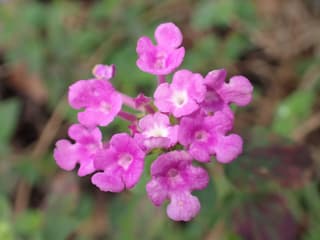
Trailing Lantana (Lantana montevidensis) is a sprawling, perennial groundcover native to South America (Brazil, Uruguay, Argentina). It produces clusters of small purple-violet flowers in rounded umbels from spring through fall, making it a favorite for slopes, hanging baskets, and dry landscapes. Exceptionally drought-tolerant once established, it thrives in hot, sunny conditions with minimal care.
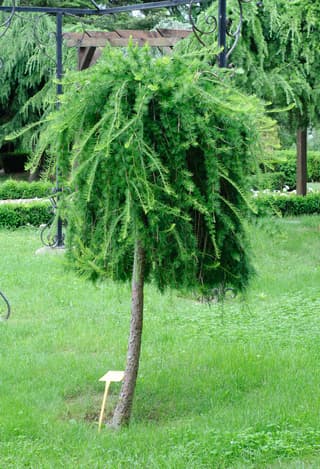
European Larch
Larix decidua
European Larch (Larix decidua) is a deciduous coniferous tree species from the pine family (Pinaceae), native to the mountains of Central Europe – the Alps and Carpathians. As one of the few conifers, it sheds its soft, bright green needles, gathered in bundles, in winter, which turn golden-yellow in autumn. It can reach heights of 30-45 m and is one of the fastest-growing coniferous trees in temperate climates, growing up to 60 cm annually when young. It is a pioneer species, exceptionally frost-hardy (USDA zones 2-6), and long-lived – some specimens in Europe reach an age of up to 500 years. Larch wood is very durable and valued in construction and carpentry.
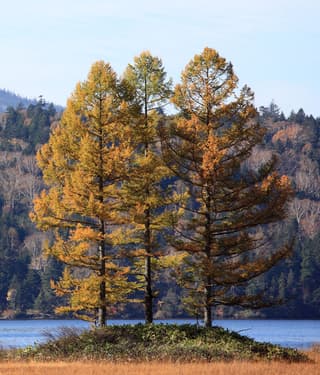
Japanese Larch
Larix kaempferi
The Japanese larch is a deciduous conifer native to the mountains of central Honshu, Japan. Unlike most conifers, it sheds its soft, light-green needles each autumn, first turning a striking golden-yellow to orange-red. It grows into a pyramidal tree, reaching large size in landscape cultivation, and is also a popular subject for bonsai.
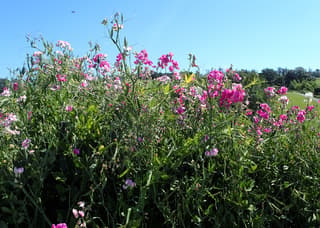
Everlasting Pea
Lathyrus latifolius
Lathyrus latifolius, commonly known as Everlasting Pea or Perennial Sweet Pea, is a vigorous climbing perennial native to Europe and North Africa. It produces showy pea-like flowers in shades of pink, white, rose, and purple from midsummer through fall, making it ideal for covering fences, trellises, and walls. Unlike the annual sweet pea, it is unscented but returns reliably year after year. Note: seeds are toxic and can cause lathyrism if consumed in large quantities.
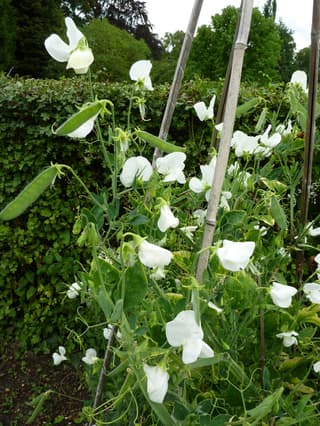
Sweet Pea
Lathyrus odoratus
Sweet Pea (Lathyrus odoratus) is an annual climbing plant native to the Mediterranean region, particularly Sicily and southern Italy. Celebrated for its intensely fragrant flowers in shades of pink, purple, white, red, and lilac, it is a beloved cottage garden classic and a favorite for cut flower arrangements. It blooms abundantly from spring through early summer and thrives in cool weather conditions.
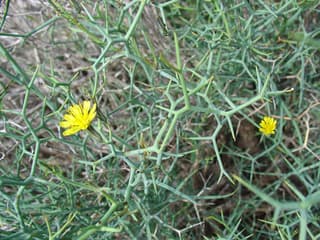
Zig-zag bush
Launaea arborescens
A woody and thorny shrub, reaching up to 1 m in height, native to North Africa, southern Spain (primarily Almeria and Murcia), and the Canary Islands. It is characterized by glaucous-green, waxy branches that are highly branched in a zigzag pattern (divaricate growth), ending in rigid, sharp tips as a defense against herbivores. Leaves are sparse, fleshy, and inconspicuous, and the entire stem secretes a milky latex when broken. The flower heads are small and terminal, with light yellow florets similar to a miniature dandelion. It grows in arid scrublands, stony slopes, and dry riverbeds, from sea level up to approximately 800 m in altitude.
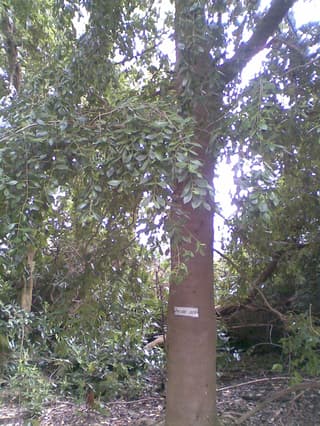
Chilean Laurel
Laurelia sempervirens
The Chilean laurel (Laurelia sempervirens) is an aromatic evergreen tree endemic to the temperate rainforests of Chile, where it can reach heights of up to 30 meters. Its opposite, leathery leaves with serrated edges, along with its smooth yellowish bark, distinguish it within the Valdivian forest. It produces small greenish-yellow flowers in early summer and dry fruits (achenes) dispersed by the wind.
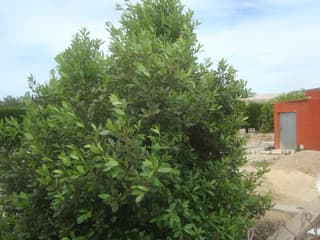
Bay Laurel
Laurus nobilis
Bay Laurel (Laurus nobilis) is a slow-growing, evergreen tree or large shrub native to the Mediterranean region. Prized for its aromatic, leathery leaves, it has been cultivated for millennia for culinary, medicinal, and ornamental purposes. In the wild it can reach up to 12 metres, but in gardens and containers it is usually kept much smaller through regular pruning and topiary.
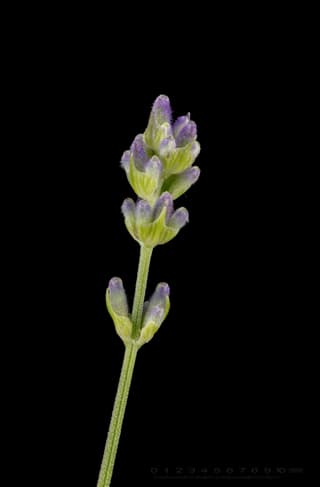
Lavender
Lavandula
Lavandula is a genus of aromatic flowering plants in the family Lamiaceae, native to the Mediterranean region, the Middle East, and northern Africa. Best known for its distinctive purple-blue flower spikes and calming fragrance, lavender is one of the world's most cultivated plants, prized for ornamental, medicinal, and aromatic uses. The most widely grown species is Lavandula angustifolia (English lavender). Lavender is a hardy, drought-tolerant, evergreen subshrub that thrives in full sun and well-drained, lean soils.
Find the Perfect Plant
Our plant guide helps you find ideal species for your experience level and time of year.
Browse by Difficulty, Season & More
Use the filters below to narrow this catalog by care difficulty, season, environment, or search directly by name. Each filter leads to a focused list tailored to your specific growing conditions.