Complete Plant Guide
Explore plants by difficulty, season and more. Find the perfect plant for you.
Difficulty
Categories
Plants by City
🗺️ Plants by City3478 plants found
Showing 1873-1908 of 3478
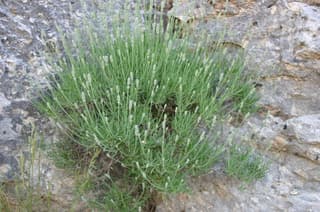
English Lavender
Lavandula angustifolia
English Lavender (Lavandula angustifolia) is a fragrant perennial shrub native to the Mediterranean region of Europe. Beloved worldwide for its distinctive purple flower spikes and calming scent, it is one of the most widely cultivated aromatic plants, used in cosmetics, aromatherapy, culinary arts, and traditional medicine.
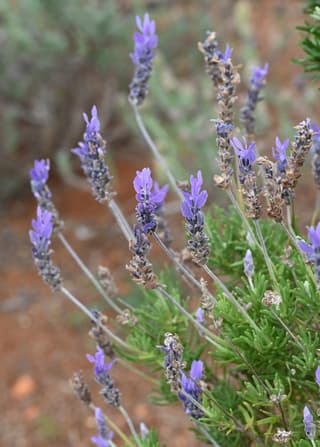
French Lavender
Lavandula dentata
Lavandula dentata, commonly known as French Lavender or Fringed Lavender, is an aromatic evergreen shrub native to the Mediterranean region. It is recognized by its distinctive grey-green toothed leaves and tall purple bottlebrush flower spikes topped with sterile bracts. Highly drought-tolerant, fast-growing, and long-lived, it thrives in full sun with well-draining soil and is prized for its ornamental value, fragrance, and medicinal properties.
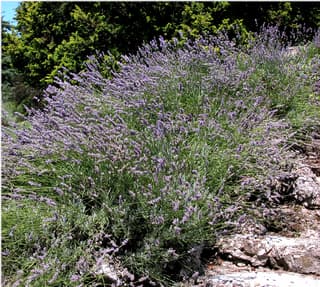
Spike Lavender
Lavandula latifolia
Spike lavender is a bushy, evergreen Mediterranean sub-shrub native to Spain, Portugal and southern France. Compared to English lavender, it has broader, grey-green leaves and single, unbranched flower spikes carried on tall stems. It produces the most potent, camphor-rich essential oil of all lavenders and is one of the two parent species used to create lavandin hybrids.
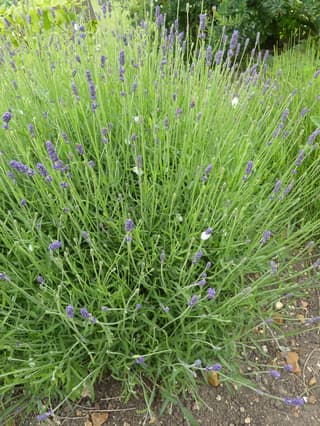
Lavender
Lavandula sp
Lavender (Lavandula sp) is a perennial aromatic shrub from the Lamiaceae family, native to the Mediterranean region. Celebrated for its distinctive fragrance and vibrant purple blooms, it is widely cultivated for ornamental, medicinal, and essential oil production. It thrives in hot, dry climates and is one of the most beloved aromatic plants in the world.
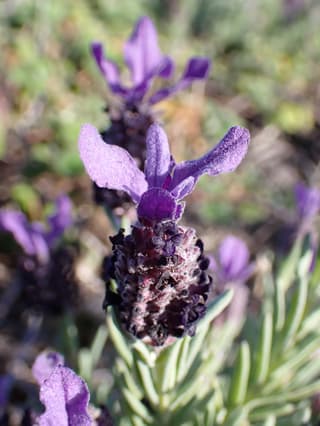
Spanish Lavender
Lavandula stoechas
Spanish Lavender (Lavandula stoechas) is a compact Mediterranean shrub known for its distinctive purple bracts resembling rabbit ears atop each flower spike. Its silvery, fragrant foliage resembles rosemary. Highly drought-tolerant once established, it thrives in full sun gardens and containers.
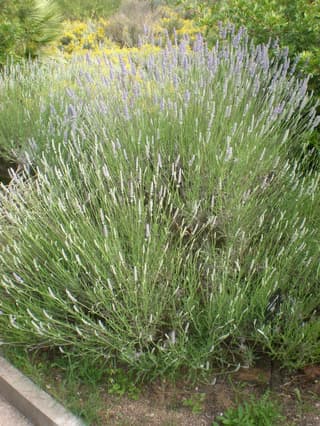
Lavandin
Lavandula x intermedia
Lavandin (Lavandula x intermedia) is a sterile hybrid between English lavender (L. angustifolia) and spike lavender (L. latifolia), widely grown across Provence for essential oil production and as a garden ornamental. It forms an aromatic, gray-green shrub with tall purple flower spikes from midsummer to early fall, attracting bees and butterflies.
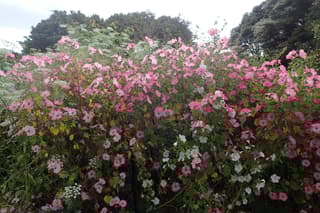
Rose Mallow
Lavatera trimestris
Lavatera trimestris, commonly known as Rose Mallow or Annual Mallow, is a fast-growing annual plant native to the Mediterranean region. It produces an abundance of large, saucer-shaped flowers in shades of white, pink, and deep rose throughout summer and fall. Growing up to 3-4 feet tall, it is a stunning addition to cottage gardens and borders.
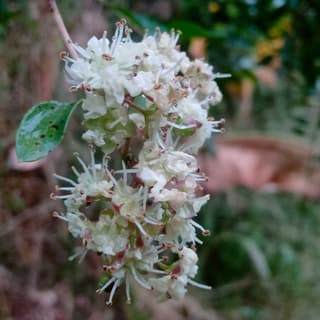
Henna
Lawsonia inermis
Henna (Lawsonia inermis) is a fast-growing evergreen shrub native to North Africa, the Middle East, and South Asia. It can reach up to 7 meters in height in its natural habitat, with dense branches that develop thorns in mature specimens. Its small flowers, with a scent similar to tea rose, bloom in spring and summer in shades of white, cream, and pink. It is world-renowned for the reddish dye contained in its leaves, lawsone, used for millennia to decorate skin, hair, and nails. In addition to its enormous cosmetic and cultural value, the plant possesses well-documented medicinal properties. It thrives in warm climates, well-drained soils, and full sun, and is highly drought-tolerant once established.
Brown Birch Bolete
Leccinum scabrum
The Brown Birch Bolete (Leccinum scabrum) is a widespread and highly regarded edible mushroom belonging to the Boletaceae family. It features a grayish-brown to dark brown cap that is slightly sticky to the touch, and a characteristic white stem covered in dark scales. This fungus grows in symbiosis with birch trees, forming a mycorrhizal relationship with them.
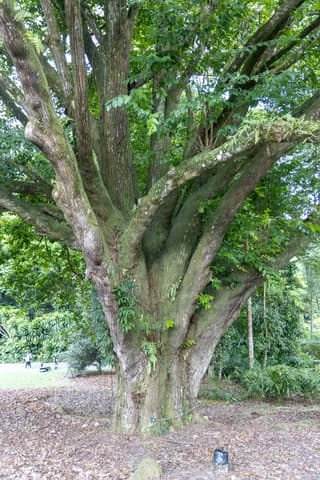
Paradise Nut
Lecythis pisonis
Lecythis pisonis, commonly known as the Paradise Nut or Monkey Pot, is a majestic tropical tree in the family Lecythidaceae, native to the Brazilian Atlantic Forest and Amazon rainforest. It is famous for its distinctive urn-shaped wooden fruit pods — the "monkey pots" — from which monkeys extract the edible seeds. The tree can reach up to 40 meters tall in forest conditions. Its seeds are similar to Brazil nuts but with a softer, creamier texture and milder flavor.
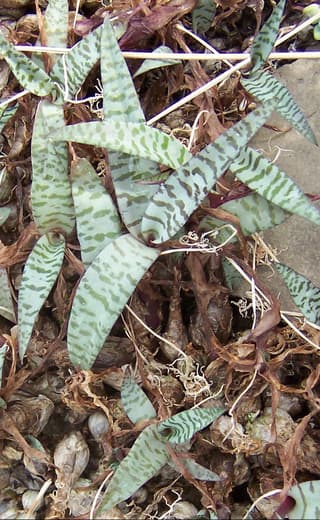
Silver Squill
Ledebouria
Ledebouria is a genus of roughly 65 species of bulbous perennial herbs in the subfamily Scilloideae (family Asparagaceae), most of which were formerly classified within Scilla. Native mainly to sub-Saharan Africa, with South Africa as the center of diversity, these geophytes form basal rosettes of lance-shaped leaves, frequently patterned with silver, purple, or green mottling, growing from teardrop-shaped bulbs that sit partly above the soil surface. The most widely cultivated species, Ledebouria socialis (silver squill/leopard lily), is prized as a low-maintenance houseplant for its decorative variegated foliage.
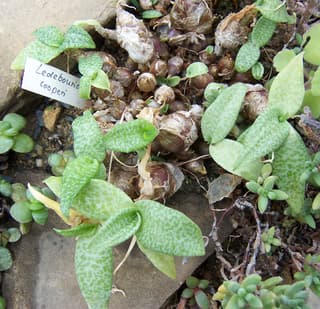
Cooper's False Scilla
Ledebouria cooperi
Ledebouria cooperi is a charming deciduous bulbous perennial native to South Africa. It produces narrow, lance-shaped leaves adorned with distinctive purple spots and stripes on an olive-green background, growing up to 25 cm tall. In spring and summer, it sends up graceful drooping racemes of small, star-shaped pink to lilac flowers. This low-maintenance bulb forms dense colonies through underground stolons and is prized as both a houseplant and garden specimen.
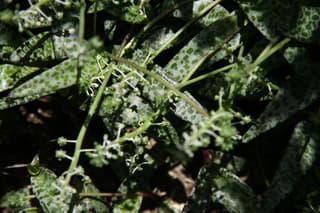
Silver Squill
Ledebouria socialis
Ledebouria socialis, commonly known as Silver Squill, is a charming bulbous houseplant native to the Eastern Cape of South Africa. It features striking lance-shaped leaves with silvery-green spotting on a purple-flushed underside, giving it a leopard-like pattern. The exposed teardrop-shaped bulbs sit above the soil surface, and in spring and summer it sends up delicate pink-and-green flower spikes. It is a remarkably low-maintenance plant that thrives on neglect, making it an ideal choice for beginner plant enthusiasts.
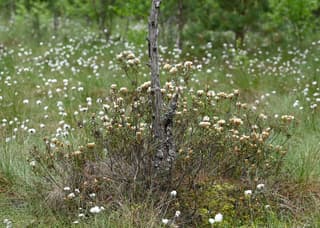
Marsh Labrador Tea
Ledum palustre
Marsh Labrador Tea (Ledum palustre, syn. Rhododendron tomentosum) is a characteristic low-growing evergreen shrub of peat bogs, marshes, and coniferous forests in the Northern Hemisphere. Its leathery leaves, which curl back at the edges, have a dense, rusty-brown felt-like indumentum on their undersides, distinguishing it from similar rhododendron species. In late spring to early summer, small white flowers bloom in umbrella-like clusters, emitting a strong, intoxicating scent. All parts of the plant contain toxic diterpenes (ledol) and grayanotoxins, which can cause severe poisoning, dizziness, convulsions, and loss of consciousness if consumed in large quantities. As a traditional medicinal herb, it was only used in extremely small doses and externally.
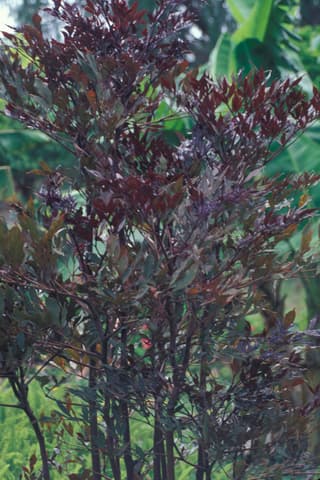
Red Leea
Leea guineensis
Leea guineensis, commonly known as Red Leea or West African Leea, is a lush tropical shrub belonging to the Vitaceae family, native to the tropical rainforests of West Africa and tropical Asia. It grows in a compact and upright manner, reaching up to 3 meters in height in cultivation. Its dense and glossy foliage often features shades of bronze, dark green, or deep burgundy, especially in the 'Rubra' variety. Under ideal conditions, it produces characteristic umbrella-shaped (umbel) inflorescences with small flowers ranging from red to orange and yellow, followed by rounded fruits that ripen from purple to scarlet red. It is an understory plant adapted to partial or full shade, making it excellent for spacious interiors, shaded tropical gardens, and as an ornamental specimen in pots.
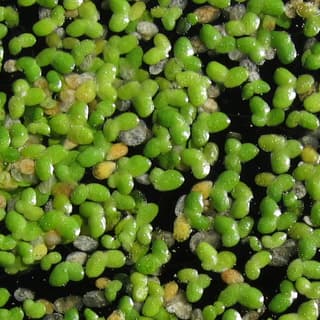
Common Duckweed
Lemna minor
Common Duckweed (Lemna minor) is one of the smallest flowering plants in the world. It floats freely on the surface of still or slow-moving freshwater bodies, forming dense green mats. Cosmopolitan in distribution, it is found in ponds, lakes, and aquariums worldwide.
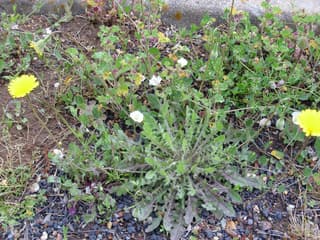
Rough Hawkbit
Leontodon hispidus
Leontodon hispidus, commonly known as Rough Hawkbit, is a perennial herbaceous plant in the family Asteraceae, native to grasslands and meadows across Europe and Asia. It produces dandelion-like yellow flower heads from June to September, making it a valuable nectar source for bees, butterflies, and other pollinators.
Lesser Hawkbit
Leontodon saxatilis
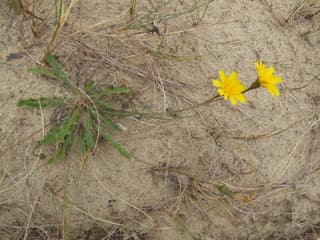
Leontodon saxatilis, commonly known as Lesser Hawkbit or Hairy Hawkbit, is a low-growing perennial wildflower in the family Asteraceae. It forms a basal rosette of lobed, bristly-haired leaves from which emerge slender, leafless stems bearing solitary bright yellow flowerheads that closely resemble a small dandelion. Native to Europe and North Africa, it thrives in grassy habitats on sandy, calcareous or well-drained soils and flowers prolifically from June through October.

Edelweiss
Leontopodium nivale
Edelweiss (Leontopodium nivale) is a perennial alpine plant from the Asteraceae family, native to the high mountain ranges of Europe — the Alps, Carpathians, Pyrenees, Balkans, and Apennines — where it grows on limestone rocks and scree at altitudes of 1800-3400 m. The flowering stems, 3-20 cm tall (up to 40 cm in cultivation), bear small yellow flowers grouped in a 5-6 ray star shape, surrounded by white bracts densely covered with fine hairs that protect the plant from cold, drought, and intense ultraviolet radiation at high altitudes. It has been a legally protected species in Romania since 1933, declared a monument of nature.
Five-lobed Motherwort
Leonurus quinquelobatus
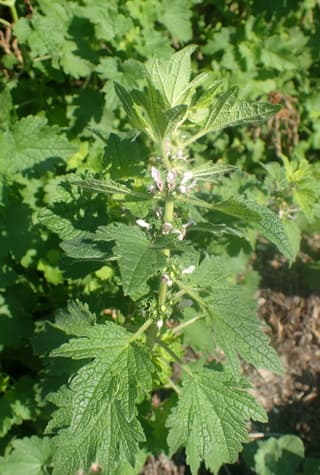
Leonurus quinquelobatus is a perennial herbaceous medicinal plant belonging to the mint family (Lamiaceae), found across much of Eurasia, from Sakhalin to Central Europe and Italy. It is a close relative of Common Motherwort (Leonurus cardiaca), with which it is often confused, but its palmately divided leaves with five distinct lobes serve as a characteristic identifier. The plant can grow up to 1-1.5 meters tall, featuring square, pubescent stems and pale pink-purple flowers that bloom in axillary whorls between June and August. It thrives best in sunny to partially shaded locations with nutrient-rich, well-drained soil and can live in the same spot for decades. Traditionally known as 'heartwort' or 'strengthening herb,' its flowering shoots have been used since ancient times to soothe heart palpitations and support the female reproductive system.
Lesser Swinecress
Lepidium didymum
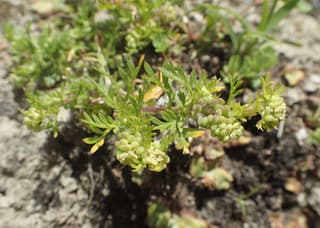
Lesser swinecress (Lepidium didymum, syn. Coronopus didymus) is an annual or biennial herb in the Brassicaceae family, native to South America (Brazil, Argentina, Bolivia, Chile, Paraguay, Peru, Uruguay, and Venezuela) and now naturalized throughout most of the world. It forms a basal rosette from which highly branched, decumbent or ascending stems emerge, reaching up to 40 cm in length. The leaves are alternate and pinnatifid with narrow segments, and the entire plant emits a strong, characteristic odor when crushed. The flowers are tiny, whitish or nearly petal-less, gathered in racemes, giving rise to the bilobed fruits typical of the Lepidium genus. It is common in disturbed ground, roadsides, gardens, lawns, and cultivated areas, where it behaves as a vigorous, fast-growing spontaneous plant.
Chestnut Dapperling
Lepiota castanea
Lepiota castanea, known as the 'Chestnut Dapperling', is a small, saprophytic mushroom from the Agaricaceae family. It is characterized by a cap covered with small, chestnut-brown scales arranged concentrically on a whitish background. Although its appearance is delicate, this species is extremely dangerous, containing amatoxins similar to those found in Amanita phalloides.
Lepismium cruciforme
Lepismium cruciforme
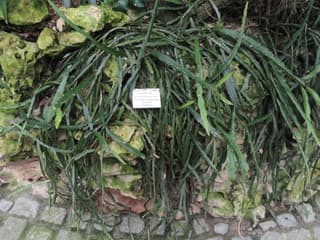
Lepismium cruciforme, commonly known as the Hurricane Cactus, is a striking epiphytic cactus native to the rainforests of South America. Unlike typical desert cacti, it grows on trees and features long, segmented stems that are often three-angled or flat. Under bright light, the foliage can take on a beautiful reddish-purple hue. It produces small, delicate flowers along the stem margins, followed by ornamental berry-like fruits.
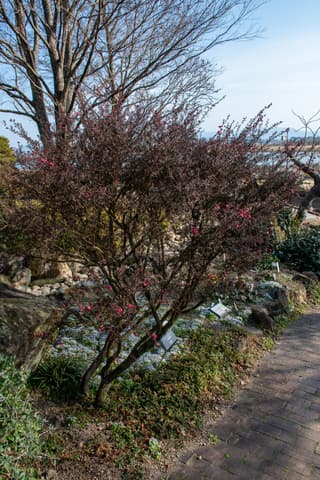
Manuka
Leptospermum scoparium
Leptospermum scoparium, commonly known as Manuka or New Zealand Tea Tree, is an evergreen shrub native to New Zealand and southeast Australia. It is widely recognized for its delicate five-petaled flowers and small, pointed, intensely aromatic leaves. This plant is the primary source for the production of the famous Manuka honey, valued worldwide for its unique antibacterial properties.
Redlead Roundhead
Leratiomyces ceres
Leratiomyces ceres, commonly known as the 'Redlead Roundhead', is a striking mushroom recognizable by its bright red to brick-red cap. It frequently appears on woodchip mulch in urban gardens and parks. Although visually attractive, it is considered poisonous and must not be consumed.
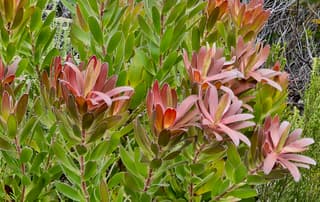
Golden Conebush
Leucadendron laureolum
Leucadendron laureolum, the golden conebush, is a hardy evergreen shrub native to the fynbos of South Africa's southwestern Cape. Reaching 1-2 m tall on a single woody stem, it produces vivid yellow-green flowerheads formed by leafy bracts that blaze through the winter months. Male and female plants look distinct: compact, golden-hued males and looser, greener females that mature into woody, fire-resistant seed cones. This adaptation lets the plant survive wildfires common to its habitat, releasing its stored seed to regenerate the landscape afterward.
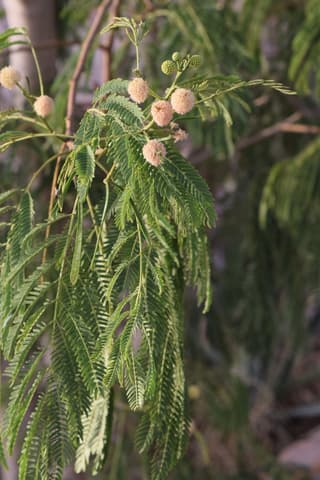
Leadtree
Leucaena leucocephala
Leucaena leucocephala is an extremely fast-growing leguminous tree native to Mexico and Central America. It is widely recognized for its delicate, feathery foliage, white globular flowers, and long seed pods. It is a valuable pioneer species for reclaiming degraded soils due to its nitrogen-fixing ability, although it can become invasive in tropical climates if not properly managed.
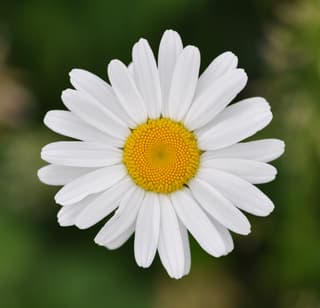
Shasta Daisy
Leucanthemum
Leucanthemum is a genus of herbaceous perennials in the Asteraceae family, native to Europe and Asia. The most cultivated species are L. × superbum (Shasta daisy) and L. vulgare (oxeye daisy). They produce classic white flowers with golden-yellow centers, blooming from spring through summer. Hardy, low-maintenance, and beloved in gardens and as cut flowers.
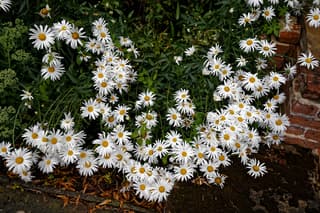
Shasta daisy
Leucanthemum × superbum
Shasta daisy (Leucanthemum × superbum) is a popular hybrid herbaceous perennial prized for its large white, daisy-like flowers with golden-yellow centers. Bred by horticulturist Luther Burbank, it blooms profusely from late spring through early fall and is relatively easy to grow.
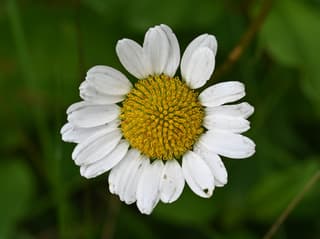
Oxeye Daisy
Leucanthemum ircutianum
Leucanthemum ircutianum, commonly known as the oxeye daisy, is a herbaceous perennial in the Asteraceae family, native to Eurasia. It produces iconic white-petalled flowers with a golden-yellow central disc, blooming from spring through autumn. A hardy, low-maintenance wildflower, it is highly attractive to pollinators including bees, butterflies, and hoverflies.
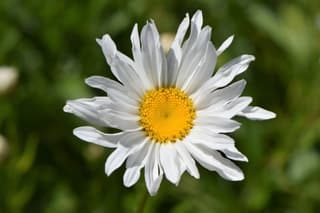
Max Chrysanthemum
Leucanthemum maximum
Leucanthemum maximum, commonly known as the max chrysanthemum or great daisy, is a herbaceous perennial in the Asteraceae family, native to the Pyrenees mountains of France and Spain. It produces classic white daisy-like flowers with bright white ray petals surrounding a golden-yellow disc center, blooming from late spring through summer. This species is one of the parent plants used by horticulturist Luther Burbank to create the beloved Shasta daisy hybrid. It is widely grown in cottage gardens, borders, and as a long-lasting cut flower.
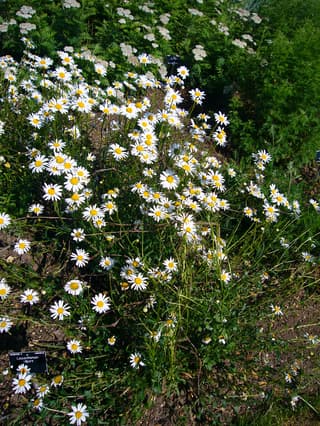
Oxeye Daisy
Leucanthemum vulgare
Leucanthemum vulgare, commonly known as the Oxeye Daisy, is a hardy perennial wildflower native to Europe, belonging to the Asteraceae family. It produces cheerful white ray flowers with a flattened yellow center disk, growing 30–90 cm tall. Blooming from spring through summer, it is a magnet for pollinators including bees, butterflies, and hoverflies. Though graceful in wildflower meadows and cottage gardens, it can spread vigorously and is considered invasive in parts of North America and Australia.
reddening lepiota
Leucoagaricus americanus
Leucoagaricus americanus, commonly known as the reddening lepiota, is a saprobic mushroom characterized by its white cap with reddish-brown scales that stains yellow then deep red when bruised or aged. It typically grows in clusters on wood chips, mulch, or near stumps. While striking in appearance, it is not recommended for consumption due to potential gastrointestinal distress and its similarity to toxic species.
Flowerpot Parasol
Leucocoprinus birnbaumii
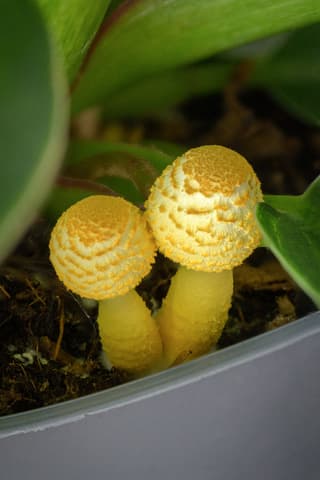
Leucocoprinus birnbaumii is a saprophytic fungus commonly found in indoor plant pots and greenhouses. It is characterized by its vibrant yellow color and bell-shaped cap when young, which opens into a flat cap over time. While it does not harm plants (as it feeds only on dead organic matter in the soil), its presence indicates rich and moist soil.
Thunder Cloud Sage
Leucophyllum candidum
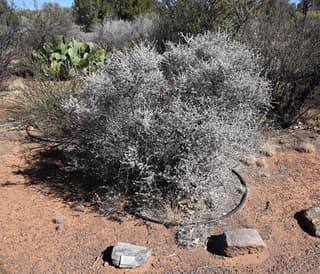
Leucophyllum candidum is a compact, silvery-leaved evergreen shrub native to the arid limestone hills of the Chihuahuan Desert in Texas and northern Mexico. Prized for its dense, felted foliage and lavender-purple blooms that appear after rains, it is a hardy, low-maintenance choice for xeriscapes and desert gardens.
Texas Sage
Leucophyllum frutescens
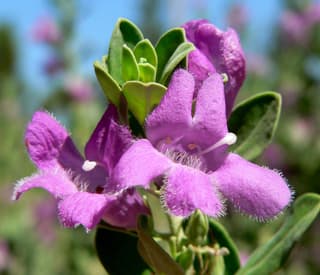
Texas Sage (Leucophyllum frutescens) is a stunning evergreen shrub native to the arid regions of Texas and northern Mexico. Celebrated for its extraordinary drought tolerance and silvery-gray foliage, this low-maintenance plant bursts into bloom with vibrant purple, violet, or lavender flowers during summer and fall. Commonly known as the "barometer bush," it flowers in response to high humidity and falling atmospheric pressure — often right before or after rain. A beloved staple of xeriscape gardens and water-wise landscaping.
Find the Perfect Plant
Our plant guide helps you find ideal species for your experience level and time of year.
Browse by Difficulty, Season & More
Use the filters below to narrow this catalog by care difficulty, season, environment, or search directly by name. Each filter leads to a focused list tailored to your specific growing conditions.