Complete Plant Guide
Explore plants by difficulty, season and more. Find the perfect plant for you.
Difficulty
Categories
Plants by City
🗺️ Plants by City3454 plants found
Showing 2665-2700 of 3454
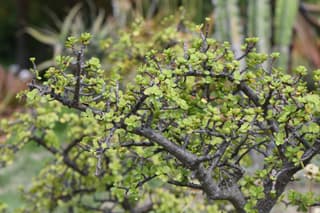
Elephant bush
Portulacaria afra
Portulacaria afra, commonly known as Elephant Bush or Spekboom, is a succulent shrub native to South Africa. It features small, fleshy, emerald-green leaves on attractive reddish-brown stems. In its natural habitat, it can grow into a large shrub or small tree, but it is frequently used as a bonsai or indoor plant. It is renowned for its exceptional ability to sequester carbon dioxide from the atmosphere, making it an environmentally significant species.
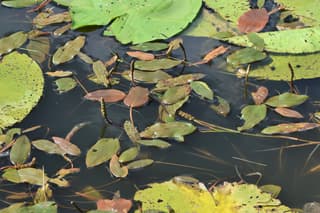
Broad-leaved Pondweed
Potamogeton natans
Potamogeton natans, also known as broad-leaved pondweed, is a perennial aquatic plant that produces oval, leathery, olive-green floating leaves. Its submerged leaves are narrow and translucent, often disappearing as the plant matures. It is a fundamental species for freshwater ecosystems, providing shelter for fish and oxygenating the water.
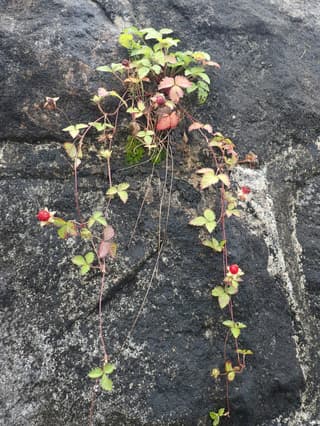
yellow-flowered strawberry
Potentilla indica
Potentilla indica, commonly known as mock strawberry or Indian strawberry, is a perennial herbaceous plant that closely resembles true strawberries. It is distinguished by its five-petaled yellow flowers and red, bumpy fruit that points upward. While the fruit is edible, it is generally considered flavorless or watery. It spreads aggressively through stolons (runners), making it a highly effective, though sometimes invasive, ground cover.
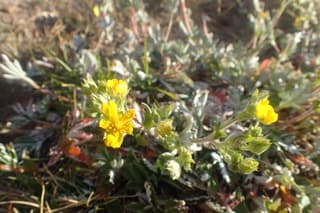
Beautiful Cinquefoil
Potentilla pulcherrima
Potentilla pulcherrima, commonly known as Beautiful Cinquefoil, is a native North American perennial wildflower in the rose family (Rosaceae). It produces cheerful yellow five-petalled flowers from spring through fall and features distinctive silvery-white leaf undersides. Highly cold-hardy and drought-tolerant once established, it thrives in rocky meadows, alpine slopes, and open woodlands across Canada and the western United States.
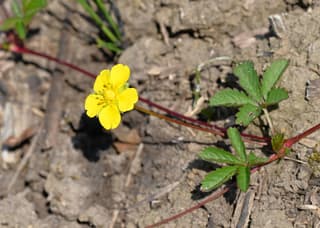
Creeping Cinquefoil
Potentilla reptans
Creeping cinquefoil (Potentilla reptans) is a low-growing perennial in the rose family, native to Europe, western Asia and North Africa. Its trailing stems root at every node, forming dense mats of five-fingered leaflets studded with bright yellow, five-petaled flowers from June to September. Equally at home as a groundcover or a persistent lawn weed, it thrives almost anywhere with a little sun.
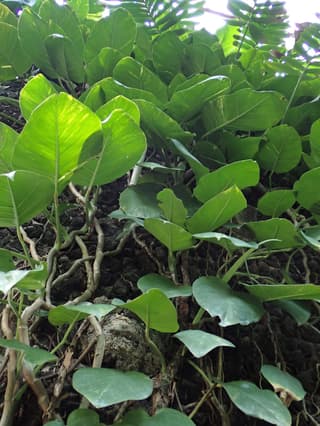
Pothos
Pothos
Pothos is one of the most popular and forgiving houseplants in the world, prized for its trailing vines and heart-shaped, often variegated leaves. In everyday use the name "pothos" almost always refers to Epipremnum aureum (golden pothos), a fast-growing tropical vine native to the Solomon Islands. The name stuck from an old classification: the plant was first described in 1880 as Pothos aureus, and even after botanists moved it into the genus Epipremnum in 1964, the common name never went away. It tolerates low light, irregular watering, and general neglect better than almost any other houseplant, making it a favorite for beginners and offices alike.
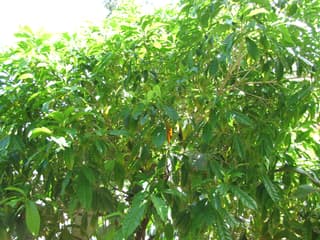
Abiu
Pouteria caimito
The abiu (Pouteria caimito) is a tropical evergreen fruit tree in the Sapotaceae family, native to the Peruvian and Brazilian Amazon basin. When cultivated, it reaches 4 to 10 meters in height, featuring a dense canopy and dark green leaves. It produces fragrant yellowish-white flowers between December and January, followed by smooth, oval fruits that ripen to a golden-yellow hue. The pulp is translucent with a pudding-like consistency and a sweet flavor reminiscent of caramel; the unripe fruit contains an irritating latex that disappears upon ripening.
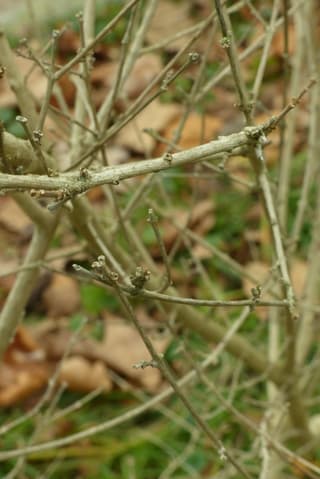
Premna
Premna
Premna is a genus of tropical shrubs and small trees in the family Lamiaceae, native to Asia, Africa, and Oceania. It is prized in Asia — especially P. microphylla and P. serratifolia — as a bonsai subject and hedge plant, valued for its dense foliage and fast growth.
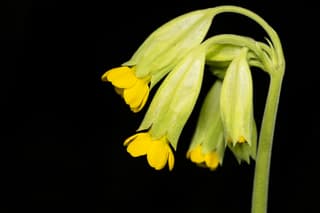
Primrose
Primula
Primula is a genus of approximately 500 species of flowering perennial plants in the family Primulaceae. Known for their early spring blooms, they form rosettes of basal leaves and produce showy flowers in shades of yellow, red, purple, white, and pink. They thrive in cool, partially shaded environments and are beloved in cottage gardens and indoor displays.
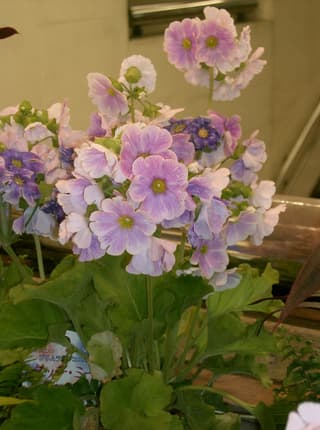
Poison Primrose
Primula obconica
Primula obconica, commonly known as the Poison Primrose or German Primrose, is a charming flowering houseplant native to China. It produces clusters of delicate blooms in shades of pink, red, purple, blue, and white, typically in spring. Despite its beauty, the plant contains primin — a natural allergen that can cause skin irritation on contact, earning it the nickname Poison Primrose. It thrives in cool, bright indirect light conditions, making it an excellent windowsill plant during the cooler months.
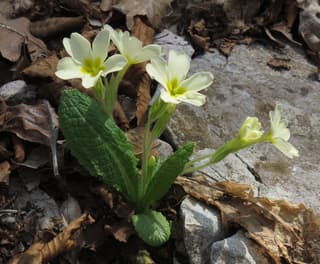
Common primrose
Primula vulgaris
Primula vulgaris, the common primrose, is a low-growing herbaceous perennial native to western and southern Europe. It forms a basal rosette of wrinkled, dark green leaves and produces solitary, pale yellow flowers with a deeper yellow eye, among the earliest blooms of late winter and early spring.
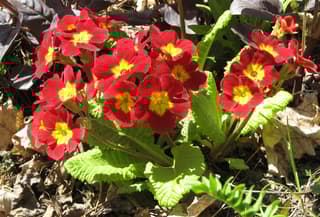
Polyanthus Primrose
Primula x polyantha
Primula x polyantha, commonly known as the Polyanthus Primrose, is a charming European hybrid resulting from crosses between Primula veris (cowslip) and Primula vulgaris (common primrose). It produces clusters of vibrantly colored flowers in spring, making it a favourite for garden borders, containers, and cool indoor displays. Cultivated for centuries, it has been bred into an extraordinary range of colors including red, orange, pink, white, cream, yellow, and purple.

Oak-Nymph-Leaved Primulina
Primulina dryas
Primulina dryas, formerly known as Chirita dryas, is a compact evergreen perennial in the family Gesneriaceae, native to Hong Kong and southern China. It grows naturally on shaded limestone cliffs and rocky karst formations, forming flat rosettes of thick, velvety leaves sometimes marked with silvery veins. In summer and autumn it produces small clusters of tubular white flowers with purple lobes and yellow throats.
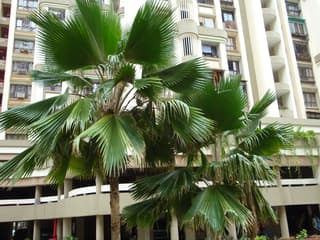
Fiji Fan Palm
Pritchardia pacifica
Pritchardia pacifica, commonly known as the Fiji Fan Palm or Pacific Fan Palm, is a majestic tropical palm native to the Pacific islands of Fiji and Tonga. It features stunning fan-shaped leaves up to 6 feet (1.8 m) in diameter, making it one of the most visually striking palms in the world. Historically, Fijian chiefs used its leaves as ceremonial fans, giving it deep cultural and royal significance.
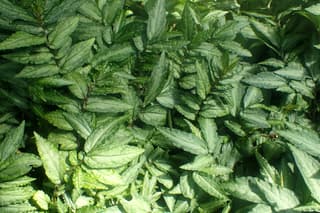
Trailing Watermelon Begonia
Procris repens
The Trailing Watermelon Begonia (Procris repens, formerly classified as Pellionia repens or Elatostema repens) is a small herbaceous creeper in the Urticaceae family, native to the tropical forests from southern China to Southeast Asia. It grows close to the ground, reaching about 6 inches in height and spreading up to 24 inches, with reddish zigzagging stems. Its asymmetrical, wavy leaves resemble watermelon rinds, featuring shades of grayish-green and silver with edges ranging from bronze to brownish-purple, darkening as the plant matures. It is widely used as an indoor plant in terrariums, hanging baskets, and vertical gardens.
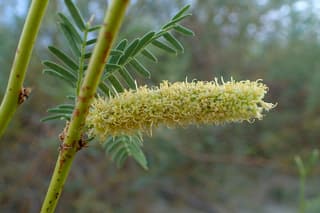
Honey Mesquite
Prosopis glandulosa
The honey mesquite (Prosopis glandulosa) is a deciduous tree or shrub in the legume family (Fabaceae), native to the arid and semi-arid regions of the Southwestern United States and Northern Mexico. It reaches between 4 and 9 meters in height, featuring a wide, spreading crown, a short trunk, and branches armed with thorns. In spring and summer, it produces dense clusters of highly fragrant greenish-yellow flowers, followed by elongated, flat pods that ripen in late summer. Thanks to its taproot, capable of reaching dozens of meters deep in search of water, and its ability to fix atmospheric nitrogen, it is an extremely drought-resistant species and fundamental to desert ecosystems.
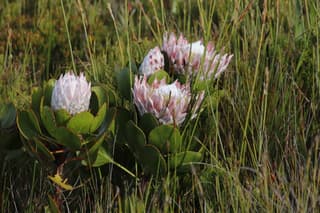
King Protea
Protea cynaroides
Protea cynaroides, the King Protea, is an evergreen shrub native to the fynbos of South Africa's Western and Southern Cape, where it thrives in nutrient-poor, well-drained sandy soils under a Mediterranean climate of hot, dry summers and cool, wet winters. It produces the largest flower head in the genus - a goblet-shaped inflorescence of tightly packed silky florets ringed by large, stiff bracts that range from creamy white to deep crimson, with soft silvery pink being the most prized form. Below the flowers, the plant carries tough, leathery, dark green leaves adapted to withstand drought and wind. Slow-growing and long-lived, it resprouts vigorously from a woody underground rootstock after wildfires, a trait central to its status as South Africa's national flower.
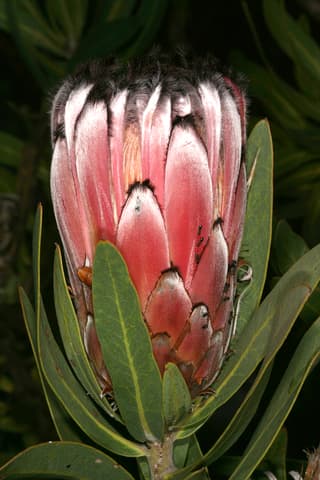
Oleander-leaf protea
Protea neriifolia
Protea neriifolia, commonly known as the Oleander-leaf protea, is a majestic evergreen shrub native to South Africa. It is famous for its cup-shaped inflorescences, composed of colorful bracts ranging from soft pink to cream, ending in distinct velvety black tips. Its leaves are narrow and leathery, resembling those of the oleander, which gives it its specific name.
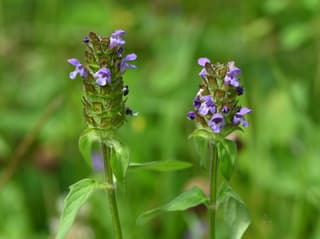
Self-Heal
Prunella vulgaris
Prunella vulgaris, commonly known as self-heal or heal-all, is a low-growing perennial herb in the mint family (Lamiaceae), native to Europe, Asia, and North America. It produces dense spikes of small tubular flowers in shades of purple, pink, and white from late spring through fall, attracting bees and butterflies. The plant forms spreading mats of semi-evergreen foliage via stolons and is celebrated for its extensive medicinal and edible properties across many cultures.
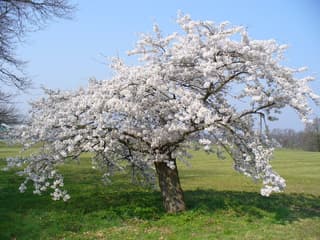
Plum / Cherry (genus)
Prunus
Prunus is one of the largest and most economically important genera in the rose family (Rosaceae), comprising over 400 species of trees and shrubs including cherries, plums, peaches, almonds, and apricots. Native to temperate regions of the Northern Hemisphere, these deciduous plants are celebrated for their spectacular spring blossoms and edible fruits. They thrive in full sun and well-drained soils, tolerating cold winters down to USDA zone 4.
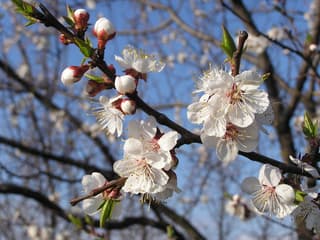
Apricot
Prunus armeniaca
The apricot (Prunus armeniaca) is a deciduous fruit tree in the Rosaceae family, native to Central Asia and Eastern Europe. It produces sweet, golden-orange drupes prized fresh, dried, or preserved. In early spring, before the leaves emerge, the tree bursts into delicate pink-white blossoms, making it as ornamental as it is productive. Note: the pits contain amygdalin, a cyanogenic glycoside that can be harmful in large amounts — the fruit flesh is entirely safe to eat.
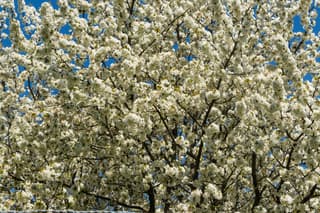
Sweet Cherry Tree
Prunus avium
Prunus avium, commonly known as the sweet cherry tree, is a large deciduous tree in the Rosaceae family, native to Europe and Western Asia. It produces stunning white blossoms in spring and sweet red cherries in summer, cultivated both for its ornamental beauty and its edible fruits.
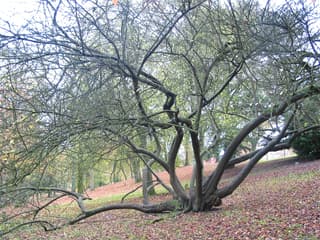
Cherry Plum
Prunus cerasifera
Cherry Plum (Prunus cerasifera) is a deciduous ornamental tree in the Roseaceae family, native to Southwest Asia and the Balkans. Renowned for its spectacular early spring flowering before the leaves emerge, it produces masses of small white to pale pink fragrant blossoms. Many popular cultivars feature striking purple or bronze foliage, making it one of the most ornamental landscape trees in temperate gardens. It also produces small edible plums used in preserves and jellies.
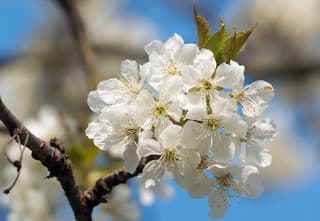
Sour Cherry
Prunus cerasus
Sour cherry (Prunus cerasus) is a deciduous fruit tree in the Rosaceae family, native to Eastern Europe and Southwest Asia. It produces small, tart red fruits prized for culinary use in pies, jams, liqueurs, and dried snacks. In spring, the tree bursts into clusters of fragrant white blossoms before leafing out, making it an ornamental highlight in any garden.
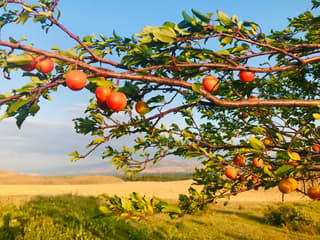
European Plum
Prunus domestica
The European plum (Prunus domestica) is a deciduous fruit tree originating in Western Asia and cultivated across Europe for thousands of years. It produces juicy, sweet plums prized for fresh eating, jams, dried prunes, and spirits such as slivovitz. In spring, the tree bursts into delicate white blossoms before leafing out, making it as ornamental as it is productive.
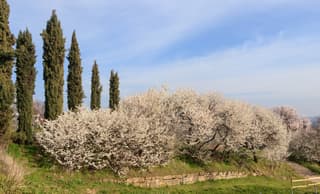
Almond
Prunus dulcis
Prunus dulcis, commonly known as the almond, is a deciduous tree native to the Middle East and South Asia, now widely cultivated across Mediterranean climates for its edible seed. It bursts into pale pink-and-white blossom in late winter before its narrow leaves emerge, one of the earliest trees to flower each year. Grown as an orchard or ornamental tree, it needs a hot, dry summer and a cold winter dormancy to fruit well. Two forms exist: the sweet almond (var. dulcis), prized for its edible kernel, and the bitter almond (var. amara), whose seeds contain amygdalin and are toxic unless processed.
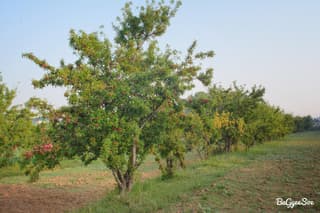
Damson
Prunus insititia
The damson (Prunus insititia) is a small deciduous tree or shrub in the rose family (Rosaceae), native to Europe and southwest Asia. It bears white blossoms in early spring and small, tart, dark purple fruits traditionally used in jams, preserves and damson gin.
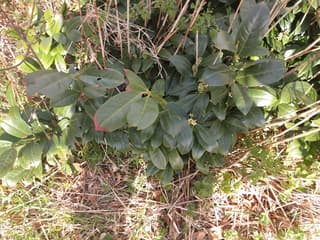
Cherry laurel
Prunus laurocerasus
Prunus laurocerasus, commonly known as Cherry Laurel, is a vigorous, large evergreen shrub or small tree. It is widely appreciated for its dense growth habit and glossy, leathery dark green leaves, making it an ideal choice for privacy hedges. In mid-spring, it produces upright spikes of small, fragrant white flowers that attract pollinators, followed by small, cherry-like fruits that ripen to black. It is exceptionally hardy and can tolerate significant urban pollution and heavy shade.
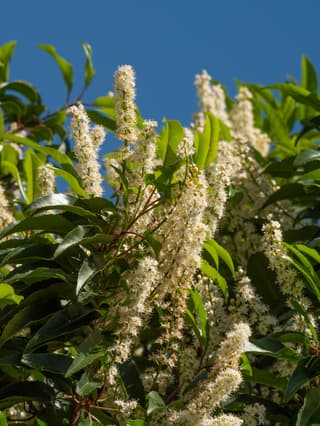
Portuguese Laurel
Prunus lusitanica
The Portuguese Laurel (Prunus lusitanica) is an evergreen shrub or small tree native to the Iberian Peninsula and the Macaronesian islands. Featuring glossy dark green foliage, fragrant white flowers in long racemes, and dark purple fruits, it is highly valued in formal gardens, hedges, and topiary. Hardy and adaptable, it tolerates various soil types, partial shade, and coastal conditions.
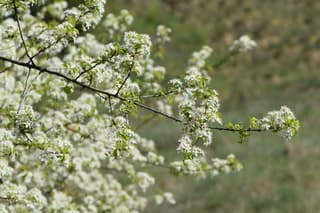
Mahaleb Cherry
Prunus mahaleb
Mahaleb cherry (Prunus mahaleb) is a deciduous tree or shrub in the Rosaceae family, native to central and southern Europe, northwest Africa, and western Asia. It typically grows 2-10 m tall, with grey-brown bark marked by conspicuous lenticels. Small, rounded, serrated leaves accompany fragrant white flowers borne in short racemes in mid-spring. The small drupes ripen from green to red to dark purple-black and are very bitter, rarely eaten fresh — but the roasted, ground kernels yield mahlab (mahlepe), a fragrant spice widely used in Eastern Mediterranean and Middle Eastern breads and pastries. The species is also the classic cherry rootstock, prized for its hardiness and tolerance of dry, calcareous soils.
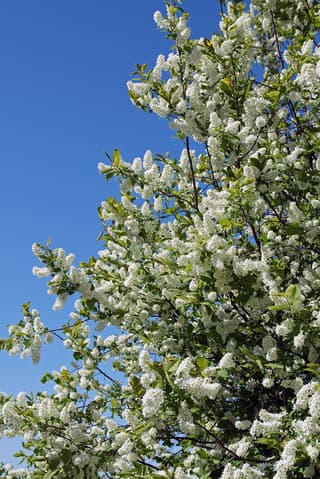
Bird Cherry
Prunus padus
Bird cherry (Prunus padus) is a fast-growing deciduous tree native to Northern Europe and Asia, belonging to the Rosaceae family. It can reach up to 15 meters tall, with a rounded crown and dark, strong-smelling bark. In spring it produces long, drooping clusters of fragrant white flowers, followed by small bitter black fruits favored by birds.
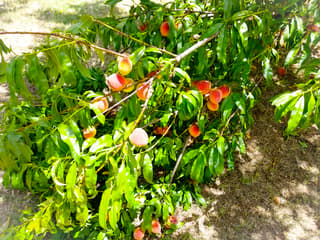
Peach Tree
Prunus persica
The peach tree (Prunus persica) is a deciduous fruit tree native to China, now cultivated worldwide in temperate regions. It produces sweet, juicy fruits with velvety skin and yellow or white flesh, and puts on a spectacular display of pink or white blossoms in early spring. One of the most popular fruit trees for home orchards, it is valued for its delicious fruit, ornamental beauty, and relatively fast growth.
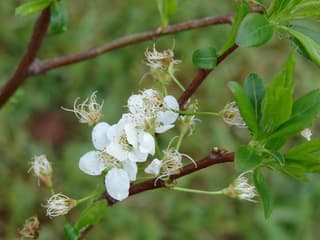
Japanese Plum
Prunus salicina
Prunus salicina, commonly known as the Japanese plum or Chinese plum, is a small to medium-sized deciduous tree native to China. It is widely cultivated across temperate regions of the world for its delicate white spring blossoms and juicy, flavorful fruits that ripen in summer. The tree is valued both as an ornamental specimen and as a productive fruit tree in home gardens and commercial orchards.
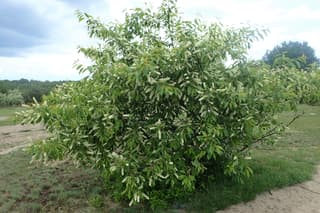
Black Cherry
Prunus serotina
Black Cherry (Prunus serotina) is a large, fast-growing deciduous tree native to North America, valued for its fragrant spring blossoms, edible dark fruits, and prized hardwood timber. It thrives in full sun across a wide climate range from Canada to the southern United States.
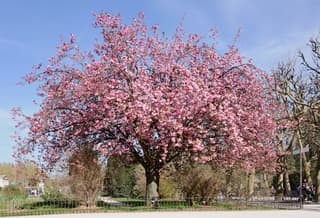
Japanese Cherry Blossom
Prunus serrulata
Prunus serrulata, widely known as Sakura or Japanese Cherry Blossom, is a deciduous tree of incomparable beauty, native to Japan, Korea, and China. It is famous for its ephemeral and exuberant blooming that occurs in early spring, covering bare branches with dense clusters of pink or white flowers. Its serrated leaves emerge after the flowers and take on bronze tones before turning green, eventually becoming yellow or reddish in the fall.
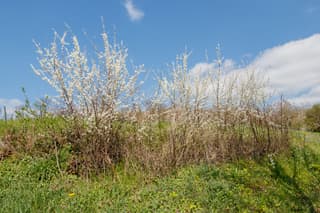
Blackthorn
Prunus spinosa
Blackthorn (Prunus spinosa) is a dense, thorny deciduous shrub native to Europe, western Asia and northwest Africa. Valued for its clouds of small white blossoms that appear on bare branches in early spring, ahead of the leaves, it later produces the tart, dark blue-black sloe berries prized for sloe gin. Its thorny, suckering growth makes it a traditional choice for hedgerows and wildlife gardens.
Find the Perfect Plant
Our plant guide helps you find ideal species for your experience level and time of year.
Browse by Difficulty, Season & More
Use the filters below to narrow this catalog by care difficulty, season, environment, or search directly by name. Each filter leads to a focused list tailored to your specific growing conditions.