Complete Plant Guide
Explore plants by difficulty, season and more. Find the perfect plant for you.
Difficulty
Categories
Plants by City
🗺️ Plants by City3454 plants found
Showing 2701-2736 of 3454

Chokecherry
Prunus virginiana
Prunus virginiana, known as chokecherry, is a fast-growing, suckering deciduous shrub or small tree native to nearly every U.S. state and Canadian province. In late spring it produces long, fragrant, white flower clusters (racemes) that mature into pea-sized berries, ripening from red to nearly black by late summer. Chokecherry is prized by gardeners for its wildlife value and spring bloom, and by foragers for its tart fruit, traditionally cooked into jellies, syrups, and wine. Every other part of the plant -- bark, leaves, twigs, and seed pits -- contains cyanogenic compounds and is toxic if chewed or wilted, so only the ripe, de-seeded fruit pulp is safe to eat.
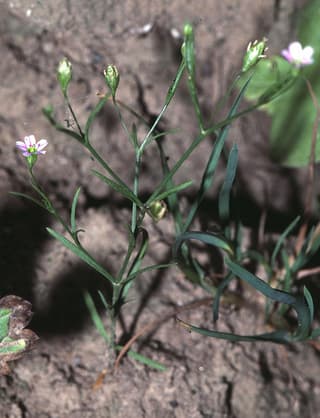
Annual Baby's Breath
Psammophiliella muralis
Annual Baby's Breath (Psammophiliella muralis), formerly classified as Gypsophila muralis, is an annual herb in the pink family (Caryophyllaceae). The species was described as early as 1753 by Carl Linnaeus, and the name muralis ("growing on walls") refers to its preference for dry, open habitats such as gravel paths, stone walls, and sandy soils. The plant forms a dense, bushy mound of thin, branched stems with narrow, linear leaves and typically reaches a height of 12-16 inches (30-40 cm). From midsummer to autumn, the mound is covered in a cloud of small, five-petaled flowers in shades of pink, or more rarely, white. The species is almost entirely free from serious pests, but in damp, poorly drained soil, it can be affected by root rot and gray mold.
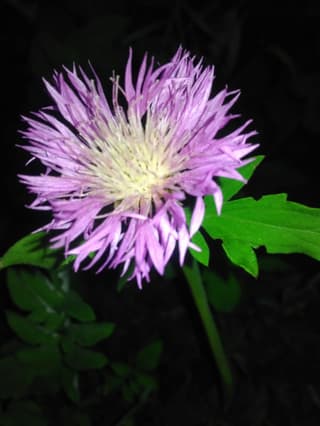
Persian Cornflower
Psephellus dealbatus
Psephellus dealbatus (Persian cornflower) is an exceptionally hardy perennial native to the mountain regions of the Caucasus, suitable for cultivation in USDA zones 3–9b. It is characterized by deeply lobed, gray-green leaves with silvery-tomentose undersides, which provide a decorative appearance even in winter. In early summer, it produces striking, fringe-petaled flowers in shades of pinkish-lavender that are excellent for attracting bees and butterflies. It performs best in poor, well-drained soil; in rich, moist soil, it tends to flop and is prone to crown rot.
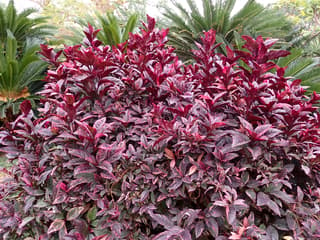
Purple False Eranthemum
Pseuderanthemum carruthersii
Pseuderanthemum carruthersii, popularly known as Purple False Eranthemum, is a perennial tropical shrub native to the Pacific islands. It is notable for its lush ornamental foliage, featuring oval leaves with intense shades of purple, burgundy, and metallic green. Its flowers are small, white with pinkish or purplish centers, appearing in terminal spikes. It is an excellent plant for creating color contrasts in tropical gardens or as a focal point in spacious, well-lit interiors.
Stinking Squid
Pseudocolus fusiformis
Pseudocolus fusiformis, commonly known as the 'Squid Stinkhorn', is a fascinating saprophytic fungus. It emerges from a white underground 'egg' to form a structure with 3 to 4 arms joined at the top, which separate at maturity, resembling tentacles. The inner part of the arms is covered by a foul-smelling greenish-brown gleba that attracts flies for spore dispersal.
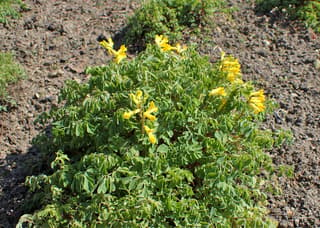
Yellow Corydalis
Pseudofumaria lutea
Pseudofumaria lutea, commonly known as yellow corydalis or rock fumewort, is a compact, clump-forming perennial in the poppy family (Papaveraceae). Native to shaded limestone crevices in the Alps of Italy and Switzerland, it has naturalized across old walls, pavements, and rockeries throughout Europe and North America. Its ferny, blue-green foliage forms tidy mounds topped with clusters of bright golden-yellow, short-spurred flowers that bloom almost continuously from late spring through the first hard frost.
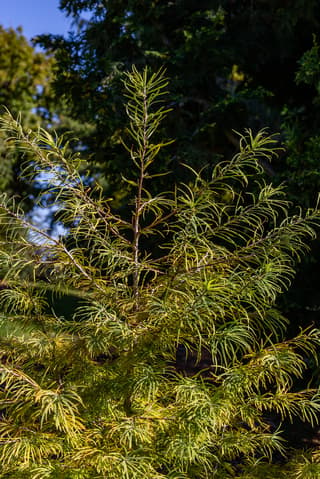
Golden Larch
Pseudolarix amabilis
The Golden Larch (Pseudolarix amabilis) is a deciduous conifer native to eastern China and the sole species in the genus Pseudolarix. Unlike most conifers, it sheds its needles every autumn, which turn a striking golden-yellow color before falling, giving the tree its name. It is slow-growing and can reach 9–18 m in height in cultivation, featuring soft, light-green needles arranged in tufts on short spurs. Instead of true flowers, it develops cones: smaller male pollen cones in spring and upright, ovoid female cones that mature to a reddish-brown color and disintegrate after the seeds ripen. It is highly valued as a specimen ornamental tree and as a bonsai for its seasonal beauty and unique appearance.
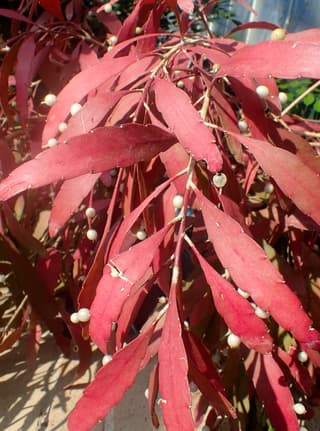
Red Mistletoe Cactus
Pseudorhipsalis ramulosa
Pseudorhipsalis ramulosa, known as the Red Mistletoe Cactus, is an epiphytic cactus native to the humid rainforests of Central and South America, where it grows clinging to tree trunks and rocks. Its flat, ribbon-like stems cascade downwards and can reach several feet in length, taking on shades ranging from deep green to ruby red when exposed to brighter light. In summer, it produces small greenish-white flowers followed by white or reddish berries, making it a highly prized ornamental plant for hanging baskets.
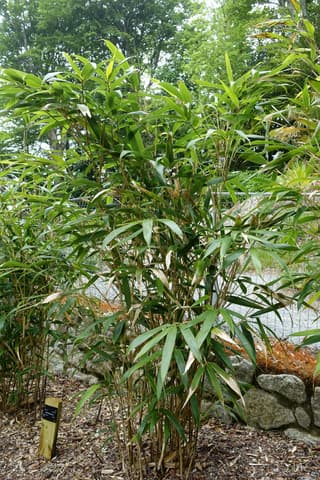
Arrow Bamboo
Pseudosasa japonica
Arrow Bamboo (Pseudosasa japonica) is a temperate bamboo species native to Japan and Korea. It forms dense thickets of upright, slender culms covered with long, glossy dark-green leaves that can reach 30 cm in length. It is one of the most widely cultivated bamboo species in temperate gardens worldwide, prized for its elegant foliage and exceptional cold hardiness.
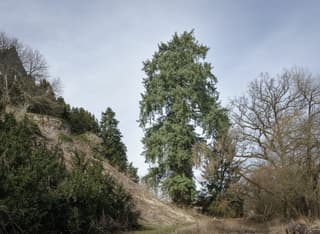
Douglas Fir
Pseudotsuga menziesii
Douglas fir (Pseudotsuga menziesii) is a large, fast-growing evergreen conifer native to western North America, ranging from the Rocky Mountains to the Pacific coast. Despite its common name, it is not a true fir (Abies) but belongs to its own genus, Pseudotsuga. It has a conical, pyramidal form with soft, flat, blue-green to dark-green needles arranged spirally around the twig, and distinctive pendant cones with three-pointed, snake-tongue-like bracts protruding between the scales. In its native range it is among the tallest trees in the world, historically reaching over 90 m (300 ft); in cultivated landscapes it more typically grows 12-24 m (40-80 ft) tall with a 4-6 m spread. Douglas fir is the backbone of the Pacific Northwest timber industry and is Oregon's official state tree, and its fragrant foliage makes it one of the most popular Christmas trees in North America.
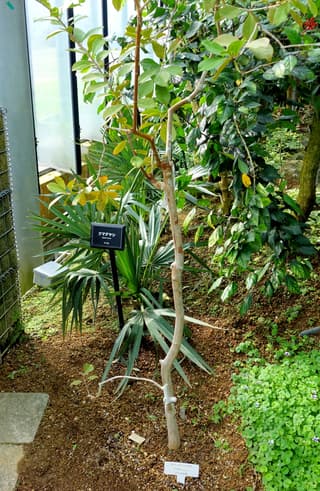
Strawberry Guava
Psidium cattleyanum
Strawberry Guava (Psidium cattleyanum) is a fruiting shrub or small tree native to Brazil, belonging to the Myrtaceae family. It produces small, strawberry-flavored fruits that can be red or yellow. Known for its hardiness and adaptability, it thrives in tropical and subtropical climates and is valued for both its edible fruits and ornamental appearance.
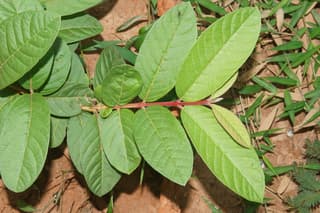
Guava Tree
Psidium guajava
The guava tree (Psidium guajava) is a tropical fruit tree in the Myrtaceae family, native to the Americas. It is widely cultivated for its sweet and aromatic fruits, known as guavas. The tree features smooth bark, elliptical leaves, and delicate white flowers. It is a robust and fast-growing plant that can reach several meters in height, valued both for its fruit production and its medicinal properties.
Psilocybe angulospora
Psilocybe angulospora
Psilocybe angulospora is a species of agaric fungus in the family Hymenogastraceae. It is characterized by its small, brownish-to-yellowish caps that often exhibit a bluing reaction when bruised, indicating the presence of psilocybin. The species is notable for its angulate (angular) spores, which distinguish it from many other members of the genus. It is typically found growing in wood chips, mulch, or rich organic debris in temperate and subtropical regions.
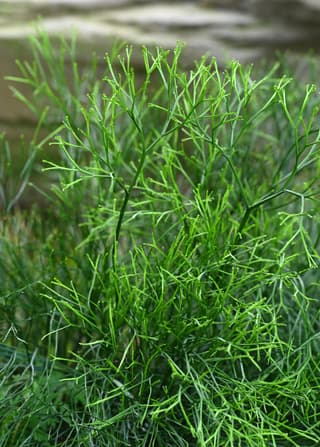
Whisk Fern
Psilotum nudum
Psilotum nudum, commonly known as the Whisk Fern, is one of the most primitive vascular plants on Earth, with a lineage stretching back over 400 million years. Lacking true roots and leaves, it absorbs water and nutrients through its rhizomes and photosynthetic green stems. Native to pantropical regions, it grows naturally in rock crevices and as an epiphyte.
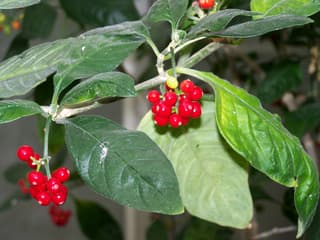
Wild Coffee
Psychotria
Psychotria is one of the largest genera of flowering plants in the world, belonging to the family Rubiaceae (the coffee family), with over 1,600 species spread across tropical and subtropical regions on every continent. Commonly known as wild coffee, these plants are evergreen shrubs or small understory trees featuring opposite, glossy leaves, small tubular white-to-greenish flowers, and fleshy drupes that ripen to bright red or deep purple. The genus is ecologically vital — providing nectar for pollinators and fruit for birds — and ethnobotanically significant, with numerous species used in traditional medicine across the Americas, Africa, and Asia. Certain species, most notably Psychotria viridis, produce the alkaloid dimethyltryptamine (DMT), making the genus uniquely important in ethnopharmacology and indigenous spiritual practices.
Hot Lips Plant
Psychotria elata
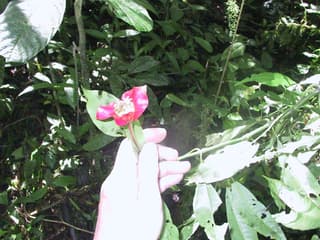
Psychotria elata, commonly known as the Hot Lips Plant or Hooker's Lips, is a tropical shrub native to the rainforests of Central and South America. Its most striking feature is its vivid red bracts shaped like human lips, which appear before small white and yellow flowers bloom. Found growing as an understory shrub in the tropical forests of Mexico, Costa Rica, Panama, Colombia, and Ecuador, this remarkable plant has become endangered due to deforestation in its native range.
Bracken Fern
Pteridium aquilinum
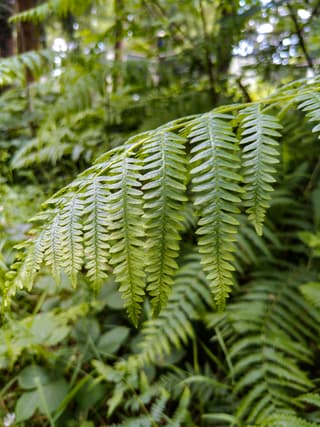
Pteridium aquilinum, commonly known as Bracken Fern or Eagle Fern, is one of the most widespread plants on Earth, found on every continent except Antarctica. This deciduous fern produces large, triangular fronds reaching up to 4 feet tall and spreads aggressively via underground rhizomes. While historically used for medicinal and practical purposes, it is carcinogenic if consumed regularly and toxic to livestock.
Brake Fern
Pteris
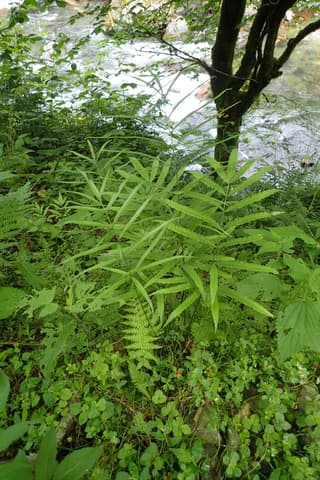
Pteris is a genus of roughly 300 fern species in the family Pteridaceae, native to tropical and subtropical regions worldwide. Commonly known as brake ferns or table ferns, they are prized for their graceful, arching fronds — often variegated with white or silver stripes. These ferns thrive in shaded, humid conditions and are among the most popular indoor ferns. They reproduce via spores borne openly along frond margins and produce no flowers. Pteris ferns are considered non-toxic to cats, dogs, and humans, making them a pet-safe choice for home and office.
Cretan Brake Fern
Pteris cretica
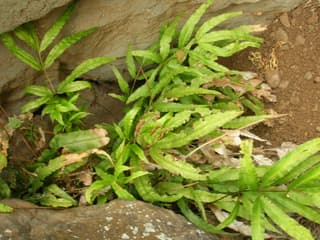
Pteris cretica, commonly known as the Cretan Brake Fern, is an elegant evergreen fern native to the Mediterranean region. With its graceful, pinnate fronds that can display beautiful variegation, it has become a popular houseplant prized for its delicate appearance and air-purifying properties. This slow-growing fern thrives in humid, shaded environments and is well-suited to terrariums, bathrooms, and indoor collections.
Silver Lace Fern
Pteris ensiformis
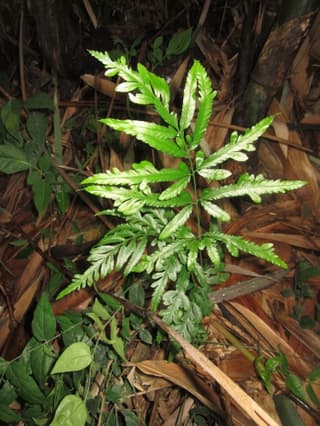
The Silver Lace Fern (Pteris ensiformis) is a compact ornamental fern from the Pteridaceae family, native to Southeast Asia and Australia. It is known for its thin, arching fronds with silver midribs that contrast with the dark green, providing a delicate lace-like appearance. The 'Evergemiensis' cultivar is the most popular for indoor cultivation, reaching about 12 to 24 inches (30 to 60 cm) in height.
Chinese Brake Fern
Pteris vittata
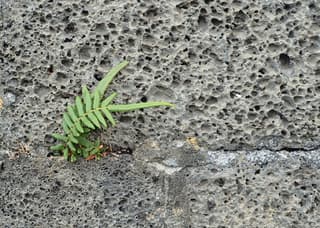
Pteris vittata, commonly known as the Chinese Brake Fern, is a resilient fern native to tropical and subtropical regions across Asia, Africa, and Europe. It produces graceful, arching fronds with narrow pinnae arranged ladder-like along the midrib. This fern holds a remarkable distinction in the plant world: it is the first naturally discovered arsenic hyperaccumulator, capable of drawing up to 22,630 mg of arsenic per kilogram of shoot dry weight from contaminated soil — making it a celebrated tool in phytoremediation projects worldwide.
Caucasian Wingnut
Pterocarya fraxinifolia
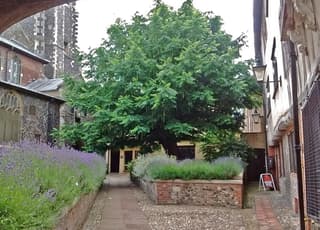
The Caucasian Wingnut (Pterocarya fraxinifolia) is a majestic and very fast-growing forest tree, native to the riparian forests of the Caucasus and northern Iran. It can reach 25 to 30 meters in height and 20 meters in spread, developing a powerful trunk with deeply fissured bark and a broad, spreading crown. Its deciduous foliage, dark green and glossy, is composed of large pinnate leaves that can exceed 60 cm in length, resembling those of an ash tree. In spring, it produces long, greenish, highly ornamental pendulous catkins, followed in summer by a succession of winged fruits in clusters that can reach 60 cm. This outdoor tree is ideal for large spaces, parks, and plantings along water bodies, where its suckering roots contribute to bank stabilization.
Maroonhood
Pterostylis pedunculata
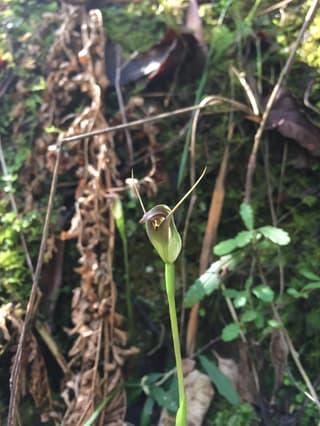
Pterostylis pedunculata, the maroonhood, is a small terrestrial orchid endemic to south-eastern Australia. From an underground tuber it produces a rosette of stalked leaves and a single hooded flower that is white and green at the base and stained deep reddish-brown to maroon over the hood, or galea. It is a winter-growing, colony-forming greenhood of forests and woodlands, sometimes even growing on the fibrous trunks of tree ferns.
Knight's plume moss
Ptilium crista-castrensis
Ptilium crista-castrensis, commonly known as Knight's plume moss, is a pleurocarpous moss of exceptional beauty. Its branches are dense, symmetrical, and pinnate, resembling bird feathers or the ornaments of medieval helmets. Ranging from light green to golden in color, this moss forms soft, extensive carpets on coniferous forest floors and decaying wood in boreal regions.
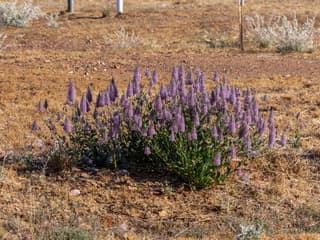
Pink Mulla Mulla
Ptilotus exaltatus
Ptilotus exaltatus is a stiff, herbaceous to semi-woody annual or short-lived perennial in the Amaranthaceae family, native to the arid and semi-arid regions across much of Australia. It produces egg-shaped to oblong leaves up to 125 mm long and striking conical flower spikes, up to 150 mm long, in shades of pink to purple, giving rise to its "mulla mulla" and "lamb's tail" common names. It is a fast grower, often flowering within weeks from seed, but has a reputation among growers for being short-lived and not entirely reliable in cultivation outside its native dry climate.
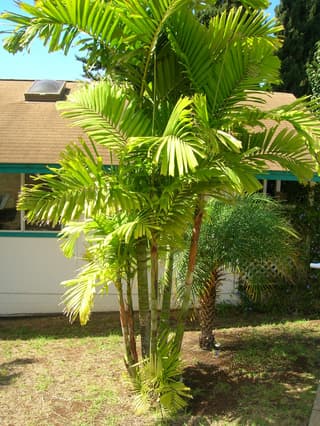
Macarthur Palm
Ptychosperma macarthurii
The Macarthur Palm (Ptychosperma macarthurii) is a clustering, multi-stemmed palm native to northern Australia and New Guinea. It produces slender, ringed canes topped with dark green, arching, pinnate fronds, forming a dense and graceful clump. Prized for its adaptability, this palm tolerates a wide range of soils, grows well both outdoors in tropical landscapes and indoors in bright rooms, and is notably resistant to pests, disease, and even lethal yellowing, a condition that affects many other palm species.
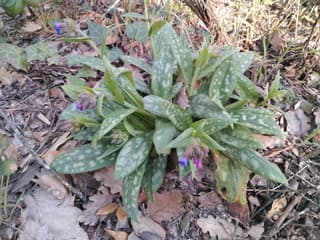
Long-leaved Lungwort
Pulmonaria longifolia
Pulmonaria longifolia, commonly called long-leaved lungwort, is a low-growing, semi-evergreen woodland perennial native to France, Great Britain, Portugal and Spain. Its long, narrow, dark green leaves are heavily dappled with silvery-white spots, forming dense clumps of textural foliage well before and after the bloom period. In spring, dense clusters of funnel-shaped flowers open from pink buds and mature to deep blue, giving each stem a two-toned display. Slow-spreading and shade-loving, it thrives in the cool, moist woodland conditions of borders and shaded slopes.
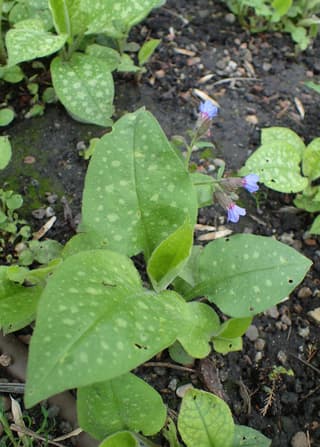
Bethlehem Sage
Pulmonaria saccharata
Pulmonaria saccharata, commonly called Bethlehem sage, is a low-growing, semi-evergreen perennial native to woodlands of France and Italy. Its lance-shaped, deep green leaves are heavily splashed with silvery-white spots, forming a dense, textural groundcover even when the plant isn't in bloom. In early spring, clusters of funnel-shaped flowers open pink and mature to vivid blue, creating a two-toned display on the same stem. Spreading slowly by creeping rhizomes, it thrives in the cool, moist shade of woodland and shade gardens.
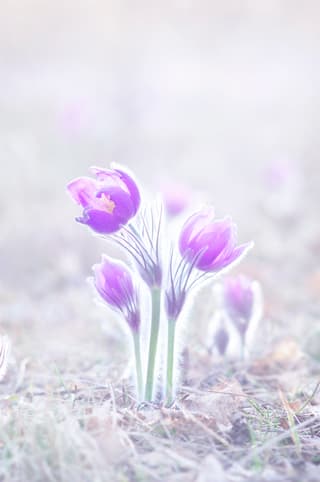
eastern pasqueflower
Pulsatilla patens
Pulsatilla patens, commonly known as the eastern pasqueflower, is a hardy perennial herb native to North America, Europe, and Asia. It is famous for being one of the first flowers to bloom in early spring, often emerging through the snow. The plant is characterized by its bell-shaped, silky-haired purple flowers and deeply divided, feathery foliage. After the flowers fade, they are replaced by striking, plume-like seed heads that remain decorative for weeks.
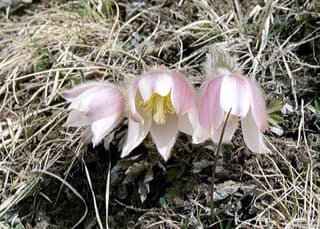
Spring pasqueflower
Pulsatilla vernalis
Pulsatilla vernalis is a low-growing alpine perennial in the buttercup family, native to the mountain meadows and rocky slopes of Europe from the Pyrenees to Scandinavia and the Balkans. It is among the first flowers to bloom each year, often pushing through the last patches of melting snow in early spring. Each nodding, bell-shaped flower is covered in silky silver hairs and opens to reveal six petal-like white to pale violet sepals flushed with purple on the reverse, surrounding a boss of golden stamens. After flowering, the plant produces feathery seed heads and finely divided, fern-like foliage that persists through summer before dying back in autumn.
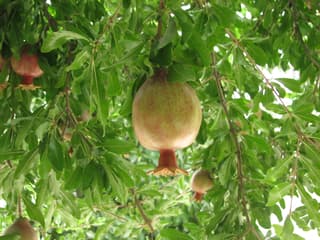
Pomegranate
Punica granatum
Punica granatum, commonly known as Pomegranate, is a fruit-bearing deciduous shrub or small tree native to the region spanning Iran to northern India. It has been cultivated for millennia and is prized for its jewel-like red arils, ornamental scarlet flowers, and deep cultural symbolism. Growing 3 to 5 meters tall, it thrives in hot, dry climates with full sun and well-draining soil.
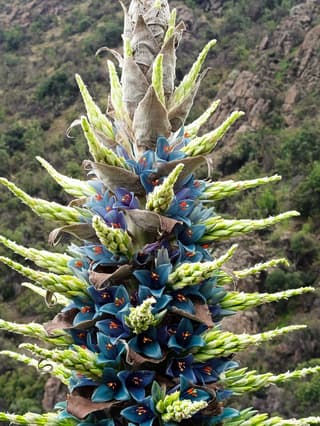
Puya
Puya
Puya is a genus of roughly 200-225 terrestrial bromeliad species native to the cool, dry slopes of the Andes Mountains in Chile, Peru, Bolivia, and Argentina. Unlike most bromeliads, Puya species grow rooted in the ground rather than as epiphytes, forming tough, spiny rosettes of silvery-green leaves. Many are monocarpic, sending up a dramatic flower spike -- sometimes several meters tall -- once in their lifetime before the rosette dies, leaving offsets behind.
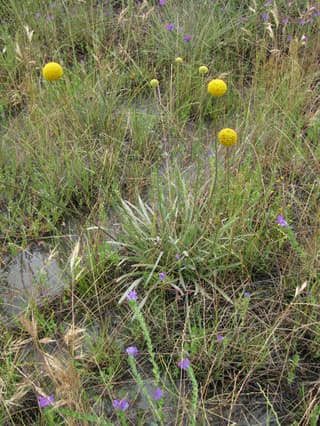
Billy Buttons
Pycnosorus globosus
Craspedia (Pycnosorus globosus) is a perennial herbaceous plant in the Asteraceae family, native to the grasslands and temporary wetlands of southeastern Australia (New South Wales, Queensland, South Australia, Victoria). It is recognizable by its compact, globose flower heads of intense golden yellow, borne on long, rigid stems that can reach 35 to 47 inches (90 to 120 cm) in height, rising above low-growing, persistent silvery-gray foliage. Highly valued in fresh or dried bouquets, it regenerates easily by seed, particularly after fire in its natural habitat.
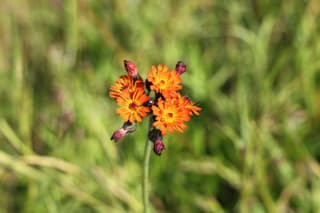
Orange hawkweed
Pylosella aurantiaca
Orange hawkweed (Pilosella aurantiaca, syn. Hieracium aurantiacum) is a low-growing perennial herb from the Asteraceae family, native to the mountain meadows of central, eastern, and northern Europe. It forms a basal rosette of oblong, slightly hairy grayish-green leaves and, in spring and summer, sends up one to several hairy stems bearing clusters of striking fiery orange to brick-red flower heads. The plant spreads via above-ground runners (stolons) and creeping rhizomes, allowing it to quickly form dense mats—consequently, in North America and several other regions outside its native range, it is considered an aggressive invasive species that displaces native vegetation in meadows and pastures.
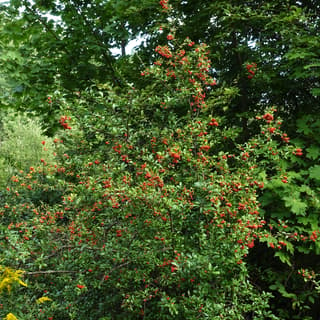
Scarlet Firethorn
Pyracantha coccinea
Pyracantha coccinea (Scarlet Firethorn) is a thorny, broadleaf semi-evergreen shrub native to Southern Europe and Western Asia. It is prized for its dense clusters of small white flowers in late spring and its profuse display of brilliant orange-red berries that persist through winter, providing vital food for birds. The plant forms dense, impenetrable thickets due to its sharp thorns, making it an excellent barrier hedge or security planting.
Pyronema omphalodes
Pyronema omphalodes
Pyronema omphalodes, commonly known as the charcoal cushion or bonfire fungus, is a pyrophilous ascomycete fungus. It typically appears as bright orange to salmon-colored, cushion-like masses on recently burned soil or sterilized substrates. It is a pioneer species that thrives in the alkaline, nutrient-rich environment created by fire, often appearing within weeks of a burn.
Find the Perfect Plant
Our plant guide helps you find ideal species for your experience level and time of year.
Browse by Difficulty, Season & More
Use the filters below to narrow this catalog by care difficulty, season, environment, or search directly by name. Each filter leads to a focused list tailored to your specific growing conditions.