How to Care for Gardenia in Pots or Gardens: Light, Acidic Soil, Watering, and Buds
How to care for gardenia in pots or the garden: morning sun, acidic soil, consistent watering, and humid air. Learn why buds drop, when to prune, and why it is known as difficult.
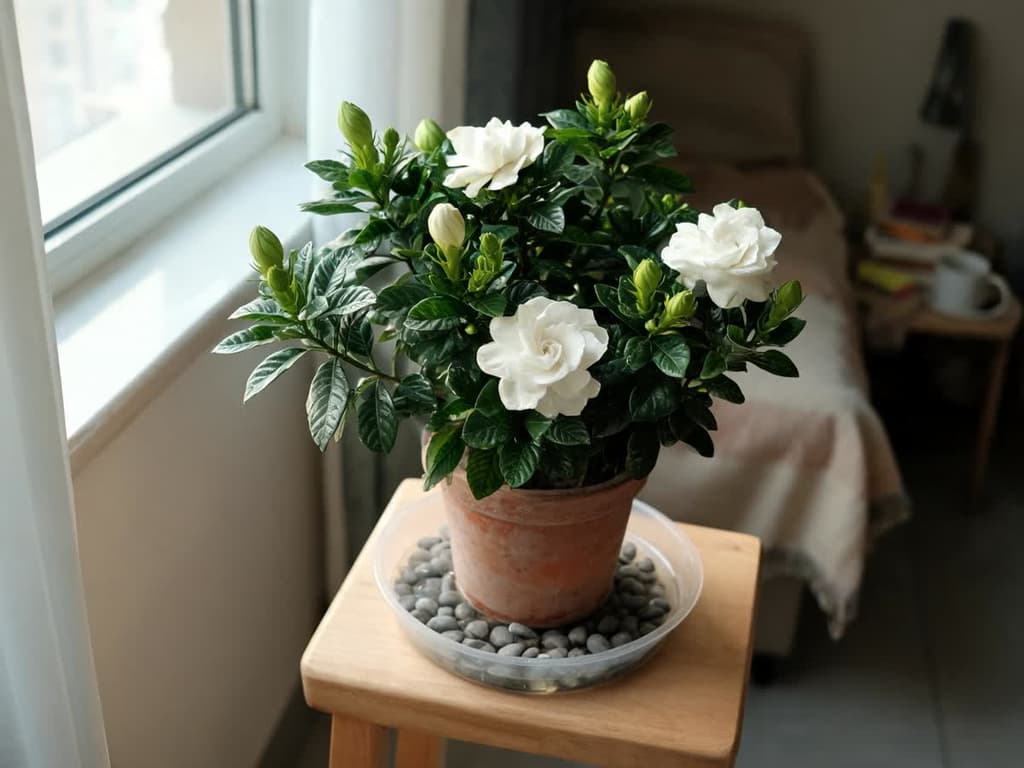
To care for a gardenia, place the plant where it gets morning sun and afternoon shade. Plant it in acidic, well-draining soil, and keep the soil consistently moist without waterlogging. Indoors, gardenias require humid air. Only prune right after blooming ends so you do not cut off next year's buds.
If your gardenia just arrived and is dropping buds, in most cases it can still be saved. Store-bought gardenias grow in greenhouses. According to the New York Botanical Garden (NYBG), moving the plant to an average home can cause bud drop. A dropped bud will not grow back, but the plant remains alive. Do not repot it now and do not move the plant around daily.
The figures in this guide come from university extension services in the United States, university programs that publish guidance for plant growers. These include Clemson (South Carolina), UF/IFAS (University of Florida), and NC State (North Carolina). They also come from the NYBG and a study on bud formation published in Acta Horticulturae. These sources are from the Northern Hemisphere. For this reason, the guide refers to seasons and only cites a month when it says "in Brazil."
Quick summary:
The gardenia (Gardenia jasminoides), also called Cape jasmine, prefers morning sun and afternoon shade, according to Clemson.
The ideal soil is acidic, with a pH (a measure of acidity; below 7 is acidic) between 5.0 and 6.0. Above 7.0, iron in the soil becomes unavailable to the roots (Clemson).
The NYBG states that gardenias struggle when humidity drops below 60%.
Pruning should be done right after the main bloom period. Trimming in late summer or fall removes the buds for the following year.
Gardenia in pots or the garden: care summary table
Care factor | What to do | Source |
|---|---|---|
Light | Morning sun and afternoon shade; indoors, your brightest window without harsh afternoon sun | Clemson, NYBG |
Soil | Acidic (pH 5.0 to 6.0), rich in organic matter, and well-draining | Clemson, UF/IFAS |
Watering | Consistently moist soil, never waterlogged; in pots, water when the top 0.4 inches (1 cm) of soil feels dry to the touch | NYBG, Clemson |
Water type | Rainwater or distilled water for potted plants; tap water can raise soil pH over time | NYBG |
Humidity | 60% or higher; a pebble tray with water or a humidifier | NYBG |
Fertilizer | Fertilizer formulated for acid-loving plants during the growing season; none in the fall | NYBG, Clemson |
Pruning | Right after the main bloom ends | Clemson, NYBG |
Cold tolerance | Cold-sensitive; severe winter temperatures can kill top growth | Clemson |
Cats and dogs | Toxic: mild vomiting, diarrhea, and hives | ASPCA |
Why gardenias have a reputation for being difficult
Three American institutions describe the gardenia as demanding. Clemson calls gardenias high-maintenance plants because they have specific growing requirements. UF/IFAS notes that they can be challenging to maintain. The NYBG characterizes potted gardenias as finicky and difficult to get to rebloom.
There are three specific reasons, and each is supported by research:
Soil must be acidic. At a pH above 7.0, iron remains in the soil, but the roots cannot absorb it (Clemson). New leaves turn yellow with green veins.
Buds are sensitive to any change. Clemson lists roughly ten causes for bud drop: watering issues, light shifts, heat, cold, and pests. The NYBG notes that simply moving the plant to a new location can cause buds to drop.
Sap-sucking pests. According to UF/IFAS, pests are the most common issue for gardenias. These insects secrete a sugary honeydew on which sooty mold, a black fungus, thrives (Clemson).
Where to place your gardenia: light and morning sun
Gardenias bloom best with morning sun and afternoon shade, according to Clemson. NC State suggests bright indirect light or partial shade. Harsh afternoon sun scorches leaves: the NYBG advises protecting the plant from direct afternoon sun to prevent leaf burn.
In warm climates, the guide from the Gardenia.net website advises protecting the plant from harsh midday and afternoon sun. In Brazil, in the garden, choose an east-facing bed that receives only morning sun. Avoid a west-facing wall, which catches the hottest sun of the day. Dense shade also interferes: without enough light, the gardenia will not set blooms (NYBG).
Protect the plant from strong winds and cold drafts. NC State recommends sheltering gardenias against both to prevent winter burn, which dries out foliage. Very hot and dry conditions also cause bud drop, according to Clemson.
Growing gardenias indoors
Indoors, the gardenia needs the brightest window you have. The NYBG recommends an east-facing window, right next to the glass. The other option is to place the plant about 4 feet (1.2 m) from a window with strong sun. In Brazil, the window with strong sun is the one facing north.
Rotate the pot a quarter turn each time you water so light reaches all the foliage evenly (NYBG). No study has measured whether rotating causes bud drop, though the NYBG notes that moving the plant can drop buds. The safest approach is rotating only after flowers open. In summer, sheer curtains or moving the pot 1 to 2 feet (30 to 60 cm) further from the window prevents leaf scorch. In winter, days are shorter, so the NYBG recommends moving the plant closer to the glass.
Acidic soil for gardenias
Gardenias need rich, well-draining, acidic soil. Clemson recommends a pH range of 5.0 to 6.0. UF/IFAS accepts 5.0 to 6.5, while the NYBG cites 4.5 to 6.0. The range supported by all three sources is 5.0 to 6.0.
Above pH 7.0, iron becomes inaccessible, causing new growth to turn yellow (Clemson). UF/IFAS notes that if your soil pH is above 7.0, it is better to choose a different plant or grow your gardenia in a container. A pH test kit from a garden center shows your soil's current level.
Did you plant next to a wall, sidewalk, or foundation? Lime leaching from concrete and mortar raises the pH of surrounding soil (Clemson). NC State issues the same warning regarding soil near concrete sidewalks and foundations.
For pots, use commercial potting mix made for acid-loving plants, often sold for azaleas and camellias. The acidic potting soil recipe for camellias works as a reliable baseline, since camellias also thrive in acidic soil. Water quality matters too: the NYBG points out that municipal tap water can gradually increase container soil pH over time.
How to water your gardenia
Gardenias prefer soil that stays evenly moist, never soggy. In containers, the NYBG advises watering whenever the top 0.4 inches (1 cm) of soil feels dry to the touch. Water in the morning until moisture flows freely from the drainage hole. After 15 minutes, empty any standing water left in the saucer.
In winter, plant growth slows down. The NYBG recommends letting the top 1 to 2 inches (2.5 to 5 cm) of soil dry out before watering again. Use room-temperature water, ideally rainwater or distilled water, since neither contains the alkaline minerals that drive up soil pH (NYBG).
In outdoor beds, Clemson recommends watering once a week during dry summer spells. Drip irrigation that wets only the soil prevents leaf spotting (Clemson). Clemson also suggests mulching with a 2- to 3-inch (5 to 8 cm) layer of shredded pine bark, pine needles, or compost. Mulch retains soil moisture longer.
Clemson states that root rot is one of the most common and destructive diseases affecting gardenias. It develops in waterlogged soil. Never let the base of the container sit in stagnant water, whether inside a cachepot or on a drainage tray. In a pebble tray setup, ensure the water level stays below the bottom of the pot.
Humidity requirements for gardenias
Potted gardenias suffer when relative humidity drops below 60%, according to the NYBG. In dry air, buds turn brown and drop off, and leaf tips dry out. A hygrometer, an inexpensive tool that tracks ambient humidity, tells you if your space hits this mark.
To boost humidity, place a wide tray filled with pebbles and water beneath the pot, ensuring the water never touches the pot bottom. Another option is running a humidifier nearby. The NYBG advises against misting leaves directly, as standing water droplets stain petals and foster fungal diseases.
Dry air also invites spider mites. The NYBG notes that these pests are a telltale sign of low surrounding humidity. Spider mites produce yellow stippling across foliage and fine webbing among stems; our guide on spider mites on plants details how to identify them.
Fertilizing gardenias: timing and rates
Use fertilizer formulated for acid-loving plants, the same type used for azaleas and camellias. This food helps maintain lower soil pH. The NYBG recommends an acidic plant food enriched with iron, as young leaves turn yellow when the plant cannot take up enough iron.
In pots, the NYBG advises fertilizing every 2 to 4 weeks during the growing season, using half the strength recommended on the package. Full-strength fertilizer can burn the roots. In Brazil, the growing season runs roughly from September to March.
In landscape beds, Clemson recommends a different approach: apply a light feeding in spring after frost danger has passed, followed by a second round 6 weeks later. UF/IFAS feeds gardenias in garden beds two to three times annually. Potted plants need fertilizer more frequently because limited soil volume loses nutrients with each watering.
Do not fertilize in fall. Clemson warns that late-season fertilizing forces tender new shoots that freeze and die in winter cold. NC State offers the same advice. Overfertilizing also leads to bud drop, according to Clemson.
The camellia also thrives in acidic soil and uses the same fertilizer formulated for acid-loving plants.
Temperature: are cold nights required?
The most commonly repeated rule states that gardenias only set buds with night temperatures between 15 and 17 °C. The NYBG gives this range for potted plants. Clemson gives a lower figure for the garden: nights between 10 and 13 °C.
A study tested this idea in growth chambers, where temperature is controlled. Researchers Makridou and Economou exposed young plants to night temperatures of 12, 18, and 24 °C. According to the abstract published in Acta Horticulturae, all three temperatures formed buds.
The same study found another factor: day length. Plants with 8 or 12 hours of light formed more buds than plants with 16 hours. This guide follows the study because it measured under controlled conditions, while the other sources do not cite measurements.
In practice, warm night temperatures do not stop young plants from forming flower buds, according to the study. Bud drop stems from different triggers. The NYBG lists high indoor temperatures as the most frequent culprit. Clemson highlights sudden temperature swings, unseasonal cold snaps, and hot, arid weather. Keep your plant in a stable temperature zone away from air conditioners, heating vents, and exterior entryways.
Gardenias are sensitive to cold. Clemson states that a severe winter can kill the entire aboveground portion of the plant. Often, the plant resprouts in spring. In Brazil, the risk of a severe winter exists in the South and in the mountains: on frost nights, move the pot to a sheltered spot.
Why gardenia buds drop
Bud drop happens when the plant experiences environmental stress, not because of a disease pathogen. Clemson categorizes bud drop as a cultural disorder and notes that no chemical spray will treat it. Applying neem oil or fungicides to buds will not stop them from falling.
Clemson's list of causes includes overwatering, underwatering, poor soil drainage, inadequate light, overfertilization, and sudden temperature shifts. Other factors include hot, dry weather, pests such as thrips (tiny insects) and aphids, and nematodes, which are microscopic roundworms that damage roots. The NYBG adds low humidity and moving the pot to the list, naming elevated indoor temperatures as the primary trigger.
With newly purchased gardenias, disturb the plant as little as possible. The NYBG suggests leaving the plant in its nursery pot at first, because repotting right away triggers flower loss. Pick a permanent spot, water when the top 0.4 inches (1 cm) of soil is dry to the touch, and wait for fresh buds to form.
Yellow leaves on gardenias
Yellow leaves on gardenias point to two possible causes, which you can identify by where the yellowing occurs. Lower, interior foliage naturally turns yellow and drops off in small numbers as part of normal growth cycles (NYBG). Clemson notes that this shedding of old leaves typically occurs in early spring, just before fresh growth begins.
Young foliage turning yellow while veins remain distinctly green indicates iron chlorosis (yellowing caused by an inability to absorb iron). Clemson states that it primarily affects new leaves. The root cause is usually insufficiently acidic soil, rather than a lack of iron in the soil itself.
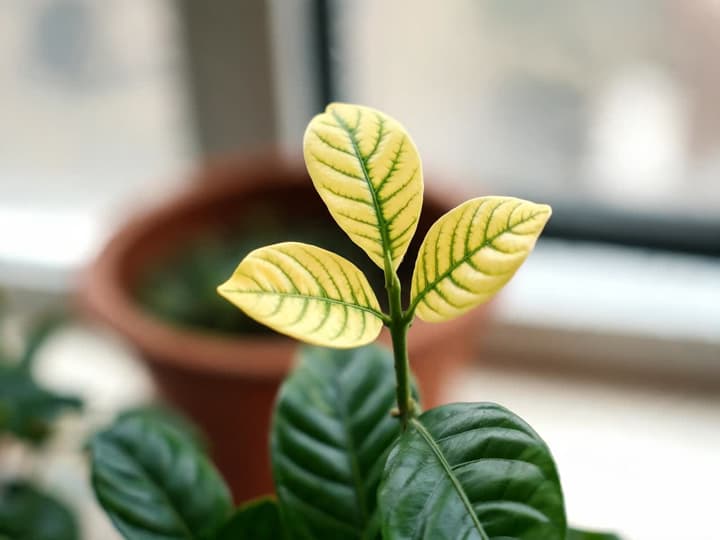
Clemson recommends adjusting soil pH as the permanent fix. For potted plants, that means using rainwater or distilled water along with soil and fertilizer made for acid-loving plants. An iron-supplemented fertilizer helps young foliage green up, but the problem returns unless you lower soil pH.
Gardenia pests and sooty mold
The most frequent gardenia pests are sap-sucking insects. UF/IFAS lists scale insects, aphids, mealybugs, and whiteflies. Clemson notes that whiteflies are the single most common pest problem for gardenias in South Carolina.
Sooty mold appears as a dark, powdery coating covering upper leaf surfaces. It feeds on the sugary honeydew excreted by sap-sucking pests (Clemson). Clemson explains that sooty mold is largely a cosmetic issue and treatments must target the underlying pests, not the mold itself.
UF/IFAS recommends insecticidal soap or horticultural oil, which control these pests when used according to the package instructions. The article on mealybugs shows how to recognize the mealybug, the one with white tufts.
Unsure which pest is infesting your leaves? Bloom (available for iOS) identifies plants from a photo and diagnoses issues through its Premium subscription.
Pruning gardenias: immediately after blooming
Prune your gardenia right after the main flush of blooms wraps up. Clemson advises pruning at this stage to trim back overly long branches and cut off spent flowers. The NYBG also recommends pruning promptly after flowering. Cut just above an outward-facing bud (the small shoot tucked into the leaf axil).
NC State suggests spring pruning and notes that flowers emerge on fresh wood. Clemson and the NYBG advise pruning right after flowering, and this guide follows both sources. The reason comes down to timing. Southern Living Plants, a commercial grower, notes that gardenias start setting flower buds for the coming year in late summer. No research institution has verified that exact timeframe, so pruning right after blooming remains the safest choice. Pruning in late summer or fall removes these developing flower buds.
NC State explains that removing faded flowers throughout the blooming period encourages continuous flowering. Snip off the spent flower stem right beneath the bloom base.
Are gardenias toxic to cats and dogs?
Yes. The ASPCA, an animal poison control center in the United States, classifies the gardenia (Gardenia jasminoides) as toxic to dogs, cats, and horses. Signs on the ASPCA list are mild vomiting, diarrhea, and hives.
If your pet chewed on the plant, call your veterinarian. The gardenia profile in Bloom also classifies the species as toxic, consistent with the ASPCA.
Frequently asked questions
Do gardenias grow better in pots or planted in the ground?
Both methods work well. A container is the right choice when your garden soil pH runs above 7.0, according to UF/IFAS. Pots allow you to control soil acidity and bring plants indoors during frosty nights. Clemson notes that compact cultivars perform reliably in pots.
Are coffee grounds good for gardenias?
None of the university sources in this guide recommend coffee grounds for gardenias. To address soil that is not acidic enough, they advise testing pH and applying mixes and fertilizers intended for acid-loving plants. If you choose to apply coffee grounds, test your soil pH before and after to check if it made any measurable difference.
How many times a year do gardenias flower?
Gardenias primarily bloom once a year, from late spring into early summer, according to Gardenia.net. Certain cultivars produce sporadic flowers throughout summer. Deadheading spent flowers helps encourage new buds, according to NC State.
Can you grow a gardenia indoors?
Yes, but it is a demanding houseplant. The NYBG notes that many people treat potted gardenias as temporary floral displays, discarding them after flowers fade. To keep one thriving long term, give it your brightest window, provide at least 60% ambient humidity, and water consistently.
Related articles

How to Care for Hibiscus: Sun, Watering, Fertilizer, and Pruning for Flowers
How to care for hibiscus: 6 hours of direct sun, evenly moist soil without waterlogging, half-strength fertilizer in spring and summer, and pruning in early spring. Find out why the flower lasts one day and why buds drop before opening.

Do Ferns Like Sun or Shade? It Depends on the Type
Ferns prefer bright shade: plenty of light, but no direct sun on their fronds. Tuberous sword fern is the exception that handles sun. Here is the ideal light for each type, where to place pots, and how fronds show too much or too little light.

African Violet Yellow Leaves: Causes and What to Do
Yellow leaves on an African violet usually stem from overwatering, and the first place to check is the center of the plant. Losing one lower leaf at a time is normal. Identify whether age, watering, cold water, sunlight, cold drafts, or fertilizer is the culprit based on the yellowing pattern, and see what to do today.