Gardenia with Yellow Leaves: Causes and What to Do
A gardenia with yellow leaves usually lacks iron due to low-acid soil, but old leaves dropping during season changes are normal. Learn how to pinpoint the causes by leaf and soil, and how long recovery takes.
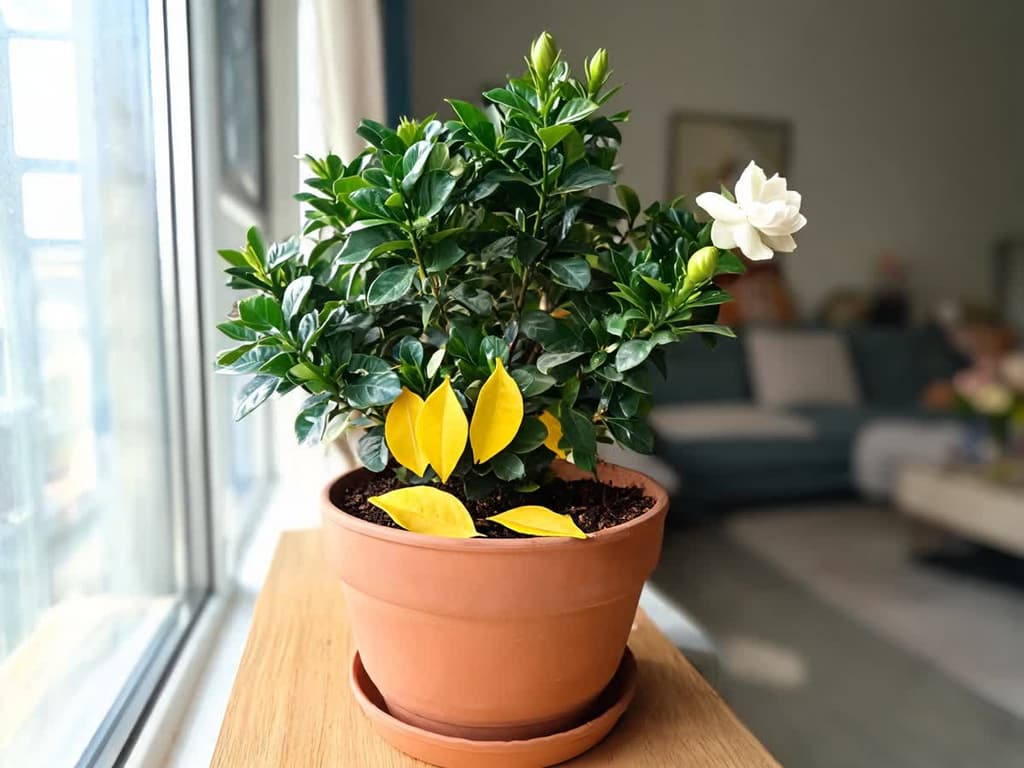
A gardenia with yellow leaves at the top of the branches, where new growth forms, is usually dealing with iron deficiency. That is according to the University of Florida Extension (UF/IFAS). Iron is usually present in the soil, but roots cannot absorb it when the soil is not acidic enough (Clemson). A few older interior leaves yellowing and dropping are normal, according to UF/IFAS, especially in early spring and fall.
In most cases, the gardenia can be saved. Before trimming leaves or changing your watering routine, check three things: which leaves turned yellow (new ones at the tip, or old ones at the base), whether the veins remain green, and whether the soil stays constantly wet. These three answers separate the causes, and each cause requires a different fix.
The sources for this guide are university extensions in the United States, services from universities that publish guidance for plant growers, and the New York Botanical Garden (NYBG). They come from the Northern Hemisphere, where the seasons fall in opposite months to Brazil. For this reason, this guide refers to seasons, such as spring and fall, and only mentions months when it states "in Brazil."
Quick summary:
Yellow new growth with green veins: iron chlorosis; the plant cannot absorb iron because the soil is not acidic enough.
A small number of older interior leaves yellowing and dropping in early spring or fall: normal leaf shedding.
Leaves yellowing starting from older foliage with constantly wet soil, sometimes with wilting: suspect root rot.
Yellow foliage covered by a black coating or sticky leaves: sap-sucking pests, such as scales and whiteflies.
Iron chelate starts greening up the gardenia in about 2 weeks, according to a Cornell University experiment.
Which leaf turned yellow: the chart that isolates the causes
The position of the yellow foliage and the condition of the soil point to the most likely cause for a gardenia with yellow leaves. Start with the first column and check the soil by sticking your finger into it.
What you see | Soil condition | Likely cause | First step |
|---|---|---|---|
Yellow new leaves at the tip, green veins | Moist, not waterlogged | Iron chlorosis (iron deficiency caused by high pH) | Measure pH and apply iron chelate |
A few yellow older interior leaves dropping, green branch tips | Moist, not waterlogged | Normal leaf shedding | Nothing; clear away fallen leaves |
Entire plant turns light green, older leaves even lighter | Moist, not waterlogged | Nitrogen deficiency | Fertilizer for acid-loving plants |
Older leaves turn yellow first, sometimes wilting | Wet for days | Root rot | Remove from pot and inspect roots |
Yellowing with a black coating or sticky leaves | Any condition | Sap-sucking pests | Check leaf undersides |
The page on yellow leaves on gardenia lists the pests and diseases that cause this symptom. The sections below explain how to confirm each cause and what actions to take.
Yellow new growth with green veins: iron chlorosis
Iron chlorosis is the yellowing of foliage caused by the plant's inability to take up iron from the soil. On gardenias, it appears as yellow new leaves with green veins. Clemson (Clemson University, South Carolina) notes that iron chlorosis primarily affects new growth.
The underlying cause is usually soil pH, the measure of acidity (below 7 is acidic, above 7 is alkaline). Clemson explains that the soil usually contains sufficient iron, but it becomes unavailable to the roots when the pH rises above 7.0. Sources suggest slightly different ideal ranges: 5.0 to 6.0 (Clemson), 5.0 to 6.5 (UF/IFAS), and 4.5 to 6.0 (NYBG). The range shared across all three is 5.0 to 6.0, which this guide follows.
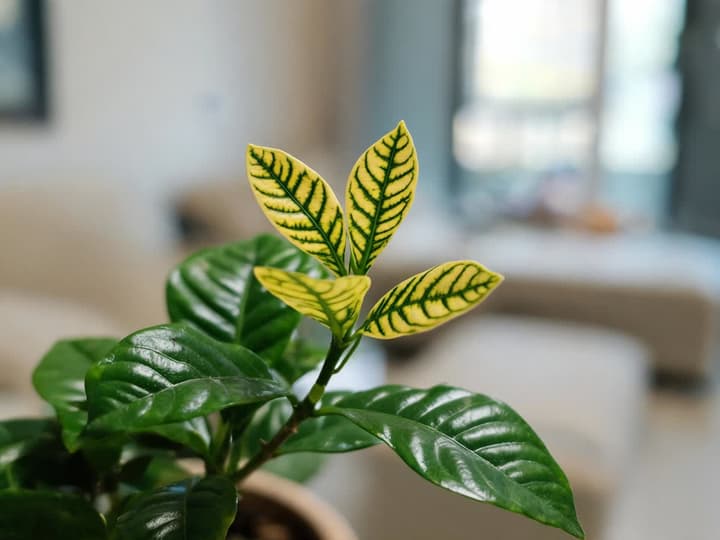
In containers, NYBG notes that tap water and the wrong fertilizer can alter soil pH. In the garden, Clemson warns that lime from concrete and mortar leaches into the soil near walls and sidewalks. NC State (North Carolina State University) also states that near concrete foundations or walkways, the soil can become too alkaline for gardenias.
How to correct chlorosis: iron chelate and soil pH
Fixing chlorosis involves two steps: iron chelate restores leaf color within weeks, and correcting the pH prevents yellowing from returning. Clemson recommends testing soil pH before starting any treatment. Soil pH test kits are available at garden centers.
Iron chelate provides iron in a chemical form that roots can absorb even under high pH conditions. In a Cornell University experiment with gardenias, plants began greening up about 2 weeks after chelate was applied to the soil. A single application lasted 2 to 6 months, depending on watering volume, since water leaches iron from the soil.
There are two approaches to application. Clemson permits applying chelate to the soil or spraying it onto the leaves. In the Cornell experiment, spraying chelate on leaves or applying dry powder to the soil damaged the plants, while dissolving chelate in water and drenching the soil caused no harm. This guide follows Cornell, because its 1956 greenhouse experiment tested gardenias directly and noted damage from the other two methods. Dissolve the chelate in water at package rates and drench the soil.
The type of chelate depends on the soil pH. New Mexico State University and Utah State University extensions recommend EDDHA chelate for soils with a pH above 7. The chelate abbreviation appears on the package. EDTA chelate, the most common type, performs better in soils with a pH below 7, according to New Mexico extension. These two sources refer to plants in general, not specifically gardenias.
To adjust pH, Clemson suggests elemental sulfur or aluminum sulfate applied at label rates to the soil beneath the plant. Clemson also cautions that this treatment is not permanent in naturally alkaline soils, meaning chelate applications must be repeated whenever yellowing returns. UF/IFAS considers soil pH difficult to change and suggests applying iron directly. This guide recommends both in this order: chelate acts within weeks, and pH correction helps keep yellowing from returning.
UF/IFAS notes that in soil with a pH above 7.0, it is worth considering another plant or growing the gardenia in a container. For potted plants, use potting mix and fertilizer formulated for acid-loving plants and, if possible, distilled water as suggested by NYBG.
Camellias and azaleas also prefer acidic soil and display the same chlorosis. The guides on camellia with yellow leaves and azalea with yellow leaves follow the same pH principles for both plants.
Older bottom leaves yellowing and dropping: normal shedding
Gardenias lose some older leaves every year, even though they stay green year-round. UF/IFAS states that older yellow leaves dropping is normal, especially in early spring and fall. Clemson says shedding happens in early spring before new growth appears.
Normal shedding presents three simultaneous signs: few leaves affected, exclusively the oldest foliage inside the plant canopy, and active, green branch tips. In this scenario, do nothing. Clean up dropped foliage from the pot or garden bed and maintain regular watering routines.
When all foliage turns light green and older leaves fade even further, nitrogen deficiency could be the culprit, as nitrogen is a primary fertilizer nutrient. University of Maryland Extension states that nitrogen deficiency appears first on older foliage, which becomes paler and smaller. This source covers trees and shrubs in general. If the gardenia has gone months without fertilizer, apply an acid-plant fertilizer diluted to half the package strength, as recommended by NYBG.
The guide on yellow leaves on any plant explains the differences among underwatering, overwatering, and nutrient deficiencies across other species.
Epsom salt on gardenias: only with a soil test
Epsom salt (magnesium sulfate) only benefits gardenias when the soil lacks magnesium. New Zealand fertilizer manufacturer Tui recommends "a good dose" of Epsom salt for gardenias with yellow leaves. Washington State University (WSU) Extension states the opposite.
Linda Chalker-Scott of WSU wrote that recommending Epsom salt without evaluating the soil and plant requirements is irresponsible. She notes that without a soil test confirming magnesium deficiency, there is no reason to apply it. Maryland Extension recommends Epsom salt for magnesium deficiency, which causes interveinal chlorosis on older leaves followed by reddish patches.
This guide follows WSU: use Epsom salt only if a soil test confirms a magnesium deficiency. In pots, WSU points out that excess salts accumulate because they cannot leach away freely, which can scorch foliage.
Yellowing with constantly wet soil: root rot
Root rot is a cause of yellow leaves on gardenias that can kill the plant. Clemson states it is one of the most common and destructive gardenia diseases in South Carolina. It appears most frequently when soil stays waterlogged. Symptoms can develop gradually or suddenly: older leaves turn yellow first, and severely affected plants can suddenly wilt and die.
Root rot is easily confused with normal leaf shedding because both begin on older leaves. The distinction lies in the soil and the number of leaves involved. Soil that remains wet for days, many leaves yellowing simultaneously, and foliage wilting despite moist soil point toward the roots.
To confirm, unpot the gardenia and inspect the root system. Clemson notes that healthy gardenias have fine white roots. Brown, mushy roots that collapse when touched are rotted.
If white roots remain, trim away the rotted sections using clean shears and repot into fresh mix for acid-loving plants inside a container with drainage holes. Afterward, water only when the top 0.5 inches (1.3 cm) of soil feels dry to the touch, which is the benchmark NYBG recommends for potted gardenias. Empty the drainage saucer 15 minutes after watering, as NYBG advises.
Nematodes, microscopic roundworms that attack roots, cause similar yellowing and wilting. UF/IFAS notes that there are no chemical treatments for nematodes in home garden plantings. It recommends maintaining a 3-inch (7.5 cm) layer of organic mulch, such as pine bark or compost, over the soil.
Newly purchased gardenias yellowing and dropping leaves
Gardenias bought within the past few weeks commonly drop flower buds due to changes in environment. NYBG explains that they grow in greenhouses under controlled light, humidity, and temperature, whereas average homes are very different. NYBG states that this environmental shift and repotting immediately upon arrival trigger bud drop.
None of the consulted sources state that the relocation alone causes yellow leaves. Yellow foliage during this stage requires the same chart-based triage, starting with soil moisture. Avoid fluctuating between underwatering and overwatering: Clemson lists both overwatering and underwatering as triggers for bud drop. Water only when the top 0.5 inches (1.3 cm) of soil feels dry to the touch rather than relying on a calendar schedule.
Avoid repotting or relocating the plant weekly. Choose a spot that receives morning sun and afternoon shade, as Clemson recommends, and watch for new growth. If new leaves emerge yellow with green veins, return to the iron chlorosis section.
Yellow leaves in cold weather
Cold soil also turns gardenia leaves yellow. Clemson includes soil temperatures below 70 °F (21 °C) among the causes of yellowing and leaf loss. In the Cornell experiment, gardenias grown in soil at 50 °F (10 °C) struggled to take up iron and developed yellow foliage.
In Brazil, winter runs from June to August. During this time, a potted gardenia resting on a cold porch floor can turn yellow even with the correct pH. Raise the pot off the floor with a stand and keep the plant away from cold drafts. The same Cornell experiment shows that iron chelate in the soil corrected chlorosis even with the soil at 10 °C (50 °F).
Yellow leaves with black patches or sticky residue: scale and whiteflies
Yellow foliage accompanied by a black surface layer or a sticky coating signals sap-sucking pests. Clemson lists yellowing and premature leaf drop among the signs of whiteflies, the most common gardenia pest in South Carolina. Scale insects also turn leaves yellow.
The black coating is sooty mold, a fungus that grows on the sugary honeydew excreted by these insects. UF/IFAS explains that controlling sooty mold requires eliminating the insects rather than treating the mold itself.
UF/IFAS lists insecticidal soap and horticultural oil as safe options against these pests. Spray at the label rate, including the undersides of leaves, and repeat at the interval indicated on the package. Mealybugs, the ones with white cottony tufts in the leaf axils, are covered in the guide on mealybugs. Pale speckles on the leaf and a fine web underneath indicate spider mites, which Clemson says are worse in hot, dry weather.
Unsure which pest is hiding under the leaves? Bloom (available for iOS) identifies plants from photos and diagnoses plant health issues with its Premium plan.
Frequently asked questions
Do yellow gardenia leaves turn green again?
With iron chlorosis, foliage turns green again. In the Cornell experiment, gardenias began greening up about 2 weeks after soil applications of iron chelate. None of the consulted sources state whether older leaves that yellowed during seasonal turnover can regain their green color. Those leaves typically drop naturally, and recovery is marked by new leaves emerging green.
Should I remove yellow leaves from my gardenia?
You can pluck them off or let them drop naturally. An advisory response from Oregon State University Extension concerning a different shrub mentions that you can remove yellow leaves or allow them to fall on their own. Removing the leaf does not address the underlying cause. Before trimming, use the foliage as a diagnostic clue: their position reveals whether the issue stems from iron deficiency, root problems, or seasonal leaf turnover.
Does harsh sunlight make gardenia leaves turn yellow?
The consulted sources do not connect gardenia leaf yellowing to intense sun exposure. Clemson recommends morning sun with afternoon shade, and NYBG advises shielding potted gardenias from direct afternoon rays. If your gardenia receives full-day sun and turns yellow, try shifting it to a spot with morning light only and verify the other factors listed in the chart. UF/IFAS permits full sun in Florida, but this guide follows Clemson and NYBG in recommending afternoon shade as the safer choice.
What is the best fertilizer for a gardenia with yellow leaves?
Use fertilizer formulated for acid-loving plants, the same type used for azaleas and camellias. NYBG recommends an acidic fertilizer containing iron, diluted to half the strength listed on the package. Clemson advises against fertilizing gardenias in the fall because feeding stimulates tender new growth that winter cold can kill. Above pH 7.0, Clemson notes that soil iron becomes unavailable, meaning chelate applications or pH amendments must precede fertilizing.
What to do today for a gardenia with yellow leaves
Identify which leaves turned yellow and check the soil with your finger to feel its moisture level. If new foliage shows yellowing between green veins, test the pH and drench the soil with dissolved iron chelate. If only a few older leaves are affected while shoot tips remain green, leave the plant alone.
If the soil has remained wet for days and widespread yellowing develops, unpot the gardenia and inspect its root system today. For iron chlorosis, wait about 2 weeks to evaluate the chelate treatment, which matches the timeframe gardenias required to start greening up in the Cornell experiment.
Related articles
How to Care for Hibiscus: Sun, Watering, Fertilizer, and Pruning for Flowers
How to care for hibiscus: 6 hours of direct sun, evenly moist soil without waterlogging, half-strength fertilizer in spring and summer, and pruning in early spring. Find out why the flower lasts one day and why buds drop before opening.

Do Ferns Like Sun or Shade? It Depends on the Type
Ferns prefer bright shade: plenty of light, but no direct sun on their fronds. Tuberous sword fern is the exception that handles sun. Here is the ideal light for each type, where to place pots, and how fronds show too much or too little light.

African Violet Yellow Leaves: Causes and What to Do
Yellow leaves on an African violet usually stem from overwatering, and the first place to check is the center of the plant. Losing one lower leaf at a time is normal. Identify whether age, watering, cold water, sunlight, cold drafts, or fertilizer is the culprit based on the yellowing pattern, and see what to do today.