How to Care for Pothos: Keep It Full, from Light to Pruning
How to care for pothos at home: the right light, when to water, and how to prune. See why it gets leggy, how to keep pothos full, when to use a moss pole, and pet toxicity risks.
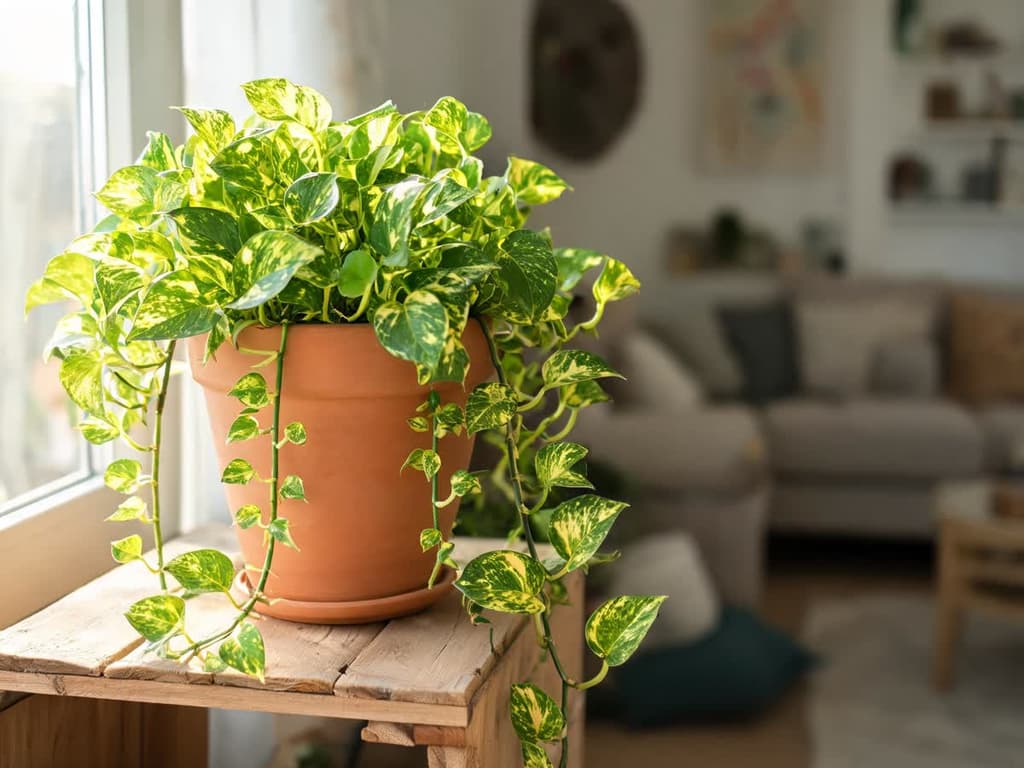
To care for pothos (Epipremnum aureum), place the pot in a bright spot without direct sun on the leaves. Water when the soil surface feels dry to the touch, and use a pot with drainage holes at the bottom. Prune long, leafless stems to keep the plant bushy and full.
Pothos survives in almost any corner, which is why so many pothos plants become leggy and sparse. It will not die in low light, but it puts out small leaves. Over time, the leaves closest to the pot drop, leaving just a tuft at the tip of each vine. The plant is also toxic to cats, dogs, and children.
A pothos with yellow, sparse, or wilting leaves can usually be saved. Each stem tip with a node and a green leaf roots in water in 3 to 4 weeks, according to the University of Wisconsin Extension. Even if the roots are lost, healthy tips become a new plant. Extension is the public outreach service maintained by American universities.
Care | What to do |
|---|---|
Light | Bright, near a window, without direct sun on the leaves |
Watering | When the soil surface feels dry to the touch |
Temperature | Between 60°F and 85°F (16°C to 29°C); cold between 33°F and 40°F (1°C to 4°C) spots leaves |
Humidity | 50% to 70% is ideal; average household humidity (30% to 60%) works too |
Fertilizer | Every 2 months in spring, summer, and fall (from September to May in Brazil); none in winter |
Cats, dogs, and children | Toxic: keep out of reach |
Is your plant actually a pothos?
Pothos is Epipremnum aureum, a climbing vine with heart-shaped leaves that are solid green or variegated with yellow or white. It is also called devil's ivy, and in the United States, golden pothos. Some stores still sell pothos as Epipremnum pinnatum. NC State Extension explains that this was the old name. Botanists separated the two species, and common pothos became E. aureum.
The yellow streaks and bands across the leaf are natural to the plant, not a sign of disease. According to NC State, 'Golden' has green leaves striped with yellow, and 'Marble Queen' is marbled with white. 'Neon' features solid chartreuse, lemon-yellow foliage.
Two similar plants are actually different species and require slightly different care:
Satin pothos (*Scindapsus pictus*): dark green leaves splashed with silver. Clemson Extension notes that it belongs to a different genus, grows more slowly, and tolerates overwatering less than pothos.
Heartleaf philodendron (*Philodendron hederaceum*): thinner, softer leaves. The philodendron leaf stem is smooth, while the pothos leaf stem has a groove along its length. The guide on how to identify houseplants shows this groove, and the philodendron guide covers its care.
If your plant arrived without a label, the Bloom app identifies the species from a photo of the leaf.
Why pothos gets leggy and how to make it full
Pothos gets sparse and leggy for two reasons that often occur together: the natural loss of older leaves and a lack of light.
Older leaves drop. NC State describes the process: over time, older leaves turn yellow and drop. Almost all leaves end up clustered at the tips of the stems. A long, bare stem near the pot is the result. An older leaf turning yellow every now and then is normal.
Lack of light. UF/IFAS notes that pothos tolerates low light, but new leaves emerge small under this condition. Varieties with yellow or white also lose their color, according to the same source.
To make your pothos bushy and full, do three things:
Prune bare stems. NC State recommends pruning stems to keep the plant bushy. Cut each stem right above a node, which is the point along the stem where leaves and aerial roots (the brown roots growing from stems above the soil) emerge. The node left below the cut can sprout new growth.
Replant the tips in the same pot. Cut tips root easily. The University of Wisconsin Extension recommends planting several rooted tips together in the same pot. Leave the cut tips in water until roots grow. Then plant the rooted tips near the base of the bare stems, and the pot will have leaves near the soil again.
Rotate the pot every week. Penn State Extension notes that leaves grow toward the light. Rotating it weekly keeps foliage growing evenly, without leaning to just one side.
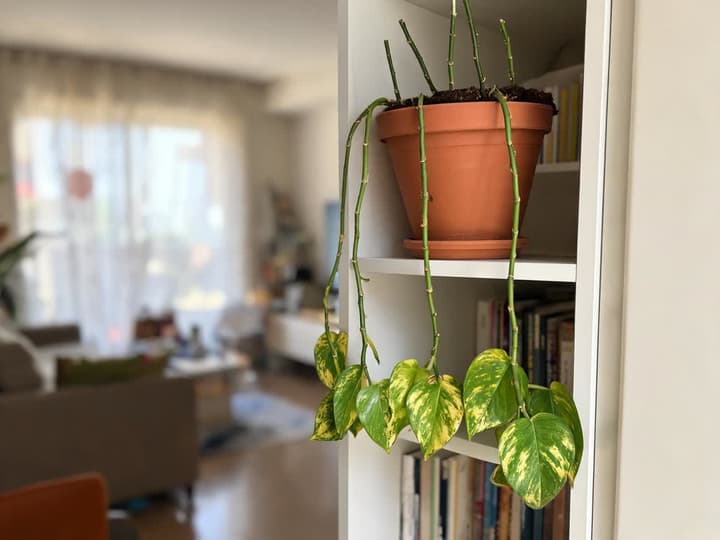
Without more light, pruning only delays the problem. If your plant sits far from a window, move the pot before cutting.
Trailing pothos vs. on a pole: which grows larger leaves?
Trailing pothos and pothos on a support (a moss-covered or wooden pole that it climbs) are the same plant, and the difference appears in leaf size. In nature, pothos climbs tree trunks, and the leaves grow as it climbs. Wisconsin records adult leaves up to 90 cm (3 feet) on the climbing plant. In a pot, without support, pothos keeps juvenile leaves of 7.5 to 15 cm (3 to 6 inches), according to NC State.
Trailing. With stems cascading from a shelf or hanging basket, pothos usually keeps its juvenile leaves. To keep it looking good hanging, Clemson recommends pruning regularly. The hanging plants guide explains why hanging baskets dry out before other pots.
On a support. NC State notes that with a structure to climb and sufficient light, pothos begins producing large, mature leaves. Clemson recommends a moss pole or a wooden stake. No one has measured how large leaves can grow indoors, so a specific size cannot be guaranteed. What both extensions document is that leaves grow bigger.
To set up the support, Penn State recommends a moss-covered stake placed into the pot. Rest the stems against it and secure them with soft twine. The brown aerial roots cling to the moss.
Where to place pothos: light
Place pothos near a bright window, where it gets plenty of light without direct sun on the leaves. Penn State warns that direct sun yellows the leaves. UF/IFAS notes another sign of excess light or heat: scorched spots only on the yellow or white parts of the leaf. This leaf does not recover.
UF/IFAS provides the numbers. Pothos survives at 50 foot-candles (about 540 lux), but with small new leaves and fading variegation. At 150 foot-candles (about 1,600 lux) and above, it keeps both leaf color and leaf size. Lux measures the light hitting the foliage, and a smartphone light meter app can read this figure.
In Brazil, a north-facing window gets sun almost all day in the winter. Keep pothos out of the strip of sunlight that comes through this window, or behind a sheer curtain. An east-facing window gets only morning sun, which is weaker. A south-facing window gets little direct sun: there, pothos can stay very close to the window, without touching the glass.
Different cultivars require different light levels. According to Clemson, 'Marble Queen', 'Snow Queen', and 'Pearls and Jade' need more light than the others. All three have a lot of white in their leaves. 'Neon' and 'Jessenia' tolerate lower light. NC State adds that 'Jade', which is solid green, does well in low light. The low-light plants guide compares pothos with other plants for dark corners.
Pruning pothos: where to cut
Cut the pothos stem just above a node, using clean, sharp scissors, as soon as it becomes bare near the pot. The extensions do not set a specific pruning schedule. Penn State accepts cutting at any point along the stem, always just above a node, or removing the entire stem, leaving a 2-inch (5 cm) stub. Wisconsin also accepts cutting the entire plant back to 2 inches (5 cm) from the soil when it is very bare.
Wear gloves when pruning. NC State notes that pothos sap irritates the skin. The cut tips make cuttings. Penn State says that the cut tip roots best in spring and summer, from September to March in Brazil.
How to water pothos
Water pothos when the soil surface feels dry to the touch, as Wisconsin indicates. Penn State directs watering when the soil feels dry. Clemson goes further and directs waiting until the soil dries out completely. Clemson calls for a thorough watering that reaches all the roots: soak until water runs out the drainage hole of the pot.
Penn State notes that pothos tolerates dry soil far better than wet soil. This guide follows the dry-surface rule, and when in doubt, wait an extra day before watering. Too much water rots roots, while underwatering only wilts leaves temporarily. Wilted leaves firm right back up after a drink. The interval between waterings depends on your pot, light levels, and the season, changing between summer and winter.
To check if the roots have rotted, take the pothos out of the pot: rotten roots turn brown or disappear, according to Wisconsin, and the most common cause is overwatering. If the entire root system has rotted, cut the healthy tips of the stems and propagate them.
Soil, pots, and growing pothos in water
Plant pothos in well-draining soil, in a pot with drainage holes at the bottom. Clemson calls for a light, airy mix. Repot pothos into a slightly larger pot every 1 to 2 years, when roots poke through the drainage hole or the plant becomes root-bound.
Pothos also grows with stems in water: NC State notes that stems root readily in water. The consulted extensions only cover rooting in water, and none has measured pothos kept strictly in water for years.
Fertilizing pothos
Fertilize pothos with a balanced houseplant fertilizer at the label rate every 2 months while it is growing, from September to May in Brazil, and stop in winter (from June to August in Brazil). This is recommended by NC State and Wisconsin, which advise pausing in winter. Penn State fertilizes more: every 2 weeks during the growing phase and once a month in winter.
This guide follows NC State and Wisconsin, and Clemson recommends the same interval. The reason is the risk of overdoing it: according to Wisconsin, fertilizer salts build up in the potting mix and scorch leaf tips and margins.
Temperature and humidity for pothos
Pothos prefers 16 °C to 21 °C at night and 21 °C to 29 °C during the day, according to Clemson. Do not leave the pot in front of air conditioning or resting against window glass in winter: hot or cold air dries out the foliage.
Cold leaves a distinct spot on the leaf. UF/IFAS records brown spots scattered across the middle of the leaf after a few hours between 1 °C and 4 °C (33 °F to 40 °F). A sudden temperature change causes the same spot. Where winter gets this cold (from June to August in Brazil), move the pothos away from the window at night.
Ideal air humidity ranges between 50% and 70%. Clemson notes that pothos tolerates normal household humidity of 30% to 60%. If your air is drier than average home levels, a humidifier helps.
Yellow leaves, brown tips, and leaf spots on pothos
Yellow leaves on pothos have different causes depending on where they appear:
A single old leaf now and then: this is the natural leaf turnover described by NC State. On trailing pothos, old leaves are the ones closest to the pot. Do not change anything.
Multiple yellow leaves with constantly moist soil: overwatering. Wait for the soil surface to dry before the next watering and check that the pot has a drainage hole. Clemson also cites lack of fertilizer as a cause when the soil is not waterlogged. In that case, fertilize according to the interval in the fertilizer section.
Yellow, dry leaves after stretching out waterings: underwatering. Resume watering whenever the soil surface feels dry, without flooding the container.
Yellow leaves near a window with scorched patches: sunburn. Move the pot back from the window; sunburned leaves cannot recover.
Dark tips and edges have three causes recorded by Wisconsin: overwatering, underwatering, and fertilizer salt buildup in the soil. Waterlogged soil points to overwatering, and soil dry for several days points to underwatering. With recent fertilizer, the likely cause is salt: UF/IFAS recommends running plenty of water through the soil until it drains out the bottom to flush the excess. Clemson adds dry air and light that is too intense. A brown spot in the center of the leaf, after a cold night, is cold damage. The yellow leaves guide shows how to tell the causes apart on any plant, and the guide on what is wrong with my plant covers other symptoms.
Pothos pests
The most common pothos pests indoors are mealybugs and scale insects, according to Wisconsin. Check the undersides of leaves and the point where the leaf meets the stem. A white mark on nodes near the soil can come from two pests: a cottony tuft is mealybugs, and a fine, spider-like web is spider mites.
Mealybugs: white, cottony tufts where the leaf meets the stem, under leaves, and even down in the roots. The mealybug guide shows how to remove them.
Scale insects: small, raised, bark-colored bumps along stems and leaves. Both scale insects and mealybugs can leave leaves and surrounding furniture sticky with honeydew.
Spider mites: Wisconsin suggests thoroughly washing the plant, including the undersides of leaves, and applying insecticidal soap, repeating according to label directions. The spider mite guide explains how to confirm the infestation.
Wisconsin notes that on a pothos severely infested with scale or mealybugs, it is often best to discard the plant and start fresh from healthy vine cuttings. Pothos roots so easily that starting over is straightforward. The houseplant pest guide covers other common pests.
How to propagate pothos
To propagate pothos, cut a stem section with at least one node and place it in water or soil, according to Clemson. Wisconsin reports roots in 3 to 4 weeks, and the first new leaves (shoots) can appear in 1 to 2 weeks, before the roots are fully formed, if the environment is warm.
Is pothos toxic to cats, dogs, and children?
Yes. The ASPCA, an animal poison control center in the United States, lists pothos as toxic to dogs and cats. The toxic principle is insoluble calcium oxalate, a needle-shaped crystal. The ASPCA describes intense burning and irritation of the mouth, tongue, and lips, excessive drooling, vomiting, and difficulty swallowing.
For people, NC State classifies pothos as having medium toxicity. All parts of the plant contain the crystal, and the sap can irritate the skin. If a child chewed a leaf, remove the rest from their mouth and call Disque-Intoxicação at 0800 722 6001 (Anvisa, toll-free, 24 hours). If it was your pet, call the vet.
You do not have to throw the plant away. Keep the pot well out of reach and pick up fallen leaves right away. For a hanging pothos, putting the pot high up is not enough: trailing vines grow downward and tips eventually reach a cat's level. Trim vine tips before they reach your pets. The toxic plants for pets guide lists other houseplants containing the same crystals.
Frequently asked questions
Can pothos grow indoors?
Yes. Pothos tolerates low light: UF/IFAS notes it survives at around 540 lux. To preserve leaf color and leaf size, it needs 1,600 lux or more, which corresponds to a spot near a window. The only essential precaution is keeping the pot away from children and pets, as the plant is toxic.
Can I put coffee grounds on pothos?
It is not a good idea to put coffee grounds directly into the pot. The University of Illinois Extension warns that a thick layer of grounds forms a film that repels water and makes it difficult to penetrate the soil. The same extension notes that there is little research showing that grounds alter soil acidity. If you have leftover grounds, put them in the organic waste or into a compost bin (the container where food scraps turn into compost), as the same extension indicates.
Does pothos purify the air?
Not in a way that makes a difference in a home. In the 1989 NASA test, conducted in small, sealed chambers, pothos removed some benzene and formaldehyde from the air. A review by Drexel University researchers did the math for a home: it would take 10 to 1,000 plants per square meter. The NASA test measured a sealed box, and the review measured what happens in a real home. The guide to plants that purify the air provides the numbers from the test.
Why are new pothos leaves smaller than the older ones?
UF/IFAS lists three causes for smaller new leaves lacking variegation: low light, magnesium deficiency (a nutrient in fertilizers), and under-fertilizing. Check light first: move the pothos closer to a bright window. If lighting is adequate, check whether you fertilized the plant during the growing season. On trailing pothos, leaves naturally stay within their juvenile size of 3 to 6 inches (7.5 to 15 cm). Indoors, larger mature leaves typically appear only when the plant climbs a support with ample light.
If your pothos shows a symptom you cannot identify, the Bloom app for iPhone can help. It identifies plants from a photo and, on the Premium plan, diagnoses plant diseases from leaf pictures.
Related articles
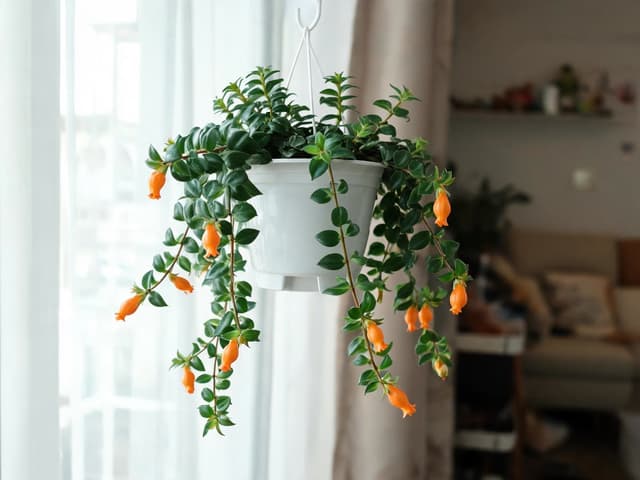
How to Care for a Goldfish Plant: Light, Watering, and Blooms
How to care for a goldfish plant: bright light without strong sun, water when the soil surface dries, and humid air. Learn how to tell a Nematanthus from a Columnea, why it drops leaves, and how to get it to bloom again.
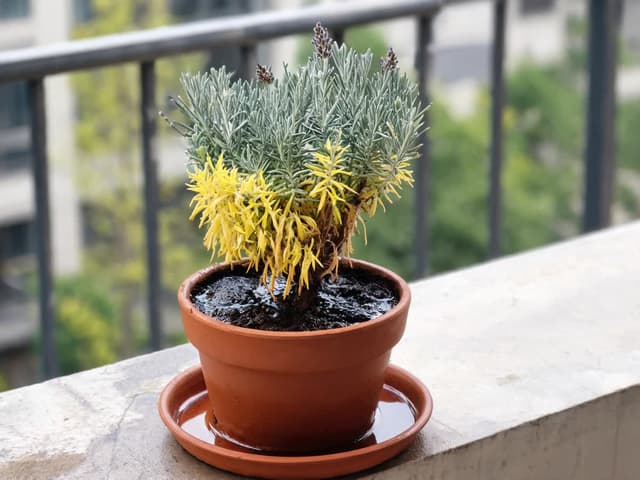
Lavender Leaves Turning Yellow: Where the Yellowing Starts Shows the Cause
Lower leaves turning yellow with moist soil means overwatered roots, the most common cause. Old leaves drying one by one on woody stems is normal. Take the stem and root test, see if your plant can still be saved, and find out what to do today.
How to Propagate Lavender: Where to Cut and Why Cuttings Rot
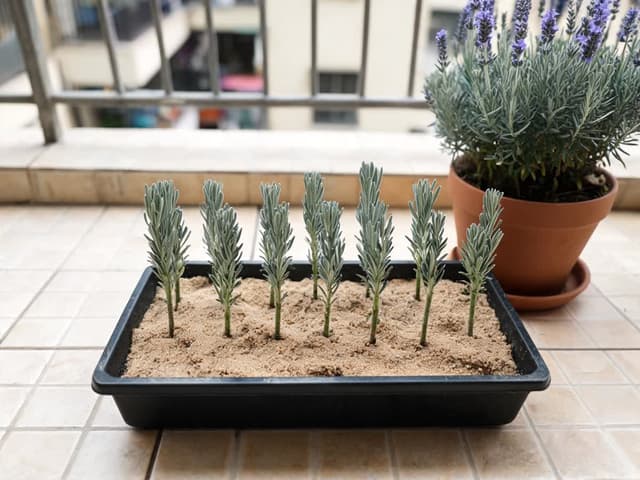
A lavender cutting comes from a non-flowering branch tip, about 4 inches long, planted in sandy soil that never stays soggy. Learn where to cut, rooting times, seasonality in Brazil, and what to do if the base turns black.