How to Identify Houseplants Without an App: 4 Clues and 15 Common Species
You can figure out what houseplant you have by looking at four simple clues right in front of you: leaf venation, shape, growth habit, and sap. Here is the breakdown of the 15 most common indoor plants and the classic mix-ups that trick almost everyone.

To identify a houseplant without an app, look at four things in this specific order: the vein pattern on the leaf (parallel lines or a network spreading from a central vein), the shape and margin of the leaf blade, where the leaves emerge (a stem with nodes, a stemless rosette, or a clump), and what oozes out when you break a stem. Answering these four questions is usually enough to narrow down almost any apartment plant to a few likely candidates.
This works because the world of houseplants is not an infinite universe. Nurseries have been selling the same few dozen species for decades, and they mostly fall into half a dozen plant families with very distinct traits. You do not need a degree in botany; you just need to know where to look. And you also need to know where human eyes reach their limit, which is what we cover in the last section of this guide.
Quick summary:
Parallel veins and strap-like leaves emerging from the base: orchids, snake plants, lucky bamboo, spider plants, and palms.
Net-like veins with a thick central midrib: almost everything else, including pothos, monstera, anthurium, and ficus.
Heart-shaped leaves with holes in the middle only appear on mature plants: young monstera leaves are completely solid, with no holes at all.
Milky white sap points to three specific plant families, and none of them are harmless: always wash your hands after testing.
Out of the 15 most popular houseplants in Brazil, 11 are toxic to cats and dogs according to the ASPCA.
Clue 1: Leaf veins split your plant shelf into two groups
Venation is the pattern of veins in a leaf. There are two main types. In parallel venation, several veins run side by side from the base to the tip without a thick central vein. In reticulate (netted) venation, a thick central midrib branches out into smaller, intersecting veins that form a web-like network. This is your first filter because it rules out entire plant groups right away.
The definition comes from formal botany. According to the North Carolina State University extension manual, parallel-veined leaves "do not have a midrib, but may have one or several larger veins with smaller parallel veins between them," while in net-veined leaves "secondary veins branch from a conspicuous midrib and then subdivide into finer veins, which unite in a complicated network" (NC State Extension Gardener Handbook, chapter 3).
In practice, inside your home:
Parallel: orchids, snake plants, lucky bamboo, spider plants, palms, and peace lilies from a distance. Long, often strap-like leaves that grow straight from the base.
Netted: pothos, monstera, anthurium, ficus, begonia, African violet, kalanchoe, and dumb cane. These have a thick central vein you can easily trace with your finger.

The high school biology rule that says "netted veins mean dicots" has a massive exception, and it lives right in your living room. Aroids (pothos, monstera, anthurium, peace lily, ZZ plant, and dumb cane) are monocots with netted venation. Even the NC State manual uses the word "usually" in its definition, and for good reason. For home identification, this does not matter: what matters is the visual pattern in front of you, not its taxonomic classification.
Clue 2: Leaf shape, margins, and holes
Leaf shape is the silhouette of the blade, and the margin is the design of its edge. Together, they help separate species within the same venation group: heart, fiddle, strap, or compound silhouettes; smooth, serrated, or lobed edges. For houseplants, four details do almost all the heavy lifting.
The silhouette. Heart-shaped (pothos, monstera, anthurium, philodendron), fiddle-shaped (fiddle-leaf fig), rigid strap (snake plant), thick and elliptical (rubber tree), compound leaves with shiny leaflets (ZZ plant), or arching, divided fronds (ferns).
The margin. NC State uses three simple categories: entire, "a smooth edge with no teeth or notches"; serrate, "with small, sharp teeth pointing toward the tip"; and lobed, where "the notches go less than halfway to the midrib." Margins are what tell a Thanksgiving cactus apart from a Christmas cactus.
The holes. That hole in the middle of the split-leaf philodendron leaf has a name, fenestration, and it has a rule: "only mature leaves have these holes, which develop as the leaf grows" (NC State, Monstera deliciosa). It is the number one trap for those who buy small plants: the young split-leaf philodendron has an entire, heart-shaped leaf, without any holes, and spends years looking like something else.
Texture and symmetry. Run your finger over it. A thick, fleshy leaf that yields slightly to pressure indicates succulence (snake plant, ZZ plant, kalanchoe). A velvety, wrinkled leaf covered in tiny hairs is an African violet. And look at the base of the leaf near the stem: if the two sides are visibly different, one fuller than the other, you almost certainly have a begonia in your hand. NC State describes the leaves of the genus as "usually asymmetrical, at least at the base" (NC State, Begonia).
Clue 3: Growth habit and where leaves emerge
Growth habit is the architecture of the plant: where the leaves sprout and how the stem is organized. In apartment pots, it usually takes one of five forms: a rosette tight to the soil, a clump sprouting from the pot, a vine with aerial roots, a single woody trunk, or a swollen bottle-shaped base. Two plants with similar leaves can have completely opposite architectures.
Look at the base of the plant, not the tips.
Stemless rosette: the leaves all grow from a single point flush with the soil. Orchids, African violets, and peace lilies grow this way. The technical term is acaulescent, which NC State uses for both Phalaenopsis ("acaulescent, no visible stem") and Spathiphyllum.
Clump sprouting from the soil: multiple stems emerge from the potting mix at different spots, fed by a hidden rhizome or tuber. Snake plants and ZZ plants, which have "bulbous, fleshy rhizomes," grow like this.
Vines or trailers with aerial roots: flexible stems with nodes, where brown roots sprout to cling to surfaces. Pothos and monstera are classic examples. Pothos "climbs by clingy, brown aerial roots."
Single woody trunk: a central stem that hardens over time and supports a canopy, like the fiddle-leaf fig.
Fleshy stems with spaced-out leaves: lucky bamboo, which has "thick, green, fleshy stems resembling bamboo" but is not actually bamboo at all.
Swollen, bottle-shaped base: this is a caudex, which in indoor pots almost always points to a desert rose.
Fronds with dark spots on the underside: ferns. Those orderly rows of dots are spores, not a disease. Plants that reproduce via spores do not produce flowers, which immediately rules out half the plant shelf.
Clue 4: Break a stem and check the sap
Sap is the fluid that drains when you break a leaf or stem, and its color is a major family trait. Milky white sap is called latex and appears in three common houseplant families; clear sap that irritates the skin points to another. This is often the most definitive of the four clues, yet almost no general guide mentions it.
Pinch the edge of a leaf or snap a small stem and observe the fluid.
If you see a sticky, milky white liquid, it is latex. This points to three plant families that cover a huge portion of common houseplant varieties:
Moraceae, the fig family. NC State notes that in fiddle-leaf figs, "stems have a milky sap that can be irritating to the skin."
Euphorbiaceae, the spurge family (like the crown of thorns), where "the milky white latex present in all parts of the plant can cause mild to severe contact dermatitis."
Apocynaceae, the dogbane family (which includes the desert rose), whose "sap is milky and poisonous."
If the sap is clear and the leaf burns when touching your lips, you are looking at an arum. The burning has a physical cause: needle-shaped calcium oxalate crystals, which is why the ASPCA lists dumb cane, pothos, split-leaf philodendron, anthurium, and peace lily all under the same principle, "insoluble calcium oxalates." In the case of dumb cane, the effect is so characteristic that it named the plant in English: the name dumbcane "refers to the numbing and paralyzing effect of the sap on the vocal cords" (NC State, Dieffenbachia seguine).
Do this test near a sink, keep kids and pets out of the room, and wash your hands with soap immediately afterward. Never put a piece of the plant in your mouth to "test the burn": you will feel the irritation on your skin, and that is more than enough. If you get latex on your hands, do not rub your eyes.
The step-by-step identification process
An identification key is a sequence of single-answer questions that narrows down the candidates until you are left with just one. This system uses four questions: venation, growth habit, leaf shape/margin, and sap. Answer them in order without skipping, because each answer determines what the next question needs to filter.
Are the veins parallel or netted? Parallel leads you to orchids, snake plants, lucky bamboo, spider plants, and palms. Netted leads to everything else.
Where do the leaves grow from? A stemless rosette, a clumping base, a climbing vine with aerial roots, a woody trunk, or a swollen base. At this stage, your list of candidates is down to just a handful.
What is the shape and margin of the leaf? Heart, fiddle, strap, compound, or frond. Smooth, serrated, or lobed margins. Only look for holes if the plant is mature.
What kind of sap runs when broken? Milky white latex points to a ficus, crown of thorns, or desert rose. Clear sap that burns points directly to an aroid.
If all four answers point to the same plant in our table of 15 species, you have got it. If they point to two different candidates, jump to the common mix-ups section: each pair has a single, undeniable feature that settles the debate.
The 15 most common houseplants in Brazilian homes
Our selection criteria is transparent: these are the 15 indoor species with the highest search volume in Brazil in our own keyword database (78,098 Portuguese terms, with search volumes pulled from DataForSEO in August 2026), measured by searches for "how to care for," excluding outdoor garden plants (sunflowers, tulips, roses, lavender, rosemary) and the generic category "succulents."
Planta | Nome científico | O sinal que entrega | Tóxica para gato e cão |
|---|---|---|---|
Orquídea-borboleta | Phalaenopsis | Without a visible stem, 3 to 6 thick leaves with few visible veins and thick green roots coming out of the pot | Não |
Lírio-da-paz | Spathiphyllum wallisii | Concave white spathe that curves around the spadix; leaves emerge directly from the base | Sim, oxalato insolúvel |
Rosa-do-deserto | Adenium obesum | Swollen bottle-shaped stem base (caudex) and milky sap | Sim, glicosídeos cardíacos |
Zamioculca | Zamioculcas zamiifolia | Compound leaf with thick and glossy leaflets, stem thickened at the base, bulbous rhizome | Sim, oxalato de cálcio (NC State) |
Samambaia | Nephrolepis exaltata | Cut and arched frond with dark spore dots in rows on the back | Não |
Bambu-da-sorte | Dracaena sanderiana | Solid and fleshy stem, without the rings or the hollow center of real bamboo | Sim, saponinas |
Kalanchoe | Kalanchoe blossfeldiana | Thick and shiny leaf with a wavy margin, in opposite pairs on the stem | Sim, bufadienolídeos |
Flor-de-maio | Schlumbergera truncata | Flattened segments attached to one another, with pointed teeth on the margin. No true leaf | Não |
Jiboia | Epipremnum aureum | Variegated heart-shaped leaf, white-striped stem, and clinging brown aerial roots | Sim, oxalato insolúvel |
Ficus lyrata | Ficus lyrata | Large, fiddle-shaped leaf, leathery, prominent veins, white latex when cut | Yes (NC State); active principle ficin and psoralen |
Antúrio | Anthurium andraeanum | Broad, flat, and waxy-looking spathe, colored, with the spadix prominent in front | Sim, oxalato insolúvel |
Begônia | Begonia spp. | Visibly asymmetric leaf base, one side fuller than the other | Sim, oxalato solúvel |
Costela-de-adão | Monstera deliciosa | Giant heart-shaped leaf with holes inside the blade, only on mature leaves, and thick aerial roots | Sim, oxalato em agulha |
Violeta africana | Streptocarpus ionanthus | Rosette of thick, wrinkled leaves covered in tiny hairs, with almost no stem | Não |
Espada-de-são-jorge | Dracaena trifasciata | Flat, rigid, and erect leaf, with transverse bands, emerging directly from the pot in a clump | Sim, saponinas |
The entire toxicity column was checked one by one against the ASPCA list of toxic and non-toxic plants, with the exception of ZZ plant and fiddle-leaf fig, which do not have their own entry there and therefore come from the NC State Extension Plant Toolbox. Eleven of the fifteen are toxic. It is good to know the name of the plant before leaving it within reach of the cat.
Two notes on names that changed, because you will find both in any search. The snake plant was Sansevieria trifasciata and today the accepted name is Dracaena trifasciata: the genus Sansevieria was absorbed into Dracaena. The African violet was Saintpaulia ionantha and today is Streptocarpus ionanthus. Both changes are registered at NC State as "formerly known as".
Dumb cane (Dieffenbachia) missed the list by about 300 monthly searches. However, we included it in our mix-ups section because it is the toxic plant most frequently mistaken for a harmless one, and leaving it out due to a rigid volume cutoff would be a disservice.
The 6 classic plant mix-ups that fool almost everyone
Each pair below represents a case where the correct plant and its lookalike often sit side by side in the same plant store. Each has a single, definitive trait that clears up the confusion.
Pothos vs. Heartleaf Philodendron. From a distance, they look identical. Look at the leaf stem: on the pothos, it has a groove along its length, and there is no stipule at all on the new growth. NC State is explicit in stating that pothos "is distinguished from Philodendron hederaceum by the absence of conspicuous free stipules on new growth and by the grooved petioles" (NC State, Epipremnum aureum).
Dumb Cane vs. Chinese Evergreen. Both feature large leaves splashed with cream patterns, and both are toxic, so a mix-up here is not dangerous, just embarrassing. Count the primary lateral veins branching off the central midrib: dumb cane has "more than 8 (usually about 20 to 30)," while Chinese evergreen (Aglaonema) typically has only 5 to 8.
Anthurium vs. Peace Lily. Both feature a modified leaf called a spathe and a central spike called a spadix (the structure that looks like a finger). On an anthurium, the spathe is "broad, flat, and waxy-looking," usually brightly colored, and sits behind the spadix. On a peace lily, the spathe is white or greenish, concave, and "curves around the spadix" like a protective hood.
Thanksgiving cactus vs. Easter cactus. Look at the margin of the segments. The Thanksgiving cactus (Schlumbergera truncata) has a "distinctly serrated" margin, with pointed projections. The Easter cactus (Rhipsalidopsis gaertneri) has a "weakly crenate" margin, meaning wavy and rounded, and bristles at the tips: "these rounded margins and the presence of bristles at the tips distinguish it from other species" (NC State). Useful trivia: in the Northern Hemisphere, this same Schlumbergera truncata blooms at the end of November and is sold as Christmas cactus. Here it blooms in May, hence the name.
Snake Plant vs. Cylindrical Snake Plant. Run your finger along the side of the leaf. The standard snake plant has flat, blade-like leaves with two distinct faces and a sharp edge. The cylindrical snake plant (Dracaena angolensis) has round, solid leaves that feel like thick pencils.
Fiddle-Leaf Fig vs. Rubber Tree. Both produce milky white latex, so checking the sap will not help. Instead, look at the shape: fiddle-shaped, wide, and rounded at the tip for the fiddle-leaf fig; elliptical, smooth, shiny, and pointed at the tip for the rubber tree.

Where manual identification hits a wall
The four-clue method can identify most houseplants down to their genus, and many all the way to their species. But it has real limitations, and pretending otherwise would give you a false sense of confidence that visual inspection cannot back up.
Cultivars and variegation. The same species can have cultivars with white, yellow, pink, or highly compact leaves, each with its own commercial name. These do not change the species, but they completely change how the plant looks. A variegated pothos and a solid green pothos look like entirely different plants, but they are not.
Juvenile plants. The fenestrations on a monstera are a classic example, but not the only one. Many species take years to grow the distinctive traits that identify them, and until they do, they look like half a dozen of their neighbors.
Massive genera. Recognizing that your plant is a begonia is easy thanks to its asymmetrical leaf base. Figuring out which begonia you have is a different story: the genus contains over 2,100 species and is the eighth-largest in the flowering plant world, according to 2023 data compiled by NC State. At this point, the untrained eye is stuck.
Lack of flowers. Traditional botanical identification keys rely heavily on flower or fruit details, but houseplants rarely bloom indoors.
This is exactly when a photo helps, not before. An image-based identification app compares your plant with a massive database of photos and returns matching candidates in seconds, solving all four issues mentioned above. Bloom uses Plant.id by Kindwise as its identification engine, which has a 93% accuracy rate as measured by independent universities (this is the engine's accuracy, not the entire app's), and offers a free tier with two identifications per month, which is plenty for identifying a new plant or two.
With an honest caveat that applies to any app, including ours: the published accuracy tests of these apps were conducted with trees and wild plants, not with cultivated houseplants. In 2023, the journal Clinical Toxicology tested six popular apps with edible and toxic plants from the American Midwest and concluded that they "are not reliable enough for poison control centers to use when guiding plant exposure calls," with identification by a botanist remaining the gold standard (Clinical Toxicology 61(7), 2023). Translating to your living room: use the app to find out the name, and not to decide if you can give a leaf to the rabbit.
And knowing the name is half the battle. If your plant already looks bad, the name alone will not fix it: see what is wrong with your plant, in three questions.
Frequently Asked Questions
Is there a free way to identify houseplants?
There are two. The truly free one is the method in this guide: vein, shape, stem, and sap cost nothing and work without an internet signal. And several photo identification apps have a free mode with a monthly limit on identifications. We compared the main ones in best plant identification apps.
Can I identify my plant from a photo?
Yes, and it is the fastest route when the key features are subtle. Photos work best when they show the entire plant in its pot along with a well-lit, top-down shot of a single leaf. Keep in mind that public accuracy tests for these apps were done using wild plants, not indoor varieties.
Can I use Google to identify a plant?
Yes. Google Lens identifies a plant by photo directly from the camera or gallery, without installing a plant app. It usually gets the species right and does not tell you what to do with it afterward. The step-by-step guide and the most common mistakes are in identifying a plant with Google Lens.
How do I identify an indoor plant by its leaf?
Start with the veins: are they parallel or netted? Then look at the silhouette (heart, fiddle, strap, compound), the margin (smooth, serrated, lobed), the texture (smooth, velvety, fleshy), and the symmetry of the base. Just the first two steps will rule out most candidates on an average shelf.
Is my plant toxic to cats?
Eleven of the fifteen most common houseplants in Brazil are toxic to cats and dogs, including pothos, monstera, peace lilies, anthuriums, and snake plants. Orchids, ferns, African violets, and Thanksgiving cacti are safe. The most complete and updated list is maintained by the ASPCA.
Where to start
Pick the most mysterious plant in your home. Hold a leaf up to the light to see if the veins run parallel or form a web-like network around a central midrib. Then look at where the leaves grow, their shape and margins, and finally, what kind of sap appears when you pinch a stem. In most cases, these four answers will reveal the name. Even when they do not, you will understand exactly what you are looking at.
Bloom identifies plants from photos and builds a custom care schedule for the recognized species. It is available exclusively for iPhone and iPad.
Related articles
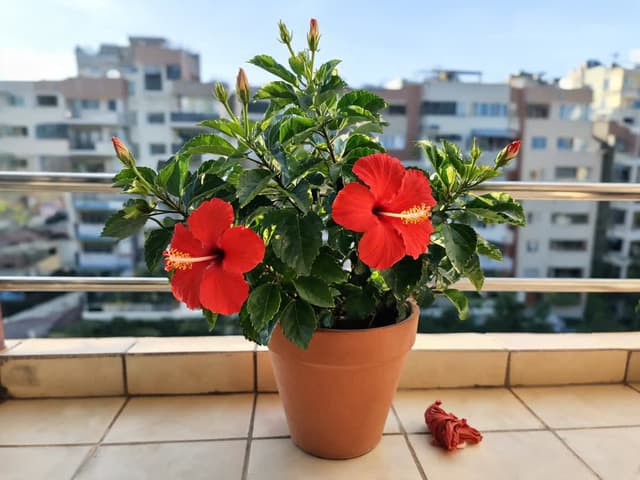
How to Care for Hibiscus: Sun, Watering, Fertilizer, and Pruning for Flowers
How to care for hibiscus: 6 hours of direct sun, evenly moist soil without waterlogging, half-strength fertilizer in spring and summer, and pruning in early spring. Find out why the flower lasts one day and why buds drop before opening.
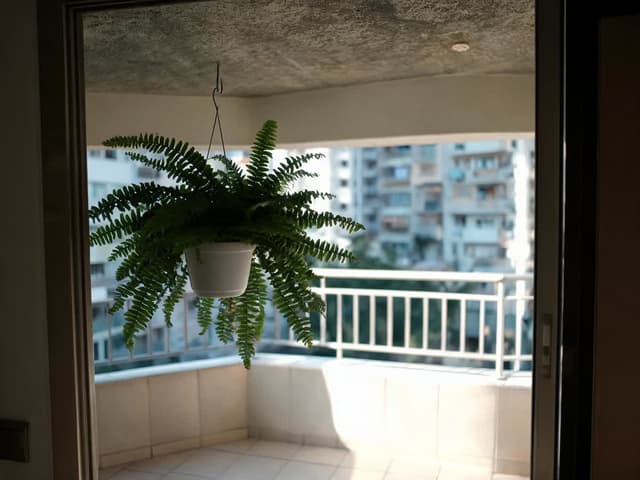
Do Ferns Like Sun or Shade? It Depends on the Type
Ferns prefer bright shade: plenty of light, but no direct sun on their fronds. Tuberous sword fern is the exception that handles sun. Here is the ideal light for each type, where to place pots, and how fronds show too much or too little light.
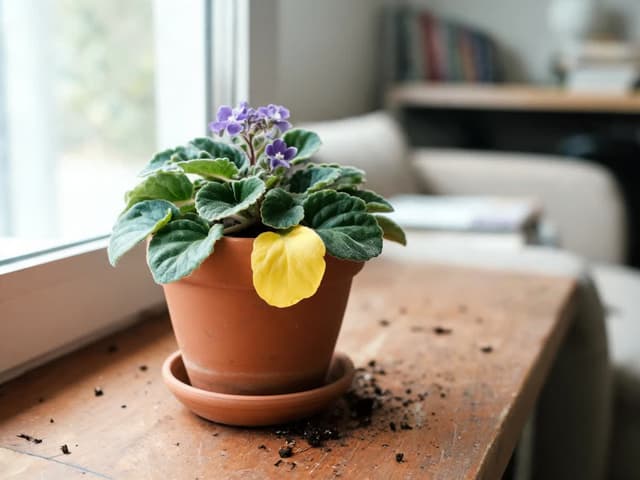
African Violet Yellow Leaves: Causes and What to Do
Yellow leaves on an African violet usually stem from overwatering, and the first place to check is the center of the plant. Losing one lower leaf at a time is normal. Identify whether age, watering, cold water, sunlight, cold drafts, or fertilizer is the culprit based on the yellowing pattern, and see what to do today.