844 Easy Pet Safe | 2026 Guide
Find 844 easy pet safe. Complete guide for your garden.
844 Pet Safe with easy level
Showing 1-36 of 844
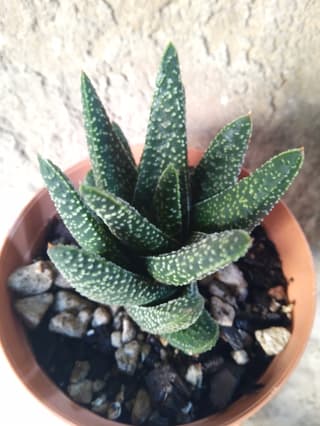
Gasteraloe (hybrid genus)
× Gasteraloe
Gasteraloe is an intergeneric hybrid nothogenus of succulents created by crossing Gasteria and Aloe, belonging to the family Asphodelaceae. Plants form compact rosettes with thick, often spotted or banded leaves, and produce tubular flowers in orange, red, or pink during spring and summer. They thrive indoors and outdoors in warm climates (USDA zones 9–11).
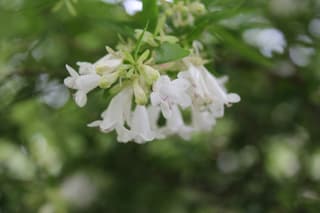
Glossy Abelia
Abelia x grandiflora
Glossy Abelia (Abelia x grandiflora) is a semi-evergreen ornamental shrub prized for its long-lasting display of fragrant, pink-tinged white bell-shaped flowers from late spring through fall. A hybrid of Asian species developed in the 19th century, it features attractive glossy foliage that turns bronze-red in winter. Highly adaptable and low-maintenance, it is widely used in hedges, borders, and pollinator gardens.
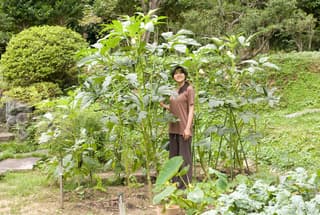
Okra
Abelmoschus esculentus
Okra (Abelmoschus esculentus) is an annual vegetable in the Malvaceae family, native to tropical regions of Africa. It is cultivated for its green, elongated, and mucilaginous fruits, which are harvested while still immature for culinary use. It is a robust, fast-growing plant that requires full sun and a warm climate to fruit well, and it is very sensitive to frost.
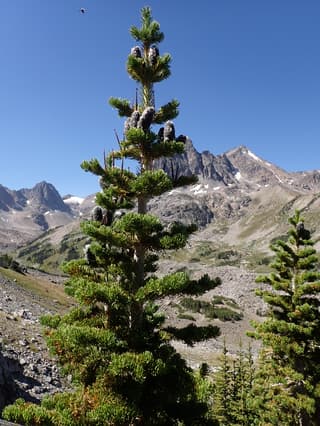
Subalpine Fir
Abies lasiocarpa
The Subalpine Fir (Abies lasiocarpa) is a majestic coniferous tree native to the subalpine forests and mountainous regions of western North America, where it grows at elevations from 600 to 3,700 m. This slow-growing tree, with a narrow, conical crown, reaches a height of 15–27 m and a width of 3–6 m. It is characterized by smooth, silvery-gray bark with resin blisters on young specimens, and soft, spirally arranged needles with a striking silvery-blue-gray coloration. It is one of the most resilient cold-loving conifers, capable of surviving frosts down to –29 °C, and forms a typical mountain forest alongside dwarf pine and spruce. Due to its elegant habit, it is valued as an ornamental tree for large gardens and parks.
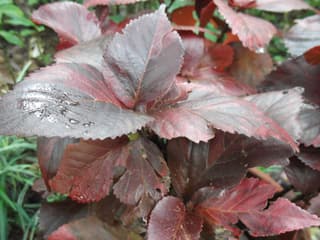
Jacob's Coat
Acalypha wilkesiana
Acalypha wilkesiana, commonly known as Jacob's Coat or Copperleaf, is a fast-growing tropical evergreen shrub from the Euphorbiaceae family. Native to the Pacific Islands (Fiji and neighboring South Pacific islands), it is prized for its strikingly colorful foliage that comes in mottled combinations of green, purple, yellow, orange, copper, crimson, pink, and white. The heart-shaped serrated leaves can reach 10-20 cm in length. It is widely used as an ornamental hedge or accent plant in tropical and subtropical gardens.
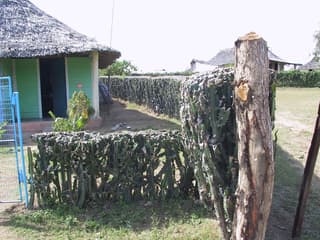
Fairy Castle Cactus
Acanthocereus tetragonus
Acanthocereus tetragonus 'Fairy Castle' is a dwarf, branching variant of the cactus native to the Americas. Its five-sided stems have short spines and grow in dense clusters, creating a silhouette reminiscent of a castle with multiple medieval towers. It is a slow-growing plant, extremely popular for interior decoration due to its sculptural appearance and ease of maintenance.

Field Maple
Acer campestre
The Field Maple (Acer campestre) is a medium-sized deciduous tree native to Europe, Southwest Asia, and North Africa. It is Denmark's only native maple and thrives in forest edges, hedges, and open landscapes. The Field Maple is recognized by its characteristic bark with corky ridges and five-lobed leaves that turn golden yellow and orange-red in autumn. The tree is extremely hardy, tolerates pollution and wind, and is particularly well-suited as a hedge and avenue plant. It grows up to 15–25 meters and lives for many hundreds of years.
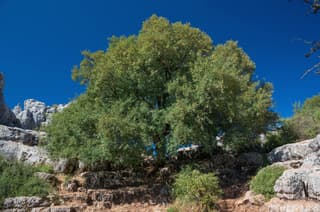
Montpellier maple
Acer monspessulanum
The Montpellier maple (Acer monspessulanum) is a small to medium-sized deciduous tree native to the Mediterranean region, inhabiting rocky, dry habitats from southern France to North Africa and Western Asia. A member of the Sapindaceae family, it is distinguished by its three-lobed, leathery leaves that turn vibrant shades of yellow and orange in autumn. The tree is remarkably drought-tolerant and flourishes in well-drained, calcareous soils.
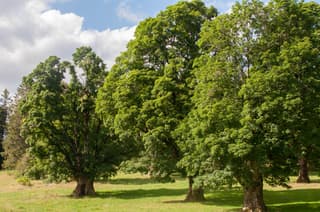
Sycamore Maple
Acer pseudoplatanus
Acer pseudoplatanus is a large, fast-growing deciduous tree native to central and southern Europe and southwestern Asia, now widely naturalized across the UK and North America. It forms a broad, dome-shaped crown with five-lobed, dark green leaves and produces hanging racemes of small yellow-green flowers in spring, followed by winged seeds (samaras) in autumn. It tolerates wind, salt spray, pollution and poor soils better than almost any other broadleaf tree, making it a popular choice for exposed sites, parks and shelterbelts. Note: the seeds and spring seedlings contain hypoglycin A, a toxin linked to atypical myopathy, a serious and often fatal muscle disease in grazing horses, so caution is advised when planting near pastures or paddocks.
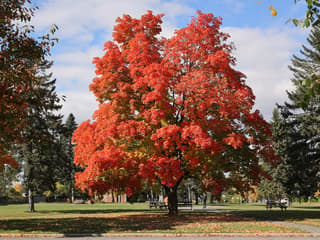
sugar maple
Acer saccharum
The Sugar Maple is a large, long-lived deciduous tree native to the hardwood forests of eastern North America. It is most famous for its brilliant autumn foliage, which ranges from bright yellow to fluorescent orange and deep red. Beyond its beauty, it is the primary source of maple syrup, produced from its sweet sap during the late winter and early spring thaw.
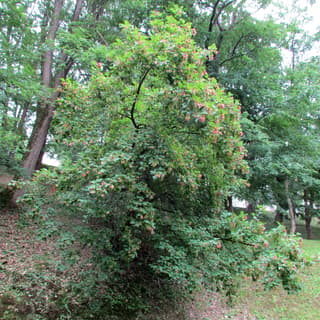
Tatarian Maple
Acer tataricum
Acer tataricum is a deciduous, multi-stemmed small tree or large shrub native to central and southeastern Europe and temperate Asia, growing 4–9 metres tall with a broad, spreading crown. It produces greenish-white flowers in upright panicles during spring, followed by showy paired red samaras (winged fruits) that persist into autumn, and simple to shallowly-lobed leaves that turn yellow and red in fall. It is exceptionally cold-hardy, tolerating temperatures down to −30 °C, and adapts readily to a wide range of soil types including clay.
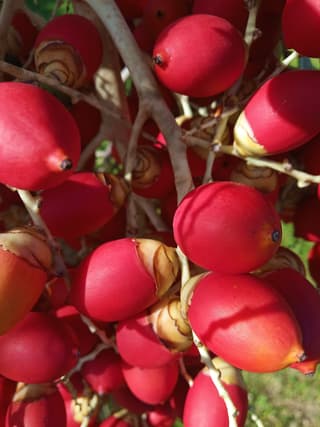
Christmas Palm
Adonidia merrillii
Adonidia merrillii, commonly known as the Christmas Palm, is an elegant and compact species native to the Philippines. It is distinguished by its smooth, single trunk and, most notably, its large clusters of berries that turn bright red in winter, resembling Christmas ornaments. It is one of the world's most popular ornamental palms for tropical landscapes and bright indoor spaces.
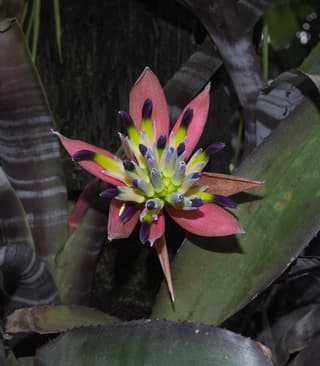
Urn Plant
Aechmea
Aechmea is a genus of approximately 250 epiphytic bromeliads native to the tropical and subtropical Americas. Their distinctive tank-shaped rosettes form a central cup that holds water — a remarkable adaptation to life in the forest canopy. The most popular houseplant species, Aechmea fasciata (Silver Vase or Urn Plant), is celebrated for its long-lasting pink bracts and small violet flowers.
Orange Bromeliad
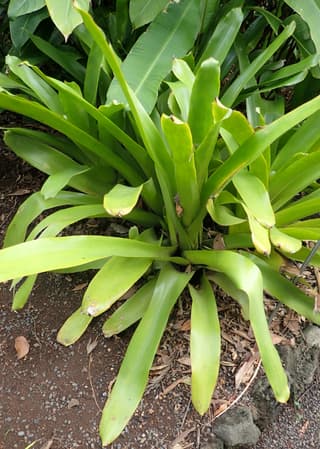
Aechmea blanchetiana
Aechmea blanchetiana, commonly known as the Orange Bromeliad, is a stunning tropical bromeliad native to the restinga coastal forests of Brazil's Atlantic Forest. Its stiff, linear leaves form a classic vase-shaped rosette that can hold up to one liter of water in the central cup. When grown in full sun, the foliage transforms into brilliant shades of orange, red, and apricot, making it one of the most striking bromeliads for tropical and subtropical landscapes. After flowering, the mother plant produces offsets that ensure continuity of growth.
Wax Mallow Bromeliad
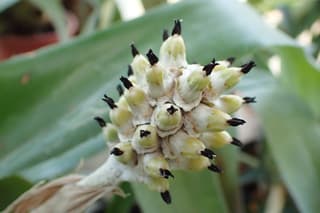
Aechmea bromeliifolia
Aechmea bromeliifolia, commonly called Wax Mallow Bromeliad, is a terrestrial bromeliad native to the tropical regions of South and Central America. It forms a striking rosette of stiff, spine-edged leaves and produces a showy inflorescence with colorful bracts. It is one of the most widespread Aechmea species, found in gallery forests, cerrado, and open scrublands.
Urn Plant
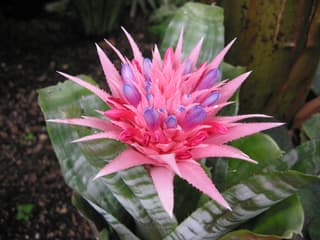
Aechmea fasciata
Aechmea fasciata is an epiphytic bromeliad native to southeastern Brazil, renowned for its striking silver-banded leaves and spectacular pink inflorescence with tiny blue-violet flowers. It is one of the most popular bromeliads for indoor cultivation, valued for its exotic beauty and ease of care.
Nakedstem Bromeliad
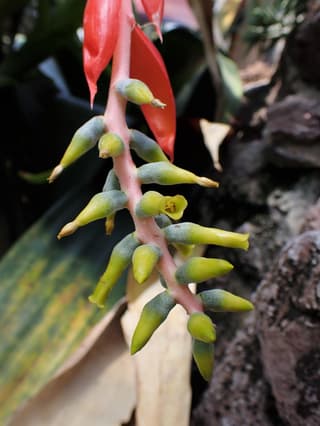
Aechmea nudicaulis
Aechmea nudicaulis, commonly known as the Nakedstem Bromeliad or Naked-stemmed Living Vase, is a stunning epiphytic and terrestrial bromeliad native to Brazil's Atlantic Forest, with distribution extending through the Caribbean and northern South America. It forms a rosette of stiff, dark green, strap-like leaves with serrated margins, from which emerges a striking inflorescence: a bright red spike bearing greenish-yellow flowers tipped with blue-purple, appearing in summer through fall. The plant is prized for its architectural beauty, low maintenance requirements, and resilience. After flowering — a once-in-a-lifetime event — the mother plant produces offsets (pups) that carry on the colony. Its central tank collects rainwater, creating a vital microhabitat for wildlife in its native forest.
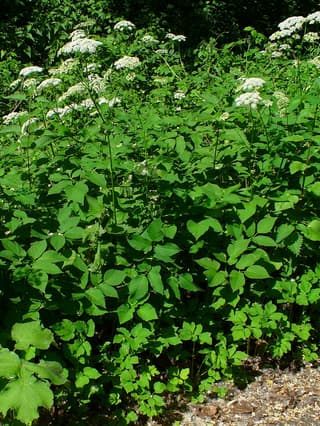
Ground elder
Aegopodium podagraria
Ground elder (Aegopodium podagraria) is a perennial herbaceous plant in the carrot family (Apiaceae), native to Europe and Asia. It is known for its extremely rapid growth and spread via rhizomes, making it one of the most hardy and invasive ground covers in temperate regions. The plant forms dense carpets of light green, ternate leaves and bears white umbels (flower clusters) from May to June. It thrives in shade to partial shade and tolerates most soil types. Historically, it was cultivated as a food and medicinal plant during the Middle Ages.
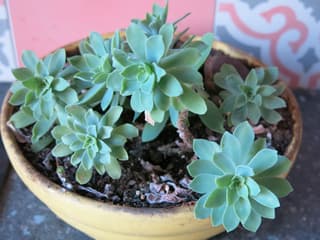
Aeonium
Aeonium
Aeonium is a genus of succulents with approximately 35 species, primarily native to the Canary Islands. Unlike most succulents, Aeonium grows actively in the fall and winter, entering dormancy during the hot summer. Its perfect rosettes of glossy leaves form stunning ornamental colonies, making it one of the most elegant succulents for Mediterranean gardens and pots.
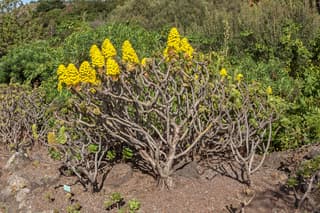
Tree Aeonium
Aeonium arboreum
Aeonium arboreum is a woody-stemmed succulent native to the Canary Islands and North Africa, renowned for its striking rosettes of fleshy leaves atop branching stems. The dark-purple cultivar 'Schwarzkopf' (also spelled 'Zwartkop') is one of the most popular ornamental succulents worldwide.
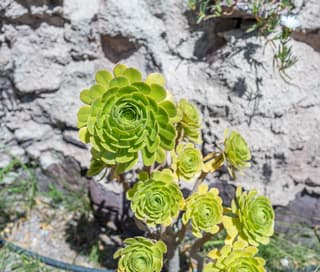
Stalked Aeonium
Aeonium undulatum
Aeonium undulatum is a striking succulent subshrub native to the Canary Islands, specifically Gran Canaria. Known for its large rosettes of bright, glossy, wavy-edged green leaves, it can grow over 2 meters tall on a single unbranched stem, making it one of the tallest species in the Aeonium genus. It is monocarpic, producing stunning pyramidal panicles of yellow star-shaped flowers after approximately 5 years.
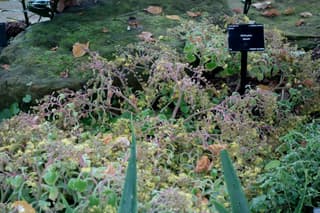
Tree of Love
Aichryson laxum
The Tree of Love (Aichryson laxum) is a compact succulent native to the Canary Islands, belonging to the Crassulaceae family. It features fleshy heart-shaped leaves arranged in rosettes at the tips of its branches, and produces small star-shaped yellow flowers in spring and summer. It is an annual or biennial plant that naturally dies after flowering.
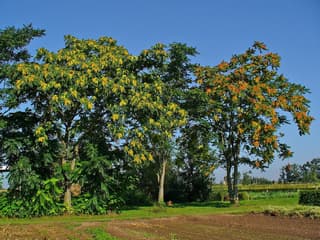
Tree of Heaven
Ailanthus
The Tree of Heaven (Ailanthus altissima) is an extremely fast-growing deciduous tree native to northern China and Taiwan. Belonging to the family Simaroubaceae, it can reach up to 25 metres in height and is renowned for its extraordinary resilience in harsh urban environments, tolerating pollution, poor soils, drought, and extreme temperatures. While classified as an invasive species in most temperate regions worldwide, Ailanthus has a rugged beauty with its large, pinnately compound leaves. The plant contains allelopathic compounds that inhibit the growth of surrounding vegetation, and contact with its sap may cause contact dermatitis in sensitive individuals. It carries mild toxicity and should be handled with care, especially during pruning.
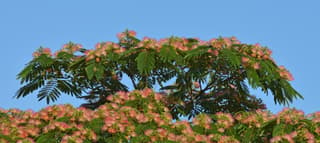
Silk Tree / Mimosa (genus)
Albizia
Albizia is a genus of tropical and subtropical ornamental trees in the Fabaceae family, known for their delicate pink powder-puff flowers and feathery bipinnate foliage. The most widely grown species is Albizia julibrissin.
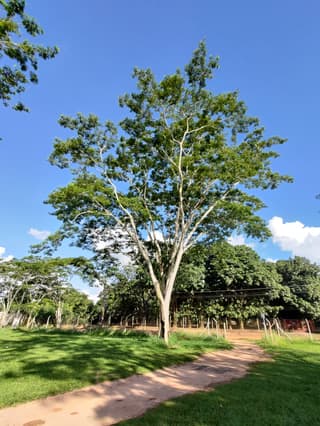
White Silk Tree
Albizia niopoides
Albizia niopoides, commonly known as White Silk Tree or Farinha Seca, is a fast-growing deciduous tree native to South America and Central America, belonging to the Fabaceae family. It can reach 10 to 35 meters in height, developing a characteristic wide, umbrella-shaped crown. Its delicate white to light-pink feathery flowers bloom from spring through summer, attracting bees and hummingbirds. The tree is known for nitrogen fixation, making it valuable for reforestation and agroforestry. It is highly drought-tolerant once established and adapts well to a wide range of tropical and subtropical conditions.
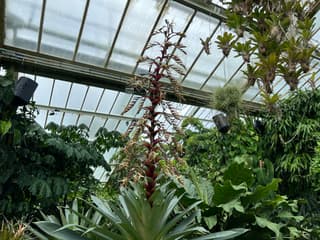
Alcantarea / Imperial Bromeliad (genus)
Alcantarea
Alcantarea is a genus of giant bromeliads native to rocky outcrops and cliff faces in Brazil, particularly in Rio de Janeiro state. These monumental plants form a central water-holding tank with their massive leaf rosettes and are adapted to full sun and periodic drought, making them outstanding specimens for tropical and subtropical gardens.
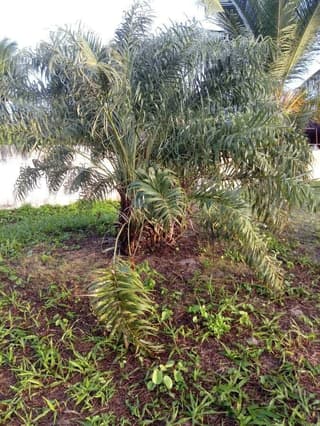
Seashore Palm
Allagoptera arenaria
Allagoptera arenaria, commonly known as the Seashore Palm or Shore Palm, is a small palm species native to the restingas (coastal scrublands) of the Brazilian coast. It typically features an underground or very short stem, with grayish-green pinnate leaves that emerge directly from the sandy soil. It is an extremely resilient plant, adapted to strong winds, high salinity, and intense solar radiation, playing a vital ecological role in dune stabilization.
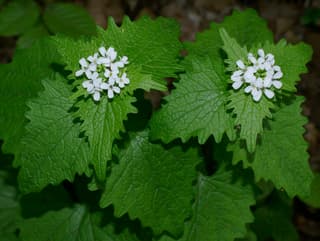
Garlic Mustard
Alliaria petiolata
Garlic mustard (Alliaria petiolata) is a biennial herbaceous plant in the mustard family (Brassicaceae), widely distributed across Central and Northern Europe as well as parts of Asia. In its first year, it forms a basal rosette of heart-shaped, deeply toothed leaves, while in its second year, it sends up a 60–100 cm tall stem with white, four-petaled flowers. Its distinctive feature is the intense garlic scent released when the leaves are crushed, which is due to the presence of glucosinolates. The plant inhabits open deciduous forests, road and forest edges, and slopes, and is known as an invasive species in North America. It is an important host plant for the Orange-tip butterfly (Anthocharis cardamines) and its caterpillars.
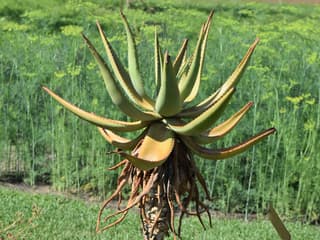
Bitter Aloe
Aloe ferox
Aloe ferox, commonly known as bitter aloe or Cape aloe, is a tree-like succulent native to South Africa, forming a single rosette of spiny, grey-green leaves atop an unbranched stem that can reach up to 3 meters tall. It is renowned for its tall flower spikes bearing tubular orange-red blooms in winter, which attract sunbirds and bees.
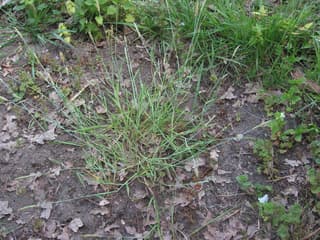
Water Foxtail
Alopecurus geniculatus
Alopecurus geniculatus, commonly known as water foxtail or marsh foxtail, is a perennial grass native to Eurasia. It forms compact tufts with erect or geniculate stems reaching up to 60 cm tall, thriving in waterlogged soils, pond margins, ditches, and seasonally flooded meadows. Its dense, cylindrical flower spikes adorned with pale yellow-orange anthers make it a subtle ornamental accent in water gardens.
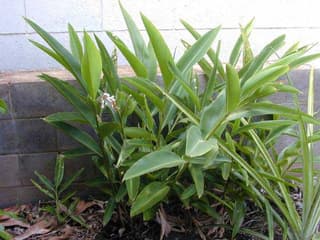
Alpinia / Ginger Lily (genus)
Alpinia
The genus Alpinia comprises over 200 species of tropical plants in the family Zingiberaceae, native primarily to tropical Asia and the Pacific. It includes popular ornamentals such as A. zerumbet (shell ginger) and A. purpurata (red ginger), as well as culinary and medicinal species like A. galanga (greater galangal).
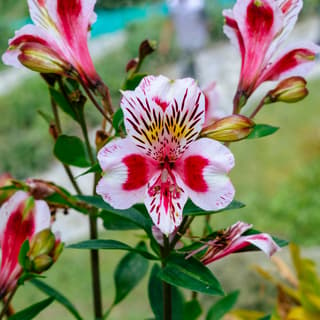
Peruvian Lily
Alstroemeria
The Peruvian Lily, scientifically known as Alstroemeria, is a popular ornamental plant prized for its vibrant and long-lasting flowers. Native to South America, it grows from rhizomes and produces upright stems with lanceolate leaves. The flowers, which come in a wide range of colors and patterns, are often bicolor and have distinct petals, with the lower ones usually marked. It is an excellent choice for flower beds, borders, and as a cut flower due to its long vase life.
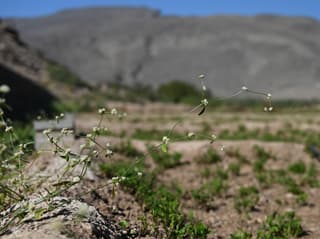
Calico Plant
Alternanthera bettzickiana
Alternanthera bettzickiana, commonly known as Calico Plant or Joseph's Coat, is a compact ornamental herb native to Brazil. It is prized for its vibrant multicolored foliage in shades of red, yellow, green, and pink. Widely used in tropical and subtropical gardens for borders, carpet bedding, and living patterns.
Brazilian Joyweed
Alternanthera brasiliana
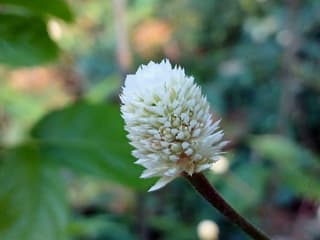
Alternanthera brasiliana is a perennial herbaceous plant native to Brazil, famous for its vibrant purple foliage. It is widely used in landscaping to create color contrasts in borders and mass plantings. Its leaves are opposite and oval, and the plant produces small white flowers clustered in globose inflorescences. It is a hardy species with vigorous growth.
Joseph's Coat
Alternanthera dentata
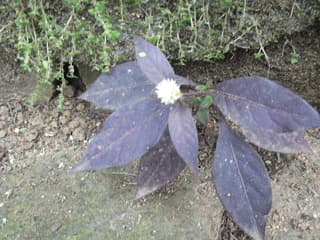
Alternanthera dentata is a tropical perennial prized for its vibrant burgundy-to-purple foliage. Native to South America, it forms dense mounds and works beautifully as ground cover or border plant. The leaves retain their rich color best in full sun.
Joyweed
Alternanthera ficoidea
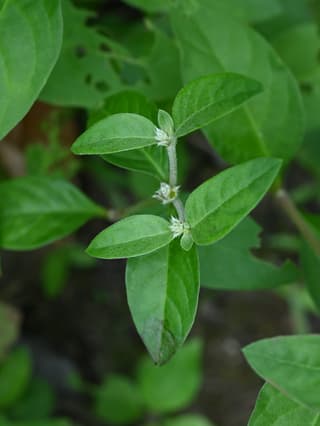
Joyweed (Alternanthera ficoidea) is a colorful ornamental groundcover native to South America, particularly Brazil. Celebrated for its vibrant foliage in shades of red, purple, orange, and green, it is widely used in tropical and subtropical gardens for edging, carpet bedding, and living tapestry designs.
Easy Care Pet Safe
Our selection of 844 easy pet safe combines the characteristics of this category with reduced care needs. Perfect for beginners who love this category.
Why Choose Easy Pet Safe?
Combining the beauty of pet safe with easy difficulty level lets you enjoy this category without excessive maintenance worries. Each plant was selected to offer the best characteristics of the category at the care level you are looking for.