1443 Easy Pet Safe | 2026 Guide - Page 2
Find 1443 easy pet safe. Complete guide for your garden.
1443 Pet Safe with easy level
Showing 37-72 of 1443
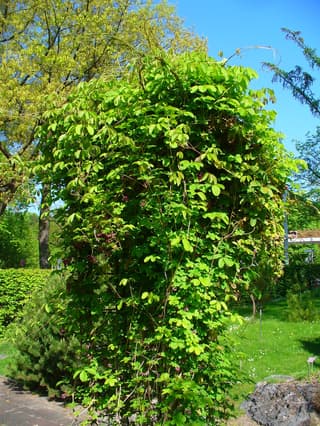
Chocolate Vine
Akebia quinata
Akebia quinata, commonly known as chocolate vine, is a vigorous, twining, semi-evergreen to deciduous climber native to Japan, Korea and China. In spring, it produces clusters of small, fragrant, chocolate-scented flowers in shades of deep purple and maroon, followed in autumn by sausage-shaped, edible purple seed pods. Its five-lobed leaflets and rapid growth make it a popular choice for covering fences, pergolas and trellises, though it can become invasive in mild climates if left unchecked.
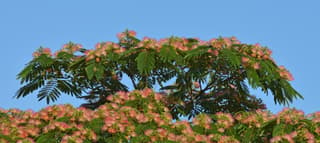
Silk Tree / Mimosa (genus)
Albizia
Albizia is a genus of tropical and subtropical ornamental trees in the Fabaceae family, known for their delicate pink powder-puff flowers and feathery bipinnate foliage. The most widely grown species is Albizia julibrissin.
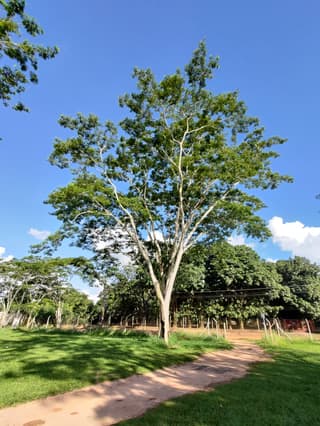
White Silk Tree
Albizia niopoides
Albizia niopoides, commonly known as White Silk Tree or Farinha Seca, is a fast-growing deciduous tree native to South America and Central America, belonging to the Fabaceae family. It can reach 10 to 35 meters in height, developing a characteristic wide, umbrella-shaped crown. Its delicate white to light-pink feathery flowers bloom from spring through summer, attracting bees and hummingbirds. The tree is known for nitrogen fixation, making it valuable for reforestation and agroforestry. It is highly drought-tolerant once established and adapts well to a wide range of tropical and subtropical conditions.
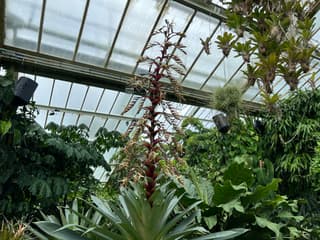
Alcantarea / Imperial Bromeliad (genus)
Alcantarea
Alcantarea is a genus of giant bromeliads native to rocky outcrops and cliff faces in Brazil, particularly in Rio de Janeiro state. These monumental plants form a central water-holding tank with their massive leaf rosettes and are adapted to full sun and periodic drought, making them outstanding specimens for tropical and subtropical gardens.
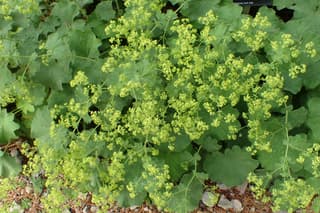
Lady's mantle
Alchemilla mollis
Lady's mantle (Alchemilla mollis) is a hardy perennial from the rose family (Rosaceae), native to Southeast Europe. The plant forms elegant, rounded mounds of softly hairy, fan-shaped leaves with scalloped edges. Thanks to these fine hairs, rain and dew water bead up on the leaves—an effect that alchemists once considered the purest form of water and used in their experiments. In summer, loose clusters of countless tiny, chartreuse flowers appear above the foliage. Lady's mantle is a very low-maintenance groundcover that is excellent for borders, under trees, and along paths, and it naturalizes easily through self-seeding.

Common Water-plantain
Alisma plantago-aquatica
Alisma plantago-aquatica is a hardy marginal perennial of pond edges, ditches and slow-moving water across Europe and Asia. From a basal rosette of long-stalked, plantain-like leaves it sends up tall, airy, much-branched stems studded with tiny three-petalled flowers in white to pale pink that open in the afternoon. It dies back in winter and regrows from its rootstock each spring.
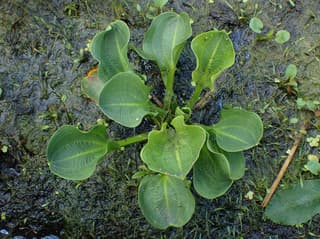
American water plantain
Alisma subcordatum
Alisma subcordatum, the American water plantain, is a native perennial emergent aquatic plant in the water-plantain family (Alismataceae). It forms a rosette of long-stalked, oval to heart-shaped leaves rising from a bulbous corm, and through summer sends up airy, much-branched panicles of tiny three-petaled flowers that open white to pale pink. Reaching about 1 m tall, it colonizes pond margins, ditches, marshes and muddy shallows across eastern and central North America, where it self-seeds freely.
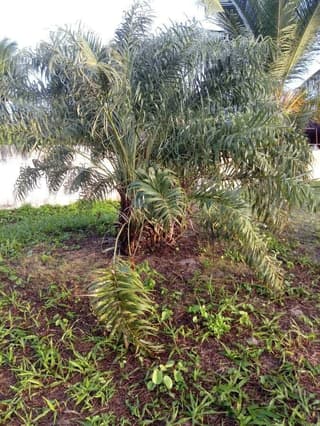
Seashore Palm
Allagoptera arenaria
Allagoptera arenaria, commonly known as the Seashore Palm or Shore Palm, is a small palm species native to the restingas (coastal scrublands) of the Brazilian coast. It typically features an underground or very short stem, with grayish-green pinnate leaves that emerge directly from the sandy soil. It is an extremely resilient plant, adapted to strong winds, high salinity, and intense solar radiation, playing a vital ecological role in dune stabilization.
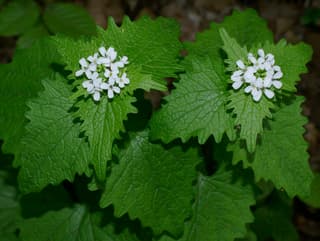
Garlic Mustard
Alliaria petiolata
Garlic mustard (Alliaria petiolata) is a biennial herbaceous plant in the mustard family (Brassicaceae), widely distributed across Central and Northern Europe as well as parts of Asia. In its first year, it forms a basal rosette of heart-shaped, deeply toothed leaves, while in its second year, it sends up a 60–100 cm tall stem with white, four-petaled flowers. Its distinctive feature is the intense garlic scent released when the leaves are crushed, which is due to the presence of glucosinolates. The plant inhabits open deciduous forests, road and forest edges, and slopes, and is known as an invasive species in North America. It is an important host plant for the Orange-tip butterfly (Anthocharis cardamines) and its caterpillars.
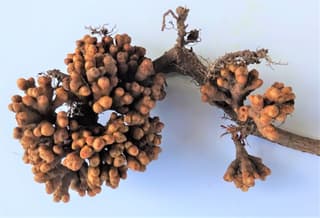
Alder
Alnus
Alder (genus Alnus) is a deciduous tree from the birch family (Betulaceae), growing predominantly near watercourses, lakes, and in moist soils across the temperate zone of the Northern Hemisphere. It is characterized by rapid growth and the ability to fix atmospheric nitrogen through symbiosis with Frankia bacteria, which enriches the surrounding soil. In early spring, before the leaves emerge, it blooms with striking pendulous catkins. Alder wood does not rot when submerged in water, which is why it was traditionally used for building piles and bridge structures.

Common Alder
Alnus glutinosa
The common alder (Alnus glutinosa) is a fast-growing deciduous tree native to Europe, western Asia, and North Africa, prized for its ability to thrive in wet, boggy, and riverside soils where few other trees survive. Reaching up to 25 meters, it produces distinctive reddish-brown catkins in late winter before its rounded, glossy leaves emerge, followed by small woody cone-like fruits that persist into winter. Its roots host nitrogen-fixing bacteria (Frankia alni), allowing it to enrich poor soils naturally, making it a valuable pioneer species for riverbank stabilization, wetland restoration, and windbreaks.
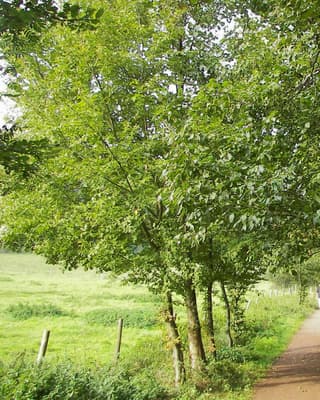
Grey Alder
Alnus incana
Grey alder is a fast-growing deciduous tree native to the cooler regions of Europe and parts of North America, prized for its hardiness, adaptability to poor and wet soils, and its role as a pioneer species that fixes nitrogen in the soil. It produces distinctive purplish male catkins and small cone-like female catkins in late winter before the leaves emerge.
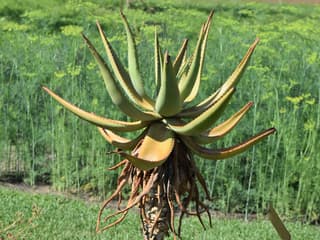
Bitter Aloe
Aloe ferox
Aloe ferox, commonly known as bitter aloe or Cape aloe, is a tree-like succulent native to South Africa, forming a single rosette of spiny, grey-green leaves atop an unbranched stem that can reach up to 3 meters tall. It is renowned for its tall flower spikes bearing tubular orange-red blooms in winter, which attract sunbirds and bees.
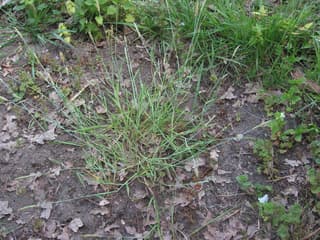
Water Foxtail
Alopecurus geniculatus
Alopecurus geniculatus, commonly known as water foxtail or marsh foxtail, is a perennial grass native to Eurasia. It forms compact tufts with erect or geniculate stems reaching up to 60 cm tall, thriving in waterlogged soils, pond margins, ditches, and seasonally flooded meadows. Its dense, cylindrical flower spikes adorned with pale yellow-orange anthers make it a subtle ornamental accent in water gardens.
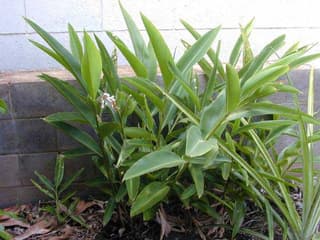
Alpinia / Ginger Lily (genus)
Alpinia
The genus Alpinia comprises over 200 species of tropical plants in the family Zingiberaceae, native primarily to tropical Asia and the Pacific. It includes popular ornamentals such as A. zerumbet (shell ginger) and A. purpurata (red ginger), as well as culinary and medicinal species like A. galanga (greater galangal).
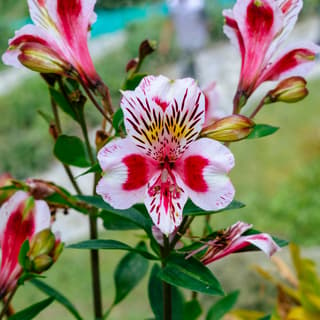
Peruvian Lily
Alstroemeria
The Peruvian Lily, scientifically known as Alstroemeria, is a popular ornamental plant prized for its vibrant and long-lasting flowers. Native to South America, it grows from rhizomes and produces upright stems with lanceolate leaves. The flowers, which come in a wide range of colors and patterns, are often bicolor and have distinct petals, with the lower ones usually marked. It is an excellent choice for flower beds, borders, and as a cut flower due to its long vase life.
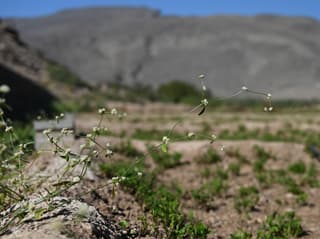
Calico Plant
Alternanthera bettzickiana
Alternanthera bettzickiana, commonly known as Calico Plant or Joseph's Coat, is a compact ornamental herb native to Brazil. It is prized for its vibrant multicolored foliage in shades of red, yellow, green, and pink. Widely used in tropical and subtropical gardens for borders, carpet bedding, and living patterns.
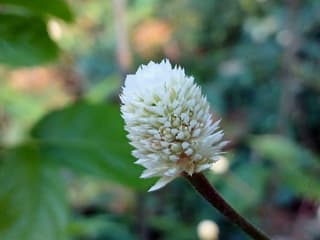
Brazilian Joyweed
Alternanthera brasiliana
Alternanthera brasiliana is a perennial herbaceous plant native to Brazil, famous for its vibrant purple foliage. It is widely used in landscaping to create color contrasts in borders and mass plantings. Its leaves are opposite and oval, and the plant produces small white flowers clustered in globose inflorescences. It is a hardy species with vigorous growth.
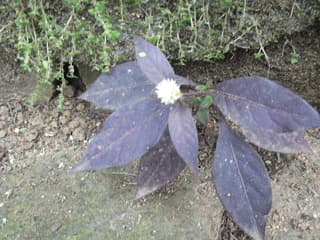
Joseph's Coat
Alternanthera dentata
Alternanthera dentata is a tropical perennial prized for its vibrant burgundy-to-purple foliage. Native to South America, it forms dense mounds and works beautifully as ground cover or border plant. The leaves retain their rich color best in full sun.
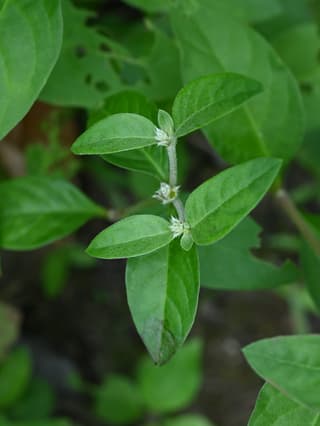
Joyweed
Alternanthera ficoidea
Joyweed (Alternanthera ficoidea) is a colorful ornamental groundcover native to South America, particularly Brazil. Celebrated for its vibrant foliage in shades of red, purple, orange, and green, it is widely used in tropical and subtropical gardens for edging, carpet bedding, and living tapestry designs.
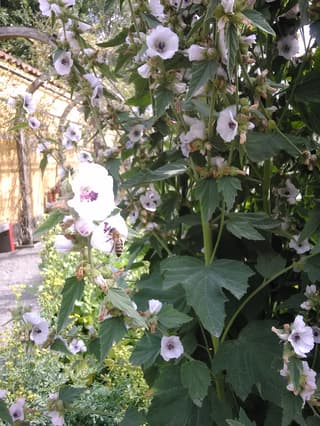
Marshmallow
Althaea officinalis
Althaea officinalis, commonly known as marshmallow, is a perennial herbaceous medicinal plant in the family Malvaceae, native to Europe and western Asia. It produces delicate white-pink flowers in summer and has been valued for its therapeutic properties for millennia, particularly for soothing respiratory and digestive irritations.

Mountain Alyssum
Alyssum montanum
Alyssum montanum, commonly known as mountain alyssum or mountain madwort, is a low-growing evergreen perennial in the mustard family (Brassicaceae), native to the mountainous regions of Central and Southern Europe. It forms dense, mat-like cushions of small grey-green leaves and bursts into a profusion of fragrant, bright yellow flowers from late spring through early summer. Prized for rock gardens, alpine troughs, and sunny border edges, it thrives in poor, well-drained soil and tolerates drought once established, making it an easy, low-maintenance choice for sunny, exposed sites.
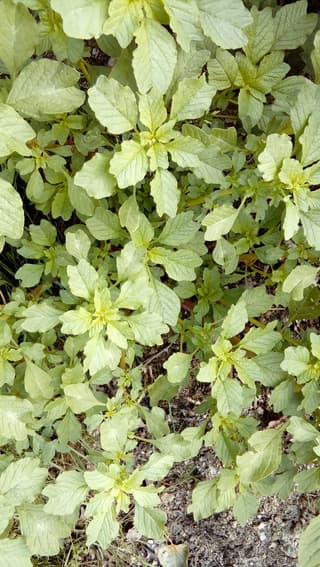
Purple Amaranth
Amaranthus blitum
Amaranthus blitum, commonly known as Purple Amaranth or Livid Amaranth, is an annual herbaceous plant in the Amaranthaceae family, native to the Mediterranean region and Southwest Asia. Widely naturalized across tropical and subtropical zones, it is valued as an edible leafy vegetable and traditional medicinal plant.
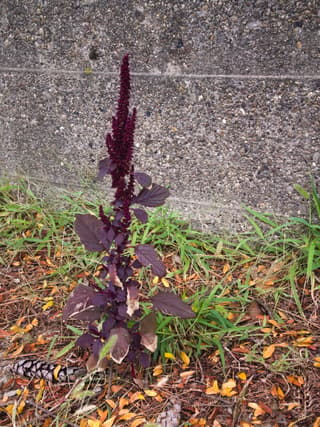
Red Amaranth
Amaranthus cruentus
Amaranthus cruentus, commonly known as Red Amaranth or Blood Amaranth, is a fast-growing annual plant native to Central America and Mexico. Its dramatic feathery plumes in shades of red, purple, and magenta make it a striking ornamental, while its leaves and protein-rich seeds have been used as food and medicine for thousands of years.
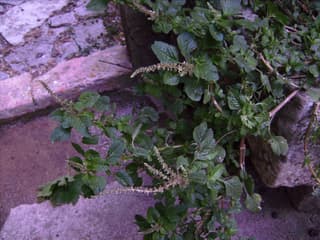
Low Amaranth
Amaranthus deflexus
Low Amaranth (Amaranthus deflexus) is a short-lived perennial or annual herb native to South America, now naturalized worldwide in warm and temperate regions. A highly adaptable and resilient weed-edible, its leaves and seeds are protein-rich and edible. Commonly found in disturbed soils, roadsides, and gardens.
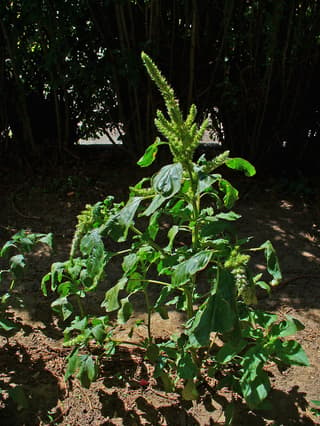
Smooth Amaranth
Amaranthus hybridus
Amaranthus hybridus, commonly known as smooth amaranth or slim amaranth, is a fast-growing annual plant native to the tropical and subtropical Americas. Belonging to the Amaranthaceae family, it is valued as both a food and medicinal plant. Its green leaves and nutritious seeds are consumed in many cultures around the world. The plant produces dense inflorescences in shades of red, green, or purple during summer and fall.

Prince's Feather
Amaranthus hypochondriacus
Amaranthus hypochondriacus, commonly known as Prince's Feather, is an annual herbaceous plant in the Amaranthaceae family, native to Mexico and Central America. It can grow up to 2 meters tall, with lanceolate leaves and dense, erect flower spikes in shades of red and burgundy that stand out from summer through fall. It is grown both as an ornamental plant and as a protein-rich edible grain.
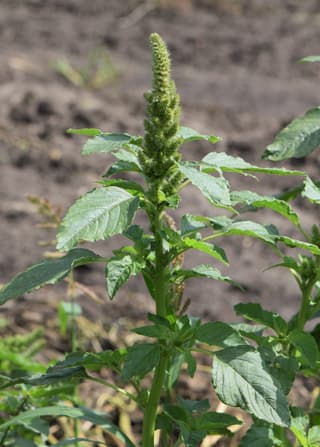
Redroot Pigweed
Amaranthus retroflexus
Redroot Pigweed (Amaranthus retroflexus) is an annual herb native to tropical Americas, now naturalized worldwide. It grows up to 2 m tall with dense gray-green flower spikes. Leaves are nutritious — rich in iron, calcium, vitamins A and C — and have long been used as food and medicine. CAUTION: leaves must always be cooked before consumption to neutralize oxalates; the plant can accumulate nitrates making it toxic to livestock in large quantities.
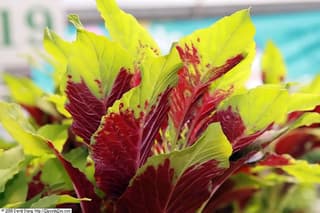
Joseph's Coat
Amaranthus tricolor
Amaranthus tricolor, commonly known as Joseph's Coat or Tampala, is a striking annual plant native to South and Southeast Asia. Celebrated for its brilliantly colored foliage of red, yellow, and green, it is cultivated worldwide as both an ornamental garden plant and a nutritious leaf vegetable. Its vivid tricolor leaves make it a standout in summer borders and tropical garden designs.
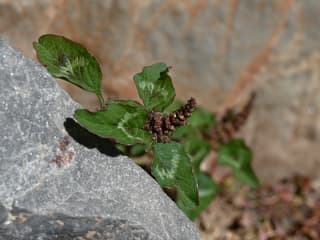
Slender amaranth
Amaranthus viridis
Slender amaranth (Amaranthus viridis) is an annual herb in the Amaranthaceae family, native to the tropical Americas and now naturalized as a cosmopolitan weed worldwide. It grows upright, 60-80 cm tall, with branching stems from the base, ovate leaves 3-6 cm long, and small green flowers borne in terminal panicles. It is both a leafy vegetable, cooked and eaten like spinach in many tropical cuisines, and a common agricultural weed.
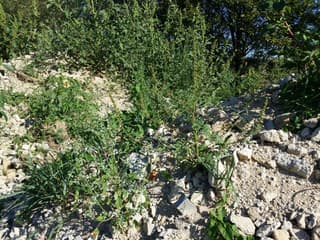
Ragweed
Ambrosia
Ambrosia is a genus of roughly 40 weedy annual and perennial species in the daisy family (Asteraceae), native to the Americas and now naturalized across Europe, Asia, and beyond. The best-known species, Ambrosia artemisiifolia (common or annual ragweed), is a fast-growing, deeply lobed-leaved plant that colonizes disturbed soil -- roadsides, fields, construction sites, and waste ground. It is not cultivated as an ornamental; rather, it is notorious as one of the most significant sources of allergenic pollen in the world, triggering hay fever (allergic rhinitis) in millions of people during late summer and fall.
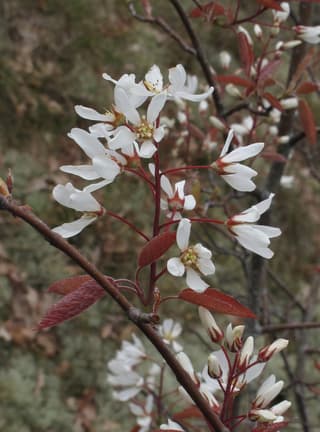
Serviceberry
Amelanchier
Amelanchier, commonly known as serviceberry or juneberry, is a genus of deciduous shrubs and small trees in the rose family (Rosaceae), native mainly to North America. It is prized for its clouds of white spring flowers, sweet edible summer berries, and fiery orange-red fall foliage.
Juneberry
Amelanchier × lamarckii
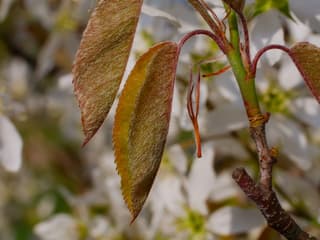
Amelanchier × lamarckii is a naturally occurring hybrid serviceberry, most likely a cross between Allegheny serviceberry (A. laevis) and downy serviceberry (A. arborea), first recognized in the early 20th century and now widely planted as an ornamental garden tree. This deciduous, multi-stemmed large shrub or small tree grows 15-25 ft (roughly 4.5-7.5 m) tall, with an open, rounded crown. In spring, before or as the bronze-tinted young leaves unfurl, it is covered in drooping clusters of star-shaped white flowers. These are followed in early summer by small, round, purple-black pome fruits ("juneberries") that resemble blueberries and are sweet and edible, attracting birds. Fall brings vivid orange-to-red foliage color, making this a four-season interest plant.
Saskatoon Serviceberry
Amelanchier alnifolia
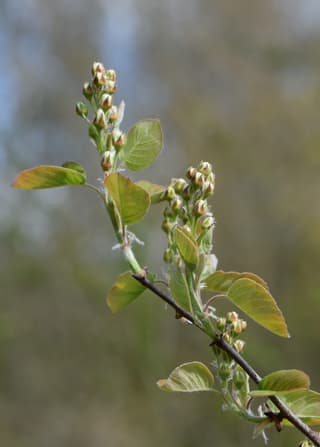
Amelanchier alnifolia, the Saskatoon serviceberry, is a long-lived deciduous shrub or small tree native to western North America, ranging from Alaska south to California and east to the Great Plains. One of the most cold-hardy woody fruiting plants in cultivation, it thrives in USDA zones 2a through 7b and tolerates temperatures as low as -45°C. Each spring it erupts in clusters of fragrant, star-shaped white flowers before the leaves fully expand—an early-season spectacle cherished by pollinators and gardeners alike. By midsummer, branches bow under generous crops of sweet, blueberry-like purple berries that have sustained Indigenous peoples for millennia, eaten fresh, dried into pemmican, or baked into pies. Come autumn, the foliage transforms to brilliant golds, oranges, and reds, extending its ornamental value through the season. Highly drought-tolerant once established, it asks for little beyond full sun, well-drained loamy soil, and occasional pruning to keep its suckering growth in check.
Serviceberry
Amelanchier canadensis
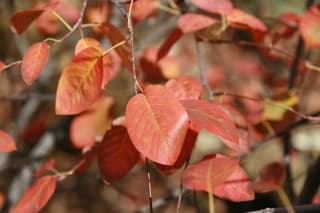
A deciduous, multi-stemmed shrub or small tree native to eastern North America, prized for its clouds of white star-shaped flowers that open in early spring before the leaves unfurl. By early summer the blooms give way to sweet, blueberry-like purple-black berries, and in autumn the foliage turns brilliant shades of orange and red. Its early bloom time made it a folk calendar marker for the shad fish runs, hence the name shadbush.
Winged Everlasting
Ammobium alatum
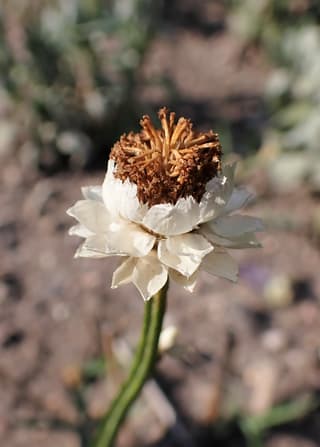
The Winged Everlasting is an Australian, long-lasting ornamental plant belonging to the aster family (Asteraceae). It is known for its white, papery dry flowers with a bright yellow center. The plant requires plenty of sun and is very drought-tolerant, making it an ideal choice for dry gardens and dried flower arrangements.
Easy Care Pet Safe
Our selection of 1443 easy pet safe combines the characteristics of this category with reduced care needs. Perfect for beginners who love this category.
Why Choose Easy Pet Safe?
Combining the beauty of pet safe with easy difficulty level lets you enjoy this category without excessive maintenance worries. Each plant was selected to offer the best characteristics of the category at the care level you are looking for.