375 Medium Pet Safe | 2026 Guide
Find 375 medium pet safe. Complete guide for your garden.
375 Pet Safe with medium level
Showing 1-36 of 375
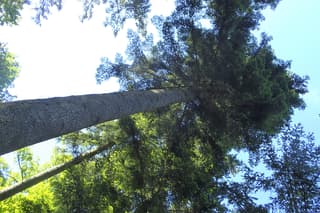
Nordmann fir
Abies nordmanniana
The Nordmann fir (Abies nordmanniana) is a large, majestic conifer native to the mountain forests of the Caucasus, northeastern Turkey, and Georgia. The tree has a graceful, broad pyramidal crown with horizontally spreading branches that grow in tiers. The glossy, dark green needles are soft and non-prickly, featuring two prominent white stripes on the underside. In the wild, the Nordmann fir can reach heights of up to 50 meters; in gardens and parks, it typically reaches a height of 9 to 15 meters. The tree is best known as a Christmas tree because its needles are very slow to drop.
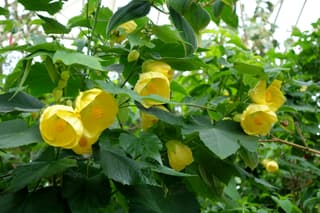
Flowering Maple
Abutilon hybridum
Abutilon hybridum, commonly known as flowering maple, is an ornamental shrub from the Malvaceae family, native to South America. Its pendulous bell-shaped flowers in shades of red, yellow, orange, and pink resemble small lanterns, making it a highly decorative plant for both indoor and outdoor settings.
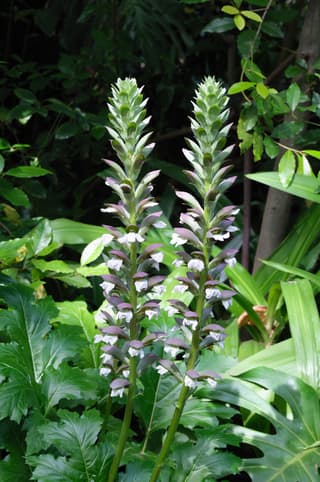
Bear's Breeches
Acanthus mollis
Acanthus mollis, commonly known as Bear's Breeches, is a bold architectural perennial native to the Mediterranean. It is prized for its dramatic, deeply lobed glossy green leaves and tall spikes of white and purple flowers that bloom in late spring to midsummer. Its striking foliage inspired the iconic leaf motif on Corinthian columns.
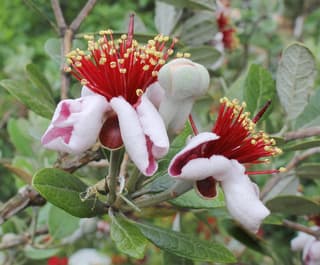
Pineapple Guava
Acca sellowiana
Acca sellowiana, commonly known as pineapple guava or feijoa, is an evergreen shrub native to southern Brazil and Uruguay. Belonging to the Myrtaceae family, it produces aromatic fruits with a flavor reminiscent of pineapple, strawberry, and guava. Its ornamental flowers feature white petals with striking red stamens — and are entirely edible.
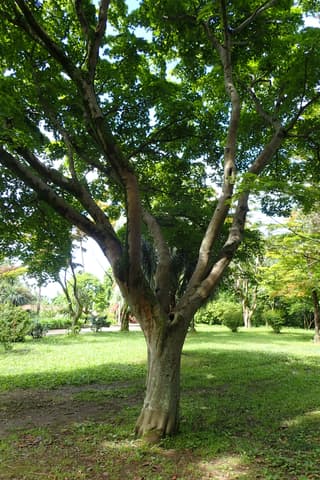
Maple
Acer
The genus Acer, commonly known as maple, encompasses more than 130 species of deciduous trees and shrubs distributed throughout the Northern Hemisphere. Famous for the exuberance of its autumn foliage, the maple is cultivated for both its ornamental value and its fine wood. The Japanese species Acer palmatum is especially prized in gardens and bonsai, while Acer saccharum provides the famous sap for maple syrup.
Fullmoon Maple
Acer japonicum
The Fullmoon Maple (Acer japonicum) is a small-to-medium deciduous tree native to the mountain woodlands of Japan and Korea, prized for its rounded, moon-shaped leaves with 7-11 soft lobes. In spring it bears clusters of small purplish-red flowers before the foliage unfurls, and in autumn its canopy turns brilliant shades of gold, orange, and crimson. Slow-growing and elegant, it is a signature specimen tree in Japanese-style gardens.
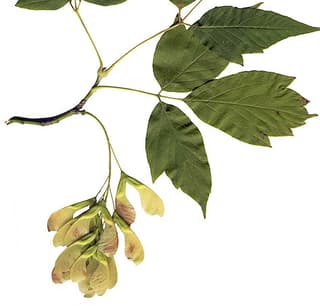
Boxelder
Acer negundo
Boxelder (Acer negundo) is a fast-growing, deciduous tree native to North America, belonging to the family Sapindaceae. It can reach up to 21 meters (70 feet) in height and is renowned for its exceptional cold hardiness and adaptability to a wide range of soil types and climatic conditions. The tree features pinnately compound leaves with 3 to 5 leaflets and produces inconspicuous green-yellow flowers in spring before the leaves emerge. It is dioecious, with male and female flowers on separate trees.
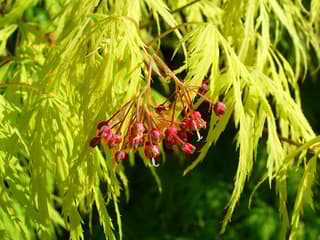
Japanese Maple
Acer palmatum
The Japanese Maple (Acer palmatum) is an ornamental tree native to Japan, China, and Korea, celebrated for the spectacular beauty of its foliage, which transforms through the seasons — from deep green in spring to vivid shades of red, orange, and yellow in autumn. With an elegant habit and deeply lobed palmate leaves, it is one of the most beloved ornamental trees in Asian-style gardens, contemplation gardens, and as a bonsai subject.
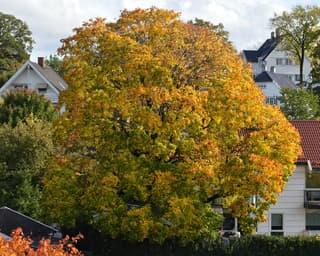
Norway Maple
Acer platanoides
The Norway Maple (Acer platanoides) is a large deciduous tree native to Europe and western Asia, widely planted as a shade and street tree. It features broad, palmate leaves, small yellow-green spring flowers, and vibrant yellow to orange autumn foliage. Extremely hardy and adaptable, it tolerates a wide range of soils, pollution, and urban conditions.
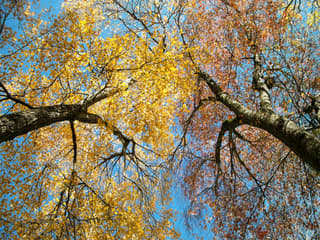
Red Maple
Acer rubrum
Acer rubrum, commonly known as the Red Maple, is one of the most abundant and widespread deciduous trees in eastern North America. Celebrated for its spectacular crimson, orange, and yellow autumn foliage, it is a fast-growing landscape tree valued for shade, wildlife habitat, and ornamental beauty.
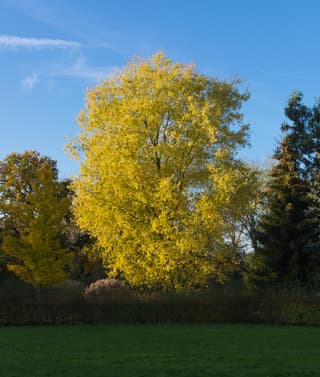
Silver Maple
Acer saccharinum
The Silver Maple (Acer saccharinum) is a fast-growing deciduous tree native to eastern and central North America. Named for the silvery underside of its leaves, it is widely planted as a shade and ornamental tree. It thrives along rivers and wetlands but adapts well to drier conditions.
Full Moon Maple
Acer shirasawanum
Acer shirasawanum, or the Full Moon Maple, is a slow-growing deciduous tree or large shrub native to Japan, prized for its rounded, star-shaped leaves that emerge bright yellow-green in spring and turn brilliant orange and red in autumn. Reaching 5-6 meters (16-20 feet) tall and wide at maturity, it forms an elegant, rounded canopy that works beautifully as a specimen tree or understory planting.
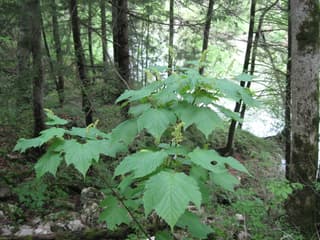
Mountain Maple
Acer spicatum
Mountain Maple (Acer spicatum) is a small deciduous shrub or understory tree native to eastern North America. It thrives on rocky slopes and stream banks in cool, shaded forests, producing brilliant yellow, orange, and red foliage in autumn. Its erect racemes of small greenish-yellow flowers appear in early summer.
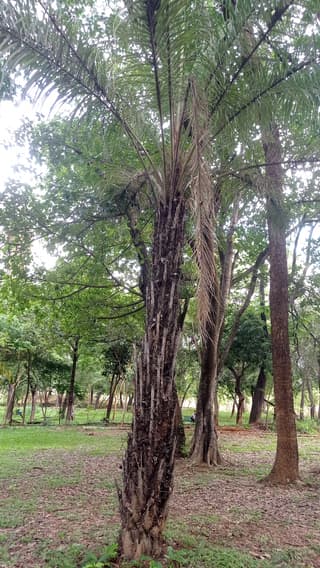
Macaw Palm
Acrocomia aculeata
Acrocomia aculeata, commonly known as the Macaw Palm or Grugru Palm, is a native Brazilian and tropical American palm tree widely distributed across the Cerrado, Atlantic Forest, and transitional zones. Its spiny trunk can reach up to 15 meters in height, crowned by long, arching pinnate leaves that give it a majestic tropical appearance. It produces abundant oil-rich fruits, making it one of the most versatile and economically promising palms in the Americas. Highly resistant to drought and fire, it adapts to different soil types and is increasingly valued in tropical landscaping and sustainable agroindustry.
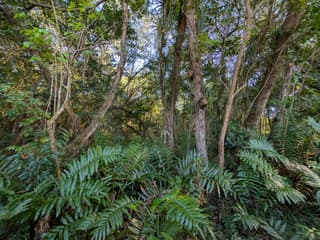
Golden Leather Fern
Acrostichum aureum
Acrostichum aureum, commonly known as the Golden Leather Fern or Mangrove Fern, is one of the largest tropical ferns in the world. Native to pantropical mangrove swamps and coastal wetlands, this robust species develops long, leathery fronds reaching up to 3 metres in length. It tolerates both saline and freshwater environments, making it one of the most adaptable ferns on Earth.
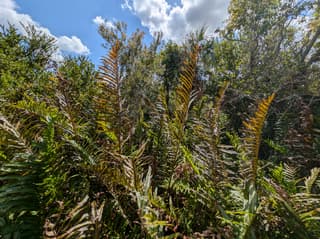
Giant Leather Fern
Acrostichum danaeifolium
The Giant Leather Fern (Acrostichum danaeifolium) is one of the largest ferns in the Americas, native to mangrove swamps and coastal wetlands of tropical America. It can reach up to 12 feet tall and thrives in consistently wet, even flooded, soils with high humidity.
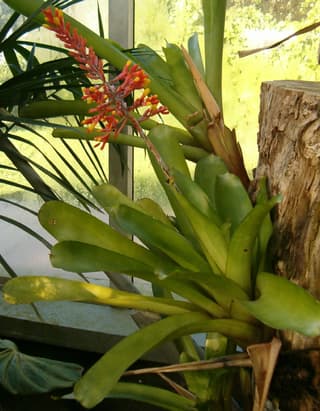
Tail Bromeliad
Aechmea caudata
Aechmea caudata is a bromeliad native to Brazil's Atlantic Forest, occurring from Espírito Santo to Rio Grande do Sul across epiphytic, rupicolous, and terrestrial habitats. It forms a funnel-shaped rosette of long arching leaves up to 128 cm, with serrated margins and a sharp tip. The erect spike inflorescence rises above the rosette, bearing yellowish flowers with orange-red sepals — a striking tropical display. Like all monocarpic bromeliads, it flowers once in its lifetime (typically in summer), then slowly declines while producing offsets.
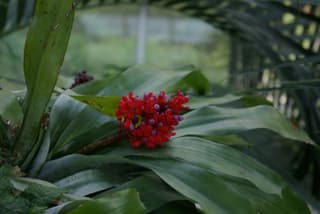
Coral Berry Bromeliad
Aechmea fulgens
Aechmea fulgens, commonly known as the Coral Berry Bromeliad, is an epiphytic bromeliad native to northeastern Brazil, particularly the states of Bahia and Pernambuco. It forms an elegant rosette of bright green, waxy leaves with marginal spines. Its striking inflorescence features red bracts and numerous purple flowers, followed by long-lasting red globose berries that persist for many months after blooming. This makes it one of the most decorative bromeliads for both indoor cultivation and tropical gardens.
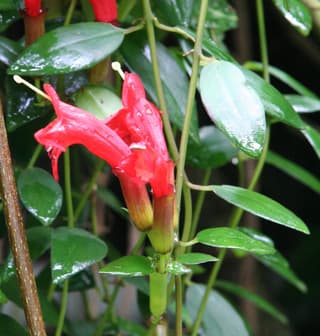
Lipstick Plant
Aeschynanthus radicans
The Lipstick Plant (Aeschynanthus radicans) is a stunning tropical epiphyte native to the humid rainforests of Southeast Asia. Known for its cascading vines adorned with glossy, waxy leaves and striking tubular red flowers that emerge from dark burgundy calyxes resembling a lipstick tube, this plant is a favorite among indoor gardeners. It thrives in hanging baskets where its trailing stems can gracefully drape, creating a lush, eye-catching display.
Common Fieldcap
Agrocybe pediades
Agrocybe pediades is a small, cosmopolitan saprophytic fungus that frequently grows in nutrient-rich soils, such as lawns, gardens, and pastures. It is characterized by its initially hemispherical cap that flattens with age, displaying a yellowish-ochre or cinnamon color. It is an essential organism for the decomposition of organic matter and nutrient recycling in the soil. Although edible, its small size and the potential for confusion with similar toxic species require caution.
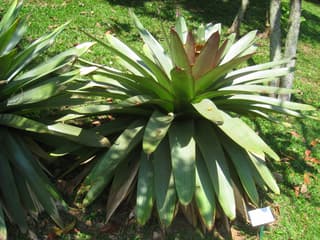
Imperial Bromeliad
Alcantarea imperialis
Alcantarea imperialis, commonly known as the Imperial Bromeliad, is one of the largest bromeliads in the world and a truly spectacular ornamental plant endemic to Brazil. Native to the rocky slopes of the Serra dos Órgãos mountain range in Rio de Janeiro state, this magnificent species forms enormous rosettes of leathery leaves that can reach 1.5 m in diameter, with a central tank capable of holding up to 30 liters of rainwater. When it eventually blooms — an event that occurs after 10 to 40 years — it produces a towering flower spike up to 3.5 m tall bearing white-yellowish flowers with reddish bracts that attract hummingbirds and other pollinators.
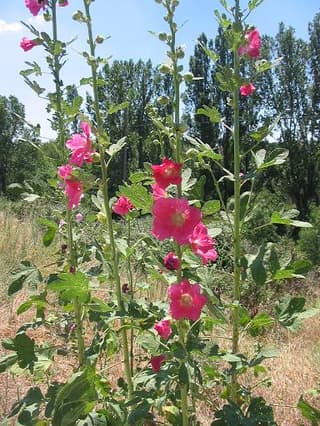
Hollyhock
Alcea rosea
Hollyhock (Alcea rosea) is a biennial or short-lived perennial flowering plant in the family Malvaceae, native to southwestern and central Asia, including Turkey and China. Renowned for its towering flower spikes reaching up to 2.5 metres (8 feet) in height, it produces abundant blooms in shades of pink, red, white, yellow, purple, and orange throughout summer. A cottage garden classic, hollyhocks thrive along fences, walls, and borders.
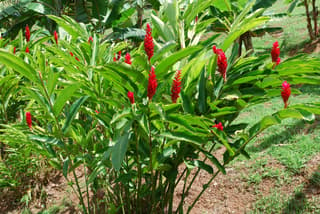
Red Ginger
Alpinia purpurata
Red Ginger (Alpinia purpurata) is a stunning tropical plant native to the South Pacific, celebrated for its dramatic crimson-red flower spikes rising above glossy lance-shaped foliage. A member of the Zingiberaceae family, it is widely cultivated as an ornamental in tropical and subtropical gardens and as a potted plant in warm interiors. Its long-lasting blooms make it highly prized for floral arrangements, leis, and landscape use.
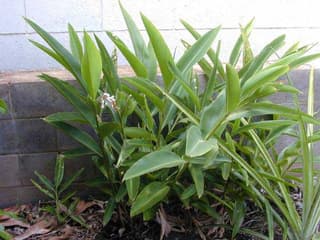
Shell Ginger
Alpinia zerumbet
Alpinia zerumbet, commonly known as Shell Ginger, is a magnificent tropical perennial native to East Asia (Japan and China). Belonging to the Zingiberaceae family, it produces large, lush, lance-shaped evergreen leaves and spectacular arching clusters of waxy, shell-shaped flowers in white and pink with yellow accents. It is widely cultivated as an ornamental plant in tropical and subtropical gardens worldwide and can also be grown indoors in bright conditions.
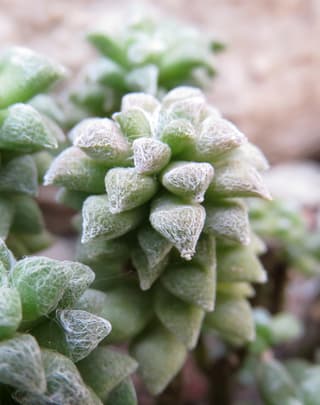
Spiderweb Anacampseros
Anacampseros arachnoides
Anacampseros arachnoides is a small, charming succulent native to South Africa, prized for its compact rosettes adorned with fine white thread-like trichomes that resemble a spider's web. It belongs to the family Anacampserotaceae and thrives in bright, direct sunlight with minimal watering.
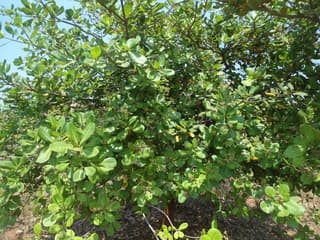
Cashew
Anacardium occidentale
The cashew tree (Anacardium occidentale) is a tropical fruit tree native to northeastern Brazil, now cultivated worldwide in over 30 countries. It produces the cashew apple (a fleshy pseudofruit) and the cashew nut — one of the world's most popular snacks. Trees can grow up to 20 meters tall with a dense, spreading canopy. Small pink-white flowers bloom in the dry season, attracting bees and birds. The raw shell contains urushiol (a skin irritant related to poison ivy), but roasted cashew nuts are completely safe to eat.
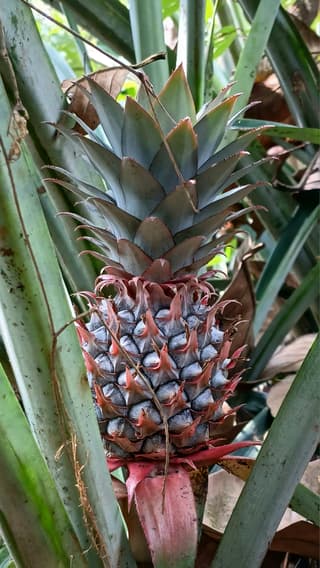
Pineapple
Ananas comosus
Ananas comosus, popularly known as the pineapple, is a perennial tropical plant in the bromeliad family. It is characterized by a rosette of stiff, spiny, sword-shaped leaves, from which a central stalk emerges to produce the inflorescence and, subsequently, the composite fruit. It is a CAM plant, meaning it releases oxygen at night, making it excellent for indoor environments.
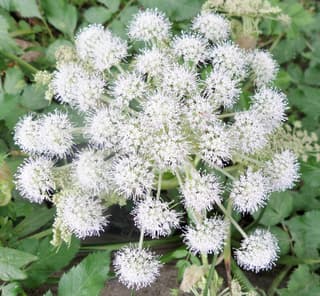
Wild Angelica
Angelica sylvestris
Wild Angelica (Angelica sylvestris) is a biennial or short-lived perennial herb in the family Apiaceae, native to Europe and temperate Asia. It thrives in moist, shaded environments such as riverbanks, woodland margins, and damp meadows, growing up to 2 metres tall. Its white to pale pink flowers, arranged in large compound umbels, are a magnet for bees, hoverflies, and butterflies. The plant has a long history of medicinal use across Europe, valued for its digestive, diuretic, and expectorant properties.
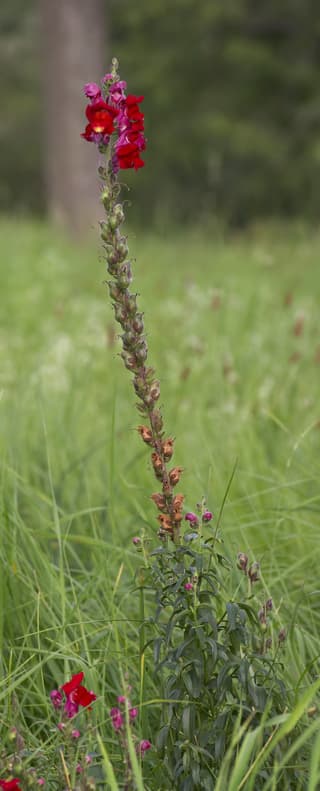
Snapdragon
Antirrhinum majus
The Snapdragon is a classic herbaceous garden plant, famous for its vertical flower spikes that open like a jaw when pressed on the sides. Native to the Mediterranean region, it is prized for its wide range of colors and for attracting pollinators such as bees and bumblebees. Although technically a short-lived perennial, it is frequently grown as an annual in cooler or temperate climates.
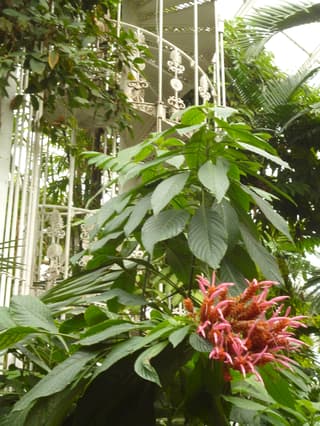
Coral Aphelandra
Aphelandra sinclairiana
Aphelandra sinclairiana, commonly known as Coral Aphelandra or Panama Queen, is a tropical evergreen shrub native to Central America, particularly Panama and Costa Rica. It can grow up to 3 meters tall and is celebrated for its spectacular coral-orange flower spikes with brilliantly colored bracts that remain decorative for weeks. The large, opposite, deep-green leaves with prominent white veins make it a striking ornamental plant for both indoor spaces and tropical gardens.
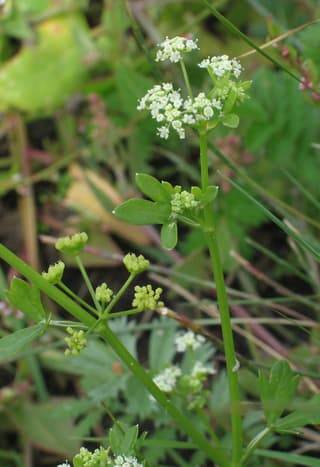
Celery
Apium graveolens
Celery (Apium graveolens) is a biennial plant in the Apiaceae family, cultivated for over 3,000 years as both a food crop and medicinal herb. Native to temperate regions of Europe, Asia, and North Africa, it is widely grown in vegetable gardens for its crisp stalks, aromatic leaves, and flavorful seeds.
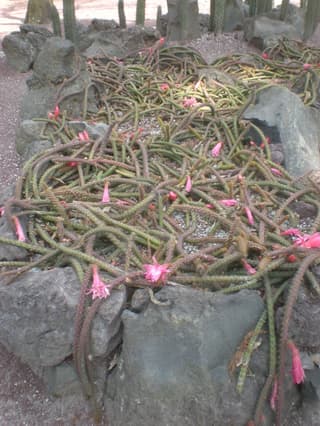
Rat Tail Cactus
Aporocactus flagelliformis
Aporocactus flagelliformis, commonly known as the rat tail cactus, is an epiphytic succulent native to Mexico (Hidalgo, Puebla, and Veracruz states). Its long, cylindrical, trailing stems, covered in fine brown spines, can reach up to 150 cm in length, making it ideal for hanging baskets. In spring, it produces vibrant tubular flowers in shades of pink, red, and crimson, which last only a few days but are exceptionally beautiful.
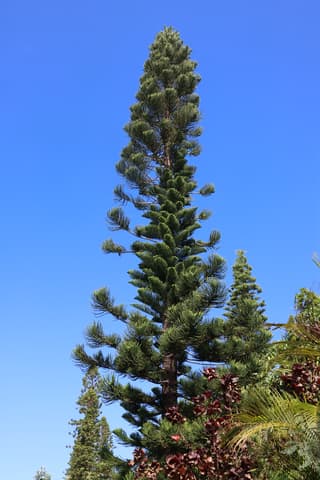
Cook Pine
Araucaria columnaris
The Cook Pine (Araucaria columnaris) is a majestic conifer native to New Caledonia, renowned for its distinctive columnar silhouette and a fascinating biological quirk: its trunk tilts toward the equator, regardless of which hemisphere it grows in. A slow-growing tree that can reach 60 meters in the wild, it typically stays 15-20 meters in cultivation. Widely used as an ornamental tree in coastal and subtropical gardens.
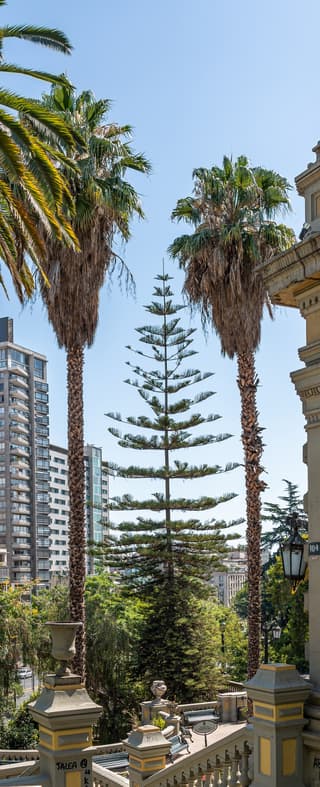
Norfolk Island Pine
Araucaria heterophylla
The Norfolk Island Pine (Araucaria heterophylla) is a slow-growing evergreen conifer endemic to Norfolk Island in the South Pacific. Renowned for its symmetrical, tiered horizontal branches and star-like silhouette, it is widely cultivated as an ornamental houseplant and outdoor landscape tree. In its native habitat it can reach over 60 meters tall, but indoors typically stays under 2 meters.
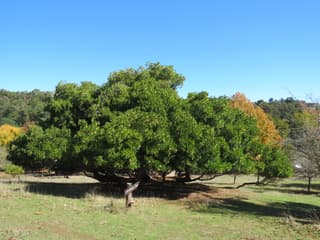
Strawberry Tree
Arbutus unedo
The strawberry tree (Arbutus unedo) is an evergreen shrub or small tree in the Ericaceae family, native to the Mediterranean region and western Europe. It is known for its white urn-shaped flowers and red strawberry-like fruit, which ripen in autumn and winter alongside the new flowering.
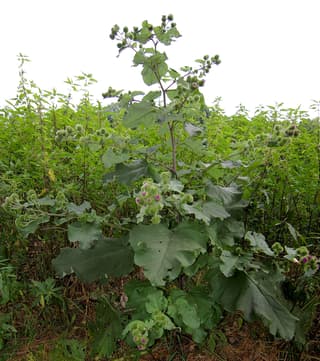
Burdock
Arctium lappa
Arctium lappa, commonly known as Burdock or Gobo, is a robust biennial herbaceous plant native to Europe and Asia. It grows up to 2 meters tall, producing large heart-shaped leaves and distinctive purple flower heads surrounded by hooked bracts that cling to clothing and animal fur — inspiring the invention of Velcro. Both the root and leaves have been valued for centuries in traditional medicine and Asian cuisine.
Medium Care Pet Safe
Our selection of 375 medium pet safe combines the characteristics of this category with moderate care needs. Ideal for those with basic experience.
Why Choose Medium Pet Safe?
Combining the beauty of pet safe with medium difficulty level lets you enjoy this category with a balanced care commitment. Each plant was selected to offer the best characteristics of the category at the care level you are looking for.