617 Medium Pet Safe | 2026 Guide - Page 2
Find 617 medium pet safe. Complete guide for your garden.
617 Pet Safe with medium level
Showing 37-72 of 617
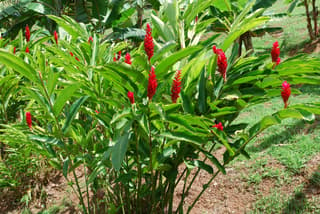
Red Ginger
Alpinia purpurata
Red Ginger (Alpinia purpurata) is a stunning tropical plant native to the South Pacific, celebrated for its dramatic crimson-red flower spikes rising above glossy lance-shaped foliage. A member of the Zingiberaceae family, it is widely cultivated as an ornamental in tropical and subtropical gardens and as a potted plant in warm interiors. Its long-lasting blooms make it highly prized for floral arrangements, leis, and landscape use.
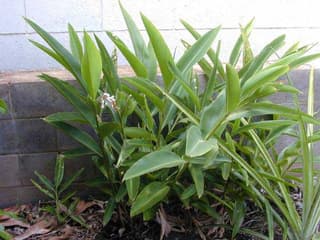
Shell Ginger
Alpinia zerumbet
Alpinia zerumbet, commonly known as Shell Ginger, is a magnificent tropical perennial native to East Asia (Japan and China). Belonging to the Zingiberaceae family, it produces large, lush, lance-shaped evergreen leaves and spectacular arching clusters of waxy, shell-shaped flowers in white and pink with yellow accents. It is widely cultivated as an ornamental plant in tropical and subtropical gardens worldwide and can also be grown indoors in bright conditions.
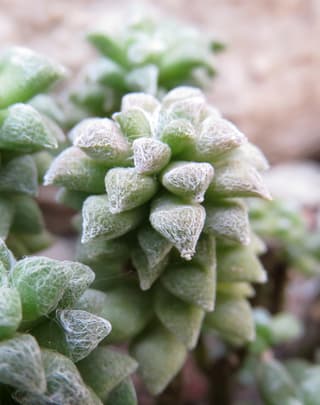
Spiderweb Anacampseros
Anacampseros arachnoides
Anacampseros arachnoides is a small, charming succulent native to South Africa, prized for its compact rosettes adorned with fine white thread-like trichomes that resemble a spider's web. It belongs to the family Anacampserotaceae and thrives in bright, direct sunlight with minimal watering.
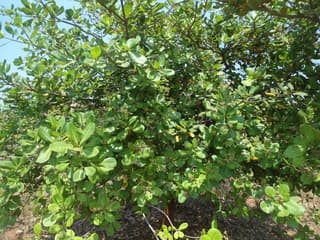
Cashew
Anacardium occidentale
The cashew tree (Anacardium occidentale) is a tropical fruit tree native to northeastern Brazil, now cultivated worldwide in over 30 countries. It produces the cashew apple (a fleshy pseudofruit) and the cashew nut — one of the world's most popular snacks. Trees can grow up to 20 meters tall with a dense, spreading canopy. Small pink-white flowers bloom in the dry season, attracting bees and birds. The raw shell contains urushiol (a skin irritant related to poison ivy), but roasted cashew nuts are completely safe to eat.
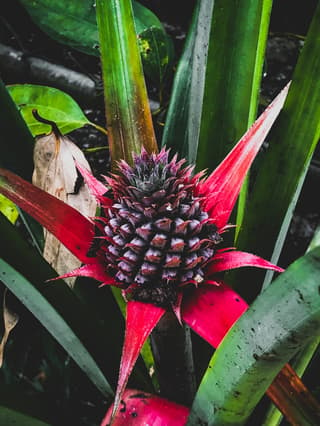
Red Pineapple
Ananas bracteatus
Ananas bracteatus, commonly known as the Red Pineapple, is an ornamental terrestrial bromeliad native to Brazil, Paraguay, Uruguay and northern Argentina. It forms a dense rosette of stiff, arching, spine-edged leaves and produces a compact, upright fruit surrounded by vivid red-orange bracts, which is more decorative than sweet. Grown outdoors in warm climates or as a striking container specimen elsewhere, it is prized for its bold silhouette and long-lasting color.
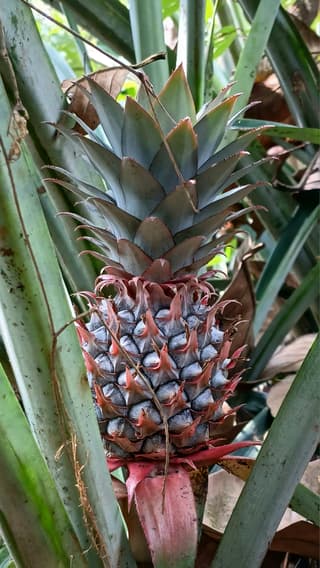
Pineapple
Ananas comosus
Ananas comosus, popularly known as the pineapple, is a perennial tropical plant in the bromeliad family. It is characterized by a rosette of stiff, spiny, sword-shaped leaves, from which a central stalk emerges to produce the inflorescence and, subsequently, the composite fruit. It is a CAM plant, meaning it releases oxygen at night, making it excellent for indoor environments.
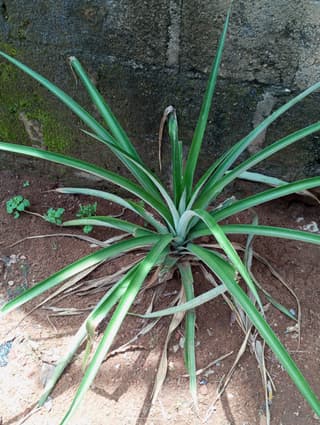
Dwarf Pineapple
Ananas nanus
Ananas nanus, commonly known as dwarf pineapple, is a terrestrial bromeliad native to Brazil, grown mainly as a compact ornamental plant. It forms a tight rosette of stiff, serrated leaves and produces a small inflorescence followed by a tiny, tart, low-pulp fruit typically used as a decorative accent in pots and arrangements.
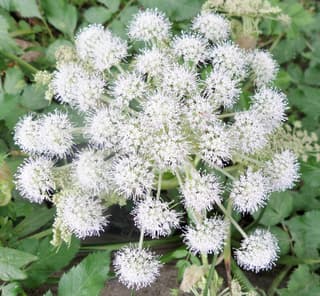
Wild Angelica
Angelica sylvestris
Wild Angelica (Angelica sylvestris) is a biennial or short-lived perennial herb in the family Apiaceae, native to Europe and temperate Asia. It thrives in moist, shaded environments such as riverbanks, woodland margins, and damp meadows, growing up to 2 metres tall. Its white to pale pink flowers, arranged in large compound umbels, are a magnet for bees, hoverflies, and butterflies. The plant has a long history of medicinal use across Europe, valued for its digestive, diuretic, and expectorant properties.
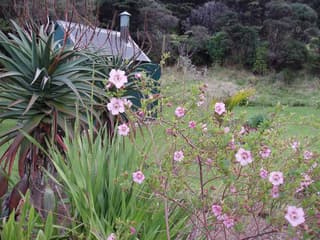
Cape Mallow
Anisodontea capensis
Anisodontea capensis, known as Cape mallow or false mallow, is an evergreen shrub native to South Africa and a member of the Malvaceae family. The plant is characterized by its gray-green, deeply lobed leaves and delicate, hibiscus-like flowers that bloom from spring to fall in shades ranging from pink to dark reddish-purple. Growing 24-40 inches (60-100 cm) tall, it is an elegant ornamental plant for balconies and gardens.
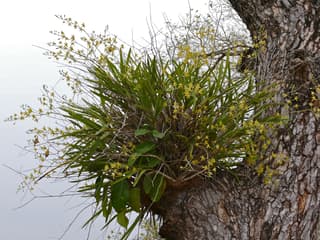
Leopard Orchid
Ansellia africana
Ansellia africana, the leopard orchid, is a large epiphytic orchid native to tropical and southern Africa, where it grows in the forks of tall trees along rivers and coastlines. It forms dense clumps of cane-like pseudobulbs topped with leathery, lance-shaped leaves, and produces branching sprays of yellow flowers boldly marked with brown spots reminiscent of a leopard's coat.
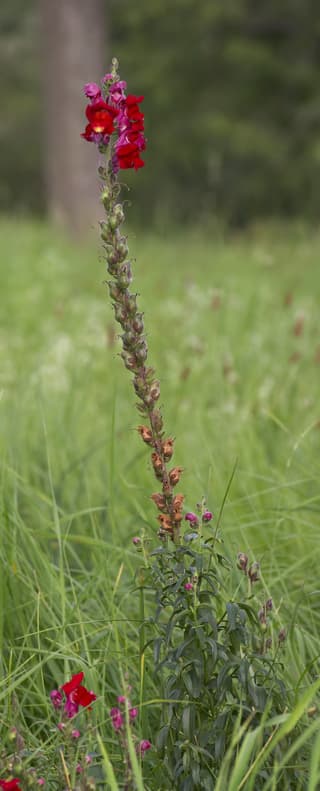
Snapdragon
Antirrhinum majus
The Snapdragon is a classic herbaceous garden plant, famous for its vertical flower spikes that open like a jaw when pressed on the sides. Native to the Mediterranean region, it is prized for its wide range of colors and for attracting pollinators such as bees and bumblebees. Although technically a short-lived perennial, it is frequently grown as an annual in cooler or temperate climates.
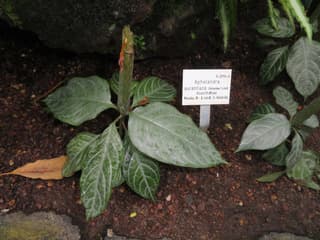
Fiery spike
Aphelandra aurantiaca
A tropical evergreen shrub in the Acanthaceae family, native to a range spanning Mexico to Brazil and Bolivia, growing in partial shade along riverbanks, forest edges and paths between 100 and 1800 m elevation. Reaches 50 cm to 1 m tall, with large opposite leaves (10-30 cm) marked by prominent veining. Produces showy terminal spikes of orange-red bracts with yellow flowers, attractive to hummingbirds.
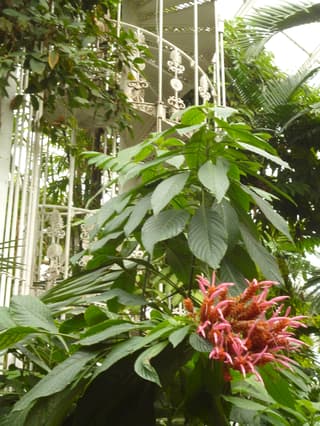
Coral Aphelandra
Aphelandra sinclairiana
Aphelandra sinclairiana, commonly known as Coral Aphelandra or Panama Queen, is a tropical evergreen shrub native to Central America, particularly Panama and Costa Rica. It can grow up to 3 meters tall and is celebrated for its spectacular coral-orange flower spikes with brilliantly colored bracts that remain decorative for weeks. The large, opposite, deep-green leaves with prominent white veins make it a striking ornamental plant for both indoor spaces and tropical gardens.
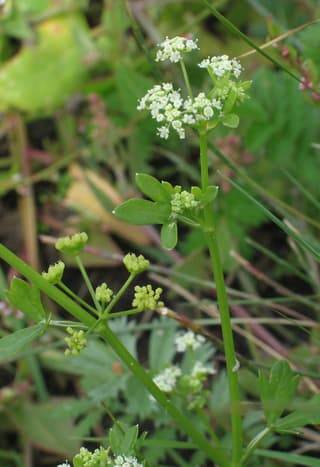
Celery
Apium graveolens
Celery (Apium graveolens) is a biennial plant in the Apiaceae family, cultivated for over 3,000 years as both a food crop and medicinal herb. Native to temperate regions of Europe, Asia, and North Africa, it is widely grown in vegetable gardens for its crisp stalks, aromatic leaves, and flavorful seeds.
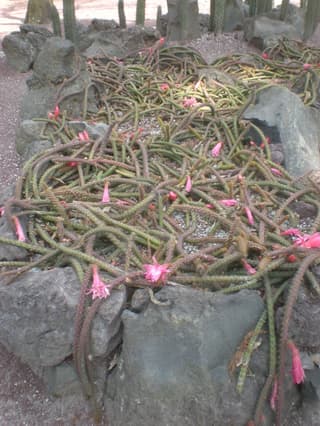
Rat Tail Cactus
Aporocactus flagelliformis
Aporocactus flagelliformis, commonly known as the rat tail cactus, is an epiphytic succulent native to Mexico (Hidalgo, Puebla, and Veracruz states). Its long, cylindrical, trailing stems, covered in fine brown spines, can reach up to 150 cm in length, making it ideal for hanging baskets. In spring, it produces vibrant tubular flowers in shades of pink, red, and crimson, which last only a few days but are exceptionally beautiful.
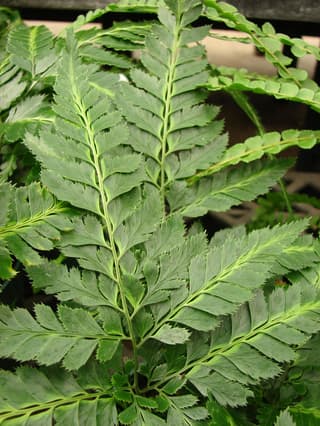
East Indian holly fern
Arachniodes simplicior
Arachniodes simplicior, commonly known as the East Indian holly fern or variegated shield fern, is a perennial fern native to China, Japan, Korea, and Vietnam. Its leathery, glossy fronds of deep dark green feature a striking yellowish-green or lime central stripe, giving it an almost waxy appearance that adds an exotic touch to shaded indoor and outdoor spaces. It forms compact, slow-growing clumps that rarely exceed 24 inches in height.
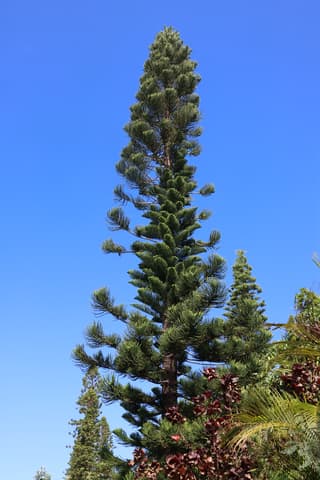
Cook Pine
Araucaria columnaris
The Cook Pine (Araucaria columnaris) is a majestic conifer native to New Caledonia, renowned for its distinctive columnar silhouette and a fascinating biological quirk: its trunk tilts toward the equator, regardless of which hemisphere it grows in. A slow-growing tree that can reach 60 meters in the wild, it typically stays 15-20 meters in cultivation. Widely used as an ornamental tree in coastal and subtropical gardens.
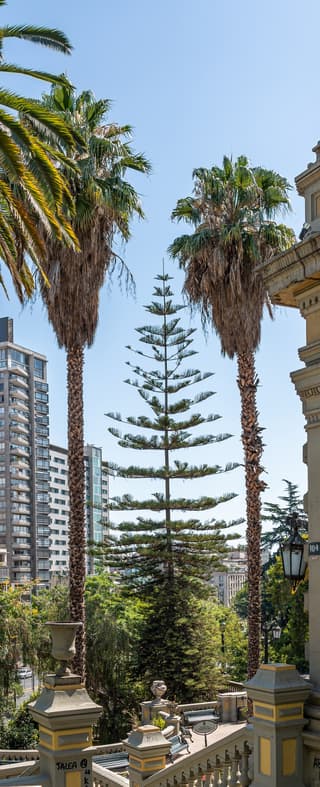
Norfolk Island Pine
Araucaria heterophylla
The Norfolk Island Pine (Araucaria heterophylla) is a slow-growing evergreen conifer endemic to Norfolk Island in the South Pacific. Renowned for its symmetrical, tiered horizontal branches and star-like silhouette, it is widely cultivated as an ornamental houseplant and outdoor landscape tree. In its native habitat it can reach over 60 meters tall, but indoors typically stays under 2 meters.
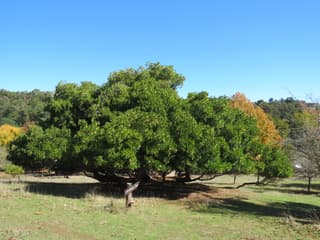
Strawberry Tree
Arbutus unedo
The strawberry tree (Arbutus unedo) is an evergreen shrub or small tree in the Ericaceae family, native to the Mediterranean region and western Europe. It is known for its white urn-shaped flowers and red strawberry-like fruit, which ripen in autumn and winter alongside the new flowering.
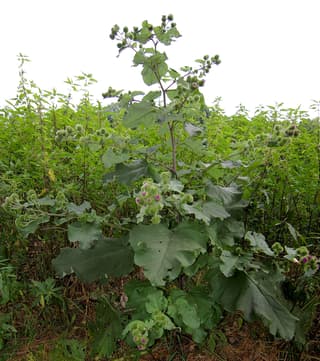
Burdock
Arctium lappa
Arctium lappa, commonly known as Burdock or Gobo, is a robust biennial herbaceous plant native to Europe and Asia. It grows up to 2 meters tall, producing large heart-shaped leaves and distinctive purple flower heads surrounded by hooked bracts that cling to clothing and animal fur — inspiring the invention of Velcro. Both the root and leaves have been valued for centuries in traditional medicine and Asian cuisine.
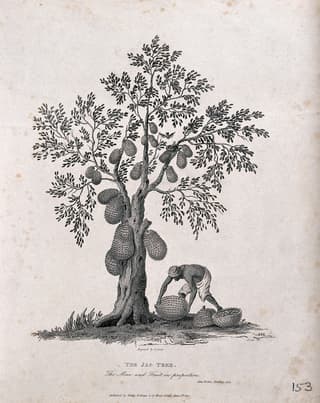
Breadfruit
Artocarpus
Artocarpus is a genus of approximately 60 species of tropical trees in the family Moraceae, native to Southeast Asia and the Pacific Islands. The most famous species are jackfruit (A. heterophyllus), which bears the largest fruit of any tree in the world, and breadfruit (A. altilis), a staple food across the Pacific. All species produce milky latex sap and feature large, ornamental leaves.
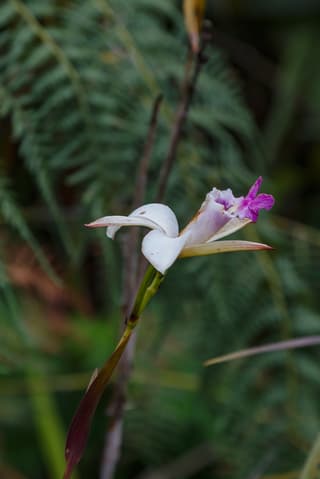
Bamboo Orchid (genus)
Arundina
Arundina is a genus of terrestrial orchids in the family Orchidaceae, native to tropical and subtropical Asia. The dominant species, A. graminifolia, features slender bamboo-like stems and delicate flowers in white, pink, and purple hues. These orchids are among the most robust and beginner-friendly in the family.
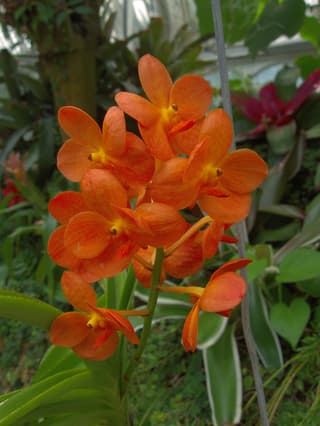
Ascocenda Orchid
Ascocenda
Ascocenda is an orchid nothogenus, a hybrid between Ascocentrum and Vanda within the family Orchidaceae. It combines the compact growth habit of Ascocentrum with the vibrant, large blooms of Vanda, producing jewel-like flowers in shades of purple, pink, orange, and yellow on upright spikes.
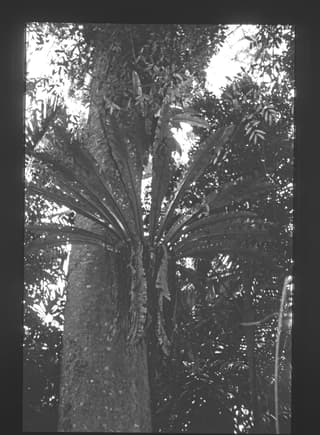
Birds Nest Fern
Asplenium australasicum
Asplenium australasicum, commonly known as the birds nest fern, is an epiphytic fern native to the rainforests of eastern Australia. Its broad, wavy fronds grow in a rosette, forming a bowl shape that collects fallen leaves and rainwater in the wild.
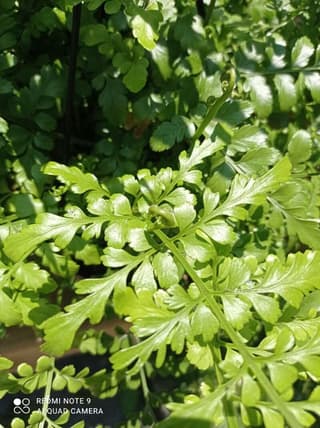
Balearic Spleenwort
Asplenium balearicum
Asplenium balearicum, commonly known as the Balearic Spleenwort, is a small and elegant fern endemic to the Balearic Islands and the Western Mediterranean. It grows naturally in limestone rock crevices and shaded slopes, forming dense clumps of dark green fronds. Well-suited to indoor environments with good humidity, it is an adaptable plant that brings a Mediterranean touch to any space.
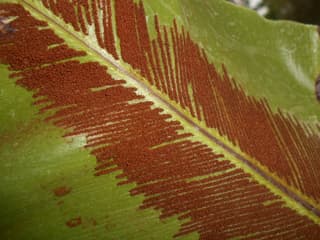
Bird's Nest Fern
Asplenium nidus
The Bird's Nest Fern (Asplenium nidus) is an elegant tropical epiphytic fern known for its rosette of bright green, lance-shaped fronds that unfurl from a central nest-like crown. Native to Southeast Asia, Australia, and the Pacific Islands, this slow-growing beauty thrives in humid environments and makes an excellent houseplant for bathrooms and shaded spaces.
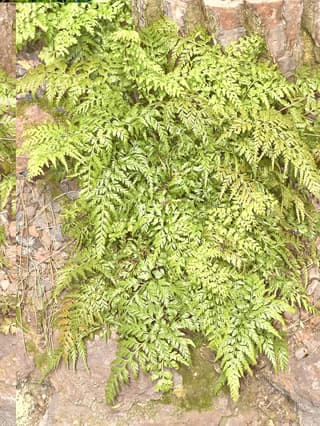
Irish spleenwort
Asplenium onopteris
Irish spleenwort (Asplenium onopteris) is an evergreen perennial fern in the family Aspleniaceae, native to the Mediterranean Basin, Macaronesia, and the Atlantic coasts of western and central Europe, with isolated populations reaching as far north as Ireland and Poland. It grows on shaded, humid rock faces, banks, and woodland floors, usually on acidic substrates, up to about 1900 m elevation. The leathery, glossy dark-green fronds are triangular-ovate in outline, 2-4 times pinnate, with a reddish-brown to black petiole (stipe). Plants reach 10-50 cm in height.
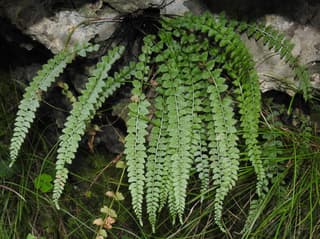
Green Spleenwort
Asplenium viride
Green Spleenwort (Asplenium viride) is a small rock-crevice fern native to calcareous mountain rocks across northern temperate Eurasia and North America. It is distinguished from the similar Maidenhair Spleenwort (Asplenium trichomanes) by its green stipes and rachises. A slow-growing, cold-hardy evergreen fern, it is well suited for rock gardens, troughs, and cool, humid indoor settings.
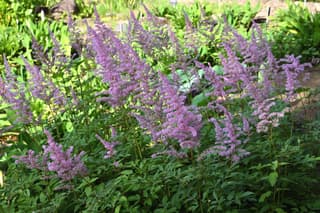
Rose Astilbe
Astilbe × rosea
Astilbe × rosea is a perennial hybrid in the Saxifragaceae family, prized for its feathery plumes of rose-pink flowers rising above finely cut, fern-like foliage. Native to shade gardens, it forms compact clumps and blooms from late spring through summer, adding color and texture to shaded borders and pond edges.

Babassu Palm
Attalea
Attalea is a genus of large neotropical palms in the Arecaceae family, highly representative of Brazil, where the most well-known species is the Babassu (Attalea speciosa). These are robust palms with a single, thick trunk, crowned by arched pinnate leaves that can exceed several meters in length. They produce branched, drooping inflorescences with small cream-colored flowers and clusters of oily fruits of great economic and nutritional importance. They grow in full sun in well-drained soils of forests, savannas (cerrados), and tropical pastures, sometimes forming dense babassu groves.
Wood Ear Mushroom
Auricularia cornea
Auricularia cornea, commonly known as the Wood Ear or Hairy Wood Ear mushroom, is a basidiomycete fungus that grows on decaying logs. It has a gelatinous texture when moist and becomes rigid and leathery when dry. Its outer surface is covered with tiny grayish hairs, while the inner surface is smooth and reddish-brown.
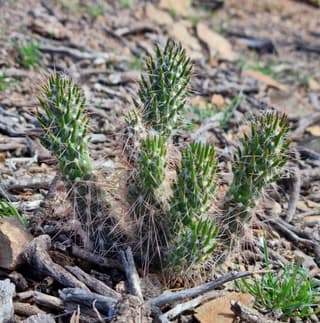
Old Man of the Andes
Austrocylindropuntia vestita
Austrocylindropuntia vestita, commonly known as the Old Man of the Andes or Cotton Coral Cactus, is a slender columnar cactus native to the high-altitude rocky grasslands of northwest Argentina and Bolivia. Its stems are densely covered in long white hairs that give it a distinctive woolly appearance, providing insulation against the cold Andean climate. It produces striking deep red to violet flowers at the stem tips during spring and summer.
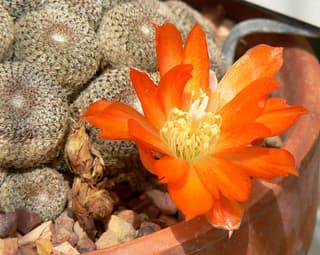
Sun Crown Cactus
Aylostera heliosa
Aylostera heliosa (formerly Rebutia heliosa) is a small clustering cactus native to the high-altitude slopes near Tarija, Bolivia. Its compact, spherical to cylindrical stems are covered in dense white spines and rarely exceed 2.5 cm in diameter, but under bright sun they produce a spectacular abundance of orange to pinkish blooms in spring.

Lemon myrtle
Backhousia citriodora
Lemon myrtle is an evergreen shrub or small tree from the Myrtaceae family, native to the subtropical rainforests of eastern Australia (Queensland, from Mackay to Brisbane). In the wild, it can grow up to 20 m, while in cultivation it usually reaches 3-5 m. The glossy lanceolate leaves, 5-12 cm long, release an intense lemon fragrance when crushed—they contain an exceptionally high proportion of citral (90-98%), making it one of the richest natural sources of this compound in the world. From summer to autumn, it blooms with small creamy-white flowers in clustered panicles.
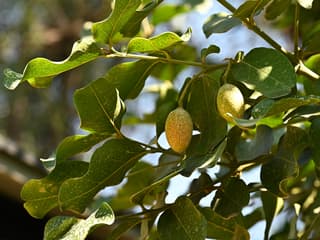
Beilschmiedia
Beilschmiedia
Beilschmiedia is a genus of approximately 268 species of evergreen tropical and subtropical trees in the family Lauraceae. Distributed across the rainforests of Africa, Asia, Oceania, Central America, and South America, these trees are notable for their impressive canopy stature, dark leathery foliage, and significant ecological roles as dominant forest species. Notable members include B. tawa and B. tarairi from New Zealand and B. pendula (Pau de remo) from Brazil.
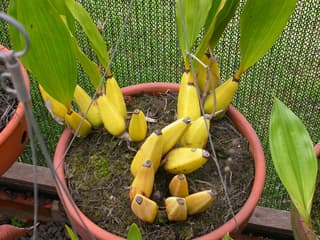
Harrison's Bifrenaria
Bifrenaria harrisoniae
Bifrenaria harrisoniae, commonly known as Harrison's Bifrenaria, is a striking epiphytic orchid endemic to Brazil. Found in the Atlantic Forest and Cerrado biomes at elevations between 200 and 1,200 meters, it produces large, waxy, fragrant flowers — predominantly white with a pink-to-burgundy labellum and dark veining — up to 8 cm across. The robust pseudobulbs store water and nutrients, enabling the plant to withstand seasonal dry periods.
Medium Care Pet Safe
Our selection of 617 medium pet safe combines the characteristics of this category with moderate care needs. Ideal for those with basic experience.
Why Choose Medium Pet Safe?
Combining the beauty of pet safe with medium difficulty level lets you enjoy this category with a balanced care commitment. Each plant was selected to offer the best characteristics of the category at the care level you are looking for.