1443 Easy Pet Safe | 2026 Guide - Page 38
Find 1443 easy pet safe. Complete guide for your garden.
1443 Pet Safe with easy level
Showing 1333-1368 of 1443
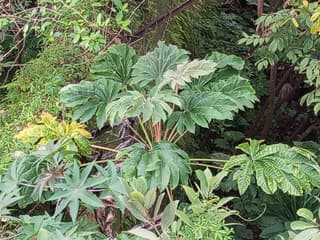
Rice Paper Plant
Tetrapanax papyrifer
Tetrapanax papyrifer is a bold, architectural shrub native to Taiwan and southern China, celebrated for its enormous, deeply lobed, grey-green leaves that can reach over 60 cm across. It grows vigorously via underground suckers, creating dramatic tropical-looking colonies in gardens. The plant has been cultivated for centuries, with its pith traditionally used to make Chinese rice paper.
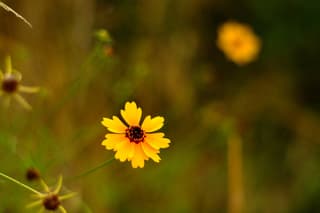
Stiff Greenthread
Thelesperma filifolium
Thelesperma filifolium, commonly known as stiff greenthread, is a drought-tolerant wildflower native to the Great Plains and prairies of North America, from Texas to the Dakotas. It forms slender, branching stems with thread-like foliage topped by cheerful golden-yellow daisy-like flowers with reddish-brown centers. A winter annual or short-lived perennial, it thrives in dry, sandy, or gravelly soils and full sun, making it a favorite for native wildflower meadows and pollinator gardens.
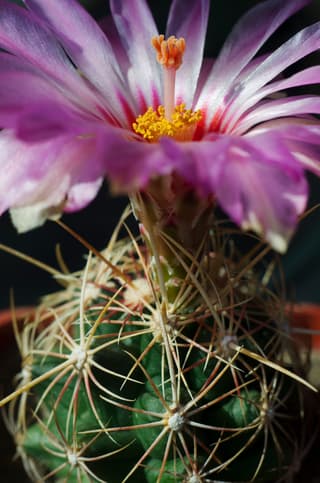
Thelocactus
Thelocactus
Thelocactus is a genus of about 13 species of globose to short cylindrical cacti that grow wild in the arid regions of central and northern Mexico as well as in the Big Bend region of Texas. The plants are characterized by prominent, often spiraling ribs set with distinct tubercles and star-shaped spine clusters in colors ranging from white and golden to reddish-brown. In spring and summer, large, funnel-shaped flowers bloom from the plant's apex in shades of white, yellow, pink, and purple – often nearly as wide as the plant itself.
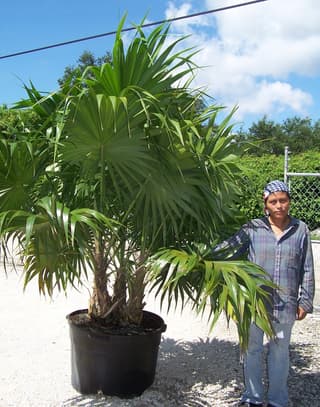
Florida thatch palm
Thrinax radiata
The Florida thatch palm (Thrinax radiata) is a species in the Arecaceae family, native to the Florida Keys, the Yucatán Peninsula, the Caribbean, and Central America. It is a solitary, slender-trunked palm, without a crownshaft, that can reach between 6 and 9 meters in height, although it grows very slowly. Its leaves are palmate (fan-shaped), bright green on the upper side and silvery on the underside. It produces white inflorescences that can bloom year-round, followed by small white fruits. It inhabits coastal scrublands and calcareous soils, which makes it very tolerant to salinity and drought. In Florida, it is listed as an endangered species in the wild.
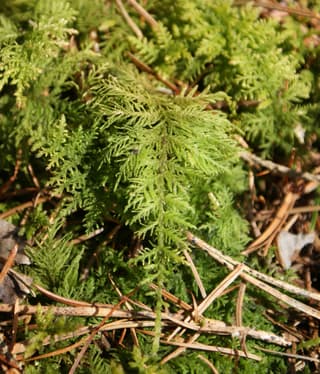
Common Tamarisk Moss
Thuidium tamariscinum
Thuidium tamariscinum, commonly known as Common Tamarisk Moss, is a feathery, evergreen bryophyte that forms lush, bright-green mats on forest floors, rocks, and fallen logs. Native to Europe and now widespread across temperate regions worldwide, it does not flower and reproduces via spores. It thrives in shaded, humid environments and is ideal for terrariums, shade gardens, and natural ground cover.
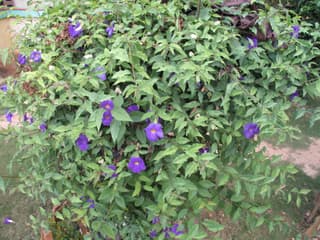
Bush Clockvine
Thunbergia erecta
Thunbergia erecta, commonly known as Bush Clockvine or King's Mantle, is a fast-growing evergreen shrub native to West Africa. It produces stunning deep purple to blue tubular flowers with creamy yellow throats throughout summer and fall, making it a prized ornamental in tropical and subtropical gardens.

Blue Trumpet Vine
Thunbergia grandiflora
Thunbergia grandiflora, commonly known as the Blue Trumpet Vine or Sky Vine, is a vigorous, woody-stemmed evergreen climber native to India and Southeast Asia. It produces an abundance of large, trumpet-shaped lavender-blue flowers with pale yellow or white throats, blooming from summer through fall and year-round in tropical climates. Its heart-shaped, velvety dark green leaves and fast-growing twining stems make it a spectacular choice for covering fences, trellises, arbors, and pergolas.

Laurel Clockvine
Thunbergia laurifolia
Thunbergia laurifolia is a vigorous, evergreen climbing vine native to the Indomalayan region (India, Thailand, and Malaysia), prized for its glossy, laurel-like leaves and pale blue to lavender trumpet-shaped flowers with a creamy-yellow throat. It grows rapidly, often covering trellises, fences, and pergolas within a single season, and blooms nearly year-round in warm climates. In Southeast Asian traditional medicine, its leaves are used to make a detoxifying herbal tea (rang jeud). Because of its fast growth and tuberous root system, it has become an invasive weed in parts of Brazil, Australia, and other tropical regions, so it should be planted with care and contained.
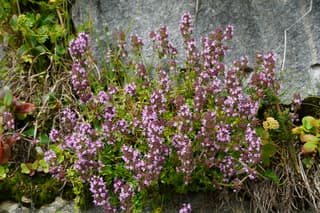
Thyme
Thymus
Thyme (Thymus) is a genus of approximately 350 species of aromatic perennial herbs and subshrubs in the family Lamiaceae, native to the Mediterranean region, North Africa, and southwestern Asia. These low-growing woody plants feature tiny aromatic leaves and small tubular flowers in pink, lavender, or white. Widely grown as a culinary, medicinal, and ornamental herb, thyme is a cornerstone of Mediterranean cuisine and herbal medicine.
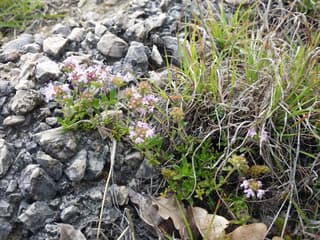
Mediterranean Thyme
Thymus longicaulis
Thymus longicaulis, also known as Mediterranean thyme or long-stemmed thyme, is a low-growing, mat-forming perennial herb from the Lamiaceae family. The plant is native to southern Europe and grows naturally on dry, rocky slopes and in Mediterranean scrubland. It forms dense, prostrate mats with sparse, twig-like stems that can reach up to 4 inches (10 cm) in height and spread up to 16 inches (40 cm) wide. The leaves are lanceolate, dark green, and aromatic. In spring and summer, the plant produces clusters of pale pink flowers that attract bees and other pollinators. Like all thyme species, Thymus longicaulis contains essential oils with antibacterial and antifungal properties.
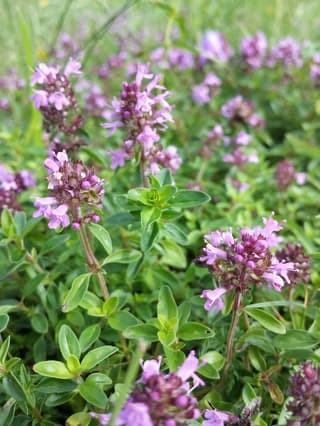
Broad-leaved Thyme
Thymus pulegioides
Thymus pulegioides is a low, mound-forming evergreen sub-shrub in the mint family (Lamiaceae), native to Europe. It has broader, more rounded leaves than common thyme, often marked with reddish tints, and produces clusters of small rose-purple to pale lilac flowers in summer. It is prized as a culinary herb, groundcover, and pollinator-friendly garden plant.
Wild Thyme
Thymus serpyllum
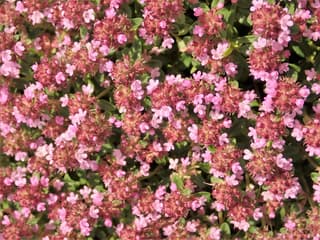
Wild Thyme (Thymus serpyllum) is a low-growing, creeping perennial herb from the Lamiaceae family, native to Europe and Western Asia. The plant forms dense, aromatic mats of small, dark glossy leaves and is covered in tiny purple-pink flowers in summer. It thrives in full sun, lean, well-draining soils, and is extremely drought-tolerant and hardy down to -15°C. Thymus serpyllum has a long history as a medicinal and culinary herb and is closely associated with symbols of courage and love.
Common Thyme
Thymus vulgaris
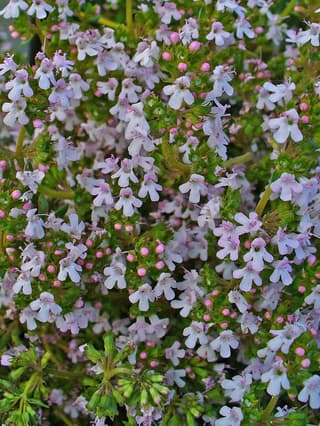
Thymus vulgaris, commonly known as common thyme or garden thyme, is a fragrant evergreen herb native to the Mediterranean region. A member of the Lamiaceae (mint) family, this small woody-stemmed perennial has been cultivated for thousands of years for its culinary, medicinal, and ornamental virtues. It produces tiny aromatic leaves and delicate pink to purple flowers that attract pollinators.
Lemon thyme
Thymus x citriodorus
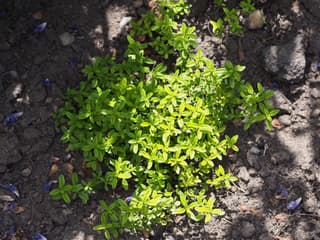
Lemon thyme is a woody-based perennial subshrub that is primarily grown as a culinary herb for its intense lemon-scented foliage. It forms a low, spreading mat of tiny, oval, dark green leaves that may be variegated with gold or silver depending on the cultivar. During the summer, it produces small, nectar-rich lavender to pink flowers that are highly attractive to pollinators like bees and butterflies.
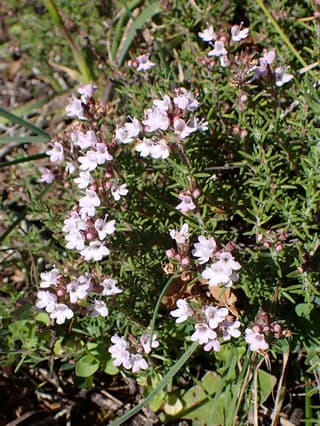
Spanish Thyme
Thymus zygis
Thymus zygis, commonly known as Spanish thyme or white thyme, is a perennial aromatic subshrub native to the Iberian Peninsula, belonging to the Lamiaceae family. It thrives in poor, sandy, and rocky soils, typically alkaline, adapted to the Mediterranean climate of hot, dry summers and mild winters. Its small, linear leaves are rich in essential oil (thymol, carvacrol, linalool), giving it an intense, characteristic aroma that makes it widely cultivated for both culinary and medicinal purposes. It flowers from May to July, producing small tubular pink, lilac, or white flowers clustered in dense inflorescences at the top of the stems, highly attractive to bees and other pollinators.

Tiger grass
Thysanolaena latifolia
Tiger grass (Thysanolaena latifolia) is a vigorous perennial grass from the Poaceae family, native to the tropical and subtropical regions of Asia. It forms dense clumps up to 3 meters tall, featuring broad bamboo-like leaves and large feathery panicles at the end of the season. It is widely used as a hedge and specimen plant in gardens, and its panicles are traditionally tied together to make brooms.
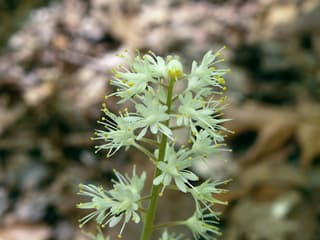
Foamflower
Tiarella cordifolia
Tiarella cordifolia, commonly known as foamflower, is a low-growing herbaceous perennial native to the woodlands of eastern North America, from Nova Scotia south through the Appalachian Mountains to Alabama. It forms a dense mat of heart-shaped, hairy-stalked leaves that often display attractive burgundy veining and takes on a bronze-red hue in cooler months. In mid to late spring, upright flower spikes rise above the foliage, covered in tiny, star-shaped white or pale pink blossoms that give the plant its foamy, frothy appearance. Foamflower spreads slowly by rhizomes and stolons, making it a popular choice for woodland gardens, shaded borders, and as a naturalizing ground cover beneath trees and shrubs.

Common lime
Tilia × europaea
The Common lime (Tilia x europaea) is a large, deciduous hybrid between the large-leaved lime and the small-leaved lime. This stately tree can reach heights of up to 35 meters and features a broad, dome-shaped canopy of heart-shaped leaves. In July, the tree bears clusters of small, yellowish flowers with a sweet, honey-like fragrance that attracts bees and other insects. Traditionally, the lime tree has been widely planted in the Netherlands along avenues, in squares, and as a village tree, symbolizing community and protection.

Large-leaved Lime
Tilia platyphyllos
The large-leaved lime (Tilia platyphyllos) is a large deciduous tree native to Europe, in the family Malvaceae. It grows up to 25 m tall with a dense, pyramidal crown. Its fragrant pale-yellow flowers, highly attractive to bees, are traditionally harvested to brew linden tea.

Silver Linden
Tilia tomentosa
Silver Linden (Tilia tomentosa) is a large deciduous shade tree native to southeastern Europe and western Asia, including Albania, Bulgaria, Greece, Hungary, Romania, and Turkey. A member of the Malvaceae family, it is widely planted as a street, park, and specimen tree thanks to its dense, broad-pyramidal canopy and outstanding tolerance of urban pollution, heat, and road salt. Its heart-shaped leaves are dark green above and covered with a fine silvery-white down beneath, creating a shimmering effect when stirred by the wind — the source of its common name. From late spring into summer the tree produces hanging clusters of small, creamy-yellow, intensely fragrant, nectar-rich flowers that are highly attractive to bees and other pollinators. It typically reaches 50-70 ft (15-21 m) tall, occasionally up to 100 ft (30 m), with a spread of 30-50 ft (9-15 m), and grows at a rapid rate.
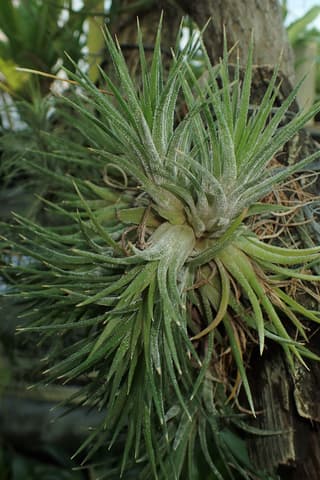
Air Plant
Tillandsia
Tillandsia is a genus of approximately 650 epiphytic plants in the Bromeliaceae family, native from the southern United States to Argentina. They require no soil, instead absorbing water and nutrients directly through their leaves via specialized structures called trichomes. Famous species include T. ionantha, T. xerographica, and Spanish Moss (T. usneoides).

Air plant
Tillandsia aeranthos
Tillandsia aeranthos is an epiphytic air plant from South America that lives without soil, clinging to branches, rocks or mounts. It forms clumps of stiff, silvery leaves and produces pink bracts with blue-violet flowers in spring.
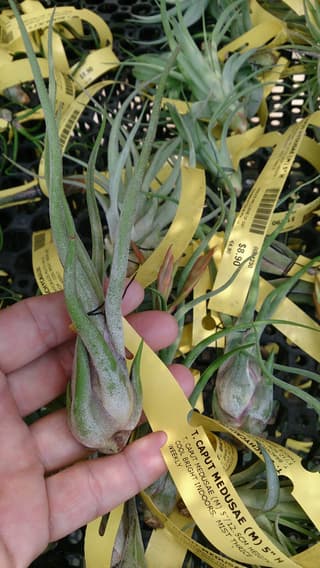
Medusa's Head Air Plant
Tillandsia caput-medusae
Tillandsia caput-medusae is an epiphytic bromeliad native to Mexico and Central America, where it grows attached to tree branches at elevations up to 2,000 meters. Its name comes from the bulbous base of the rosette, from which twisting, silvery-green leaves emerge, resembling snakes or the tentacles of an octopus. The leaves are covered in fine trichomes that absorb water and nutrients directly from the air. It is a hardy, slow-growing species, widely used in terrariums and mounted displays since it needs no soil at all.
Guatemalan Air Plant
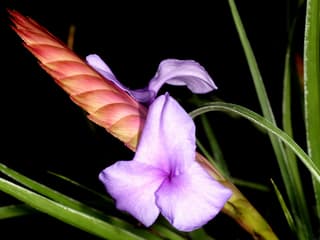
Tillandsia guatemalensis
Tillandsia guatemalensis is an epiphytic bromeliad native to forests from Mexico to Panama. It forms a rosette of silvery-grey leaves and produces a striking flower spike with deep rose-pink bracts and tubular violet-blue flowers. As a true air plant, it absorbs water and nutrients directly from the air through specialized leaf scales called trichomes.
Harris's Air Plant
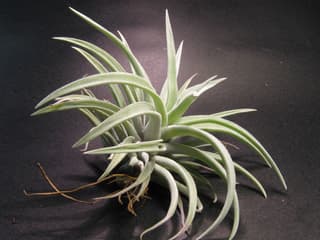
Tillandsia harrisii
Tillandsia harrisii is a slow-growing epiphytic bromeliad endemic to the dry rocky slopes of Zacapa, Guatemala. Its silvery, densely trichome-covered leaves form a tight rosette on a short stem, giving the plant a soft, fuzzy, almost white appearance that helps it survive intense sun and low humidity in its native habitat. After a year or two of growth it produces an upright spike with coral-red to orange bracts and violet-blue flowers, after which pups form at the base.
Sky Plant
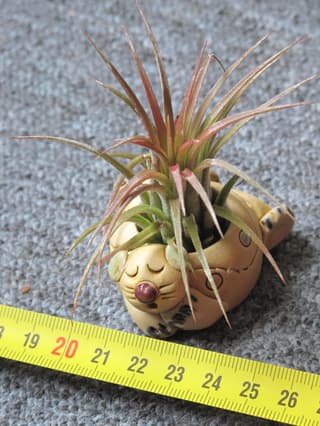
Tillandsia ionantha
Tillandsia ionantha is a fascinating epiphytic plant from the bromeliad family, native to Central America and Mexico. Known as the air plant, it does not need soil to grow, absorbing water and nutrients directly from the air through its silver trichome-covered leaves. During flowering, its central leaves turn vivid red, contrasting with the delicate purple flowers.
Air Plant
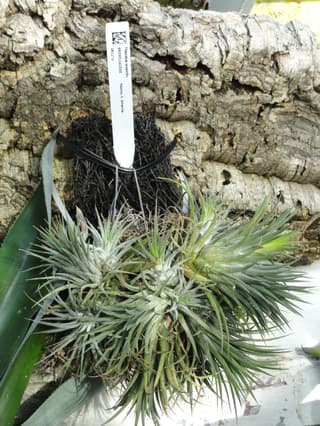
Tillandsia sp
Tillandsias, commonly known as air plants, belong to the Bromeliaceae family and represent its largest genus with over 660 species. Native to the tropical and subtropical Americas, from the southern United States to Argentina, these fascinating epiphytes require no soil to thrive. Instead, they absorb water and nutrients directly from the air through specialized leaf structures called trichomes. Their ability to adapt to diverse environments—from tropical rainforests and cloud forests to arid deserts and rocky mountainsides—makes them among the most versatile and unique plants in the world.
Upright Air Plant
Tillandsia stricta
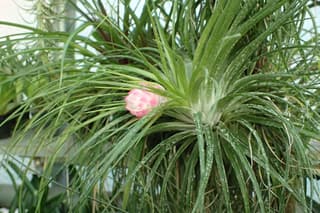
Tillandsia stricta, commonly known as the Upright Air Plant, is an epiphytic bromeliad native to eastern South America, ranging from Venezuela to northern Argentina. Unlike most plants, it requires no soil to thrive — it absorbs water and nutrients directly through its silvery trichome-covered leaves. It produces stunning blooms in shades of red, pink, blue, and purple in spring and summer, making it one of the most ornamental air plants available.
King of Air Plants
Tillandsia xerographica
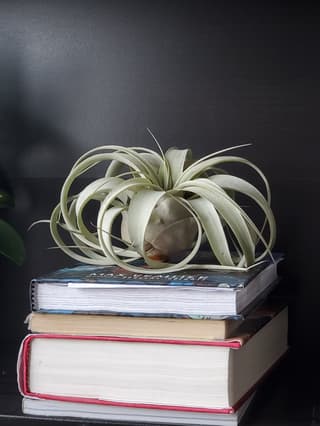
Tillandsia xerographica is known as the "King of Air Plants" due to its impressive size and beautifully curled silvery-green leaves. This epiphytic plant is native to southern Mexico, Guatemala, and El Salvador. It can reach up to 90 cm in diameter and is highly prized for its sculptural rosette shape. Like all tillandsias, it doesn't need soil to grow and absorbs water and nutrients through its leaves. It is protected under CITES due to past overharvesting in the wild.
Tipu tree
Tipuana tipu
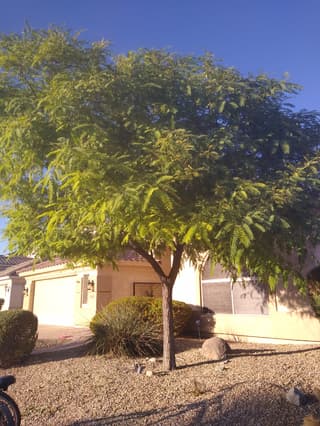
The Tipu tree (Tipuana tipu) is a majestic, fast-growing tree native to South America. Known for its broad, leafy umbrella-shaped canopy, it provides dense and refreshing shade. During spring and early summer, the tree is covered in clusters of vibrant yellow flowers that, when they fall, create a beautiful golden carpet on the ground. Its leaves are compound and light green, and its fruits are winged samaras, similar to those of a maple.
Mexican Sunflower
Tithonia
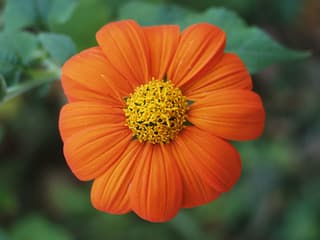
Tithonia is a genus of flowering plants in the family Asteraceae, native to Mexico and Central America, widely grown as a garden ornamental worldwide. The most popular species, Tithonia rotundifolia, is celebrated for its brilliant orange daisy-like blooms that attract butterflies, bees, and hummingbirds. Fast-growing and highly heat- and drought-tolerant, it is an outstanding choice for sunny summer gardens.
Mexican Sunflower
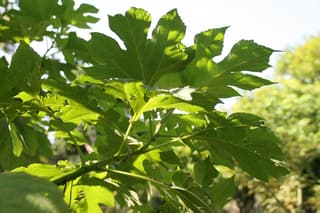
Tithonia diversifolia
Mexican Sunflower (Tithonia diversifolia) is a fast-growing shrub in the Asteraceae family, native to Mexico and Central America. It reaches up to 4 meters tall and produces vivid orange and yellow flowers from summer through fall. Widely naturalized across the tropics, it is prized as an ornamental, green manure crop, and medicinal plant.
Mexican Sunflower
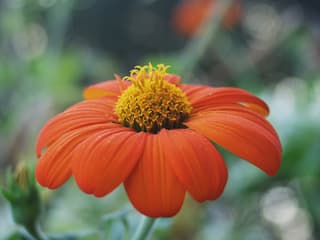
Tithonia rotundifolia
Mexican Sunflower (Tithonia rotundifolia) is a fast-growing annual native to Mexico and Central America, celebrated for its bold orange, red, and yellow daisy-like blooms. Growing up to 8 feet tall, it is a magnet for butterflies, hummingbirds, and bees throughout summer and fall.
Piggyback Plant
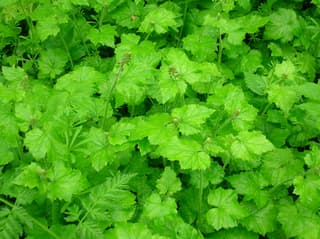
Tolmiea menziesii
Tolmiea menziesii, commonly known as the Piggyback Plant, is a charming evergreen perennial native to the moist, shady forests of the Pacific Northwest coast of North America. It earns its whimsical name from its unique ability to produce tiny plantlets directly at the base of its mature leaves — babies riding "piggyback" on the parent leaf. With soft, hairy, maple-like leaves and a lush mounding habit, it makes an attractive ground cover outdoors and a delightful cascading houseplant indoors.
Wishbone flower
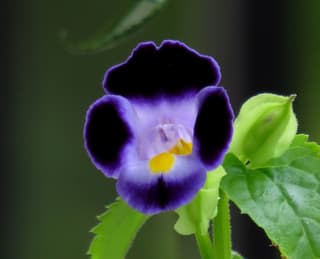
Torenia fournieri
Torenia fournieri, commonly known as the Wishbone flower, is a compact and charming herbaceous plant. Its trumpet-shaped flowers feature vibrant colors, usually with a contrasting yellow blotch on the throat. Unlike traditional pansies, this species is highly heat and humidity tolerant, making it ideal for tropical and subtropical gardens.
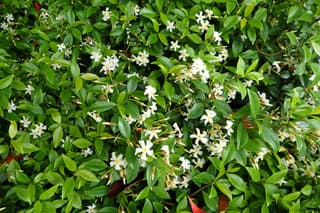
Asian Jasmine
Trachelospermum asiaticum
Asian Jasmine (Trachelospermum asiaticum) is a vigorous, evergreen woody vine native to China, Japan and Korea. Grown low and dense, it is one of the most popular groundcovers in warm climates, forming a glossy dark-green carpet studded with small cream-to-yellow star-shaped flowers in late spring and early summer. Left to climb, it will scale trellises, walls and fences with twining stems.
Easy Care Pet Safe
Our selection of 1443 easy pet safe combines the characteristics of this category with reduced care needs. Perfect for beginners who love this category.
Why Choose Easy Pet Safe?
Combining the beauty of pet safe with easy difficulty level lets you enjoy this category without excessive maintenance worries. Each plant was selected to offer the best characteristics of the category at the care level you are looking for.