1446 Easy Pet Safe | 2026 Guide - Page 37
Find 1446 easy pet safe. Complete guide for your garden.
1446 Pet Safe with easy level
Showing 1297-1332 of 1446
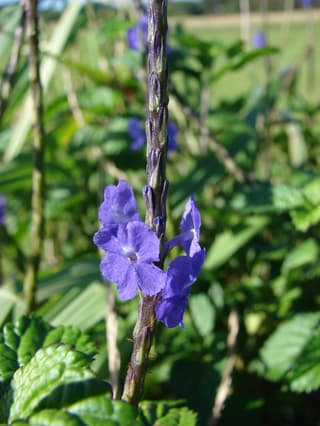
Blue Snakeweed
Stachytarpheta cayennensis
Blue Snakeweed (Stachytarpheta cayennensis) is a fast-growing tropical subshrub native to tropical America, belonging to the Verbenaceae family. It produces long, slender flower spikes adorned with vivid blue-purple tubular flowers that bloom successively over many months. A magnet for pollinators, it attracts over 98 butterfly species, bees, and hummingbirds. It is widely used as an ornamental garden plant and holds significant importance in traditional medicine throughout the tropics.
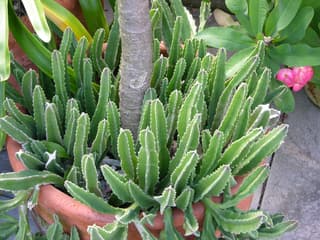
Zulu Giant
Stapelia gigantea
Stapelia gigantea, commonly known as the Zulu Giant or Carrion Flower, is a striking succulent native to South Africa. It produces enormous star-shaped flowers up to 30 cm across with a distinctive reddish-maroon and cream pattern. The flowers emit a carrion-like odor to attract flies for pollination. Its leafless, ribbed succulent stems grow in dense clumps and turn reddish-purple in bright sunlight.
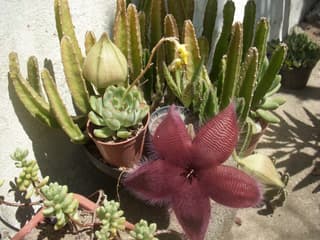
Starfish Flower
Stapelia grandiflora
Stapelia grandiflora, commonly known as the Starfish Flower or Carrion Plant, is a fascinating succulent native to South Africa. It produces striking star-shaped flowers up to 10 inches across, covered in fine hairs. The flowers emit a carrion scent to attract flies as pollinators, making it a remarkable botanical curiosity and a prized plant among succulent collectors.
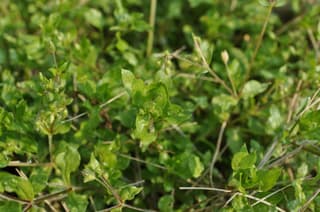
Common Chickweed
Stellaria
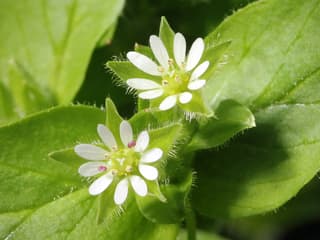
Stellaria is a genus of roughly 120 low-growing herbaceous plants in the carnation family (Caryophyllaceae), best known through its most common and widespread member, Stellaria media, or common chickweed. This sprawling, mat-forming annual produces tender oval leaves and tiny star-shaped white flowers (its genus name comes from the Latin "stella," meaning star). Chickweed thrives in cool, moist conditions and is one of the fastest-growing plants in temperate gardens, often flowering and setting seed within weeks of germination. It is naturalized nearly worldwide and is valued both as a nutritious wild edible and as a traditional skin-soothing herb, even though gardeners often treat it as a weed.
Chickweed
Stellaria media
Stellaria media, commonly called chickweed, is a low-growing, sprawling annual (or winter annual) native to Europe and now naturalized worldwide. It forms soft mats of small oval leaves and tiny white star-shaped flowers, thriving in cool, moist, disturbed soil such as garden beds, lawns, and greenhouses. Prized both as a cottage-garden ground cover and as one of the most popular wild edible and medicinal weeds, chickweed grows and flowers almost year-round in temperate climates.

Brain Cactus
Stenocactus phyllacanthus
Stenocactus phyllacanthus is a small, solitary, globose to short-cylindrical cactus native to the high-desert scrublands of central and northern Mexico (Aguascalientes, Guanajuato, Hidalgo, Jalisco, Nuevo León, Querétaro, San Luis Potosí and Zacatecas), typically found between 1,700 and 2,800 m elevation. Rarely exceeding 15 cm in height and 10 cm in diameter, it is prized by collectors for its dramatically wavy, paper-thin ribs crowned with dense tufts of fine spines. In spring and summer it bears funnel-shaped, yellowish-white flowers with brownish-red throats near the crown. Slow-growing and undemanding, it is one of the easiest Stenocactus species to bring into flower in cultivation.
Organ Pipe Cactus
Stenocereus
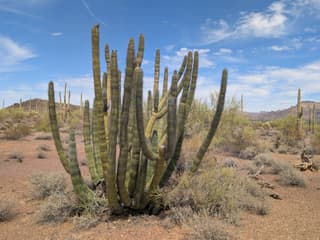
Stenocereus is a genus of large, tree-like columnar cacti native to the deserts of Mexico and the southwestern United States. The best-known species, Stenocereus thurberi (organ pipe cactus), forms clusters of slender, upright stems rising from a short trunk, resembling the pipes of a musical organ. Ribbed, spiny stems can reach up to 8 m tall and 3.5 m wide, producing white, night-blooming flowers followed by spiny, sweet edible fruit.
St. Augustine Grass
Stenotaphrum secundatum
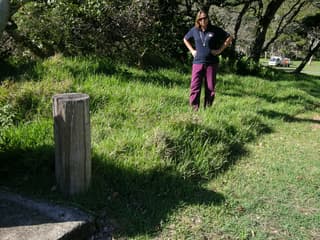
St. Augustine Grass (Stenotaphrum secundatum) is a fast-growing warm-season turfgrass native to the Gulf of Mexico region, widely used for residential and commercial lawns in tropical and subtropical climates. It forms a dense, vigorous carpet with good tolerance to partial shade and coastal salt exposure.

European feather grass
Stipa pennata
European feather grass (Stipa pennata) is a characteristic clump-forming perennial grass of the Eurasian steppes, native from Mongolia to the Hungarian Great Plain and the sandy, loess steppes of the Carpathian Basin. Growing 60-90 cm tall, it produces narrow, slender leaves and, between May and August, releases the long, silvery-silky, feathery awns that made the species famous, waving characteristically in the wind. It is an increasingly rare species in Hungary, tied to protected habitats, and has been a symbol of the Hungarian puszta since the national romantic era of poets Sándor Petőfi and Mihály Tompa.

Mexican feather grass
Stipa tenuissima
Stipa tenuissima, commonly known as Mexican feather grass, is a perennial ornamental grass forming dense, rounded tufts of fine, bright green thread-like leaves. In summer, it produces long, feathery panicles that transition from silvery-green to cream and then to golden blond, swaying with the slightest breeze. Hardy in USDA zones 7 to 10, this grass reaches 12 to 24 inches in height and width, and is particularly valued for xeriscaping, rock gardens, and naturalist-style borders.
Stokes' Aster
Stokesia laevis
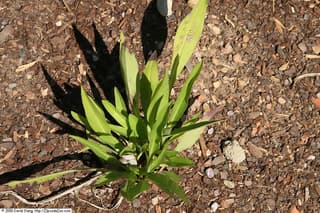
Stokesia laevis, commonly known as Stokes' Aster, is a herbaceous perennial native to the wetlands, bottomlands, and pine savannas of the southeastern United States. It produces showy, cornflower-like blooms in shades of lavender-blue, purple, white, and pink, making it a beloved addition to native and cottage gardens. Despite its origins in moist habitats, it adapts remarkably well to average garden conditions and is notably drought-tolerant once established.
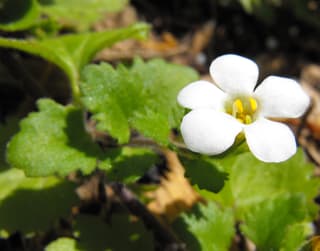
Bacopa
Sutera cordata
Sutera cordata (syn. Chaenostoma cordatum) is a fast-growing ornamental plant from the Scrophulariaceae family, native to South African wetlands. It is characterized by small, dark green, opposite leaves with slightly serrated edges and tiny white star-shaped flowers with yellow-orange centers. It is ideal for hanging baskets, containers, and as a groundcover due to its trailing growth habit. It is known for its rapid growth and profuse blooming throughout summer and fall.

Queen Palm
Syagrus romanzoffiana
The Queen Palm (Syagrus romanzoffiana) is a stately feather palm native to Brazil and South America, belonging to the family Arecaceae. Prized for its graceful arching fronds and slender trunk, it is one of the most popular landscape palms in subtropical and tropical regions worldwide. It can reach heights of 10-15 meters and produces clusters of bright orange fruits that attract wildlife.
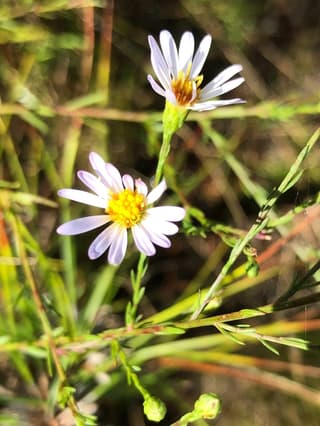
Rice Button Aster
Symphyotrichum dumosum
Symphyotrichum dumosum is a herbaceous perennial native to eastern North America. It forms bushy, branching clumps about 60 to 90 cm tall, covered in late summer and fall with masses of small daisy-like flowers with white to pale lilac rays and yellow centers that age to reddish purple. It is a valuable late-season nectar source for bees, butterflies and skippers.
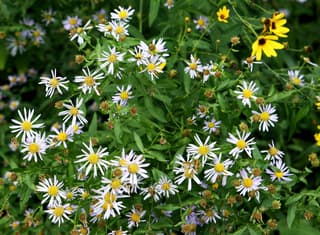
White Panicle Aster
Symphyotrichum lanceolatum
Symphyotrichum lanceolatum, commonly known as White Panicle Aster, is a native North American perennial wildflower in the Asteraceae family. Formerly classified as Aster lanceolatus, it produces masses of small daisy-like white flowers with yellow disc centers from mid-summer through fall, reaching up to 1.5 meters tall. A vital late-season pollinator plant, it thrives in moist, sunny conditions and spreads via rhizomes.

New York Aster
Symphyotrichum novi-belgii
Symphyotrichum novi-belgii, commonly called the New York aster or Michaelmas daisy, is a hardy herbaceous perennial native to eastern Canada and the northeastern United States, often found in wet meadows and abandoned fields near the coast. Valued for its abundant daisy-like flower heads in shades of purple, pink, and white surrounding bright yellow centers, it blooms from late summer through fall, often peaking around Michaelmas (September 29). Growing 3-5 feet (90-150cm) tall, it thrives in sunny garden borders and wildlife gardens, attracting bees, butterflies -- including Pearl Crescents, for which it is a host plant -- and seed-eating songbirds.
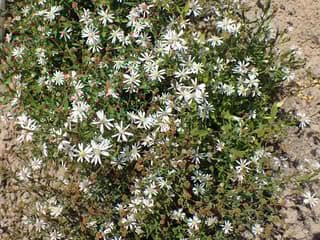
Shore Aster
Symphyotrichum tradescantii
Symphyotrichum tradescantii, commonly known as Shore Aster or Tradescant's Aster, is a native perennial wildflower of northeastern North America. This deciduous herbaceous plant produces an abundance of small, daisy-like flowers with white ray florets and pale yellow to purple disk florets in late summer and fall. It grows naturally along rocky shores, riverbanks, and freshwater estuaries, thriving in full sun to partial shade and moist soils. An excellent choice for naturalistic gardens, rain gardens, and native plant landscapes.
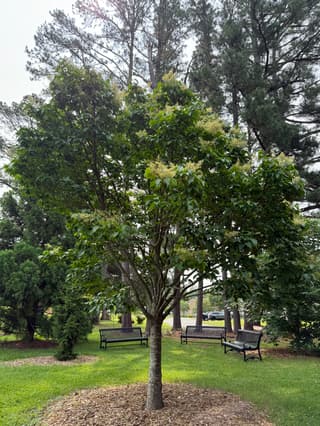
Japanese Tree Lilac
Syringa reticulata
Japanese Tree Lilac (Syringa reticulata) is a small to medium-sized ornamental tree native to Japan and northeastern Asia. It stands out for its enormous creamy-white fragrant flower panicles that appear in early summer, blooming up to six weeks after most other lilacs have finished. With cherry-like bark and exceptional urban tolerance, it is one of the most versatile and low-maintenance ornamental trees for gardens and streetscaping.
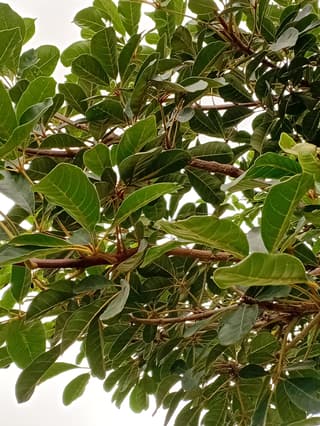
Syzygium (genus)
Syzygium
Syzygium is a large genus of tropical and subtropical evergreen trees and shrubs in the family Myrtaceae, comprising over 1,000 species native to Asia, Australia, and Africa. The genus includes economically and culturally significant species such as clove (S. aromaticum), jambolan (S. cumini), and rose apple (S. samarangense). These are hardy plants with dense, glossy foliage that produce edible fruits and aromatic flowers.
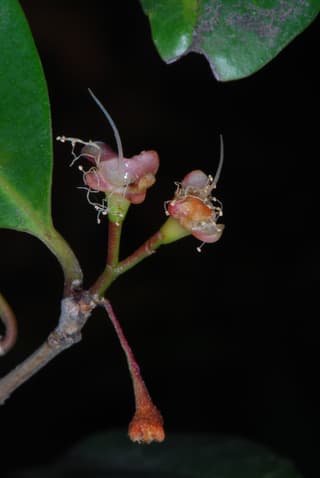
Magenta Cherry
Syzygium paniculatum
Syzygium paniculatum, known as Magenta Cherry or Brush Cherry, is an evergreen shrub and small tree native to the rainforests of eastern Australia (New South Wales). It bears glossy dark green leaves with attractive bronze-red new growth, clusters of white flowers in spring and summer, and distinctive magenta-coloured edible berries. Formerly classified as Eugenia paniculata, it is widely grown as a hedging plant, topiary subject, and ornamental specimen across subtropical and warm temperate regions worldwide.
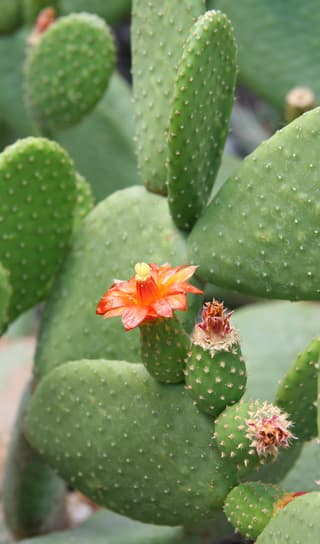
Pink Toad Cactus
Tacinga
Tacinga is a genus of cacti native to the Caatinga biome of northeastern Brazil, belonging to the family Cactaceae (subfamily Opuntioideae). Closely related to Opuntia, it includes species such as T. inamoena and T. funalis, perfectly adapted to semi-arid conditions. It produces colorful flowers and edible fruits, and is an iconic symbol of Brazil's endemic flora.
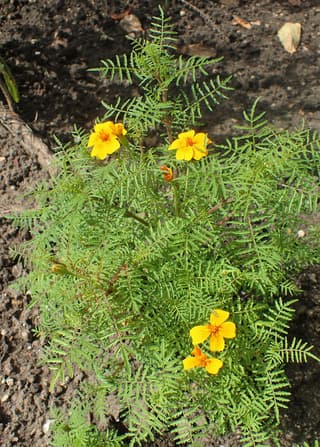
Signet Marigold
Tagetes tenuifolia
Signet marigold (Tagetes tenuifolia) is a compact, mounding annual native to Mexico and Central America, prized for its lacy, lemon-scented foliage and abundance of small single flowers in yellow, orange, and gold. It blooms profusely from early summer through fall and is a popular edging and companion plant.
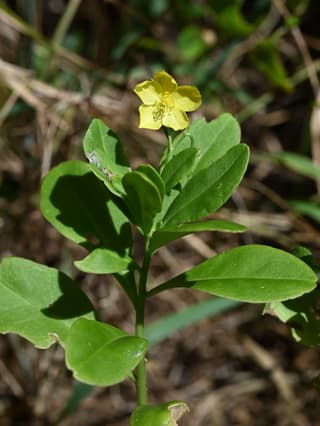
Waterleaf
Talinum fruticosum
Waterleaf (Talinum fruticosum) is a fast-growing tropical perennial leafy vegetable native to Mexico, the Caribbean, and Central and South America, now widely cultivated across West Africa, South and Southeast Asia, and tropical regions worldwide. Its broad, succulent leaves have a mildly tangy, slightly sour flavor and become tender when cooked. It is a staple ingredient in West African soups and stews, and is valued in Brazilian Amazonian cooking as "cariru." The plant is exceptionally easy to grow, thrives in heat, tolerates poor soils, and produces leaves almost continuously in warm climates.
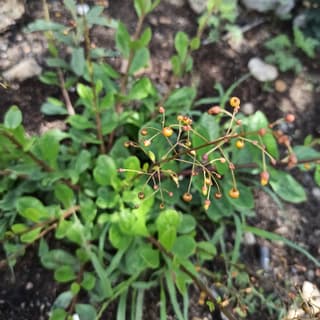
Jewels of Opar
Talinum paniculatum
Jewels of Opar (Talinum paniculatum) is a succulent perennial herb native to tropical Americas, including Brazil. It produces delicate pink flowers on airy panicles that resemble a miniature baby's breath, making it a charming ornamental plant. The fleshy, nutrient-rich leaves are edible and recognized as an unconventional food plant (PANC in Brazil), rich in protein, iron, potassium, and magnesium. Extremely drought-tolerant, it thrives in full sun with minimal care and self-seeds readily.
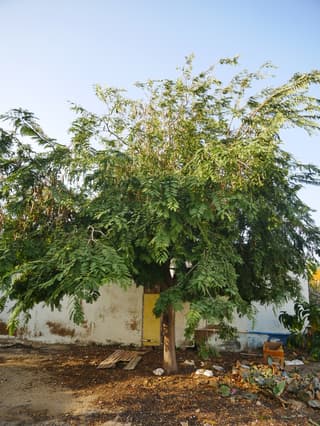
Tamarind
Tamarindus indica
Tamarindus indica is a majestic tropical tree, known for its dense canopy and pod-shaped fruits containing a highly prized sweet and sour pulp. Its leaves are pinnate and delicate, closing at night. It is a long-lived species that can reach large proportions in warm climates.
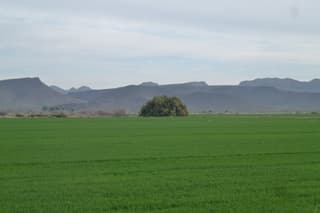
Athel tamarisk
Tamarix aphylla
Tamarix aphylla, known as the Athel tamarisk or Athel pine, is the largest representative of the Tamarix genus, capable of reaching 18 meters in height. It is an evergreen tree with leaves reduced to grayish-green scales, adapted to excrete salt through specialized leaf glands, forming crystals on the surface. Native to North Africa, the Middle East, and South Asia, it is widely cultivated in arid regions as a windbreak, shade plant, and for soil stabilization. Its small white or pink flowers, gathered in spikes, bloom from late summer to autumn, providing valuable nectar for bees.
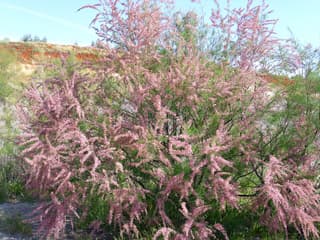
French Tamarisk
Tamarix gallica
French Tamarisk (Tamarix gallica) is a fast-establishing, salt-tolerant deciduous shrub or small tree native to the Mediterranean basin and parts of the Middle East. Valued for its feathery, blue-green scale-like foliage and airy plumes of pale pink flowers that appear in late spring and again in summer, it is widely planted in coastal gardens, hedgerows and dune-stabilization projects thanks to its remarkable tolerance of wind, salt spray, drought and poor soils.
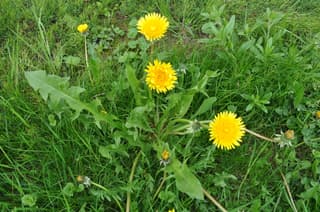
Dandelion
Taraxacum
Taraxacum is a genus of flowering perennials in the daisy family (Asteraceae), comprising over 2,000 recognized species and microspecies worldwide, most reproducing by apomixis. This profile covers the genus at a general level, using the emblematic and most widespread species, Taraxacum officinale (common dandelion), as the reference for care data. Recognizable by its rosette of toothed leaves, solitary yellow flower heads, and globe-shaped seed puffballs, Taraxacum is both a common lawn weed and a valued edible and medicinal plant.
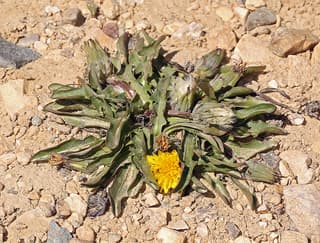
Horned Dandelion
Taraxacum ceratophorum
Taraxacum ceratophorum, commonly known as the horned dandelion, is a herbaceous perennial native to alpine and subalpine zones across the Northern Hemisphere. It is distinguished by its distinctive swollen red-tinged phyllary tips resembling horns, which give the plant its common name. It grows in alpine meadows, fellfields, and rocky slopes up to 3,000 meters elevation, and is considered the most widespread native dandelion in North America.
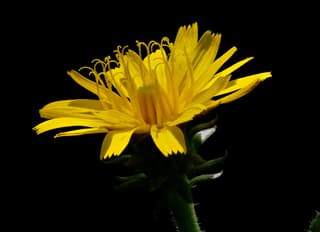
Dandelion
Taraxacum sect. Taraxacum
The dandelion is an extremely resilient perennial herbaceous plant, known for its basal rosette of jagged leaves and bright yellow flowers. It is famous for its ability to colonize various habitats and for its 'pappus', the sphere of feathery seeds that disperse with the wind. Although often considered a weed, it is a highly nutritious and medicinal plant.
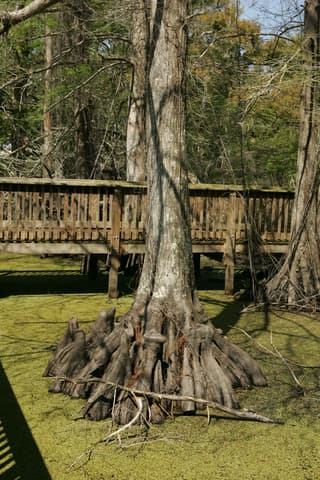
Bald Cypress
Taxodium distichum
Taxodium distichum, commonly known as the bald cypress, is a large deciduous conifer in the Cupressaceae family. Native to the southeastern United States, it grows naturally in swamps, riverbanks, and floodplains. It is one of the few deciduous conifers, and its bright green foliage turns reddish-bronze in autumn before falling. It produces aerial root structures called pneumatophores or "cypress knees" when growing in flooded soils. With an exceptional lifespan that can exceed 1,000 years, it is an iconic tree of North American wetlands, widely used in parks, urban gardens, and riparian restoration projects.
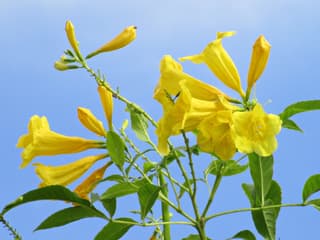
Trumpetbush (genus)
Tecoma
Tecoma is a genus of shrubs and small trees in the family Bignoniaceae, prized for their showy trumpet-shaped yellow or orange flowers. Hardy and drought-tolerant, they thrive in hot, sunny landscapes across tropical and subtropical regions.
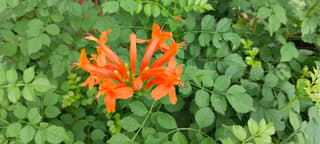
Cape Honeysuckle
Tecoma capensis
Cape Honeysuckle (Tecoma capensis) is an evergreen, scrambling shrub native to southern Africa, prized for its clusters of orange, tubular flowers. Fast-growing and adaptable, it can be trained as a hedge, espalier, or climbing vine, blooming mainly from fall through spring and attracting hummingbirds and butterflies.
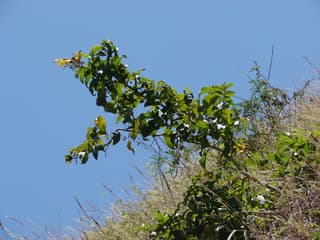
Yellow Bells
Tecoma stans
Tecoma stans, commonly known as Yellow Bells or Yellow Trumpetbush, is a fast-growing shrub or small tree native to the Americas, from Mexico to Argentina. It is celebrated for its stunning clusters of bright yellow, trumpet-shaped flowers that bloom from spring through fall, attracting hummingbirds, butterflies, and bees. Highly drought-tolerant and low-maintenance, it thrives in warm, sunny gardens and is considered a symbol of vitality and abundance across Latin America.
Verschaffelt Tephrocactus
Tephrocactus verschaffeltii
Tephrocactus verschaffeltii is a captivating segmented cactus native to the arid regions of Argentina and Bolivia. Its oval segments display colors ranging from mint green to plum purple, adorned with distinctive white fluffy areoles. In spring and summer, it produces vibrant fire-red to orange blooms that make it a striking collector's piece. A slow-growing species, it is well-suited for rock gardens, desert landscapes, and container growing.
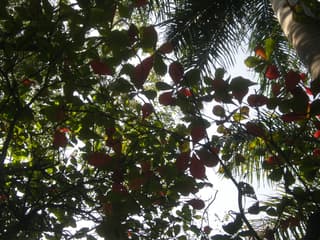
Tropical Almond
Terminalia
Terminalia is a genus of approximately 100 species of large tropical and subtropical trees in the family Combretaceae, found across coastal and inland tropical regions worldwide. Notable species include T. catappa (Tropical Almond), T. mantaly (Madagascar Umbrella Tree), and T. arjuna (Arjuna Tree), revered in Ayurvedic medicine. These fast-growing trees are valued for their generous shade, attractive layered branching, durable timber, and the wide-ranging medicinal properties of their leaves and fruit.
Easy Care Pet Safe
Our selection of 1446 easy pet safe combines the characteristics of this category with reduced care needs. Perfect for beginners who love this category.
Why Choose Easy Pet Safe?
Combining the beauty of pet safe with easy difficulty level lets you enjoy this category without excessive maintenance worries. Each plant was selected to offer the best characteristics of the category at the care level you are looking for.