2315 Easy Plants | 2026 Guide - Page 8
Discover 2315 easy plants for your garden. Complete care guide.
2315 Easy Plants
Showing 253-288 of 2315
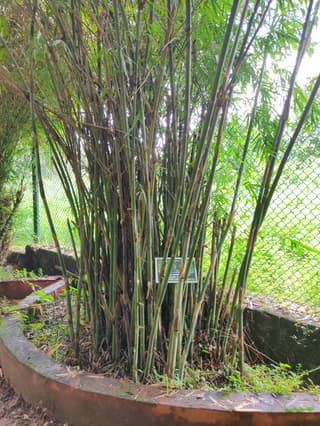
Hedge Bamboo
Bambusa multiplex
Hedge Bamboo (Bambusa multiplex) is a perennial grass known for its fast and dense growth, forming compact clumps. It features thin, flexible culms with vibrant green leaves that create a lush screen. It is a popular choice for landscaping, privacy hedges, and as an ornamental plant in pots.
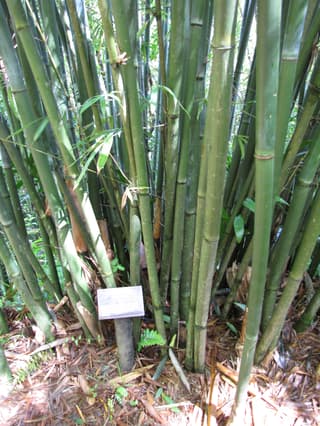
Slender Weavers Bamboo
Bambusa textilis gracili
Slender Weavers Bamboo (Bambusa textilis gracili) is a clumping bamboo native to southern China, prized for its elegant, upright culms that can reach up to 9 meters tall. Unlike running bamboos, it forms compact, non-invasive clumps with culms up to 3 cm in diameter and a spread of only 2 meters. It is one of the most popular bamboos for privacy screens, hedges, and tropical garden landscaping worldwide. Its fast growth rate, low maintenance needs, and non-invasive root system make it an ideal choice for both residential and commercial gardens.
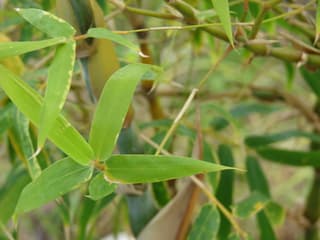
Buddha Belly Bamboo
Bambusa ventricosa
Buddha Belly Bamboo (Bambusa ventricosa) is a clumping bamboo native to China and Southeast Asia, celebrated for its distinctively swollen internodes resembling the rounded belly of the Buddha statue. This ornamental feature is most pronounced when the plant is grown in containers or under mild stress conditions. It is one of the most attractive bamboo species available, equally valued in gardens, patios, and as a bonsai subject.
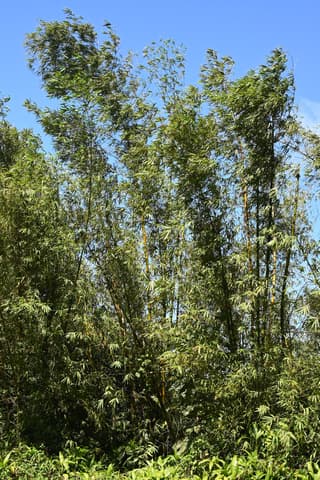
Common Bamboo
Bambusa vulgaris
Bambusa vulgaris, commonly known as Common Bamboo or Golden Bamboo, is one of the most widely cultivated bamboo species in the world. Native to South and Southeast Asia, it has spread to tropical and subtropical regions across all continents. Its culms can reach up to 20 meters in height, featuring a characteristic yellow-green coloration. It is an extremely fast-growing, versatile, and resilient plant used in construction, landscaping, and food production.
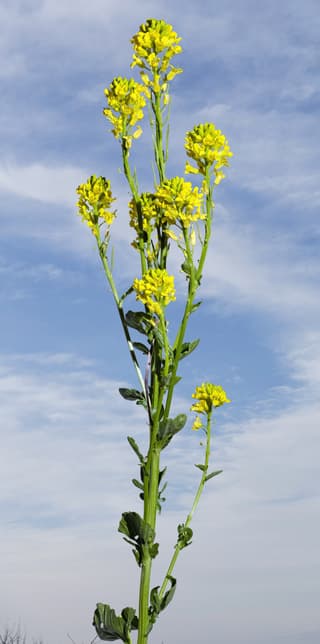
Wintercress
Barbarea vulgaris
Wintercress (Barbarea vulgaris) is a biennial herbaceous plant in the Brassicaceae (mustard) family, native to Europe and widely naturalized across North America and beyond. It forms a basal rosette of dark, glossy, lobed leaves through autumn and winter, then sends up flowering stalks in early spring bearing clusters of bright yellow, four-petaled flowers. The young leaves have a pleasantly bitter, peppery flavor reminiscent of watercress or arugula and are one of the few fresh greens available during winter months. It grows in disturbed soils, roadsides, moist meadows, and stream banks, and is valued both as a wild edible and for its early-season nectar for pollinators.
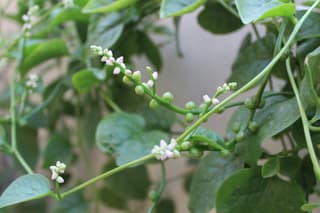
Malabar Spinach
Basella alba
Malabar Spinach (Basella alba) is a fast-growing tropical edible vine native to India and Southeast Asia. Its thick, succulent leaves are rich in vitamins A and C, calcium, and iron, making it a nutritious leafy green for warm climates. It thrives in heat and humidity where traditional spinach fails.
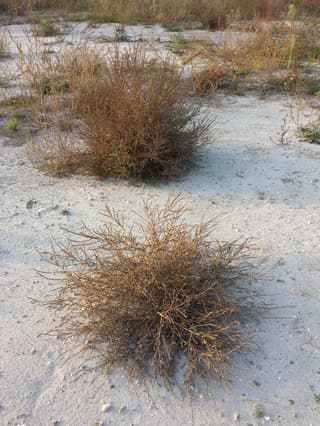
Burningbush
Bassia scoparia
Burningbush (Bassia scoparia) is a fast-growing annual herb native to Eurasia. It forms a dense, symmetrical mound of fine, bright green foliage that turns brilliant red or purple in autumn, creating a spectacular seasonal display. Widely grown as an ornamental in gardens and borders.
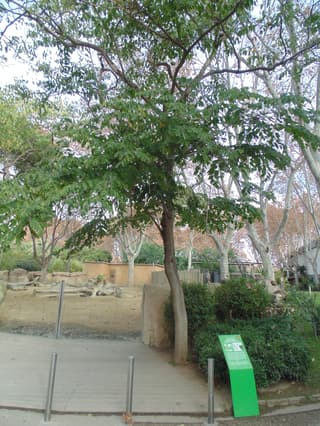
Brazilian Orchid Tree
Bauhinia forficata
Bauhinia forficata, commonly known as the Brazilian Orchid Tree or Cow's Hoof Tree, is a medium-to-large deciduous tree native to Brazil. It produces elegant white flowers resembling orchids in spring and summer and is renowned in traditional Brazilian medicine for its hypoglycemic properties, earning it the nickname "vegetable insulin."

Napoleon's Plume
Bauhinia monandra
Bauhinia monandra, commonly known as Napoleon's Plume or Pink Orchid Tree, is a medium-sized tropical tree in the Fabaceae family. Native to the tropical Americas, it is widely cultivated in gardens and parks for its spectacular flowers that transition from pale yellow to deep pink, each adorned with a distinctive streaked petal. In frost-free tropical and subtropical climates, it blooms for most of the year, making it a prized ornamental tree for landscaping.
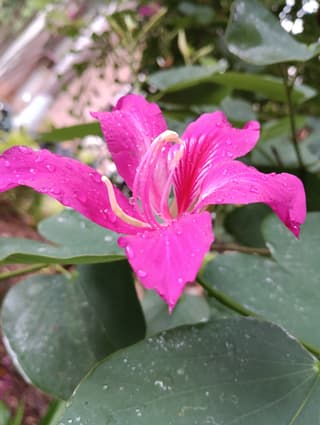
Purple Orchid Tree
Bauhinia purpurea
The Purple Orchid Tree (Bauhinia purpurea) is a medium-sized ornamental tree native to southern China and Southeast Asia. Renowned for its spectacular purple-pink flowers resembling orchid blooms, it flowers primarily in fall and winter, providing rare color in cooler months. Its distinctive bilobed leaves resemble butterfly wings or cow hoofprints — a hallmark of the Bauhinia genus. As a legume, it fixes nitrogen in the soil, offering both ornamental and ecological value.
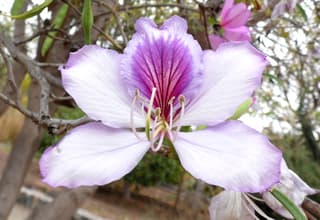
Orchid Tree
Bauhinia variegata
Bauhinia variegata, commonly known as the Orchid Tree or Mountain Ebony, is a medium-sized deciduous tree native to tropical Asia, particularly India and China. It produces spectacular orchid-like flowers in shades of pink, purple, and white during late winter and spring, making it one of the most ornamental flowering trees for warm climates. Its distinctive bilobed leaves, resembling a camel's footprint or butterfly wings, give it unique visual appeal throughout the year.
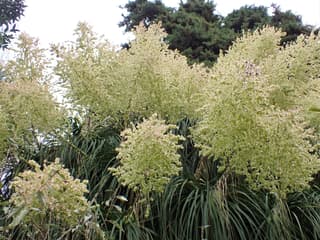
Ponytail Palm
Beaucarnea
Beaucarnea is a genus of slow-growing, drought-tolerant succulent trees native to the arid regions of eastern Mexico, prized for the bulbous, water-storing caudex at its base and the long, gracefully arching ribbon-like leaves that give it its "ponytail" look. Despite the common name, it is not a true palm but a member of the Asparagaceae family (subfamily Nolinoideae), most closely related to Dracaena and Nolina. The most widely cultivated species, Beaucarnea recurvata, is grown around the world as a low-maintenance houseplant and landscape specimen thanks to its resilience to neglect and infrequent watering.
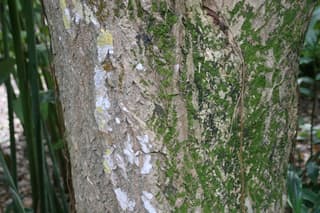
Guatemalan Ponytail Palm
Beaucarnea guatemalensis
Beaucarnea guatemalensis, the Guatemalan ponytail palm, is a succulent-like plant native to Central America, prized for the bulbous caudex at the base of its trunk that stores water and grants excellent drought tolerance. Its long, thin, arching leaves emerge in a fountain-like burst reminiscent of a horse's tail. A slow grower, it is a popular low-maintenance houseplant valued for its sculptural form and resilience.
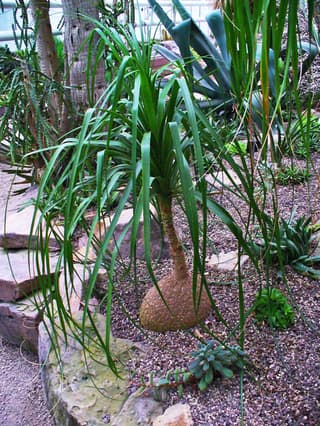
Ponytail Palm
Beaucarnea recurvata
The Ponytail Palm (Beaucarnea recurvata) is a succulent plant native to Mexico, known for its bulbous trunk base that stores water and long, cascading leaves resembling a ponytail. Despite its common name, it is not a true palm but belongs to the Asparagaceae family. It is extremely hardy and long-lived, capable of surviving for hundreds of years in the wild.
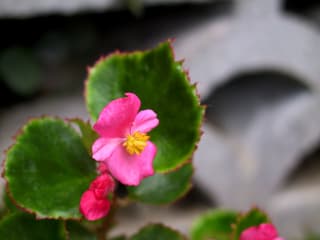
Wax Begonia
Begonia × semperflorens-cultorum
Wax Begonia (Begonia × semperflorens-cultorum) is a popular flowering annual and tender perennial prized for its glossy, waxy foliage and prolific blooms in shades of white, pink, and red. It thrives in borders, containers, and as a houseplant, blooming almost continuously from spring to fall.
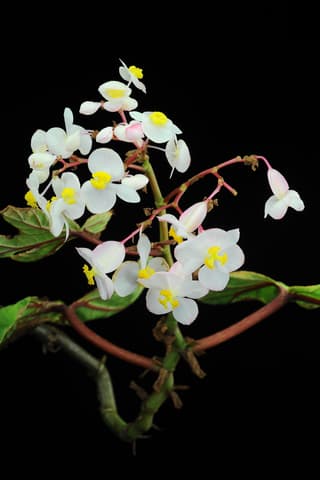
Angel wing begonia
Begonia aconitifolia
Begonia aconitifolia, commonly known as the angel wing begonia, is a tropical plant native to Brazil belonging to the Begoniaceae family. Its distinctive asymmetrical wing-shaped leaves, often decorated with silver spots, and its pendant clusters of pink to red flowers make it one of the most elegant ornamental begonias. It is a medium-growth plant, well-suited for both indoor and partially shaded outdoor environments.
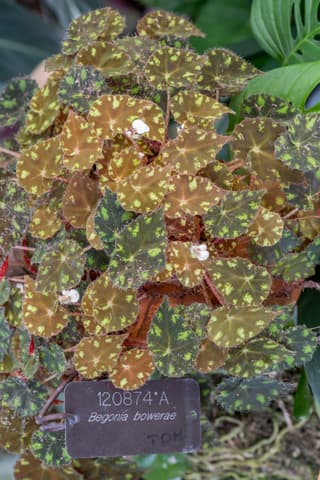
Eyelash Begonia
Begonia bowerae
Begonia bowerae, commonly known as the eyelash begonia, is a compact rhizomatous begonia native to Mexico prized for its asymmetrical, wing-shaped leaves edged with tiny white hairs that resemble eyelashes. Deep green foliage is often patterned with chocolate-brown bands, and clusters of small white to pale pink flowers appear above the leaves in winter and spring. It grows low and spreading from a fleshy rhizome, making it a favorite for terrariums, hanging baskets, and shelf displays.
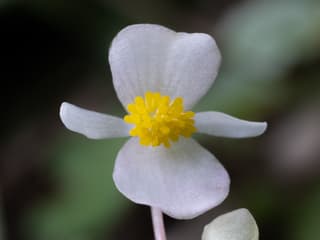
Wax Begonia
Begonia cucullata
Begonia cucullata, commonly known as the Wax Begonia, is a compact ornamental plant native to South America (Brazil and Argentina). It produces an abundance of white, pink, or red flowers from spring through fall, with glossy, waxy leaves that give the plant its common name. One of the most popular bedding plants worldwide.
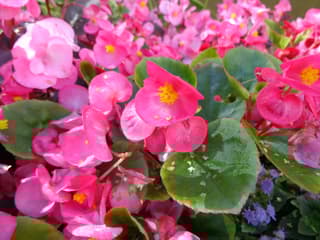
Wax Begonia
Begonia semperflorens
Begonia semperflorens, commonly known as Wax Begonia, is a compact, mound-forming annual or tender perennial native to South America. It is prized for its continuous bloom throughout spring, summer, and fall, producing cheerful flowers in shades of pink, red, and white. Its glossy, waxy leaves come in green or bronze tones, adding ornamental appeal even when not in flower. A popular choice for garden beds, containers, and window boxes, it thrives in a wide range of light conditions.
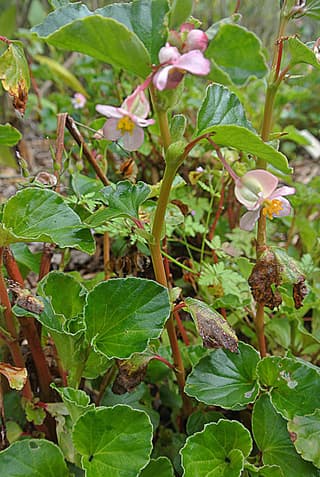
Wax begonia
Begonia x semperflorens-cultorum
Begonia x semperflorens-cultorum, commonly known as wax begonia, is a compact, ever-blooming hybrid group prized for its glossy, waxy leaves and nonstop clusters of small flowers in red, pink, or white. Bred from South American species, it is one of the most popular bedding and container plants worldwide thanks to its low maintenance, heat tolerance, and reliable color.
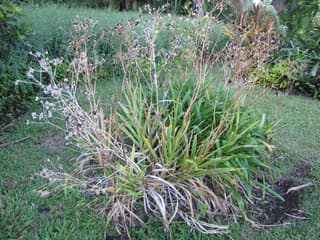
Blackberry Lily
Belamcanda chinensis
Blackberry Lily (Belamcanda chinensis) is a rhizomatous perennial native to temperate Asia, including China, Japan, and Korea. It produces striking orange, red-spotted flowers that resemble leopard rosettes, followed by seed capsules that split open to reveal shiny black seeds resembling blackberries — giving the plant its distinctive common name. Belonging to the Iridaceae family, it has been used in traditional Chinese medicine for over 2,000 years.
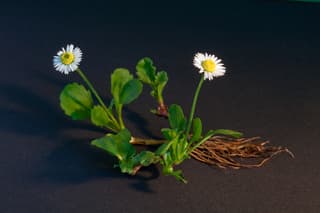
English Daisy
Bellis perennis
Bellis perennis, commonly known as the English Daisy or Common Daisy, is a cheerful perennial wildflower native to western and central Europe. It forms low rosettes of spoon-shaped leaves from which leafless stems rise bearing classic composite flowers — white ray petals often tipped with pink or red, surrounding a bright yellow disc. Blooming from early spring through summer, it thrives in lawns, meadows, borders, and rock gardens. It is the national flower of the Netherlands and has been beloved in folk tradition for centuries.
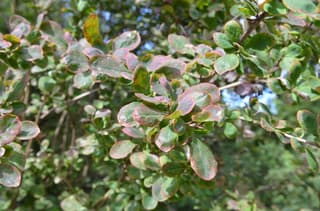
Ottawa Barberry
Berberis × ottawensis
Berberis × ottawensis is a vigorous deciduous hybrid shrub, a natural cross between Berberis thunbergii and Berberis vulgaris. Known for its ornamental deep red-purple foliage in summer that turns vivid red in autumn, clusters of small yellow spring flowers, and bright red berries. Widely grown as a hardy hedge or specimen shrub.
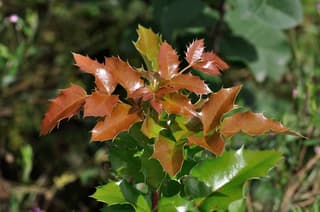
Oregon Grape
Berberis aquifolium
The Oregon grape (Berberis aquifolium) is a robust, evergreen shrub native to western North America, reaching heights of 1 to 1.5 meters. Its glossy, spiny-toothed pinnate leaves resemble holly leaves and often take on an attractive purplish-red hue in winter. In early spring (March–May), it produces bright yellow, lightly fragrant flower panicles that serve as a valuable food source for early insects. These are followed in summer by blue-black, glaucous berries that are rich in vitamin C and can be processed into jelly or juice. Thanks to its tolerance for shade, drought, and urban conditions, it is one of the easiest evergreen shrubs to maintain in temperate gardens.
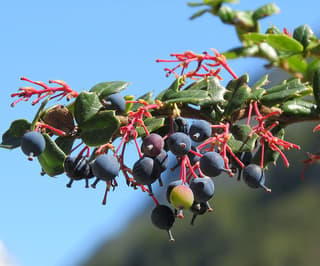
Darwin's barberry
Berberis darwinii
Darwin's barberry (Berberis darwinii) is a dense, spiny evergreen shrub native to Chile and Argentina, named after Charles Darwin who collected it during the voyage of the Beagle. In spring it produces a profusion of small, deep orange, bell-shaped flowers followed by edible dark blue-purple berries. It is a popular hedging and ornamental plant, holding the RHS Award of Garden Merit.
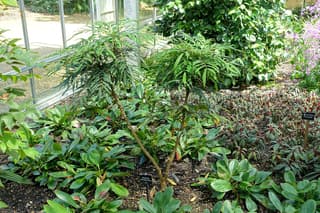
Narrowleaf Oregon Grape
Berberis eurybracteata
Berberis eurybracteata, long sold under its former name Mahonia eurybracteata, is an evergreen shrub of the barberry family native to China. It forms an upright, clumping habit with graceful, glossy dark green pinnate leaves made up of slender leaflets. In late summer and autumn it carries erect spires of small, fragrant yellow flowers, which are followed by blue-black berries. The popular cultivar Soft Caress stays compact at roughly 1.2 m in height and spread, and its leaflets are narrow and largely spine-free, so it is much easier to handle than typical mahonias. It gives a fine, architectural texture in shady borders, woodland gardens and containers, and it is valued for late-season colour when few other shrubs are in flower.
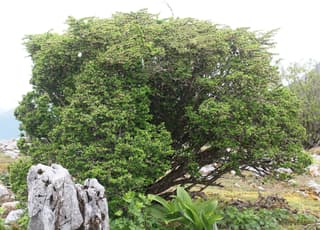
Japanese Barberry
Berberis thunbergii
Berberis thunbergii, or Japanese barberry, is a compact, deciduous shrub native to Japan prized for its dense thorny branching, small oval leaves (green, purple, or gold depending on cultivar), and bright red berries that persist into winter. Clusters of pale yellow flowers appear in mid-spring before the foliage fully unfurls. While it is a tough, low-maintenance landscape plant valued for hedging and erosion control, it has become invasive across parts of the northeastern and midwestern United States and eastern Canada, where it escapes cultivation, crowds out native understory plants, and creates humid microhabitats favored by ticks; several states restrict or ban its sale and planting.
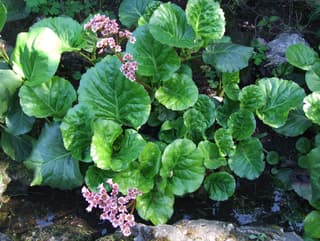
Heart-leaved Bergenia
Bergenia crassifolia
Bergenia crassifolia is a perennial evergreen plant native to Siberia, Mongolia, and Central Asia. It is recognized by its large, leathery, glossy leaves that turn reddish or bronze in winter. The plant blooms in early spring with beautiful pink, purple, or white flower clusters. It is extremely hardy and can survive temperatures as low as –30 °C.
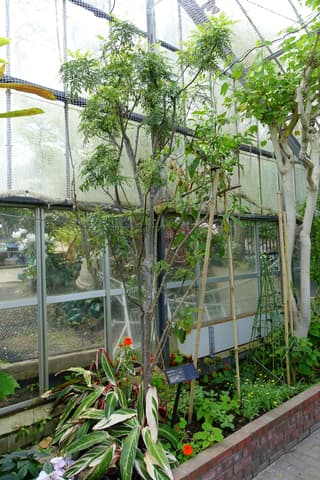
Curry Leaf Tree
Bergera koenigii
The curry leaf tree (Bergera koenigii, synonym Murraya koenigii) is an aromatic shrub or small tree in the citrus family Rutaceae, native to South Asia. Its glossy, pinnately compound leaves are intensely fragrant and are a staple seasoning in Indian and Southeast Asian cooking, typically fried fresh in oil at the start of a dish. The plant bears small fragrant white flowers followed by ornamental black berries. It has a medium growth rate, tolerates drought once established, but is sensitive to frost.
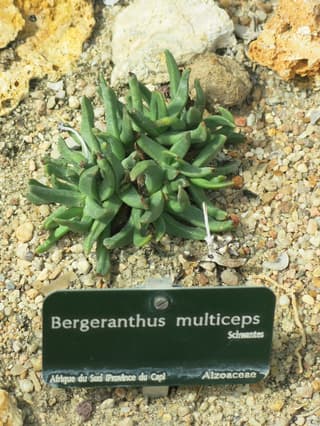
Gold-flowered Bergeranthus
Bergeranthus multiceps
A low-growing, compact succulent native to the sandstone outcrops of the Eastern Cape in South Africa, belonging to the Aizoaceae (mesembs) family. It forms dense clumps of triangular, fleshy, and sub-erect leaves, alluding to its name 'multiceps' (multiple heads). In spring and summer, it produces striking yellow daisy-like flowers that only open in direct sunlight and close at night or on cloudy days.
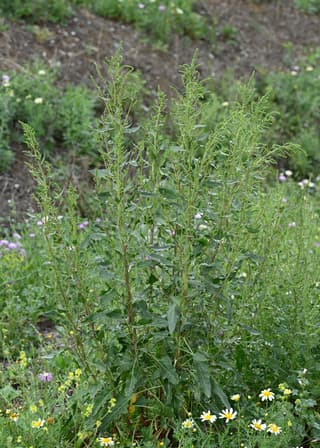
Beetroot
Beta vulgaris
Beta vulgaris is a versatile plant species in the Amaranthaceae family, native to Europe, Western Asia, and the North African coast. It includes several cultivar groups: table beet (edible root), Swiss chard (edible leaves and stems), sugar beet, and mangelwurzel. It is a biennial vegetable grown worldwide for its nutritional value and ease of cultivation.
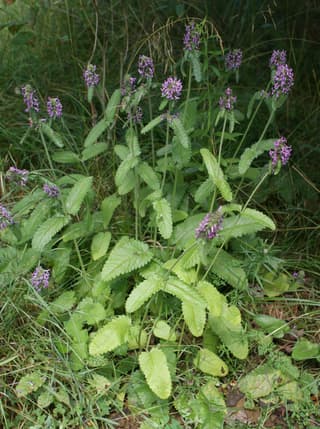
Wood Betony
Betonica officinalis
Wood betony (Betonica officinalis, syn. Stachys officinalis) is a perennial herb in the mint family (Lamiaceae), native to Europe, where it grows wild in grasslands, along hedgerows, and in open woodlands. The plant forms a dense rosette of heart-shaped, rough basal leaves and an upright, slightly hairy stem reaching 30-70 cm in height. From June to August, it bears dense spikes of purple-red to pink tubular flowers, which are highly attractive to bees and other pollinators. Wood betony has a long history as a medicinal plant and was considered in the Middle Ages to be able to cure almost anything—hence the old proverb 'sell your cow and buy betony'.
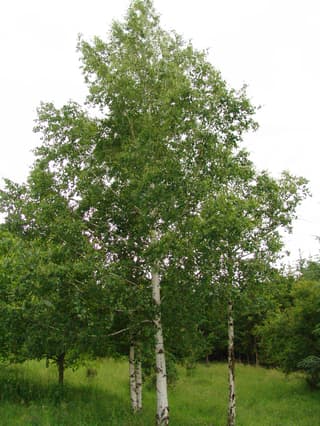
Birch
Betula
Betula, commonly known as birch, is a genus of about 30-60 species of deciduous hardwood trees and shrubs native to cool temperate and boreal regions of the Northern Hemisphere. Birches are best known for their thin, often peeling bark, which ranges from silvery-white to golden-bronze depending on the species, and for the slender catkins that dangle from bare branches in early spring before the leaves emerge. Fast-growing and relatively short-lived, birches are pioneer trees that quickly colonize open or disturbed ground, and they are widely planted as ornamental specimens for their striking bark, graceful form, and brilliant yellow autumn foliage.

Silver Birch
Betula pendula
The Silver Birch (Betula pendula) is an elegant, fast-growing deciduous tree and one of Europe's most light-demanding forest trees. It reaches heights of up to 25 meters and is known for its characteristic white, peeling bark and its fine, drooping branches. As a pioneer species, it colonizes open spaces and disturbed sites as one of the first tree species. In autumn, its diamond-shaped leaves turn a vibrant yellow. The birch thrives in sandy, moderately dry to fresh soils with a slightly acidic pH and tolerates harsh winters down to -40 °C.
Downy Birch
Betula pubescens
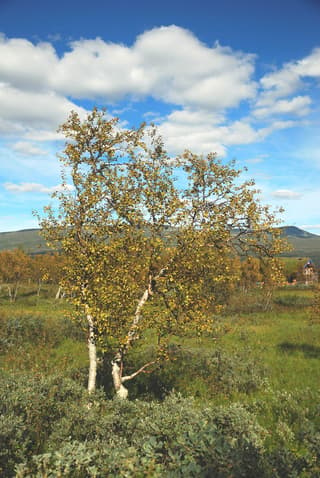
Betula pubescens, known as downy birch or moor birch, is a fast-growing deciduous tree native to northern Europe and Asia. It features smooth, dull grey-white bark marked with dark lenticels, and small serrated, diamond-shaped leaves that turn golden yellow in autumn. As one of the most cold-hardy broadleaf trees in the world, it thrives in cool, moist climates and is often the first tree species to colonize open ground after disturbance.
Bidens
Bidens
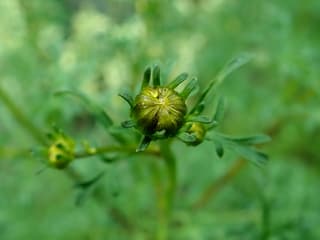
The Bidens genus consists of extremely versatile and resilient plants belonging to the Asteraceae family. In Brazil, Black-jack (Bidens pilosa) is widely known for its medicinal properties, while Bidens ferulifolia is a garden favorite for its bright yellow flowers that attract pollinators. Its seeds have characteristic hooks that attach to surfaces, facilitating dispersal.
What are Easy Plants?
Easy Plants are ideal for beginners or people with little time for care. These species are tolerant of watering mistakes, light variations, and don't require constant attention. Perfect for those just starting out with plants.
Tips for Growing Easy Plants
To succeed with easy plants, remember: less is more. Avoid overwatering, choose a spot with adequate light, and let the soil dry between waterings. Most of these plants prefer to be 'forgotten' occasionally.