2315 Easy Plants | 2026 Guide - Page 9
Discover 2315 easy plants for your garden. Complete care guide.
2315 Easy Plants
Showing 289-324 of 2315

Devil's Beggarticks
Bidens frondosa
Bidens frondosa, commonly known as Devil's Beggarticks or Devil's Pitchfork, is a fast-growing annual wildflower native to North America. It belongs to the Asteraceae family and thrives in moist, sunny environments such as riverbanks, ditches, and disturbed grounds. The plant produces small golden-yellow to orange disc flowers from late summer through fall, followed by distinctive barbed seed heads that cling to clothing and animal fur — giving rise to its colorful common names.
Blackjack
Bidens pilosa
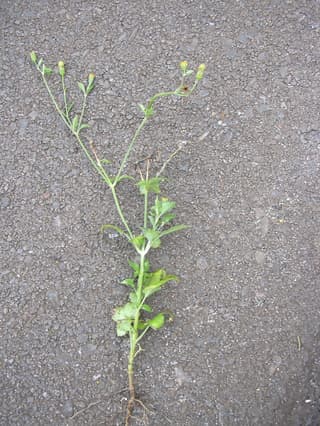
Bidens pilosa, commonly known as blackjack or hairy beggarticks, is an annual herb in the Asteraceae family, native to tropical America and now naturalized as a common weed across the globe. It grows up to 1.8 m tall, with white-and-yellow daisy-like flowers and barbed seeds that cling easily to clothing and animal fur. It is widely valued in traditional medicine and also eaten as a wild leafy vegetable.
Billbergia (genus)
Billbergia
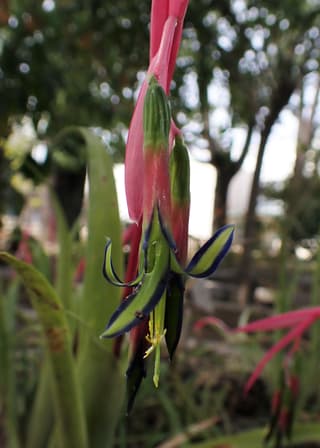
Billbergia is a genus of bromeliads native primarily to South America, widely cultivated as ornamental plants for their evergreen rosettes and colorful tubular flowers. The most popular species, B. nutans, is commonly known as Queen's Tears.
Queen's Tears
Billbergia nutans
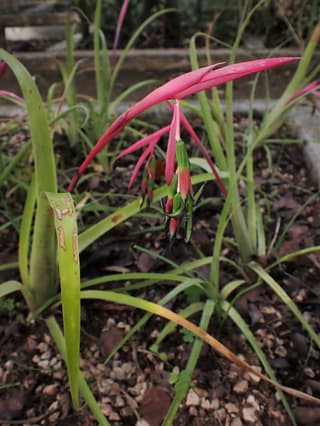
Billbergia nutans, commonly known as Queen's Tears or Friendship Plant, is an epiphytic bromeliad native to Brazil, Argentina, Uruguay, and Paraguay. It forms tubular rosettes of arching grey-green leaves with serrated margins, producing pendant flower spikes with vivid rose-pink bracts and petals combining blue-violet, green, and yellow. It is considered one of the easiest bromeliads to grow and thrives both indoors and outdoors in mild climates.
Flaming Torch
Billbergia pyramidalis
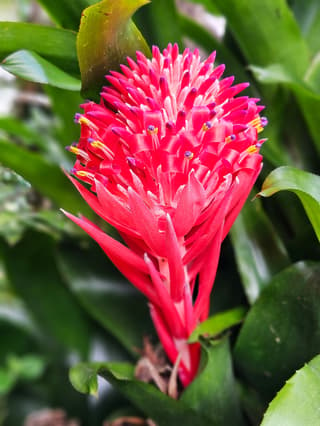
Billbergia pyramidalis, commonly called flaming torch or foolproof plant, is an epiphytic or terrestrial bromeliad native to northern South America and the Caribbean. It forms a compact rosette of glossy green leaves and produces a pyramidal scarlet-red inflorescence with violet and yellow highlights, typically in late summer or early autumn. It is a tough, low-maintenance plant popular in tropical gardens and decorative pots.
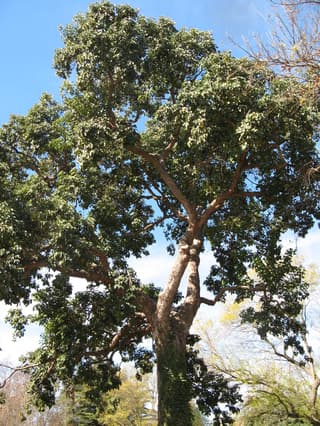
Bishopwood
Bischofia javanica
Bischofia javanica, known as bishopwood, is a fast-growing evergreen tree native to tropical and subtropical Asia, Australia, and the Pacific. It features trifoliate leaves that emerge bronze-red and mature to glossy green, small greenish-yellow flowers in hanging clusters, and round berry-like fruits that turn brownish-orange. In its native range it can exceed 30 m in height, though cultivated specimens are usually smaller. It is valued as a fast shade tree but has become invasive in some regions such as Florida and Pacific islands.
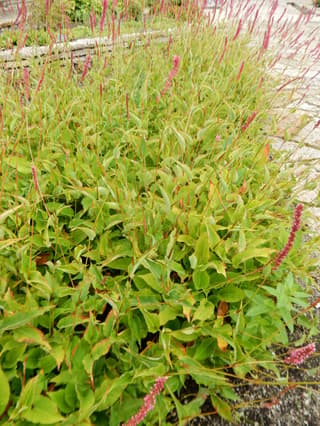
Red Bistort
Bistorta amplexicaulis
Bistorta amplexicaulis (syn. Persicaria amplexicaulis), commonly called red bistort or mountain fleece, is a clump-forming herbaceous perennial in the buckwheat family (Polygonaceae), native to the Himalayan region from Afghanistan to China. It forms bushy mounds of pointed, heart-shaped leaves that clasp the stem (the epithet 'amplexicaulis' means 'stem-clasping'), topped from midsummer to early autumn by narrow, bottlebrush-like spikes of tiny red, pink or white flowers that are highly attractive to bees and butterflies. Fully hardy and easy-going, it is a mainstay of cottage gardens, borders, pond margins and bog gardens.
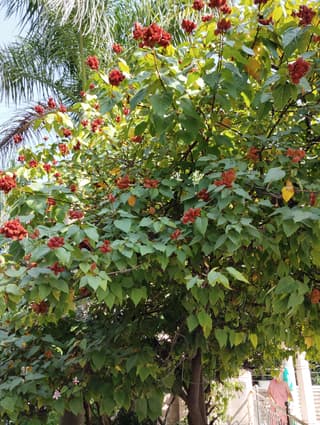
Annatto
Bixa orellana
Bixa orellana, commonly known as annatto or the lipstick tree, is a fast-growing tropical shrub or small tree native to Brazil and tropical America. It is prized for its spiny reddish seed pods containing bixin-rich seeds, a natural orange-red pigment widely used as a food coloring and in cosmetics. The plant produces beautiful pink flowers and is equally valued as an ornamental and as a commercial crop.
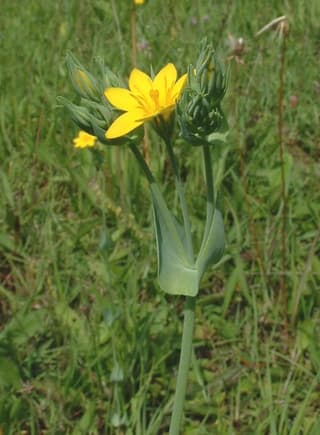
Yellow-wort
Blackstonia perfoliata
Yellow-wort (Blackstonia perfoliata) is a low-growing annual wildflower in the gentian family, native to the Mediterranean Basin and extending into northwestern Europe, including Britain, Ireland and Iberia. It grows 10-50cm tall on stiff, branching stems, with distinctive bluish-green waxy leaves that fuse together in opposite pairs to form a shallow saucer around the stem. From June to October it produces clusters of bright yellow, star-shaped flowers with 6-8 pointed petals that close in the afternoon. It is a classic indicator of chalk and limestone grassland, thriving on sunny, lime-rich, nutrient-poor soils where it self-sows freely.
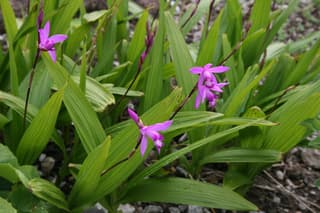
Chinese Ground Orchid
Bletilla striata
Bletilla striata, known as the Chinese ground orchid or hyacinth orchid, is a hardy deciduous terrestrial orchid native to China, Japan, and Korea. Unlike tropical orchids, it grows directly in garden soil, producing pleated, lance-shaped leaves and upright spikes of purple-pink, hyacinth-like flowers in spring and early summer.
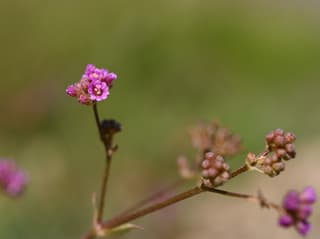
Red Spiderling
Boerhavia diffusa
Boerhavia diffusa is a sprawling, pantropical perennial herb with prostrate to semi-erect, much-branched stems and fleshy taproots. Tiny pink flowers, only about 5mm across, appear in loose clusters almost year-round wherever moisture is adequate. Best known by its Sanskrit name "punarnava" ("that which renews"), it is one of the most widely used plants in Ayurvedic medicine, and its tender young leaves are cooked as a leafy green vegetable across India and the tropics.
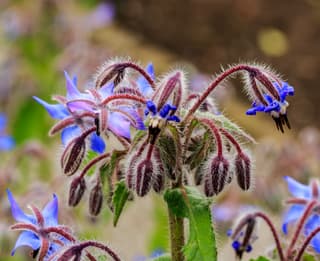
Borage
Borago officinalis
Borage is a fast-growing, hardy annual herb in the Boraginaceae family, prized for its coarse, hairy leaves and vivid star-shaped blue flowers. Native to the Mediterranean region, it has been grown for centuries as a culinary, medicinal, and ornamental plant, and is one of the best bee and pollinator plants for the vegetable garden.
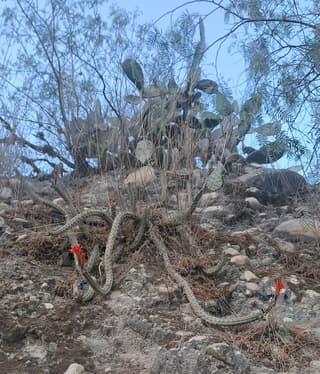
Cleistocactus
Borzicactus
Borzicactus is a genus of columnar or prostrate cacti native to the Andes of South America (Peru, Bolivia, Ecuador, Argentina), often treated as a synonym of Cleistocactus or included within Loxanthocereus. Its stems, densely covered with fine spines, can grow upright or form hanging clumps. It produces very showy tubular flowers - usually red, orange, or pink - adapted for hummingbird pollination. It is a long-lived, drought-resistant, slow-growing plant, highly valued in cactus collections for its sculptural form.
Yellow Bluestem
Bothriochloa ischaemum
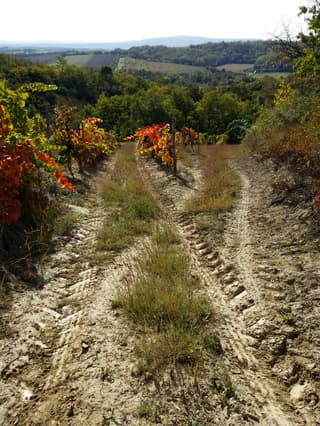
Yellow bluestem (Bothriochloa ischaemum) is a perennial, bunch-forming grass belonging to the Poaceae family. Originally native to the dry steppes of Southern Europe and Western Asia, it has since spread globally and is considered an invasive species in many regions. It grows in loose tufts with erect stems reaching 30–100 cm in height, featuring grayish-green foliage that turns a distinctive brownish-red in the fall. Thanks to its strong, deep-reaching root system, it is exceptionally drought-tolerant and resistant to trampling, making it a frequent choice for roadside embankments and erosion control. During summer and autumn, it produces yellowish inflorescences followed by reddish-brown seed heads.
Signal Grass
Brachiaria decumbens
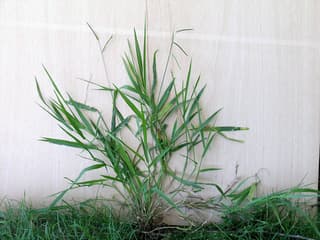
Signal grass (Brachiaria decumbens) is a vigorous perennial tropical grass native to central and east Africa, belonging to the Poaceae family. Widely naturalized across tropical regions, it is one of the most important pasture grasses in South America, particularly Brazil. It forms dense, fast-spreading mats via stolons and rhizomes, tolerating poor, acidic soils and seasonal drought.
Kurrajong
Brachychiton populneus
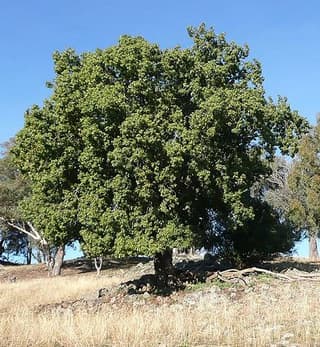
The Kurrajong (Brachychiton populneus) is a hardy, evergreen tree native to eastern Australia, prized for its distinctive bottle-shaped trunk that stores water, its glossy poplar-like leaves, and its resilience to drought. It produces creamy-white, bell-shaped flowers streaked with pink or purple in spring and summer, followed by woody seed pods.
Mediterranean False Brome
Brachypodium retusum
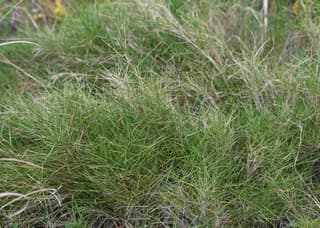
Brachypodium retusum is a tough, drought-resistant perennial grass native to the Mediterranean basin. It forms dense tufts of narrow, glaucous leaf blades that remain green year-round. Ecologically significant, it is the first grass to resprout after wildfires, making it vital for soil stabilization and habitat recovery across Mediterranean scrubland and garrigue. Its pale yellow-green spikelets bloom from spring to early summer, adding natural texture and movement to dry gardens.
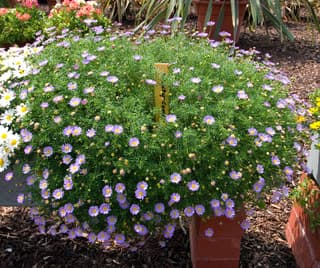
Swan River Daisy
Brachyscome iberidifolia
Brachyscome iberidifolia, commonly known as the Swan River Daisy, is a charming Australian annual herb. It is highly valued for its delicate, fern-like foliage and a profusion of small, daisy-like flowers that appear in vibrant shades of blue, purple, pink, and white. Growing in a compact, mounding habit, it is a favorite for borders, rock gardens, and hanging baskets.
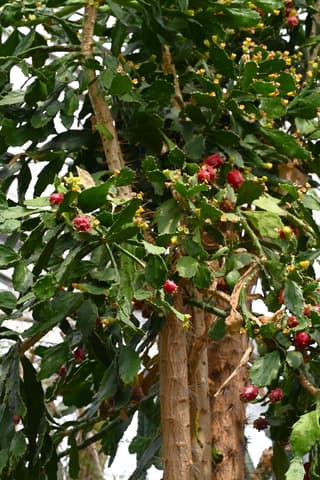
Brazilian Tree Cactus
Brasiliopuntia brasiliensis
Brasiliopuntia brasiliensis, commonly known as the Brazilian Tree Cactus, is a monotypic tree-like cactus native to Brazil, Argentina, and Paraguay. It is the sole species of the genus Brasiliopuntia and stands out for its arborescent structure — a woody cylindrical trunk topped with flattened cladodes on branch tips — which can reach over 20 meters in its natural habitat.
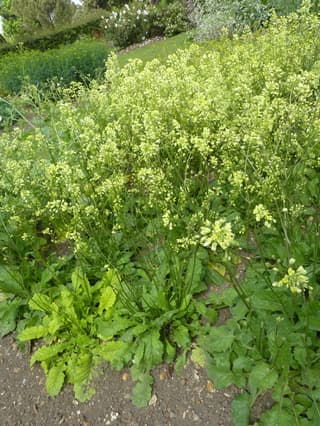
Brassica
Brassica
The genus Brassica comprises more than 30 species of herbaceous plants in the Brassicaceae family, including some of the most widely consumed vegetables in the world: kale, cabbage, broccoli, cauliflower, mustard, and turnip. Native to Europe and Asia, these annual or biennial plants adapt to cool and temperate climates, producing nutrient-rich leaves and characteristic four-petaled yellow or white flowers that gave the family its name.
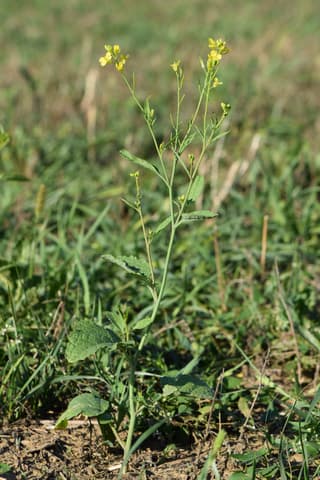
Brown Mustard
Brassica juncea
Brassica juncea, commonly known as brown mustard or mustard greens, is a fast-growing annual herb in the Brassicaceae family, native to Central and South Asia. It is widely cultivated worldwide for its pungent edible leaves, seeds used in condiment production, and mustard oil extraction. The plant produces bright yellow flowers and thrives in cool weather.
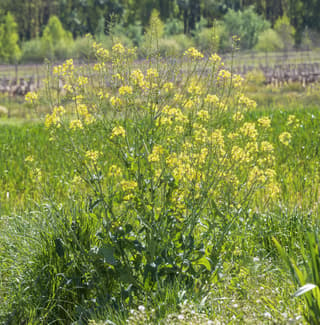
Rapeseed
Brassica napus
Brassica napus, widely known as rapeseed or canola, is a fast-growing herbaceous plant famous for its vast fields of vibrant yellow flowers. It is one of the world's most important oilseed crops, used for the production of edible vegetable oil, biodiesel, and animal feed. Its young leaves are edible and nutrient-rich, resembling kale.
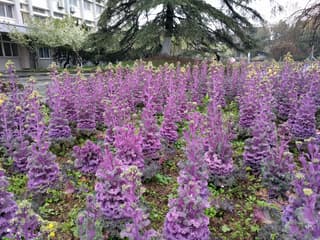
Kale
Brassica oleracea var. acephala
Kale is a leafy, nutritious herbaceous vegetable belonging to the Brassicaceae family. It is extremely hardy and valued worldwide as a superfood, being rich in iron, calcium, and vitamins A, C, and K. Its leaves can range from light green to purple, depending on the variety.
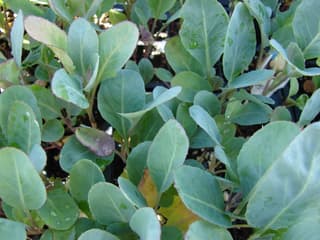
Cabbage
Brassica oleracea var. capitata
Cabbage (Brassica oleracea var. capitata) is a biennial leafy vegetable of the Brassicaceae family, grown as an annual for its tightly packed head of leaves. Native to the Mediterranean coast and western Europe, it is one of the most widely eaten vegetables worldwide, used raw in salads, fermented into sauerkraut, or cooked.
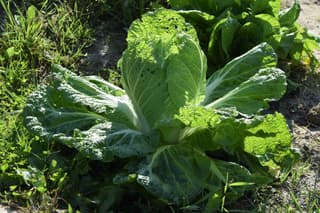
Chinese Cabbage
Brassica rapa pekinensis
Chinese Cabbage (Brassica rapa pekinensis) is a cool-season leafy vegetable originating from China, belonging to the Brassicaceae family. It forms a tight cylindrical head of pale green, crinkled leaves and is one of the most widely cultivated vegetables in East Asia. It is prized for its mild, slightly sweet flavor and versatility in cooking.
Snowbush
Breynia disticha
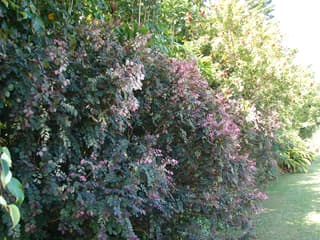
Breynia disticha, commonly known as Snowbush or Breynia, is a tropical evergreen shrub native to the Pacific Islands. Its lush, multicolored foliage—featuring oval leaves in shades of green, creamy white, pink, and burgundy—is its hallmark. The white-tipped branches evoke a delicate layer of snow, hence the name "Snowbush." A fast-growing plant, it can reach between 3 and 6 feet in height in tropical and subtropical gardens, being widely used as a hedge, border, or focal point in decorative pots. Its small, inconspicuous green flowers bloom in summer. Ideal for warm, humid climates, it requires high light and humidity to display its full color splendor.

Caraguata
Bromelia antiacantha
Bromelia antiacantha, commonly known as caraguata or gravata, is a terrestrial bromeliad native to the Atlantic Forest and coastal restinga scrub of southern and southeastern Brazil, also found in Uruguay. It forms dense clumps up to 2 meters tall, with long, rigid leaves (80-185 cm) edged with dark spines arranged in a rosette. It flowers in summer (December to February), producing creamy-white bracts and pink flowers with pale margins. The fruits, ripening from February to June, are triangular, juicy berries with a tangy-sweet flavor, traditionally used in cooking and folk medicine for respiratory ailments.
Heart of Flame
Bromelia balansae
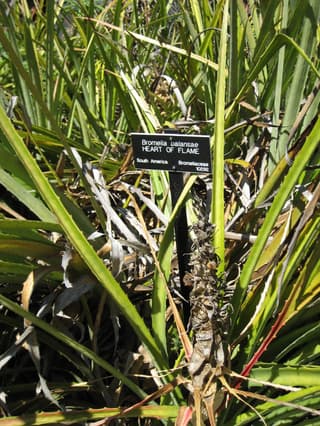
Bromelia balansae, commonly known as Heart of Flame, is a large terrestrial bromeliad native to Brazil, Argentina, Bolivia, Colombia, and Paraguay. This striking plant features long, spiny leaves arranged in a large rosette, and is renowned for its spectacular flowering display: before blooming, the center of the rosette transforms into a vivid red-orange color, then reveals magenta and white flowers — creating the iconic "heart of flame" appearance. It is a tough, drought-tolerant plant that works beautifully as a landscape accent, living fence, or bold container specimen.
Wild Pineapple
Bromelia pinguin
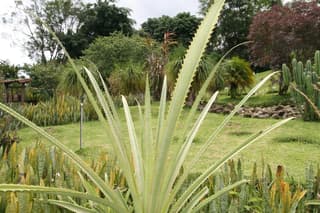
Bromelia pinguin, commonly known as Wild Pineapple or Pinguin, is a spiny terrestrial bromeliad native to Central America, the Caribbean, and northern South America. It forms dense rosettes with long, robust leaves armed with sharp spines. The intensely sour yellow fruits are edible with a distinctive, citrus-like flavor. The plant naturally reproduces via thick runners (stolons) both above and below ground, forming dense colonies in its native habitat. Extremely hardy and adapted to challenging conditions, it is widely planted as a living fence and for erosion control throughout the tropics.
Brome grass
Bromus
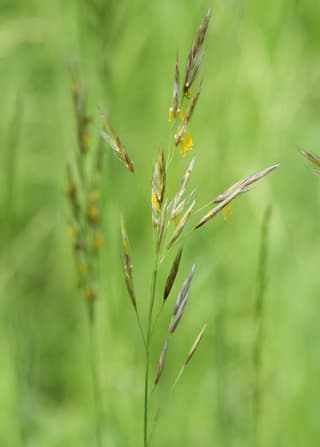
The genus Bromus comprises a diverse group of grasses, commonly known as bromes or brome grasses. They are widely distributed in temperate regions and are recognized by their branched and drooping panicle inflorescences. While some species are considered weeds in crops, many are valued as livestock forage or as ornamental plants due to their delicate texture and graceful movement in the wind.
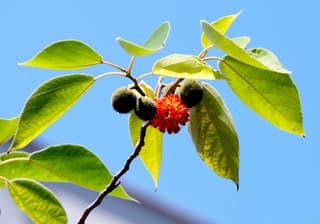
Paper Mulberry
Broussonetia papyrifera
Paper mulberry (Broussonetia papyrifera) is a fast-growing deciduous tree native to East Asia. Historically prized for producing washi paper in Japan and tapa cloth across Pacific cultures, it is a highly adaptable tree tolerant of poor soils, drought, and urban pollution.
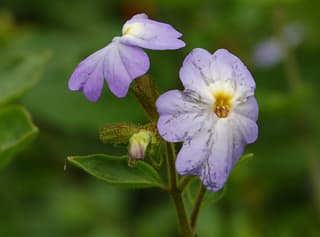
Jamaican Forget-Me-Not
Browallia americana
Browallia americana, commonly known as Jamaican Forget-Me-Not or Bush Violet, is an annual or short-lived perennial ornamental plant from the Solanaceae family, native to tropical South America. It produces star-shaped flowers in shades of blue, violet, and white, blooming abundantly in spring and summer. It is an excellent choice for containers, borders, and shaded gardens.
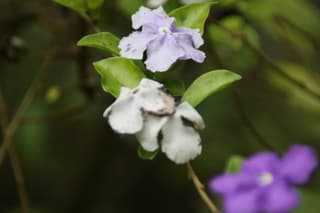
Yesterday-today-and-tomorrow
Brunfelsia uniflora
Yesterday-today-and-tomorrow is a shrub native to the Brazilian Atlantic Forest, famous for its flowers that change color: they open in a vibrant shade of purple, turn lavender, and finally white before wilting. This characteristic gives the plant its popular name. In addition to the visual spectacle, its flowers exude a sweet and intense fragrance, especially at night.
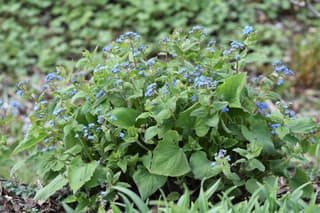
Siberian Bugloss
Brunnera macrophylla
Brunnera macrophylla, commonly called Siberian Bugloss or False Forget-Me-Not, is a shade-loving herbaceous perennial native to the forests of the Caucasus region and Turkey. It produces sprays of tiny, brilliant blue flowers above large heart-shaped leaves every spring, making it a beloved choice for woodland gardens and shaded borders.
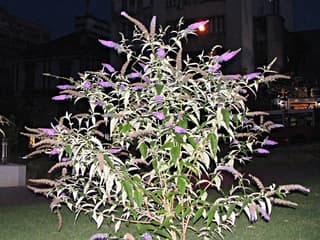
Butterfly Bush
Buddleja davidii
Buddleja davidii, commonly known as Butterfly Bush or Summer Lilac, is a fast-growing deciduous shrub native to central China. It produces long, arching panicles of fragrant flowers in shades of purple, white, pink, and lavender from summer through fall, making it a magnet for butterflies, bees, and other pollinators. Its vigorous growth and spectacular blooms have made it one of the most popular ornamental garden shrubs worldwide.
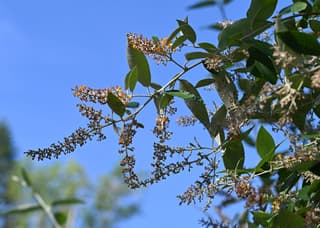
Madagascar Butterfly Bush
Buddleja madagascariensis
Buddleja madagascariensis, commonly known as the Madagascar butterfly bush or smokebush, is a fast-growing, sprawling evergreen shrub native to Madagascar. It can reach 1.5-4 m in cultivation (occasionally taller in the wild) and produces long, slender terminal panicles of fragrant flowers that open deep yellow and age through orange to soft pink, blooming from autumn through spring. The felted, greyish undersides of its leaves give the plant a soft, silvery look, and its flowers are highly attractive to butterflies, hummingbirds and bees. Outside its native range it has become invasive in parts of Hawaii and other subtropical regions, where its vigorous growth allows it to overtop native vegetation, so it should be planted with care and, where required by local regulation, kept contained.
What are Easy Plants?
Easy Plants are ideal for beginners or people with little time for care. These species are tolerant of watering mistakes, light variations, and don't require constant attention. Perfect for those just starting out with plants.
Tips for Growing Easy Plants
To succeed with easy plants, remember: less is more. Avoid overwatering, choose a spot with adequate light, and let the soil dry between waterings. Most of these plants prefer to be 'forgotten' occasionally.