38 Medium Succulents | 2026 Guide
Find 38 medium succulents. Complete guide for your garden.
38 Succulents with medium level
Showing 1-36 of 38
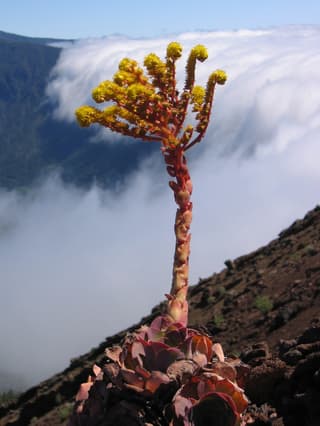
Canary Island Rose
Aeonium aureum
Aeonium aureum, commonly known as the Canary Island Rose, is a striking rosette-forming succulent native to the volcanic slopes of Tenerife in the Canary Islands. Its tightly packed, spoon-shaped leaves form a perfectly symmetrical, rose-like rosette in shades of blue-green to golden-green, giving the plant its species name "aureum" (golden). Unlike many succulents, this species follows a winter-growing, summer-dormant cycle: it grows actively through the cool, damp months of autumn, winter and spring, then closes its rosette tightly and rests through the hot, dry summer to conserve moisture. After several years of growth, mature rosettes may send up a tall, golden-yellow flower spike, a rare and spectacular event, though the flowering rosette dies afterward, leaving offsets behind to continue the plant.
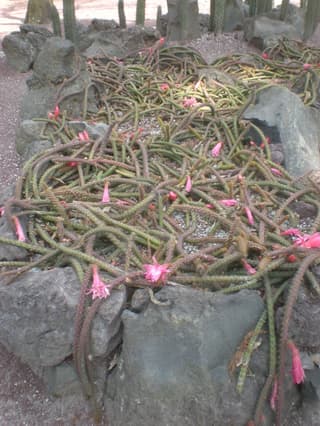
Rat Tail Cactus
Aporocactus flagelliformis
Aporocactus flagelliformis, commonly known as the rat tail cactus, is an epiphytic succulent native to Mexico (Hidalgo, Puebla, and Veracruz states). Its long, cylindrical, trailing stems, covered in fine brown spines, can reach up to 150 cm in length, making it ideal for hanging baskets. In spring, it produces vibrant tubular flowers in shades of pink, red, and crimson, which last only a few days but are exceptionally beautiful.
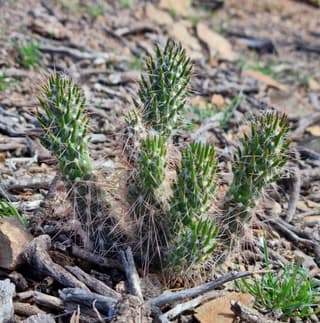
Old Man of the Andes
Austrocylindropuntia vestita
Austrocylindropuntia vestita, commonly known as the Old Man of the Andes or Cotton Coral Cactus, is a slender columnar cactus native to the high-altitude rocky grasslands of northwest Argentina and Bolivia. Its stems are densely covered in long white hairs that give it a distinctive woolly appearance, providing insulation against the cold Andean climate. It produces striking deep red to violet flowers at the stem tips during spring and summer.
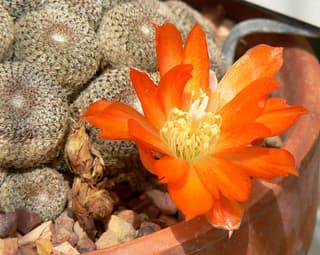
Sun Crown Cactus
Aylostera heliosa
Aylostera heliosa (formerly Rebutia heliosa) is a small clustering cactus native to the high-altitude slopes near Tarija, Bolivia. Its compact, spherical to cylindrical stems are covered in dense white spines and rarely exceed 2.5 cm in diameter, but under bright sun they produce a spectacular abundance of orange to pinkish blooms in spring.
Golden Snake Cactus
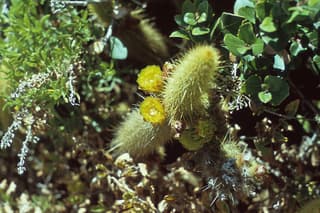
Bergerocactus emoryi
Bergerocactus emoryi is a shrubby cactus in the Cactaceae family, native to the coast of Southern California and northwestern Baja California. It forms dense thickets of cylindrical branches with 12 to 18 ribs, covered in golden-yellow spines that appear velvety when backlit by the sun. Stems are typically less than 6 feet (2 m) long. It blooms in spring with diurnal yellow flowers featuring reddish tips and produces globular, reddish, and spiny fruits. It is rare in cultivation and highly valued as an ornamental plant.
Wright's Fishhook Cactus
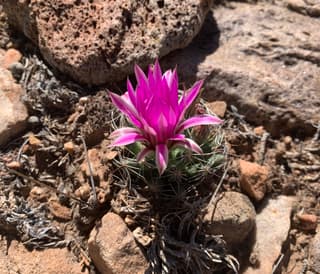
Cochemiea wrightii
Cochemiea wrightii, formerly classified as Mammillaria wrightii, is a small solitary cactus native to the high-elevation grasslands and rocky hills of Arizona, New Mexico, Sonora, and Chihuahua. It grows as a flattened to briefly cylindrical stem reaching just 3 to 8 cm in diameter, armed with dark, hooked central spines and whitish marginal spines. In spring and summer it produces striking magenta to bright purple flowers up to 2.5 cm wide. Thanks to its origin at elevations up to 2,200 m, it tolerates far colder winters than most Mammillaria-type cacti.
Dog-tail Cactus
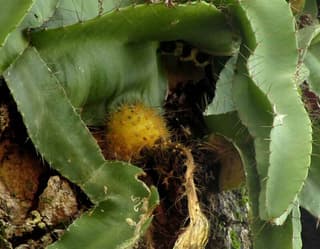
Deamia testudo
Deamia testudo, known as the Dog-tail Cactus, is an epiphytic and climbing cactus native to the tropical forests of Central America and northern South America, from Mexico to Colombia and Venezuela. It grows by attaching itself to tree trunks and rocks using aerial roots, displaying angular and flattened stems that resemble a tortoise shell. In summer and early fall, it produces large, fragrant, nocturnal white flowers, followed by spiny spherical fruits.
Orchid Cactus
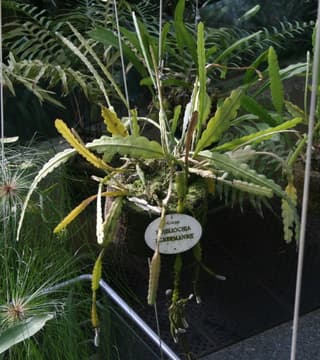
Disocactus
Disocactus is a genus of epiphytic cacti native to the tropical forests of Mexico and Central America, prized for their flattened, leaf-like stems and spectacular funnel-shaped flowers in shades of red, pink, and white. Unlike desert cacti, Disocactus species grow on trees in humid, shaded environments, making them a striking choice for hanging baskets indoors.

Rat Tail Cactus
Disocactus flagelliformis
Disocactus flagelliformis, commonly known as the Rat Tail Cactus, is an epiphytic cactus native to Mexico. Its long, trailing cylindrical stems can reach up to 2 meters in length and are covered in fine spines. It is prized for its spectacular magenta to bright red flowers that bloom in spring, making it a popular choice for hanging baskets.

German Empress
Disocactus phyllanthoides
Disocactus phyllanthoides, commonly called the German Empress, is an epiphytic cactus native to the cloud forests of Puebla and Veracruz, Mexico. It has flattened, leaf-like stems and produces funnel-shaped rose-pink flowers in late winter to spring. Unlike desert cacti, it thrives in filtered shade and moderate humidity, often growing on trees or rocks in its native habitat.
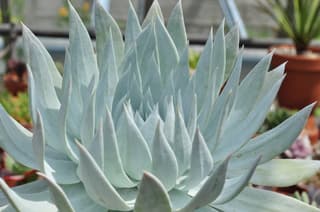
Liveforever
Dudleya
Dudleya is a genus of rosette-forming succulents native to the coastal bluffs, cliffs, and rocky outcrops of California, Arizona, Baja California, and Guadalupe Island. Often called liveforevers for their remarkable longevity, the roughly 70 species and countless cultivars share a striking feature: a powdery white coating called farina that covers the leaves like natural sunscreen, protecting the plant from intense coastal sun and reducing water loss. Species such as D. brittonii and D. pulverulenta form dramatic silver-white rosettes up to 30-50 cm across, sometimes held on short woody stems. Unlike many other succulents, Dudleya cannot be propagated from a single leaf; plants grow from offsets, division, or seed. Their most distinctive habit is summer dormancy: in their native Mediterranean climate, Dudleya grow actively through the cool, wet winter and spring, then rest through the hot, dry summer, when they should receive little to no water. Handling the leaves removes the farina permanently, leaving unsightly marks and exposing tissue to sunburn, so these plants are best admired without touching.
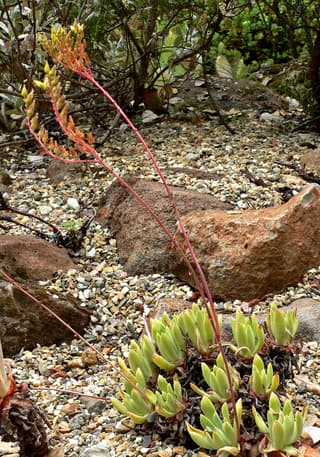
Greene's Liveforever
Dudleya greenei
Dudleya greenei, commonly known as Greene's Liveforever or Greene's Dudleya, is a rare succulent endemic to the Channel Islands of California. It forms striking silvery-white powdery rosettes that grow close to the ground, giving it the nickname "chalk lettuce." This slow-growing evergreen is threatened in the wild due to habitat loss and illegal collection, making it a protected species. Its fleshy, glaucous leaves are coated in a natural white powder (farina) that reflects harsh sunlight and helps retain moisture.

Chalk Dudleya
Dudleya pulverulenta
Chalk Dudleya (Dudleya pulverulenta) is a striking rosette succulent native to Southern California and Baja California. Its broad silvery-white leaves are coated in a chalky wax (farina) that reflects intense sun, and in spring tall arching red stalks carry tubular red-to-yellow flowers loved by hummingbirds. Rosettes can reach 30 cm or more across.
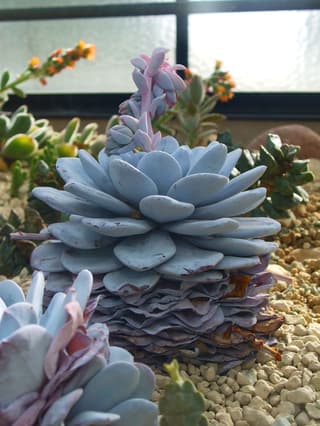
Lau's Echeveria
Echeveria laui
Echeveria laui is a slow-growing succulent native to Oaxaca, Mexico, prized for its compact rosettes covered in a thick, powdery blue-white farina that gives the leaves a frosted, icing-sugar appearance. The plump, spoon-shaped leaves form a tight rosette rarely taller than a few centimeters, and mature plants produce coral-pink, bell-shaped flowers on tall stalks in summer.
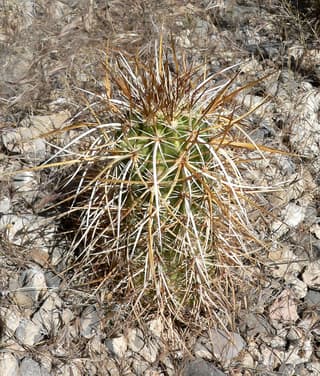
Engelmann's Hedgehog Cactus
Echinocereus engelmannii
Echinocereus engelmannii is a clustering cylindrical cactus native to the deserts of the southwestern United States and northern Mexico, prized for its dense, colorful spines and vivid magenta-to-pink funnel-shaped flowers that bloom in spring.
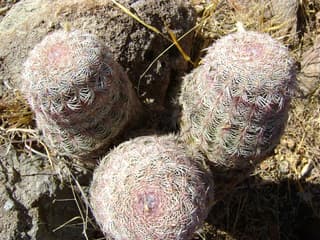
Rainbow Hedgehog Cactus
Echinocereus pectinatus
Echinocereus pectinatus is a small, solitary, cylindrical cactus native to the Chihuahuan Desert of northern Mexico and the Trans-Pecos region of Texas. Its ribs are lined with dense, comb-like spines banded in white and pink, giving rise to its common name. In late spring, it produces large, funnel-shaped magenta flowers that open in daylight and last several days.
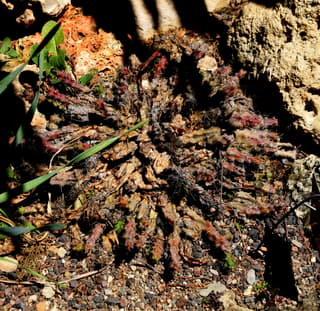
Ladyfinger Cactus
Echinocereus pentalophus
Echinocereus pentalophus, known as the ladyfinger cactus, is a low-growing, clustering cactus native to southern Texas and northeastern Mexico. Its slender, finger-like stems trail and branch to form dense mats up to a meter wide, and in late spring the plant produces large, funnel-shaped flowers in vivid pink to magenta with a pale throat that can nearly cover the entire clump for a brief but spectacular bloom.

Green Ball Cactus
Echinopsis calochlora
The Green Ball Cactus (Echinopsis calochlora) is a small globose clustering cactus native to Brazil and Paraguay. Over time it forms dense clumps of bright green spheres adorned with spines, and produces large, fragrant white flowers that open at night during spring and summer.
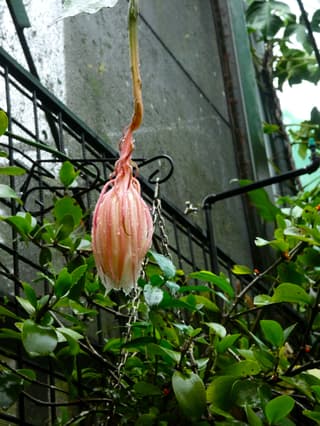
Orchid Cactus
Epiphyllum
Epiphyllum is a genus of epiphytic cacti native to the tropical forests of Central and South America. Unlike desert cacti, they grow perched on tree branches in dappled light, producing long, flat, trailing stems. They are celebrated for their spectacular flowers — enormous, often fragrant, and sometimes night-blooming — that last only one or two days, making each bloom a fleeting but unforgettable event.
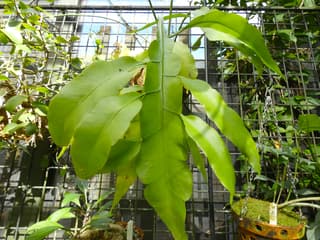
Queen of the Night
Epiphyllum oxypetalum
Epiphyllum oxypetalum is a spectacular epiphytic cactus native to Central America, famous for its stunning white nocturnal flowers that can reach up to 30 cm in diameter. The flowers open only for one night, releasing a sweet and intense fragrance, and wilt by dawn. It is a fast-growing plant that can reach up to 3 meters in height, with flattened stems that function as leaves (phylloclades) with wavy edges. Unlike other cacti, it has no spines.
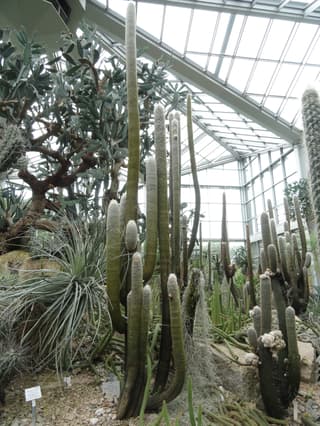
Old Man Cactus
Espostoa lanata
Espostoa lanata, commonly known as the Old Man Cactus, is a columnar cactus native to the Andean slopes from southern Ecuador to northern Peru. Its stem is densely covered in woolly white hairs that hide sharp spines, giving it a fuzzy and ornamental appearance. In its natural habitat, it can exceed 7 meters in height, but when grown in pots, it grows much more compactly and slowly.

White Head Cactus
Espostoopsis dybowskii
Espostoopsis dybowskii is a rare, columnar cactus species native exclusively to the eastern and northern parts of Bahia state in Brazil, within the caatinga habitat at altitudes of 300–750 meters. The plant grows on granite and gneiss rocks, as well as quartzitic outcrops, where it occasionally forms dense, single-species stands. Its erect, unbranched, cylindrical stems can reach heights of 2–4 meters with a diameter of approximately 8 cm and 20–28 low ribs. The stems are covered in dense, white hair that almost completely hides the surface, giving rise to the Portuguese folk names "cabeça-branca" (white head) and "homem-velho" (old man). The spines consist of 2–3 yellowish or brownish, needle-like central spines 2–3 cm long, while the radial spines are fine and short, hidden within the wool. Its nocturnal, approximately 4 cm long, white, bell-shaped flowers emerge from a lateral cephalium (a white woolly flowering area), typically in summer. The species is endemic to Brazil and is the only known species in the monotypic genus Espostoopsis within the Cactaceae family.
Golden Bristle Cactus
Haageocereus pseudomelanostele
Haageocereus pseudomelanostele, commonly known as the Golden Bristle Cactus, is a branched columnar cactus native to the coastal areas and arid valleys of Peru. It is characterized by dense, golden-yellow to whitish spines that cover its stems, giving it a furry appearance. Its flowers are nocturnal, white or cream-colored, and typically appear in summer.
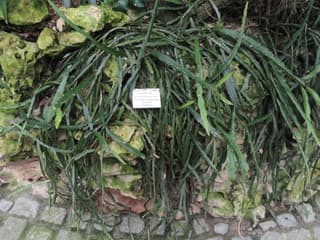
Lepismium cruciforme
Lepismium cruciforme
Lepismium cruciforme, commonly known as the Hurricane Cactus, is a striking epiphytic cactus native to the rainforests of South America. Unlike typical desert cacti, it grows on trees and features long, segmented stems that are often three-angled or flat. Under bright light, the foliage can take on a beautiful reddish-purple hue. It produces small, delicate flowers along the stem margins, followed by ornamental berry-like fruits.
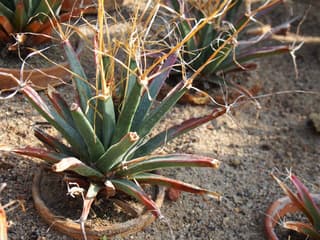
Agave Cactus
Leuchtenbergia principis
Leuchtenbergia principis, commonly known as the Agave Cactus, is a unique cactus native to central and northern Mexico. It is the only species in its genus and stands out for its long, bluish-green triangular tubercles, which give it an agave-like appearance, topped with papery and harmless spines. It develops a thick taproot and, in summer, produces large, fragrant yellow flowers.

Leaf Cactus
Leuenbergeria
Leuenbergeria is a small genus of leafy, tree-like cacti native to the Caribbean basin, Central America and northern South America. Unlike most cacti, Leuenbergeria species keep true leaves and develop woody, bark-covered stems while young, so at first glance they look more like a spiny shrub than a classic cactus. The genus was split from the broader Pereskia group in 2012 and now forms its own subfamily, Leuenbergerioideae, considered the most primitive lineage within Cactaceae. The best documented species, Leuenbergeria bleo (Rose Cactus), grows as a spiny shrub or small tree up to 8 meters tall along riverbanks and in secondary forest, producing showy orange to pink rose-like flowers followed by edible yellow fruit. Leaves, fruit and bark have a long history of traditional medicinal use across Central America and Southeast Asia.
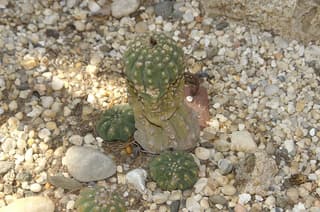
Madison Cactus
Matucana madisoniorum
Matucana madisoniorum is a small, solitary-growing, globular or slightly cylindrical cactus native to a very narrow range in the Amazon region of Peru, specifically the Marañón River valley, at elevations of only 400-1000 meters. Its grayish-green stem consists of 7-12 flat, wavy ribs, and its spination is highly variable: some individuals possess long, curved, dark brown spines, while others are completely spineless, making them easily confused with the peyote cactus (Lophophora williamsii). The funnel-shaped flowers blooming from the apical areoles are bright orange-red, or more rarely white, reaching 8-10 cm in length, and bloom in several waves during the summer. The species is listed as Critically Endangered by the International Union for Conservation of Nature (IUCN) due to habitat loss and over-collection.
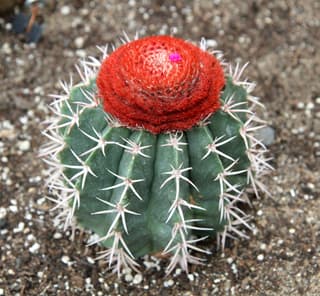
Turk's Cap Cactus
Melocactus zehntneri
Melocactus zehntneri, commonly known as Turk's Cap Cactus, is a globose cactus native to the Caatinga biome of northeastern Brazil. Its most distinctive feature is the cephalium — a cylindrical structure of white bristles and wool that develops at the apex of the plant only at maturity, from which small pink flowers and red fruits emerge. It is perfectly adapted to the harsh conditions of one of Brazil's most arid ecosystems.
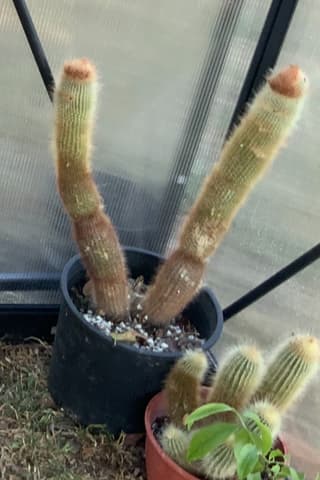
Micranthocereus
Micranthocereus
Micranthocereus is a genus of columnar cacti endemic to Brazil, with about ten species distributed mainly throughout Bahia and Minas Gerais, in Caatinga environments, rocky fields (campos rupestres), and quartzite rock outcrops. The stems are erect, branched at the base, and covered by low ribs and woolly areoles from which white to brown spines emerge. A woolly cephalium—a whitish fuzzy structure from which flowers bloom—forms at the top of older stems. The flowers are tubular, usually white, sometimes yellowish or pinkish, opening at night and pollinated by bats and moths, followed by globose and fleshy fruits. It is a hardy plant, adapted to long periods of drought, intense light, and poor, well-drained soils, making it highly sought after by cactus collectors for its sculptural form and resilience.
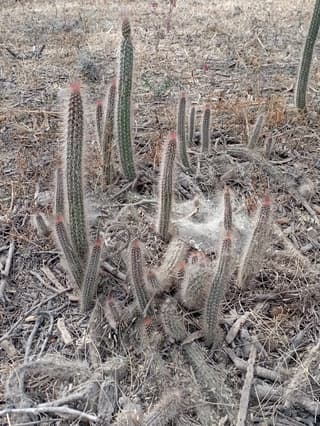
Snake Cactus, Junco, Queen of the Night
Nyctocereus serpentinus
Nyctocereus serpentinus is a night-blooming climbing cactus native to southern Mexico (Michoacán, Morelos, Oaxaca), belonging to the Cactaceae family. The plant features long, sinuous, spiny stems (up to 3 meters) that initially grow upright but sprawl horizontally without support. It is highly prized for its spectacular large white, funnel-shaped flowers measuring up to 15 cm in diameter that open at night with an intense, seductive fragrance. These nocturnal blooms attract pollinators including moths, bats, and bees. The plant produces edible fruits that change from green to bright red, ripening primarily from August to October. Widely cultivated in warm climates for its ornamental value and aromatic night-blooming flowers, this species combines functional beauty with practical food production.
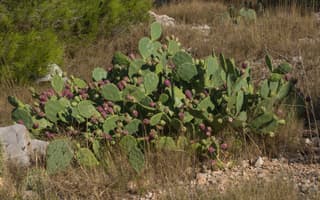
Erect Prickly Pear
Opuntia stricta
Opuntia stricta is an upright to spreading succulent shrub from the Cactaceae family, native to tropical and subtropical America including Florida, Cuba, and eastern Mexico. Typically 50-100 cm tall but can reach 2 m in height. The plant bears flat, paddle-shaped stems (cladodes) 10-35 cm long covered in sharp spines and microscopic barbed glochids. It produces bright yellow flowers in spring and summer, followed by edible red or purple fruits. Now classified as one of the 100 worst invasive species globally, it has spread throughout Africa, Australia, Mediterranean regions, and Asia.
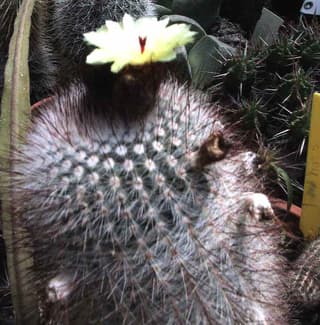
Silver Ball Cactus
Parodia scopa
Parodia scopa, commonly known as the silver ball cactus, is a globular to cylindrical cactus native to the uplands of southern Brazil and Uruguay. Its spherical body is densely covered in fine white to silvery spines that give it a shimmering, satin-like appearance. In late spring and summer, it produces bright pale-yellow flowers at the crown.

Red Mistletoe Cactus
Pseudorhipsalis ramulosa
Pseudorhipsalis ramulosa, known as the Red Mistletoe Cactus, is an epiphytic cactus native to the humid rainforests of Central and South America, where it grows clinging to tree trunks and rocks. Its flat, ribbon-like stems cascade downwards and can reach several feet in length, taking on shades ranging from deep green to ruby red when exposed to brighter light. In summer, it produces small greenish-white flowers followed by white or reddish berries, making it a highly prized ornamental plant for hanging baskets.
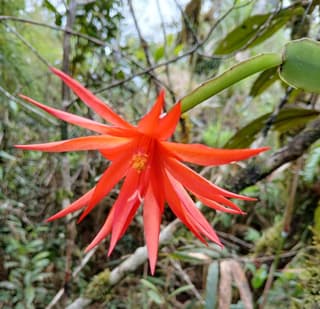
Easter Cactus
Rhipsalidopsis gaertneri
The Easter Cactus (Rhipsalidopsis gaertneri) is an epiphytic cactus native to the Atlantic Forest of Brazil, particularly Paraná and Santa Catarina states. Unlike desert cacti, it thrives in humid conditions with indirect light, producing stunning star-shaped flowers in shades of red, pink, and white during spring.
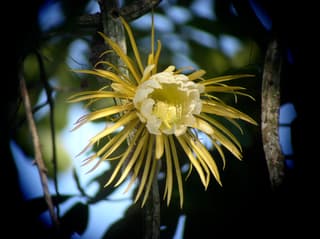
Night-Blooming Cereus
Selenicereus grandiflorus
Selenicereus grandiflorus is a climbing, epiphytic cactus native to Mexico, Central America, and the Caribbean, prized for its enormous, intensely fragrant white flowers that bloom for only one night each year. Its long, sprawling, ribbed stems climb trees and rocks using aerial roots, and by dusk on a single summer evening the plant unfurls a spectacular blossom up to 30 cm wide before it withers by morning.
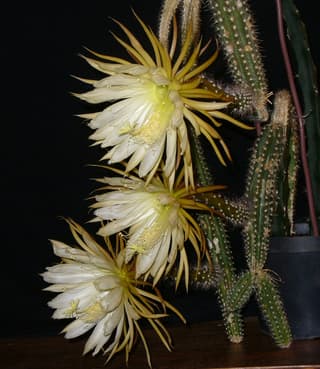
Moonlight Cactus
Selenicereus validus
The Moonlight Cactus (Selenicereus validus) is an epiphytic cactus native to Mexico and Central America, celebrated for its long, pendant cylindrical stems and spectacular nocturnal white and yellow flowers. It belongs to the family Cactaceae and thrives in tropical and subtropical forests, climbing trees and rocky outcrops.
Medium Care Succulents
Our selection of 38 medium succulents combines the characteristics of this category with moderate care needs. Ideal for those with basic experience.
Why Choose Medium Succulents?
Combining the beauty of succulents with medium difficulty level lets you enjoy this category with a balanced care commitment. Each plant was selected to offer the best characteristics of the category at the care level you are looking for.