1162 Medium Easy Care | 2026 Guide - Page 16
Find 1162 medium easy care. Complete guide for your garden.
1162 Easy Care with medium level
Showing 541-576 of 1162
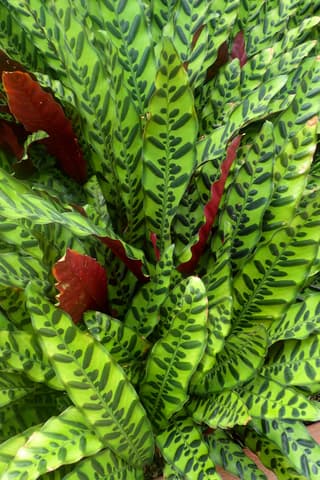
Rattlesnake Plant
Goeppertia insignis
Goeppertia insignis, commonly known as the Rattlesnake Plant (formerly Calathea lancifolia), is a tropical evergreen perennial native to the state of Rio de Janeiro, Brazil. It features long, wavy lance-shaped leaves in pale green with alternating dark green elliptical spots on top and a striking purple underside. Like other prayer plants, it folds its leaves upward at nightfall in a movement called nyctinasty.
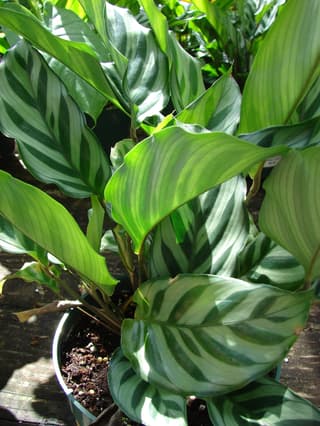
Leopard Calathea
Goeppertia leopardina
The Leopard Calathea (Goeppertia leopardina, syn. Calathea leopardina) is a compact foliage plant in the Marantaceae family, prized for its glossy oval leaves marked with dark leopard-like blotches along the veins. Like other calatheas, its leaves rise during the day and fold together at night in a movement called nyctinasty, earning the group the nickname "prayer plants." It is a popular indoor houseplant that thrives in bright, filtered light and high humidity.
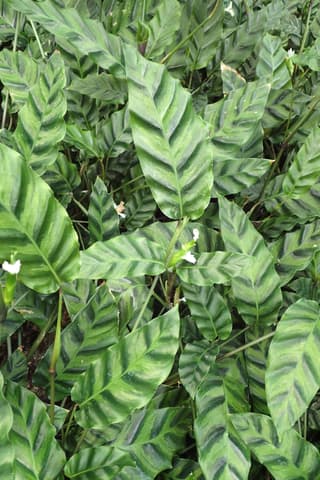
Thai Beauty Calathea
Goeppertia louisae
Goeppertia louisae, commonly known as Thai Beauty Calathea, is a tropical houseplant native to the rainforests of southeastern Brazil. A member of the Marantaceae family, it captivates with its glossy, oblong leaves featuring brush-stroke patterns of creamy yellow or pale green against a deep green surface, with striking purple undersides. One of its most enchanting traits is nyctinastic movement — the leaves open at dawn and close at dusk, sometimes producing a soft, audible rustling sound.
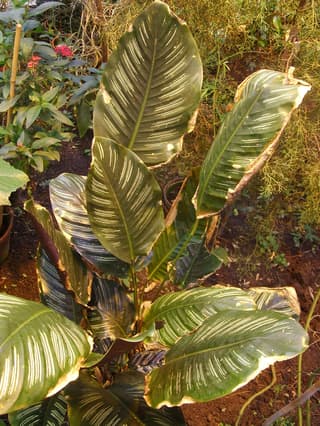
White Star Calathea
Goeppertia majestica
The White Star Calathea (Goeppertia majestica), formerly classified as Calathea majestica or Calathea ornata 'Majestica', is a tropical foliage plant in the Marantaceae family, closely related to the popular prayer plants. Its large, oval to lance-shaped leaves display fine white or cream pinstripes radiating from the central vein against a glossy dark-green background, with undersides flushed deep purple — a dramatic contrast that earns it the "white star" nickname. Native to the humid tropical forests of South America, the plant follows the circadian rhythm typical of the genus Goeppertia, raising and folding its leaves in the evening in a movement called nyctinasty, as if in prayer. It is a highly popular indoor choice for its lush ornamental form and because it is completely non-toxic to cats, dogs, and humans, though it demands close attention to air humidity, water quality, and temperature stability to keep its leaves lush and free of crispy tips.
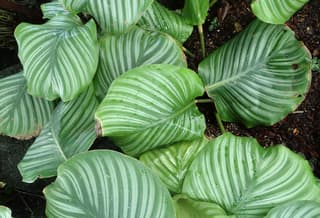
Round-leaf Calathea
Goeppertia orbifolia
Goeppertia orbifolia, commonly known as Round-leaf Calathea and previously classified as Calathea orbifolia, is a stunning tropical houseplant from the Marantaceae family, native to the forests of Bolivia. Its large, rounded leaves adorned with bold silver-green stripes make it one of the most sought-after indoor plants. Like other prayer plants, it folds its leaves upward at night in a movement called nyctinasty.
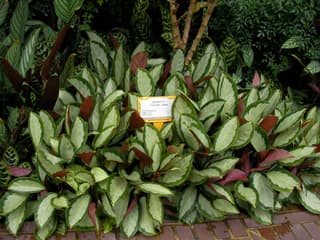
Calathea Picturata
Goeppertia picturata
Goeppertia picturata, commonly known as Calathea Picturata, is a tropical houseplant native to northern Brazil in the Marantaceae family. It is prized for its stunning foliage — dark green leaves adorned with silvery stripes along the midrib and margins, and deep purple undersides. Like all prayer plants, it performs nyctinasty: leaves fold upward at night and open again during the day.
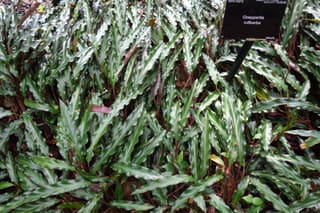
Furry Feather Calathea
Goeppertia rufibarba
Goeppertia rufibarba, commonly known as the Furry Feather Calathea or Velvet Calathea, is a tropical houseplant native to Brazil. It is prized for its long, wavy leaves with a glossy green upper surface and a distinctive purplish underside covered in soft reddish hairs. A member of the Marantaceae family, it is among the most elegant calatheas for indoor growing.
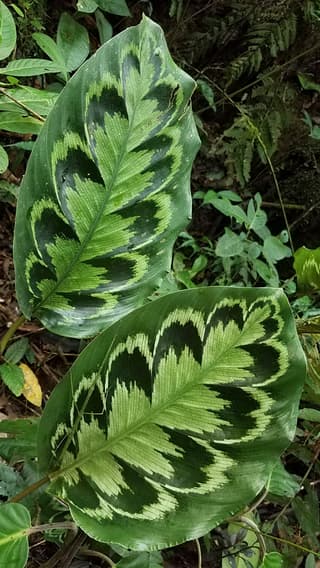
Medallion Calathea
Goeppertia veitchiana
Goeppertia veitchiana, popularly known as Medallion Calathea, is a tropical plant native to the rainforests of Ecuador. Its leaves are true works of art: large, rounded, and adorned with patterns in shades of dark and light green, with a wine-red underside. Like other prayer plants in the Marantaceae family, it moves its leaves throughout the day in response to light.
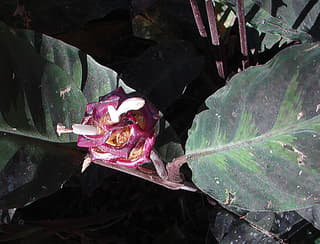
Jungle Velvet Calathea
Goeppertia warszewiczii
Goeppertia warszewiczii, popularly known as the Jungle Velvet Calathea, is a striking tropical houseplant native to the rainforest understory of Costa Rica and Nicaragua. Prized for its oversized, velvety dark-green leaves marked with a feathery light-green midrib pattern and deep purple undersides, it is one of the larger and more dramatic members of the prayer-plant family (Marantaceae). Like other Calatheas, its leaves fold upward at night in a nyctinastic movement, giving the plant its 'prayer plant' nickname.
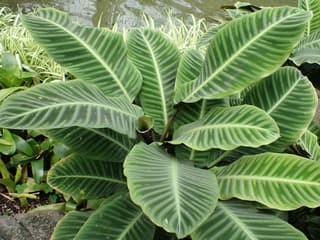
Zebra Plant
Goeppertia zebrina
Goeppertia zebrina, commonly known as the Zebra Plant or Zebra Calathea, is a stunning tropical plant native to the southeastern rainforests of Brazil. It is prized for its large, velvety leaves adorned with alternating dark and light green stripes reminiscent of a zebra pattern.
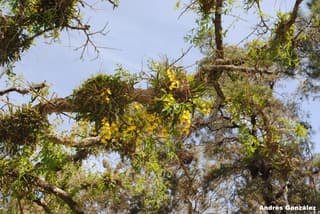
Dancing-lady orchid
Gomesa bifolia
Gomesa bifolia (synonym Oncidium bifolium) is a small epiphytic orchid native to riparian forests and high-altitude woodlands of southern Brazil (Paraná, Santa Catarina, and Rio Grande do Sul), as well as Bolivia, Uruguay, and Argentina, occurring at altitudes between 100 and 1,300 m. It forms clustered ovoid pseudobulbs, from which usually a single linear-elongated leaf grows (rarely two). Between late winter and early spring, it produces arched flower spikes up to 35 cm long with several small flowers (2 to 2.5 cm), featuring yellow sepals and petals spotted with brown and a smooth, showy yellow lip, which are sometimes fragrant.
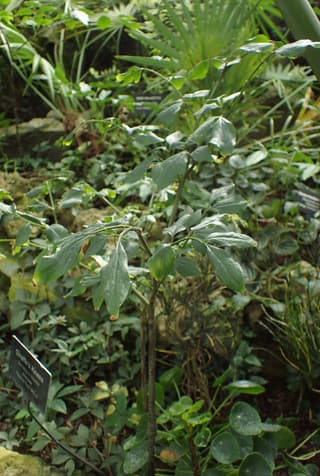
Giraffe's Knees
Gonatopus boivinii
Gonatopus boivinii, commonly known as Giraffe's Knees, is a rare tuberous aroid native to East Africa (Kenya and Tanzania). Its distinctive stem features swollen knobby nodes that resemble a giraffe's knobbly knees, making it one of the most visually unique houseplants available. A single large marbled leaf emerges from the flat tuber, reaching up to 90 cm tall. It is a deciduous plant that goes dormant in winter, dropping its leaf.
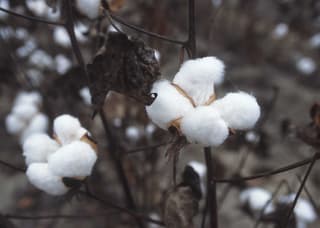
Cotton
Gossypium
Gossypium is the botanical genus encompassing all cultivated cotton species, belonging to the Malvaceae family. Economically one of the most important fiber crops in the world, cotton plants produce ornamental flowers and iconic fluffy white bolls used in textiles, oil, and more.
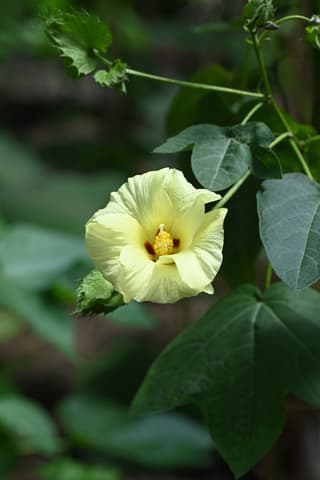
Upland Cotton
Gossypium hirsutum
Gossypium hirsutum, commonly known as upland cotton, is the most widely cultivated cotton species in the world, accounting for approximately 90% of global cotton fiber production. Native to Mexico and Central America, it is an annual or short-lived perennial shrub grown primarily for its fiber, oil, and ornamental value.
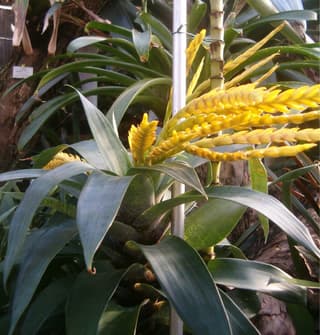
Goudaea (genus)
Goudaea
Goudaea is a genus of epiphytic bromeliads in the family Bromeliaceae, split from Vriesea in 2009 based on molecular phylogenetic studies. Native to Andean forests of Colombia, it includes species such as G. ospinae and G. chrysostachys, prized for their showy inflorescences and elegant rosette foliage.
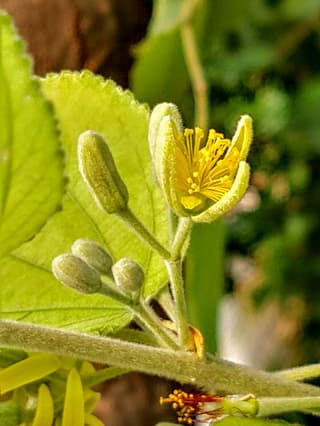
Phalsa
Grewia asiatica
The phalsa (Grewia asiatica) is a deciduous shrub or small tree belonging to the mallow family (Malvaceae), native to South Asia, primarily India and Pakistan. Following its small yellow flowers, it produces purple-red, tart berries that are consumed fresh or processed into refreshing summer drinks and syrups. The plant is fast-growing and highly tolerant of heat and drought, making it a popular fruit shrub during the hot summers of South Asia.
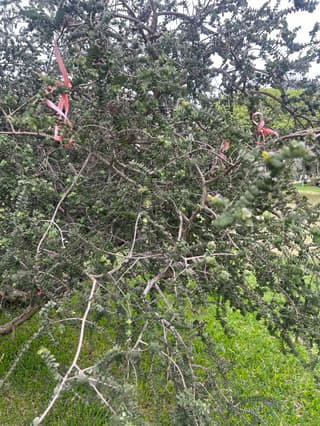
Coulter's Lignum Vitae
Guaiacum coulteri
Coulter's Lignum Vitae (Guaiacum coulteri) is a slow-growing evergreen tree native to western Mexico and Guatemala. Renowned for producing the world's densest and hardest wood, it bears stunning violet-blue flowers in spring and summer. Highly drought-tolerant once established, it thrives in full sun and well-drained soils, making it ideal for xeriscape and low-maintenance gardens in warm climates.
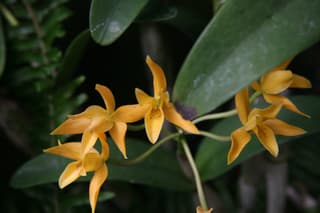
Orange Cattleya
Guarianthe aurantiaca
Guarianthe aurantiaca, commonly known as the Orange Cattleya, is a compact epiphytic orchid native to the tropical and montane forests of Mexico, Guatemala, Honduras, El Salvador, Nicaragua, and Costa Rica. It forms clumps of slender cane-like pseudobulbs topped with a pair of leathery, evergreen leaves, and produces clusters of two to eleven small, vividly orange (occasionally yellow) flowers from late winter through spring. Once classified as a Cattleya, this species is now placed in the genus Guarianthe alongside close relatives such as G. skinneri and G. bowringiana.
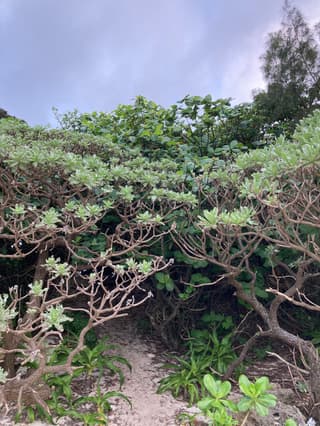
Velvetseed
Guettarda
Guettarda is a genus of tropical and subtropical evergreen shrubs and small trees in the family Rubiaceae, comprising over 150 species. Commonly known as velvetseed, these plants are native to the Neotropics, Pacific Islands, and coastal regions of Africa and Australia. They are characterized by opposite, often velvety leaves, fragrant tubular white or pink flowers, and small fleshy multi-seeded fruits. Species such as G. speciosa thrive on sandy beaches and coastal margins, while G. scabra favors dry Caribbean woodlands.
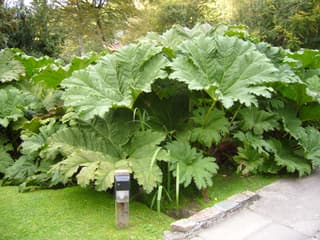
Giant Rhubarb
Gunnera manicata
Gunnera manicata is a monumental clump-forming herbaceous perennial native to the Serra do Mar coastal mountains of southern Brazil. Commonly known as Giant Rhubarb or Dinosaur Food, it is celebrated for its colossal leaves that can exceed 2 meters in diameter. Despite its common name, it is not related to culinary rhubarb. It belongs to the family Gunneraceae and has a fascinating symbiotic relationship with nitrogen-fixing cyanobacteria.
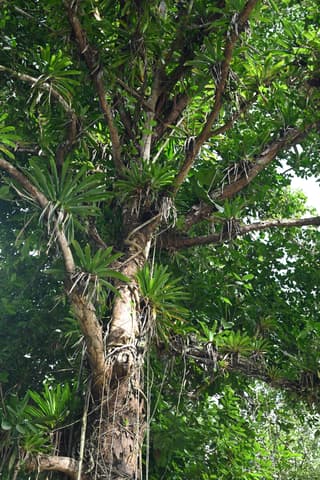
Guzmania
Guzmania
Guzmania is a genus of epiphytic bromeliads native to the rainforests of Central and South America, prized for its strap-shaped leaf rosettes and long-lasting, brightly colored bracts that resemble flowers.
Gymnopus
Gymnopus
Gymnopus is a genus of gilled mushrooms that was formerly part of the Marasmiaceae family and is now often classified within the Omphalotaceae. These fungi are characterized by their typically tough stems and pale spore prints. They grow saprobically on forest litter, decaying wood, or humus, playing a crucial role in forest ecosystems as decomposers of organic matter.
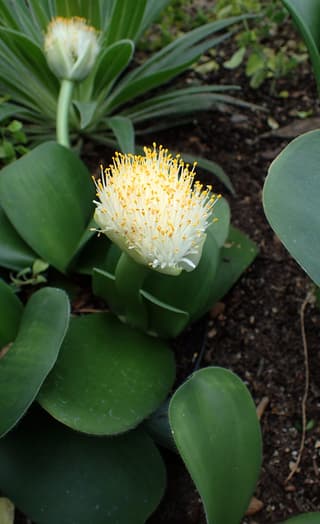
Blood Lily
Haemanthus
Haemanthus is a genus of bulbous perennials native to southern Africa, prized for its bold, brush-like flowerheads and thick, paddle-shaped leaves. Sometimes called the Blood Lily for the vivid scarlet blooms of species like H. coccineus, or the Paintbrush Lily for the softer white tufts of the popular houseplant H. albiflos, the genus stores water and nutrients in a large fleshy bulb that lets it survive long, dry dormant seasons. Depending on the species, foliage may be evergreen or fully deciduous, dying back after flowering before regrowing with the rains. Because of this dormancy cycle, care should follow the plant's natural rhythm rather than a fixed calendar.
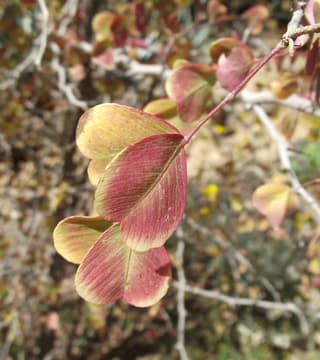
Mexican Logwood
Haematoxylum brasiletto
The Mexican Logwood (Haematoxylum brasiletto) is a small tree or thorny shrub native to Mexico, Central America, and northern Colombia, belonging to the Fabaceae family. It grows between 2 and 15 meters tall, featuring a twisted, fluted trunk and an intense red heartwood, historically used for extracting textile dye (hematoxylin). Its leaves are pinnate with heart-shaped leaflets, and the branches bear rigid thorns up to 2 cm long. It produces small clusters of fragrant yellow flowers, followed by copper-colored seed pods. It is extremely drought and heat resistant, thriving in rocky, alkaline soils of tropical deciduous forests and thorn scrubs.
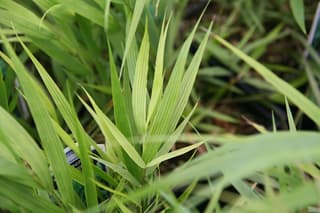
Japanese forest grass
Hakonechloa macra
Hakonechloa macra is the only species in the genus Hakonechloa, a perennial clumping grass native to the mountainous regions of the Japanese island of Honshu, where it grows on moist rocks and stabilized scree in wooded mountain gorges between 500 and 1500 m above sea level. It forms dense clumps with short creeping rhizomes and thin, arching stems over 50 cm long. Narrow lanceolate leaves grow to about 25 cm in length and are complemented by inconspicuous greenish-yellow panicle inflorescences from summer to autumn. Thanks to its elegant, waterfall-like growth habit, it is one of the most popular ornamental grasses for shady gardens.
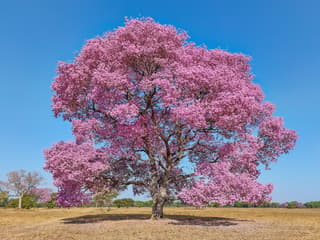
Trumpet Tree
Handroanthus
Handroanthus is a genus of Neotropical flowering trees in the family Bignoniaceae, native to Brazil and other tropical and subtropical regions of the Americas. This genus-level profile covers the group as a whole, including iconic species such as the yellow-flowered Golden Trumpet Tree (Handroanthus albus and H. chrysotrichus) and the purple-flowered Pink/Purple Trumpet Tree (H. impetiginosus). Known in Brazil as "Ipê," these deciduous trees produce one of the most spectacular displays in the plant world: a canopy of flowers covering completely leafless branches, typically between late winter and spring.

Sierra Golden Trumpet Tree
Handroanthus albus
The sierra golden trumpet tree (Handroanthus albus), family Bignoniaceae, is a deciduous tree native to the Cerrado of Brazil and adjacent areas of Argentina, Paraguay and Bolivia. It grows 20-30 m tall with a trunk 40-60 cm in diameter. Despite the species epithet 'albus' (white), the flowers are yellow - the name instead refers to the whitish pubescence on new twigs and the underside of the leaves. Flowering occurs in late winter to early spring (August-September), before new leaves emerge, covering the crown in bright yellow trumpet-shaped blooms.
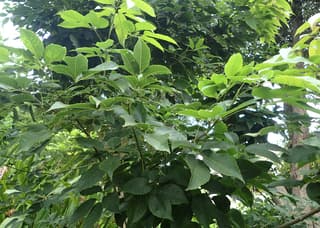
Pink Trumpet Tree
Handroanthus heptaphyllus
Handroanthus heptaphyllus, commonly known as the Pink Trumpet Tree or Purple Ipê, is a stunning South American native celebrated for its spectacular lavender-pink trumpet-shaped flowers that emerge on bare branches from July to September. It can reach up to 20 meters in height and is widely planted as a street and ornamental tree throughout Brazil and beyond.
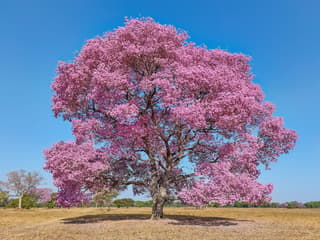
Pink trumpet tree
Handroanthus impetiginosus
The pink trumpet tree (Handroanthus impetiginosus) is a deciduous tree native to South America, prized for its striking pink-to-magenta trumpet-shaped flowers that bloom on bare branches in late winter to spring. It can grow up to 20 m tall and is widely planted as an ornamental street and garden tree. Its inner bark, known as pau d'arco, is traditionally brewed as a medicinal tea.
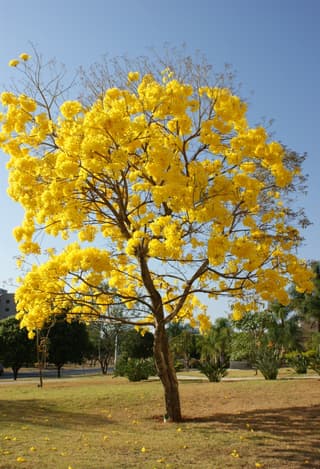
Yellow ipê
Handroanthus serratifolius
Handroanthus serratifolius, the yellow ipê, is a deciduous tree native to the forests and savannas of South America, especially Brazil. In spring it drops its leaves and covers itself entirely in golden-yellow flowers, one of the most striking displays of Brazilian flora.
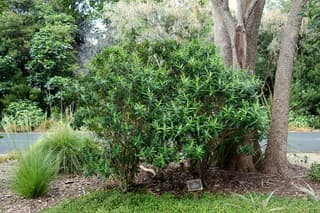
Hebe 'Magic Color'
Hebe 'Magic Color'
Hebe 'Magic Color' is an evergreen ornamental shrub from the plantain family (Plantaginaceae), belonging to the genus Hebe (formerly classified under Veronica), which is native to New Zealand. This cultivar is prized for its variegated foliage, where small opposite leaves display alternating shades of green, cream, and pinkish-purple. In late summer and autumn, the shrub is adorned with small clusters of purple to white flowers. It is a compact, densely branched shrub suitable for garden beds, containers, and low hedges.
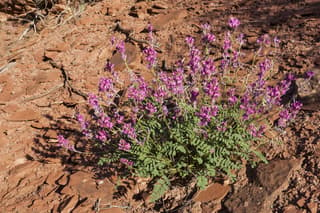
Boreal Sweet-vetch
Hedysarum boreale
Boreal sweet-vetch (Hedysarum boreale) is a hardy perennial legume wildflower native to the cold, dry rangelands and open slopes of northern and western North America, from the Canadian Arctic south through the Intermountain West. Growing from a deep, woody taproot to about 30-70 cm tall, it produces racemes of pink-to-purple, pea-like flowers from late spring into summer, followed by segmented seed pods. As a nitrogen-fixer it improves the soil around it and is prized for erosion control, pollinator meadows, and rangeland restoration. Its sweet, licorice-carrot-flavored roots were traditionally eaten and used medicinally by Indigenous peoples of the region.
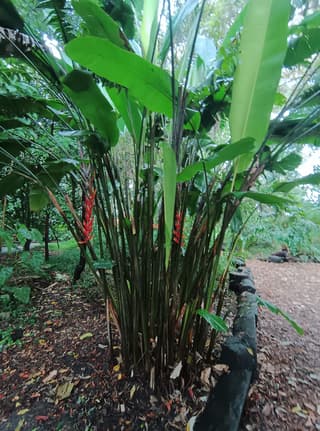
Heliconia
Heliconia
Heliconia is a genus of tropical perennial plants native to the tropical Americas, prized for its striking lobster-claw or parrot-beak shaped inflorescences. Waxy, brightly colored bracts in shades of red, orange, yellow and pink shelter small true flowers and attract hummingbirds in the wild. With large, banana-like leaves, it brings lush jungle texture to tropical gardens and bright indoor spaces.
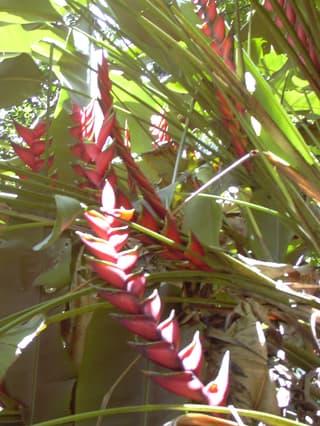
Lobster Claw
Heliconia bihai
Heliconia bihai, commonly known as Lobster Claw or Heliconia, is a spectacular tropical plant native to the Caribbean and South America. Its dramatic inflorescences in shades of red, orange, and yellow emerge among broad, glossy leaves, resembling lobster claws. It is highly valued in tropical floral arrangements and as an ornamental garden plant.
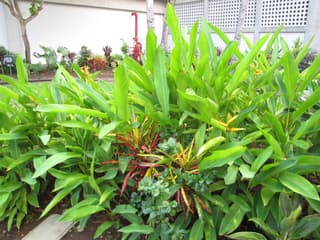
Parrot Heliconia
Heliconia psittacorum
Heliconia psittacorum, commonly known as Parrot Heliconia or Parrot's Beak, is a tropical flowering plant native to Brazil and the Caribbean. It is prized for its vibrant bracts in shades of red, orange, and yellow that resemble a parrot's plumage. A member of the Heliconiaceae family, it blooms nearly year-round in warm climates and is widely used as an ornamental garden plant and cut flower.
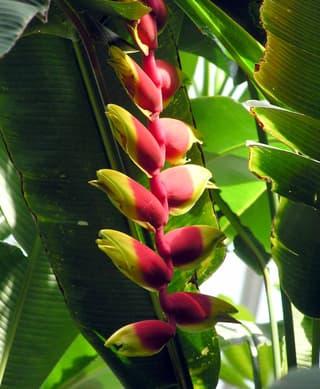
Hanging Lobster Claw
Heliconia rostrata
Heliconia rostrata, commonly known as the Hanging Lobster Claw, is a tropical perennial herbaceous plant native to Peru, Bolivia, and Colombia. It is celebrated for its dramatic pendant inflorescences composed of bright red bracts tipped with yellow and green, attracting hummingbirds and lasting for weeks. Its large, dark-green banana-like leaves can reach up to 120 cm in length, creating a stunning tropical statement in any warm garden.
Medium Care Easy Care
Our selection of 1162 medium easy care combines the characteristics of this category with moderate care needs. Ideal for those with basic experience.
Why Choose Medium Easy Care?
Combining the beauty of easy care with medium difficulty level lets you enjoy this category with a balanced care commitment. Each plant was selected to offer the best characteristics of the category at the care level you are looking for.