1159 Medium Easy Care | 2026 Guide - Page 28
Find 1159 medium easy care. Complete guide for your garden.
1159 Easy Care with medium level
Showing 973-1008 of 1159
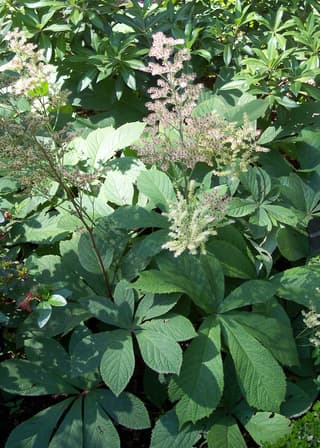
Chestnut-leaf Rodgersia
Rodgersia aesculifolia
Chestnut-leaf Rodgersia is a large, clump-forming perennial with creeping rhizomes, native to moist forests and stream banks in Northern China. Its palmate leaves can grow up to 40 cm long, are deeply lobed with 5–9 coarsely toothed leaflets resembling chestnut leaves, and have a bronze sheen when young before darkening to green throughout the season. In summer, the plant produces large, feathery flower spikes up to 60 cm tall with creamy white or pale pink flowers that eventually turn green. This species is widely used as an ornamental plant in shady perennial beds, near ponds and streams, and eventually forms large, stately colonies.
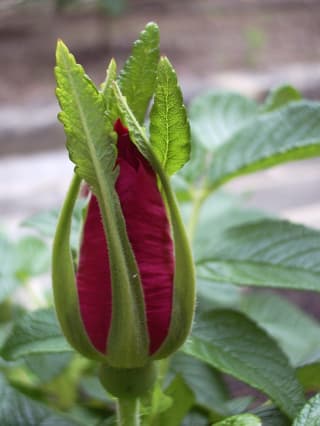
Rose
Rosa
The Rose is one of the most iconic shrubs in the world, belonging to the Rosaceae family. Known for its stunning beauty and unmistakable fragrance, it features woody stems usually protected by prickles (thorns). There are thousands of varieties resulting from centuries of hybridization, ranging from miniatures to climbing roses.
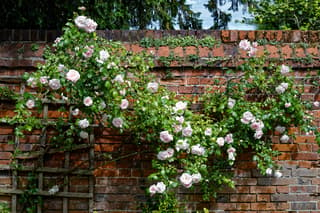
Nice Day Rose
Rosa 'CHEWNICEBELL'
Rosa 'CHEWNICEBELL', marketed as 'Nice Day', is a modern patio climbing rose bred by award-winning UK breeder Chris Warner, known for compact, disease-resistant, low-spray garden roses. It bears loose sprays of small, double, fragrant salmon-to-coral-pink blooms up to 5cm across that repeat-flower through summer and autumn, set against neat, glossy dark-green foliage. Reaching around 1.5-2.5m tall with a 0.5-1m spread, its compact climbing habit suits pillars, obelisks, fences, and large patio containers in smaller gardens.
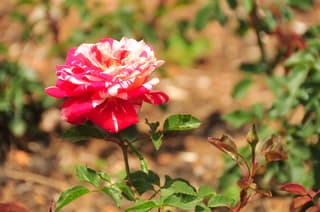
Hybrid Tea Rose
Rosa × hybrida
The Hybrid Tea Rose (Rosa × hybrida) is the world's most popular cultivar group, resulting from centuries of crossbreeding various Rosa species. Celebrated for its large, high-centered blooms and wide color range, it is grown in gardens, containers, and as a cut flower worldwide.
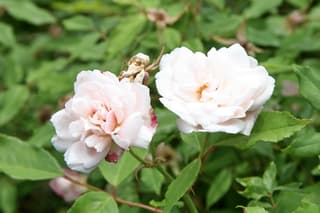
Tea Rose
Rosa × odorata
The Tea Rose (Rosa × odorata) is an elegant hybrid originating from China, a cross between Rosa chinensis and Rosa gigantea. Celebrated for its large, fragrant blooms in shades of white, pink, cream, and yellow, it became the genetic foundation for most modern hybrid tea roses. Its delicate tea-like fragrance and repeat-blooming habit made it one of the most influential rose species in horticultural history.
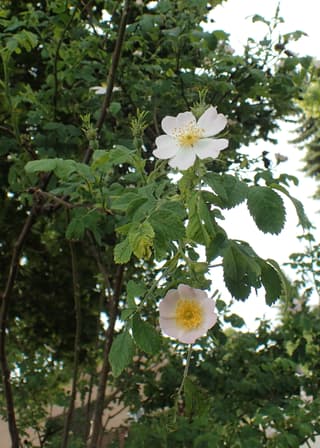
Fir-leaved Rose
Rosa abietina
Rosa abietina, commonly known as the Fir-leaved Rose or Pine Rose, is a deciduous shrub native to the mountainous regions of the European Alps across Switzerland, Austria, France, Italy, and Germany. It grows up to 2 meters tall, producing delicate pink flowers with a mild spicy fragrance from May to July. This wild rose is highly valued for alpine and naturalized gardens.
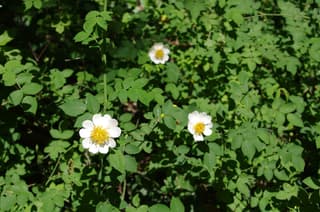
Field Rose
Rosa arvensis
Rosa arvensis, commonly known as the Field Rose, is a vigorous deciduous wild rose native to Western, Central, and Southern Europe. It produces clusters of delicate white flowers with golden stamens throughout summer, followed by small oval orange-red hips. Its arching, thorny stems make it an excellent hedgerow and ground-cover plant.
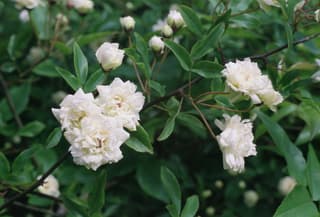
Lady Banks' Rose
Rosa banksiae
Lady Banks' Rose (Rosa banksiae) is a vigorous, nearly thornless climbing rose native to central and western China. In spring, it produces breathtaking cascades of small, fragrant flowers in white or yellow that can blanket entire walls, pergolas, and fences. One of the oldest roses in Western cultivation, it combines historical charm with remarkable toughness, drought tolerance, and disease resistance.
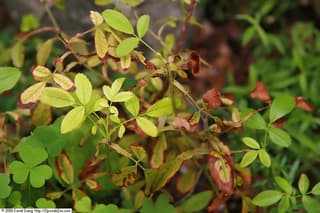
Carolina rose
Rosa carolina
Rosa carolina, commonly known as the Carolina rose or pasture rose, is a deciduous native shrub of eastern North America belonging to the Rosaceae family. Hardy across USDA zones 4–9, it typically grows 60 cm to 1.5 m tall, spreading naturally through underground stolons to form dense thickets. In late spring to early summer, it bears single, five-petaled, fragrant flowers in shades of medium to deep pink. After flowering, bright red to orange-red rose hips develop and persist through autumn and winter, providing a vital food source for birds and wildlife. Valued in naturalistic landscaping, habitat restoration, and erosion control, Carolina rose thrives along woodland edges, roadsides, and open fields, offering both ornamental appeal and ecological benefit.

China Rose
Rosa chinensis
The China Rose (Rosa chinensis) is an ornamental shrub native to China and one of the most historically significant rose species in the world. It introduced the trait of repeat-blooming to Western horticulture in the 18th century, becoming an essential parent of nearly all modern rose cultivars. It produces elegant flowers in shades of red, pink, white, yellow, and cream throughout spring, summer, and fall.
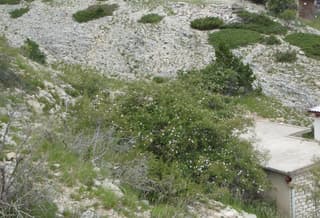
Glaucous Dog Rose
Rosa dumalis
Rosa dumalis, the glaucous dog rose, is a deciduous shrub native to Europe and parts of Western Asia, growing 1-2 m tall with arching, thorny stems. Its blue-green (glaucous) foliage and fragrant pink flowers, blooming from spring into summer, are followed by bright red hips rich in vitamin C. Closely related to the common dog rose (Rosa canina), it thrives in hedgerows, scrubland, and woodland edges across its native range.
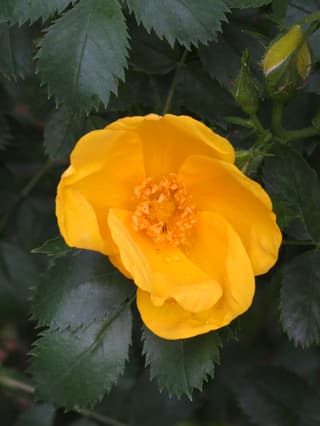
Persian Yellow Rose
Rosa foetida
Rosa foetida, commonly known as the Persian Yellow Rose or Austrian Briar, is a thorny deciduous shrub native to Southwest Asia. It produces intensely golden-yellow single flowers in late spring to early summer, with a distinctive musky scent that inspired its Latin name "foetida." It is historically significant as the ancestor of all modern yellow roses.
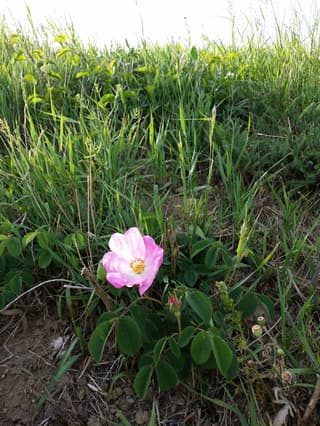
French Rose
Rosa gallica
Rosa gallica, commonly known as the French Rose or Apothecary Rose, is one of the oldest cultivated roses in the world, native to Central and Southern Europe. It produces fragrant, deep pink to crimson flowers in summer and has been prized for centuries for its ornamental, medicinal, and aromatic qualities. It is the ancestor of many modern rose cultivars.
Kordana Rose
Rosa kordana
The Kordana Rose is a miniature potted rose bred for compact size and repeat blooming, developed by the German Kordes nursery for indoor and patio cultivation. Its small, full-sized-looking flowers come in many colors and make it one of the most popular gift and houseplant roses worldwide.
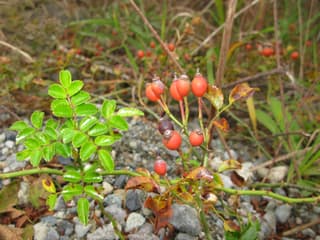
Memorial Rose
Rosa lucieae
Rosa lucieae, commonly known as Memorial Rose or Wichura Rose, is a vigorous semi-evergreen climbing and trailing rose native to East Asia. With long, thorny, trailing stems that can reach up to 6 meters, it forms dense mats and is exceptional as a ground cover or scrambling over structures. Its single white flowers with prominent yellow stamens bloom in summer, filling the garden with rich fragrance. The species is notable for its disease and mildew resistance and has been the parent of many beloved classic climbing rose cultivars such as Dorothy Perkins and New Dawn.
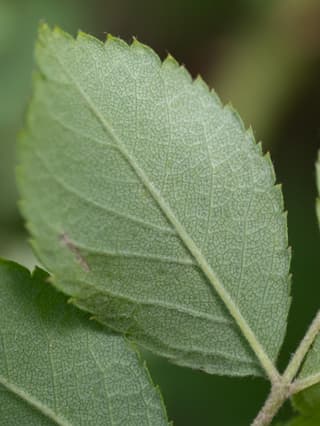
Multiflora Rose
Rosa multiflora
Rosa multiflora, commonly known as Multiflora Rose or Baby Rose, is a vigorous climbing shrub native to East Asia (Japan, Korea, and China). It produces spectacular cascading clusters of small white to light pink fragrant flowers in late spring to early summer, followed by small red hips that persist through winter. While ornamentally attractive, it is classified as a highly invasive species in much of the United States and several other countries, forming dense impenetrable thickets that displace native vegetation.
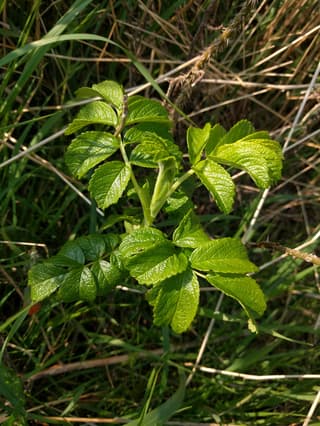
Rugosa Rose
Rosa rugosa
Rugosa Rose (Rosa rugosa) is a hardy, thorny shrub native to East Asia — Japan, China, Korea, and Russia. Renowned for its exceptional resistance to salt spray, wind, and extreme cold, it thrives in coastal gardens and temperate climates. Fragrant blooms in pink, white, and red appear from late spring through fall, followed by large orange-red hips rich in vitamin C.
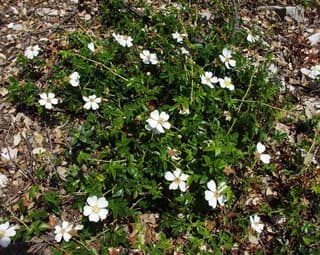
Evergreen Rose
Rosa sempervirens
Rosa sempervirens, commonly known as the evergreen rose, is a vigorous rambling rose native to the Mediterranean region, thriving across southern Europe and North Africa. It produces clusters of small, fragrant white to cream flowers in late spring and early summer, against a backdrop of glossy, semi-evergreen foliage that persists through mild winters. Widely cultivated as a climbing plant for walls, pergolas, and fences, it brings enduring charm and ecological value to gardens.
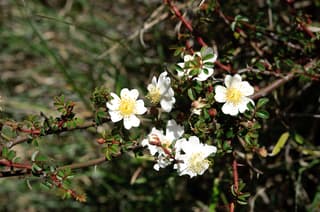
Glandular Rose
Rosa transmorrisonensis
Rosa transmorrisonensis is a climbing rose native to Taiwan and the Philippines (Luzon), found in subtropical mountain biomes. It is distinguished from related species by its glabrous (smooth) styles.
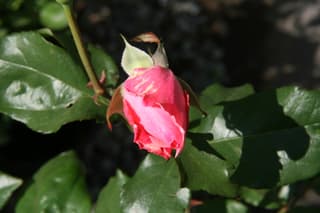
Grandiflora Rose
Rosa x grandiflora
Rosa x grandiflora, commonly known as the Grandiflora Rose, is a modern hybrid class created in the 1950s by crossing Hybrid Tea roses with Floribunda roses. The result is a vigorous, tall-growing shrub that bears large, elegant blooms in clusters on long stems, combining the best traits of both parent classes. Grandiflora roses are celebrated for their repeat blooming, remarkable height, and wide spectrum of colors ranging from pure white to deep red, golden yellow, and vivid bicolors.
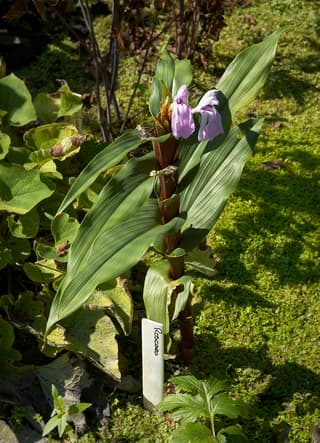
Purple Roscoea
Roscoea purpurea
The Purple Roscoea (Roscoea purpurea) is a herbaceous perennial plant from the ginger family (Zingiberaceae), native to the high altitudes of the Himalayas—primarily Nepal and Northern India—where it grows in alpine meadows, rocky outcrops, terraces, and forest edges. In early summer, it sprouts broad, orchid-like leaves and a fleshy pseudostem from a short, vertical rhizome, reaching heights of 12 to 20 inches (30 to 50 cm). From summer to early autumn, large purple to mauve flowers appear with a three-part corolla and a prominent lip, resembling tropical orchids and giving rise to the common name 'Ginger Orchid.' As a geophyte, the plant goes completely dormant in winter, surviving the cold season underground within its rhizome.
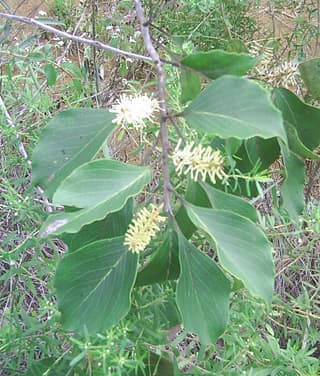
Brazilian Oak
Roupala montana
Roupala montana, popularly known as the Brazilian Oak, is a native tree or shrub from the Proteaceae family, found from Mexico to southern Brazil, Bolivia, Paraguay, and Argentina. It is typical of the Cerrado (Brazilian savanna), gallery forests, rocky fields, and restingas, generally growing between 3 and 26 feet tall, though it can reach up to 50-80 feet in favorable conditions. It features a dense, rounded crown, a cylindrical trunk, and simple or compound leaves, with young branches being densely hairy. Its small flowers, ranging from white to cream or pale yellow, gather in elongated inflorescences (racemes) that appear mainly between summer and autumn. The species is considered an 'ochlospecies' due to its high morphological variability between populations. Its noble wood, similar to European oak, is used in cabinetry, civil construction, and charcoal production, while the bark is utilized in traditional medicine.
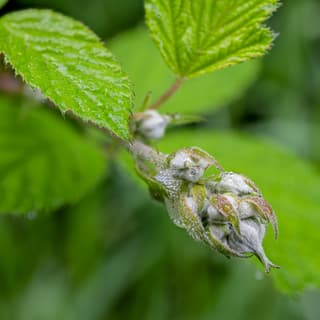
Blackberry
Rubus fruticosus
Rubus fruticosus, commonly known as blackberry or bramble, is a vigorous deciduous shrub native to Europe and widely naturalised across the world. It produces arching, thorny canes (called floricanes) that bear clusters of white to pale-pink flowers in late spring and early summer, followed by the familiar glossy black, sweet-tart fruit beloved in jams, pies and fresh eating. A true biennial-caned plant, first-year primocanes grow vegetatively while second-year floricanes fruit and then die back, making annual pruning essential. Deeply embedded in European folklore and cottage gardens alike, blackberry is one of nature's most generous edible hedgerow plants.
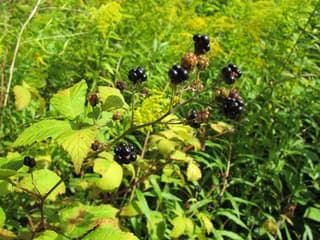
Grabowski's Bramble
Rubus grabowskii
Grabowski's Bramble is one of the roughly 330+ microspecies that make up the European blackberry group (Rubus fruticosus aggregate), a complex of apomictic (seed-clone-forming) brambles found across hedgerows, woodland edges, and waste ground in central and northern Europe. Like its relatives, it is a vigorous, thorny, arching shrub with biennial canes: first-year canes grow vegetatively, then flower, fruit, and die back in their second year while new canes rise to replace them. Botanists distinguish it from other microspecies by its tapering prickles, leaves with a notably long terminal-leaflet stalk, a broad, often pyramid-shaped flower cluster, and white or pale pink flowers with hairy carpel tips. The blackberries it produces in late summer are edible and, like all brambles in the aggregate, it is valuable to wildlife as forage, nesting cover, and a nectar source for pollinators.
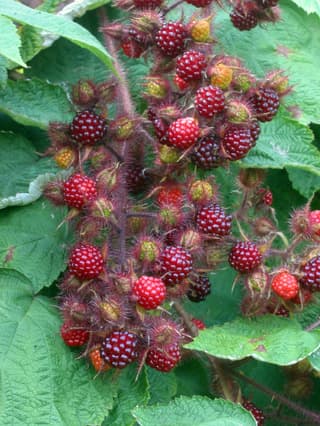
Wineberry
Rubus phoenicolasius
Rubus phoenicolasius, known as the Wineberry, is a vigorous perennial shrub in the rose family. It is native to East Asia and is easily identified by its stems, which are densely covered in reddish-purple glandular hairs. The plant produces small white flowers that develop into bright red, shiny, edible berries. The fruit is encased in a protective hairy calyx until it is fully ripe. It is highly valued for its sweet-tart flavor but is considered an invasive species in many parts of North America due to its rapid growth and ability to form dense thickets.
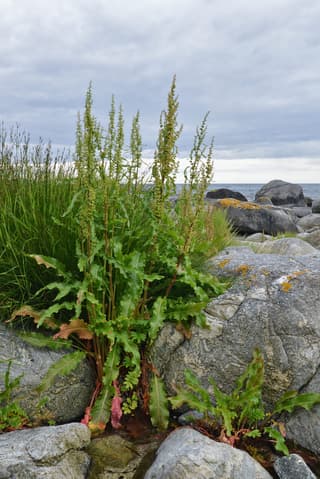
Curly dock
Rumex crispus
A perennial herbaceous plant from the Polygonaceae family, native to Europe and Western Asia. Features smooth leaves with distinctly wavy or curled margins, measuring 14-24 cm in length. Common in disturbed soils and adapted to various climates, highly tolerant of cold and drought. Forms dense rosettes and produces thousands of viable seeds per plant that can remain viable for 50+ years.
Narrow-leaved rue
Ruta angustifolia
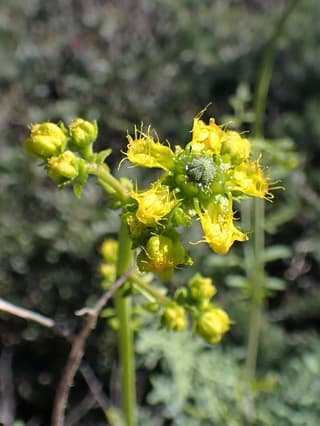
Ruta angustifolia, known as narrow-leaved rue or fringed rue, is an aromatic evergreen subshrub in the Rutaceae family, native to the Mediterranean region and widely naturalized across Southeast Asia. It grows 40-100 cm tall with slender woody stems and finely divided, blue-green leaves that release a strong, pungent scent when bruised. Clusters of small yellow flowers with a fetid odor bloom from spring through summer. The plant has a long history of traditional medicinal use for ailments such as fever, cramps and liver complaints, but all parts are toxic if ingested and the sap can cause severe skin burns when exposed to sunlight.
Sugarcane
Saccharum officinarum
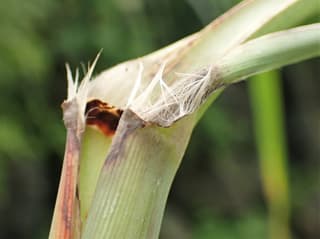
Sugarcane (Saccharum officinarum) is a large, perennial grass native to Southeast Asia and New Guinea, cultivated for millennia for its succulent stalks rich in sucrose. It forms vigorous clumps with erect, jointed, and fibrous stalks that can exceed 13 to 20 feet (4 to 6 meters) in height, covered by long, narrow, and sharp-edged leaves. It is the world's primary source of sugar and one of the most important agricultural crops on the planet, also used in the production of ethanol, rum, molasses, and unrefined cane sugar. It blooms only when days shorten, producing a silvery, feathery inflorescence known as an "arrow."
Sweet Plum
Sageretia theezans
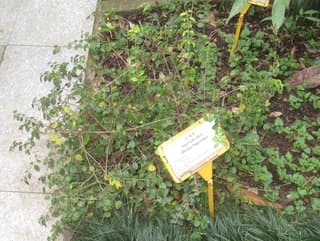
The Chinese Sweet Plum (Sageretia theezans) is an evergreen shrub from the buckthorn family (Rhamnaceae), native to southern China. It is one of the most popular indoor bonsai species, combining fine, glossy foliage, attractive scaly, multicolored bark, and reddish new growth at the shoot tips. In late summer, inconspicuous creamy-white flower panicles appear, followed by small, edible blue-black drupes. In its native habitat, it grows 1 to 3 meters tall, but as a bonsai, it remains significantly smaller through regular pruning.
African Violet
Saintpaulia ionantha
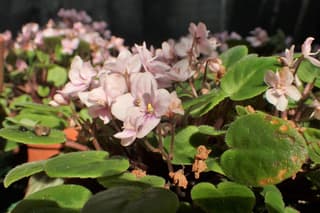
The African Violet is a beloved compact houseplant native to the cloud forests of Tanzania and Kenya. Discovered in 1892 by Baron Walter von Saint Paul, it features velvety, dark green leaves and delicate flowers that bloom in shades of purple, blue, pink, white, and red. With proper care, these charming plants can live up to 50 years and bloom nearly year-round.
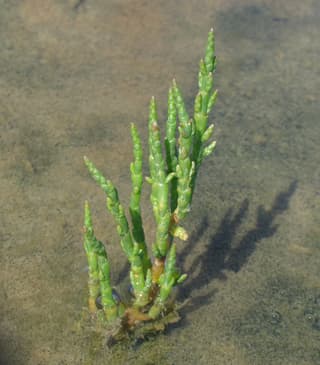
Glasswort
Salicornia
Glasswort (Salicornia) is a genus of annual, succulent-stemmed plants in the Amaranthaceae family, adapted to saltwater habitats. Its jointed, leafless, succulent shoots are green, often turning red or orange in the fall. It grows in coastal salt marshes, saline soils, and on the shores of salt lakes, where almost no other plants can survive. Its young shoots are also known as "sea asparagus" or "sea beans" and are a sought-after vegetable worldwide for their crunchy, salty flavor.
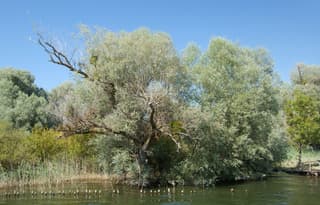
Willow
Salix
Willow (Salix) is a large genus of deciduous trees and shrubs in the family Salicaceae, native across the Northern Hemisphere. Best known for the graceful weeping willow (Salix babylonica) with its long, pendulous branches sweeping toward water, willows have been culturally and medicinally significant for millennia. The bark of Salix alba (white willow) contains salicin, the natural compound that inspired the synthesis of aspirin in 1897. Willows thrive near rivers, lakes, and wetlands, and are among the fastest-growing trees in the world.
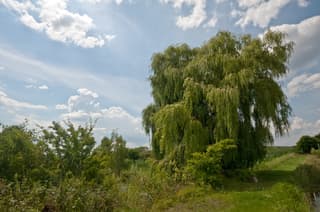
White Willow
Salix alba
The white willow (Salix alba) is a fast-growing deciduous tree native to Europe, temperate Asia, and North Africa. It can reach up to 25 meters (82 feet) in height, with characteristic silvery-green lanceolate leaves, especially on the underside. It thrives in moist soils and near watercourses, making it a popular choice for riparian landscaping and erosion control.
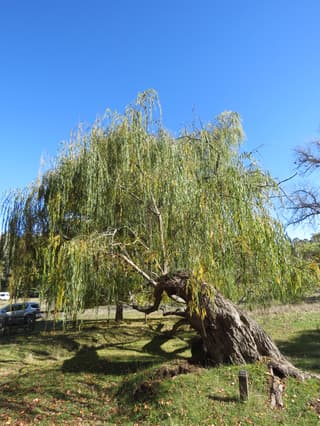
Weeping Willow
Salix babylonica
The Weeping Willow (Salix babylonica) is a majestic tree native to northern China, widely cultivated around the world for its graceful, cascading branches that sweep the ground. It thrives near water — rivers, lakes, and ponds — where it can reach its full potential. Its iconic silhouette makes it one of the most recognizable ornamental trees globally.
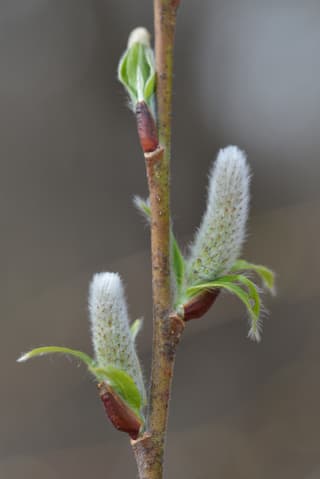
Pussy Willow
Salix discolor
Salix discolor, commonly known as Pussy Willow, is a fast-growing deciduous shrub or small tree native to North America. Celebrated for its silky, pearl-gray catkins that emerge in late winter before the leaves, it is one of the first plants to signal the arrival of spring. It thrives in moist to wet soils and is ideal for rain gardens, stream banks, and wildlife habitats.
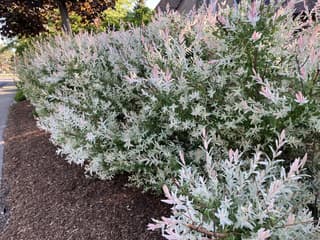
Dappled Willow
Salix integra
Salix integra is a deciduous shrub in the willow family (Salicaceae), grown mainly for its ornamental foliage rather than its inconspicuous yellow catkins. The widely planted cultivar 'Hakuro-nishiki' (dappled willow) produces slender, lance-shaped leaves splashed with pink, cream and green when they emerge, maturing to green by summer and turning gold in fall. It is fast-growing, cold-hardy, and adaptable to a range of soils, including damp or heavier ground where many other ornamentals struggle.
Medium Care Easy Care
Our selection of 1159 medium easy care combines the characteristics of this category with moderate care needs. Ideal for those with basic experience.
Why Choose Medium Easy Care?
Combining the beauty of easy care with medium difficulty level lets you enjoy this category with a balanced care commitment. Each plant was selected to offer the best characteristics of the category at the care level you are looking for.