1159 Medium Plants | 2026 Guide - Page 17
Discover 1159 medium plants for your garden. Complete care guide.
1159 Medium Plants
Showing 577-612 of 1159
Lenten Rose
Helleborus orientalis
Helleborus orientalis, commonly known as the Lenten Rose, is an elegant herbaceous perennial from the Ranunculaceae family, native to Greece and Turkey. Prized for its early winter-to-spring blooms that often appear when snow still covers the ground, this shade-loving plant produces flowers ranging from white to pink and purple, frequently adorned with distinctive interior spotting. It grows slowly into a clump-forming plant reaching 45-50cm in height and spread, making it ideal for shaded garden borders and woodland settings.
Purple Waffle Plant
Hemigraphis alternata
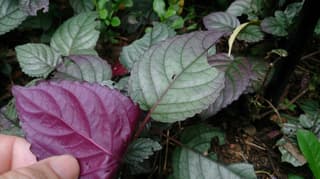
Hemigraphis alternata is a striking tropical ground cover from Southeast Asia, prized for its uniquely textured, waffle-like leaves that display metallic silvery-green tops and vivid purple undersides. A member of the Acanthaceae family, it is one of NASA's top-rated air-purifying plants, effectively filtering volatile organic compounds like benzene and toluene from indoor air. While it produces tiny white bell-shaped flowers, it is grown primarily for its dramatic foliage.
Heart Fern
Hemionitis arifolia
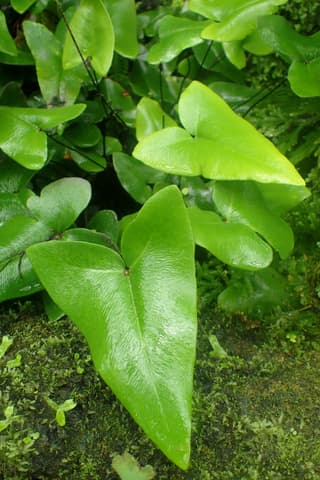
Hemionitis arifolia, commonly known as the Heart Fern, is a small fern from the Pteridaceae family, native to the moist forests of South and Southeast Asia (ranging from India to China, Cambodia, and Taiwan). The plant reaches only 6-10 inches in height and produces two types of fronds set on dark, almost black petioles: shorter, leathery heart-shaped sterile fronds and longer, arrow-shaped fertile fronds that rise above the clump. It is a slow grower and thrives best in conditions similar to a terrarium.
Common Hogweed
Heracleum
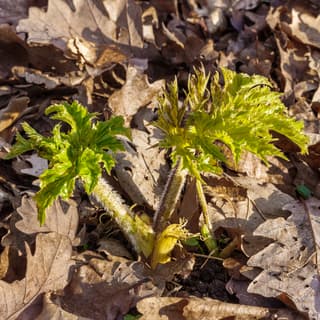
Heracleum is a genus of robust herbaceous plants in the family Apiaceae, native to temperate regions of Europe, Asia, and North America. The most widespread species, Heracleum sphondylium (common hogweed), and the invasive Heracleum mantegazzianum (giant hogweed), are well known for their dramatic architectural presence and large white compound umbels that can reach up to 2.5 metres in height. The plant's sap contains furanocoumarins — phototoxic compounds that, upon contact with skin exposed to sunlight, cause severe chemical burns, blistering, and long-lasting hyperpigmentation. Despite this hazard, Heracleum species have a long history of medicinal and culinary use across European and Asian cultures. They are also ecologically significant as major nectar and pollen sources for a wide range of pollinators including bees, hoverflies, and beetles.
Common Hogweed
Heracleum sphondylium
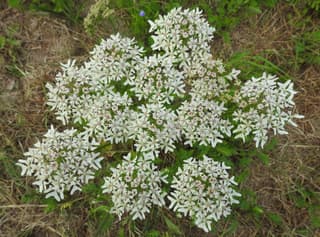
Heracleum sphondylium, commonly known as common hogweed or cow parsnip, is a robust herbaceous perennial in the carrot family Apiaceae, native to Europe and western Asia. It thrives in meadows, hedgerows, woodland edges and roadsides, growing up to 2 metres tall. In summer it produces spectacular large umbrella-shaped clusters of white flowers, making it a striking addition to naturalistic gardens. Its sap contains phototoxic compounds that can cause skin reactions in sensitive individuals.
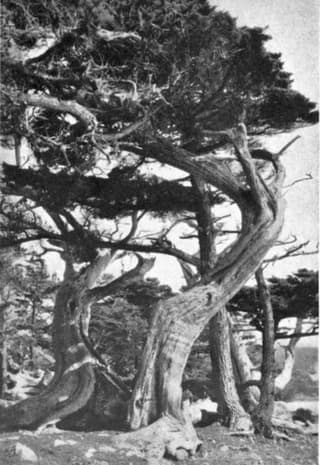
Monterey Cypress
Hesperocyparis macrocarpa
Hesperocyparis macrocarpa, commonly known as Monterey Cypress, is a fast-growing evergreen conifer native to the central California coast. Known for its dramatic windswept silhouette in the wild, the cultivar 'Goldcrest' is widely used as a fragrant, lemon-scented indoor or patio plant. Its bright golden-green foliage and compact columnar form make it a striking ornamental choice.
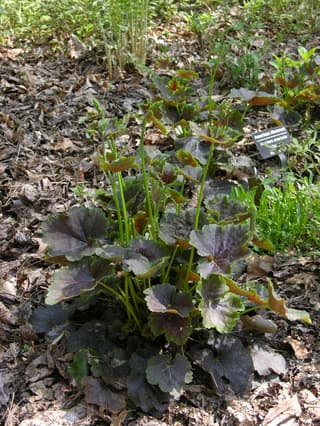
American Alumroot
Heuchera americana
Heuchera americana, commonly known as American Alumroot, is a native perennial of Eastern North America prized for its ornamental, deeply lobed foliage with silver-grey marbling. It produces delicate bell-shaped flowers on wiry stalks in late spring and thrives in shaded garden settings.
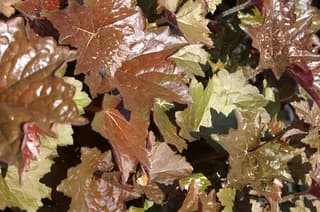
Crevice Alumroot
Heuchera micrantha
Heuchera micrantha, commonly known as crevice alumroot or small-flowered alumroot, is a herbaceous perennial in the family Saxifragaceae native to the rocky cliffs, talus slopes, and crevices of western North America, from British Columbia south to California. It forms low, mounding rosettes of deeply lobed, maple-like leaves in shades of green to bronzy-red, providing year-round ornamental interest. In late spring to early summer, slender wiry stems rise above the foliage bearing loose, airy panicles of tiny white to cream flowers that attract native bees and flies. It thrives in partial shade and well-drained, rocky soils, making it an excellent choice for rock gardens, shaded borders, and naturalistic plantings.
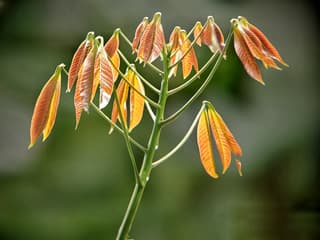
Rubber tree
Hevea brasiliensis
Hevea brasiliensis, commonly known as the rubber tree, is a species native to the Amazon rainforests (Amazon and Orinoco basins), where it can reach heights of 130 feet along riverbanks. It is the primary source of the world's natural rubber: an incision in its bark releases a white latex harvested through tapping starting around age 7. Introduced to Asia and Africa at the turn of the 20th century, it thrives there largely protected from its main threat, the Microcyclus ulei fungus, which causes South American Leaf Blight (SALB) that once devastated Brazilian rubber production. Indoors, grown for its glossy green trifoliate foliage, it remains much smaller in size. Its latex contains proteins (hevein) known to be allergenic: handling the sap can cause skin irritation or more severe reactions in individuals with latex allergies.
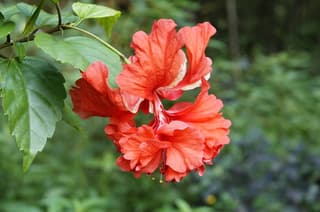
Chinese Hibiscus
Hibiscus rosa-sinensis
Hibiscus rosa-sinensis, commonly known as Chinese Hibiscus or Tropical Hibiscus, is a flowering evergreen shrub in the family Malvaceae, native to tropical Asia. It produces large, showy flowers in a wide range of colors throughout the year and is widely cultivated as an ornamental plant in gardens and containers worldwide.
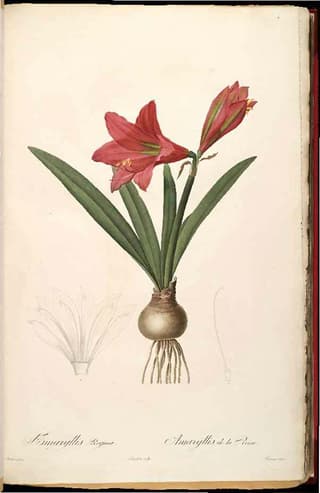
Mexican Lily
Hippeastrum reginae
Hippeastrum reginae, commonly known as Mexican Lily or Amaryllis, is a bulbous perennial from the Amaryllidaceae family, native to tropical and subtropical regions of South America. It produces spectacular trumpet-shaped flowers in shades of red, pink, white, orange, and bicolor on upright stems reaching up to 60 cm tall. Widely grown as an ornamental plant in pots and gardens, it is particularly prized for its vibrant winter and spring blooms.
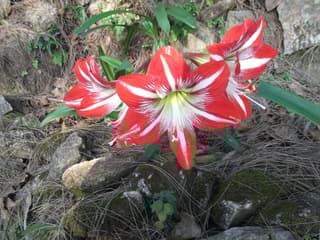
Amaryllis
Hippeastrum vittatum
Amaryllis (Hippeastrum vittatum) is a bulbous plant native to South America, belonging to the Amaryllidaceae family. It is distinguished by its large, showy trumpet-shaped flowers that can reach up to 20 cm in diameter. It is one of the most popular bulbous plants for indoor cultivation, especially during winter and spring.
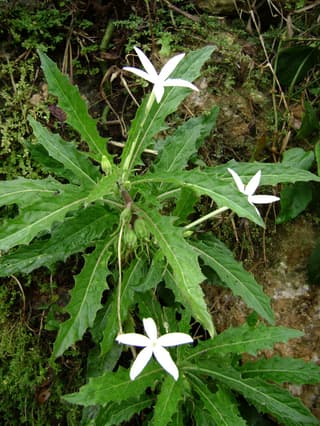
Star of Bethlehem
Hippobroma longiflora
Hippobroma longiflora, commonly known as Star of Bethlehem, is a perennial herb with an erect or decumbent stem, native to Jamaica and now naturalized in humid tropical and subtropical regions, typically along stream banks and ditches. Its leaves are simple, alternate, elliptical to lanceolate in shape with serrated edges, measuring 5 to 15 cm in length. The flowers are solitary, white, and fragrant, with a slender floral tube 6 to 12 cm long ending in five pointed lobes—an adaptation for pollination by long-tongued sphinx moths. It is considered one of the most dangerous plants to cultivate: the entire plant, especially the milky sap, contains pyridine alkaloids such as lobeline and nicotine. Contact with the sap causes intense burning on the skin and mucous membranes and can cause temporary blindness if it reaches the eyes; ingestion is dangerous for humans and animals (including cattle, dogs, and cats), potentially causing vomiting, tremors, muscle paralysis, and, in severe cases, death.
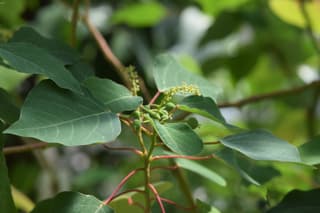
Bleeding Heart Tree
Homalanthus
Homalanthus is a genus of fast-growing tropical trees and shrubs in the family Euphorbiaceae, native to Australia, Papua New Guinea, and Pacific islands. These pioneer plants rapidly colonize disturbed forest edges and clearings, playing a critical role in tropical forest regeneration. They feature large, heart-shaped leaves that turn vivid red before dropping, and produce milky white latex throughout their tissues. Several species, notably Homalanthus nutans, have attracted significant scientific interest for containing prostratin — a compound with demonstrated antiviral and anti-HIV activity derived from traditional Samoan ethnobotanical knowledge.
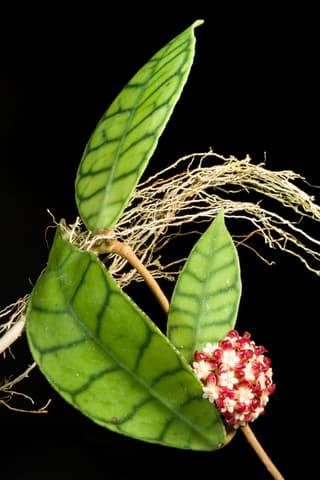
Hoya Callistophylla
Hoya callistophylla
Hoya callistophylla is an epiphytic climbing plant native to the rainforests of Borneo (Sabah, Malaysia), primarily cultivated for its strikingly veined foliage. The thick, leathery leaves feature a silvery-light network of veins against a dark green background, appearing almost hand-painted. In spring and summer, it produces fragrant, star-shaped flower umbels consisting of 20 to 40 individual creamy-white to pale yellow blossoms with reddish tips. As a vining plant, it is perfectly suited for hanging baskets or trellises.
Hoya crassipetiolata
Hoya crassipetiolata
Hoya crassipetiolata is an epiphytic climbing plant from the Apocynaceae family, native to the tropical forests of Southeast Asia (Indonesia, Thailand, Malaysia). It is known for its thick, waxy, deep green leaves with prominent light-colored veining, and for the unusually thick petiole that gives it its name. In spring and summer, it blooms with clusters of creamy-white, fragrant, star-shaped flowers typical of the Hoya genus. It is a popular indoor plant due to its relatively easy maintenance and slow growth, suitable for hanging baskets or training on a support.
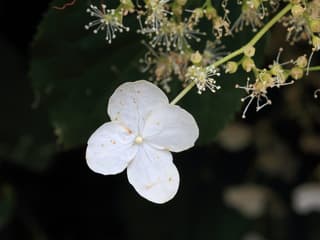
Climbing hydrangea
Hydrangea anomala
Hydrangea anomala is a deciduous, self-clinging climbing vine native to Japan, China, Korea and eastern Siberia. It attaches to walls, fences and trees using aerial rootlets, producing broad, glossy dark-green leaves and flat lacecap flower heads of small fertile florets ringed by showy white sterile ones in late spring to summer.
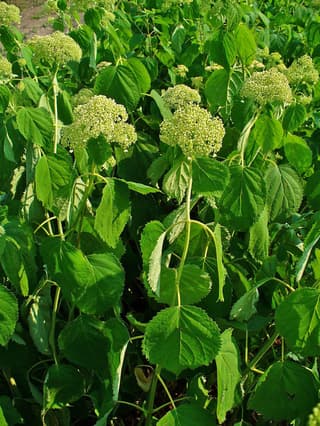
Smooth Hydrangea
Hydrangea arborescens
Hydrangea arborescens, commonly known as Smooth Hydrangea or Wild Hydrangea, is a deciduous shrub native to the eastern United States. The 'Annabelle' cultivar is iconic for its massive, globe-shaped white flower heads reaching up to 30 cm across. Hardy to USDA zone 3, it is one of the most cold-tolerant hydrangeas available.
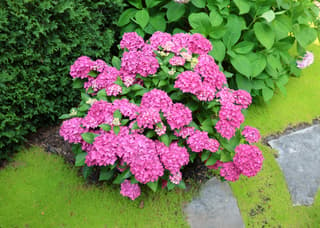
Bigleaf Hydrangea
Hydrangea macrophylla
Hydrangea macrophylla, commonly known as Bigleaf Hydrangea, is a deciduous flowering shrub native to Japan. It is celebrated for its large, rounded flower clusters that dramatically change color — from pink to blue — based on the pH of the soil. This versatility and visual impact make it one of the most popular ornamental shrubs in gardens worldwide.
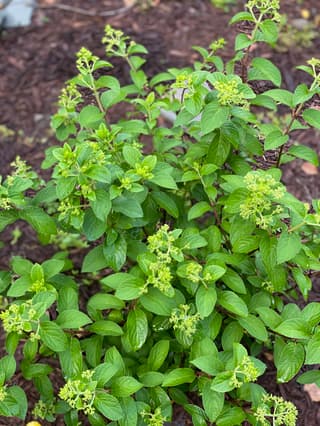
Mountain Hydrangea
Hydrangea serrata
Hydrangea serrata, commonly known as mountain hydrangea, is a compact deciduous shrub native to the mountainous regions of Korea and Japan. It produces elegant lacecap flower heads in shades of blue, pink, white, and lavender, with colour determined by soil pH. Growing slowly to about 120 cm tall and 150 cm wide, it is prized for its delicate texture, long summer-to-fall bloom period, and adaptability to woodland and cottage garden settings.
False Chanterelle
Hygrophoropsis aurantiaca
Hygrophoropsis aurantiaca, commonly known as the False Chanterelle, is a species of fungus that closely resembles the prized edible Chanterelle. It features a funnel-shaped cap with a distinct orange to yellow-orange hue and decurrent, crowded gills that fork repeatedly. While it is often found in coniferous and deciduous woodlands across Europe and North America, it is primarily a saprotrophic fungus, breaking down organic matter such as pine needles and decaying wood.
Guatemalan Dragon Fruit
Hylocereus guatemalensis
Hylocereus guatemalensis (now often treated as Selenicereus guatemalensis) is an epiphytic climbing cactus native to Guatemala, El Salvador and southern Mexico. It has green, fleshy, three-ribbed leafless stems that cling to trees and walls with aerial roots and can exceed 5 m. Its large, fragrant white flowers open only at night and last a single night. The fruit is a deep pink, scaly berry with sweet, edible purple flesh.

Mountain fern moss
Hylocomium splendens
Mountain fern moss (Hylocomium splendens) is a prominent moss in the Hylocomiaceae family, forming dense, shimmering, olive- or yellow-green mats with a characteristic tiered (stair-step) structure—each annual growth segment emerges from the center of the previous year's shoot, creating distinct steps. The stems, reddish at the base, reach 10-20 cm in length and are bipinnately branched. This moss lacks true roots; it attaches to the substrate via rhizoids and absorbs water and nutrients through its entire surface. It is a common species in boreal coniferous and mixed forests of the Northern Hemisphere. It prefers nutrient-poor, acidic forest soils, growing on earth, humus, and decaying wood in shaded areas.
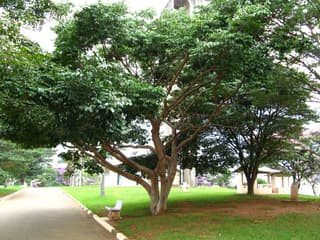
Jatoba
Hymenaea courbaril
The jatoba is a tree native to Brazil and other tropical regions of the Americas, found in the Amazon, Cerrado, Atlantic Forest, Caatinga, and Pantanal. When cultivated, it typically reaches 26 to 50 feet in height, with a wide and dense canopy. The leaves are bifoliate, leathery, and sickle-shaped. The flowers are white to cream-colored and appear between September and November. The fruits are woody pods containing a mealy, sweet pulp surrounding the seeds. The wood is dense and highly valued, and its resin is known as copal.
Rooting Shank
Hymenopellis radicata
Hymenopellis radicata, also known as the Rooting Shank, is an edible mushroom characterized by its long, spindle-shaped stem that extends deep into the ground to decaying roots of deciduous trees. When wet, the cap is distinctly slimy, wrinkled, and colored in brownish to olive tones. It is a fascinating species that indicates the presence of old beech wood beneath the forest floor.
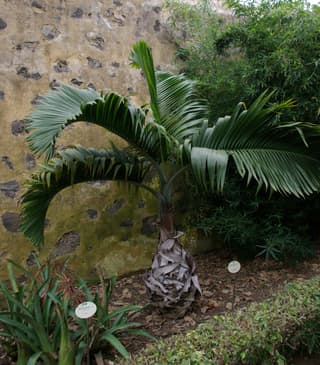
Bottle palm
Hyophorbe lagenicaulis
The bottle palm (Hyophorbe lagenicaulis) is a solitary palm from the Arecaceae family, endemic to Round Island in the Mascarene Islands (Mauritius). It is famous for its smooth, grayish trunk, which is swollen in a bottle shape at the base and tapers toward the crown, supporting a small canopy of 4 to 8 deep green pinnate leaves (young plants often show reddish or orange tones). A slow-growing species, fewer than 10 adult specimens remain in the wild, making it critically endangered, although its ornamental cultivation is widespread in tropical and subtropical climates worldwide.
Brick Cap
Hypholoma lateritium
Hypholoma lateritium, commonly known as the Brick Cap, is a wood-decaying fungus that forms dense clusters on hardwood stumps. It features a characteristic brick-red cap that is darker in the center and lighter toward the edges. Unlike its toxic relative (the Sulphur Tuft), the flesh of this mushroom is milder, though sometimes slightly bitter.
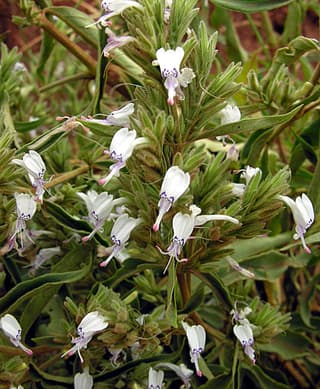
White Ribbon Bush
Hypoestes forskaolii
Hypoestes forskaolii, commonly known as White Ribbon Bush, is a perennial or annual herb native to tropical Africa and the Arabian Peninsula. It belongs to the family Acanthaceae and is prized both as an ornamental plant and for its remarkable medicinal properties. The plant produces smooth, oval leaves forming dense, vivid green foliage, with delicate small flowers that range from white to pale pink. In its natural habitat, it grows under shrubs and trees, thriving in filtered shade and well-drained tropical soils. Of particular scientific interest are its diterpene compounds, which have demonstrated antimicrobial, anticancer, and antioxidant properties in laboratory studies.
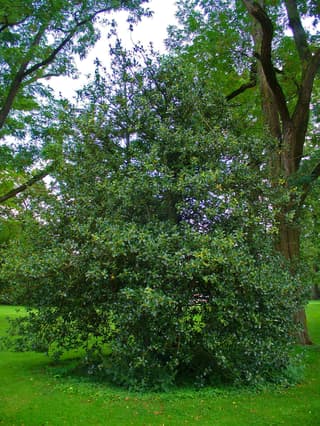
English Holly
Ilex aquifolium
English Holly is a slow-growing evergreen shrub or small tree prized for its glossy, spiny dark-green leaves and bright red winter berries. Native to western and southern Europe, it forms a dense pyramidal habit and is a classic feature of winter gardens and holiday decoration, though its berries are toxic if eaten.
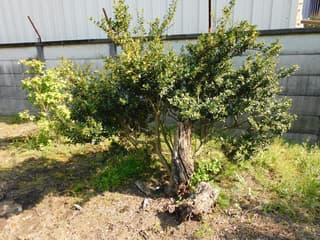
Japanese Holly
Ilex crenata
Ilex crenata, commonly known as Japanese holly, is a dense, slow-growing broadleaf evergreen shrub native to Japan, Korea, and eastern China. Prized as a boxwood substitute, it features small, glossy, spineless leaves and a fine, compact texture that responds beautifully to shearing into hedges, topiary, and bonsai forms. In late spring it produces tiny, inconspicuous greenish-white flowers, followed on female plants by small black berries that persist into winter.
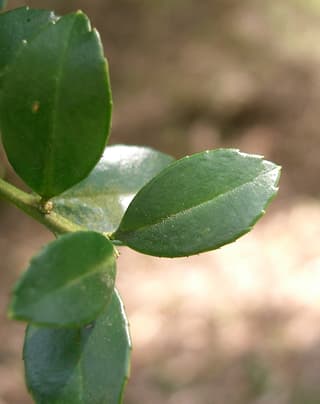
Japanese Holly 'Helleri'
Ilex crenata 'Helleri'
Japanese Holly 'Helleri' is a dwarf, evergreen cultivar of the Japanese holly (Ilex crenata) native to East Asia. It forms a dense, mounded shrub reaching 2 to 4 feet (60-120 cm) in height and width, with small, glossy, dark green leaves that resemble boxwood. Inconspicuous greenish-white flowers appear in spring, followed occasionally by black drupes in the fall. Due to its compact habit and high tolerance for pruning, it is an excellent choice for topiary, low hedges, or garden borders.
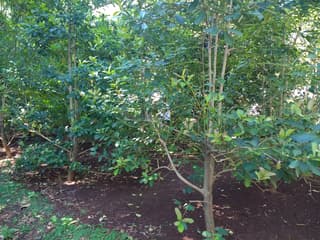
Yerba Mate
Ilex paraguariensis
Yerba mate (Ilex paraguariensis) is an evergreen tree or shrub in the Aquifoliaceae family, native to the subtropical regions of southern Brazil, Paraguay, Argentina, and Uruguay. Its leathery, dark green leaves are the base for chimarrão and tereré, traditional South American beverages rich in caffeine and antioxidants. In the wild, it can reach up to 15 meters in height, but in cultivation, it is generally maintained as a pruned shrub between 3 and 8 meters.
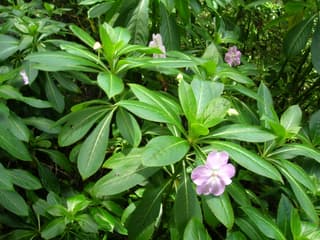
Poor Man's Rhododendron
Impatiens sodenii
Impatiens sodenii, commonly known as Poor Man's Rhododendron, is a perennial subshrub native to Kenya and Tanzania. It grows up to 2.5 meters tall with whorled leaves and produces pink or white flowers year-round. It has received the Royal Horticultural Society's Award of Garden Merit and is widely cultivated as an ornamental plant in tropical and subtropical gardens.
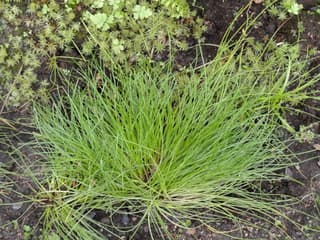
Fiber optic grass
Isolepis cernua
Isolepis cernua is a small sedge (family Cyperaceae) native to temperate regions across several continents, including parts of Europe, Africa, the Americas, and Oceania. It forms dense, delicate clumps of fine, thread-like, dark green leaves, tipped with tiny light brown to greenish spikelets that resemble illuminated fiber optic strands—hence its popular name. It naturally occurs in waterlogged soils, pond margins, marshes, and brackish areas, making it a plant that tolerates and even requires permanently moist soil.
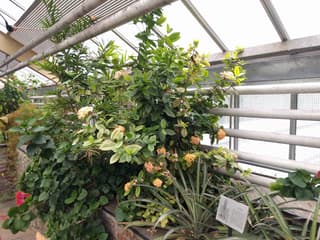
Chinese Ixora
Ixora chinensis
Ixora chinensis, commonly known as Chinese Ixora or Dwarf Ixora, is a tropical evergreen shrub in the Rubiaceae family, native to China and Southeast Asia. It produces dense clusters of small, vibrant flowers in shades of red, orange, pink, yellow, and white, blooming almost year-round in tropical climates. It is widely used in gardens, hedges, and ornamental beds, prized for its long flowering period and compact, dense growth habit.
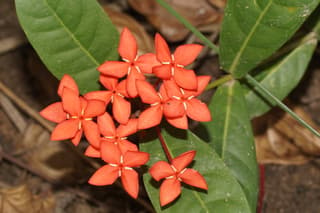
Jungle Geranium
Ixora coccinea
Ixora coccinea, commonly known as jungle geranium or flame of the woods, is a dense, multi-branched evergreen shrub in the family Rubiaceae. Native to Southern India, Bangladesh, and Sri Lanka, it has been widely cultivated across tropical and subtropical regions worldwide for centuries. The plant typically reaches 1.2–1.8 m (4–6 ft) in height under garden conditions, though it can grow to 3.7 m (12 ft) or more in ideal settings. Its glossy, leathery oblong leaves emerge bronzy before maturing to deep dark green, providing an attractive backdrop for its showy flowers. The plant produces spectacular rounded clusters (corymbs) of small, tubular, four-petaled flowers measuring 2–5 inches across. While the classic form bears brilliant scarlet-red blooms, cultivars exist in orange, yellow, pink, and white. In frost-free tropical climates, flowering is nearly continuous year-round, making it one of the most reliable and long-blooming tropical shrubs available. The flowers are mildly fragrant and attract butterflies, hummingbirds, and other pollinators, followed by small dark purple-black berry-like fruits. Ixora coccinea thrives in full sun with consistently moist, well-draining, acidic soil (pH 5.0–5.5) — it is notably sensitive to alkaline conditions, quickly developing iron and manganese chlorosis if soil pH rises above 6.0. It is frost-tender, suited only to USDA zones 10–11 outdoors, but can be grown as a container plant brought indoors in cooler climates. Beyond its ornamental value, Ixora holds significant cultural and medicinal importance — it is sacred in Hindu practice as an offering to Shiva, is the national flower of Suriname, and has a long history of use in Ayurvedic medicine.
What are Medium Plants?
Medium Plants require a bit more attention and basic gardening knowledge. These plants thrive with regular care and some cultivation experience. Ideal for those who already master the basics.
Tips for Growing Medium Plants
medium plants need a balance between attention and freedom. Keep a regular care routine, watch leaves to identify problems early, and adjust watering by season.