Complete Plant Guide
Explore plants by difficulty, season and more. Find the perfect plant for you.
Difficulty
Categories
Plants by City
🗺️ Plants by City3478 plants found
Showing 1369-1404 of 3478

Oriental Beech
Fagus orientalis
Fagus orientalis, commonly known as the Oriental Beech, is a magnificent large deciduous tree native to the Caucasus region, northern Turkey, and northern Iran. It is one of the most impressive broadleaf trees in its natural range, reaching heights of 25–40 metres with a broad, dense, rounded crown. Its smooth silver-grey bark, lush green foliage, and brilliant autumn colours make it a highly valued ornamental and forestry tree. It is closely related to the European Beech (Fagus sylvatica) but is better adapted to hotter, drier climates and grows faster in its early years.
European Beech
Fagus sylvatica
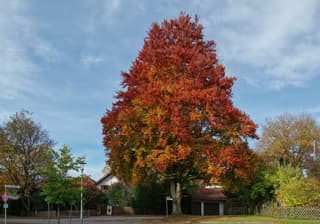
The European beech is a large, long-lived deciduous tree native to Europe, prized for its smooth grey bark, dense glossy foliage and dramatic golden-copper autumn colour. It is widely planted as a specimen tree, in parkland, and as a formal hedge, since it tolerates close pruning and retains dried leaves through winter when clipped.
Black bindweed
Fallopia convolvulus
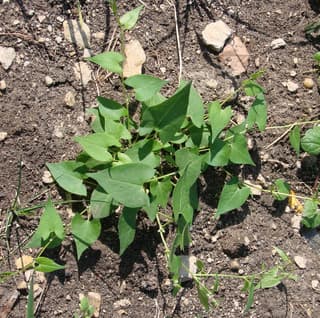
Black bindweed (Fallopia convolvulus, syn. Polygonum convolvulus) is an annual twining vine in the family Polygonaceae, native to Eurasia and North Africa. It has heart-shaped leaves and slender, twining stems that climb over other plants and structures, producing small greenish-white flowers, sometimes tinged pink, from late spring through fall. It is a common agricultural weed found in cultivated fields and disturbed ground, but is also grown as a fast-growing ground cover.

Leopard plant
Farfugium japonicum
Farfugium japonicum, also known as the leopard plant or green leopard plant, is a perennial in the Asteraceae family native to moist coastal areas and stream banks in Japan, Korea, China, and Taiwan. This semi-evergreen plant forms a dense clump of large, round to kidney-shaped leaves with a leathery texture, growing from an underground rhizome on long, fleshy petioles. In the 'Aureomaculatum' cultivar, the leaves are covered with striking yellow spots resembling leopard fur, which gives the plant its name. In autumn and winter, it produces tall flower stalks with clusters of yellow daisy-like flowers. In its natural habitat, it grows in the shade along watercourses, and in gardens, it is used as an ornamental plant for shady areas.

Muriel's Bamboo
Fargesia murielae
Fargesia murielae, also known as Muriel's Bamboo or Umbrella Bamboo, is a clump-forming bamboo native to the Chinese mountain forests. It does not spread via runners and therefore is not invasive. It is characterized by dense, elegantly arching culms and fine, bright green foliage that remains evergreen throughout the year. As one of the hardiest bamboo species, it can permanently withstand temperatures down to approximately -20 °C and even significantly colder for short periods. It flowers only every few decades in a rare, synchronized event (most recently in 1999) and is primarily cultivated for its foliage, not its blooms. Thanks to its dense, non-invasive growth habit, it is very popular as a privacy hedge, a container plant, or a solitary specimen by a garden pond.
Japanese Aralia
Fatsia japonica
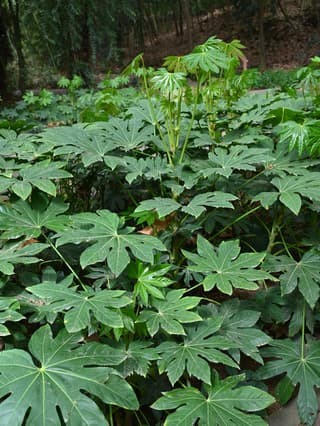
Fatsia japonica is an evergreen shrub native to Japan with dramatic, glossy, hand-shaped leaves that can have 7-11 lobes and grow up to 40 cm wide. Highly valued as an ornamental plant for both indoor spaces and shaded gardens, it is one of the few tropical-looking foliage plants that thrives in deep shade.
Tiger's Jaws
Faucaria bosscheana
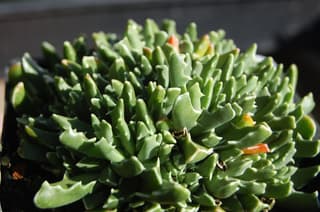
Faucaria bosscheana is a compact succulent from the Aizoaceae family, native to the arid regions of South Africa (Eastern Cape). It forms low rosettes of thick, triangular, grayish-green leaves with soft, interlocking teeth along the margins that resemble the jaws of a feline, hence its common name. In autumn and winter, it produces solitary, bright yellow daisy-like flowers that open during the day. It is a slow-growing plant, ideal for rock gardens, pots, or succulent arrangements in very bright indoor spaces.
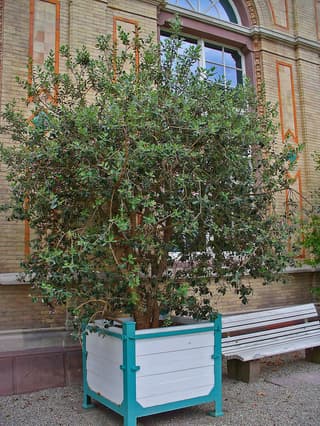
Pineapple Guava
Feijoa sellowiana
The feijoa (Feijoa sellowiana, accepted synonym Acca sellowiana) is an evergreen shrub or small tree in the Myrtaceae family, native to the subtropical highlands of southern Brazil, Uruguay, Paraguay, and Argentina. The leaves are leathery, dark green and glossy on the upper surface, and silvery and tomentose on the lower surface, giving the canopy a characteristic bicolor effect. In late spring to early summer, it produces showy flowers with purple-tinged white petals and long red stamens with yellow pollen: both the petals and the fruits are edible. The fruit, an oval green berry with aromatic pulp, resembles a cross between pineapple and strawberry in flavor. It is a hardy plant, drought-tolerant once established, resistant to salt spray and brief frosts, and widely used as an ornamental hedge and fruit tree in Mediterranean climates.
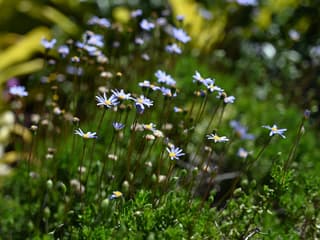
Blue Marguerite
Felicia amelloides
Felicia amelloides is an evergreen perennial (sometimes biennial) plant belonging to the Asteraceae family, native to the southern coast of South Africa, where it grows on sandy dunes and rocky slopes. It forms a small, bushy shrub 50-100 cm tall, with opposite, oval leaves that are rough to the touch due to their covering of fine hairs. From late spring until autumn, it produces numerous daisy-like flower heads, about 3 cm wide, with sky-blue ray florets and a bright yellow center.
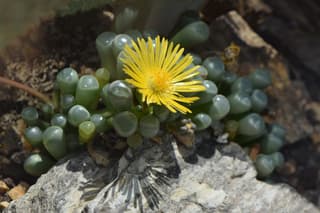
Baby toes
Fenestraria rhopalophylla
Fenestraria rhopalophylla, known as baby toes or window plant, is a succulent from the Aizoaceae family native to the deserts of Namibia and South Africa. Its cylindrical, fleshy leaves grow in tight clusters and feature translucent tips or "windows" that allow light to pass through to the interior, enabling photosynthesis while most of the leaf remains buried in the sand to protect against extreme heat and dehydration. It blooms in summer and fall with small white or yellow daisy-like flowers.
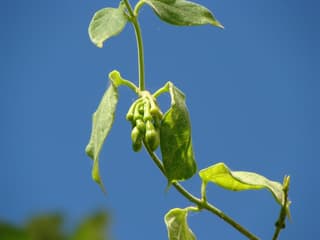
Loroco
Fernaldia pandurata
Loroco (Fernaldia pandurata) is an evergreen climbing vine in the Apocynaceae family, native to the tropical regions of Central America, particularly El Salvador, Guatemala, and Honduras. It is characterized by its twining pubescent stems that climb over fences, pergolas, and nearby trees, and by its fragrant, edible greenish-white flower buds, which are an iconic ingredient in Salvadoran cuisine, especially in pupusas.
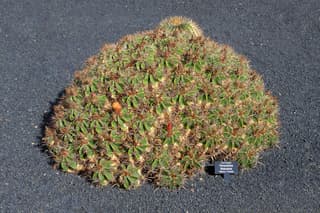
Barrel Cactus
Ferocactus
Ferocactus is a genus of roughly 30 species of barrel-shaped cacti native to the deserts of the southwestern United States and northern Mexico, ranging from California and Arizona to Sonora and Baja California. Young plants start out columnar and gradually swell into the thick, ribbed, barrel-like form that gives the genus its common name. Most species grow as solitary stems covered in dense, often hooked or brightly colored spines, though a few species such as F. robustus and F. glaucescens form clumping colonies over time. In cultivation, barrel cacti are prized as sculptural, low-maintenance succulents for xeriscapes, rock gardens, and sunny windowsills.
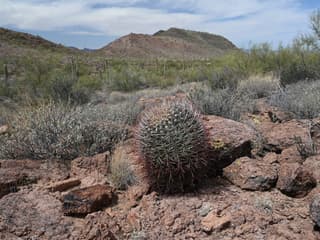
Emory's Barrel Cactus
Ferocactus emoryi
Ferocactus emoryi is a tall, barrel-shaped cactus native to the Sonoran Desert of Arizona, Sonora and Baja California. Young plants are globular and become cylindrical with age, eventually reaching barrel or column form armed with strong, hooked spines. In late summer to early fall it produces bell-shaped yellow, orange or red flowers in a crown at the apex.
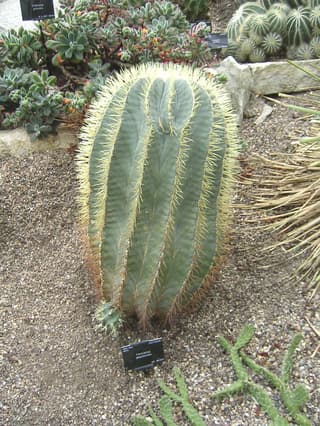
Blue Barrel Cactus
Ferocactus glaucescens
The Blue Barrel Cactus (Ferocactus glaucescens) is a globular to barrel-shaped cactus native to central Mexico, prized for its striking blue-green (glaucous) epidermis and dense crown of golden-yellow radial spines. Mature plants form a compact, ribbed barrel that can reach about 60 cm in height and 50 cm in diameter, eventually clustering into small colonies via basal offsets. In late spring and summer it produces funnel-shaped, lemon-yellow flowers near the crown, followed by small white berry-like fruits. It is a slow-growing, low-maintenance succulent that thrives in full sun and well-draining soil, making it a popular choice for xeriscaping and container gardens.
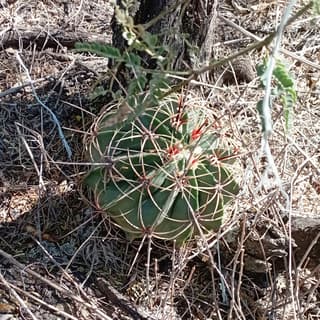
Mexican Barrel Cactus
Ferocactus histrix
Ferocactus histrix, commonly known as the Mexican Barrel Cactus, is a globular succulent species native to the arid regions of Mexico. It is characterized by its bluish-green body with prominent ribs and robust yellowish or reddish radial spines. Over time, the plant may transition from perfectly spherical to slightly columnar. It produces funnel-shaped flowers at the top of the crown, usually in shades of yellow, followed by fleshy fruits.
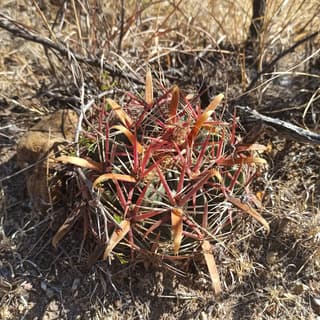
Devils Tongue Cactus
Ferocactus latispinus
Ferocactus latispinus is a solitary, globular to short-cylindrical cactus native to central Mexico, prized for its broad, flattened, hooked central spines that range from red to yellow. It grows slowly to about 30-100 cm tall and 40-45 cm wide, producing funnel-shaped pink to purple (occasionally yellowish) flowers in late autumn and early winter.
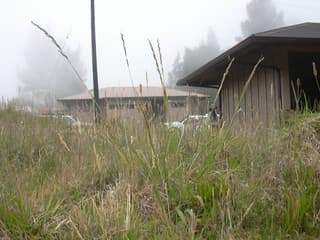
Tall Fescue
Festuca arundinacea
Tall fescue (Festuca arundinacea) is a coarse-textured, cool-season perennial bunchgrass in the Poaceae family, native to Europe and North Africa and now widely grown across temperate regions as a low-maintenance turf and forage grass. It forms dense clumps of dark green, ribbed leaves and can reach up to 1.5 m when left unmowed. It is prized for its deep root system, which provides excellent drought, heat, and wear tolerance compared to other cool-season grasses. Taxonomic note: molecular studies have reclassified the species under the synonyms Schedonorus arundinaceus and, more recently, Lolium arundinaceum, but Festuca arundinacea remains the name most widely used in horticultural and agronomic literature.
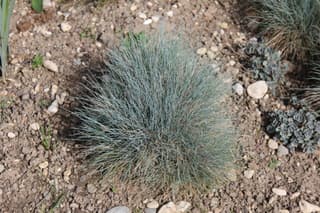
Blue Fescue
Festuca glauca
Blue fescue is a compact, clump-forming ornamental perennial grass known for its striking silvery-blue, needle-thin foliage. Native to Europe, it is prized in low-maintenance gardens, borders, and rock gardens for its year-round color and textural contrast.
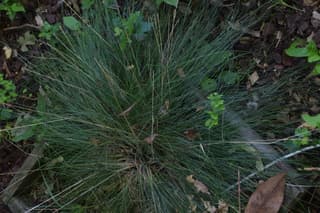
Sheep's Fescue
Festuca ovina
Festuca ovina, commonly known as sheep's fescue, is a densely tufted, cool-season perennial grass in the Poaceae family. Native to Europe and Asia and naturalized across North America, it forms neat, low-growing clumps of narrow, wiry, blue-green to gray-green blades. Non-rhizomatous and slow to spread, it stays put as a tidy mound rather than running through the garden. In late spring to early summer it sends up slender, slightly one-sided flowering panicles on wiry stems. Prized for its fine texture, drought tolerance, and ability to thrive in poor, sandy or rocky soils, sheep's fescue is a low-maintenance choice for rock gardens, borders, slopes, and mass ground-cover plantings.
Red Fescue
Festuca rubra
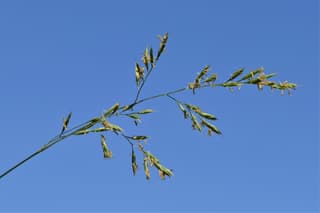
Red Fescue (Festuca rubra) is a cool-season perennial grass in the Poaceae family, widely used for lawns, meadows, and shaded garden areas. Its fine, thread-like, deep green blades form dense tufts that spread slowly via rhizomes, creating a soft, resilient turf. It is valued for its shade tolerance, drought resistance once established, and lower maintenance needs compared to many other turfgrasses.
Sedge
Ficinia
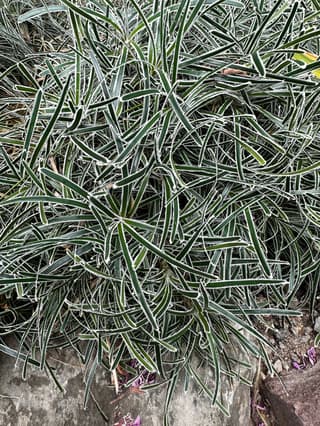
Ficinia is a genus of some 70-90 tufted, evergreen sedges (family Cyperaceae), the great majority endemic to South Africa's Cape Floristic Region, with a few species reaching New Zealand and Australia. Ornamental cultivars, most famously Ficinia truncata 'Ice Crystal', form neat clumps of narrow, grass-like foliage and are prized as low-maintenance border, container or rockery plants. This is a genus-level care profile; individual species vary in size, colour and exact habitat.

Afghan Fig
Ficus afghanistanica
The Afghan Fig (Ficus afghanistanica) is a deciduous fig tree native to the arid, mountainous regions of Afghanistan and Central Asia. It has small, silvery, lobed leaves and reddish bark, distinguishing it from the common fig. Hardy and drought-tolerant, it produces small, dark, sweet edible figs and is grown both as an ornamental container plant and as a landscape tree in warm, dry climates.
Council Tree
Ficus altissima
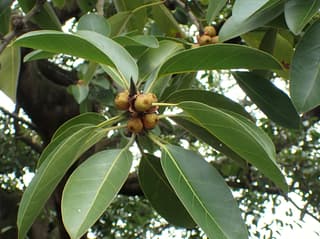
The Council Tree (Ficus altissima) is a large tropical fig native to Southeast Asia, widely grown as an indoor ornamental for its big, glossy, leathery leaves. In the wild it behaves as a "false banyan," sending down aerial roots over host trees. Its common name comes from the historic practice of village communities gathering for meetings and deliberations in the shade of its broad canopy.
Roxburgh Fig
Ficus auriculata
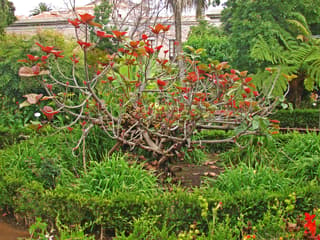
Ficus auriculata, commonly known as the Roxburgh fig or Elephant Ear fig, is a striking tropical tree native to South and Southeast Asia (India, Nepal, southern China). It is famous for its enormous heart-shaped leaves that can reach up to 38 cm (15 inches) in diameter, and for its edible figs that grow directly from the trunk and main branches in a phenomenon known as cauliflory.
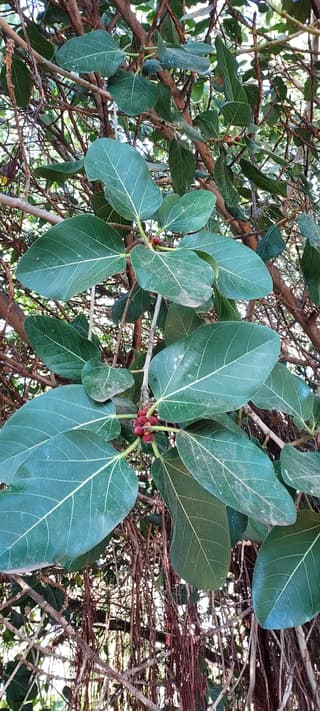
Indian Banyan
Ficus benghalensis
The Indian Banyan (Ficus benghalensis) is one of the world's most remarkable trees, native to the Indian subcontinent. Famous for its aerial roots that descend to the ground and become secondary trunks, it can spread across entire acres in the wild. As a houseplant, it is grown in the compact "Audrey" form, beloved for its large velvety deep-green leaves and for being far more forgiving than the fiddle leaf fig.
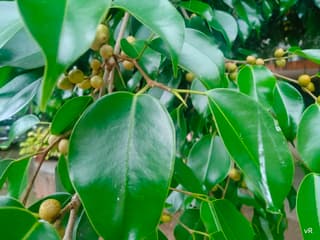
Weeping Fig
Ficus benjamina
The Weeping Fig is an elegant tropical tree native to Southeast Asia and Australia, prized for its gracefully drooping branches and glossy, dark green leaves. In the wild, it can reach up to 50 feet tall, though as a houseplant it typically grows 3-10 feet. It is the official tree of Bangkok, Thailand. Known for being sensitive to environmental changes, it may drop leaves when moved but recovers well with consistent care. An excellent air purifier, it effectively removes formaldehyde and other pollutants from indoor air.
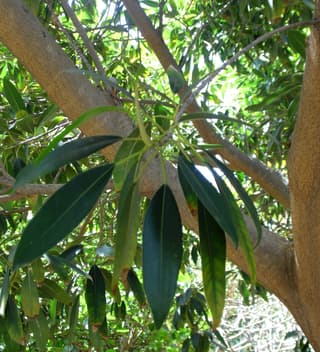
Alii Fig
Ficus binnendijkii
Ficus Alii (Ficus binnendijkii) is an elegant evergreen ornamental tree from the Moraceae family, native to Southeast Asia. It is characterized by long, narrow, leathery willow-like leaves that hang from thin, flexible branches. It grows slowly and can reach a height of up to 300 cm indoors with a spread of around 150 cm. Due to its upright, slender growth habit, it is popular as a specimen plant for room corners and is more resistant to fluctuating conditions than other Ficus species.
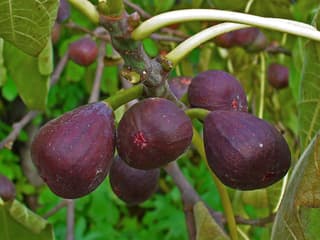
Common Fig
Ficus carica
The Common Fig (Ficus carica) is one of the oldest cultivated fruit trees in the world, native to the Mediterranean region and Western Asia. This deciduous, drought-tolerant tree produces sweet figs prized in cooking and traditional medicine. Its deeply lobed leaves and gnarled gray trunk offer ornamental beauty throughout the seasons.
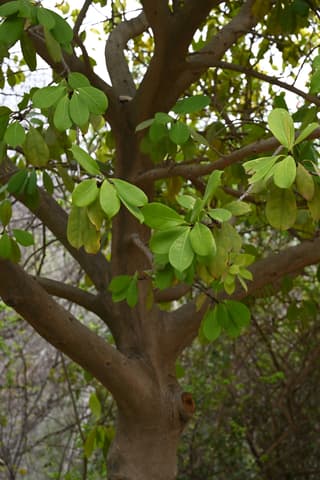
African Fig
Ficus cyathistipula
Ficus cyathistipula, commonly known as the African Fig, is a robust evergreen tree native to the tropical forests of Central and Western Africa. It features large, leathery, deep glossy green leaves with a characteristic obovate shape. It is one of the most resilient Ficus species for indoor cultivation, being more tolerant of humidity and light variations than Ficus benjamina. Its persistent cup-shaped stipules at the base of the leaves give rise to its scientific name.
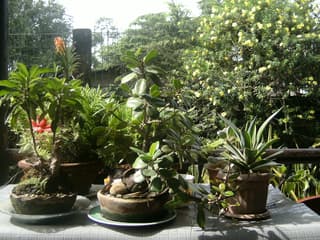
Rubber Plant
Ficus elastica
A hardy tropical plant native to Southeast Asia, known for its large, glossy, dark green leaves. One of the most popular houseplants due to its striking appearance and easy care. Can grow up to 6-10 feet indoors and is an excellent air purifier.
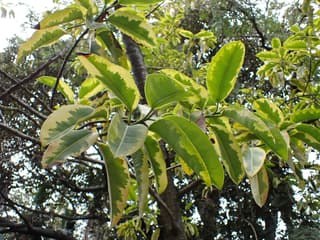
Rubber Plant 'Tineke'
Ficus elastica 'Tineke'
The Ficus elastica 'Tineke' is a striking variegated cultivar of the classic rubber plant, part of the Moraceae family. Its large, glossy, ovate leaves display a marbled pattern of dark green, light green, and creamy white to pink margins, making it one of the most sought-after variegated ficus for indoor decor. In its native tropical range across South and Southeast Asia, the parent species can grow into a towering tree, but as a houseplant Tineke typically stays between 1.5 and 3 meters tall. Like other ficus, it exudes a milky latex sap when cut or damaged, which is mildly toxic and can irritate skin, eyes, and mucous membranes in both pets and people. Because variegated tissue contains less chlorophyll, Tineke needs brighter light than plain-leaf rubber plants to maintain vivid coloring and avoid reverting to solid green growth.
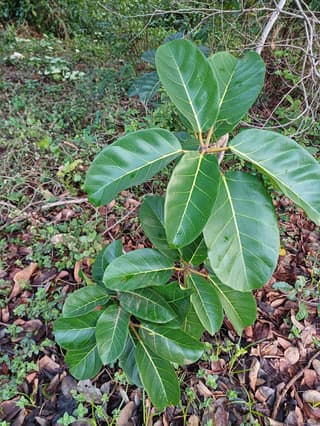
Giant-leaved Fig
Ficus lutea
Ficus lutea, commonly known as the Giant-leaved Fig or African Fig Tree, is a majestic fig tree native to tropical and southern Africa. It is distinguished by its exceptionally large, glossy leaves with prominent yellow veining, ranging from 13 to 43 cm in length. In its natural habitat it can reach 25 metres in height with a crown spanning 30–45 metres. A member of the Moraceae family, it can adopt a strangler fig habit in the wild.
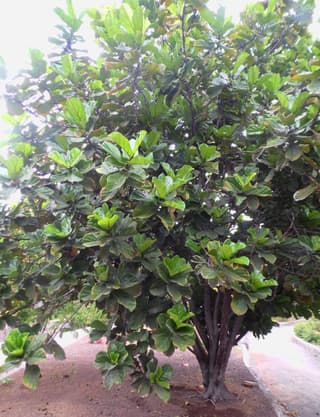
Fiddle Leaf Fig
Ficus lyrata
The Fiddle Leaf Fig is a stunning tropical plant native to West African rainforests, prized for its large, violin-shaped glossy green leaves. It has become one of the most popular houseplants for its dramatic architectural presence. In the wild, it can grow up to 40 feet tall, while indoors it typically reaches 6-10 feet. Known for being somewhat finicky, it rewards patient care with spectacular foliage.
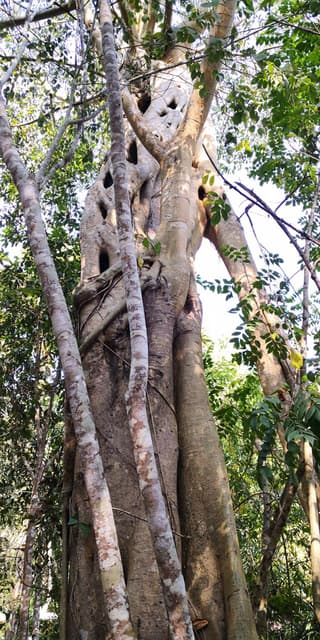
Banana Leaf Fig
Ficus maclellandii
Ficus maclellandii, widely known as the banana leaf fig or Ficus Alii, is an evergreen tree in the fig family native to Southeast Asia, India, and southern China. Its long, narrow, glossy leaves resemble banana foliage and give the popular 'Alii' cultivar an elegant, slender profile. Grown indoors as a striking floor plant, it forms a dense, upright canopy and adapts well to typical home conditions once established.
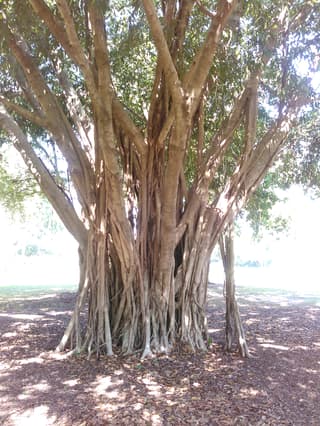
Moreton Bay Fig
Ficus macrophylla
Ficus macrophylla, known as the Moreton Bay Fig or Australian Banyan, is a majestic large evergreen tree native to eastern Australia. Belonging to the Moraceae family, it can reach over 60 meters in height in the wild, with dramatic aerial roots and a sweeping canopy that can cover areas equivalent to several football fields. It is widely planted in parks, public gardens, and boulevards of tropical and subtropical cities worldwide. As an indoor plant, it grows slowly in containers and serves as a striking architectural focal point.
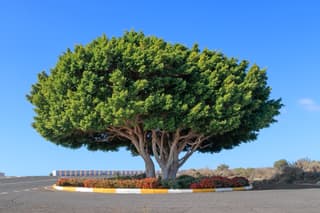
Chinese Banyan
Ficus microcarpa
Ficus microcarpa, commonly known as the Chinese Banyan or Indian Laurel, is a large evergreen fig tree native to South and Southeast Asia and Australia. Renowned for its glossy dark-green leaves, distinctive aerial roots, and ability to form impressive canopies, it is widely planted as a street tree in warm climates and is a favourite bonsai subject worldwide. It is often confused with Ficus retusa, but Ficus microcarpa is the currently accepted name.
Find the Perfect Plant
Our plant guide helps you find ideal species for your experience level and time of year.
Browse by Difficulty, Season & More
Use the filters below to narrow this catalog by care difficulty, season, environment, or search directly by name. Each filter leads to a focused list tailored to your specific growing conditions.