Complete Plant Guide
Explore plants by difficulty, season and more. Find the perfect plant for you.
Difficulty
Categories
Plants by City
🗺️ Plants by City3478 plants found
Showing 1405-1440 of 3478
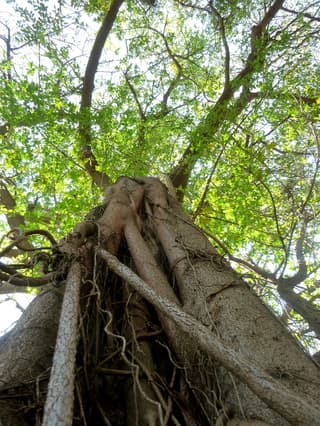
Natal Fig
Ficus natalensis
Ficus natalensis, commonly known as the Natal fig, is an evergreen tree in the fig family (Moraceae), native to eastern and southern Africa, ranging from north-eastern South Africa up through Uganda and Kenya. In the wild it can grow from 10 to 30 meters tall, forming a wide-spreading crown with characteristic aerial roots typical of strangler figs. Its leaves are glossy, elliptical and leathery, and it bears small reddish or yellowish figs. Thanks to its vigorous growth, thickening trunk, and excellent tolerance to pruning and wiring, it has become one of the most popular species for bonsai cultivation and is also grown as a low-maintenance houseplant.

Punjab Fig
Ficus palmata
Ficus palmata, known as the Punjab Fig or Wild Himalayan Fig, is a tough deciduous fig native to the dry, rocky slopes of the western Himalayas, from Pakistan and northern India to Afghanistan and the Arabian Peninsula. Unlike its cultivated cousin Ficus carica, this wild fig thrives in poor, well-drained soil under full sun, producing small sweet fruits eaten fresh or dried by local communities.
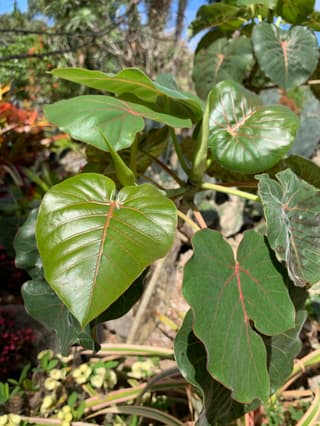
Rock Fig
Ficus petiolaris
Ficus petiolaris, the rock fig, is a dry-deciduous fig tree native to the rocky canyons and cliffs of Baja California, Sonora, and south to Oaxaca in Mexico. In the wild it grows 6-10 m tall, its roots gripping bare stone in search of soil and swelling into a striking caudex-like base. Cultivated specimens are prized for their heart-shaped leaves with rose-tinted veins and are popular as container and bonsai subjects.
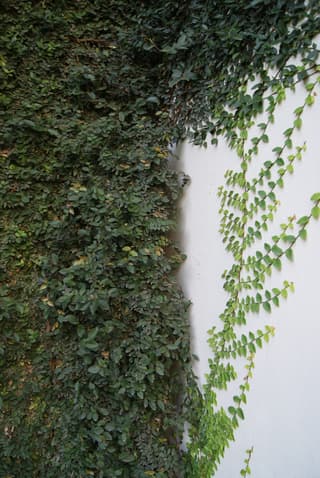
Creeping Fig
Ficus pumila
Ficus pumila is a vigorous, fast-growing evergreen vine native to East Asia. Known for its ability to cling to walls and surfaces with aerial rootlets, this versatile plant produces small, heart-shaped leaves that create a lush green carpet. Indoors it makes an elegant trailing or climbing houseplant, while outdoors it serves as an excellent ground cover or wall climber in temperate and tropical climates.
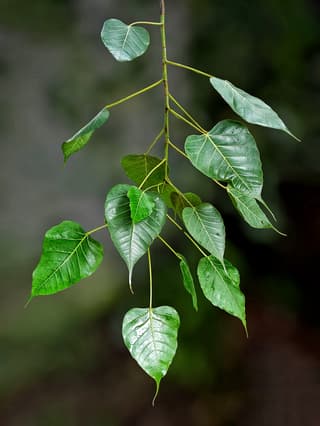
Sacred Fig
Ficus religiosa
Ficus religiosa, native to the Indian subcontinent and Indochina, is a large semi-evergreen fig tree in the Moraceae family. In the wild it develops a broad, spreading canopy with distinctive heart-shaped, long-tipped leaves that shimmer and rustle in the slightest breeze, a trait celebrated in Buddhist and Hindu literature. Grown as a bonsai or potted specimen it stays compact while retaining its iconic drip-tip foliage.
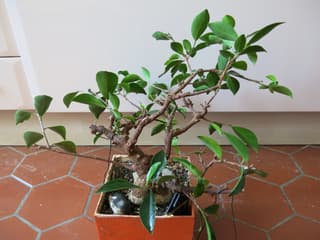
Ginseng Ficus
Ficus retusa
Ficus retusa, commonly known as the Ginseng Ficus or Banyan Fig, is a tropical tree species native to Southeast Asia (Malesia). It is widely cultivated as a bonsai due to its characteristically swollen aerial roots, sculptural trunk, and small, glossy, oval leaves. It is considered one of the most resilient and beginner-friendly indoor bonsai species in the world.

Common Wild Fig
Ficus thonningii
Ficus thonningii is an evergreen African fig that often begins life as an epiphyte, dropping aerial roots that can eventually envelop a host tree. It forms a broad, dense crown of glossy dark-green leaves over smooth pale-grey bark, and is widely grown as a shade tree, a hardy houseplant and a popular bonsai subject.
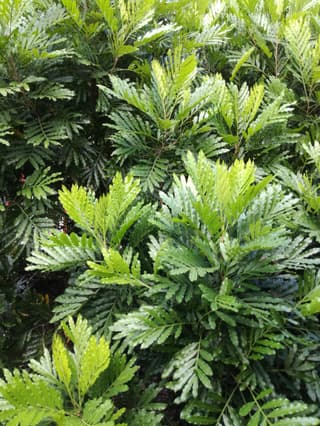
Fern Tree
Filicium decipiens
Filicium decipiens, commonly known as the Fern Tree, is a small to medium-sized tree native to East Africa and South Asia. It is widely appreciated in landscaping for its dense and elegant foliage, with pinnate leaves that resemble fern fronds. It features a rounded, symmetrical canopy with glossy green leaves and a distinctive winged rachis. It is an excellent choice for tropical gardens or as a statement plant in large pots for well-lit interiors.
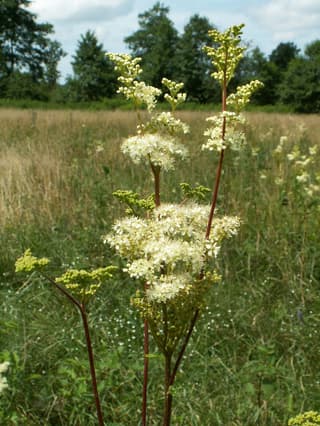
Meadowsweet
Filipendula ulmaria
Meadowsweet (Filipendula ulmaria) is a perennial herb in the rose family (Rosaceae), native to Europe and Western Asia. The plant typically grows in damp meadows, marshes, and along riverbanks, reaching heights of 3–5 feet with sturdy, furrowed stems. The leaves are dark green and serrated on the upper side, while the underside is whitish and downy. In summer and early fall, it bears dense clusters of small, creamy-white flowers with a strong, sweet fragrance reminiscent of almonds and antiseptic balsam. Meadowsweet is historically significant as the source of salicylic acid, the precursor to acetylsalicylic acid (aspirin), which was developed by Bayer in 1899.
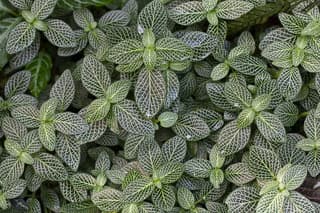
Nerve Plant
Fittonia albivenis
Fittonia albivenis is a tropical plant native to the rainforests of Peru. It is characterized by its stunning deep green leaves with white or red veins that give it a mosaic appearance. The name "nerve plant" comes from the network of veins that resembles a nervous system. It belongs to the Acanthaceae family and was named after Elizabeth and Sarah Mary Fitton, two Irish botanist sisters from the 19th century.
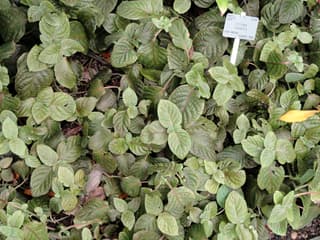
Giant Nerve Plant
Fittonia gigantea
The Giant Nerve Plant (Fittonia gigantea) is a mat-forming evergreen perennial native to the tropical rainforests of Ecuador and Peru, in the Acanthaceae family. Its oval leaves, up to 16 cm long, display deep green tones traced by striking dark red veins that resemble a network of nerves - the source of its common name. It spreads as a low, creeping groundcover, making it a favorite for terrariums, greenhouse cabinets, and high-humidity indoor spaces.
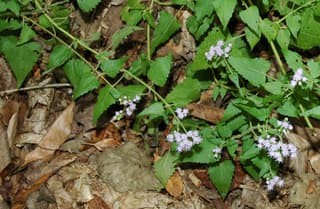
pink thoroughwort
Fleischmannia incarnata
Pink thoroughwort is a native perennial wildflower in the aster family, forming a loosely branching, sprawling clump of catnip-like, triangular-to-heart-shaped leaves. From late summer into fall it produces flat-topped clusters of small, ray-less flower heads in soft pink to purple (occasionally whitish) shades that draw butterflies, skippers, and native bees. Native to the southeastern and south-central United States and northeastern Mexico, it grows naturally in moist woodlands, bottomland forests, thickets, and along streambanks, where its airy habit lets it lean informally against neighboring plants. Once established it tolerates both ordinary garden soil and the high-calcium soils that trouble many acid-loving shrubs.
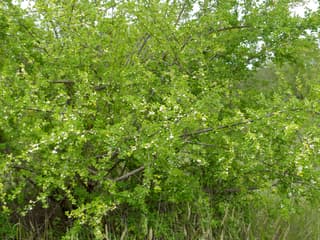
White-Berry Bush
Flueggea virosa
Flueggea virosa, commonly known as the white-berry bush or simpleleaf bushweed, is a woody, multistemmed shrub of the Phyllanthaceae family, native to the tropical and subtropical regions of Africa and Asia. It grows rapidly into dense thickets 2 to 4 meters tall, with slender branches that can appear thorn-like. Its flowers are small and creamy-green, understated but attractive to pollinators, followed by round, fleshy white berries that turn sweet upon ripening and are relished by birds and local wildlife. This extremely hardy plant tolerates drought and heat well, thriving even in poor, rocky soils, which makes it a valuable choice for low-maintenance landscaping, hedging, and land restoration projects. In traditional African medicine, its roots, bark, and fruits are widely used to treat snakebites, malaria, diarrhea, and inflammation.
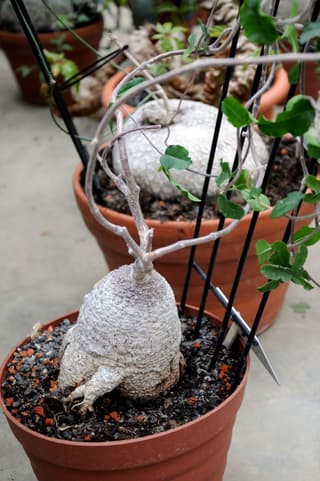
Fockea
Fockea
Fockea is a genus of caudiciform succulent vines in the family Apocynaceae, native mainly to South Africa (the Cape Provinces and KwaZulu-Natal). The most widely cultivated species, Fockea edulis, commonly known as "Hottentot bread," develops a sculptural, grey, tuberous caudex that can reach up to 60 cm in diameter, acting as a water reservoir that helps the plant survive long dry periods. Thin, twining stems emerge from the caudex and can stretch several meters under good conditions. The plant is semi-deciduous, slowing down and sometimes shedding part of its foliage during the cooler, drier winter months, though it rarely goes fully dormant. Small, star-shaped, greenish-white, lightly scented flowers appear in late spring and summer. The milky latex sap is toxic and can irritate skin and eyes; the tuberous root, while historically eaten by indigenous peoples after processing, should not be consumed without proper preparation. Fockea is slow-growing and highly prized among caudiciform succulent collectors for its unique sculptural form.
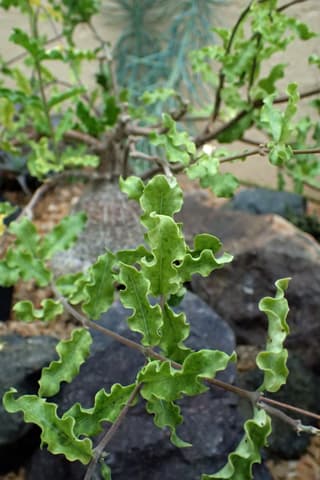
Hottentot Bread
Fockea edulis
Fockea edulis is a caudiciform succulent vine native to the arid savannahs of South Africa and Namibia. Above ground it produces thin, twining stems with small, leathery leaves that scramble over rocks and shrubs; below (or partly above) the soil sits a large, gray, warty tuber (caudex) that can grow to 60 cm or more across over many decades. The tuber gives the plant its common name, "Hottentot bread," referencing the traditional use of the starchy root as an emergency food source by the Khoikhoi people of southern Africa, after careful preparation to remove bitter compounds. Slow-growing and long-lived, it is prized by collectors as a caudiciform specimen and container plant.
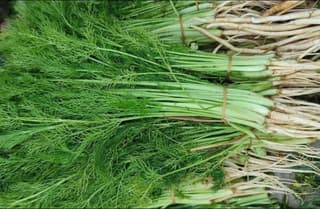
Fennel
Foeniculum vulgare
Fennel (Foeniculum vulgare) is a hardy aromatic perennial herb in the Apiaceae family, native to the Mediterranean region. With feathery, anise-scented foliage and bright yellow umbel flowers in summer, it can reach up to 6 feet (180 cm) tall. Fennel is one of the most versatile herbs, prized for its culinary, medicinal, and ornamental value.

Willow moss
Fontinalis antipyretica
Willow moss (Fontinalis antipyretica) is an evergreen aquatic moss from the Fontinalaceae family that grows exclusively submerged in water—in streams, rivers, and lakes across Europe, Asia, Africa, and North America. It forms long, branched clumps with stiff, three-ranked leaves that can reach lengths of up to 60 cm. Instead of roots, it attaches itself to submerged stones, branches, and other hardscape using rhizoids. Due to its low maintenance and decorative appearance, it is a popular plant in cold-water and moderately tempered aquariums, where it also serves as a hiding place for shrimp and fry. The specific epithet "antipyretica" refers to the medieval use of this moss for extinguishing chimney fires.
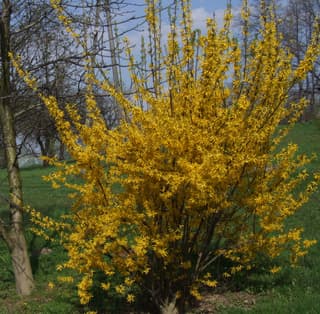
Border Forsythia
Forsythia x intermedia
Forsythia x intermedia (Border Forsythia) is a fast-growing, deciduous ornamental shrub in the olive family (Oleaceae), a hybrid cross between Forsythia viridissima and Forsythia suspensa. In early spring, before the leaves emerge, its slender, arching branches are covered in dense, golden-yellow, bell-shaped flowers, making it one of the earliest and most striking indicators of spring in gardens. At maturity, it can reach 8 to 10 feet (2.5-3 meters) in height and 10 to 12 feet (3-3.5 meters) in width, and is frequently planted as a standalone specimen or as a hedge.
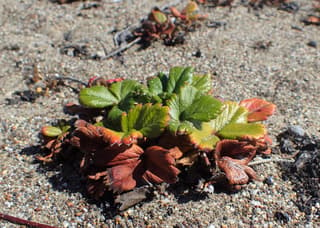
Beach Strawberry
Fragaria chiloensis
Fragaria chiloensis, commonly known as Beach Strawberry or Coastal Strawberry, is a low-growing perennial native to the Pacific coastlines of the Americas, from Alaska to Chile and Argentina. It is one of the two parent species of the modern cultivated strawberry (Fragaria × ananassa). The plant produces white to pale red, highly aromatic fruits and forms dense ground-covering mats via stolons. Its dark green, glossy trifoliate leaves may turn reddish in autumn, adding ornamental value.
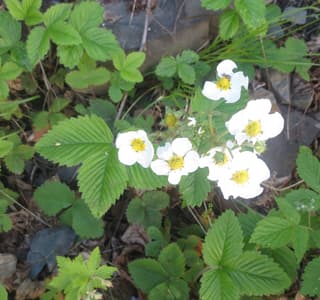
Musk Strawberry
Fragaria moschata
Fragaria moschata, commonly known as the musk strawberry or hautbois strawberry, is a herbaceous perennial in the rose family (Rosaceae), native to Central Europe and temperate Asia. It forms a clump- and mat-forming ground cover that spreads slowly by runners, producing small, deep red berries prized for an intensely aromatic flavor often described as a blend of strawberry, raspberry, and pineapple. Unlike modern garden strawberries, most musk strawberry plants are functionally dioecious, so both male (pollinator) and female/hermaphrodite plants are needed for good fruit set.
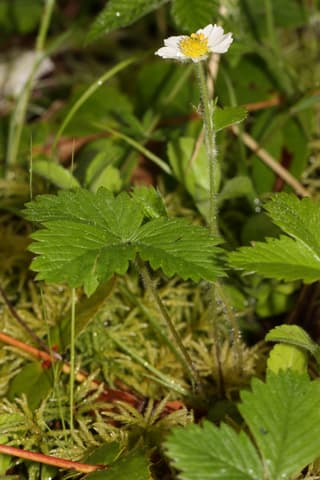
Wild Strawberry
Fragaria vesca
Fragaria vesca, commonly known as Wild Strawberry or Woodland Strawberry, is a delicate perennial native to Eurasia and North America. It produces small, intensely aromatic red fruits that are prized for their exceptional flavour — far superior in taste to cultivated varieties. Its white five-petalled flowers and tri-foliate leaves make it an attractive ground cover in gardens, meadows, and woodland edges.
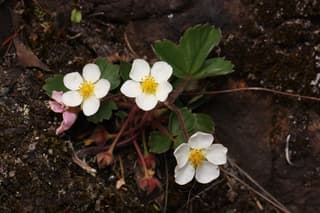
Virginia Strawberry
Fragaria virginiana
Fragaria virginiana, commonly known as the Virginia Strawberry or Wild Strawberry, is a native North American perennial groundcover belonging to the Rosaceae family. Found from Newfoundland to Georgia and westward to Oklahoma, it is one of the two parent species of the modern cultivated strawberry (Fragaria × ananassa). It forms low-growing colonies via stolons, producing small but intensely flavored red berries and delicate five-petaled white flowers in spring. It thrives in full sun to partial shade and is highly valued for erosion control, pollinator support, and edible landscaping.
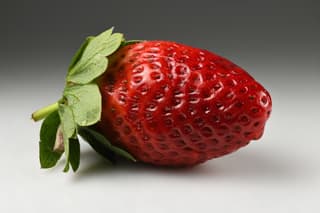
Strawberry
Fragaria x ananassa
The strawberry plant (Fragaria x ananassa) is a perennial herbaceous plant known worldwide for its delicious red fruits. It features vibrant green trifoliate leaves and delicate white flowers that give rise to the berries.
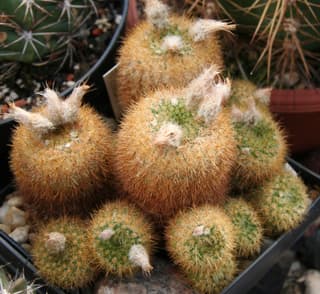
Dwarf Frailea
Frailea pumila
Frailea pumila is a tiny cactus native to the grasslands of southern Brazil, Uruguay, and Argentina. Belonging to the family Cactaceae, it rarely exceeds 5 cm in diameter. Its most remarkable trait is cleistogamous flowering: its yellow flowers develop, self-pollinate, and set seed without ever opening — a silent reproductive miracle adapted to unpredictable environments.
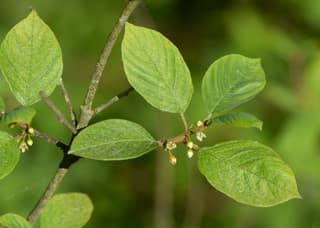
Buckthorn
Frangula
Frangula is a genus of approximately 56 species of deciduous or evergreen shrubs and small trees in the family Rhamnaceae, commonly known as buckthorns. They have a near-cosmopolitan distribution across Europe, the Americas, and large parts of Asia. Frangula species are characterized by alternate simple leaves, spineless branches, buds without scales, small five-petaled flowers, and two- to four-seeded berry-like fruits dispersed by birds. The bark and berries have a long history of medicinal use as natural laxatives. Several species, notably Frangula alnus, are considered invasive in parts of North America.
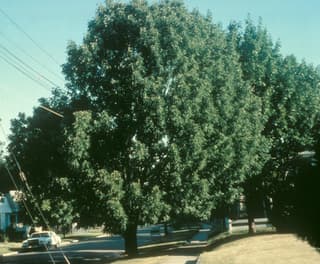
Ash (genus)
Fraxinus
Fraxinus is a genus of flowering plants in the olive family Oleaceae. It contains 45–65 species of usually medium to large trees, mostly deciduous, though a few subtropical species are evergreen. Common species include European ash (F. excelsior), white ash (F. americana), and green ash (F. pennsylvanica). Ash trees are important landscape trees valued for their large canopy, autumn color, and timber.
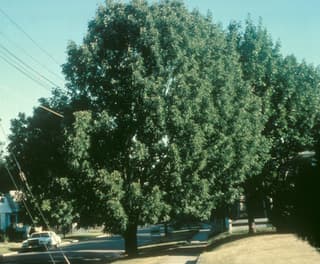
White ash
Fraxinus americana
White ash (Fraxinus americana) is a large, fast-growing deciduous shade tree native to eastern and central North America. Part of the olive family (Oleaceae), it features odd-pinnate compound leaves with 5-9 leaflets that turn yellow to purple in fall, and can reach 60-80 feet tall in the landscape.
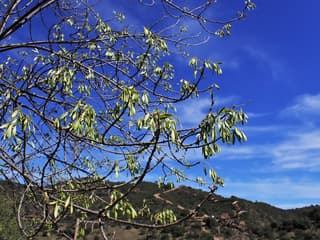
Narrow-leaved Ash
Fraxinus angustifolia
Fraxinus angustifolia, commonly known as narrow-leaved ash, is a medium to large deciduous tree native to Southern Europe, Northwest Africa, and Southwest Asia. It belongs to the family Oleaceae and can reach heights of 20 to 30 meters. Its pinnate leaves with slender, characteristic leaflets turn yellow and reddish in autumn. It flowers in spring before leaf emergence, producing small purplish-green flowers pollinated by wind.
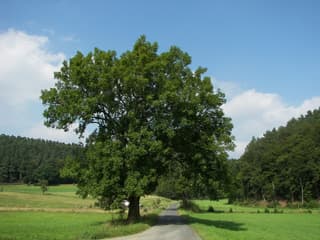
European Ash
Fraxinus excelsior
European ash (Fraxinus excelsior) is a large deciduous tree native to Europe, belonging to the Oleaceae family. It can grow 18-24 meters tall, with a rounded crown and pinnately compound leaves. Its small, petal-less flowers appear before the leaves in spring. A moderately fast-growing species, it has long been valued as an ornamental and shade tree, but is now severely threatened by ash dieback disease (caused by the fungus Hymenoscyphus fraxineus) and the emerald ash borer.
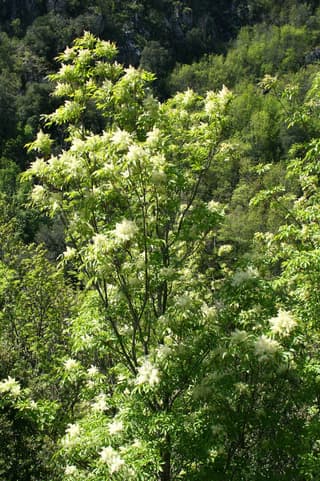
Manna Ash
Fraxinus ornus
A medium-sized deciduous tree native to southern Europe and southwest Asia, prized for its showy clusters of fragrant creamy-white flowers in spring and its historic role as the source of manna, a sweet sap harvested from cuts in the bark. It has odd-pinnate leaves with 5 to 9 leaflets and a rounded crown, reaching about 9 meters in cultivation.
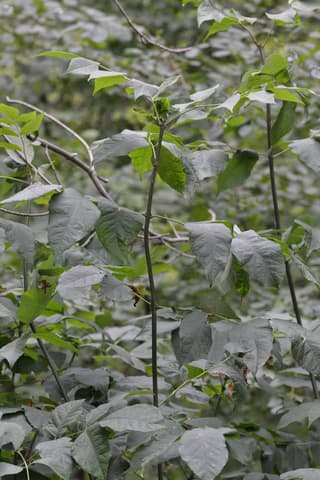
Green Ash
Fraxinus pennsylvanica
Green ash (Fraxinus pennsylvanica) is a fast-growing deciduous tree native to eastern North America. It is one of the most widely distributed ash species on the continent, thriving from the Atlantic coast to the Great Plains. Known for its adaptability to a wide range of soil conditions — including wet, dry, and compacted soils — it has long been a popular choice for urban streetscapes and residential landscapes. The tree produces small greenish-purple flowers in spring before the leaves emerge, and its foliage turns a brilliant golden yellow in autumn. Unfortunately, green ash faces an existential threat from the emerald ash borer, an invasive beetle that has decimated ash populations across North America.
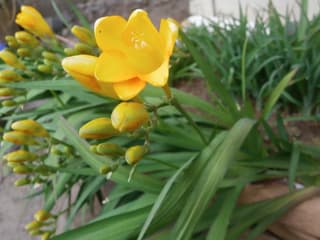
Freesia
Freesia refracta
Freesia refracta is a bulbous (cormous) perennial native to South Africa (Cape Province) belonging to the iris family (Iridaceae). Its highly fragrant, funnel-shaped flowers bloom in one-sided clusters on thin, arched stems, typically in shades of cream, white, and yellow, sometimes with purple tints on the reverse of the petals. Sword-shaped, bright green leaves emerge from near the ground. It is primarily grown as a cut flower, garden ornamental, and fragrant potted plant; it blooms in winter and spring before entering a dormant period.
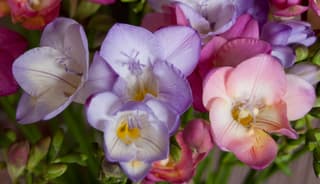
Freesia
Freesia x hybrida
Freesia (Freesia x hybrida) is a bulbous plant native to South Africa, celebrated worldwide for its stunning spike-shaped flowers and intensely sweet, powdery fragrance. Hybrid Freesias produce blooms in a wide range of colors — white, yellow, pink, purple, red, and orange — and are beloved in gardens, wedding arrangements, and cut flower displays.
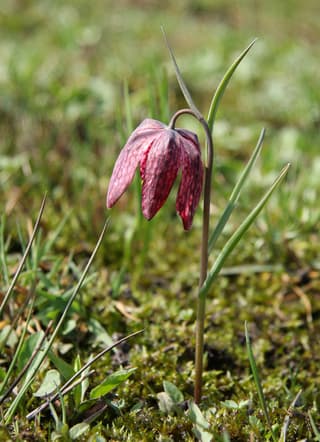
Fritillary
Fritillaria
Fritillaria is a genus of spring-flowering bulbous plants in the Liliaceae family, comprising over 100 species native to temperate regions of the Northern Hemisphere. Known for their nodding, bell-shaped flowers in shades of purple, white, yellow, orange, and red—often with distinctive checkered patterns—these elegant plants bring drama to spring gardens.
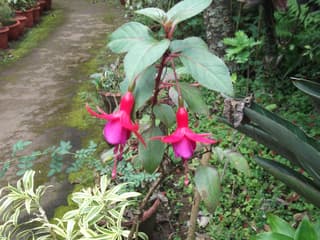
Fuchsia
Fuchsia
Fuchsia, also known as Lady's Eardrops, is an iconic ornamental plant recognized for its pendulous flowers that display vibrant and contrasting colors. Primarily originating from Central and South America, this plant has become a symbol of elegance in gardens and on balconies. Its flowers have a tubular shape with sepals that open to reveal inner petals, often in shades of purple, pink, red, and white.
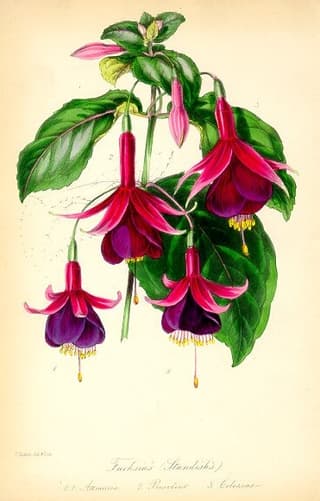
Standish's Fuchsia
Fuchsia × standishii
Fuchsia × standishii is a historic 19th-century hybrid resulting from the cross between F. lycioides and F. magellanica. It produces pendulous tubular flowers in shades of red, purple, and pink, blooming abundantly in spring and summer. A classic choice for hanging baskets and ornamental pots.
Find the Perfect Plant
Our plant guide helps you find ideal species for your experience level and time of year.
Browse by Difficulty, Season & More
Use the filters below to narrow this catalog by care difficulty, season, environment, or search directly by name. Each filter leads to a focused list tailored to your specific growing conditions.