Complete Plant Guide
Explore plants by difficulty, season and more. Find the perfect plant for you.
Difficulty
Categories
Plants by City
🗺️ Plants by City3478 plants found
Showing 2197-2232 of 3478
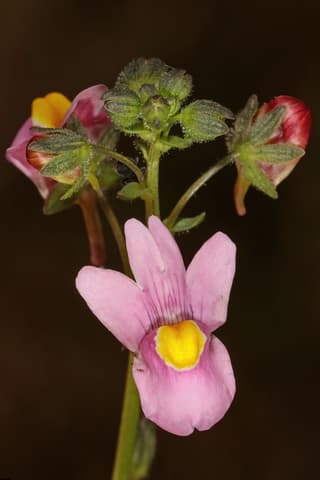
Mauve Nemesia
Nemesia fruticans
Nemesia fruticans is a perennial plant native to South Africa, valued as a cool-season ornamental for its abundant and showy flowers in a wide range of colors: white, yellow, orange, pink, red, purple, and blue. It belongs to the Scrophulariaceae family and grows in a compact, bushy habit, reaching between 8 and 20 inches (20-50 cm) in height. It is ideal for pots, hanging baskets, garden borders, and pollinator gardens. It blooms most vigorously in spring and fall when temperatures are cool, and may slow its flowering during the hottest summer months.
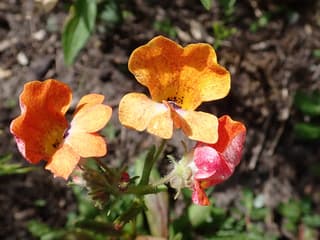
Cape Jewels
Nemesia strumosa
Nemesia strumosa, commonly known as Cape jewels, is a compact, cool-season flowering annual native to the southwestern Cape provinces of South Africa. A relative of snapdragons, it produces masses of small, pouch-shaped, often bicolored flowers in shades of white, cream, yellow, orange, pink, red, and purple from spring through fall. Its fast growth and mounding habit make it a popular choice for borders, containers, and hanging baskets, though it tends to decline once summer heat sets in.
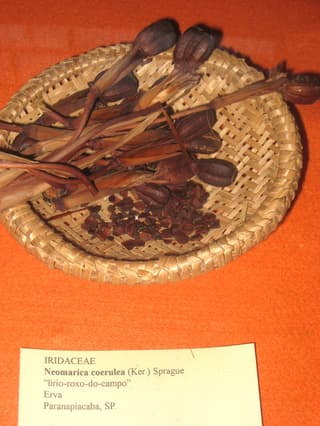
Walking Iris
Neomarica caerulea
Neomarica caerulea, commonly known as Walking Iris or Apostle Plant, is a rhizomatous perennial native to Brazil. It forms dense upright clumps of sword-shaped, fan-like dark green leaves. In late spring through summer, branching flower stems bear a succession of stunning blue-purple iris-like flowers adorned with intricate white, yellow, and cinnamon markings — each lasting only one day but appearing in waves for weeks.
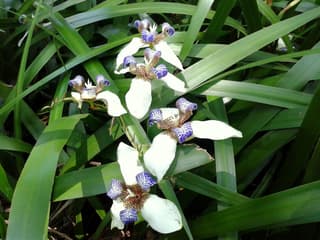
White Walking Iris
Neomarica candida
The White Walking Iris is a perennial rhizomatous herb from the Iridaceae family, native to the Brazilian coast (from Espírito Santo to Rio Grande do Sul). It forms clumps of fan-shaped leaves, resembling a small lily or orchid. Between spring and summer, it produces delicate flowers with white sepals streaked with brown at the base and three recurved blue petals; each flower lasts only one day but they renew continuously. It is a hardy plant that tolerates sea spray and wind, and it "walks" through the garden by forming plantlets at the tips of its flower stalks.
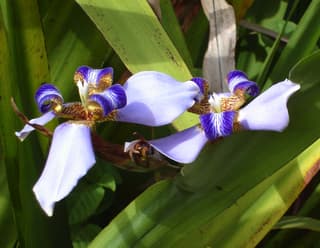
Apostle Plant
Neomarica gracilis
Neomarica gracilis, commonly called the apostle plant or walking iris, is a rhizomatous perennial in the Iridaceae family, native to Brazil. Its nickname comes from an unusual habit: after flowering, small plantlets form at the tips of the flower stalks, which arch over under their own weight until they touch the soil and take root, letting the plant "walk" outward from the parent clump. The sword-shaped, fan-arranged leaves are evergreen, and the striking flowers — white outer petals with violet, blue, and brown markings on the inner segments — bloom in succession through spring and summer, though each individual flower lasts only a single day.
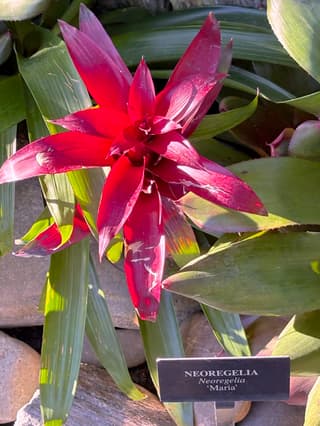
Blushing Bromeliad
Neoregelia
Neoregelia is a large genus of tropical bromeliads native to the rainforests of Brazil, grown almost entirely for their bold, colorful rosettes rather than their flowers. Broad, strap-shaped leaves form a tight cup ("tank") at the center, and as the plant nears bloom the innermost leaves "blush" red, pink or purple, giving the genus its common name. Small tubular white or blue flowers appear low in the cup and are easy to miss. Most Neoregelia are epiphytic or semi-epiphytic in the wild but adapt readily to pots, making them popular, low-maintenance houseplants and patio accents in warm climates.
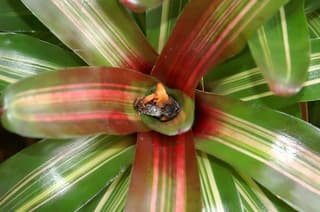
Blushing Bromeliad
Neoregelia carolinae
Neoregelia carolinae is a bromeliad native to the Brazilian Atlantic Forest, prized for its glossy leaves forming a flat rosette. When it blooms, the center of the rosette turns a vibrant red, earning it the name "Blushing Bromeliad." Its small purple-blue flowers emerge from the central tank formed by the leaves. It is an epiphytic plant that naturally grows on tree trunks, absorbing water and nutrients through its central rosette.
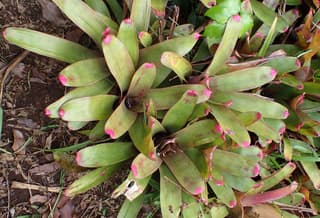
Blushing Bromeliad
Neoregelia sp
Neoregelia sp is a genus of bromeliads native to Brazil, widely cultivated for their vibrant ornamental foliage and hardiness. The leaves form a characteristic rosette with a central cup that collects water, creating a unique miniature ecosystem. Before flowering, the center of the rosette typically turns an intense color — red, pink, or purple — making it a visually striking plant.

Tropical Pitcher Plant (genus)
Nepenthes
Nepenthes is a genus of tropical carnivorous climbing plants native primarily to Southeast Asia, with over 170 described species. They are renowned for their hanging pitcher-shaped traps (ascidia) that dangle from leaf tendrils, capable of capturing and digesting insects and small animals. Species range from small epiphytes to large canopy climbers.
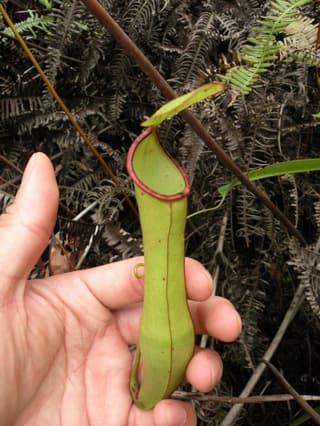
Neglecta Pitcher Plant
Nepenthes × neglecta
Nepenthes × neglecta is a naturally occurring tropical pitcher plant hybrid between N. gracilis and N. mirabilis, native to the lowland rainforests of Borneo, Peninsular Malaysia, Sumatra, and Thailand below 1000 m elevation. This scrambling, climbing subshrub can reach up to 5 m in length, producing funnel-shaped pitchers up to 15 cm tall that lure and digest insects to supplement nutrient-poor soils. Like most Nepenthes hybrids, it displays strong hybrid vigor, making it a hardier and more forgiving grower than many pure species.

Winged Pitcher Plant
Nepenthes alata
Nepenthes alata, commonly known as the winged pitcher plant, is a tropical carnivorous vine native to the Philippines, where it grows across a wide altitudinal range from lowland forests to mountain slopes. Its distinctive winged leaf petioles give the species its name, and its curling tendrils produce colorful pitcher-shaped traps that lure, capture, and digest insects to supplement the nutrient-poor soils it grows in. Prized by houseplant collectors for its striking pitchers and relatively forgiving nature compared to other Nepenthes, it is often recommended as a beginner-friendly carnivorous plant.
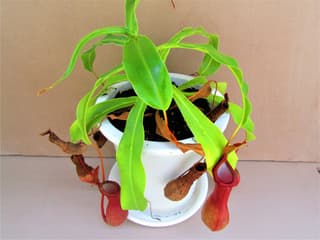
Common Swamp Pitcher-Plant
Nepenthes mirabilis
Nepenthes mirabilis, known as the common swamp pitcher-plant, is one of the most widespread carnivorous pitcher plants in the world, ranging from southern China through Southeast Asia to northern Australia. A vigorous climbing vine, it produces distinctive jug-shaped pitchers that trap and digest insects to supplement the poor nutrient content of its native boggy, sunny habitats. Its adaptability and relative ease of care make it a popular starter species for carnivorous plant enthusiasts.
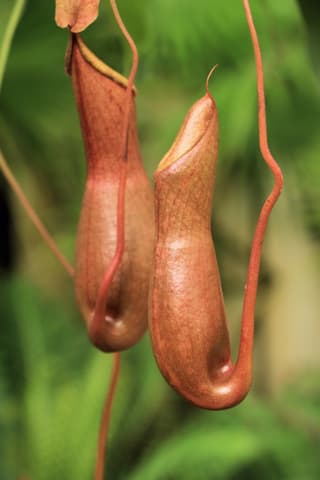
Tropical Pitcher Plant
Nepenthes spp
Nepenthes, commonly known as tropical pitcher plants or monkey cups, are fascinating carnivorous plants native to Southeast Asia, particularly Borneo, Sumatra, and the Philippines. They produce iconic pitcher-shaped traps filled with digestive fluid that capture and dissolve insects and small animals to obtain nutrients from their nutrient-poor, acidic native soils.
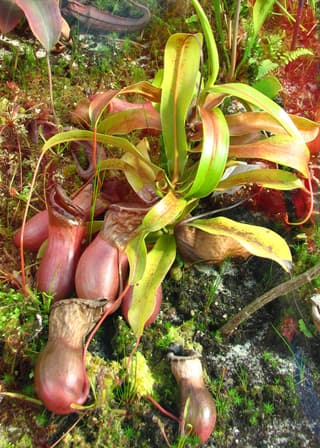
Ventricosa Pitcher Plant
Nepenthes ventricosa
Nepenthes ventricosa is a tropical pitcher plant native to the mountain forests of Luzon in the Philippines, where it grows as a climbing vine on rocky slopes and forest edges. It produces distinctive funnel-shaped pitchers with a shield-like, upturned lid used to lure and trap insects, which the plant digests to supplement the scarce nutrients of its native volcanic soil. It is one of the most beginner-friendly carnivorous plants thanks to its tolerance of a wide range of humidity levels.
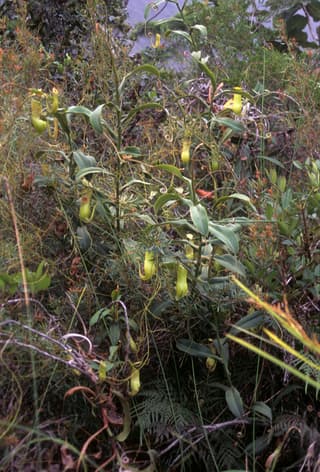
New Caledonia Pitcher Plant
Nepenthes vieillardii
Nepenthes vieillardii, the New Caledonia pitcher plant, is a climbing carnivorous shrub endemic to the island of New Caledonia in the southwest Pacific — the easternmost native range of any Nepenthes species. It grows in shrublands, dry thicket-forest, and open ground from the coastal plain up to about 900 m altitude, often on nutrient-poor ultramafic soils. Like all pitcher plants, it produces modified leaf tips that form fluid-filled traps: lower pitchers are squat and egg-shaped with fringed wings, while upper pitchers are slimmer and funnel-shaped, both ranging from yellowish to reddish in color. The trapped insects supplement the poor mineral nutrition of its native soils. It is a slow grower and considered a challenging species in cultivation, requiring very well-drained substrate and consistently high humidity.
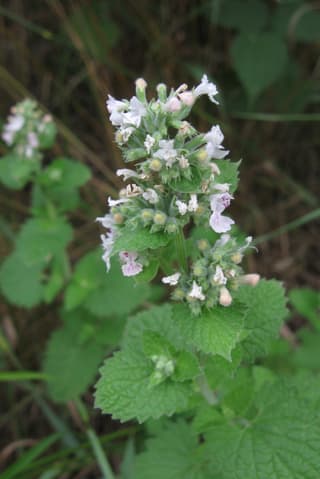
Catnip
Nepeta cataria
Nepeta cataria, commonly known as catnip or catmint, is a perennial herbaceous plant in the Lamiaceae family, native to Europe, Asia, and Africa. Famous worldwide for its euphoric effect on cats, this aromatic herb also offers valuable medicinal properties for humans, including calming, antispasmodic, and carminative effects. It produces clusters of small white to lavender flowers on long spikes from late spring through fall, attracting bees and butterflies. Vigorous and easy to grow, it thrives in garden borders, herb gardens, and containers.
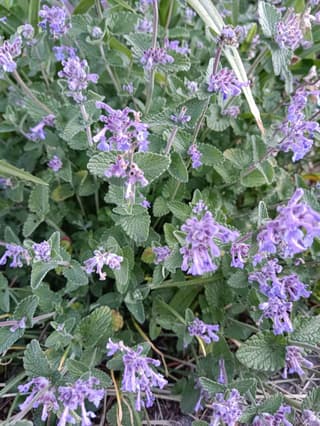
Persian Catmint
Nepeta racemosa
Nepeta racemosa, commonly known as Persian Catmint, is a low-growing aromatic perennial herb native to the Caucasus and southwestern Asia. It produces cascading mounds of gray-green foliage adorned with abundant lavender-blue flowers from late spring through fall, making it a beloved choice for garden borders, rock gardens, and pollinator gardens. Unlike true catnip (Nepeta cataria), it is valued primarily as an ornamental and is highly attractive to bees and butterflies.
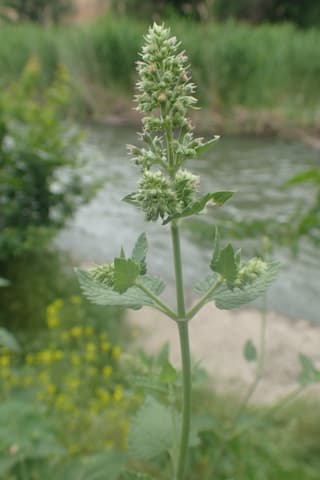
Catmint
Nepeta sp
Catmint (Nepeta sp) is a hardy, aromatic perennial herb from the Lamiaceae family, native to Europe and Asia. Known for its lavender-purple flower spikes and silvery-gray foliage, it is beloved in gardens for its long blooming season, drought tolerance, and irresistible attraction to cats. It thrives in full sun and well-drained soils, making it ideal for borders, rock gardens, and pollinator gardens.
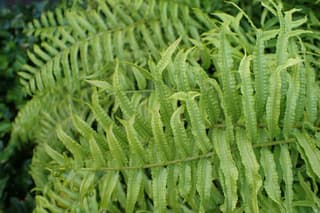
Giant Sword Fern
Nephrolepis biserrata
Nephrolepis biserrata, commonly known as Giant Sword Fern or Macho Fern, is a large tropical fern native to pantropical regions across Asia, Africa, and the Americas. Its lush, arching fronds can exceed 2 meters in length, making it one of the most striking ferns in cultivation. It thrives in warm, humid environments and is widely used in tropical gardens, hanging baskets, and as an air-purifying houseplant.
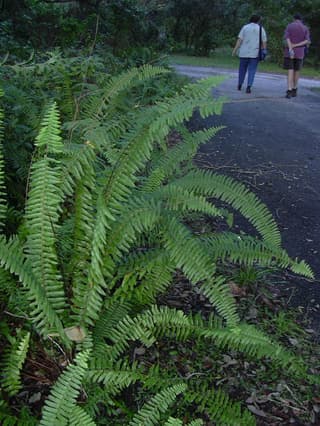
Asian Sword Fern
Nephrolepis brownii
Nephrolepis brownii, commonly known as the Asian Sword Fern, is a perennial fern native to most of Southeast Asia, extending north to China and Japan, west to Sri Lanka and India, east to the Pacific Islands, and south to Australia. Its lush, arching fronds make it a popular ornamental plant for both indoor and outdoor settings.
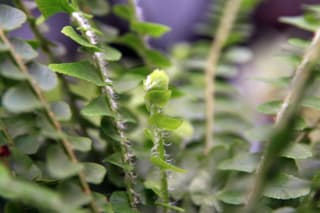
Narrow Sword Fern
Nephrolepis cordifolia
Nephrolepis cordifolia, commonly known as the Narrow Sword Fern or Tuberous Sword Fern, is a robust pantropical fern distinguished by its upright, narrow fronds and distinctive underground tubers. Native to tropical and subtropical regions worldwide, it has naturalized across many continents due to its exceptional adaptability. The plant forms lush arching clumps of bright green pinnate fronds, making it an elegant choice for both indoor and outdoor settings.
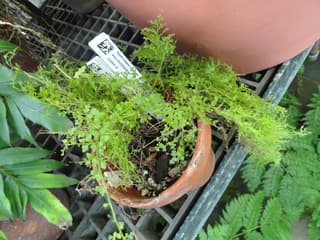
Boston Fern
Nephrolepis exaltata
The Boston Fern is a lush, elegant houseplant known for its gracefully arching fronds and excellent air-purifying qualities. Native to tropical regions of the Americas including Florida, Central America, South America, and the West Indies, this evergreen fern has been a popular indoor plant since Victorian times. Its feathery, bright green fronds can grow up to 90 cm long, creating a dramatic cascading effect perfect for hanging baskets or elevated displays.
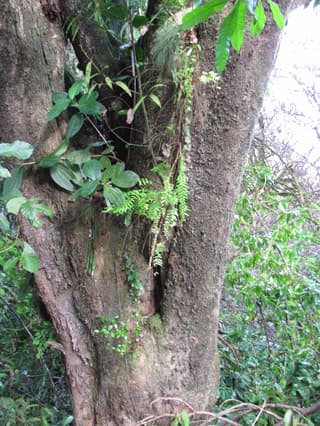
Fishtail Fern
Nephrolepis falcata
Nephrolepis falcata, commonly known as the fishtail fern, is an epiphytic fern native to Southeast Asia and the Pacific Islands, belonging to the family Nephrolepidaceae. Its long, arching fronds have forked, tail-like tips that resemble a fish tail, giving the plant its common name. A moderate-growing perennial, it is popular in hanging baskets and shaded gardens for its lush, textured foliage.
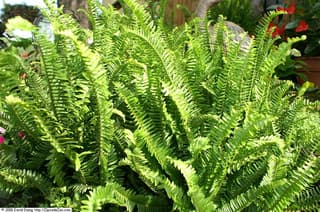
Kimberley Queen Fern
Nephrolepis obliterata
Nephrolepis obliterata, commonly known as the Kimberley Queen Fern or Australian Sword Fern, is a robust fern native to northern Australia and the Pacific Islands. Unlike most ferns, it produces stiff, upright fronds that form a compact, elegant clump. It is notably more tolerant of low humidity than the Boston Fern, making it an excellent choice for indoor environments.
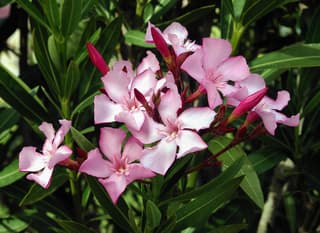
Oleander
Nerium oleander
Nerium oleander is a vigorous, evergreen shrub or small tree valued for its abundant and long-lasting floral display. Native to the Mediterranean region, it features leathery, lance-shaped leaves and clusters of funnel-shaped flowers. It is exceptionally hardy, drought-tolerant, and salt-tolerant, though all parts of the plant contain cardiac glycosides and are extremely toxic if ingested.
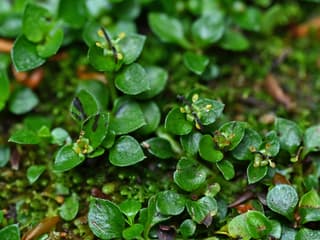
Bead plant
Nertera granadensis
The bead plant (Nertera granadensis) is a low-growing, carpet-forming perennial from the Rubiaceae family, native to the mountainous, cool-climate regions of South America, New Zealand, and the Pacific. Its tiny, round leaves form a dense, moss-like cushion, producing pale greenish-white flowers in spring, which are replaced by spectacular, coral-colored spherical berries by late summer—giving the plant its name.
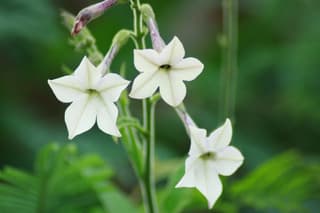
Flowering Tobacco
Nicotiana
Nicotiana, commonly known as flowering tobacco, is a genus of herbaceous plants in the Solanaceae family, grown for its trumpet-shaped, sweetly scented flowers that open in the evening. Native to the Americas, it is cultivated worldwide as an annual or short-lived tender perennial in warm climates.
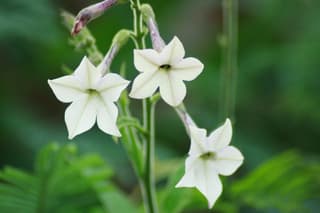
Jasmine Tobacco
Nicotiana alata
Nicotiana alata, commonly known as jasmine tobacco or flowering tobacco, is a herbaceous plant in the Solanaceae family, native to South America (Argentina, Brazil, Paraguay, and Bolivia). It is grown for its fragrant, star-shaped tubular flowers that open in the evening and release a sweet scent to attract night-flying moth pollinators. Upright stems reach up to 1.5 m tall, with large sticky basal leaves and blooms in white, red, burgundy, yellow, and lime-green. It is grown as a perennial in warm climates (USDA zones 10-11) and as a frost-tender annual elsewhere. The entire plant contains nicotine and is toxic if ingested.
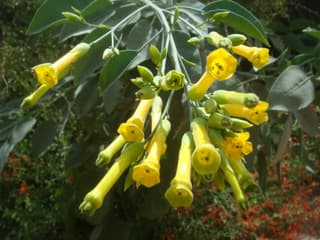
Tree Tobacco
Nicotiana glauca
Nicotiana glauca, commonly known as tree tobacco, is a shrub or small tree in the nightshade family Solanaceae, native to Argentina and Bolivia. It grows 3–7 meters tall, with thick bluish-green leaves and striking tubular yellow flowers that attract hummingbirds and butterflies. Extremely drought-tolerant and adaptable to poor soils, it is widely naturalized across the world, though all parts are highly toxic.
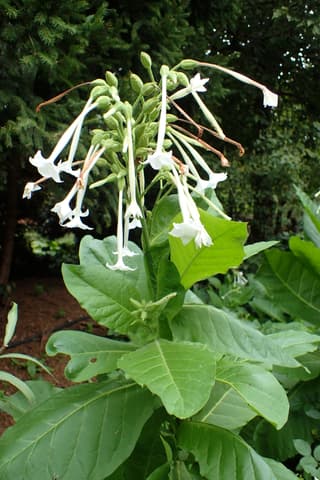
Woodland Tobacco
Nicotiana sylvestris
Nicotiana sylvestris, commonly known as Woodland Tobacco or Flowering Tobacco, is a tall ornamental plant native to the Andes of Argentina and Bolivia. It belongs to the Solanaceae family and can grow up to 1.5 m (5 ft) tall, producing long drooping clusters of tubular white flowers with an intense jasmine-like fragrance strongest at night. Grown as an annual or biennial in temperate climates, it is a dramatic addition to borders and moon gardens.
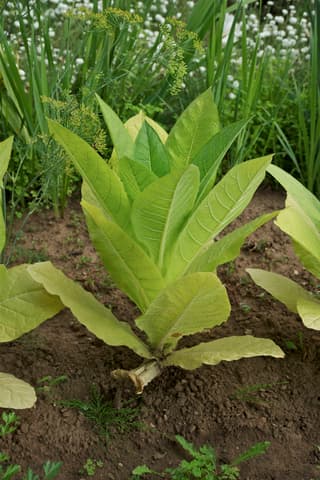
Tobacco
Nicotiana tabacum
Nicotiana tabacum, commonly known as tobacco, is an annual herbaceous plant in the Solanaceae family, native to the tropical and subtropical regions of the Americas, with origins in Bolivia and the Andean region. It grows 1 to 3 meters tall, with large, sticky, aromatic leaves that can exceed 50 cm in length. It produces branched panicle inflorescences with tubular white, pink, or cream flowers in summer and fall. It is the main species used commercially to produce tobacco leaf.
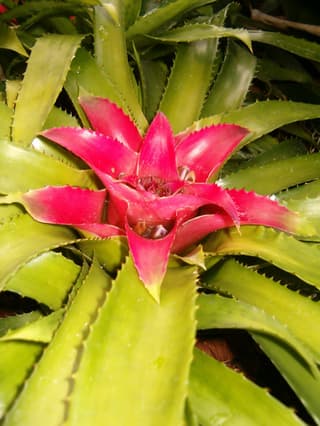
Blushing Bromeliad
Nidularium fulgens
Nidularium fulgens, known as the Blushing Bromeliad, is a stunning bromeliad native to the understory of Brazil's Atlantic Forest. It forms a flat rosette of green, spotted leaves, and when it blooms, the central cup flushes brilliant red, framing clusters of small violet flowers within.
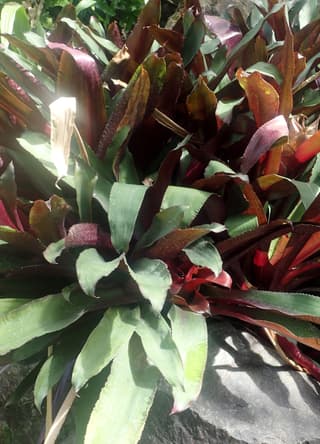
Bird's-nest Bromeliad
Nidularium innocentii
Nidularium innocentii, commonly known as the Bird's-nest Bromeliad, is a compact rosette bromeliad native to Brazil's Atlantic Forest. It forms a dense, layered nest of dark green leaves from which vibrant red bracts and small white flowers emerge. Suited both as a terrestrial and epiphytic plant, it thrives in shaded, humid environments.
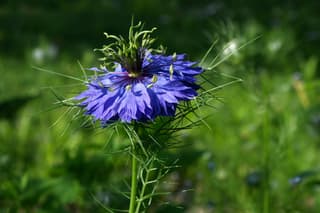
Love-in-a-mist
Nigella damascena
Love-in-a-mist is a beloved cottage-garden annual, its saucer-shaped blue, white, or pink flowers nestled in a haze of thread-fine, feathery foliage. Once pollinated, the blooms give way to striking inflated seed pods prized for dried arrangements. Easy to grow from seed, it self-sows readily and suits informal borders, wildflower patches, and containers.
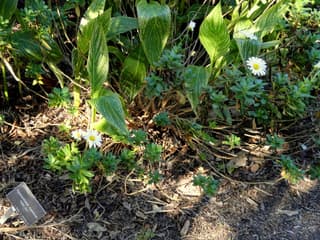
Montauk Daisy
Nipponanthemum nipponicum
Montauk daisy is a shrubby, clump-forming perennial native to coastal Japan, where its Japanese name, hamagiku, literally means "beach chrysanthemum." It bears thick, glossy, dark green, coarsely toothed leaves on woody stems, giving the plant a slightly succulent, evergreen-shrub appearance even though it is technically deciduous in colder climates. From late summer into fall it produces large, daisy-like flowers with bright white rays around a yellow-green center disk, providing valuable color after most other perennials have finished blooming. It is the sole species in its genus, having been split out from Chrysanthemum due to its distinct woody, salt-tolerant habit.
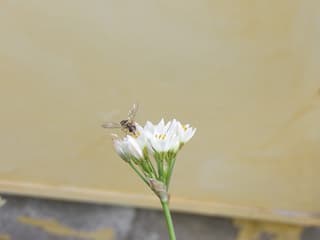
Slender False Garlic
Nothoscordum gracile
Nothoscordum gracile, known as slender false garlic, is a perennial bulbous plant appreciated for its delicate, bell-shaped white flowers that emit a soft fragrance. Although native to the Americas and cultivated as an ornamental, its high dispersal capacity through seeds and small lateral bulblets often causes it to be seen as an invasive plant in gardens and lawns. Its leaves are long, narrow, and vibrant green, resembling those of common garlic but without the characteristic strong odor.
Find the Perfect Plant
Our plant guide helps you find ideal species for your experience level and time of year.
Browse by Difficulty, Season & More
Use the filters below to narrow this catalog by care difficulty, season, environment, or search directly by name. Each filter leads to a focused list tailored to your specific growing conditions.