Complete Plant Guide
Explore plants by difficulty, season and more. Find the perfect plant for you.
Difficulty
Categories
Plants by City
🗺️ Plants by City3478 plants found
Showing 2233-2268 of 3478

Yellow Pond-Lily
Nuphar
Nuphar is a genus of hardy aquatic perennials native to still and slow-moving fresh waters across the temperate Northern Hemisphere -- from ponds and lake margins to ditches, canals, and slow rivers. Thick, spongy rhizomes anchor in the muddy bottom and send up both submerged, translucent leaves and floating or emergent leathery leaves. From late spring through autumn the plant produces small, cup-shaped, yellow (occasionally greenish-yellow) flowers held just above the water surface, each lasting several days and opening in the morning. Compared with the related water lilies (Nymphaea), Nuphar tolerates deeper water, cooler climates, and considerably more shade, making it one of the toughest and lowest-maintenance plants for natural ponds and wildlife water gardens.
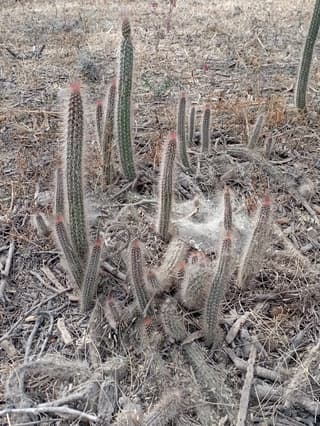
Snake Cactus, Junco, Queen of the Night
Nyctocereus serpentinus
Nyctocereus serpentinus is a night-blooming climbing cactus native to southern Mexico (Michoacán, Morelos, Oaxaca), belonging to the Cactaceae family. The plant features long, sinuous, spiny stems (up to 3 meters) that initially grow upright but sprawl horizontally without support. It is highly prized for its spectacular large white, funnel-shaped flowers measuring up to 15 cm in diameter that open at night with an intense, seductive fragrance. These nocturnal blooms attract pollinators including moths, bats, and bees. The plant produces edible fruits that change from green to bright red, ripening primarily from August to October. Widely cultivated in warm climates for its ornamental value and aromatic night-blooming flowers, this species combines functional beauty with practical food production.
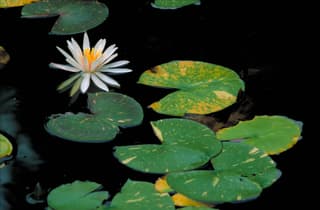
Water Lily
Nymphaea
Water Lily (Nymphaea) is a genus of approximately 65 species of aquatic perennial plants belonging to the family Nymphaeaceae, distributed across every continent except Antarctica. Renowned for their spectacular floating flowers in shades of white, pink, red, yellow, orange, purple, and blue, water lilies are among the most beloved ornamental aquatic plants in the world. Their large, round, waxy leaves repel water and float gracefully on the surface of ponds, lakes, and water gardens. The genus includes both hardy varieties, which can overwinter in cold climates, and tropical varieties that require warm water year-round.
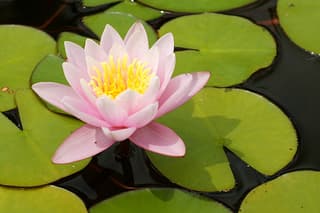
Water lily
Nymphaea × marliacea
Nymphaea × marliacea is a group of hardy water lily hybrids bred by French nurseryman Joseph Bory Latour-Marliac in the late 19th century, crossing European and North American Nymphaea species. It belongs to the family Nymphaeaceae and is an aquatic perennial with floating pads and surface-blooming flowers in white, yellow, or pink depending on the cultivar (e.g. 'Albida', 'Chromatella', 'Rosea').
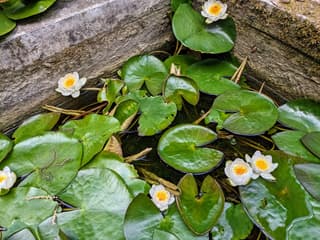
White Water Lily
Nymphaea candida
Nymphaea candida is a hardy perennial aquatic plant native to the still ponds and quiet freshwater habitats of temperate Eurasia. Its floating leaves and pristine white, yellow-centered flowers open each morning across the water surface from spring through summer, making it a classic addition to garden ponds.

Red Indian Water Lily
Nymphaea rubra
Nymphaea rubra, known as the Red Indian Water Lily, is a stunning aquatic plant native to India and Southeast Asia. This night-blooming lily produces large, fragrant flowers in shades of deep red to pinkish-purple, typically 9–15 cm wide, that open at dusk and close by mid-morning. Its floating leaves create a beautiful display on ponds and water gardens.
Yellow Floating Heart
Nymphoides peltata
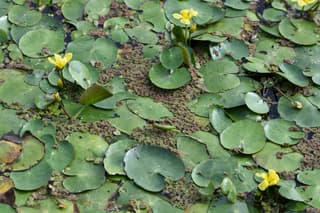
The Yellow Floating Heart (Nymphoides peltata) is a perennial aquatic plant in the Menyanthaceae family, native to Europe and temperate Asia. Its round, heart-shaped leaves, resembling a miniature water lily, float on the water's surface and can reach 6 inches in diameter, often featuring a purple-tinted underside. From June to September, it produces a succession of bright yellow, five-petaled flowers with fringed edges. Although each bloom lasts only a single day, they are continuously renewed throughout the summer. Vigorous and hardy down to -4°F (-20°C), it quickly forms a floating carpet and helps purify pond water by absorbing excess nitrogen and phosphorus.
Basil (genus)
Ocimum
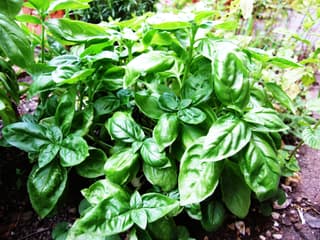
Ocimum is a genus of aromatic herbs and shrubs in the family Lamiaceae, native to tropical and subtropical regions of Asia, Africa, and the Americas. The best-known species include Ocimum basilicum (sweet basil) and Ocimum tenuiflorum (holy basil or tulsi). They are widely grown for their fragrant leaves valued for culinary, medicinal, and ornamental purposes.
Lemon Basil
Ocimum × citriodorum
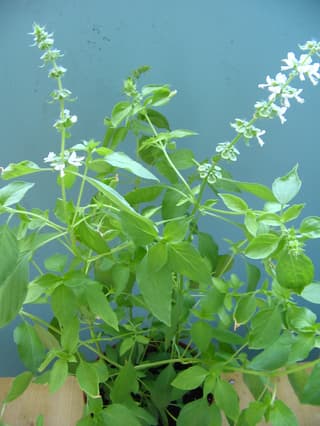
Lemon basil (Ocimum × citriodorum) is a fragrant annual herb in the mint family (Lamiaceae), prized for its bright lemon scent derived from the compound citral. A natural hybrid between sweet basil and African basil, it grows 20–60 cm tall with narrow, slightly serrated leaves and small white flower spikes. Widely used in Southeast Asian, Middle Eastern, and Mediterranean cuisines, it is also valued for its aromatic and mild medicinal properties.
Hoary Basil
Ocimum americanum
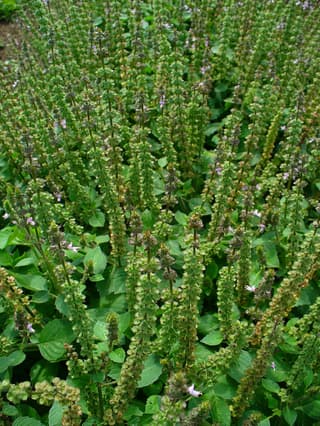
Hoary basil (Ocimum americanum) is an annual aromatic herb native to tropical Africa and South Asia, now naturalized across the tropics, including Brazil. Its small, slightly hairy leaves release a citrusy, lime-like aroma. It is more disease-resistant than sweet basil, especially against downy mildew.
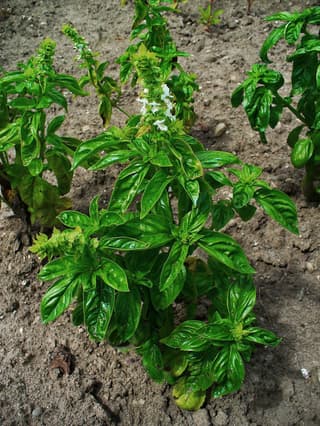
Sweet Basil
Ocimum basilicum
Sweet basil (Ocimum basilicum) is a popular annual aromatic herb native to India and Southeast Asia. Widely cultivated worldwide for culinary, medicinal, and aromatic uses, it features bright green oval leaves and small white to pink flowers that bloom in summer.

Greek Basil
Ocimum basilicum var. minimum
Greek basil (Ocimum basilicum var. minimum) is a compact, bushy variety of common basil in the mint family (Lamiaceae). Also known as bush basil or dwarf basil, it forms a dense, rounded mound up to 30 cm tall, covered in small, intensely aromatic oval leaves. It is a tender annual herb (or short-lived perennial in warm climates) prized both in Mediterranean cooking and as an ornamental container plant for patios and windowsills. Small white to pale lavender flowers appear in summer, attracting bees and other pollinators. Thanks to its compact habit and fast growth, it is one of the most popular culinary herbs for small-space and indoor gardening.
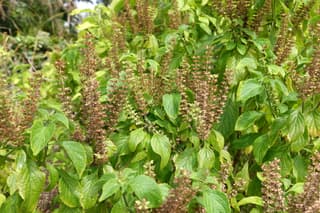
African Basil
Ocimum gratissimum
African Basil (Ocimum gratissimum) is a woody, shrubby basil species native to Tropical Africa and Asia, widely cultivated in Brazil and West Africa. Unlike common basil, it grows into a large shrub up to 3 meters tall with strongly aromatic leaves rich in eugenol and thymol — giving it a clove-like scent. It is highly valued both as a culinary herb across West Africa and as a medicinal plant used to treat infections, fever, diabetes, and inflammation.
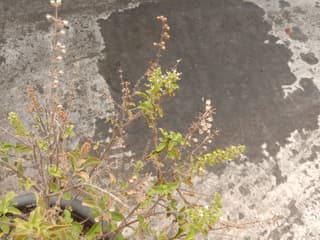
Holy Basil
Ocimum tenuiflorum
Holy Basil (Ocimum tenuiflorum), also known as Tulsi, is a sacred aromatic herb native to the Indian subcontinent and Southeast Asia. Revered in Hinduism as a manifestation of the goddess Lakshmi, it has been used for over 3,000 years in Ayurvedic medicine. This upright, bushy subshrub grows 30–60 cm tall with fragrant green or purple leaves and small purple-pink flower spikes that bloom in summer.

Red Bartsia
Odontites vernus
Red Bartsia (Odontites vernus) is an annual, hemi-parasitic meadow plant in the broomrape family. It features an upright, branched, and finely hairy stem with narrow, toothed leaves and small, pink to reddish tubular flowers that bloom from June to September. The plant partially parasitizes grass roots and thrives in nutrient-poor meadows, pastures, and along field margins.
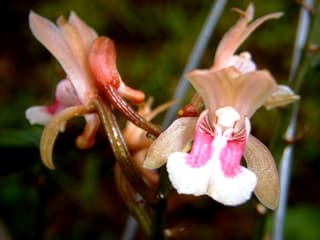
Monk Orchid
Oeceoclades maculata
Oeceoclades maculata, commonly known as the monk orchid or African spotted orchid, is a terrestrial orchid in the family Orchidaceae native to tropical Africa and Madagascar. It grows from small, clustered pseudobulbs, each topped with a single mottled, dark-green leaf marked with pale spots. In spring it sends up slender flower spikes bearing small white-and-pink blooms. Remarkably adaptable, the species has naturalized widely across the Neotropics -- from Brazil and the Caribbean to Florida -- since the 19th century, and is now considered one of the most successful invasive orchids outside its native range.
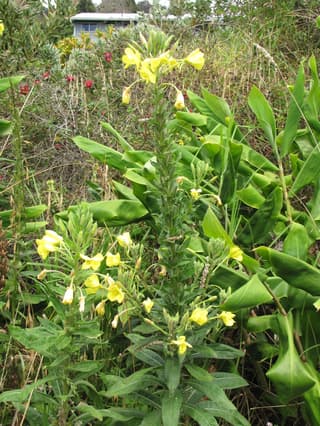
Evening Primrose
Oenothera
Evening Primrose (Oenothera) is a genus of roughly 145 herbaceous wildflowers in the Onagraceae family, native to the Americas. Depending on the species, plants may be annuals, biennials, or perennials, typically forming rosettes of lance-shaped leaves topped by four-petaled cup-shaped flowers in yellow, pink, or white. Many species open their blooms in the evening or at dusk and close by midday, a trait that gives the genus its common name and its symbolic ties to twilight and hidden beauty.
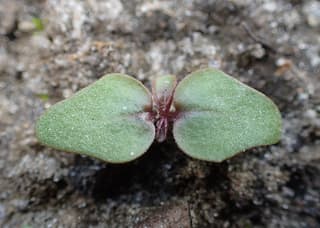
Evening Primrose
Oenothera biennis
Oenothera biennis, known as Evening Primrose, is a biennial plant native to North America. It is famous for its vibrant yellow flowers that open rapidly at dusk and emit a mild fragrance to attract nocturnal pollinators. In its first year, the plant forms a rosette of low-growing leaves, and in its second year, it develops a tall, flowering stalk. It is widely recognized in the herbal medicine industry for the oil extracted from its seeds, which is rich in gamma-linolenic acid.
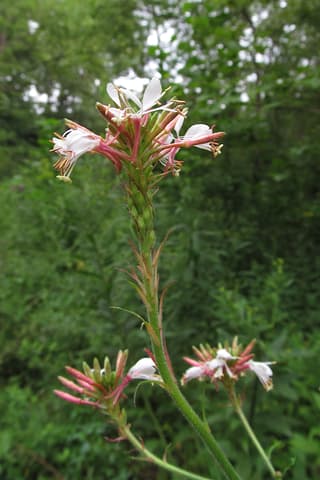
Biennial Gaura
Oenothera gaura
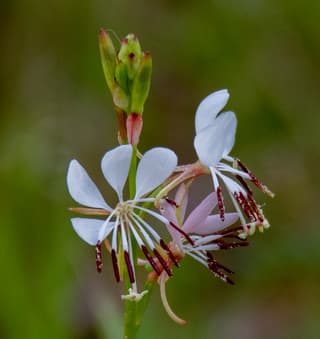
Kisses
Oenothera suffulta
Oenothera suffulta, commonly known as Kisses or Roadside Gaura, is a small annual to short-lived perennial native to south-central Texas, Oklahoma, and northern Mexico. Its delicate pink, white, and red flowers open at dusk. Formerly classified as Gaura suffulta, it belongs to the family Onagraceae and thrives in poor sandy soils, being highly drought tolerant.
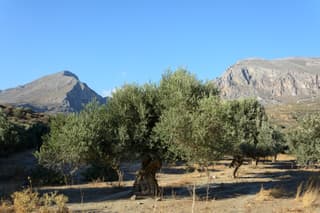
Olive tree
Olea europaea
The Olive tree (Olea europaea) is a medium-sized evergreen tree native to the Mediterranean region, Asia, and Africa. It is widely cultivated for its fruit, olives, and the oil extracted from them, olive oil. It features distinct silvery-green leaves and a gnarled, gray bark that becomes rougher with age. It is a universal symbol of peace, longevity, and prosperity.
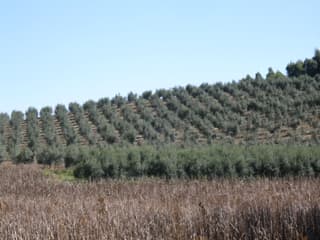
Arbequina Olive
Olea europaea 'Arbequina'
The Arbequina Olive (Olea europaea 'Arbequina') is a Spanish olive cultivar originating from the Arbeca region in Catalonia. It is recognized for its compact size, self-fertility, and early fruiting, characteristics that have made it one of the most popular varieties for cultivation in pots, small gardens, and hedges. Its leaves are evergreen, featuring a silvery underside, and the plant produces small creamy white flowers in spring, followed by green olives that ripen to a purplish hue, used for both gourmet olive oil production and table olives.
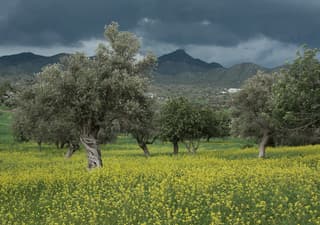
Little Ollie
Olea europaea 'Montra'
Little Ollie is a compact, non-fruiting cultivar of the Mediterranean olive tree, prized for its dense, rounded form and silvery-green evergreen foliage. Bred by Monrovia, this sterile selection produces the classic olive look without the mess of dropped fruit, making it a popular choice for hedges, containers, and topiary. Extremely drought-, heat-, and salt-tolerant once established, it thrives in full sun with minimal care.
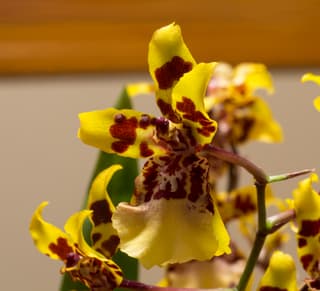
Dancing Lady Orchid (genus)
Oncidium
Oncidium is a large genus of epiphytic Neotropical orchids renowned for their abundant yellow, butterfly-like flowers that sway gracefully in the breeze. Native from Central America to South America, the genus encompasses hundreds of species widely grown as ornamentals.
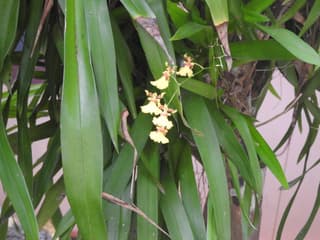
Tall Oncidium
Oncidium altissimum
Oncidium altissimum is a large epiphytic orchid native to the Caribbean islands of Cuba, Hispaniola, Puerto Rico, and the Lesser Antilles. It produces dramatically tall, branching flower spikes reaching 5–6 feet (150–180 cm) in length, adorned with hundreds of small yellow and brown flowers. This majestic species blooms in spring and fall, making it a spectacular addition to any orchid collection. Like all epiphytes, it thrives when its roots can breathe freely in well-draining bark-based media.
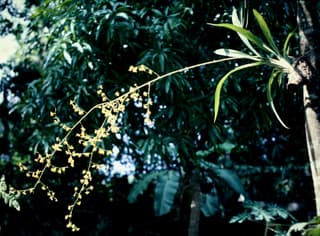
Bauer's Dancing Lady Orchid
Oncidium baueri
Oncidium baueri is an epiphytic orchid native to South America, celebrated for its graceful sprays of yellow and brown dancing-lady flowers that sway gently in the breeze. First described by Lindley in 1833, it is widely prized in orchid collections worldwide for its reliable flowering and elegant form.
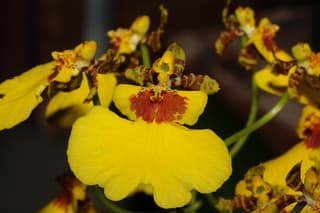
Dancing Lady Orchid
Oncidium Celtic Sun x Burgundian
The Oncidium Celtic Sun x Burgundian is a captivating sympodial orchid hybrid known for its 'Dancing Lady' appearance. It produces branched sprays of numerous small flowers that feature a large, ruffled labellum, typically in shades of golden yellow with intricate burgundy or reddish-brown markings. The plant grows from pseudobulbs that store water, with long, strap-like evergreen leaves.
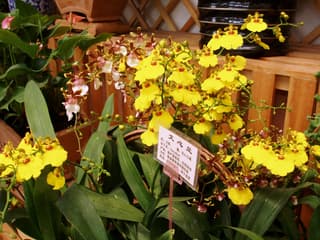
Dancing Doll Orchid
Oncidium flexuosum
Oncidium flexuosum, commonly known as the Dancing Doll Orchid or Bent Oncidium, is an epiphytic orchid native to eastern and southern Brazil, extending into northern Argentina, Paraguay and Uruguay. It forms compact clumps of oval pseudobulbs bearing narrow, glossy leaves. From fall through winter it produces long, arching, branched flower spikes—up to 1.5 m (5 ft)—carrying dozens of small golden-yellow flowers marked with reddish-brown blotches at the base and lip, which flutter in the breeze and give the plant its playful common name.
Dancing Lady Orchid
Oncidium leleui
Oncidium leleui is an epiphytic orchid native to southwestern Mexico, found across the states of Nayarit, Jalisco, Colima, Michoacán, Oaxaca, and Guerrero in seasonally dry tropical forests at elevations of 250 to 950 meters. It produces spectacular arching flower spikes that can exceed two meters in length, bearing over 270 small yellow and brown flowers resembling graceful dancing figures. It is a slow-growing species prized by orchid collectors for its extraordinary floral displays each spring.
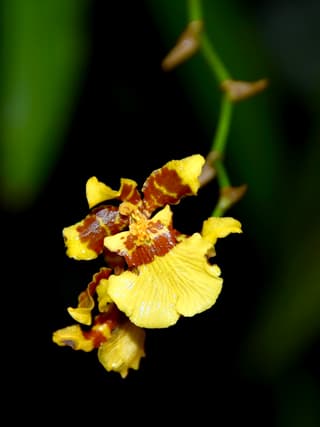
Golden Shower Orchid
Oncidium sphacelatum
Oncidium sphacelatum, commonly known as the Golden Shower Orchid, is a large epiphytic orchid native to Mexico and Central America. It produces spectacular arching flower spikes up to 1.5 meters long, adorned with masses of bright yellow and brown flowers. A vigorous grower, it forms impressive clumps over time and is considered one of the easiest oncidiums to cultivate.
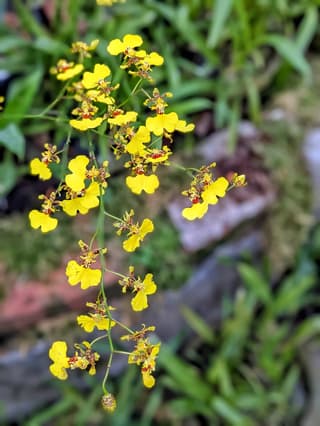
Golden Shower Orchid
Oncidium varicosum
Epiphytic orchid native to Brazil, known for its long sprays of small yellow flowers resembling a cascade of gold. Features pseudobulbs for water and nutrient storage, typical of orchids. One of the most popular orchids in Brazil due to its exuberant blooming and relatively easy cultivation.
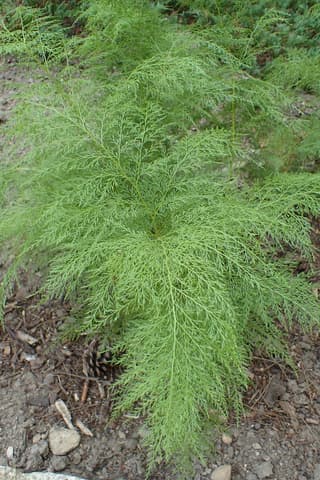
Carrot Fern
Onychium japonicum
Onychium japonicum, the carrot fern, is a clump-forming, deciduous fern native to central and eastern China, Japan, the Himalayas, the Philippines and Vietnam, where it grows in humid forests, shaded banks and rocky slopes. Its wiry, glossy black stems carry arching, feathery fronds cut two to three times into fine, thread-like segments that closely resemble carrot-top foliage -- the source of its common name. Slow to mature (often taking 5-10 years to reach full size), it forms neat mounds around 45 cm tall and wide and is prized in shade gardens and containers for its delicate, lacy texture.
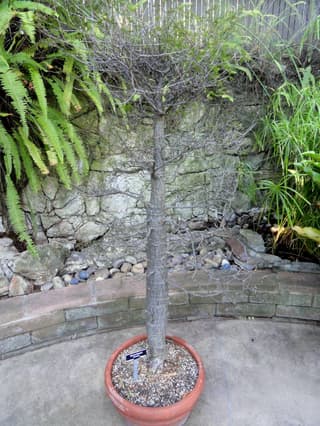
Elephant Tree
Operculicarya decaryi
Operculicarya decaryi is a slow-growing, thick-stemmed succulent tree endemic to the spiny thickets of southern Madagascar. Prized in bonsai culture for its swollen caudex, corky bark, and intricate branching pattern, it produces tiny fernlike compound leaves and clusters of small red flowers in winter. In cultivation it is grown both as an ornamental caudiciform houseplant and as a classic subject for tropical bonsai.
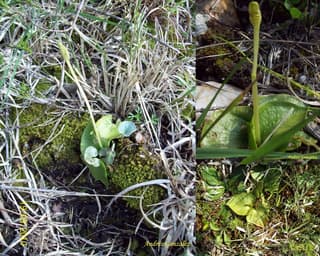
Bulbous Adder's-tongue
Ophioglossum crotalophoroides
Ophioglossum crotalophoroides is a tiny primitive fern (2 to 10 cm tall), with a single oval sterile leaf and a bulbous underground base (rather than a common cylindrical rhizome). It produces an elongated fertile spike resembling a rattlesnake's rattle, the origin of the epithet "crotalophoroides". It is ephemeral, appearing in spring (sporulating from March to June in the Northern Hemisphere) and disappearing shortly after. It occurs in disturbed lawns, open fields, and sandy soils of the southeastern United States. Like the entire Ophioglossaceae family, it depends closely on soil mycorrhizal fungi to germinate and develop, making it virtually impossible to cultivate outside its natural habitat.

Dwarf Lilyturf
Ophiopogon
Ophiopogon is a genus of evergreen, grass-like perennials in the family Asparagaceae, native to East and Southeast Asia, with Ophiopogon japonicus as the most widely cultivated species. It forms dense clumps of thin, arching, linear leaves resembling a coarse turf grass, creating a uniform dark-green mat. It is widely used as a shade groundcover, border edging, and filler between stepping stones, precisely because it tolerates spots where regular lawn grass fails from lack of sun. In summer it produces small, understated white-to-pale-lilac flowers, followed by ornamental cobalt-blue berries.
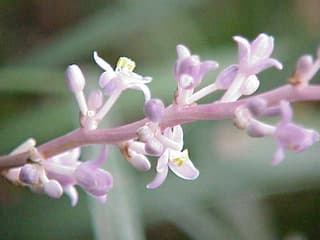
White Lilyturf
Ophiopogon jaburan
White lilyturf (Ophiopogon jaburan) is an evergreen perennial native to Japan and southern Korea, prized as a shade-tolerant groundcover and border plant. It forms dense clumps of long, arching, strap-like leaves — plain green or variegated with cream stripes — and sends up spikes of small white to pale lavender flowers in summer, followed by ornamental violet-black berries in fall. Low-maintenance and adaptable, it handles partial shade to full coastal sun and light frost.
Find the Perfect Plant
Our plant guide helps you find ideal species for your experience level and time of year.
Browse by Difficulty, Season & More
Use the filters below to narrow this catalog by care difficulty, season, environment, or search directly by name. Each filter leads to a focused list tailored to your specific growing conditions.