How to Care for a Ponytail Palm: Sun, Water, and the Trunk Test
Ponytail palms want full sun, deep watering only when the soil goes dry, and a small pot with drainage. The swollen base stores water, so squeezing it tells you whether the plant is thriving or starting to rot.
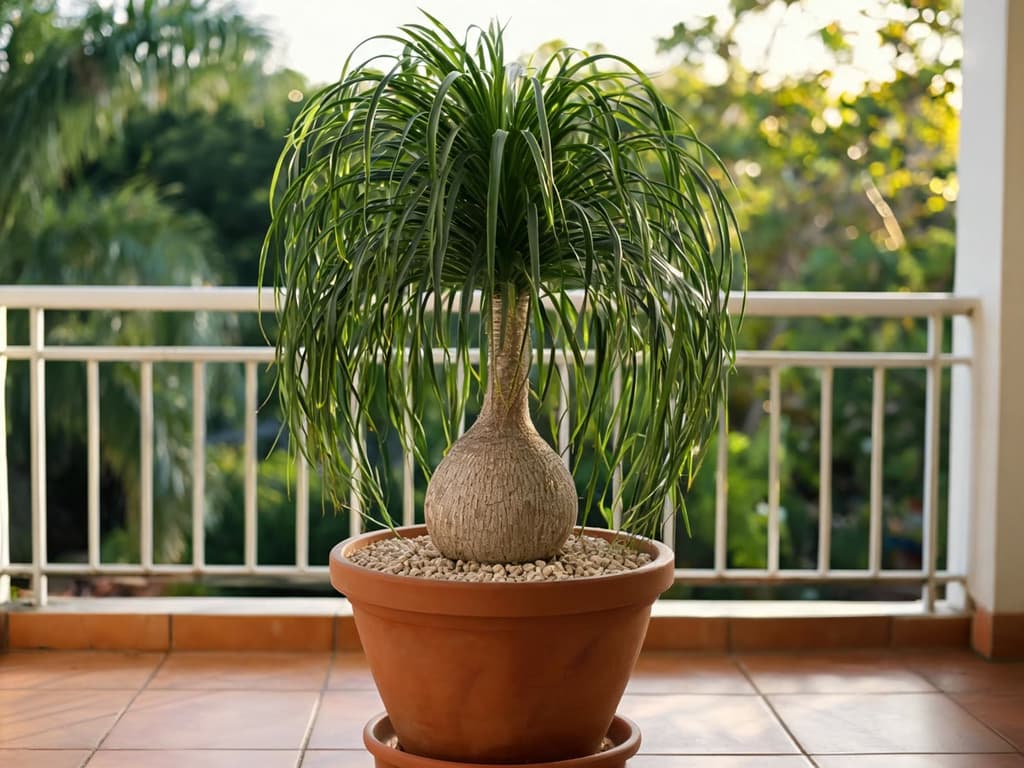
Ponytail palm care in brief: give it at least 6 hours of direct sun a day. Water thoroughly only when the soil is completely dry. Water far less in winter. Use a small pot with drainage holes and a cactus mix.
The swollen trunk stores water. That is why the plant can handle weeks of drought but dies quickly if overwatered. Give that base a squeeze whenever you water: firm means it is healthy, soft means rot.
Quick summary:
What | How to do it | Source |
|---|---|---|
Light | Full sun, 6 hours or more of direct sunlight | NC State |
Watering | Soak the soil and let it dry out almost completely before watering again | NC State, NYBG |
Winter (June to August) | Water much less and do not fertilize | NC State, NYBG |
Soil | Cactus mix, or 3 parts coarse sand to 1 part potting soil | NYBG |
Pot | Slightly larger than the base, with a drainage hole and detached saucer | NYBG |
Temperature | 18 to 24 °C; below 10 °C is dangerous in a container | NYBG, NC State |
Potted size | 1.8 to 2.4 m after many years | NC State, NYBG |
Cats and dogs | Non-toxic on the ASPCA list | ASPCA |
What is a ponytail palm (Beaucarnea recurvata)?
The ponytail palm (Beaucarnea recurvata) is native to Mexico and belongs to the asparagus family (Asparagaceae). It features a swollen, water-storing trunk base and long, slender leaves that cascade downward. It is not an actual palm, despite its common name (NC State Extension). You might still see it sold under its old botanical name, Nolina recurvata.
It is also not a leaf succulent. Jade plants and other leaf succulents store water in their leaves. The ponytail palm holds moisture in its trunk and can reach over 2 m in a container. Because of this, standard succulent watering routines do not apply cleanly to it. The reserve sits in the trunk, and that is what you monitor.
In Brazil, "pata-de-elefante" is also the common name for the spineless yucca (Yucca elephantipes). The yucca has a straight trunk without a swollen base, along with wider, stiffer leaves.
In Mexico, the ponytail palm has been on the official endangered species list since 1994. The genus was also included in CITES Appendix II, the convention that regulates the international trade of threatened species. Illegal harvesting from the wild for sale as an ornamental plant is one of the threats (Espadas-Manrique et al., 2020).
The swollen base stores water: the test that shows if the plant is doing well
The bulbous base of a ponytail palm is called a caudex, an adapted trunk that acts as a water reservoir (NC State). This caudex explains almost every care requirement the plant has. You can space waterings far apart because it has reserves. Standing water in the soil is dangerous because wet soil rots the base (NYBG).
The caudex is also your best warning system when something goes wrong. Press the base with your thumb, including just below the soil line. The New York Botanical Garden (NYBG) notes what these textures mean:
Firm and smooth: Healthy plant. Keep watering based on the soil dryness test.
Wrinkled but firm: Common on mature plants. If yours used to be smooth and suddenly wrinkled, check if the soil is waterlogged.
Wrinkled and soft: A clear sign of fungal or bacterial rot. See the section on soft stems below.
The trunk squeeze test does not replace checking the soil. The soil tells you when to water. The trunk tells you if your watering over the past few months went wrong.
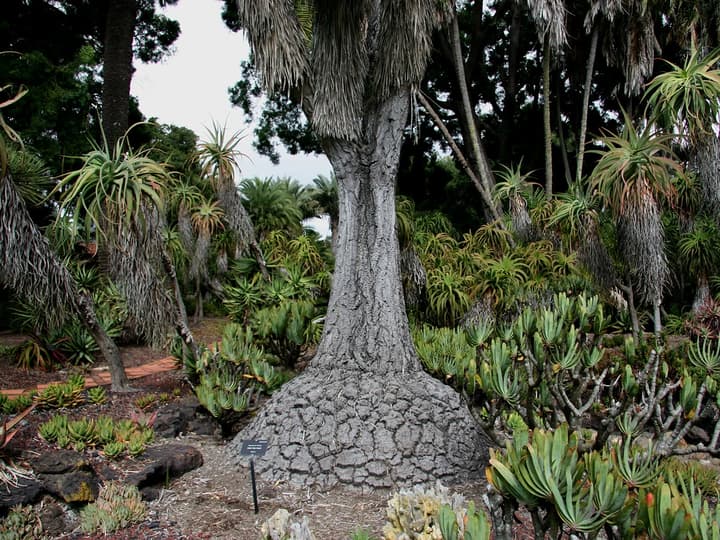
How much light does a ponytail palm need?
Ponytail palms thrive in full sun, needing 6 hours or more of direct sunlight daily (NC State). The University of Florida Extension (UF/IFAS) notes they can also grow in partial shade.
In the garden or on the balcony, choose the spot that gets sun for most of the day. Indoors, NYBG recommends the brightest window in the house and rotating the pot once a week so all sides receive light. In Brazil, north-facing windows receive the most sun. East- and west-facing windows also work.
A plant that has lived indoors will scorch if moved directly into harsh sunlight (NYBG). Acclimate it outdoors gradually, starting in partial shade as advised by UF/IFAS. Leaves shifting to a reddish-brown tone under strong sun are not diseased; that is just a natural pigment response to high light (NYBG).
How to water a ponytail palm
Water thoroughly until moisture runs freely from the drainage hole. Then let the soil dry out almost completely before watering again (NC State, NYBG). To verify dryness, insert a wooden chopstick or skewer all the way to the bottom: if it comes out clean and dry, it is time to water. When in doubt, wait a few more days, as recommended by NYBG.
Three rules keep rot away:
Empty the drip tray as soon as water finishes draining. NYBG suggests using a detached saucer rather than an attached one, as attached saucers trap stagnant water.
Pour water onto the soil, not into the leaf crown. Trapped water between the leaves trickles into the caudex and can trigger fungal issues (NYBG).
Water in the morning using room-temperature water (NYBG).
In winter, which in Brazil runs from June to August, the potted plant needs far less water (NC State). NYBG advises reducing watering without leaving the roots dry for too long. Neither institution gives a set number of days: the wooden skewer test is what decides.
Planted in the ground, the ponytail palm withstands drought. But UF/IFAS observed that watering it occasionally during the dry season keeps the leaves greener and reduces leaf drop.
Potting mix and pots for ponytail palms
The potting medium must drain fast. NYBG recommends an unfertilized commercial cactus mix, or this blend: 3 parts coarse sand or grit to 1 part standard potting soil. Add a handful of coco coir or fine bark chips. A thin layer of pebbles on top prevents the base of the trunk from sitting directly against moist soil.
Pick a container that is only slightly wider than the caudex itself, with drainage holes (NYBG). An oversized pot holds excess water that root systems cannot use, leading straight to root and stem rot. A shallow, wide terracotta pot works well because its weight keeps top-heavy plants stable without tipping over.
Repot only when the base touches the rim, and in spring, which in Brazil runs from September to November. NYBG mentions about 2 years between repottings, but the cue is the base touching the rim, not the calendar. Use the next size pot and fresh soil. Never bury the trunk deeper than it was: the buried part will rot (NYBG).
Temperature: garden, balcony, and cold weather in Brazil
Ponytail palms are happiest between 18 and 24 °C and tolerate high heat with ease (NYBG). Cold temperatures are the main danger. In pots, NYBG warns that 10 to 12 °C can kill the plant, and NC State cites 10 °C as the lowest limit.
Outdoor landscape specimens handle lower temperatures. UF/IFAS recommends ponytail palms for USDA hardiness zones 10A through 11, where average annual minimums stay above about −1 °C. The difference comes down to context: 10 °C applies to container plants, while the zone rating applies to established in-ground landscape specimens.
In most of Brazil, it stays in the garden or on the balcony all year round. Where there is frost, bring the pot indoors on nights below 10 °C. Cover the garden plant with a fabric blanket on frost nights. Indoors, keep the pot away from air conditioning and heating vents (NYBG).
Fertilizer
Fertilize every 2 months only in spring and summer, using a cactus fertilizer or a balanced houseplant fertilizer (NYBG). In Brazil, this runs from September to March. Do not fertilize in winter. Too much fertilizer makes the plant grow soft and weak (NYBG).
Brown leaf tips: can you trim them?
Yes, you can trim them. Brown tips will not harm the plant, and NYBG notes that brown portions can be trimmed off with clean shears. Snip just the dead tissue, following the natural curve of the leaf, without cutting into the healthy green section.
Trimming only hides the symptom. NYBG highlights several common triggers for brown leaf tips:
inconsistent watering (underwatering, overwatering, or swinging between both);
low light levels;
cold drafts below the safe limit;
placing the pot directly beside heating vents or air conditioning;
mineral and fertilizer salt buildup in the substrate;
tap water high in dissolved minerals.
Low humidity is rarely the culprit, according to NYBG. Misting the foliage will not cure brown tips. Losing a few lower, older leaves completely to brown, dry crisping is normal aging: simply pull them downward gently to remove them (NYBG).
Yellow leaves or shedding on ponytail palms
Old lower leaves naturally turn yellow, dry out, and drop off one by one throughout the year (UF/IFAS). The issue arises when numerous leaves yellow at once, or when the newest center fronds turn yellow.
Check both soil moisture and the trunk base to diagnose the problem. If the soil has been wet for days, young leaves yellow, and the base feels mushy, you are overwatering. Stop watering immediately and check the trunk. If the soil is bone-dry, leaves are shriveling from the tips inward, and the base remains hard, the plant is underwatered. Give it a thorough soak and check with a skewer moving forward.
Yellow foliage can also stem from lighting, pests, or nutritional issues. The yellow leaves guide breaks down these causes through 3 simple questions.
Soft trunk base: can a ponytail palm be saved?
It depends on the extent of the damage. NYBG notes that if the soft, wrinkled section extends beyond a small spot, the plant rarely recovers. A localized patch that has not reached the root core can sometimes be cut away.
To cut out a small rot patch:
Remove the plant from its pot and squeeze the entire caudex, including the subterranean portion.
Excise all mushy tissue with a clean, alcohol-sterilized knife until you reach healthy, firm white flesh (NYBG).
Let the wound air-dry completely in a dry location before potting.
Repot into fresh, dry cactus mix in a draining pot, never burying the stem deeper than before.
Hold off on watering until the fresh soil settles and dries.
Stem rot comes from excessive watering, non-draining pots, sitting in saucers full of runoff, or dense soil mixes (NYBG). Fix the root cause before repotting, or the rot will return.
None of the consulted sources (NYBG, NC State, UF/IFAS) describe how to root a severed ponytail palm crown. If the plant cannot be saved, the attempt costs nothing, but there are no published success rates. If the symptom does not match any of these, the what's wrong with my plant guide helps narrow down causes. It uses photos of the leaves and soil.
Ponytail palm pests
Ponytail palms rarely suffer from pest outbreaks. In indoor containers, NC State lists three primary threats: mealybugs (white cottony residue on leaves and stems) and scale insects (hard brown bumps). The third is spider mites (pale leaf stippling and fine webbing). NC State also mentions three plant diseases: stem rot, bacterial leaf streak, and leaf spot.
Wipe the leaves down with a damp cloth a few times a year. Dust blocks sunlight (NYBG), and cleaning the foliage helps spot pest infestations early.
Propagation, pruning, and flowering
Ponytail palms propagate most reliably from seed, though fresh seed can be difficult to source. UF/IFAS notes that commercial seed supplies typically come from Mexico. Offshoots (pups) growing off the caudex can also be rooted, with mixed results. NYBG advises letting pups grow to roughly 15 cm on the mother plant before cleanly severing them in spring. Allow the cut surface to callus over for several days before planting.
Plants with multiple crowns branching off a central stump were cut back in commercial nurseries. NYBG explains that heading back the main trunk forces multiple growing points around the perimeter. Left unpruned, the plant develops a single dominant fountain of foliage. A plant that has grown too tall indoors can be topped in spring, though success is not guaranteed, and the cut must remain dry until it calluses (NYBG).
Ponytail palms rarely bloom indoors (NC State). Outdoors in the ground, mature specimens push out large plumes of white or cream blossoms in spring or summer, occasionally blooming two to three times a year (UF/IFAS).
Are ponytail palms toxic to cats and dogs?
The ASPCA, an animal poison control center in the United States, lists the ponytail palm as non-toxic to dogs, cats, and horses. NC State repeats this classification. Three plant shop guides from Germany say the plant contains saponins and is mildly toxic, without citing a source. This article follows the ASPCA, which is the specialized source on toxicity.
The ASPCA itself warns that eating any plant can cause vomiting and an upset stomach in dogs and cats. If the animal chewed on a lot of leaves and became sick, call the veterinarian.
Every indoor plant has its own toxicity profile on the ASPCA database. Some plant ID apps show pet safety ratings right from a photo, and our guide to the best plant apps for pet owners breaks down which ones do it best.
Frequently asked questions
Can a ponytail palm live indoors full-time?
Yes, if it sits in the brightest window in the house. NC State lists full sun, 6 hours or more of direct sun, as ideal. In Brazil, a north-facing window is best. Far from the window or in a dark corner, the plant stops growing and the soil takes longer to dry, which increases the risk of rot.
How often should you water a ponytail palm?
There is no set number of days. Water thoroughly when the soil in the pot is nearly dry all the way to the bottom, checking with a wooden skewer (NC State, NYBG). In winter, from June to August in Brazil, the soil takes longer to dry and waterings are spaced much farther apart. When in doubt, wait a few more days.
How large do ponytail palms get in containers?
It grows slowly. In a pot, it reaches 1.8 to 2.4 m after many years (NC State). The NYBG mentions decades to reach that height, under the best conditions. In its Mexican habitat, it can reach 9 m (NC State). A small pot and low light make growth even slower.
Do ponytail palms like harsh, direct sun?
Yes. Adapted to arid regions of Mexico, they thrive on 6 or more hours of direct sun (NC State). The only precaution applies to plants moving from indoor rooms to the outdoors. Transition them slowly, starting in dappled shade, because sudden direct exposure scorches foliage (NYBG, UF/IFAS).
Ponytail palm care: what to do right now
Move your plant to the sunniest spot you have. Push a wooden stick all the way to the bottom of the pot and only water if it comes out dry. Squeeze the base: if it feels firm, the plant is fine, and if it feels soft, follow the steps in the soft base section.
If you are not sure whether your plant is a ponytail palm and not a spineless yucca, Bloom identifies the species from a photo. It also sets up its watering schedule. The app is only for iOS.
Sources
NC State Extension, North Carolina Extension Gardener Plant Toolbox, Beaucarnea recurvata: family, origin, water-storing caudex, full sun (6+ hours), 10 °C minimum, container size, summer/winter watering, pests and diseases, non-toxic to cats, dogs, and horses.
New York Botanical Garden, Houseplant care: Ponytail Palm (Beaucarnea recurvata): lighting, watering, unattached saucers, soil, containers, repotting, temperature, fertilizer, brown tips, soft caudex, offset propagation, pruning, leaf cleaning.
UF/IFAS Extension, Beaucarnea recurvata: Ponytail Palm (ENH252/ST093; Gilman et al.): full sun or partial shade, drainage, blooms, propagation by seed.
UF/IFAS Gardening Solutions, Ponytail "Palm": zones 10A to 11, gradual transition to sun, drying of lower leaves, watering in the dry season.
ASPCA Animal Poison Control, Pony Tail (Beaucarnea recurvata).
Espadas-Manrique, C. et al. Riesgo de extinción de Beaucarnea pliabilis. Revista Mexicana de Biodiversidad, 91, 2020.
Related articles
How to Care for a Maidenhair Fern: Light, Water, and Revival Tips
Learn how to care for a maidenhair fern indoors: bright indirect light, consistently moist soil, high humidity, and how to revive it if it dries out completely.
How to Propagate Spider Plants: Root the Pup Before Cutting
The safest spider plant cutting comes from a pup still attached to the mother plant: rest the plantlet on soil in a small pot, wait for roots to establish, and only then cut the stolon. Learn when the pup is ready, whether rooting in water is worth it, how to divide the clump, and why plants fail to produce babies.
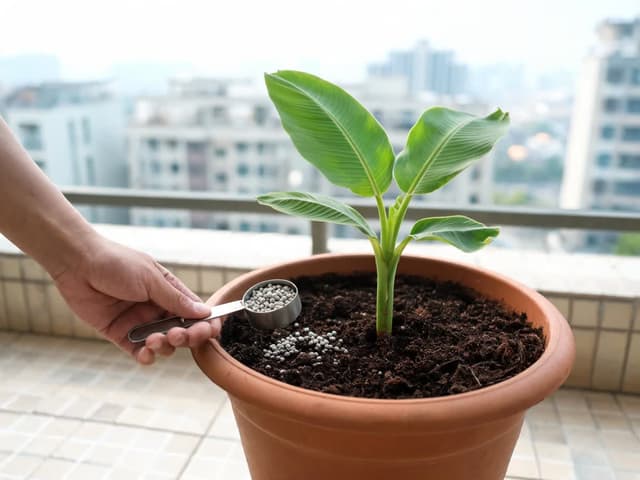
Banana plant fertilizer: fertilizing potted and backyard plants
Banana plant fertilizer needs more potassium than nitrogen, in a 3-1-6 ratio. For a potted plant on a balcony, use the label dose in spring and summer. In the backyard, fertilize every 2 months, adjusting the amount by mat age. Learn the formula, timing in Brazil, and signs of deficiency or excess.