2332 Easy Easy Care | 2026 Guide - Page 21
Find 2332 easy easy care. Complete guide for your garden.
2332 Easy Care with easy level
Showing 721-756 of 2332
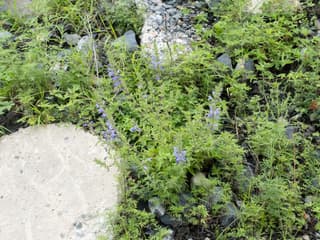
Moldavian dragonhead
Dracocephalum moldavica
Moldavian dragonhead (Dracocephalum moldavica) is an annual, lemon-scented spice and medicinal herb belonging to the mint family (Lamiaceae). It typically grows 30-60 cm tall, producing bluish-purple flowers in summer (July to August) that are attractive to insects. It is native to temperate regions of Asia and has naturalized in many parts of Eurasia. Its leaves and flowers are strongly fragrant, and their essential oil is rich in citral, often leading to confusion with lemon balm.
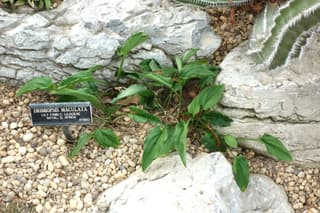
Little White Soldiers
Drimiopsis maculata
Drimiopsis maculata is a small bulbous plant native to eastern South Africa, admired for its oval leaves adorned with dark spots. It is one of the most resilient and adaptable houseplants, tolerating low light and short dry spells with ease.
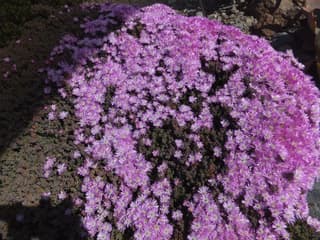
Rosea Iceplant
Drosanthemum floribundum
Drosanthemum floribundum is a fast-growing South African succulent groundcover covered in shimmering, daisy-like pink-purple flowers in spring and summer. Its low, trailing stems form a dense mat ideal for slopes, borders, and erosion control in dry landscapes.
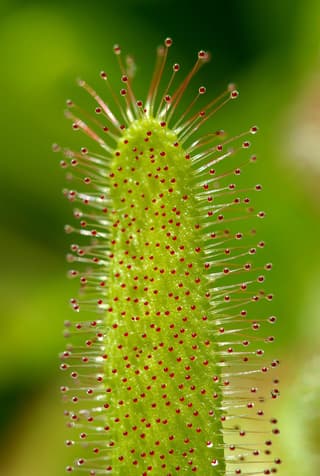
Cape Sundew
Drosera capensis
Drosera capensis, or Cape Sundew, is a carnivorous perennial native to the fynbos wetlands of the Western Cape, South Africa. Its narrow, strap-shaped leaves are covered in reddish tentacles tipped with sparkling, sticky mucilage that lure, trap, and digest small insects, supplying the plant with nitrogen and phosphorus that its nutrient-poor native soil lacks. Prized by beginners for its resilience and rapid growth, it produces small pink, self-pollinating flowers on tall stalks and readily self-seeds, often popping up as a friendly weed in other carnivorous plant pots.
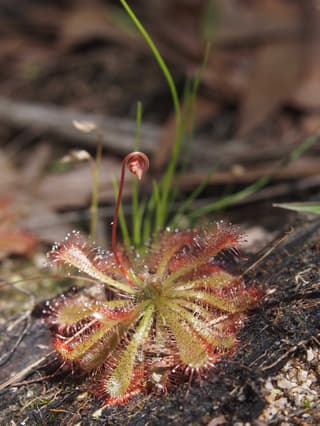
Spoon-leaved sundew
Drosera spatulata
Drosera spatulata, commonly known as the spoon-leaved sundew, is a small carnivorous plant native to Australia, New Zealand, Tasmania, and Southeast Asia. It forms a compact rosette of spoon-shaped leaves covered in red, dew-tipped tentacles that glisten to attract, trap, and digest small insects such as fruit flies and fungus gnats. It is widely regarded as one of the easiest sundews to grow, making it a favorite starter plant for carnivorous plant beginners.
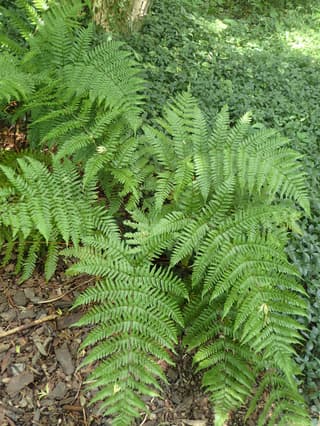
Wood Fern
Dryopteris
Dryopteris is a genus of robust and elegant ferns, commonly known as wood ferns. They are characterized by their bipinnate fronds that grow in a crown-like formation, providing a lush and architectural look. Native to temperate and tropical regions, they are perfect for shade gardens or as indoor plants in high-humidity environments.

Male Fern
Dryopteris filix-mas
The male fern (Dryopteris filix-mas) is a hardy, deciduous fern native to temperate regions of Europe and North America. It forms an upright, shuttlecock-shaped clump of long, lance-shaped, bipinnate fronds in medium green. It is one of the easiest garden ferns to grow, tolerating dense shade and poor soils, and holds the RHS Award of Garden Merit.
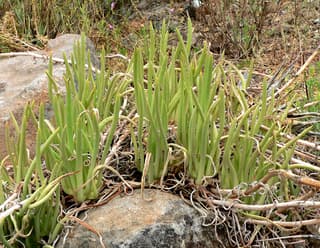
Fingertips
Dudleya edulis
Dudleya edulis, commonly called fingertips or mission lettuce, is a compact succulent native to the coastal sage scrub, sandstone sea cliffs, and rocky canyons of Southern California and northern Baja California. Its pale green, finger-shaped leaves grow upright in tight clumping rosettes, often dusted with a chalky white coating called farina that reflects intense coastal sun and reduces water loss. In late spring and summer, tall branching stalks rise well above the foliage, bearing clusters of small white to cream flowers. True to its species name -- edulis, meaning edible -- its tender young leaves and flower stalks were traditionally harvested and eaten raw by the Kumeyaay people. A tough, low-maintenance succulent, it thrives in full coastal sun to light inland shade and needs very little water once established, entering a semi-dormant rest through the hottest, driest part of summer.

Golden Dewdrop
Duranta erecta
Golden Dewdrop (Duranta erecta) is a fast-growing tropical shrub from the Verbenaceae family, native to the tropical Americas. Celebrated for its cascading clusters of blue, lavender, or white flowers and ornamental golden berries, it is widely used in tropical gardens, hedges, and landscaping. It can reach up to 6 meters in height and thrives in warm, sunny climates.
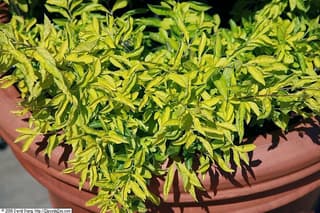
Golden Dewdrop
Duranta erecta aurea
Duranta erecta aurea is a stunning tropical shrub with golden-yellow foliage native to the tropical Americas. It produces small lilac or white flowers in pendant clusters, followed by ornamental orange-yellow berries. Its golden-yellow foliage brightens tropical and subtropical gardens year-round, making it popular as a hedge, border plant, or container specimen.
Dyckia
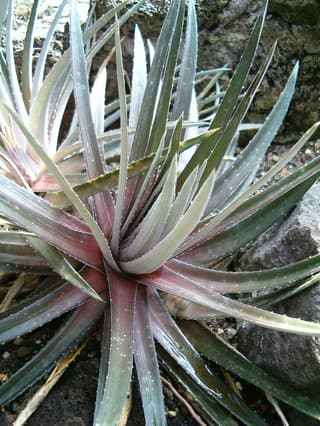
Dyckia
Dyckia is a genus of roughly 160 terrestrial bromeliad species native to rocky, sun-baked outcrops in South America. Unlike their tree-dwelling epiphyte cousins, Dyckias grow in the ground or among rocks, forming tight, spiny succulent-like rosettes of stiff, leathery leaves. They are prized by xeriscape and succulent gardeners for their striking architectural form and extreme drought tolerance.
Sawblade Dyckia
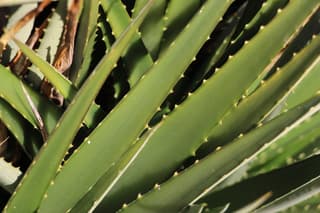
Dyckia brevifolia
Dyckia brevifolia, commonly called sawblade dyckia or pineapple dyckia, is a compact succulent bromeliad native to the rocky riverbanks of the Itajaí-Açu River in Santa Catarina, southern Brazil. It forms dense, low rosettes of stiff, grayish-green to bronze leaves edged with sharp, saw-like teeth, an adaptation that gives the species its common name. As a rheophyte, it grows directly on rocks along fast-flowing rivers subject to periodic flooding, making it exceptionally drought- and sun-tolerant. In late spring to early summer it sends up flower spikes bearing small yellow-orange blooms. Due to habitat pressure along its native river system, wild populations are considered threatened.
Epazote
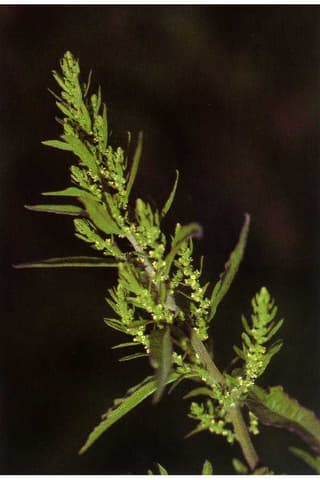
Dysphania ambrosioides
Epazote (Dysphania ambrosioides) is an aromatic annual or short-lived perennial herb native to Mexico and Central America, cultivated for millennia for its culinary and medicinal properties. Its yellow-green toothed leaves contain glands that release a strong, musky, distinctive scent. It is a staple of Mexican cuisine and widely used in traditional medicine throughout Latin America.
Squirting cucumber
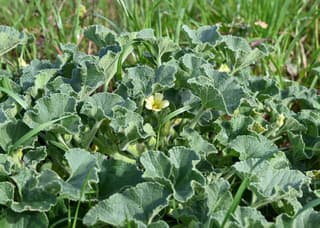
Ecballium elaterium
Ecballium elaterium is a Mediterranean herbaceous plant in the Cucurbitaceae family, known for its oval, bluish-green, bristly fruits. Upon maturity, these fruits detach and forcefully eject their seeds along with a liquid under high internal pressure. It grows in a prostrate or bushy habit, featuring rough triangular leaves and small yellow flowers. It is considered invasive, and all parts of the plant are toxic.
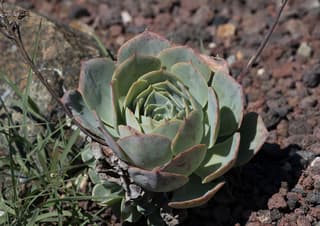
Echeveria
Echeveria
Echeveria is a large genus of succulent plants in the family Crassulaceae, native to Mexico and Central America, encompassing approximately 150 species. Known for their stunning rosette-shaped, fleshy leaves that store water, Echeverias are among the most popular succulents worldwide, prized for their ornamental beauty, diverse colors, and ease of care.
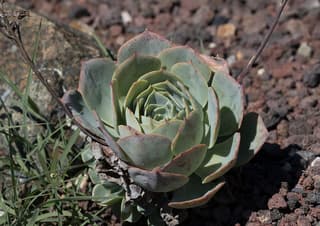
Echeveria Dionysos
Echeveria 'Dionysos'
Echeveria 'Dionysos' is a compact rosette-forming succulent cultivar in the Crassulaceae family, valued for its silvery-green, warty-textured leaves edged in reddish-pink and its dense, sculptural form. Believed to be an Echeveria purpusorum hybrid, it forms tight rosettes only a few centimeters across, making it a favorite for succulent collectors and dish gardens. In late spring to early summer it sends up slender stalks bearing red-and-yellow bell-shaped flowers.
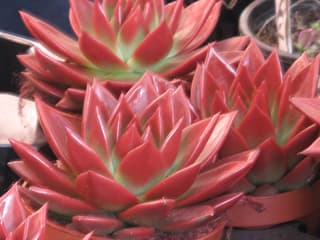
Miranda Echeveria
Echeveria 'Miranda'
Echeveria 'Miranda' is a compact succulent in the Echeveria genus, prized for its tight rosettes of gray-green leaves edged in pink to red that intensify under strong light. A hybrid cultivar derived from Echeveria agavoides, it is a popular, low-maintenance choice for succulent gardens and container displays.
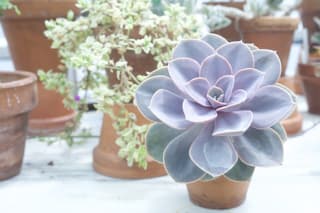
Pearl of Nuremberg
Echeveria 'Perle von Nurnberg'
Echeveria 'Perle von Nurnberg' is a compact rosette succulent hybrid bred in 1930s Germany by crossing Echeveria gibbiflora 'Metallica' with Echeveria elegans. Its spoon-shaped leaves are dusted with a pale, powdery bloom over lavender-grey and rosy-pink tones, deepening to purple under bright light. A slow grower that rarely needs repotting, it forms a single dense rosette prized as one of the most photogenic succulents in cultivation.

Black Echeveria
Echeveria affinis
Black Echeveria (Echeveria affinis) is a small rosette succulent from Mexico, famous for leaves so deep green they look nearly black in strong light. Compact rosettes reach about 15 cm across and, in autumn and winter, send up short stalks of vivid red bell-shaped flowers. Bright light is the key to keeping its dark, dramatic colour.
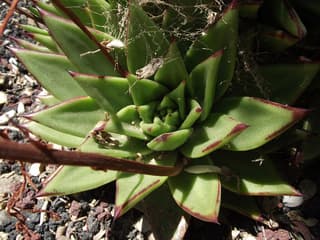
Lipstick Echeveria
Echeveria agavoides
Echeveria agavoides, commonly known as the Lipstick Echeveria or Wax Agave, is a compact rosette succulent native to rocky hillsides in Mexico. It belongs to the Crassulaceae family and is prized for its emerald-green triangular leaves tipped with deep red-pink edges, resembling a wax agave. Rosettes grow up to 20 cm tall and 36 cm wide, producing coral-pink and yellow flowers on tall stems in spring and summer.
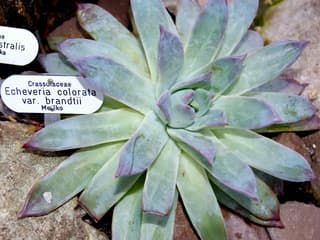
Mexican Hens and Chicks
Echeveria colorata
Echeveria colorata is a stunning rosette-forming succulent native to the mountains of Mexico (Jalisco). Its pale lavender-grey leaves are tipped with vibrant pink to red margins, creating a jewel-like appearance. In spring and summer it sends up tall arching stems bearing coral-pink to orange bell-shaped flowers beloved by hummingbirds. Like most Echeverias, it produces offsets around the base, forming a charming colony — the origin of its common name "Hens and Chicks".
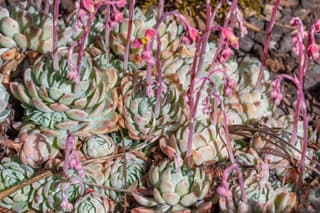
Mexican Gem
Echeveria elegans
Echeveria elegans is a rosette-forming succulent belonging to the Crassulaceae family, native to central Mexico (states of Hidalgo, Puebla, Guanajuato, and Querétaro). Its fleshy, rounded leaves display a blue-green coloration with pink edges when exposed to sunlight, covered by a fine layer of whitish pruina that gives it a soft and delicate appearance. The rosettes reach up to 10 cm (4 inches) in diameter. It is currently listed as an endangered species due to indiscriminate collection from its natural habitat.
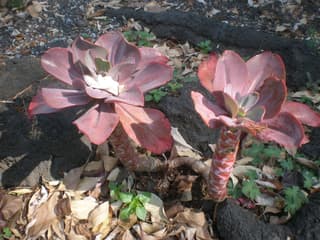
Carnival Echeveria
Echeveria gibbiflora
Echeveria gibbiflora is a large, showy succulent native to Mexico, prized for its spectacular rosettes that can reach up to 40 cm (16 inches) in diameter. Its thick, fleshy leaves display stunning hues ranging from blue-green to reddish-purple, often with wavy margins and a distinctive metallic sheen. In summer and fall, it produces tall flower stalks bearing bell-shaped blooms in shades of pink, red, and yellow.
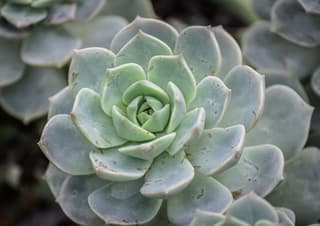
Plush Plant
Echeveria harmsii
Echeveria harmsii is a small, shrubby succulent from Mexico with soft, fuzzy, silvery-green leaves tipped in red. It forms loose rosettes on short branching stems and produces bright orange-red bell-shaped flowers in summer. It is slow growing, non-toxic and well suited to pots and sunny rock gardens.
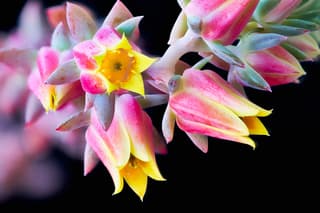
Blue Rose Echeveria
Echeveria imbricata
Echeveria imbricata, the Blue Rose Echeveria, is a rosette-forming succulent with fleshy, rounded blue-green leaves that resemble rose petals. A hybrid of Mexican Echeverias, it grows rosettes of roughly 10 to 20 cm and produces offsets at the base. In spring and early summer it sends up stalks of small orange-red flowers. It is one of the hardier Echeverias in cold weather and is non-toxic to cats and dogs.
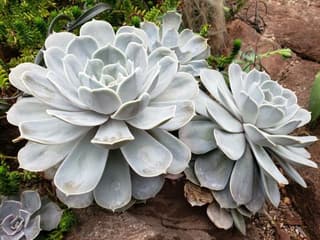
Ghost Echeveria
Echeveria lilacina
Echeveria lilacina, commonly known as the Ghost Echeveria, is a slow-growing succulent native to the rocky cliffs of Nuevo León, Mexico. It forms elegant rosettes of silvery-gray leaves with lilac and pink undertones, covered by a protective powdery coating called farina that gives the plant its characteristic ghostly appearance. It is highly prized by succulent collectors and interior designers worldwide.
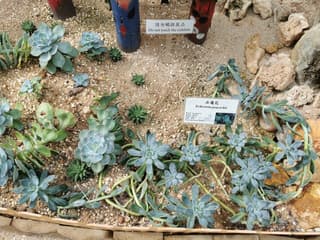
Peacock Echeveria
Echeveria peacockii
Echeveria peacockii is a compact, clump-forming succulent native to Mexico, prized for its powdery, silvery-blue rosettes edged in soft pink. Each rosette slowly offsets into a tidy cluster, and in summer it sends up wiry stems topped with coral-orange, lantern-shaped flowers that hummingbirds love.
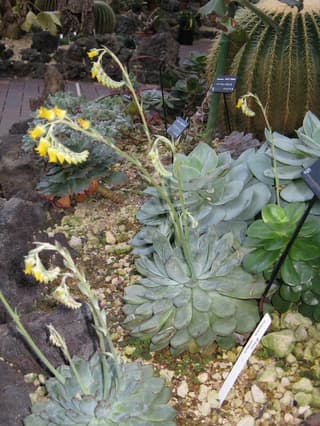
Pulido's Echeveria
Echeveria pulidonis
Echeveria pulidonis, commonly called Pulido's Echeveria, is a compact rosette-forming succulent in the Crassulaceae family, native to Mexico. Its powdery blue-green leaves develop striking red margins under strong sunlight. It is one of the slowest-growing Echeveria species and produces arching stems of golden-yellow flowers in spring.

Chenille Plant
Echeveria pulvinata
Echeveria pulvinata, commonly known as the Chenille Plant or Plush Plant, is a Mexican succulent that forms compact rosettes of thick, fuzzy leaves covered in fine white hairs that feel like plush fabric. Under strong sunlight, the leaf margins turn vivid red and orange, creating a striking contrast with the green centers. It is a hardy, moderately fast-growing succulent widely used in rock gardens, containers, and succulent arrangements for its unique texture and easy care.
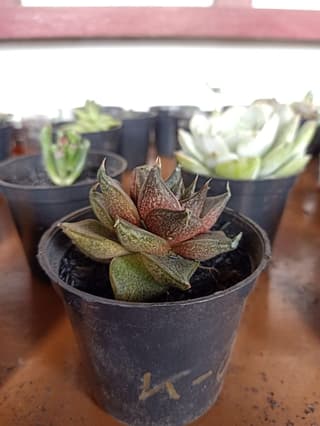
Purpus's Echeveria
Echeveria purpusorum
Echeveria purpusorum, commonly known as Purpus's Echeveria, is a slow-growing succulent native to Mexico. It forms compact rosettes with thick, dark green leaves adorned with distinctive reddish-brown mottled patterns. Highly sought after by collectors for its unique appearance and easy care requirements.
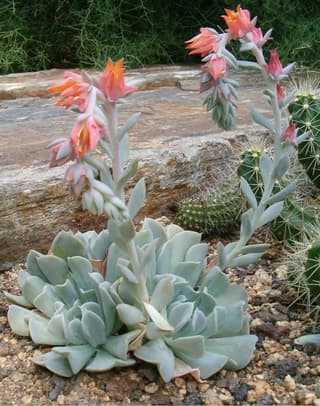
Topsy Turvy Echeveria
Echeveria runyonii
Echeveria runyonii 'Topsy Turvy' is a rosette-forming succulent native to Mexico, prized for its powdery, grayish-green leaves that curl inward like spoons, creating a distinctive whirled shape. It is a slow-growing, hardy, and low-maintenance plant, well suited to indoor pots or outdoor rock gardens in warm climates.
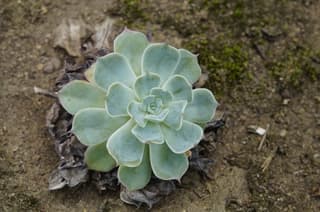
Blue Echeveria
Echeveria secunda
Echeveria secunda, commonly known as Blue Echeveria or Hen and Chicks, is a rosette-forming succulent native to the highlands of Mexico, belonging to the family Crassulaceae. Its fleshy, blue-green leaves arrange into a compact, symmetrical rosette up to 6 inches (15 cm) in diameter. In spring and summer, it produces tall slender stems bearing lantern-shaped flowers in yellow and red, making it one of the most popular ornamental succulents for both indoor and outdoor use.
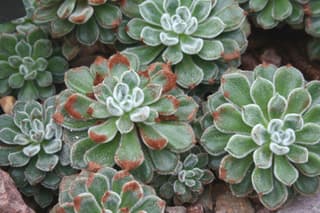
Mexican Firecracker
Echeveria setosa
Echeveria setosa, commonly called Mexican Firecracker, is a rosette-forming succulent native to Mexico, covered in fine white hairs that give it a velvety appearance. In summer, it sends up tall stalks bearing urn-shaped red flowers with yellow tips that attract hummingbirds.
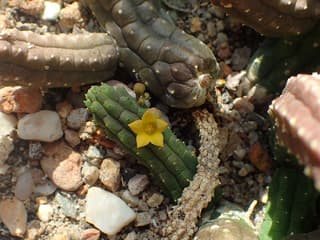
Echidnopsis
Echidnopsis cereiformis
Echidnopsis cereiformis is a leafless succulent from the Apocynaceae family, native to Northeast Africa (Eritrea and Abyssinia) and southern Arabia. It forms clumps of thin, branched cylindrical stems with 6 to 10 ribs covered in hexagonal tubercles. In autumn, it produces small brownish-yellow to brownish-purple flowers with yellow coronal lobes along the stems. It is easy to grow and highly drought-tolerant.
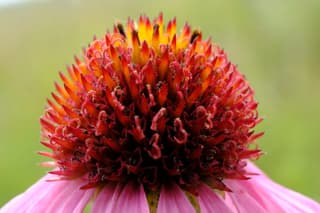
Narrow-leaf Coneflower
Echinacea angustifolia
Echinacea angustifolia, the narrow-leaf coneflower, is a taprooted perennial native to the dry prairies of the central United States and Canada, from Texas and Oklahoma north through the Dakotas into Saskatchewan. It forms a low clump of lance-shaped, hairy, gray-green leaves topped from midsummer through fall by daisy-like flowers with drooping pale-pink to purple ray petals surrounding a spiny, coppery-orange central cone. Reaching only 30-80 cm tall, it is more compact and drought-tolerant than its better-known relative Echinacea purpurea, and it is the species most historically associated with Native American herbal medicine.
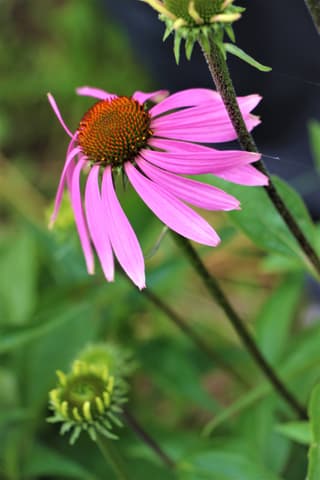
Purple Coneflower
Echinacea purpurea
Echinacea purpurea, commonly known as Purple Coneflower, is a striking native North American perennial that blooms prolifically from summer through fall. Its bold purple-pink daisy-like flowers with distinctive orange-brown spiny cones attract pollinators including bees, butterflies, and hummingbirds. A resilient, low-maintenance plant, it thrives in full sun and well-drained soil, and is highly drought-tolerant once established. Widely valued both as an ornamental garden plant and as a traditional medicinal herb, Purple Coneflower has been used by Native American tribes for centuries.
Easy Care Easy Care
Our selection of 2332 easy easy care combines the characteristics of this category with reduced care needs. Perfect for beginners who love this category.
Why Choose Easy Easy Care?
Combining the beauty of easy care with easy difficulty level lets you enjoy this category without excessive maintenance worries. Each plant was selected to offer the best characteristics of the category at the care level you are looking for.