1448 Easy Pet Safe | 2026 Guide - Page 15
Find 1448 easy pet safe. Complete guide for your garden.
1448 Pet Safe with easy level
Showing 505-540 of 1448
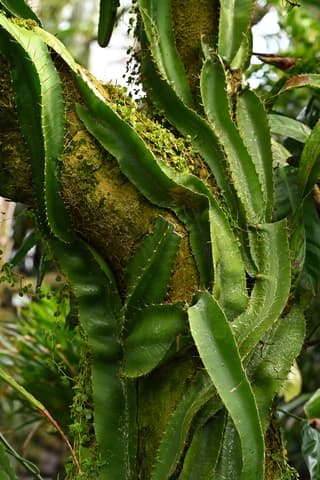
Climbing Cactus
Epiphyllum phyllanthus
Epiphyllum phyllanthus, commonly known as the Climbing Cactus or Orchid Cactus, is a tropical epiphytic cactus from the family Cactaceae, native to the forests of Central and South America. Unlike desert cacti, it grows on trees in humid, shaded environments and produces large, white, fragrant flowers that bloom only at night.
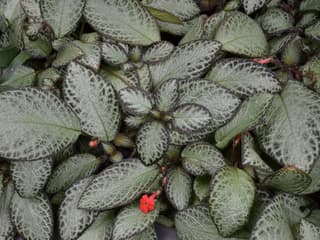
Flame Violet
Episcia reptans
Episcia reptans, commonly known as Flame Violet or Chocolate Soldier, is a creeping tropical plant in the Gesneriaceae family, native to the rainforests of the Brazilian Amazon and Colombia. Its velvety dark-green leaves with silver markings and vibrant scarlet tubular flowers make it one of the most striking houseplants available. It spreads naturally via stolons, creating a lush cascading display perfect for hanging baskets.
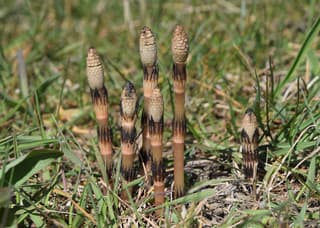
Field Horsetail
Equisetum arvense
Field horsetail (Equisetum arvense) is an ancient, non-flowering perennial in the Equisetaceae family, part of a plant lineage that predates the dinosaurs. It produces two types of stems: pale, unbranched fertile stems that appear in early spring and bear spore cones, followed by bushy green sterile stems with whorled branches that persist through summer. Rich in silica, its hollow, jointed stems were historically used to scour pots and polish metal. A vigorous, deep-rooted rhizomatous spreader, it is considered a persistent weed in gardens and farmland but is also valued as a traditional medicinal herb.
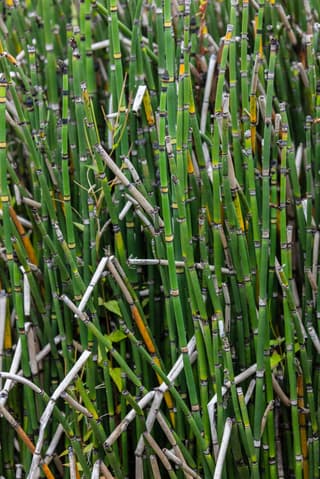
Rough Horsetail
Equisetum hyemale
Equisetum hyemale, commonly known as rough horsetail or scouring rush, is an evergreen, non-flowering perennial in the ancient Equisetaceae family. Its hollow, jointed, bamboo-like stems grow upright to 1-1.8 m and stay a striking dark green year-round, ringed with black-and-tan banded nodes. As a spore-bearing pteridophyte, it never produces flowers or seeds; instead, small cone-like strobili form at the stem tips and release spores. The species spreads vigorously through branching underground rhizomes, forming dense colonies that make it an excellent architectural accent for wet, boggy sites or contained water features, though its aggressive spread means it should almost always be planted in a pot or behind a root barrier.
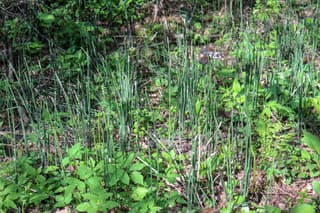
Horsetail
Equisetum spp
Horsetail (Equisetum spp) is one of the most ancient plant genera on Earth, with fossil records dating back over 300 million years. A primitive vascular plant that reproduces via spores rather than seeds, it belongs to the family Equisetaceae. Its jointed, hollow, green stems — rich in silica — are its most distinctive feature. Cosmopolitan in distribution, it naturally colonizes moist soils, riverbanks, and wetlands on nearly every continent. Widely used in traditional medicine and increasingly popular in contemporary ornamental gardening.
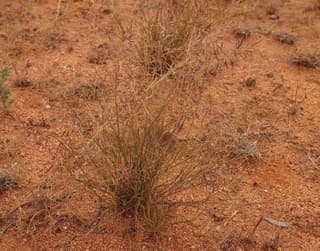
Little lovegrass
Eragrostis minor
Eragrostis minor, commonly known as little lovegrass, is an annual C4 metabolism grass species native to Europe that has since become a widespread weed globally. It is frequently found on disturbed, sandy, or gravelly soils, roadsides, railway embankments, and fallow lands. The plant grows 15-60 cm tall, forming loose tufts or small clumps. Its panicle inflorescence is 5-20 cm long, featuring flattened spikelets ranging from grayish-green to purplish-red, which fade to straw-yellow upon maturity. It blooms from mid-summer to early autumn, with seeds ripening from September through late November.
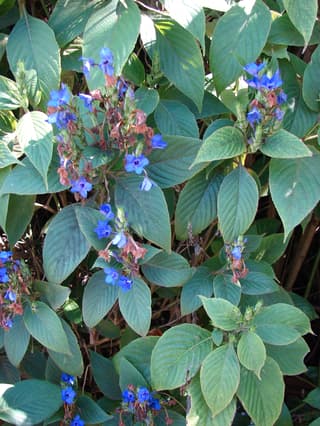
Blue Sage
Eranthemum pulchellum
Blue Sage (Eranthemum pulchellum) is a tropical evergreen shrub native to India, the Himalayas, and western China, belonging to the family Acanthaceae. It is prized for its stunning deep blue flowers that bloom in winter and spring, a rare trait among flowering shrubs. The plant features dense, oval, dark green leaves with prominent veins and lightly serrated margins. Blue Sage grows 0.5 to 1.5 meters tall and thrives in warm, humid tropical and subtropical climates.
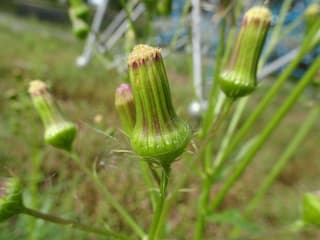
American Burnweed
Erechtites hieraciifolius
Erechtites hieraciifolius, popularly known as American burnweed or fireweed, is an annual herbaceous plant native to the Americas. It is a pioneer species, often found in disturbed soil or after fires, which earned it its common name. It features an erect stem, serrated leaves, and flower heads that produce seeds with white hairs, facilitating wind dispersal. It is widely recognized in Brazil as a NUFP (Non-Conventional Food Plant).
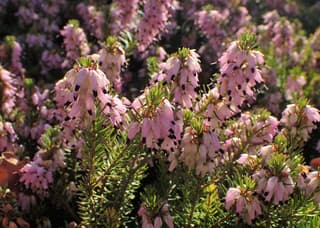
Winter Heath
Erica carnea
Erica carnea is a low, mat-forming evergreen shrub native to the mountains of central, eastern and southern Europe. Unlike most heaths, it tolerates neutral to slightly alkaline soil, making it one of the few ericas suited to chalky gardens. Its needle-like foliage stays green year-round and it produces masses of small urn-shaped flowers in shades of pink, magenta or white from December through April, providing color in the garden during the coldest months.
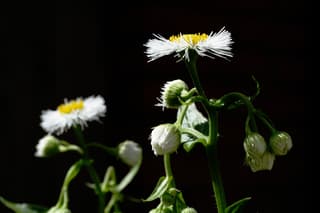
Eastern Daisy Fleabane
Erigeron annuus
Erigeron annuus, commonly known as Eastern Daisy Fleabane or Annual Fleabane, is a wildflower native to North America and widely naturalized across Europe and Asia. A member of the Asteraceae family, it produces abundant small daisy-like flowers with white to pale-lavender ray florets surrounding a bright yellow disk center. It thrives in disturbed soils, meadows, roadsides, and open woodland edges. Growing up to 150 cm tall, it is an fast-growing annual or biennial that freely self-seeds and naturalizes readily. Historically valued in herbal medicine and as a natural insect repellent, it is also a valuable nectar source for pollinators.
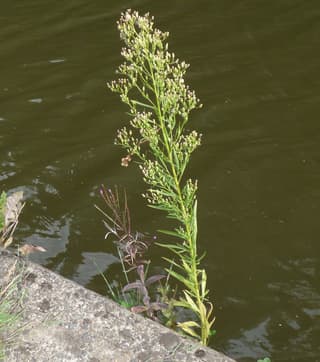
Horseweed
Erigeron canadensis
Erigeron canadensis, commonly known as horseweed or Canadian fleabane, is an annual flowering plant in the Asteraceae family, native to most of North America and Central America. It has become one of the most widely distributed weeds worldwide, naturalizing across Eurasia, Australia, and beyond. The plant features erect stems up to 1.5 m tall, narrow leaves, and terminal panicles of small white and yellow flower heads. Historically used by Native American peoples for medicinal purposes, horseweed is also notable as the first weed species to develop resistance to the herbicide glyphosate.
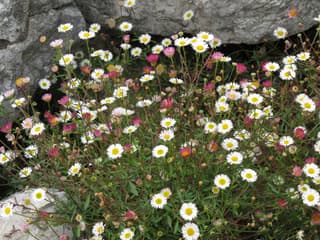
Mexican fleabane
Erigeron karvinskianus
Erigeron karvinskianus, known as Mexican fleabane, is a prolific, low-growing perennial that produces a carpet of small, daisy-like flowers. The blooms are unique for their color-changing properties, opening white and maturing to pink and eventually a soft purple. It is highly valued for its ability to colonize stone walls, steps, and paving crevices, creating a charming, naturalized look in rock gardens and cottage-style landscapes.
Guernsey Fleabane
Erigeron sumatrensis
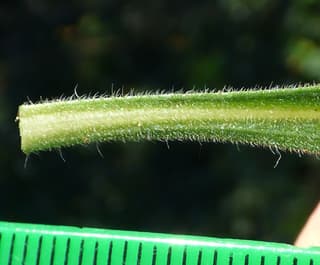
Guernsey Fleabane (Erigeron sumatrensis) is a fast-growing annual herb native to South America, now widely naturalized across tropical, subtropical, and temperate regions worldwide. A member of the Asteraceae family, it produces masses of tiny white-cream flower heads in branching sprays and can reach heights of up to 2 metres. Despite its name referencing Sumatra, the species originated in the Americas and was first described based on Sumatran specimens. It thrives in disturbed habitats — roadsides, waste grounds, urban gaps — and is regarded as an invasive weed in many countries. Its essential oils carry antimicrobial properties of pharmacological interest.

Chilean Cacti
Eriosyce
Eriosyce is a genus of slow-growing cacti native to the west coast of Chile and parts of Peru, where they are found from sea level up to altitudes of 4,000 meters. These cacti typically have a spherical to cylindrical shape with dense spines ranging in color from white to yellow, red, and black. Some members of the genus have woolly areoles. Eriosyce are popular collector's cacti due to their decorative spines and striking flowers that bloom at the top of the stem.
Chilean Pink Cactus
Eriosyce subgibbosa
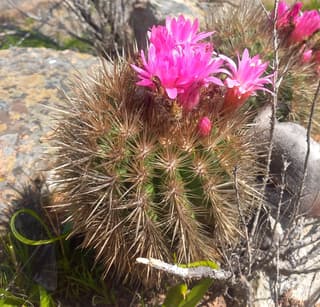
Eriosyce subgibbosa is a globular-to-columnar cactus endemic to the coastal strip of central Chile, ranging from the Biobío region to Atacama. It grows on rocky outcrops near the sea, forming a solitary stem up to 90 cm long and 25 cm wide that tends to recline with age. Flowers are pink to magenta with a paler throat and appear in late winter through spring.
Redstem Filaree
Erodium cicutarium
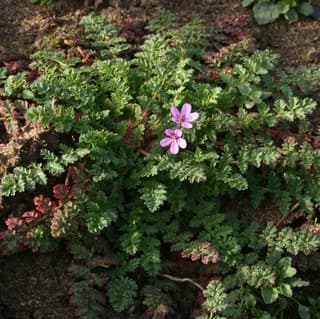
Redstem Filaree is an annual or biennial herb in the geranium family (Geraniaceae), native to Eurasia and North Africa and now naturalized worldwide. From a flat basal rosette of finely divided, fern-like leaves, it grows prostrate to ascending stems 10 to 40 cm in length. From April to September, small pink to violet flowers appear, followed by the namesake beak-like seed pods. These pods spiral when wet, actively drilling the seeds into the soil. As a hardy pioneer plant, it prefers dry, sandy, and stony locations such as roadsides, fallow fields, and vineyards.
Arugula
Eruca sativa
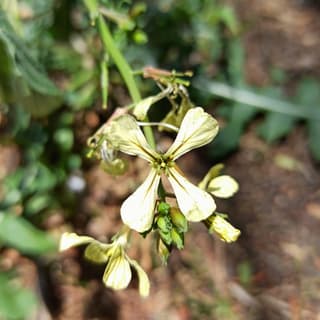
Arugula (Eruca sativa) is an annual leafy vegetable from the Brassicaceae family, native to the Mediterranean region to Western Asia. Its green, lobed leaves with a pungent and slightly bitter taste are highly valued in cuisine, especially in salads. It is a fast-growing plant, reaching maturity in 40 to 50 days, and produces small white or creamy-yellow flowers with purplish veins.

Arugula
Eruca vesicaria
Arugula (Eruca vesicaria) is an annual herbaceous plant in the mustard family (Brassicaceae), native to the Mediterranean region and Western Asia, known for its characteristic peppery and nutty flavor. The plant's pinnate, deeply lobed leaves quickly form a dense rosette and are valued in the kitchen both fresh and cooked. During flowering, the stem grows tall and bears white to creamy flowers with characteristic violet veins on the petals. Arugula is a fast-growing crop suitable for successive sowing throughout the growing season.
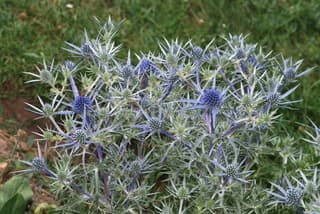
Sea Holly
Eryngium
Eryngium, commonly known as sea holly, is a genus of striking perennials in the carrot family prized for their spiny, silvery-blue bracts and thistle-like flower heads. Native to coastal cliffs, dry meadows and rocky slopes across Europe, the Americas and parts of Asia, sea hollies combine architectural texture with remarkable toughness, thriving in poor soil and salty coastal air where few other perennials survive.
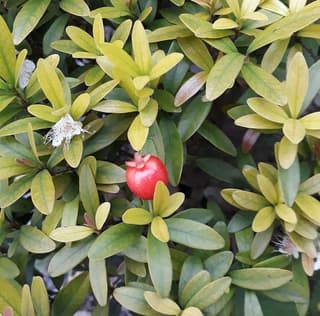
Dwarf Eugenia
Eugenia mattosii
Eugenia mattosii, popularly known as the Dwarf Eugenia, is an evergreen shrub native to Brazil, belonging to the Myrtaceae family. It features dense, compact foliage with small, oval, glossy leaves that display reddish tones when young, turning dark green at maturity. During spring and summer, it produces delicate white flowers that give rise to small, globose, deep red fruits. These fruits are edible, with a slightly acidic flavor, and are highly attractive to birds. Due to its controlled growth and small leaves, it is one of the most valued species for the art of bonsai and for landscaping in small spaces.
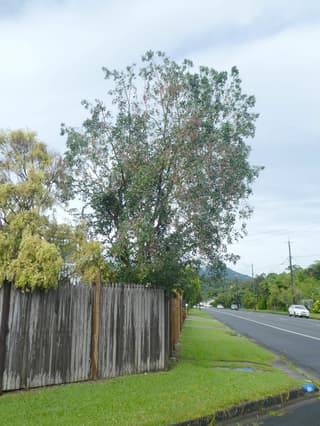
Brush Cherry
Eugenia myrtifolia
Evergreen shrub with bronze, green and red foliage producing delicate white flowers in spring and summer followed by edible magenta-red fruits. Height 4-6 meters in cultivation. Native to humid areas of eastern Australia. Highly valued as ornamental tree, hedging plant and for topiary. Non-toxic to pets and humans.
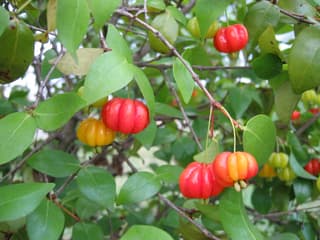
Surinam Cherry
Eugenia uniflora
Surinam Cherry (Eugenia uniflora) is an evergreen fruiting tree native to the Atlantic Forest of South America, spanning Brazil, Argentina, Uruguay and Paraguay. It is celebrated for its distinctive small fruits — deeply ribbed, turning from green through orange to deep red or nearly black when fully ripe — with a sweet-tart, resinous flavour. The tree produces clusters of fragrant white flowers in spring and fall, and its glossy leaves release a spicy-resinous scent when crushed. Both fruits and leaves have significant medicinal value recognised by traditional and modern science.

Chilean Corkscrew Cactus
Eulychnia castanea
Native to the arid coastline of northern and central Chile, between Los Molles and the Talinay mountains, Eulychnia castanea is a slow-growing columnar cactus that forms creeping clumps several meters in diameter in its coastal desert habitat, surviving on sea fog (camanchaca) in one of the driest regions on the planet. The grayish-green stems, featuring 6 to 8 ribs and spines ranging from brown to yellowish, produce fragrant white flowers in summer and greenish-yellow fruits with mucilaginous pulp and a slightly acidic flavor. The 'Varispiralis' cultivar, with spiraled or crested stems, is highly sought after by collectors.
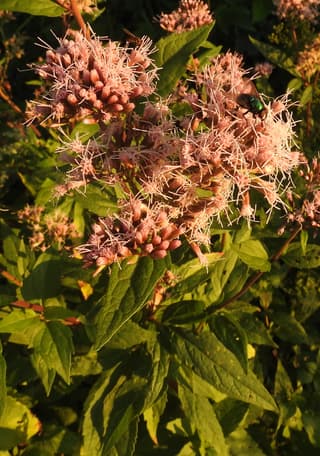
Boneset
Eupatorium
Eupatorium is a diverse genus of flowering perennial herbs in the family Asteraceae, encompassing well-known species such as Eupatorium cannabinum (hemp-agrimony), native to Europe and Asia, and Eupatorium perfoliatum (boneset), native to North America. These robust plants produce dense, flat-topped clusters of small fluffy flowers in white, pink, and mauve, highly attractive to butterflies, bees, and pollinators. Typically growing 1–1.5 metres tall, Eupatorium thrives in moist, humus-rich soils and tolerates wet ground, making it ideal for rain gardens, pond margins, and naturalistic borders. The genus has a rich ethnobotanical history: boneset was extensively used by Native Americans and colonial physicians to treat fevers and influenza, while hemp-agrimony has featured in European herbal medicine for centuries.
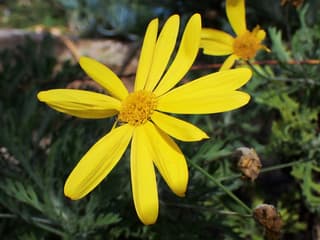
Gray-leaved Euryops
Euryops pectinatus
Gray-leaved Euryops (Euryops pectinatus) is an evergreen shrub native to South Africa, belonging to the Asteraceae family. It is prized for its silvery-gray aromatic foliage and vivid bright-yellow daisy-like flowers, which bloom almost year-round in mild climates. The plant forms a rounded mound 90–180 cm tall and wide, making it ideal for borders, slopes, and coastal gardens.
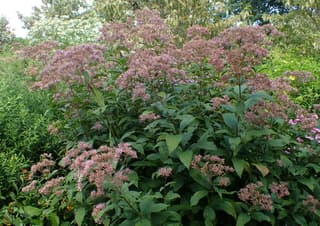
Spotted Joe-Pye Weed
Eutrochium maculatum
Spotted Joe-Pye weed (Eutrochium maculatum, synonym Eupatorium maculatum) is a perennial herbaceous plant native to North America in the Asteraceae family, growing naturally in moist meadows, stream banks, and marshy areas. The plant forms upright, sturdy, often purple-spotted stems up to 210 cm tall and bears large hemispherical pinkish-purple flower heads in late summer and autumn that attract butterflies and bees. In gardens, it is used as a background plant for moist borders, rain gardens, and naturalistic plantings.
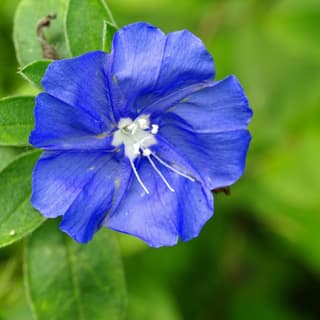
Blue Daze
Evolvulus glomeratus
Blue Daze (Evolvulus glomeratus) is a low-growing, spreading perennial native to Brazil, belonging to the Convolvulaceae family. It produces a continuous display of sky-blue flowers with white centers that open each morning and close in the evening or on cloudy days. It is widely used as ground cover, border plant, and in hanging baskets.
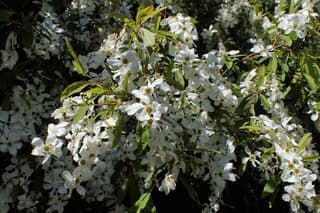
common pearlbush
Exochorda racemosa
A deciduous ornamental shrub native to China and Korea, common pearlbush is prized for its brief but spectacular spring display: masses of pure-white, five-petaled flowers open from round buds that resemble strings of pearls along arching branches. It grows 8-10 ft (2.4-3 m) tall and often wider, with a graceful, fountain-like habit. Medium-green, oval leaves show no notable fall color. Once established it is drought- and heat-tolerant, low-maintenance, and largely free of serious pests or diseases, making it a reliable backbone shrub for borders, foundation plantings, and mixed hedges.
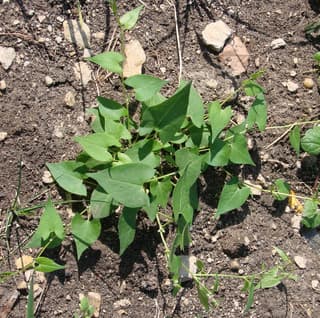
Black bindweed
Fallopia convolvulus
Black bindweed (Fallopia convolvulus, syn. Polygonum convolvulus) is an annual twining vine in the family Polygonaceae, native to Eurasia and North Africa. It has heart-shaped leaves and slender, twining stems that climb over other plants and structures, producing small greenish-white flowers, sometimes tinged pink, from late spring through fall. It is a common agricultural weed found in cultivated fields and disturbed ground, but is also grown as a fast-growing ground cover.
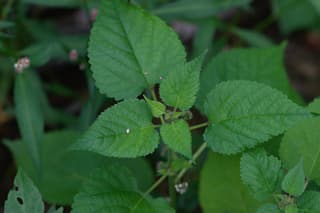
Hairy crabweed
Fatoua villosa
Hairy crabweed (Fatoua villosa) is a summer annual in the mulberry family, native to eastern Asia and now a common weed across the southern and eastern United States. It looks like a small mulberry seedling, with heart-shaped, toothed, hairy and slightly sticky leaves on erect, branched stems that range from a few inches to over 4 feet tall. It favors moist, shaded, disturbed ground such as flower beds, nursery containers, greenhouses and wetland edges. Tiny flower clusters appear from spring through fall, and seedlings can flower within about 12 days of reaching the two-leaf stage.
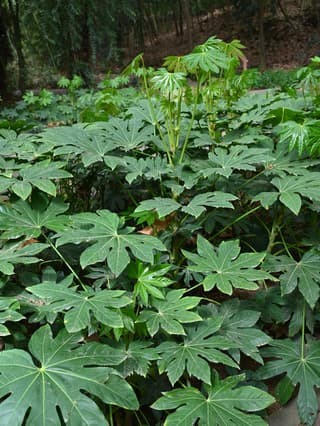
Japanese Aralia
Fatsia japonica
Fatsia japonica is an evergreen shrub native to Japan with dramatic, glossy, hand-shaped leaves that can have 7-11 lobes and grow up to 40 cm wide. Highly valued as an ornamental plant for both indoor spaces and shaded gardens, it is one of the few tropical-looking foliage plants that thrives in deep shade.
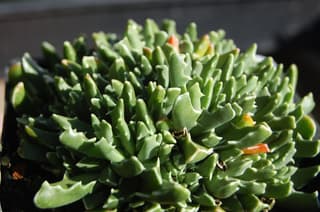
Tiger's Jaws
Faucaria bosscheana
Faucaria bosscheana is a compact succulent from the Aizoaceae family, native to the arid regions of South Africa (Eastern Cape). It forms low rosettes of thick, triangular, grayish-green leaves with soft, interlocking teeth along the margins that resemble the jaws of a feline, hence its common name. In autumn and winter, it produces solitary, bright yellow daisy-like flowers that open during the day. It is a slow-growing plant, ideal for rock gardens, pots, or succulent arrangements in very bright indoor spaces.
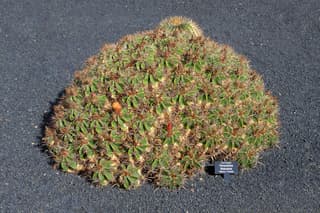
Barrel Cactus
Ferocactus
Ferocactus is a genus of roughly 30 species of barrel-shaped cacti native to the deserts of the southwestern United States and northern Mexico, ranging from California and Arizona to Sonora and Baja California. Young plants start out columnar and gradually swell into the thick, ribbed, barrel-like form that gives the genus its common name. Most species grow as solitary stems covered in dense, often hooked or brightly colored spines, though a few species such as F. robustus and F. glaucescens form clumping colonies over time. In cultivation, barrel cacti are prized as sculptural, low-maintenance succulents for xeriscapes, rock gardens, and sunny windowsills.
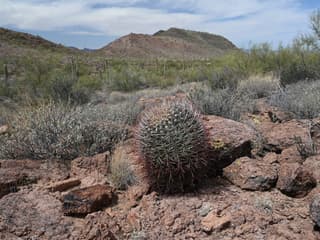
Emory's Barrel Cactus
Ferocactus emoryi
Ferocactus emoryi is a tall, barrel-shaped cactus native to the Sonoran Desert of Arizona, Sonora and Baja California. Young plants are globular and become cylindrical with age, eventually reaching barrel or column form armed with strong, hooked spines. In late summer to early fall it produces bell-shaped yellow, orange or red flowers in a crown at the apex.
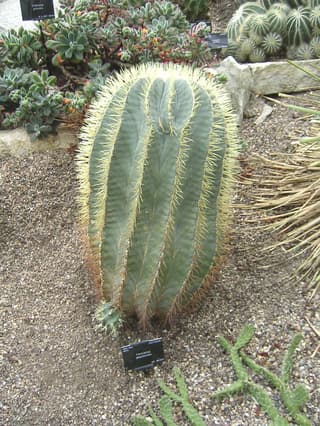
Blue Barrel Cactus
Ferocactus glaucescens
The Blue Barrel Cactus (Ferocactus glaucescens) is a globular to barrel-shaped cactus native to central Mexico, prized for its striking blue-green (glaucous) epidermis and dense crown of golden-yellow radial spines. Mature plants form a compact, ribbed barrel that can reach about 60 cm in height and 50 cm in diameter, eventually clustering into small colonies via basal offsets. In late spring and summer it produces funnel-shaped, lemon-yellow flowers near the crown, followed by small white berry-like fruits. It is a slow-growing, low-maintenance succulent that thrives in full sun and well-draining soil, making it a popular choice for xeriscaping and container gardens.
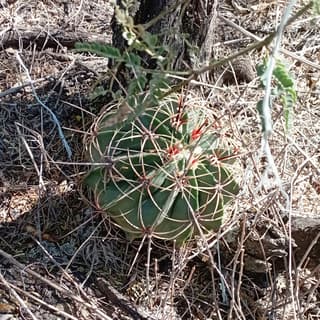
Mexican Barrel Cactus
Ferocactus histrix
Ferocactus histrix, commonly known as the Mexican Barrel Cactus, is a globular succulent species native to the arid regions of Mexico. It is characterized by its bluish-green body with prominent ribs and robust yellowish or reddish radial spines. Over time, the plant may transition from perfectly spherical to slightly columnar. It produces funnel-shaped flowers at the top of the crown, usually in shades of yellow, followed by fleshy fruits.
Easy Care Pet Safe
Our selection of 1448 easy pet safe combines the characteristics of this category with reduced care needs. Perfect for beginners who love this category.
Why Choose Easy Pet Safe?
Combining the beauty of pet safe with easy difficulty level lets you enjoy this category without excessive maintenance worries. Each plant was selected to offer the best characteristics of the category at the care level you are looking for.